Moses Sees Naftali's Future Unroll on Mount Nebo
On the last day of his life, atop Mount Nebo, Moses is shown not a map of the land but the centuries of war and rescue that will sweep across it.
Table of Contents
The old man climbed the mountain to die, and the mountain had three names waiting for him.
 Click for full size
Moses went up alone. Behind him the camp of Israel stretched along the plains of Moab, smoke from a hundred thousand cooking fires bending east in the wind, and ahead of him the slope hardened into bare rock that the wandering generation had called by three names at once. Avarim, the crossings. Nevo, the height. Pisgah, the summit. Kings had fought over this single shoulder of stone, three of them at one time, each wanting a palace planted on it, because to hold even a fist of the land was to have arrived in the world. And here was Moses, who had led the people to its edge across forty years of sand, climbing it only to look.
The Voice Said See, Not Imagine
God had told him the terms long before, on a day when the promise was still ahead of them. "See, I have set the land before you," the voice had said, and the word was exact. Not a rumor of the land. Not a sketch drawn from another man's report. "I am not giving you hearsay or approximation. See it with your own eyes." That had been the gift held out to the whole nation, the right to witness destiny instead of trusting someone else's account of it.
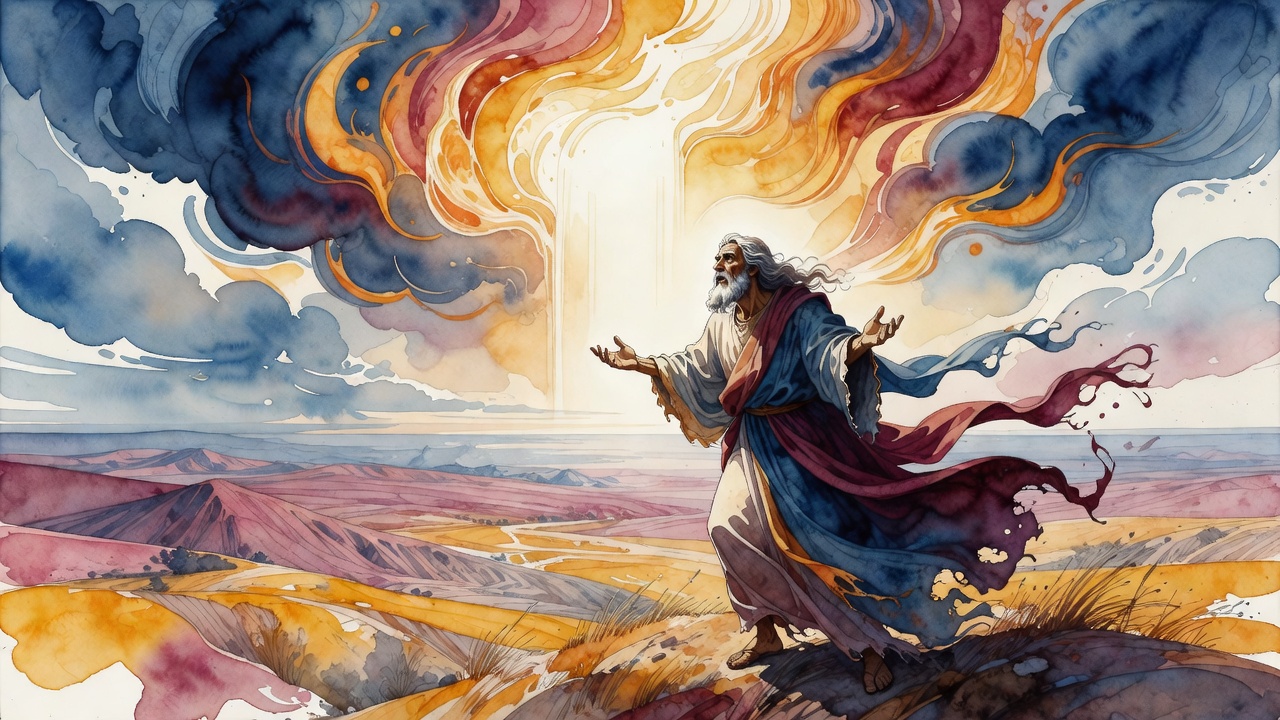
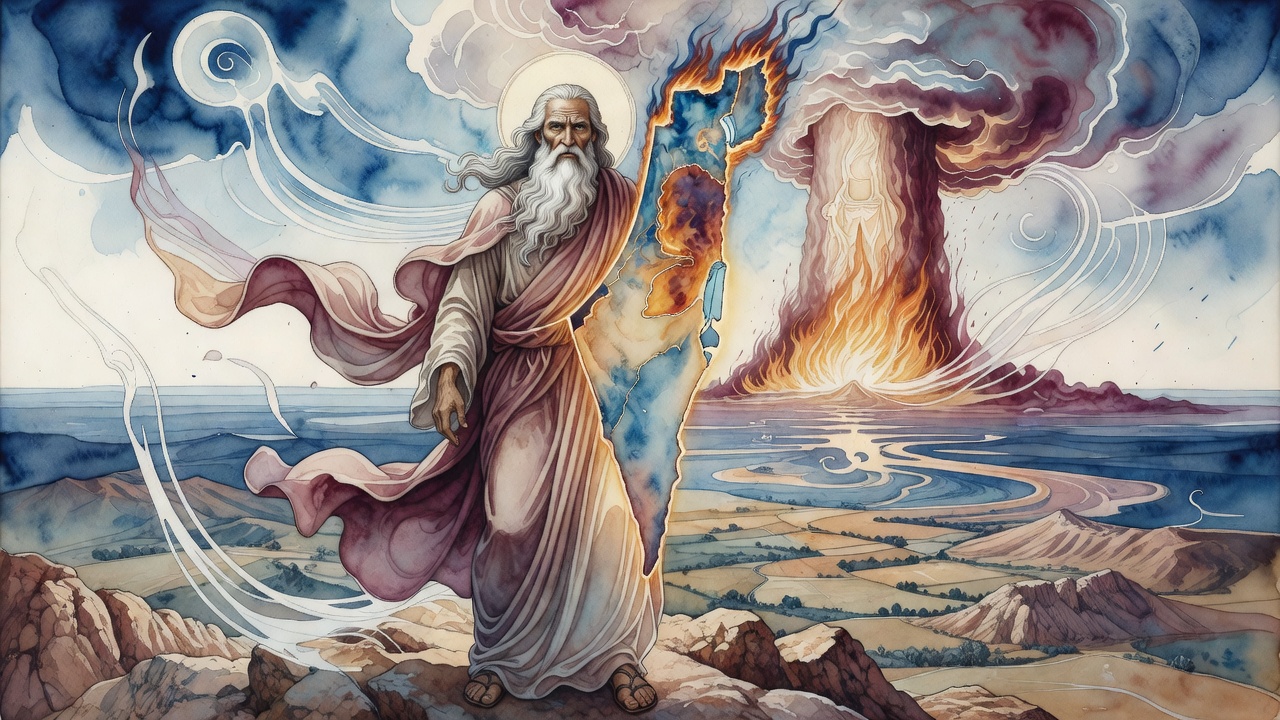
Now the gift narrowed to one man who would never cross the river. Moses reached the summit, and the wind dropped, and the land opened under him from the southern wilderness to the far western sea. He waited for a map. He was given something else.
The Land Refused to Stay a Map
His eye went north, to the green hills that would belong to the tribe of Naftali, and the hills would not hold still. The ground there began to move like water under heat. The verse God had spoken was small, only three words, "and all of Naftali," but the words split open and time poured out of them.
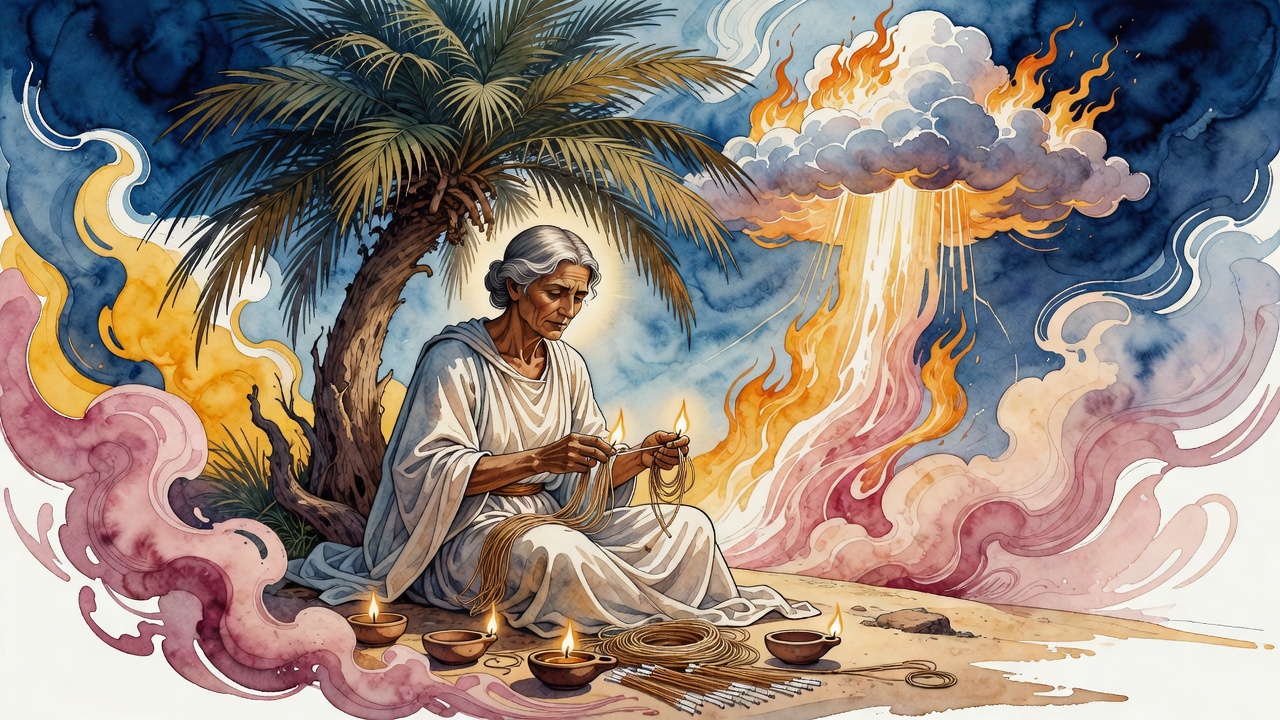
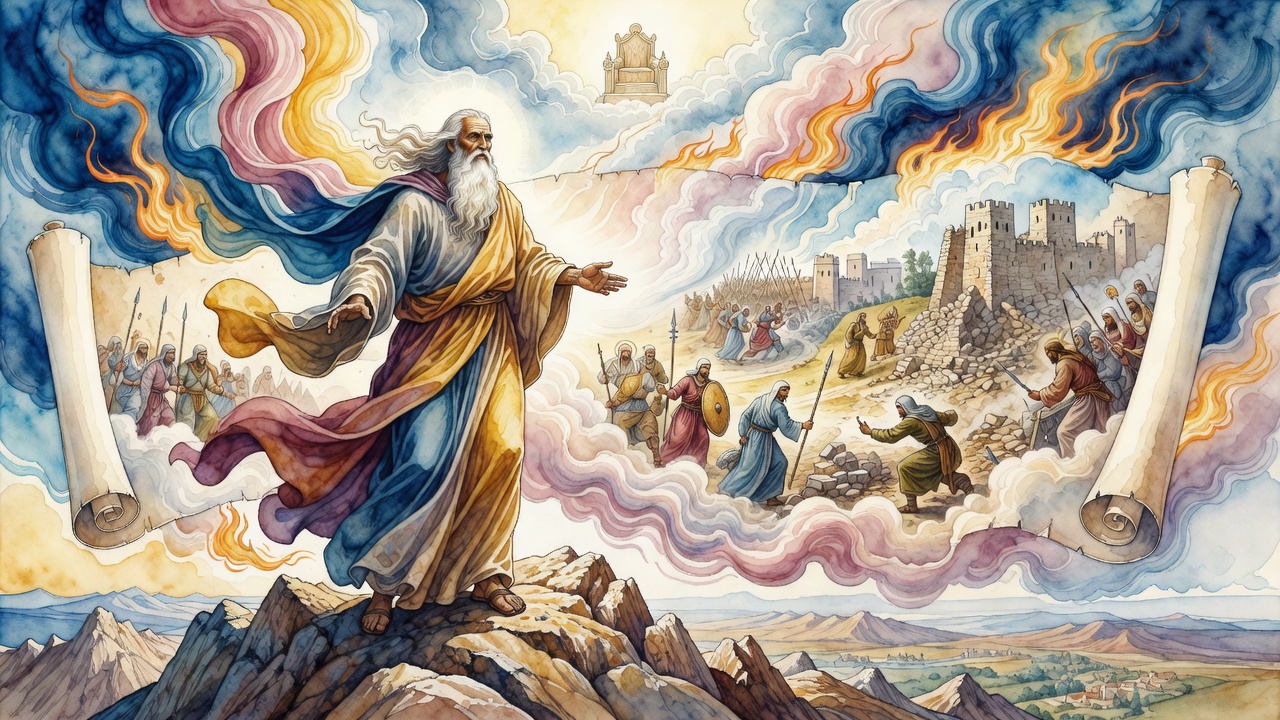
He saw a valley he did not recognize, and a woman beneath a palm tree summoning a captain. He saw Barak, son of Avinoam, riding down from Kedesh in that northern country with ten thousand men at his back. He saw the chariots of Sisera bog and founder in a river swollen to flood, iron sinking in mud, and the captain's army breaking apart in the water. The battle had not happened. The men who would fight it had not been born. Their grandparents had not been born. And it was happening in front of him now, on the ground he was forbidden to enter, written into the syllables of a blessing.
The Centuries Came in a Single Breath
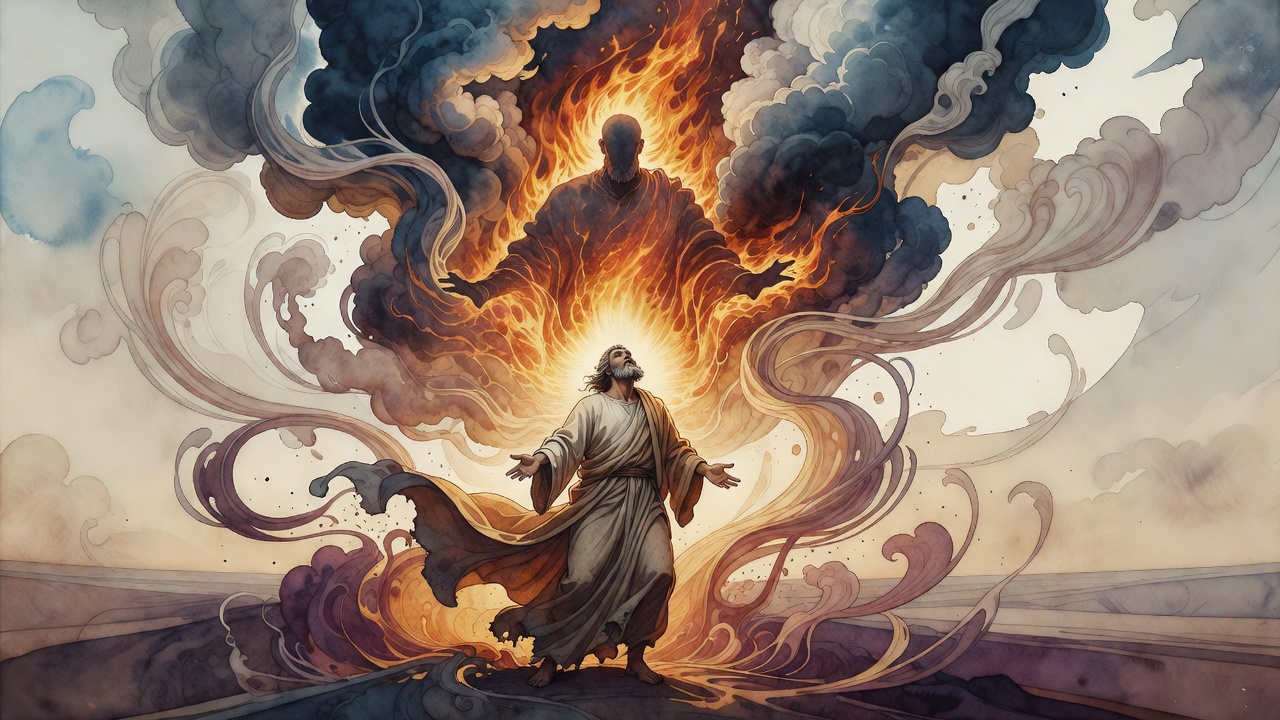
The vision did not stop with one war. The land of Ephraim rose into view beside Naftali's hills, and from inside that word climbed a younger man Moses knew by his old name. Hoshea, son of Nun, the spy who had come back from Canaan unafraid, the servant who had stood at the edge of the cloud. Moses had renamed him Joshua with his own mouth. Now he watched Joshua lead Israel against the Canaanites across that very country, the sword that would finish what the climb up Nebo could not.
One verse, and a man saw his own successor go to war. The portion of a single tribe unrolled forward through generation after generation, war and conquest and the long aftershocks of both, all of it pressed into a phrase a scribe could write in a single line. The land below him was not soil. It was a scroll, and every field was a sentence about a future Moses would have no part in.
The Dying Man and the Coveted Country
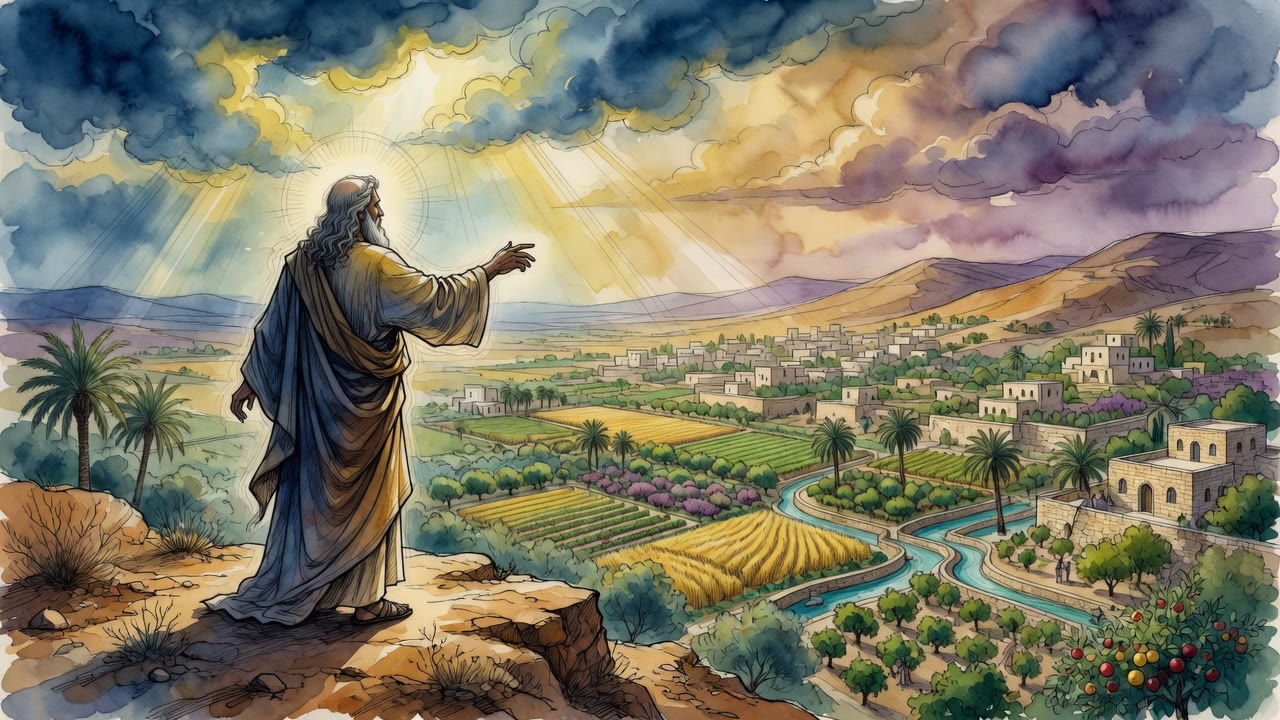
He understood, on that triple-named summit, why kings had bled for the mountain. A country worth this much vision was a country every nation on earth would covet. The prophets would later call it exactly that, a cherished land, the heritage that the multitude of nations would all reach for, dotted with the palaces of rulers who measured their whole lives by whether they had won a stake in it. Three kings had fought over the one peak under his feet. The whole of it would be fought over until the end of days, and Moses was being shown the fighting like a father shown a child he will not live to raise.
He looked until the looking was finished. The wars folded back into the green of the northern hills. The hills became hills again. The river that had drowned Sisera's chariots dried back into a thread no wider than a finger, far off and silent. The land lay quiet under the last light, holding its centuries the way a closed book holds its story, and the old man stood at the height called Pisgah with the whole future of a people behind his eyes and not one more day of his own left to spend.
He had asked, decades ago, to enter. He was permitted to see. On the mountain with three names, the man who had argued with God a hundred times said nothing at all, and lay down, and the land kept everything he had been shown.
← All myths