Moses Cleaned Joshua's Shoes at Midnight for Thirty-Six Nights
Joshua woke to a folded shirt by the pillow. The shoes sat clean beside the bed. He never saw who had knelt there in the dark.
Table of Contents
 Click for full size
The Latch at Midnight
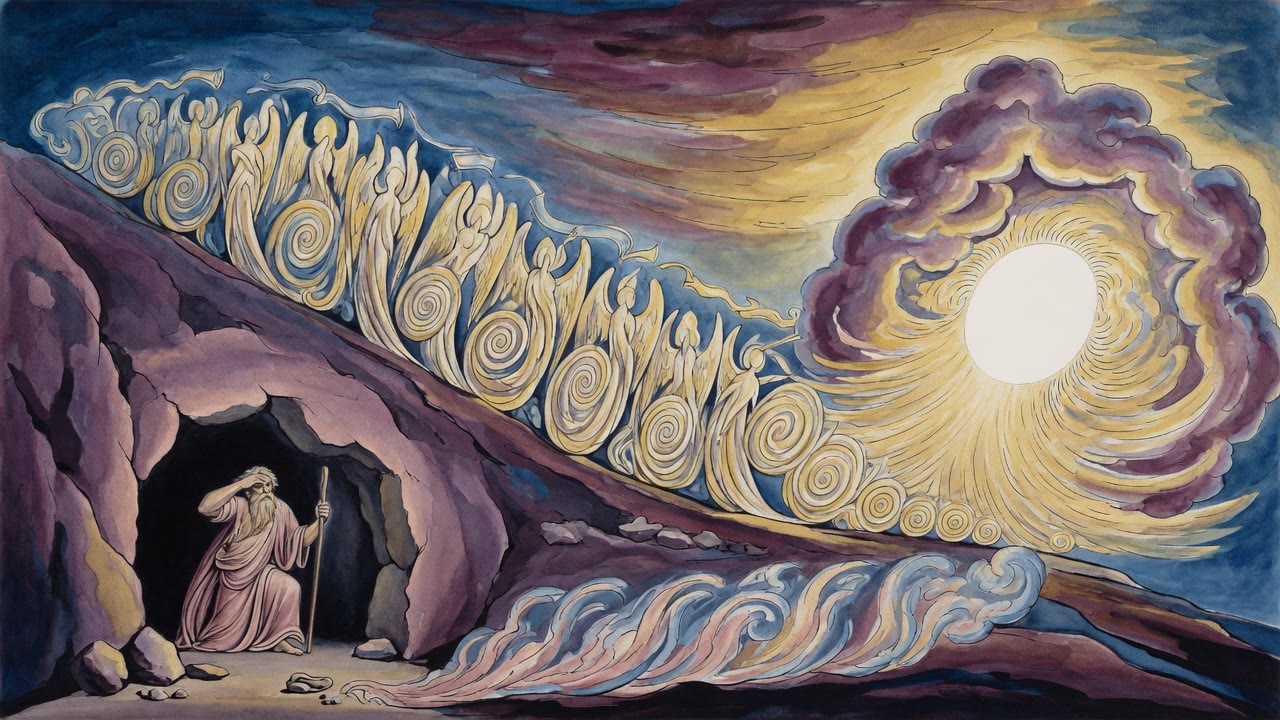
Moses rose from his bed while the camp still slept. He listened to the wind drag across the tents. He counted in his head. Thirty-six years. That was how long the young man two tents over had carried his staff, guarded his door, brought his water, and slept at the foot of the mountain while Moses climbed into the cloud.
So Moses owed him. A day for every year. He had only days left now. God had told him plainly that his life was ending, that he would not cross the river (Deuteronomy 34:4), that the land lay on the far bank for someone else's feet. The arithmetic of a dying man is exact.
He crossed the cold ground barefoot and stopped at Joshua's door. His hand was on the latch. He was the man who had split a sea and shattered tablets and spoken to God as a man speaks to a friend (Exodus 33:11). He unlocked the door quietly. He slipped inside.
The Shirt and the Shoes
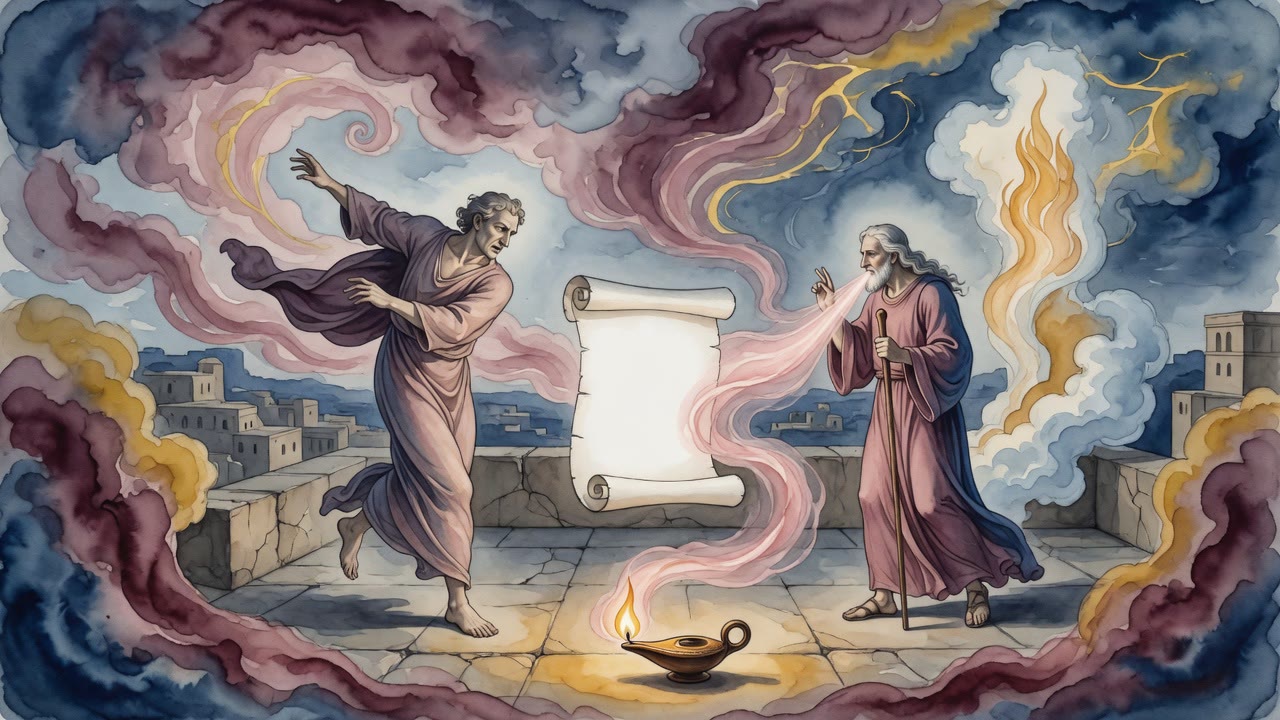
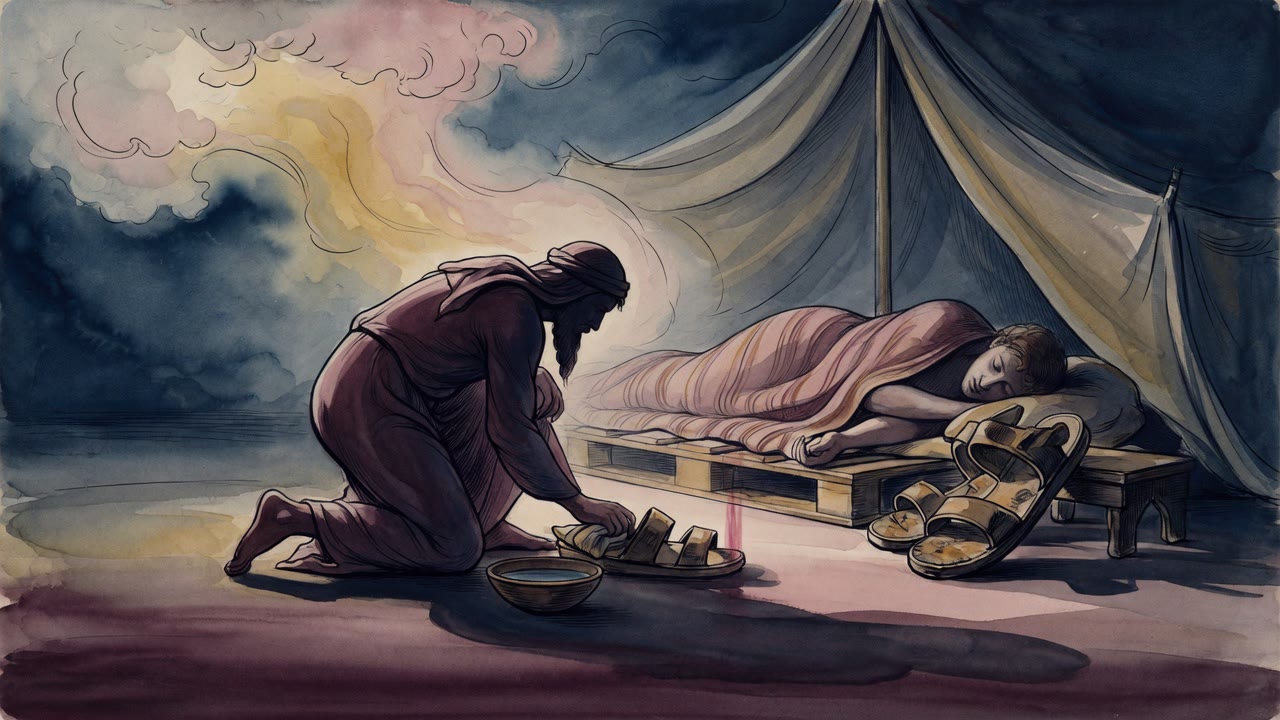
Joshua slept. Moses moved like a servant who does not want to wake the house. He found the shirt thrown over a stool, lifted it, and shook the dust from it into the dark. He folded it. He set it near Joshua's pillow so the younger man would wake to something clean and never know whose hands had made it so.
Then he knelt to the shoes. These were the same hands that had stretched over the water at the sea. Now they worked the dust out of the seams of a young man's sandals, turned them, and set them straight beside the bed.
He did not stop there. He gathered the rest of it: the undergarment, the cloak, the turban, the golden helmet, the crown of pearls. He held each piece up in the thin light and inspected it the way a craftsman inspects work he will not sign. Where the gold had dulled, he polished it. Where the cloth had creased, he smoothed it. He arranged everything on a golden chair beside the bed, ready for morning, and he left the way he had come, latching the door behind him.
He did this on the second night. He did it on the third. From the first of Shevat to the sixth of Adar, every midnight, he rose and went and served his student in secret. In the morning Joshua dressed in clothes he assumed his attendants had readied, and went out to learn how to lead.
Both Hands on Joshua's Head
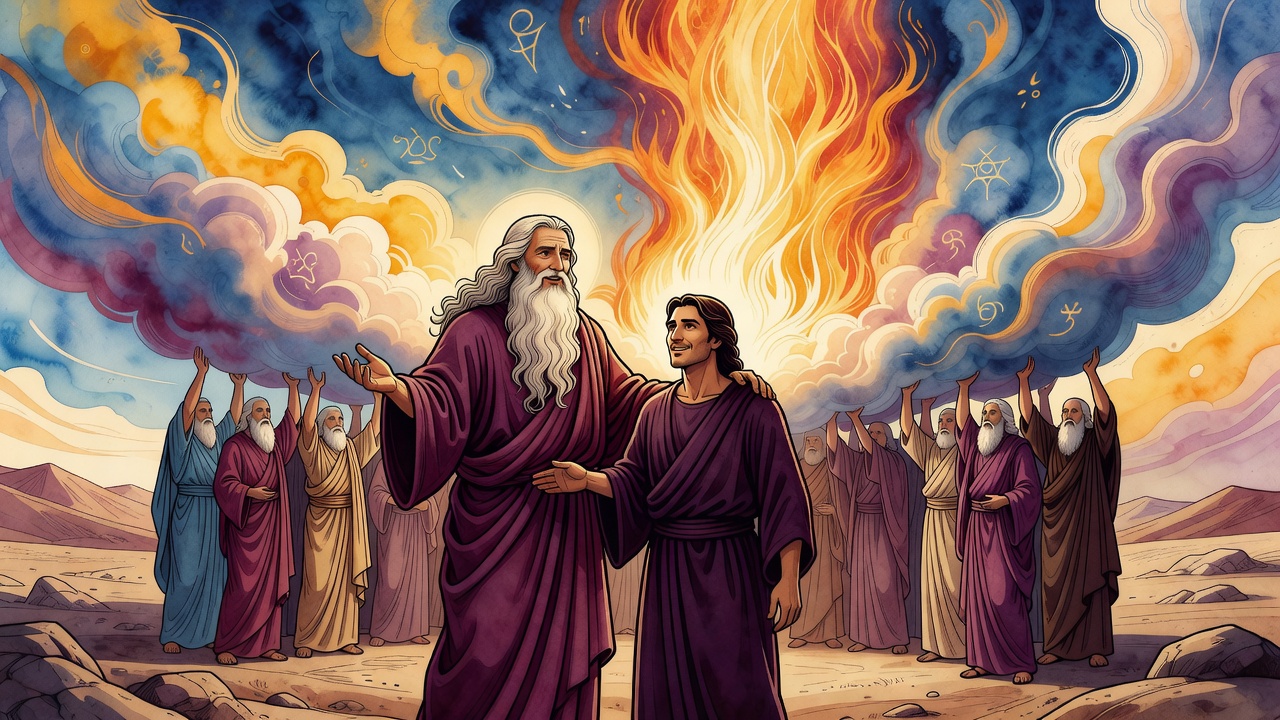
It would be a mistake to think Moses did this with a clenched jaw. God had told him to lay a hand on Joshua and pass the honor across (Numbers 27:18-23). Moses laid both. He was glad to do it, glad the way a father is glad to leave everything he has to his son. The crown was leaving him and he held the door open for it.
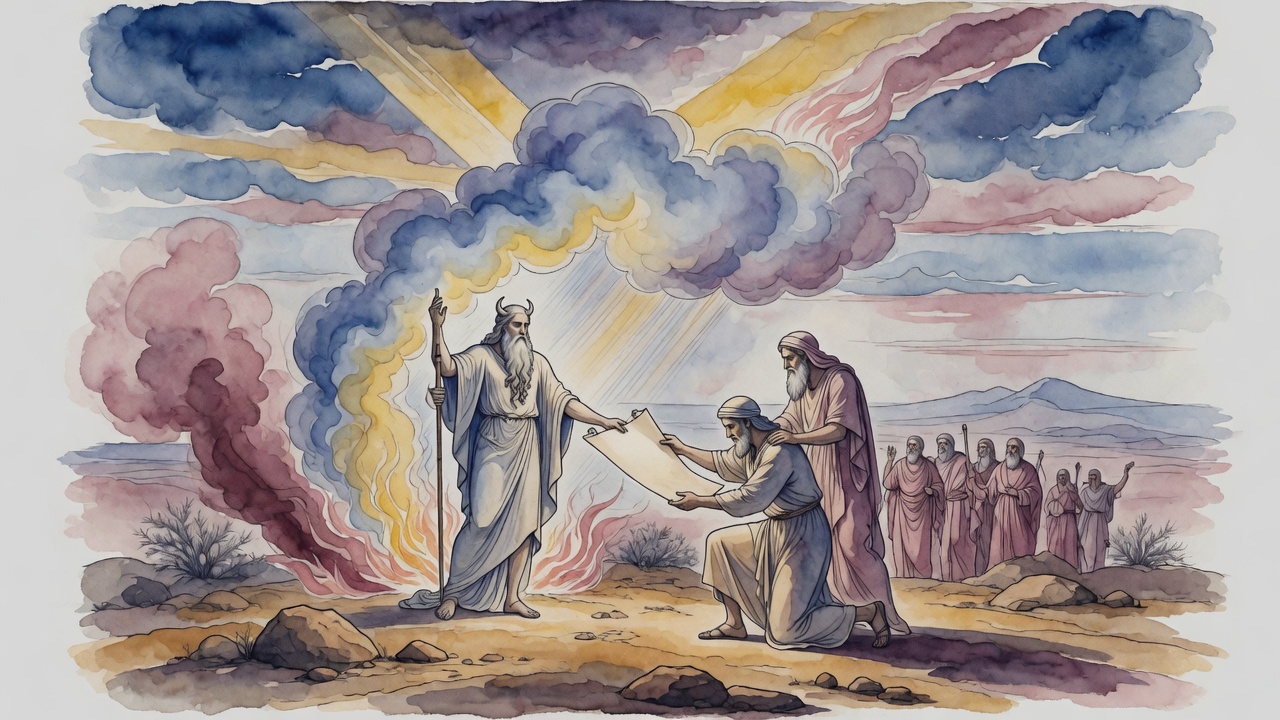
One morning the usual hour of rising came, and Moses did not slip out before Joshua woke. He stayed. He extended his hand and offered the shirt.
Joshua snatched it. He dressed himself while trembling, then threw himself at Moses' feet. "My master, do not be the reason I die before my time, because of the sovereignty God has set on me."
Moses put a hand on the younger man's hair. "Fear not, my son. You do not sin if you are served by me. With the measure I measured to you all these years, let me measure it back before I go."
Moses Begged His Student
What ate at him was not the loss of office. It was the land. Moses had led the people to the doorstep and would not step through it, because at the waters of Meribah he had struck the rock instead of speaking to it (Numbers 20:7-13). The door closed on him for that.
He lay awake doing a different arithmetic. There were commandments that could only be kept inside the land, mitzvot (מצוות) bound to its soil, the reward of fields and firstfruits and tithes he would never earn. Joshua would walk in and gather all of it. Moses would not.
Heaven and earth had not answered his prayers. The cosmos was deaf to him. He turned, at last, to a person, and the person he turned to first was the one whose shoes he had been cleaning.
"O my son," Moses said, "be mindful of the love with which I treated you by day and by night, teaching you mishnah and halakhah, oral law and judgment, and all arts and sciences. Implore now for my sake God's mercy. Perhaps through you He may take pity on me and let me enter the land."
Samael Shut the Mouth
The man who spoke to God face to face was now begging through the prayers of his student. Joshua understood what he was hearing. He wept. He beat his palms together in grief and opened his mouth to pray.
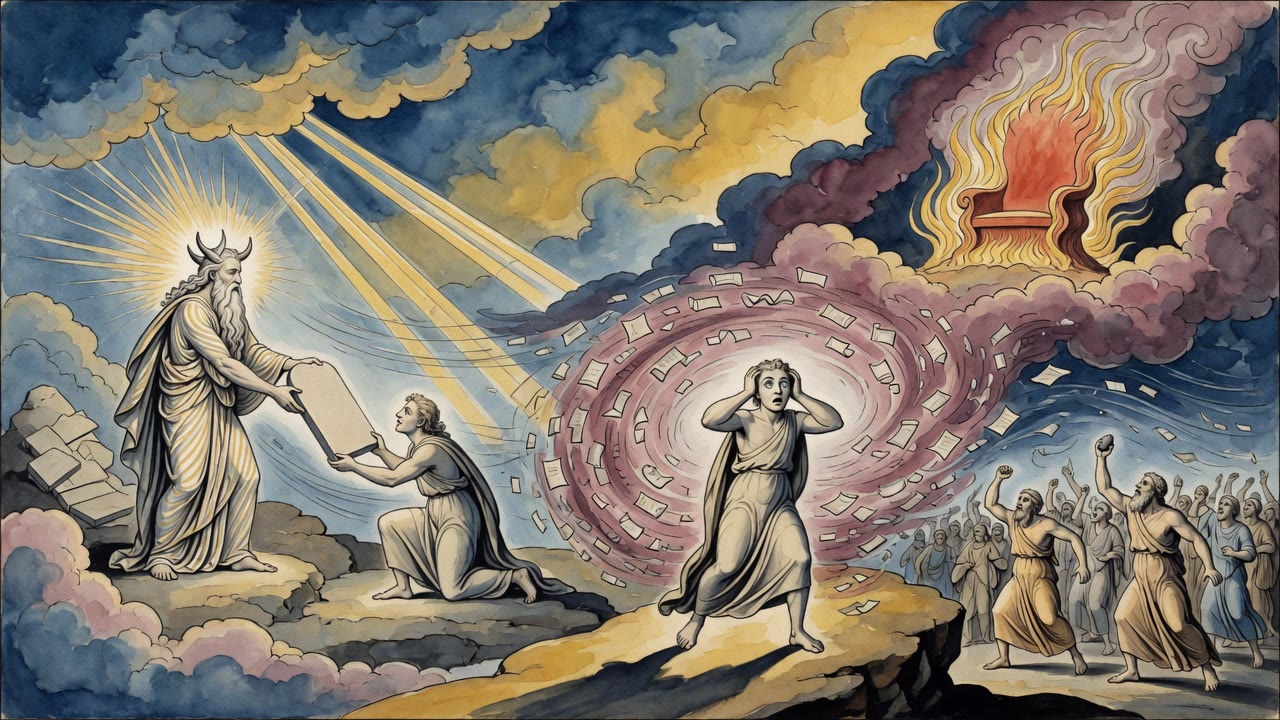
Nothing came out. Samael, the angel of death, the one who comes for every soul, had stepped between them and shut Joshua's mouth before a single word of intercession could rise. The prayer died in the disciple's throat. The student who had been served could not save the master who served him. The decree held. The door to the land stayed closed.
Joshua's jaw worked. No sound. Moses watched the silence land and did not argue with the angel. He had already argued with heaven. He had already argued with earth. He had come to a human mouth, and that mouth had been stopped.
On the nights that remained, Moses rose at midnight, crossed the cold ground, and cleaned Joshua's shoes. He owed thirty-six days. He paid every one.
← All myths