936 related texts · Page 1 of 20
It's all about Moses and Joshua, right before Moses' passing and Joshua's taking the reins. The text dives into the verse, "And charge (tzav) Joshua." Now, this isn't just a simple...
The death of Moses is the most devastating scene in the Torah—and the Talmud in Sotah 13b expands it into something almost unbearable. Moses pleaded with God not to let him die. He...
The rabbis of Esther Rabbah made a stunning claim: every time the Hebrew word vayhi ("it was") appears in the Torah, it signals disaster. Rabbi Tanhuma, Rabbi Berekhya, and Rabbi H...
God told Moses: "Do not speak to Me on this matter again" (Deuteronomy 3:26). The decree was final. But Moses argued anyway. Rabbi Abbahu offered a parable. A nobleman found a magn...
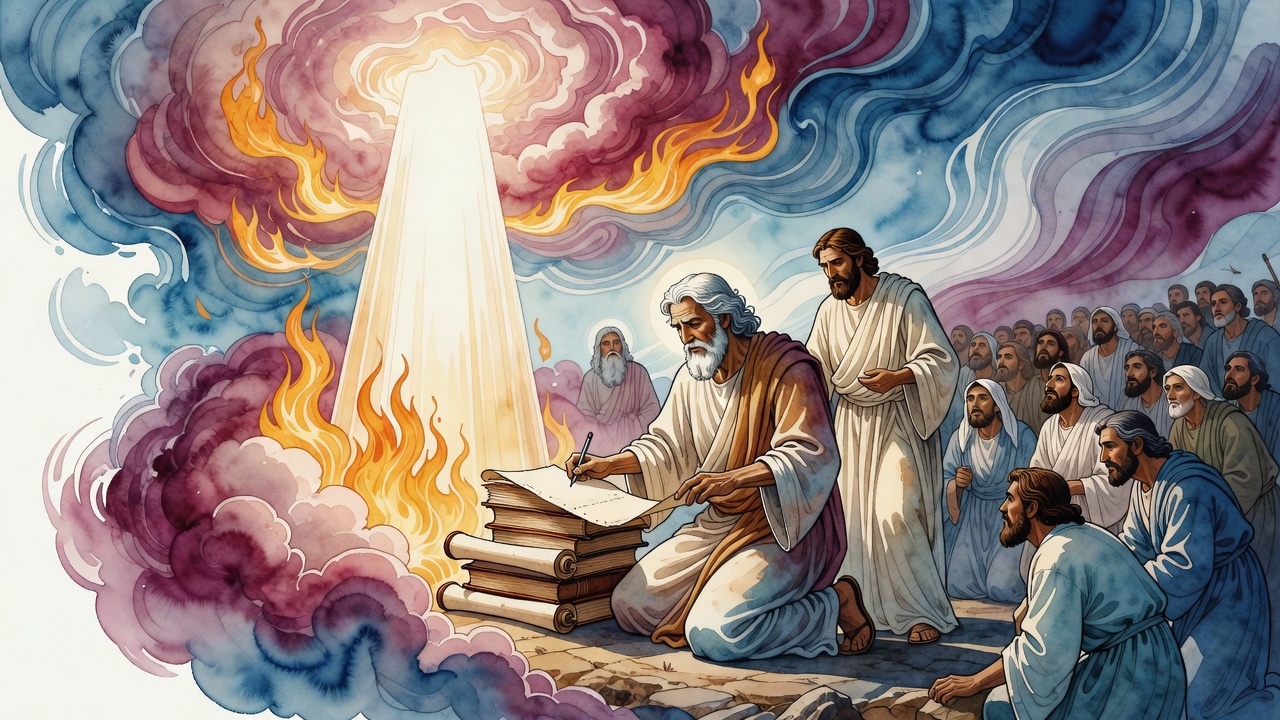
Who wrote the Hebrew Bible? The Talmud in Bava Batra 14b provides a complete accounting, attributing every book to a specific author. Moses wrote his own book—the Torah—and also th...
The Sefer haYashar, or Book of Jasher, a collection of Jewish legends and lore, gives us a glimpse. Chapter 87 opens with a divine instruction. "At that time the Lord said to Moses...
The question of whether Moses wrote the last eight verses of the Torah—the ones describing his own death—provoked one of the most poignant debates in the Talmud. Bava Batra 15a pre...
And in Chapter 89, we find just such a song, bursting with praise and recounting God's powerful deliverance. "Then spoke Joshua this song," the text begins, "on the day that the Lo...
Rabbi Nachman of Breslov taught that prayer is the essential weapon of the Messiah. Not a sword. Not an army. Prayer. The teaching begins with a striking image from the Zohar: the ...
On the last day of his life, Moses did something no prophet had ever done — he dressed his successor in public, with his own hands. He commanded that a golden throne be brought, al...
But in Jewish tradition, we find a fascinating story in Devarim Rabbah that touches upon just such a concept when it comes to the death of Moses. The text starts by asking, "What i...
It’s like a tiny seed containing an entire orchard. Take, for instance, the verse from (Song of Songs 7:5): "Your neck is like an ivory tower; your eyes are pools in Ḥeshbon, by th...
Our story comes from the wisdom of Ben Sira, also known as Ecclesiasticus, a book of wisdom literature. It’s part of the Jewish writings of the Second Temple period, writings that ...
This tension, this very human struggle, lies at the heart of a beautiful passage in the Pesikta DeRav Kahana, a collection of Midrash (rabbinic interpretive commentary)ic teachings...
It wasn't quite as simple as drawing lines on a map. There were… exceptions. Special cases. And those exceptions, as always, tell us a lot about the rules themselves. The verse in ...
Not just any song, but the song. The kind of song that echoes through eternity? Sifrei Devarim, in section 334, gives us a glimpse into this profound idea. It states, "Great is 'so...
The story continues, of course! And today, we're diving into Chapter 88 of the Book of Jasher to see what happened as the Israelites finally entered the Promised Land under the lea...
We all know the story: the Ten Commandments, the Golden Calf... but what about the moments in between? The feelings, the doubts, the sheer weight of responsibility? According to Gi...
A daunting task, wouldn't you say? The Torah tells us that Moses didn't just appoint Joshua. He made sure everyone knew it was happening, and understood why. According to the bibli...
The weight of that moment, the sheer magnitude of the loss... it's almost unbearable to contemplate. According to Legends of the Jews, when Joshua heard the words of Moses, words e...
That’s kind of how the Jewish tradition sees things. And nowhere is this more apparent than in the transition of leadership from Moses to Joshua. It's a powerful moment, heavy with...
The story goes that when Moses realized that Heaven and Earth, the very cosmos, wouldn’t answer his prayers, he turned to humanity. He sought solace, intercession, from those he ha...
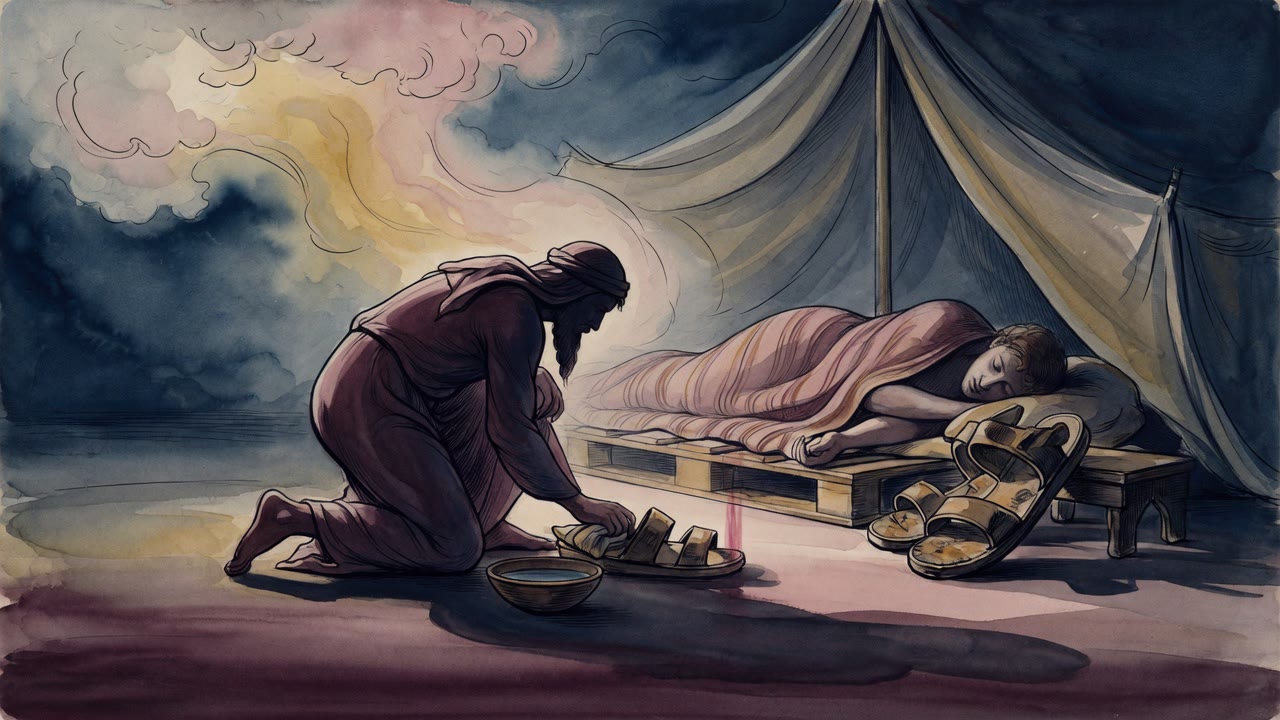
And it seems even Joshua, the great successor to Moses, felt that deeply. The story goes that the time was approaching when Joshua would usually get up. Now, imagine Moses, the lea...
It wasn't always a simple, smooth affair, as we learn in the fascinating accounts woven into the tapestry of Jewish legend. Imagine the scene: Moses, nearing the end of his life, i...
The Legends of the Jews, that incredible compilation of rabbinic stories and folklore assembled by Louis Ginzberg, gives us a glimpse into a truly human moment for the greatest pro...
What happens when a legend disappears? When a leader, a prophet, a figure like MOSES, is simply… gone? The grief, of course, is immense. But beyond that, there's often a desperate,...
It's a powerful image, isn't it? A promise from God, as recounted in Legends of the Jews, that "Thou that didst lead My children in this world, shalt also lead them in the future w...
Take Joshua, for example. Initially, he wasn't exactly known for his brilliance. In fact, some called him a fool! But he served Moses faithfully. And as we read in Legends of the J...
The Mekhilta extends its analysis of conditional versus unconditional covenants to two more foundational gifts: the Torah scroll and the priesthood of Aaron. Whence is it derived t...
Concerning this it is stated in the Tradition (Song of Songs 2:14) "My Dove in the clefts of the rock … Show me Your face; let me hear Your voice. For Your voice is sweet and Your ...
Our exploration begins with a verse from the Song of Songs (7:3): "Your navel is like a round goblet... Your belly is a heap of wheat." The Midrash (rabbinic interpretive commentar...
(Psalm 18:26) offers a fascinating, and perhaps unsettling, answer: "With a pious person, act piously; with an upright man, be upright; with a pure one, be pure; and with a crooked...
That’s precisely what we find ourselves pondering in Midrash Tehillim 79, a fascinating exploration of Psalm 79, attributed to Asaph. The psalm begins with a cry of devastation: "O...
Midrash Tehillim (a collection of rabbinic interpretations on the Book of Psalms) poses a seemingly simple question about the opening of Psalm 90, traditionally ascribed to Moses: ...
It’s an idea that pulses with life throughout Jewish tradition, a concept that goes far beyond just melody. to Midrash Tehillim, specifically Midrash Tehillim 149, and see what it ...
The Yalkut Shimoni, a compilation of rabbinic commentary on the Bible, offers us fascinating glimpses into these connections. Let's look at one small piece, specifically Yalkut Shi...
The Torah gives us a powerful example in the story of Moses and Joshua. We find ourselves in the book of Numbers, Bamidbar, specifically chapter 27. God has commanded Moses to appo...
The Torah dedicates significant space to the idea of cities of refuge, places where someone who has accidentally killed another person can flee and find protection. But when exactl...
It’s a question that’s been wrestled with for centuries, and Sifrei Devarim 41 offers a beautiful, layered answer, drawing on imagery from the Song of Songs. The verse from Song of...
In fact, the Sifrei Devarim, a collection of early legal midrash (rabbinic interpretive commentary)im on the book of Deuteronomy, highlights this idea beautifully. It all starts wi...
The Hebrew Bible records Moses's great farewell poem, the Song of Ha'azinu (Deuteronomy 32), a sweeping poetic indictment of Israel's future unfaithfulness. Targum Onkelos translat...
Some traditions whisper that it’s so much more. Imagine this: The Red Sea is splitting, a monumental miracle unfolding before the eyes of the Israelites. According to some, at that...
This Midrash (rabbinic interpretive commentary), or interpretive commentary on the Book of Numbers, opens with a verse about the nazir, someone who takes a vow to abstain from cert...
Jewish tradition has a lot to say about that moment – that before and after. And it all starts with a verse from Song of Songs: "Behold the bed of Solomon..." (Song of Songs 3:7). ...
Our jumping-off point is Bamidbar Rabbah 12, a fascinating exploration of the verse "On the day that [Moses] concluded." Now, you might think this is just a throwaway line, but the...
It all starts with a seemingly simple instruction: "Send you men that they may scout the land of Canaan that I am giving to the children of Israel" (Numbers 13:2). But before we di...
The pain of that kind of betrayal, the kind that cuts deepest, echoes through the words of King David in the Psalms. And, according to Bamidbar Rabbah 18, it wasn't just a general ...
The Midrash (rabbinic interpretive commentary), specifically Bamidbar Rabbah 19, poses a fascinating question: Why isn’t Moses, the leader who struck the rock and brought forth wat...