Moses Pleaded Five Hundred Fifteen Times to Live
Ten deaths were written over Moses before the last. He prayed five hundred fifteen times, blinded Samael, and still God took him with a kiss beyond the land.
Table of Contents
 Click for full size
Ten Deaths Written Before the Last Day
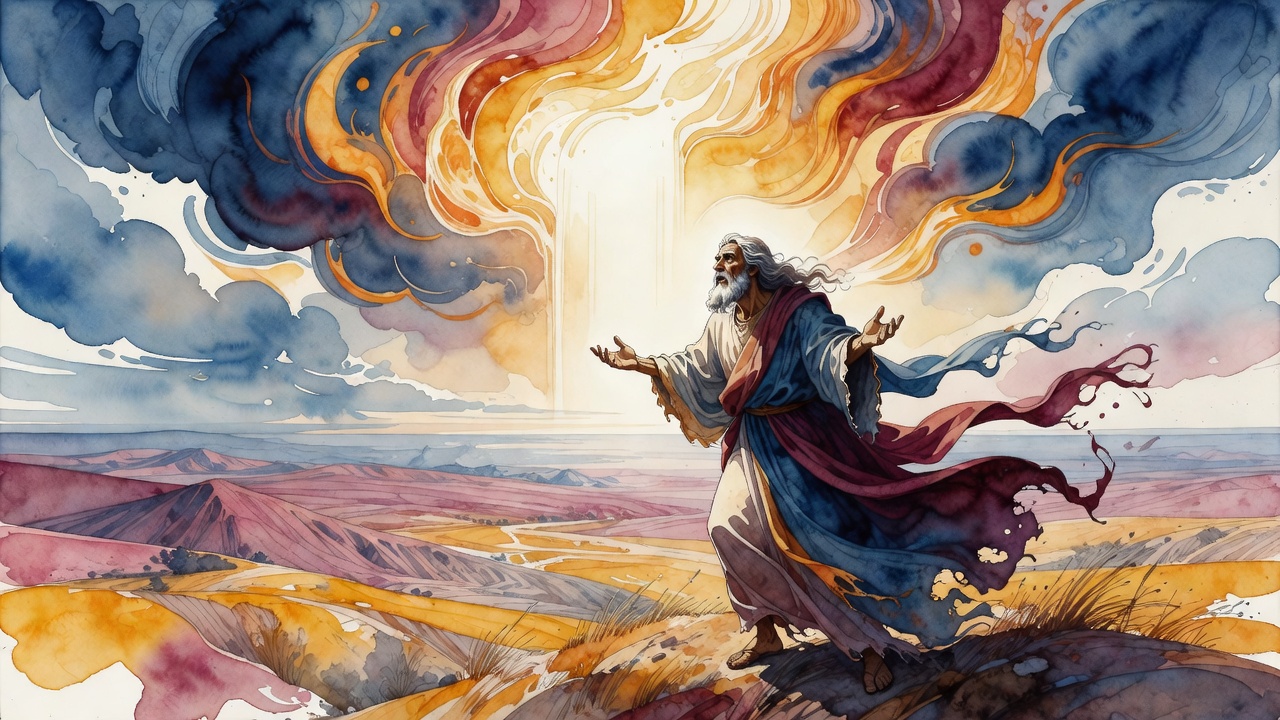
Rabbi Yochanan counts ten "deaths" written over Moses across the Torah and into Joshua: phrases like "your time to die is approaching" (Deuteronomy 31:14) and "Moses My servant died" (Joshua 1:2). Ten decrees that he would not bring Israel into the land. The man who had talked God out of destroying the people after the calf believed he could talk God out of this too. He had heard "Let Me be, and I will destroy them" and watched the Lord reconsider. His own plea, he thought, would surely bend the gate.
This time heaven treated delay as denial. The word lakhen in "you will not bring this assembly into the land" (Numbers 20:12) is read as an oath, the kind of binding speech that appears when God swears in (I Samuel 3:14). Prayer met a vow. The old method of intercession hit a locked door that even the greatest advocate could not pick.
Five Hundred Fifteen Pleas and a Sword of Prayer
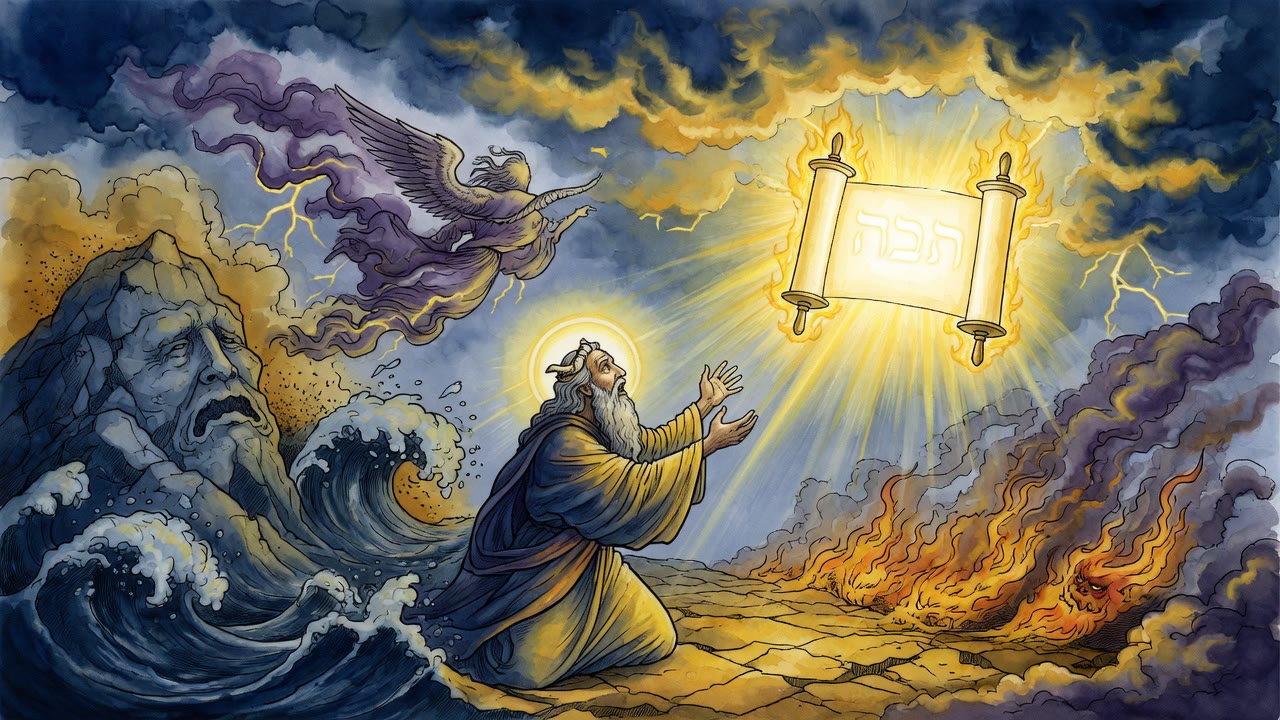
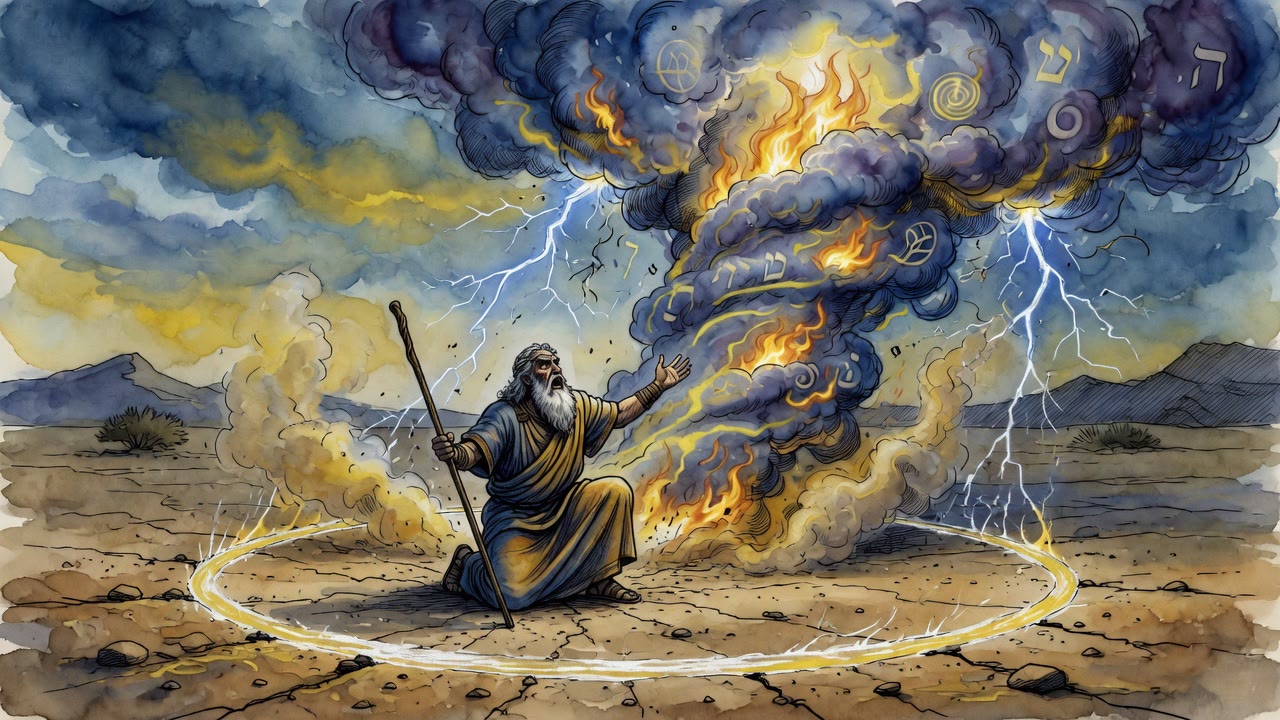
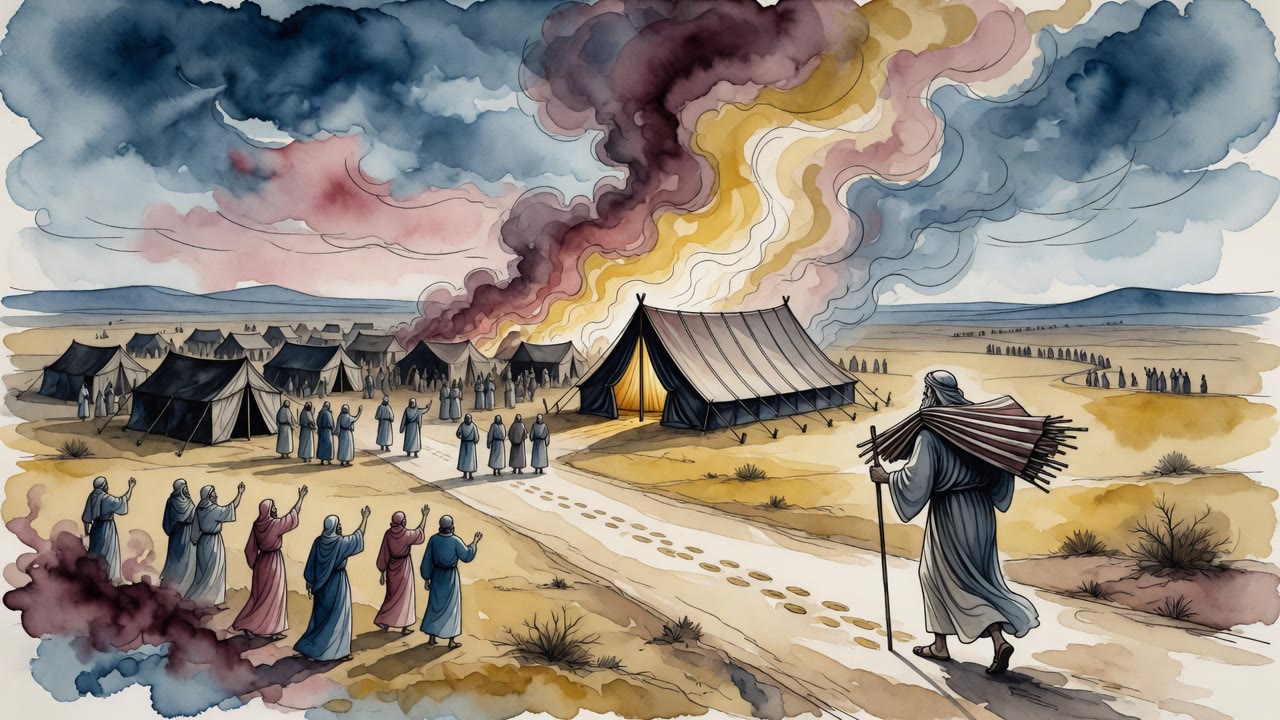
Moses put on sackcloth and ash. He fasted. He drew a small circle and vowed not to leave it until the decree moved. Creation shook under the force of his prayer. A Divine Voice said this was not the end of the world, only the trial of the man in whose hand is the life of every living thing. Gates of the firmament were ordered shut. The angel Akazriel stood alert. Still the prayer cut like a sword, powered by the ineffable Name Moses had learned from Zagzael, master scribe of the upper world.
From vaetchanan, "I pleaded" (Deuteronomy 3:23), the midrash counts five hundred fifteen petitions. Moses argued wages: decades of service, the Torah's own rule to pay a worker on time. Was God to make His teaching a forgery? Samael, head of the accusers, waited to laugh when Michael wept. Michael answered with the verse of the fallen who rise. Moses even begged to live as an animal, only to remain in the world. "Enough for you," came the reply. "Do not continue to speak to Me of this matter" (Deuteronomy 3:26).
The Word Behold Cuts Both Ways
Why tell Moses of death with the word hen, "behold"? He protested with a parable's force. He had once praised God with that word: "Behold, to the Lord your God belong the heavens" (Deuteronomy 10:14). Now the same word announced his end, as if a gift sword were used to behead the giver. God answered with a hard proverb. A bad neighbor sees incomes and not expenditures. Moses remembered the glory and forgot the debit: "Behold, they will not believe me" (Exodus 4:1), the first flinch when he was sent to Egypt.
The ledger of a life includes the day courage lagged. Even the faithful servant is not paid only in the coin of his best hours. The midrash refuses a sentimental Moses who never doubted. It shows a man whose own "behold" of fear returns when heaven says "behold" of death, and who must hear both as justice rather than as random cruelty.
Samael Blinded, God Descends
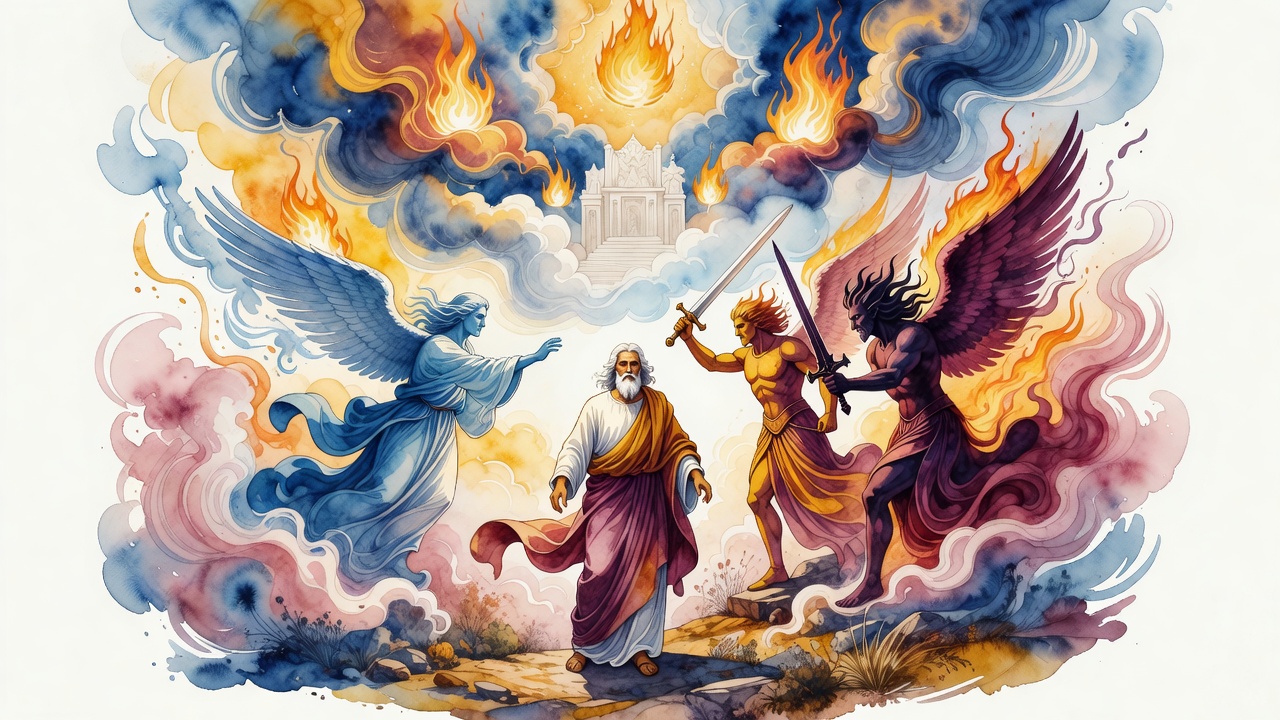
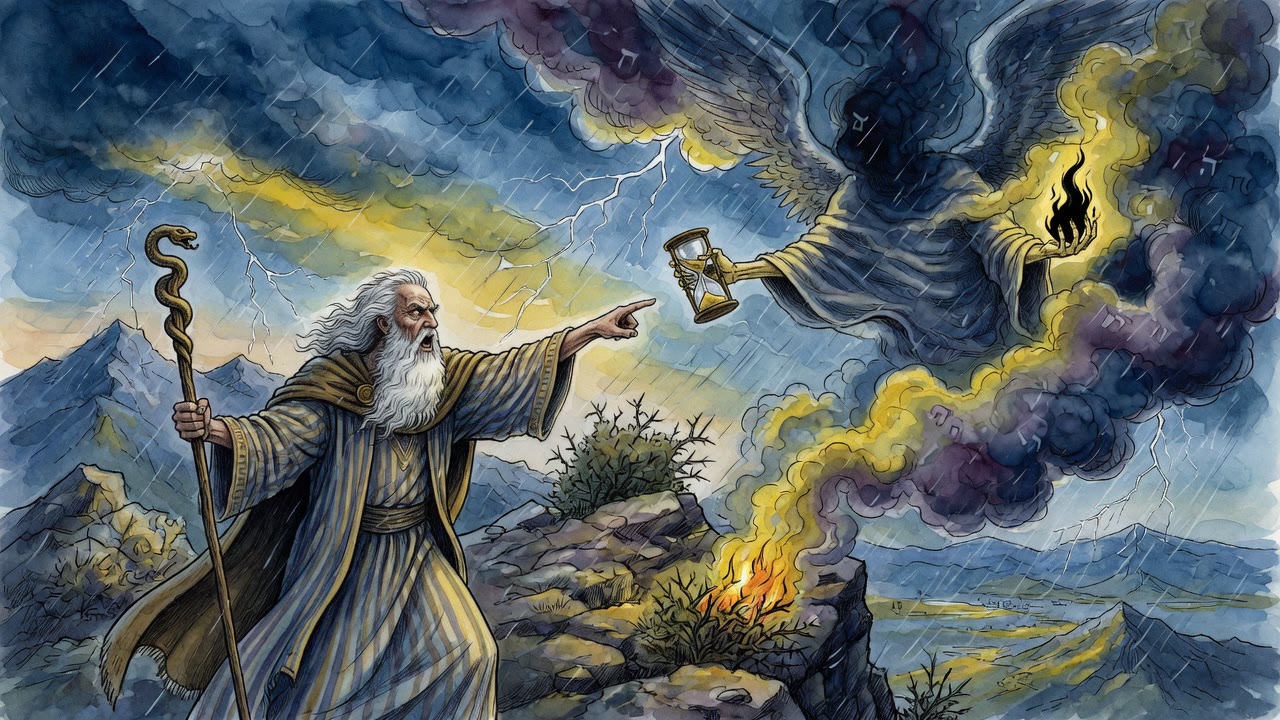
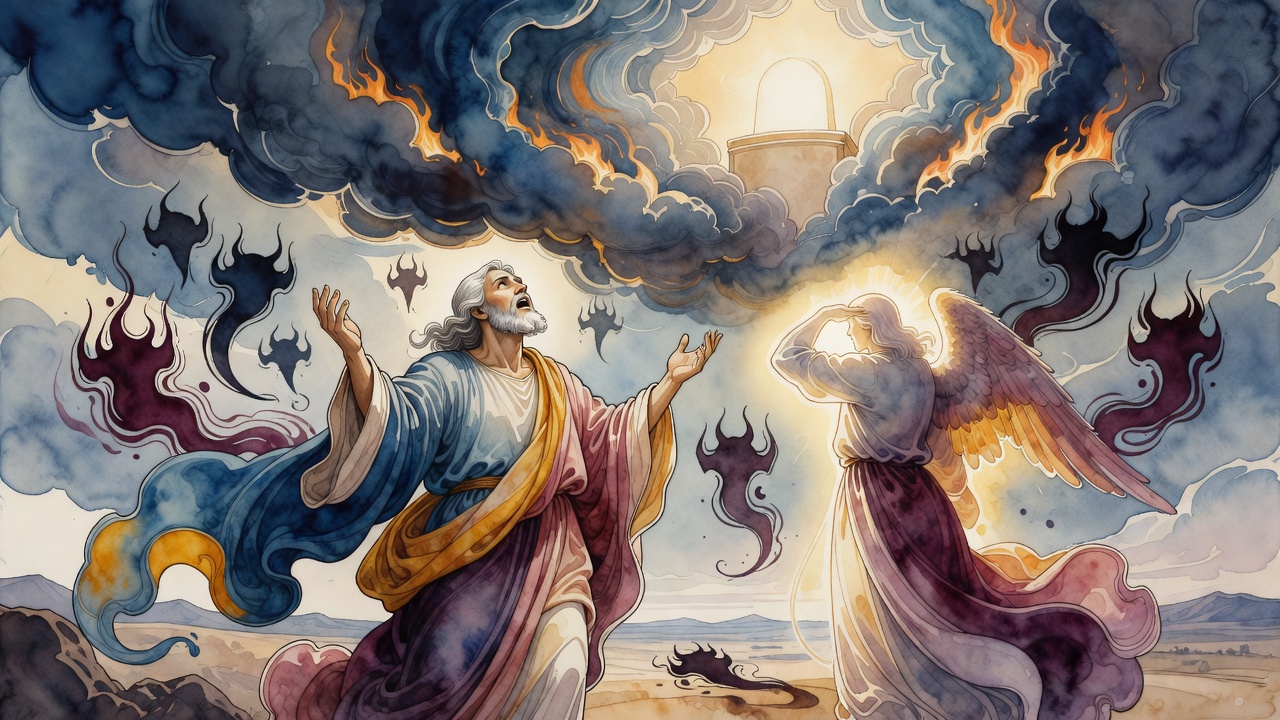
When acceptance finally came, Moses blessed the justice of the Rock. He wrote the Name and the song. Angels sent for his soul refused, all but Samael, who still trembled at Moses' radiance. Moses struck him with the staff and blinded him. Then God Himself came down with Michael, Gabriel, and Zagzagel. The soul would not leave a body so clean. God promised it honor above and took Moses with a kiss on the mouth.
Heaven and earth and Israel mourned. The memory of the righteous is for a blessing. The man who could not enter the land entered death under the mouth of God, not under the mockery of the accuser who had hoped for a cheaper ending.
The Border He Could Not Cross
So the end of Moses is not a quiet expiration. It is war in prayer, oath against petition, a word that once praised and now decrees, an angel of death humiliated, and a kiss that succeeds where five hundred fifteen pleas failed. The land stays closed. The Name stays praised. Leadership passes because even the greatest life has a line it may not redraw.
Stand on that last mountain in the mind. Behind him, a people he carried. Before him, a country he may see and not tread. Above him, gates once shut against his voice and then a descent of glory. The drama is the limit of advocacy. The same mouth that saved a nation cannot save its own crossing. That limit is taught as justice, not as spite, and the kiss is taught as love inside the refusal.
Israel will enter without him. The Torah will still carry his voice. Samael will not own the last scene. God will. That is the hard mercy of the midrash: a death refused for so long, then taken by a kiss, so that the people learn both how to plead and how to stop when the Rock has spoken enough.
← All myths