Moses Refused to Let Death Take Him Quietly
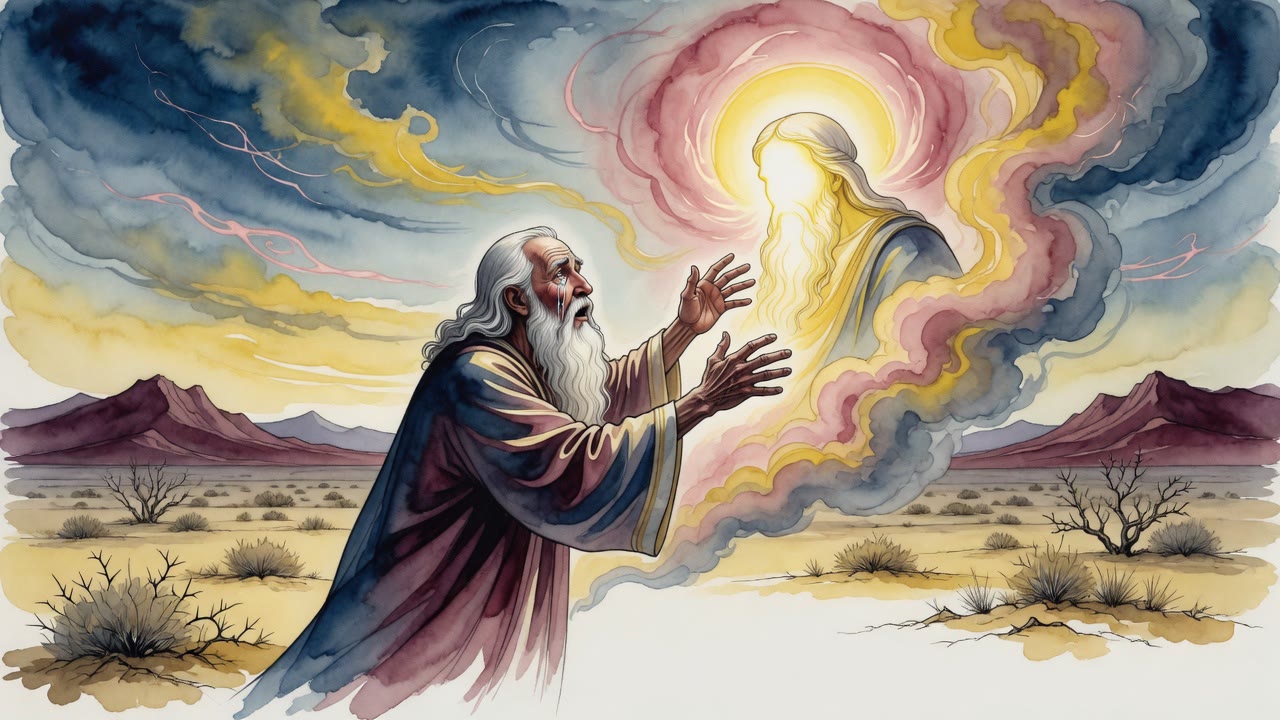
The Angel of Death came into the tent, and Moses spoke the Ineffable Name at him until he fled. On the third approach Moses met him with open hands.
Table of Contents
Moses did not walk quietly into death.
 Click for full size
He had stood inside the dark cloud, heard the voice at Sinai, carried tablets down to a people already breaking them, and dragged Israel through hunger, thirst, rebellion, plague, and mercy. When God told him the days had drawn near for him to die, Moses did what he had always done when a decree crushed Israel or himself.
He argued.
The Word Became a Sword
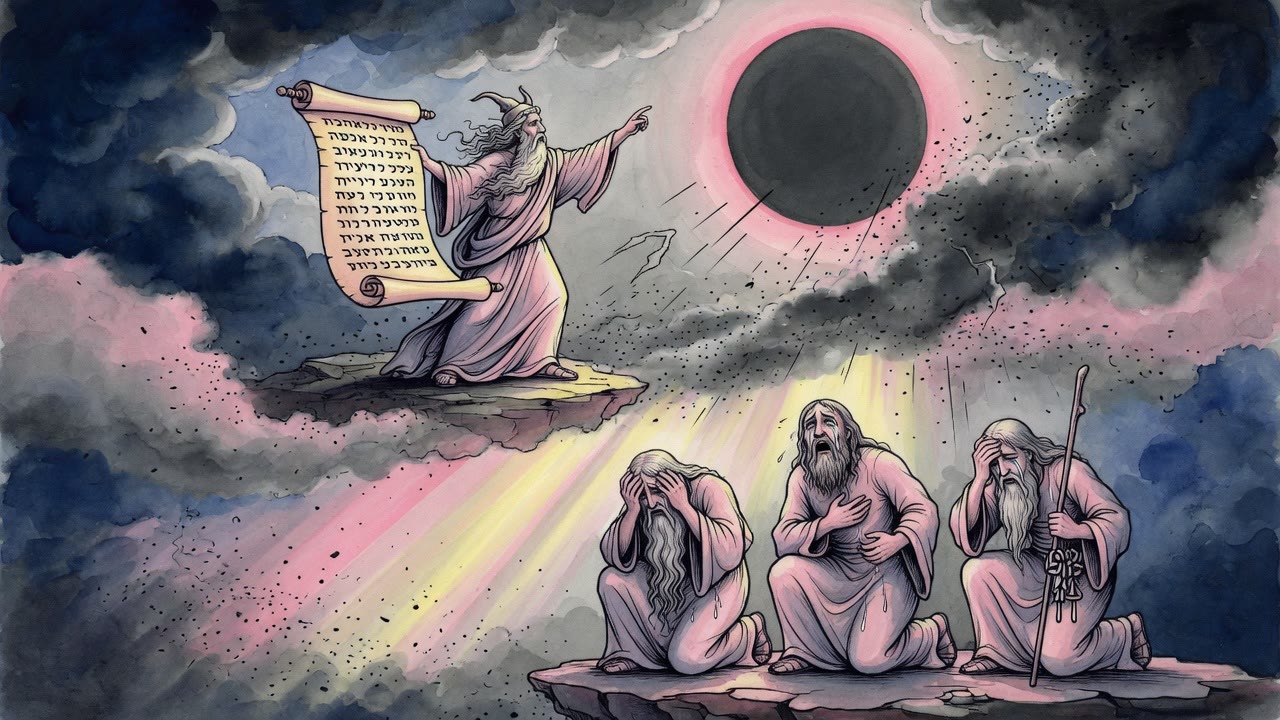
The sentence began with a word Moses knew well: hen, behold. He had lifted it once in praise. "Behold, the heavens and the heaven of heavens belong to the Lord your God" (Deuteronomy 10:14). Now God turned the same word back on him. "Behold, your days draw near to die" (Deuteronomy 31:14).
Rabbi Abbahu caught the cruelty of that reversal in a parable. A nobleman found the finest sword in the world and brought it to the king as a gift. The king admired the blade, then ordered the nobleman's head cut off with it. Moses had handed God a word of praise, and God made the word into the instrument of his death.
Moses refused to pretend acceptance. "I climbed to the heavens," he protested. "I entered the dark cloud where You dwell. I spoke with You face to face and received the Torah from Your hand. Was all of it only so my body could become food for worms?"
The Case Against the Fathers
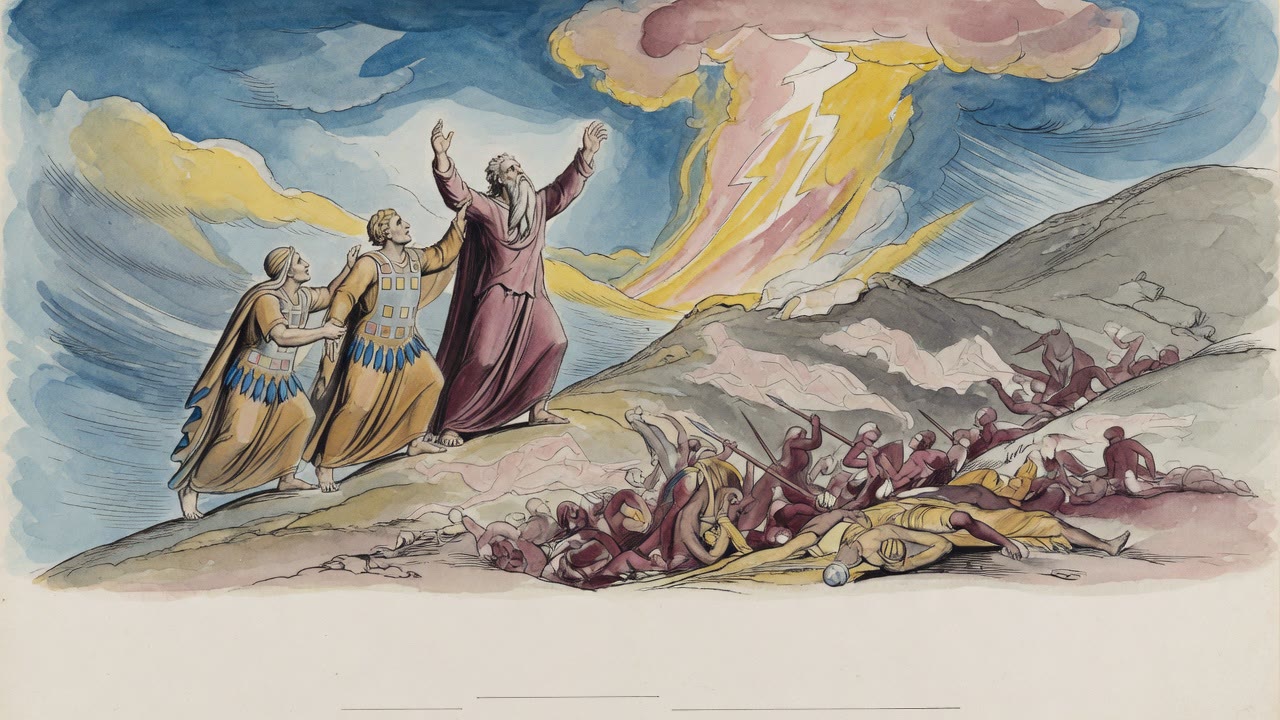
God answered with precedent. Death had already been decreed over the first Adam. Moses would not let the comparison stand. Adam was given one easy commandment and broke it; Moses had carried six hundred and thirteen. God named Abraham. Moses answered that Abraham fathered Ishmael. God named Isaac. Moses answered that Isaac fathered Esau, who would one day burn the Temple. God named Jacob, and Moses could only say that Jacob's sons had all served heaven, not one gone astray.
Behind the roll call stood a verse that closed like a door: "Who is the man who lives and does not see death?" (Psalms 89:49). Abraham had walked out of a fiery furnace, and still he expired (Genesis 25:8). Isaac had stretched himself on the altar under his father's knife, and still grew old not knowing the day of his death (Genesis 27:2). Jacob had wrestled an angel until dawn, and still the time approached for Israel to die (Genesis 47:29). Rabbi Hanina told of a pleading spirit, Pisqonit, who stands before the King like a senator with the ledger open: Abraham tasted death, and so did Nimrod the wicked; Moses will taste it, and so did Pharaoh. All flesh goes to one place. What then did the righteous gain? Solomon's answer came back quietly: the souls of the righteous are stored beneath the Throne of Glory.
The Orphan Bride's Plea
When precedent failed, Moses changed his plea. The sages told it as a parable of a king who saw an orphaned woman and wanted to marry her. Seven times he sent to propose, and seven times she answered, "I am not fit to marry the king." At last she consented. Years later, when the king grew angry and moved to divorce her for another, she said, "I have no shame if you send me away, for it was you who sought me. Only do not do to the next wife what you have done to me."
So Moses at the thornbush had spent seven days saying, "I am not a man of words" (Exodus 4:10), and God had courted him into the mission anyway. Now, told he would not cross the Jordan, Moses answered in the orphan bride's voice: "You began this. I have no shame in being turned back. Only do not do to the one who brings them in what You have done to me. Let him go before them" (Numbers 27:17). He begged for Joshua's sake what he could no longer have for his own. And God closed the hearing: "It is enough for you; do not speak to Me of this matter again" (Deuteronomy 3:26).
Creation Refused to Hide Him
Moses turned outward. He asked heaven and earth to intercede, then the mountains and hills, the sea, the wilderness, the sun and moon and stars. The sea could remember splitting. The wilderness could remember manna falling into the morning silence. Sinai could remember trembling under the voice. None of them could overturn what had been sealed.
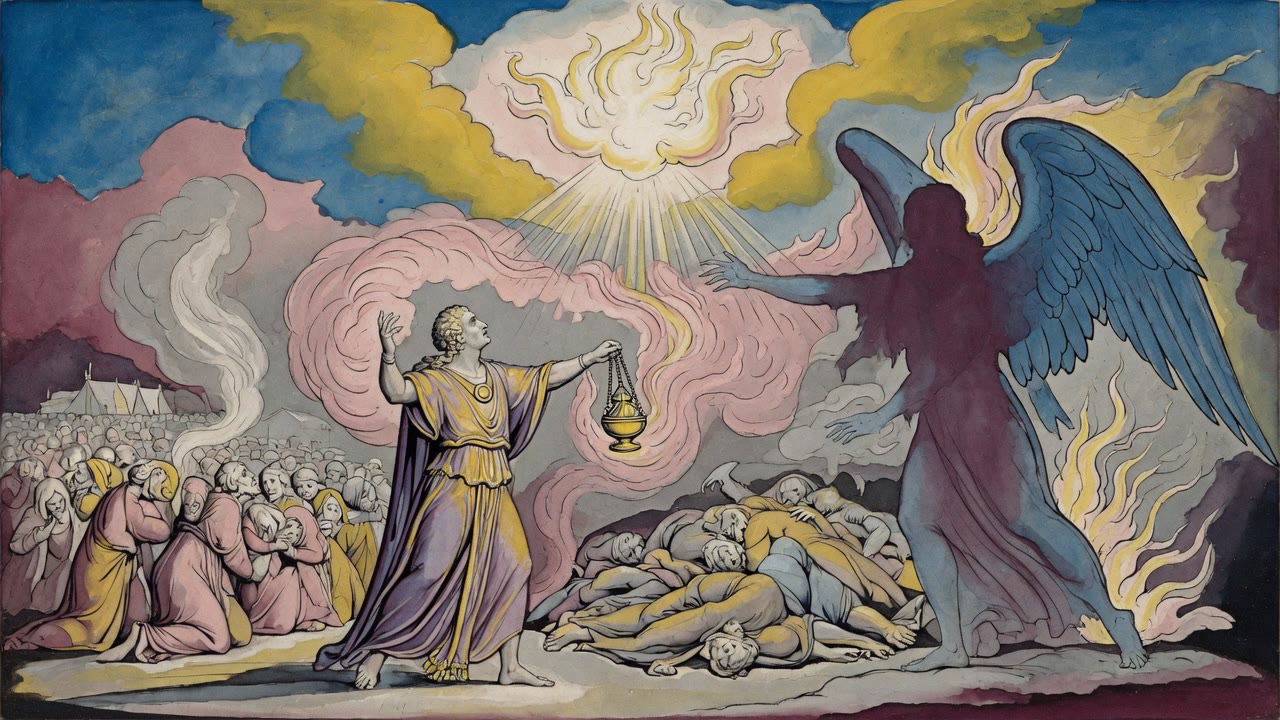
He knew already how it felt when the closest voices fail. Years before, his own brother had spoken against him, Aaron beside Miriam, over the Cushite woman he had married (Numbers 12:1). The sages pictured two snakes at a crossroads, one venomous, one harmless, and a bewildered snake charmer asking why the harmless one keeps such company. Miriam's words Moses could fathom. But Aaron, "my ally, who ate my bread" (Psalms 41:10), the brother who had stood with burning incense between the dead and the living, that bite had no reason in it. Now every voice had failed or fallen silent, and God had commanded his own voice to stop.
The Angel Came Three Times
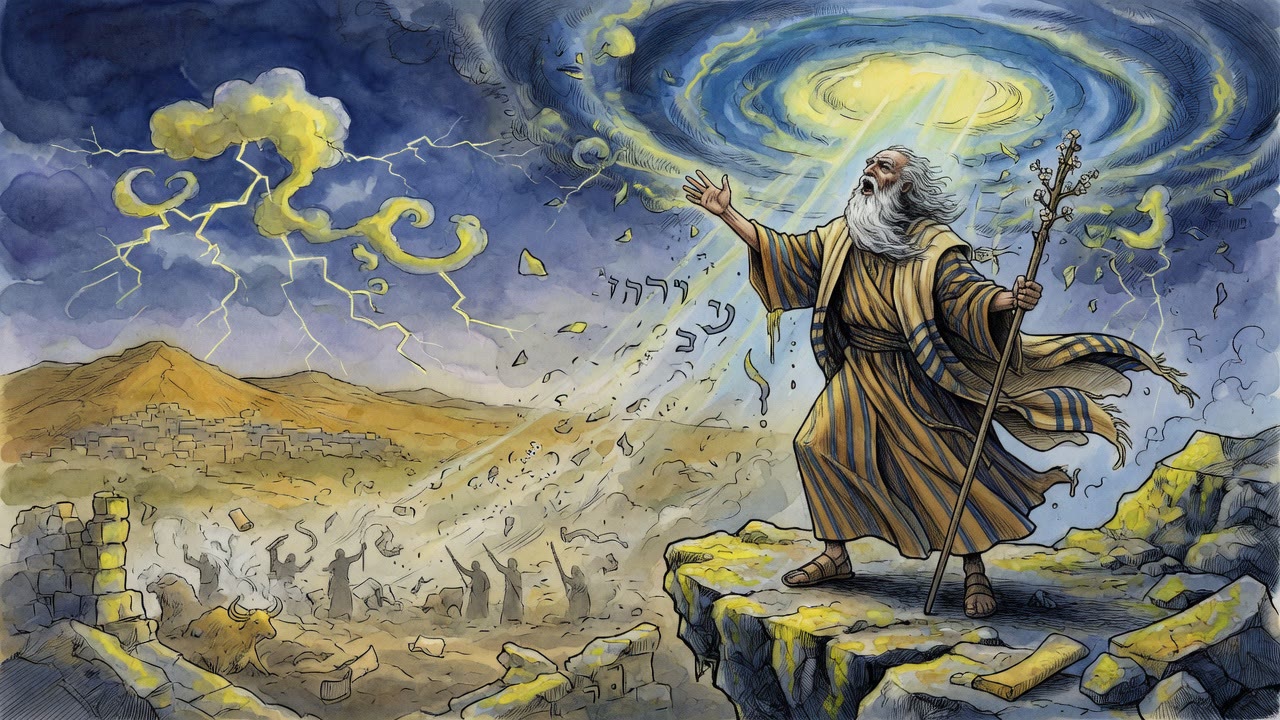
Then the Angel of Death was sent. "The Holy One has sent me," the Angel announced. "You are departing today." Moses looked at the creature that had emptied every generation and refused. "Go from here. I intend to praise the Holy One. 'I shall not die but live, and tell the deeds of the Lord'" (Psalms 118:17). The Angel pressed him: heaven and earth already praise Him every hour. "Then I will silence them and praise Him myself," Moses said. "Listen, heavens, and I will speak" (Deuteronomy 32:1).
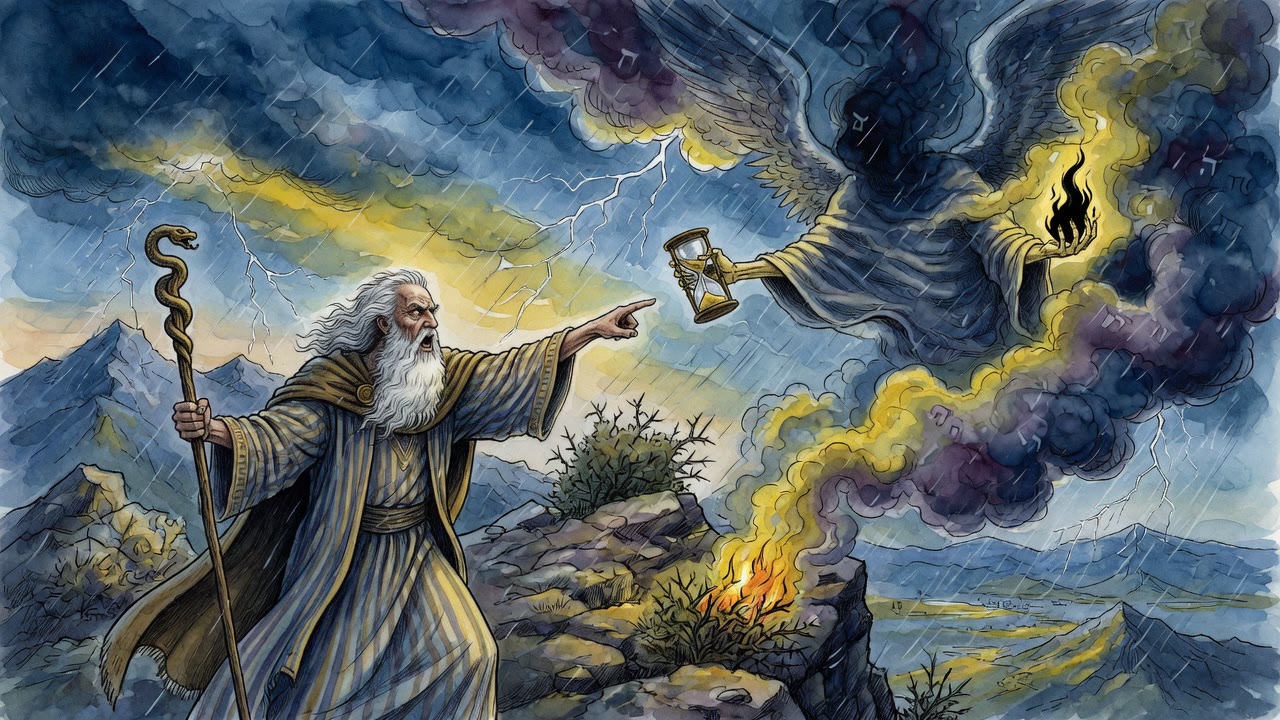
The Angel came a second time. Moses spoke the Ineffable Name at him, and the Angel fled the tent. On the third approach Moses stopped him with open hands. "The decree is from the Lord," he said. "I accept the judgment. The Rock, His work is perfect" (Deuteronomy 32:4).
Even surrender kept its precision. "Woe to my feet that never walked in the Land of Israel. Woe to my hands that never plucked its fruit. Woe to my throat that never tasted the milk and honey."
The Soul That Had to Be Persuaded
At the last, God did not leave the work to the Angel. Moses spoke with his own soul. He asked whether it feared the Angel of Death, whether it wept at leaving, whether it dreaded judgment. The soul answered out of the psalm: "You rescued me from death, my eyes from tears, my feet from stumbling. I will walk before the Lord in the land of the living" (Psalms 116:8-9). Moses gave it leave. "Return, my soul, to your rest" (Psalms 116:7).
God Himself drew the soul out by His mouth, the same mouth that had spoken to Moses from the thornbush, from Sinai, and from between the cherubim for forty years. Below, Israel answered, "Torah, Moses commanded us" (Deuteronomy 33:4). He died on the seventh of Adar, one hundred and twenty years to the day from his birth, because God completes the years of the righteous exactly, "I will fill the number of your days" (Exodus 23:26). Not a day more. Not a day less.
He fought it all the way there.
← All myths