God Found Israel in the Desert and Moses Never Entered the Land
Moses asked heaven for two more years in the land and was refused. Then he asked to be carried in dead, and he was refused that too.
Table of Contents
 Click for full size
The Quarrel at the Waterless Camp
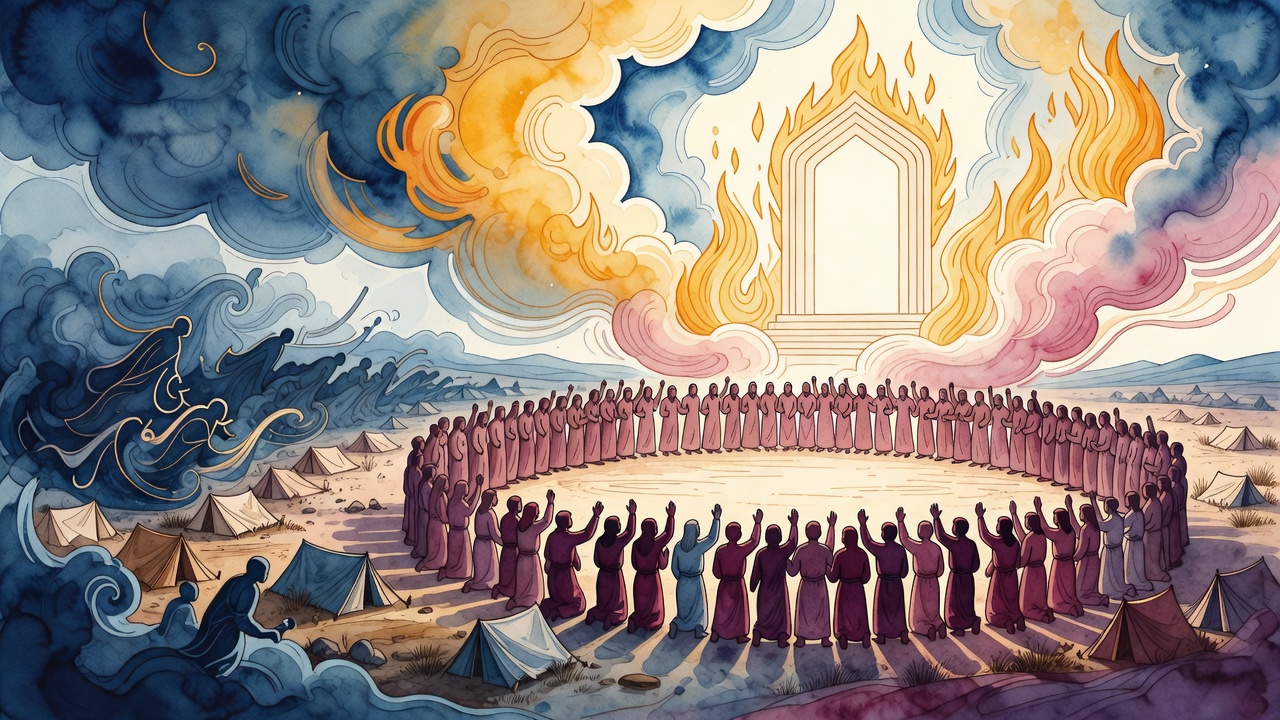
They came at Moses and Aaron in a crowd, with their grievances counted out in order.
"Fourteen thousand seven hundred of our men died in the plague," they said. "That was a heavy blow. Harder was the ground opening and swallowing the others alive. Hardest of all were the men burned up at the incense, and we are not allowed to forget them, because the plating on the altar was beaten out of their censers. We carried all of it. We would rather have died with them in one hour than dry out here by inches."
There was no water in that camp. Not in the skins, not in the rock, not anywhere in the yellow country around them.
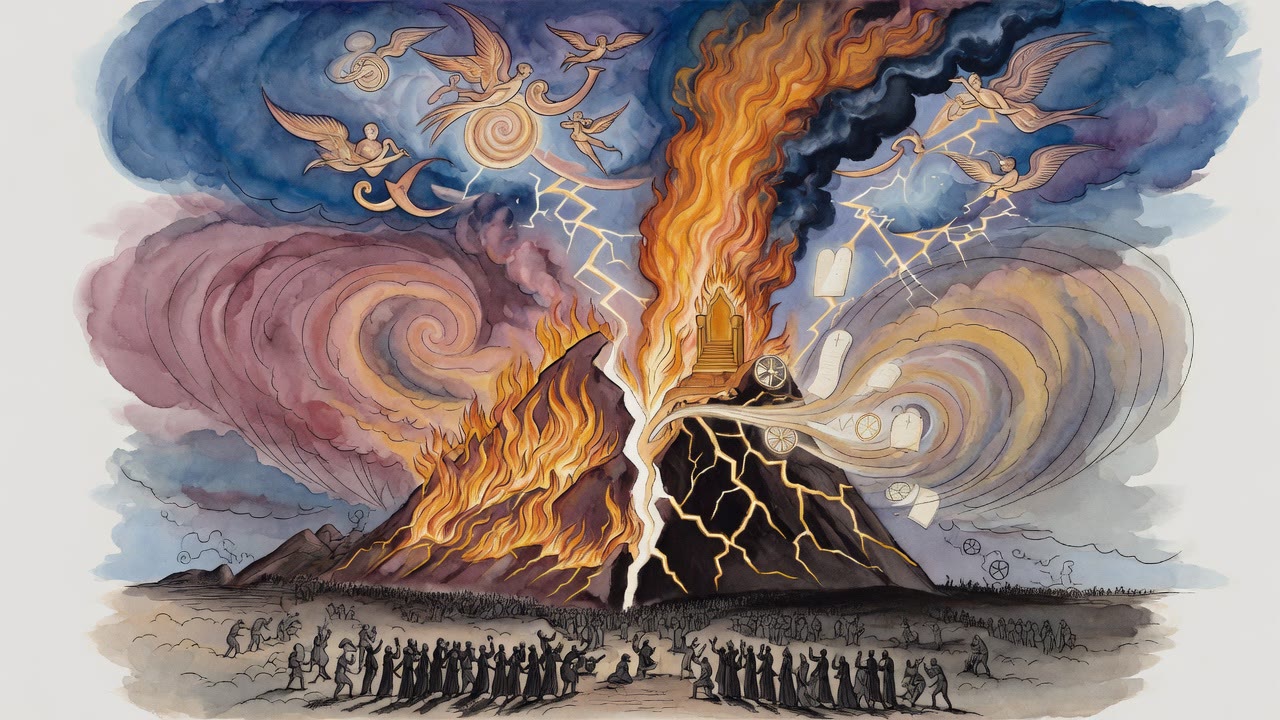
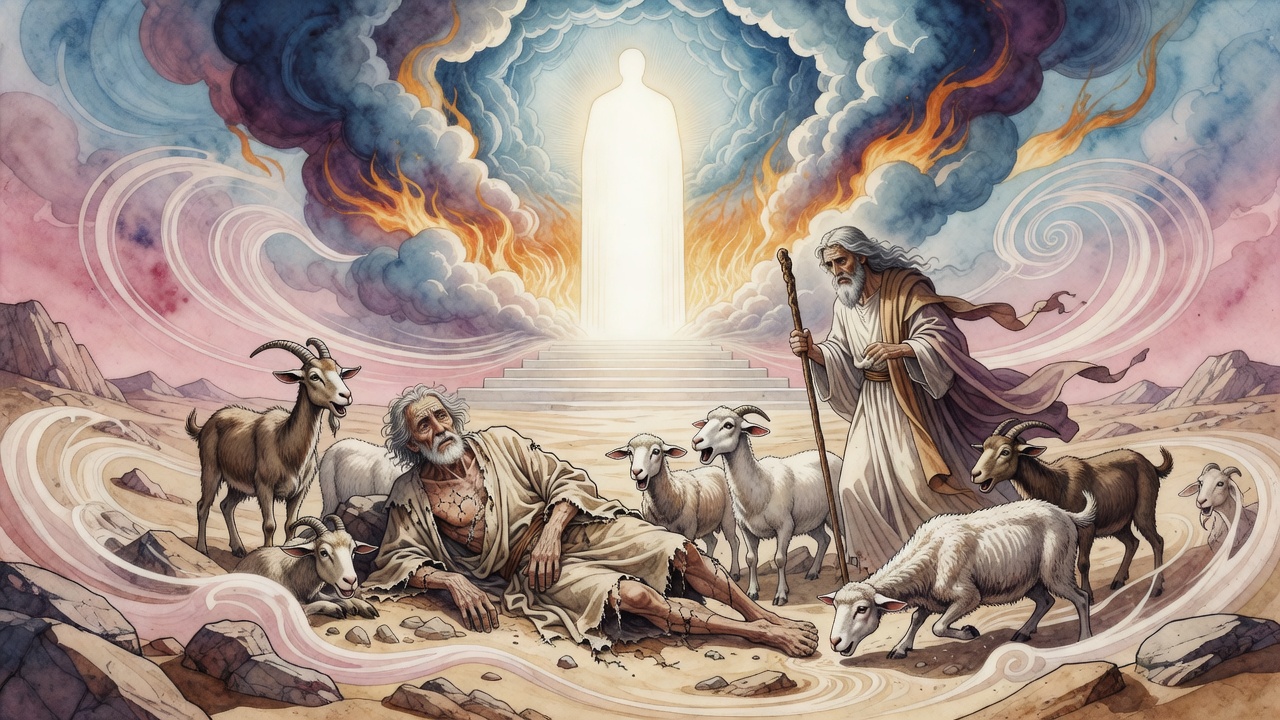
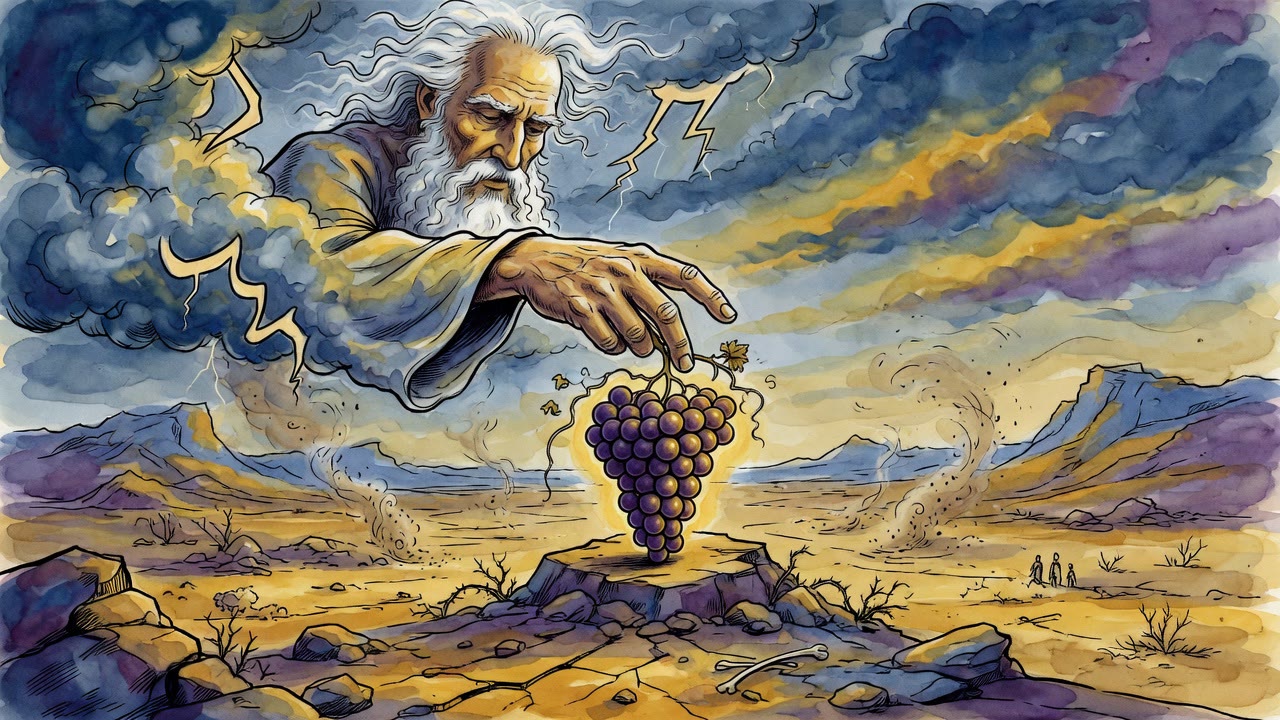
This was the people God had gone looking for. He found them in a desert land, in a howling waste, a place of raiders and fever and thieves, the way a man finds grapes growing where no vine has any business growing. He set a boundary rope around them at the mountain and taught them there. One word left His mouth and they heard inside it every law it would ever carry, every leniency, every stringency, the whole future argument of the Torah folded into a single sound.
The Word at the Rock
Moses lifted the rod in front of them all.
"Listen, you rebels," he said. "Are we to bring you water out of this rock?"
He struck it twice. Water came, enough for the whole camp and every animal in it. The people drank. And while they were still drinking, the answer arrived for the man who had spoken. Because you did not sanctify Me in the eyes of Israel, you will not bring this assembly into the land.
The Sword He Gave the King
Before that year was out the sentence came due. Behold, the days draw near for you to die.
"Master of the world," Moses said, "is it for nothing that my feet walked in the thick darkness? Is it for nothing that I ran ahead of Your children like a horse? Is the worm to be the end of me?"
A man of the court once found a sword with no equal anywhere. He said, "A blade like this is fit only for the king," and carried it up as a gift. The king took it, weighed it in his hand, and said, "Cut off his head with it." Moses had handed God a word in the same spirit. Behold, he had said, the heavens and the heaven of heavens belong to the Lord your God. Now the same word came back at him. Behold, the days draw near for you to die.
"I decreed death over the first man," God said.
"Adam earned it. One easy command, and he broke it."
"Abraham sanctified My name in My world."
"From Abraham came Ishmael."
"Isaac stretched out his neck on the altar."
"From Isaac came Esau, who will burn Your sanctuary down."
"Jacob raised twelve tribes without a flaw in them."
"Jacob never climbed the firmament. His feet never trod the darkness. He never took the Torah out of Your hand, and he never spoke with You face to face."
"Enough from you. Do not speak to Me about this again."
Moses lowered his price. "Let me in for two years. Three. Then let me die there."
"You shall not go there."
"Then carry me in dead."
"Not while you are alive, and not when you are dead."
The Sea Remembered Him Younger
So he went out to look for advocates.
He asked heaven and earth to beg mercy for him. They told him to ask elsewhere, since the heavens were going to vanish like smoke and the earth wear through like a coat. He asked the stars and the planets, which were rotting on their own schedule. He asked the mountains and the hills, which were already promised to be shaken loose.
Then he went down to the Great Sea, and the water knew him.
"Son of Amram," it said, "what is different about today? Are you not the one who came at me with a rod and struck me and split me into twelve parts? I could not stand up to you. The Presence was walking at your right hand."
Moses stood on the wet sand and cried out. "When I crossed you I was a king over the world. Now I am flat on the ground and nobody will hear me."
The angel of the Presence came to him last. "My master Moses, why wear yourself out? I heard it from behind the curtain. Your prayer is not accepted on this matter."
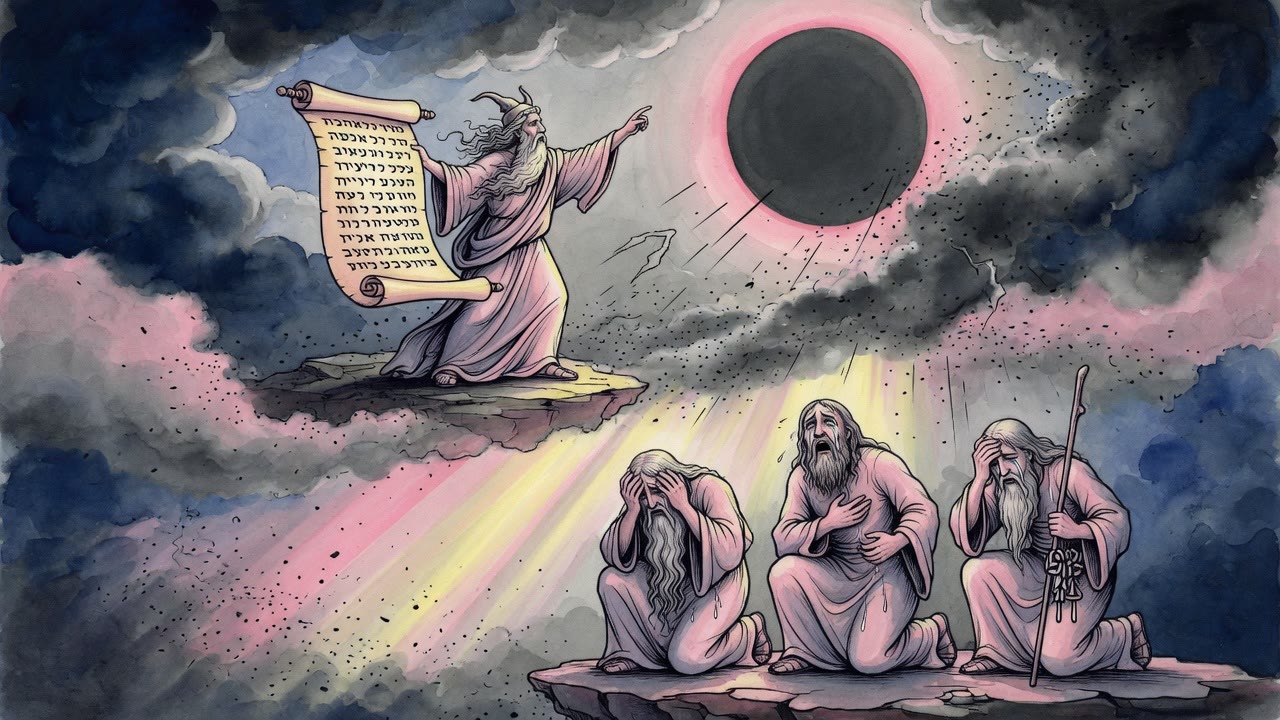
Moses put both hands on his head and sobbed. "Then with whom am I supposed to plead?"
The Teacher at His Student's Door
"Until now it was your turn to serve before Me," God said. "Your turn is finished. The time of your student Joshua has come."
"If I am dying on Joshua's account," Moses said, "let me go and be his student."
"Go, then."
He got up early and walked to Joshua's door. Joshua was already seated inside, expounding Torah to the men in front of him. Moses bent himself down at the doorway and laid his hand over his own mouth, the way a student waits to be noticed.
Joshua's eyes were held shut to him. He did not look up. He was not permitted to look up, so that Moses would feel it and let go of his life.
Israel came to Moses' door for the morning lesson and found nobody there. Someone said he had gone out early to Joshua's house. They walked over and found Joshua sitting and Moses standing.
"What has come over you," they said to Joshua, "that our master is on his feet while you sit?"
Joshua raised his eyes. He saw. He tore his clothes down the front and wept out loud. "My master, my master. My father, my father and my lord."
And Israel turned to the old man in the doorway and said, "Teach us Torah."
← All myths