Moses Sang Israel's Coming Betrayal on His Last Day
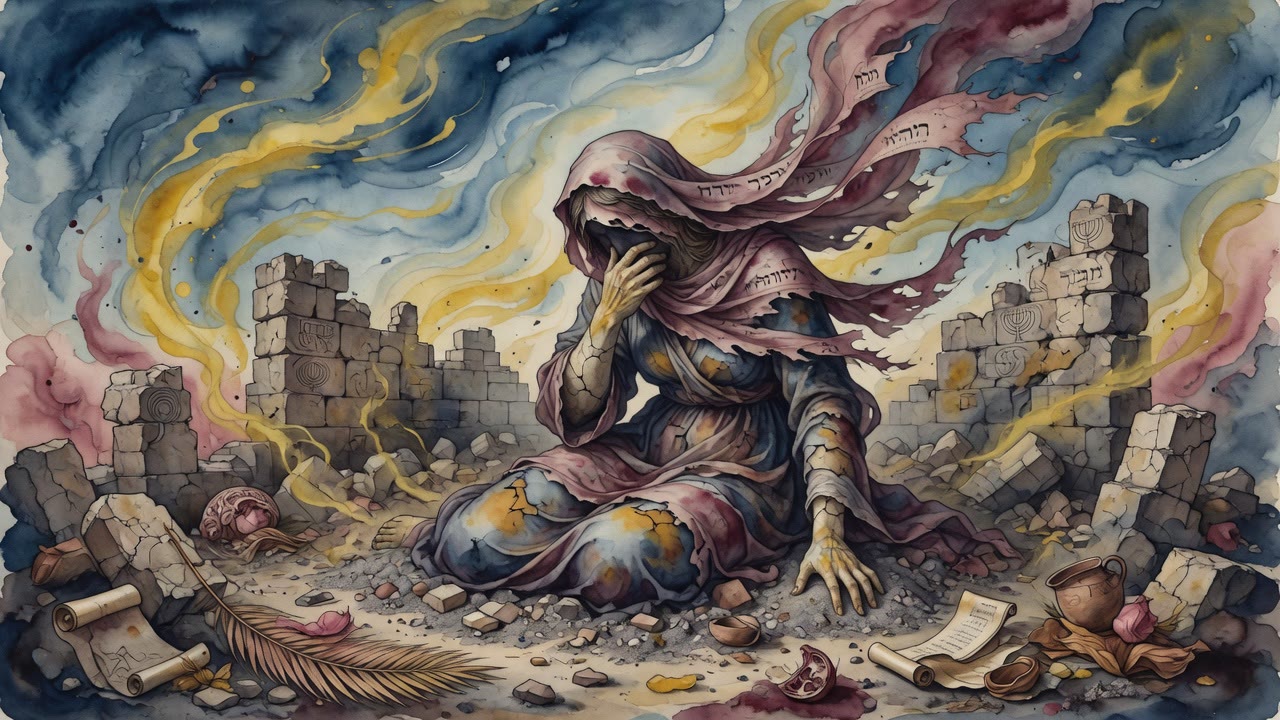
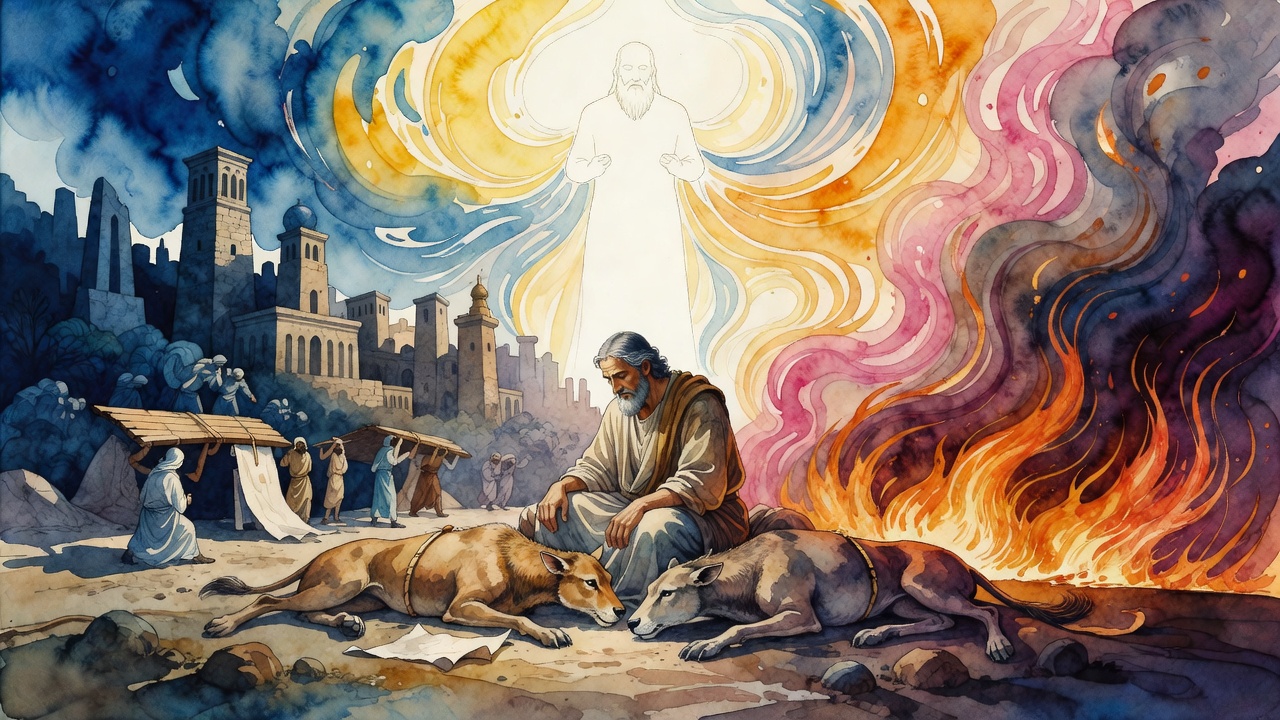
On the last day he called the heavens first, then the earth. Human ears would fail. The song had to outlive the man who sang it.
Table of Contents
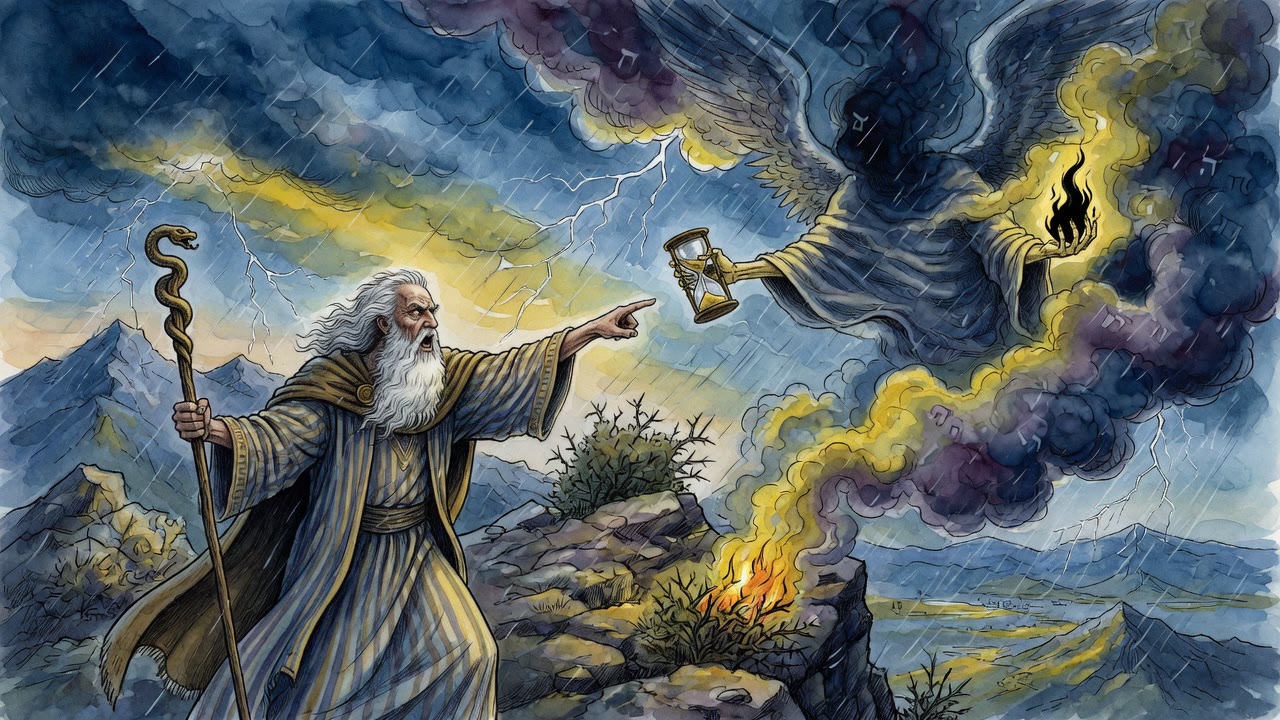
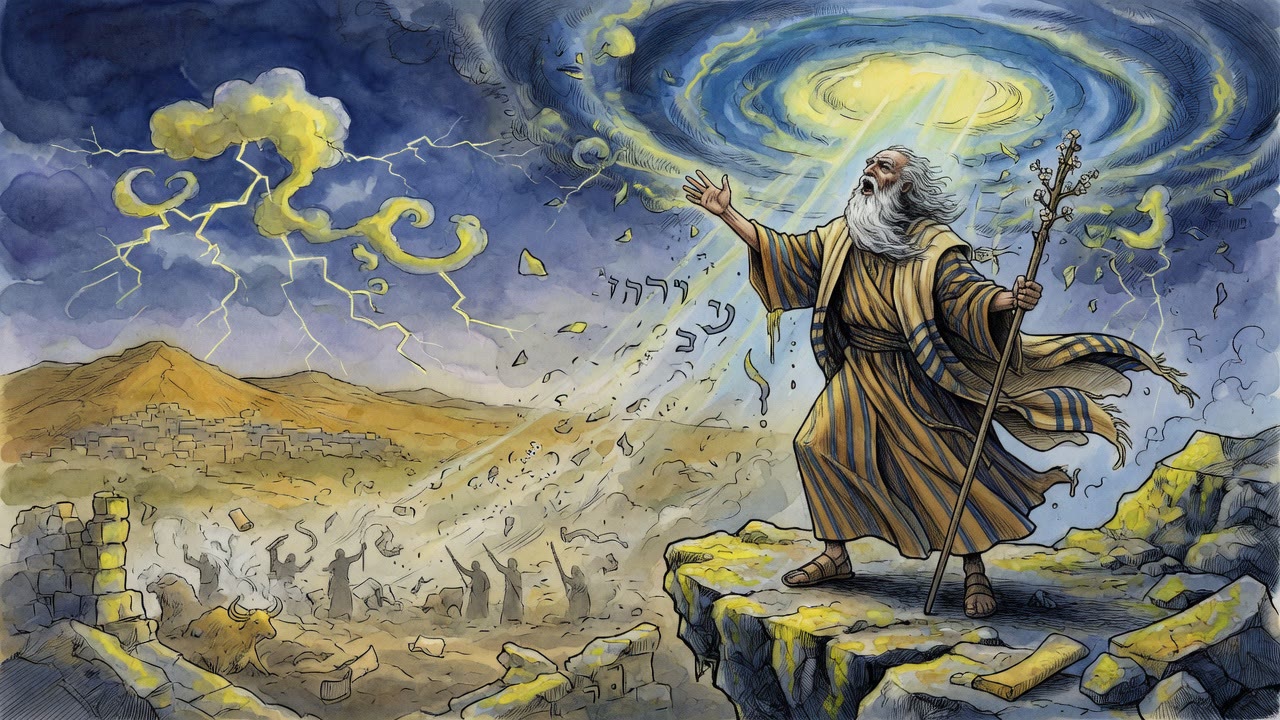
Moses stood near the edge of death with Israel gathered before him and called the heavens to listen. Then the earth. Human ears would fail. Generations would turn away. So he summoned witnesses older and wider than the camp.
 Click for full size
He was close to the heavens on that last day, closer than to the dirt of a land he would not enter, so he addressed the sky first. Listen. Then he asked the ground to hear. The future betrayal had already been told to him. He sang it anyway.
He Called Heaven Before Earth
This was not suspicion born from weariness. God had told him. Israel would grow full, kick, turn to strange service, forget the Rock that had carried them, and meet the fruit of their own changing hearts.
The old leader had argued for them after the calf, pleaded after rebellion, fallen on his face when plague moved through the camp. Now he did something harder. He gave them a song that could stand against them when they later claimed not to know. Melody would become witness. Poetry would remember what people tried to forget.
He did not spend the last song comforting them. He spent it making a record that could walk into exile without him.
Let My Teaching Fall Like Rain
"Let my teaching flow like rain," he sang. "Let my speech come down like dew."
The Aramaic translators made the rain fragrant. Instruction would not only fall. It would be received like scent after dry ground opens. His words would be accepted like dew, not forced into the earth but welcomed by it.
That small change held the wound of the whole song. Torah comes down. Israel still must receive it. Rain can strike closed ground and run off. Dew can settle unnoticed. The future betrayal would not happen because heaven failed to speak. It would happen because listeners refused to let the words enter.
No Injustice Comes From the Rock
He named God's justice before he named Israel's corruption.
"The Rock, His work is perfect. All His ways are judgment." The Aramaic sharpened the line: injustice does not come from before Him.
That mattered because the song would later describe punishment, exile, hunger, sword, terror, and shame. A wounded people might look back and blame heaven. Moses cut that path off before it opened. God had not twisted them. They had changed their own deeds and become changed by them. Sin was not a storm that happened to Israel. It was a turning they walked into with their own feet.
The Eagle Over the Nest
Then the song softened.
God was like an eagle over its nest. An eagle stirs the young, pushes them toward flight, makes the safe place unstable. The Aramaic added protection. God rouses and guards. God hovers and bears. He stretches out his wings, takes them, upbears them with the strength of his pinions.
Israel's wilderness had always felt like falling. Sea behind them. Desert before them. Food from morning. Water from stone. Law from fire. The nest kept shaking, but the wings never vanished.
Moses had lived inside that contradiction for forty years. He had watched God unsettle and carry the same people, rebuke them and feed them, expose them and shield them. He put the eagle in the song so they would have the picture when the nest shook again after he was gone.
The Letter Completed His Name
He was leaving. The five books were not. The letter hei (ה), the fifth letter, the sign of Torah's five books, had been bound to him until the name Moshe was complete. He would not cross the Jordan. The teaching would. The right hand of revelation was still opening over a man who had been told to look and not step.
He could die outside the land and still leave Israel a song with rain in it, dew in it, justice in it, eagle wings in it, and a warning that would outlive every excuse. There was mercy in the severity. A witness song can accuse, but it can also call a people back by proving that the path home had been known before the fall.
The people would cross without him. The song would cross with them. It would outlive the mountain where he stopped. He sang the future betrayal on his last day so that, when the betrayal came, no one could say the words had not already been in their mouths.
← All myths