6 min read

Hezekiah Opened the Ark and Pointed at the Tablets

Babylonian envoys came to honor the king's God. So Hezekiah opened the Ark, pointed at the tablets, and boasted that they won his wars.

Curated by Arthur · Told by Maggid ·
Table of Contents
  1. The King Spread Out His Treasures
  2. He Opened the Holy Ark
  3. The Prophet Came to the Door
  4. The King Was Glad of His Own Days

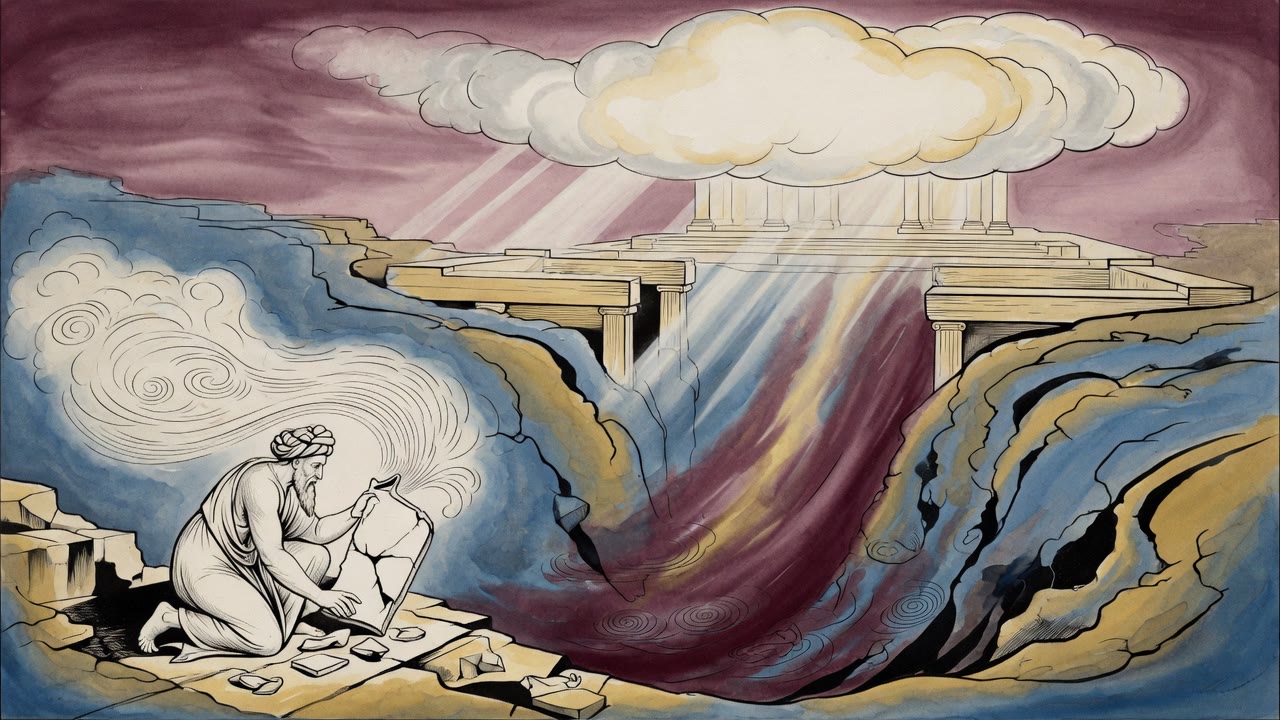
The envoys came up the road from the east with their gifts wrapped in cloth, and the gatekeepers of Jerusalem watched them climb. Word had run ahead. The king of Babylon had sent men to the city, and the men of the city wanted to know why. Sickness had nearly taken Hezekiah a little while before. He had turned his face to the wall and wept and prayed, and his life had been lengthened by fifteen years (Isaiah 38:5). Now a far empire had heard of it and sent a delegation to acknowledge the power that had done such a thing.
The power they meant was God. The honor belonged to God. Hezekiah, standing in his hall while the envoys bowed and laid out their letters, did not feel it that way. He felt the bowing as bowing to him. He felt the long journey of these men as a journey made to see him. Something swelled in his chest, a warmth that had nothing of prayer in it, and he decided the visitors should see what kind of king they had come to flatter.

The King Spread Out His Treasures

He called for a meal and seated the foreigners at his table. He sat his wife among them, which a man of his fathers' faith would not have done lightly with men from a heathen court. The wine went around. The talk warmed. And when the eating was finished, Hezekiah rose and led them through his house.

He showed them the silver and the gold. He showed them the storehouses heavy with spices and oil. He showed them the armory and the shields stacked along the walls. He brought out the trophies he had stripped from the camp of Sennacherib, the Assyrian who had besieged the city and lost a hundred and eighty-five thousand men in a single night to the angel of the Lord (2 Kings 19:35). These were not his victories to display. He displayed them.

He did not stop. He showed them a stone of magnetic iron that pulled metal toward itself as if alive. He showed them a strange pale ivory, rare and costly, fetched from far off. There was nothing in his house and nothing in all his rule that he did not open and set before their eyes (Isaiah 39:2). The envoys looked, and nodded, and remembered. Men who measure empires were measuring this one room by room.

He Opened the Holy Ark

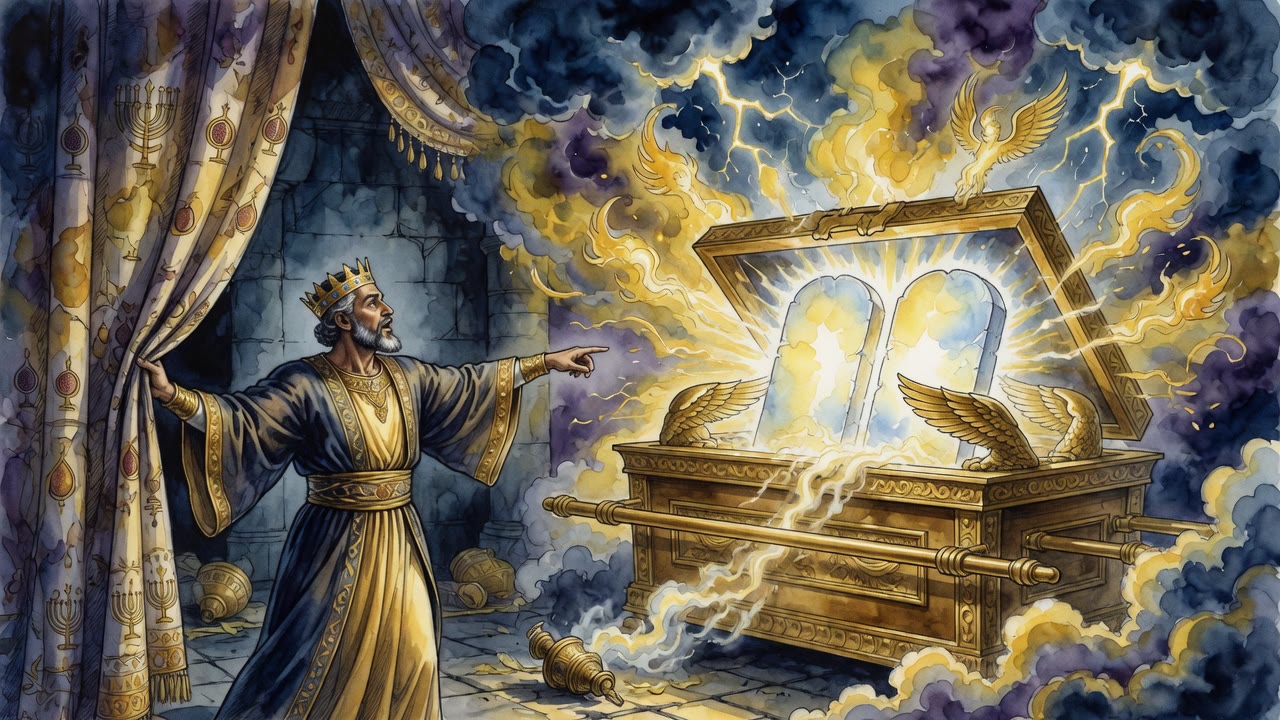
Then he led them to the thing no foreigner had reason to see. He brought them to the Aron Kodesh, the holy Ark, the gold-covered chest that had gone before his people through the wilderness and carried within it the two stone Tablets of the Law given at the mountain. The room would have gone quiet around it. This was the seat of the covenant, the most guarded object in the kingdom, and a man did not open it to satisfy the curiosity of strangers.

Hezekiah opened it.

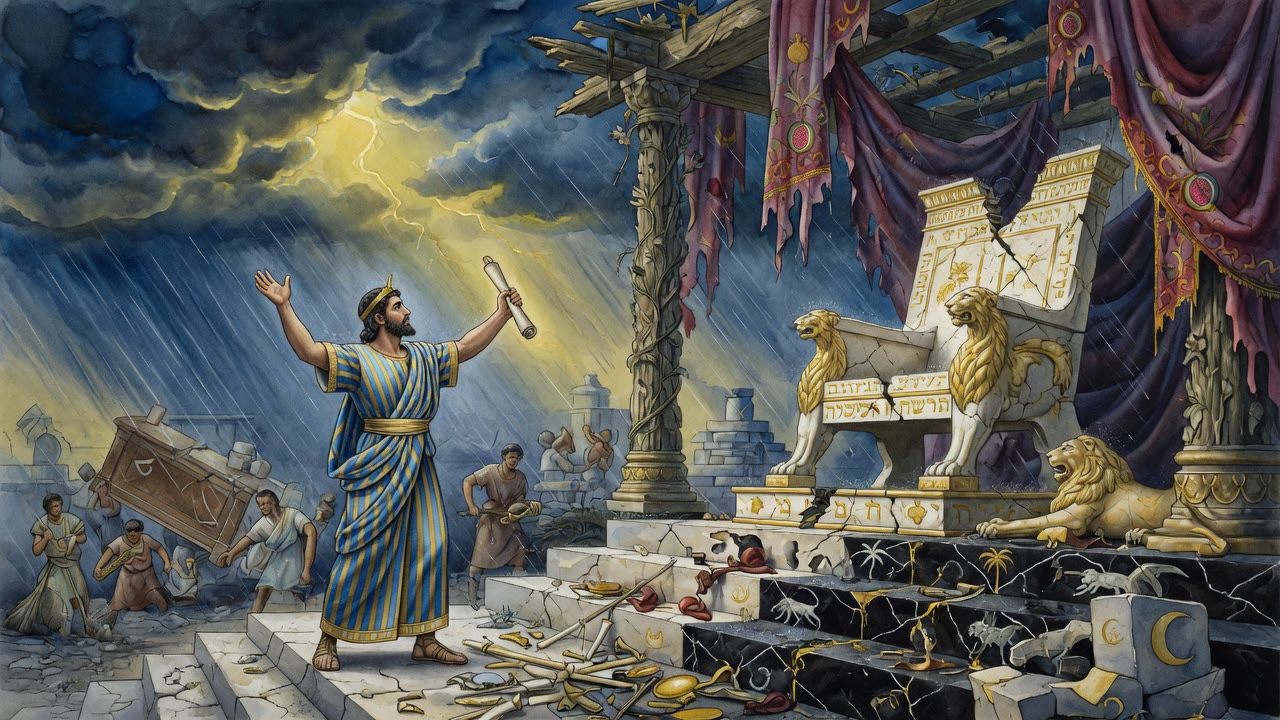
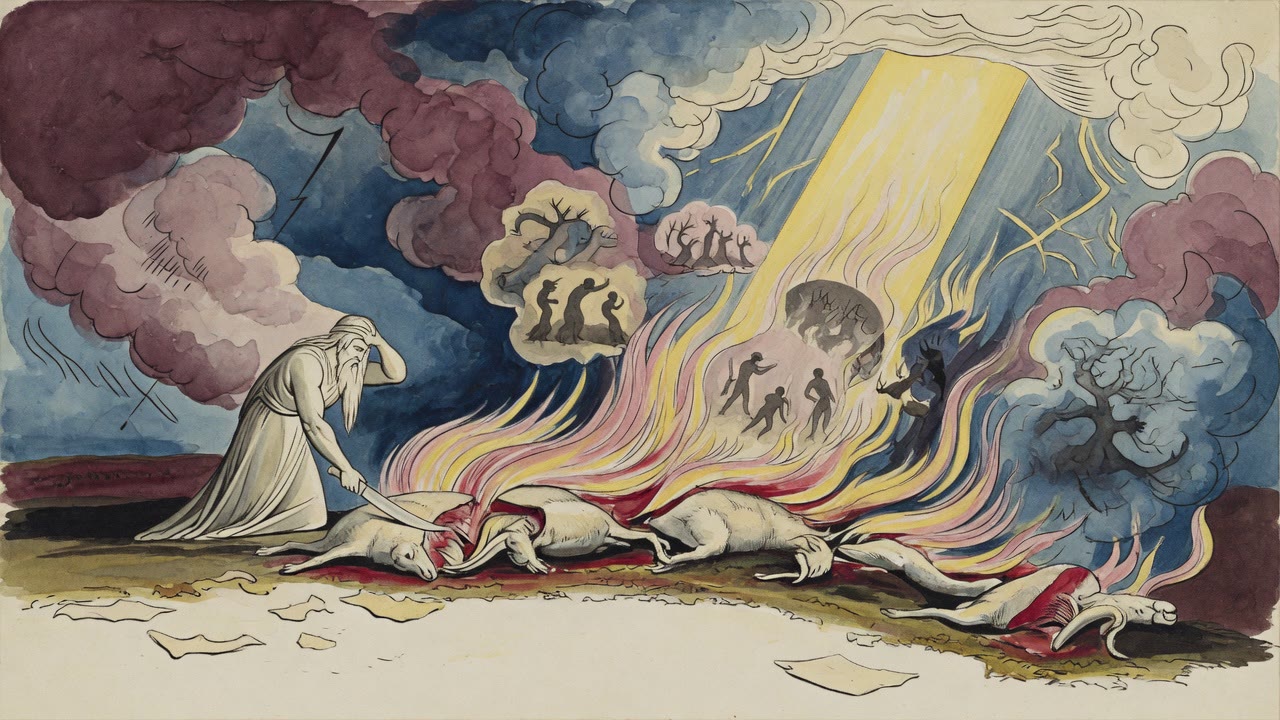
He let the heathen emissaries lean in and look on the tablets, the writing cut into stone by the finger of God. And then he raised his hand toward them and spoke, and the words turned the holiest thing in the world into a charm hung on a wall. "With the help of these," he told them, "we undertake wars and win victories." He pointed at the covenant and called it his weapon. He took the sign of God's faithfulness and offered it to outsiders as the secret of his army.

The Prophet Came to the Door

The envoys went home with everything they had seen folded into memory. And into the hall came Isaiah, who had never been gentle with kings and had no softness to spare now.

He asked plain questions, the way a man does when he already knows the answers and wants the other to hear himself say them. What did these men say. Where did these men come from. Hezekiah answered that they had come from a far country, from Babylon. Isaiah asked what they had seen in the house. And the king, who had hidden nothing from them, could hide nothing from the prophet either. They had seen everything, he said. There was nothing in his stores he had not shown them.

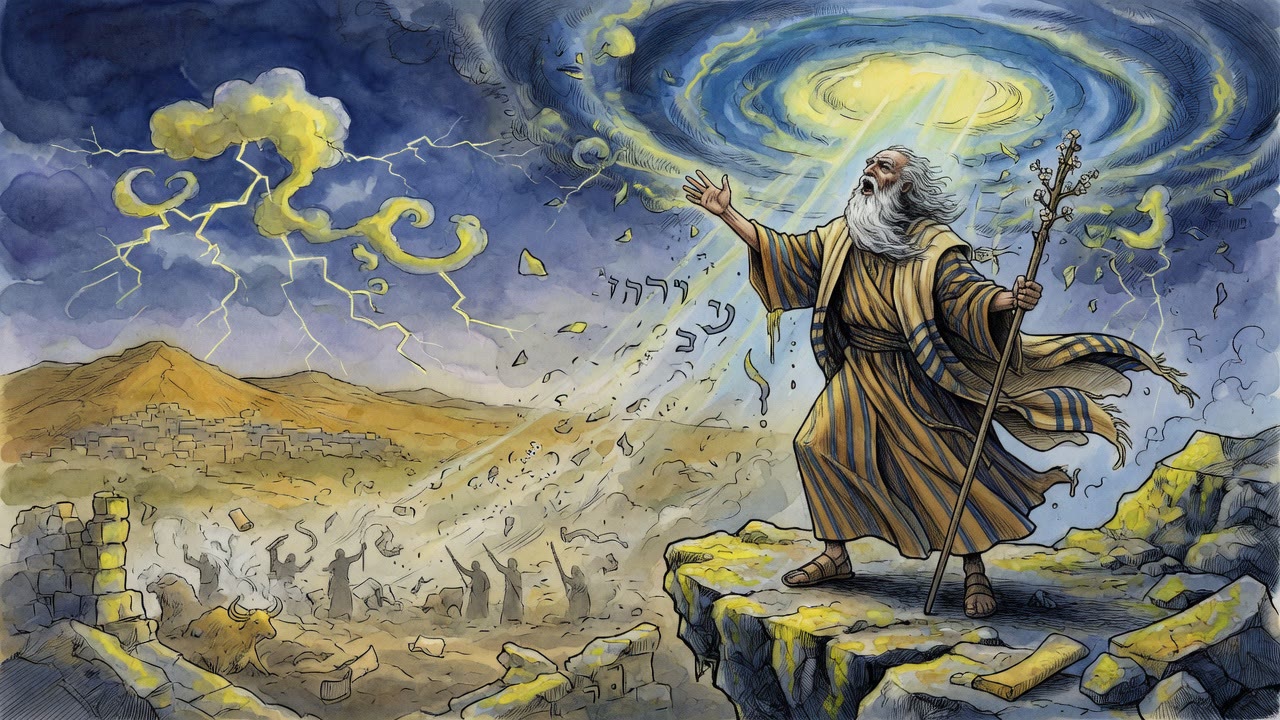
The prophet did not soften it. The day was coming, he said, when all of it, every treasure the king had paraded and every thing his fathers had laid up, would be carried off to Babylon. Nothing would be left (Isaiah 39:6). The very men who had bowed in the doorway would send their sons to empty the house. And the king's own sons, born of his own body, would be taken to that far court to serve (Isaiah 39:7).

The King Was Glad of His Own Days

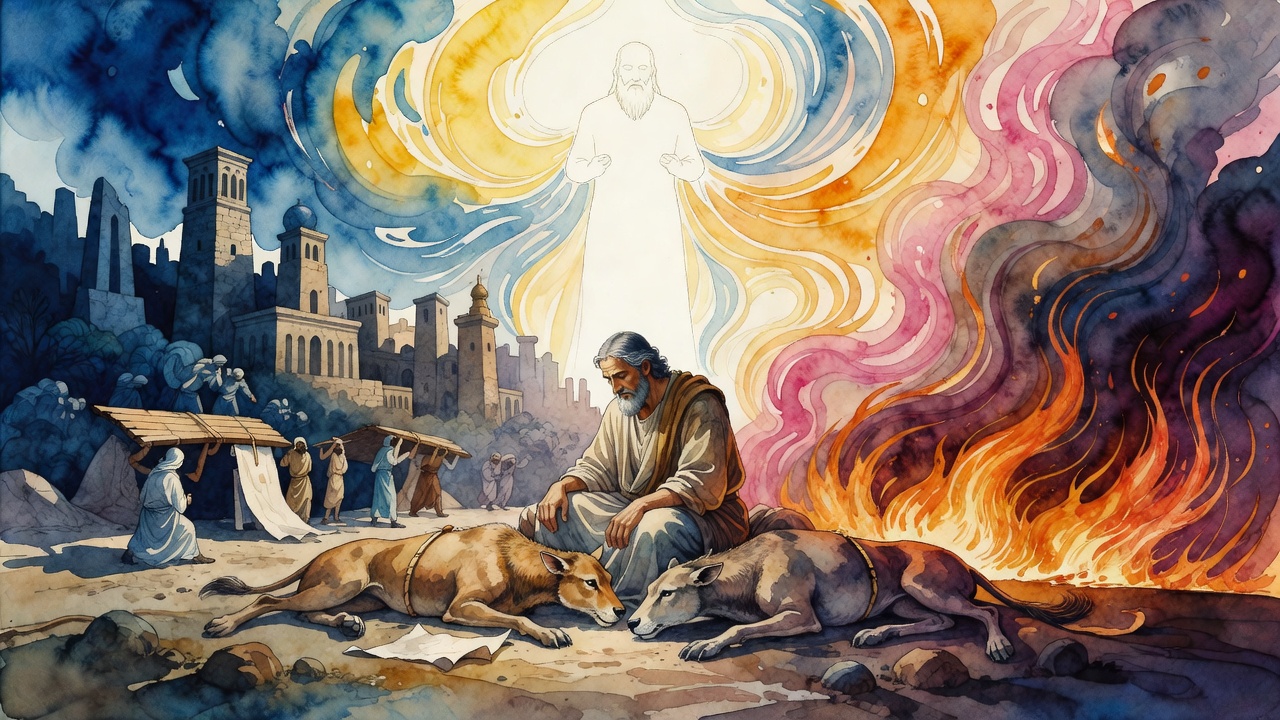
Hezekiah heard the sentence handed down on his children and his city, and what he answered was not a plea. He said the word of the Lord was good. He thought to himself that there would be peace and safety in his own days (Isaiah 39:8). The disaster was set for later, for sons not yet grown, for a generation he would not live to see. He had wept for his own life when it was threatened. He did not weep now for theirs.

The man who had purged the false altars and kept the commandments with rare care, the king even a hard prophet had called righteous, undid a piece of himself in one warm afternoon of vanity. He had been honored as the keeper of the covenant. He treated the covenant as a thing to show off. The honor had come for God, and he had taken it for himself, and the price was named to his face while he was still glad to be alive.


← All myths

From the tradition

Sources

3 sources

The texts this telling draws on, in full. Open a card to read inline, or expand it for a wider, quieter read.

Legends of the Jews 9:39Legends of the Jews

Yet, even he wasn't perfect.

The story goes that when envoys from Babylon came to visit, Hezekiah made some… questionable choices. According to Ginzberg's retelling in Legends of the Jews, he wasn't just showing off his kingdom; he actually had his wife join in the celebratory meal prepared for the embassy.

That might not sound so bad, but remember the context. This was a deeply religious time, and such actions could be seen as… well, let’s just say, not ideal.

Here's where it gets really dicey. Hezekiah opened the Aron Kodesh, the holy Ark, the very vessel containing the Tablets of the Law. And then, Ginzberg tells us, he pointed to those sacred tablets and boasted to the heathen emissaries: "With the help of these we undertake wars and win victories."

Can you imagine? Using the most sacred symbol of God's covenant as a sort of… military endorsement?

The Zohar tells us that such actions are grave offenses. Naturally, God wasn't exactly thrilled.

So, He sent Isaiah to confront Hezekiah. You'd think the king would immediately recognize his error. Confess, repent, all that good stuff. But no. in the story, Hezekiah responded haughtily.

Big mistake.

Isaiah, delivering God's message, then prophesied that the treasures Hezekiah had taken from Sennacherib, the Assyrian king, would one day end up in Babylon. And worse, that his own descendants, including figures like Daniel and his three companions – Hananiah, Mishael, and Azariah – would serve the Babylonian ruler as eunuchs. A devastating prophecy, foretelling exile and servitude.

As we find in Midrash Rabbah, this story serves as a powerful reminder that even the most righteous among us are capable of making mistakes, and that pride can lead to downfall. It also highlights the importance of humility and recognizing the true source of our strength. A lesson for kings, and for us all.

Full source
Legends of the Jews 9:38Legends of the Jews

The story begins with an embassy, a delegation, sent by the king of Babylon. Now, according to Legends of the Jews, this wasn't just a friendly visit. It was, at its heart, an acknowledgment of God's miraculous power. – Babylon, a mighty empire, sending representatives to recognize the strength of the Israelite God. Pretty powerful stuff.

Hezekiah, instead of recognizing the true source of this honor, saw it as a tribute to himself. Can you imagine the feeling? The adulation, the sense of importance swelling within?

That, my friends, became his undoing.

He not only wined and dined with these emissaries, these people considered "heathen," but he also, in his "haughtiness of mind," paraded before them all the treasures he had amassed. Treasures captured from Sennacherib, the Assyrian king he had defeated, trophies of war and divine favor.

But it didn't stop there. He showed them magnetic iron, a marvel of the age. He showed them a peculiar sort of ivory, something rare and exotic. And he showed them honey… honey as solid as stone. A wonder of nature, perhaps, but also a symbol of the abundance and prosperity God had bestowed upon him.

What was he trying to prove? What void was he trying to fill?

The text in Legends of the Jews is concise here, but the implications are enormous. Hezekiah's actions, born of pride, would have consequences. He forgot, in that moment, that his power, his treasures, his very kingdom, were gifts. And gifts, when hoarded and flaunted, can be taken away.

It's a sobering reminder, isn't it? That even after great victories, even after witnessing miracles, we must remain humble. That pride, that intoxicating sense of self-importance, can blind us to the true source of our blessings. And that, perhaps, is the most valuable treasure of all to guard: a humble heart.

Full source
Pirkei DeRabbi Eliezer 52:10Pirkei DeRabbi Eliezer

The story comes from Pirkei DeRabbi Eliezer, a fascinating and often imaginative collection of midrashic (rabbinic interpretive commentary) stories. The scene opens with messengers arriving at Hezekiah's court. Hezekiah, feeling a surge of pride, decides to show off the kingdom's wealth. But he doesn't stop there.

He throws open the doors to the Temple, including the most sacred space: the Kodesh Hakodashim, the Holy of Holies. And then, according to this account, he goes even further. He opens the Ark of the Covenant itself, revealing the Tablets of the Law, the very luchot that Moses brought down from Mount Sinai. "With this we wage war and conquer!" he boasts, quoting (Isaiah 39:2), "And Hezekiah was glad of them, and shewed them the house of his precious things."

Can you imagine?

This display of hubris doesn't sit well with the Almighty. That God was angry. Was it not enough to show the treasures of Judah, the treasures of the Temple? To reveal the Ark, the work of God's own hand?

The punishment, as foretold, is swift and severe. "They shall come up and take away all the treasures…and all that your fathers have laid up in store until this day, shall be carried to Babylon," God declares (Isaiah 39:6). But it doesn't end there. Instead of the Tablets of the Law, Hezekiah's own sons will be taken to Babylon, not as princes, but as eunuchs in the king's palace. "And of thy sons that shall issue from thee, which thou shalt beget, shall they take away; and they shall be eunuchs in the palace of the king of Babylon" (Isaiah 39:7).

This prophecy refers to Hananiah, Mishael, and Azariah – better known by their Babylonian names, Shadrach, Meshach, and Abednego. Because they were made eunuchs, they could not have children.

But here’s where the story takes a poignant turn. The prophet Isaiah offers comfort: "For thus saith the Lord to the eunuchs that keep my sabbaths,… Unto them will I give in mine house and within my walls a memorial and a name better than of sons and of daughters; I will give them an everlasting name, that shall not be cut off" (Isaiah 56:4, 5).

Even in the face of loss and displacement, faithfulness is rewarded. Hananiah, Mishael, and Azariah, though unable to have biological children, would be remembered for their devotion to God. Their names would endure, a evidence of their unwavering faith. Their legacy, the text suggests, would be greater than that of sons and daughters.

What are we to make of this story? It’s a reminder that even the most righteous among us are capable of missteps. It highlights the dangers of pride and the importance of humility. But it also offers a message of hope: even in the face of adversity, even when earthly legacies are denied, spiritual devotion can create an enduring and meaningful legacy. It makes you wonder, doesn't it, what kind of legacy we are building?

Full source