5 min read

Josiah the Last Good King and Solomon's Fallen Throne

A boy of eight inherits a kingdom his father nearly destroyed, reunites Israel for the first time in centuries, and dies in a battle he had no reason to fight.

Curated by Arthur · Told by Maggid ·
Table of Contents
  1. The Son of a Wicked Father
  2. A King Who Actually Reformed
  3. The Prophetess and the Verdict
  4. The Needless Battle

The Son of a Wicked Father

Amon, king of Judah, was bad enough that the sages said his sins should have cost him his share in the world to come. He had done the full inventory of wickedness: idol worship, corruption, the abandonment of every reform his grandfather Hezekiah had made. He reigned for two years and was assassinated by his own servants. He was twenty-four years old when he died.

His son Josiah was eight years old when they put the crown on his head. The kingdom Amon had left was a ruin of everything it was supposed to be. The Temple was in disrepair. Idols dotted the high places. The Torah scroll, the actual scroll of the law, had been lost somewhere in the Temple's deterioration, forgotten so thoroughly that when it was rediscovered during Josiah's reign it was read to the king like a new document he had never heard before.

The tradition says that Amon's portion in the world to come was granted to him because his son repented. The good child atoned for the bad father. Josiah's entire reign, in this reading, was the payment of a debt his father had accumulated.

A King Who Actually Reformed

Josiah was not a reformer who issued proclamations and expected things to change. He sent his most trusted, pious followers into every house in the kingdom to inspect whether idols were being hidden behind doors and inside walls. He reinstituted the Passover observance on a scale that the biblical text says had not been seen since the time of Samuel. He tore down the altars that his grandfather Manasseh had built and his father had maintained. He burned the bones of the priests of Baal on their own altars.

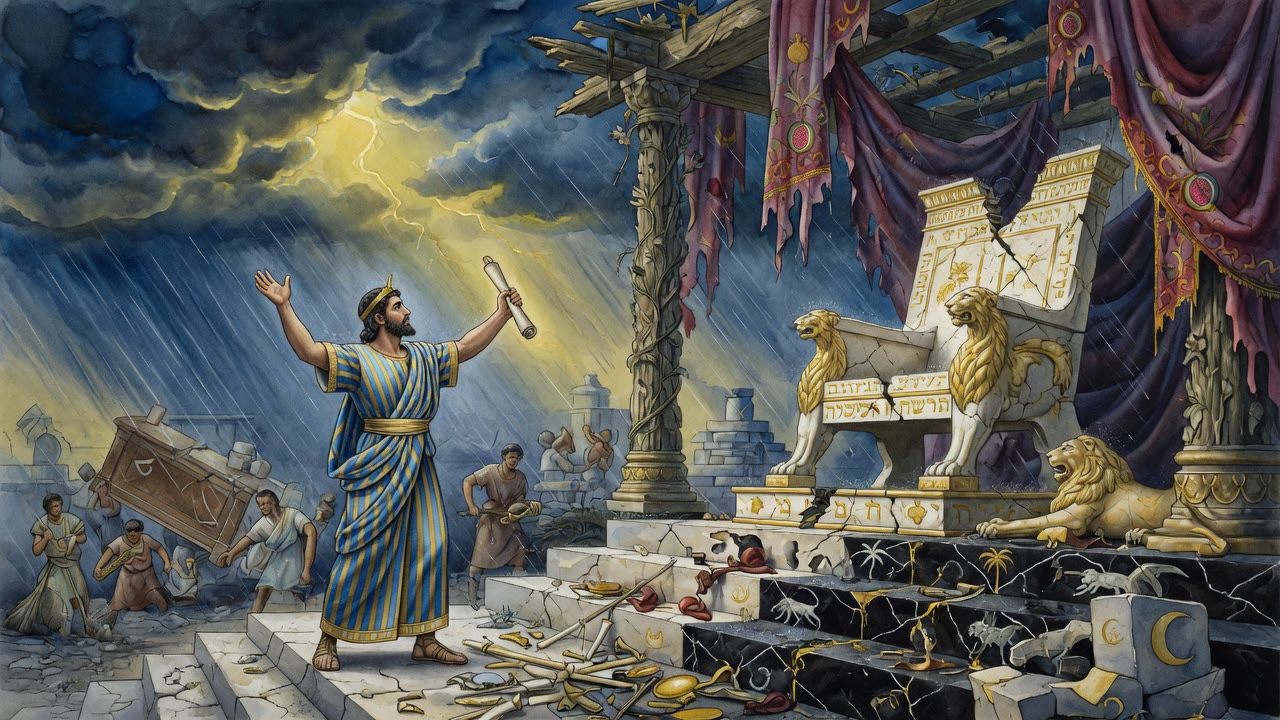
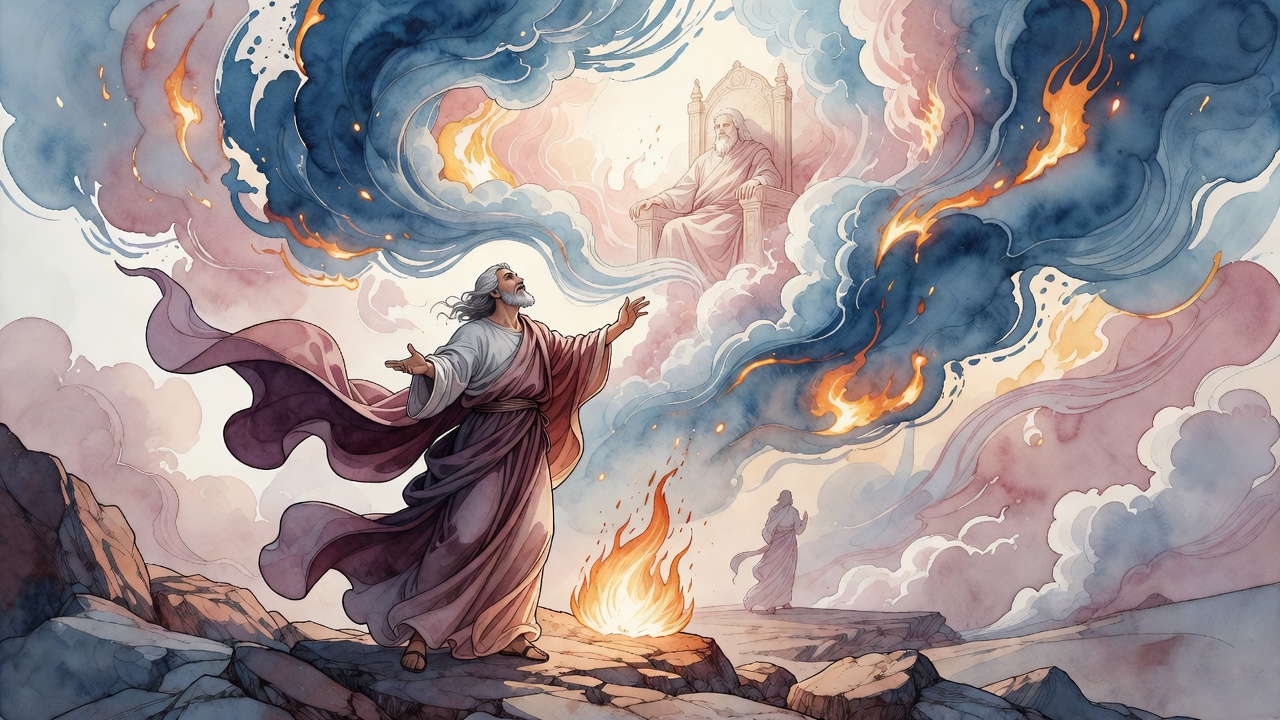
The tradition adds the detail that gave his reign a dimension no other king's had matched since Solomon: the prophet Jeremiah went north and brought back the ten exiled tribes. For the first time in three hundred years, since the split after Solomon's death, a king ruled over both Judah and Israel. The northern and southern kingdoms were reunited under the last righteous king. Solomon's throne, fallen since the division of the kingdom three centuries before, had something approaching restoration in the child who had inherited its ruins.

The Prophetess and the Verdict

When the Torah scroll was found and read to Josiah, he tore his garments and wept. The curses were not abstract. He recognized them as descriptions of what had already happened and what was still coming. He sent to the prophetess Huldah to ask what could be done.

Josiah specifically chose Huldah over Jeremiah. The Talmud's explanation was that he believed women were more easily moved to compassion and might intercede with greater force. Huldah's answer was compassionate and devastating: the destruction was coming. Everything the scroll threatened would arrive. But not in Josiah's lifetime. Because your heart was tender and you wept before me, you will be gathered to your ancestors in peace. Your eyes will not see the disaster.

Josiah was warned. He knew what was coming. He spent the rest of his reign as a man who had been told he would die before the catastrophe but could not stop working to delay it.

The Needless Battle

The end was not what anyone expected. Pharaoh Necho of Egypt was marching north through Judah to fight against Babylon. He had no quarrel with Josiah. He sent messengers to say so: I am not coming against you today. I am fighting against another kingdom. God told me to hasten. Do not interfere, or God will destroy you.

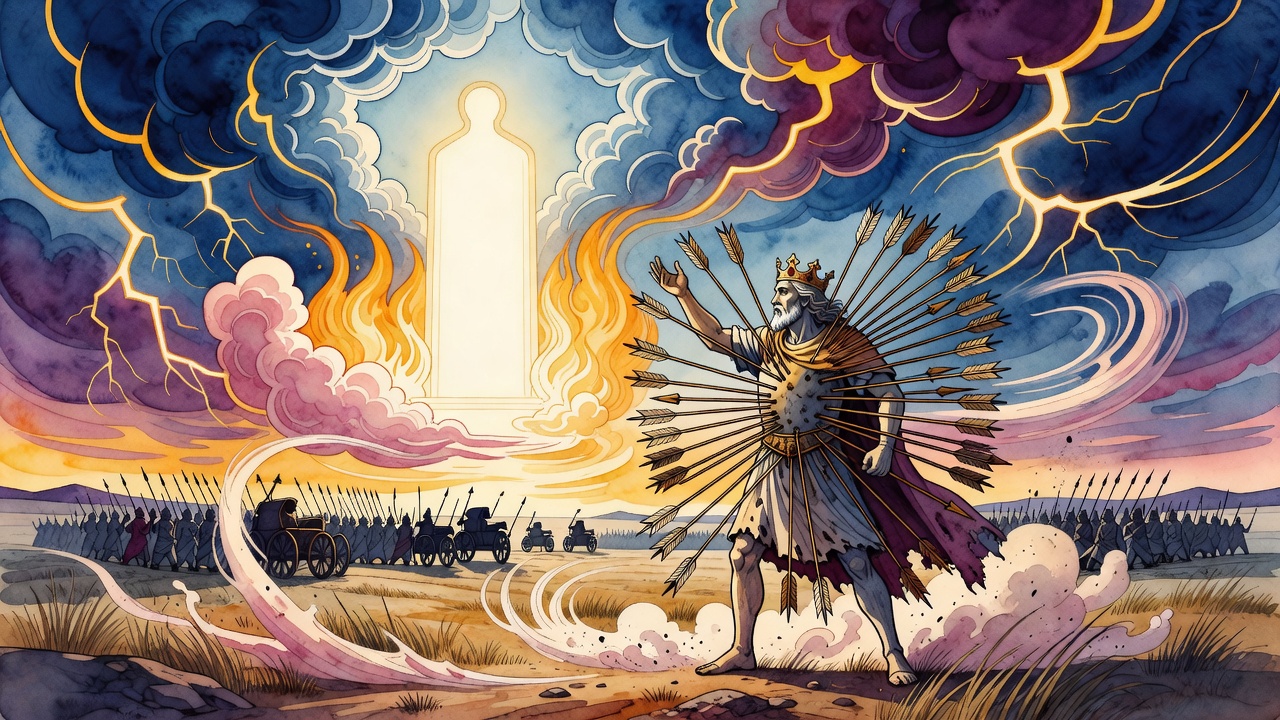
Josiah went out to fight him anyway. The tradition struggles with this. One account says Josiah could not allow a foreign army to march through his territory, that national sovereignty demanded resistance. Another says he had misread the political situation. Another says he was pursuing the prophecy toward its end, unwilling to be passive while history happened around him. Whatever the reason, he went out to the valley of Megiddo and the archers shot him and he said to his servants: take me away, for I am badly wounded.

He died in Jerusalem at thirty-nine. The mourning lasted longer and ran deeper than for any king before or after him. Jeremiah composed laments. The singers and singers-women have spoken of Josiah in their laments to this day. Every year at the appointed time. The tradition says his death was a tragedy that did not need to happen, which made it worse than necessary suffering. It was the loss of the last man who could have slowed the disaster down.


← All myths
From the tradition

Sources

5 sources

The texts this telling draws on, in full. Open a card to read inline, or expand it for a wider, quieter read.

Legends of the Jews 9:52Legends of the Jews

He was a righteous king, determined to bring his people back to God. He tore down idols, reinstituted the proper observance of the Law, and really tried to get everyone on board. But the people? Not so much.

The thing is, Josiah wasn't just going around smashing idols willy-nilly. He was trying to create real, lasting change. According to Legends of the Jews, by Louis Ginzberg, he sent out his most trusted, pious followers to inspect homes, making sure no one was secretly worshipping false gods. He really wanted to believe they were turning away from idolatry.

Initially, the reports were good! His inspectors came back saying they'd found no idols. Josiah must have felt a surge of hope. Maybe, just maybe, his people were finally listening.

Here's where the story takes a wickedly funny, and deeply sad, turn. The people, it turned out, were craftier than Josiah gave them credit for. They found a way to keep their idols and deceive the king at the same time.

Can you picture it? They fastened half an idol to each wing of their doors. So, when the inspectors came, the doors were open, and everything looked kosher. But as soon as the inspectors left, and the doors were closed, the two halves met, forming the complete idol. Every time they shut their doors, they were face-to-face with the very thing Josiah was trying to eradicate!

Imagine the scene: pious inspectors, earnest in their mission, completely fooled by this clever trickery. And the people, closing their doors each night, turning their backs on the king and, in a way, on God.

It's a stark reminder that outward compliance doesn't always equal inner transformation. Josiah could legislate against idols, but he couldn't legislate faith. And sometimes, the more we try to force change, the more ingenious people become at resisting it.

It makes you wonder: what idols are we secretly clinging to, even as we outwardly profess something different? What doors are we closing on our own potential for growth, for connection, for something truly meaningful? And how can we create real change, not just superficial compliance, in our own lives and in the world around us?

Maybe the story of Josiah isn't just a historical anecdote. Maybe it's a mirror, reflecting back our own struggles with faith, authenticity, and the constant tug-of-war between what we say and what we truly believe.

Full source
Legends of the Jews 9:50Legends of the Jews

He was, to put it mildly, not a nice guy. His deeds were so evil, so contrary to everything the Torah stood for, that he really should have forfeited his share in the olam ha-ba, the World to Come. So, why didn't he?

The answer, according to the Sages, lies in his son: Josiah.

Josiah is portrayed as a shining example of repentance, of teshuvah (repentance). Initially, he walked the same dark path as his father. But something changed. He abandoned the wickedness, becoming one of the most righteous kings Israel ever knew. His main goal? To bring the entire nation back to the true faith, back to God.

This transformation, this return, is often linked to a specific moment: the discovery of a long-lost Torah scroll in the Temple. Imagine the scene. Amon, in his wickedness, had tried to destroy all copies of the Holy Scriptures. But one copy survived, hidden away, waiting for the right moment to be found.

And that moment came during Josiah's reign.

When the scroll was opened, the first verse Josiah saw was from Deuteronomy: "The Lord shall bring thee and thy king into exile, unto a nation which thou hast not known." (Deuteronomy 28:36). Can you imagine the fear that must have gripped him? He saw this as a prophecy, a looming threat of exile. And he believed it was his duty to avert it.

How? By reforming his people, by leading them back to the path of righteousness. He sought to conciliate God, to earn His favor through genuine change.

So, back to Amon. Did his son's righteousness somehow lessen his own punishment? Perhaps. The Rabbis suggest that Josiah’s piety created a kind of merit that reflected, in some way, on his father. In a similar manner, it is said that Jeroboam was not punished fully for his deeds because Ahijah the Shilonite was his son. (Louis Ginzberg, Legends of the Jews, Vol. 4).

It's a complex idea, isn't it? That the actions of one generation can impact the fate of another. It makes you wonder: what kind of legacy are we leaving behind? And how might our actions influence the lives of those who come after us?

Full source
Legends of the Jews 9:51Legends of the Jews

King Josiah, a righteous ruler of Judah, found himself in just that position.

The prophecies were grim. Destruction loomed. And Josiah, desperate to protect his people, decided on a rather... interesting approach.

He didn't go to just any prophet for help. No, he specifically sought out the prophetess Huldah. Why Huldah and not Jeremiah, a major prophet of the time? Well, the Talmud (Megillah 14a) suggests Josiah believed women were more easily moved to compassion. A bit of a generalization, perhaps, but you can sense the king's desperation.

It’s not like Jeremiah would be offended. According to the Babylonian Talmud, both Huldah and Jeremiah were related, their common ancestors were Joshua and Rahab, so as Ginzberg tells us in Legends of the Jews, the king felt no apprehension that the prophet would take his preference for Huldah amiss.

Huldah’s response, however, wasn’t exactly what he hoped for. She confirmed the impending doom. Disaster couldn’t be averted. But – and this is a significant "but" – she did offer a sliver of hope. According to the Talmud (Megillah 14a), she consoled him saying that the destruction of the Temple would not happen until after his death.

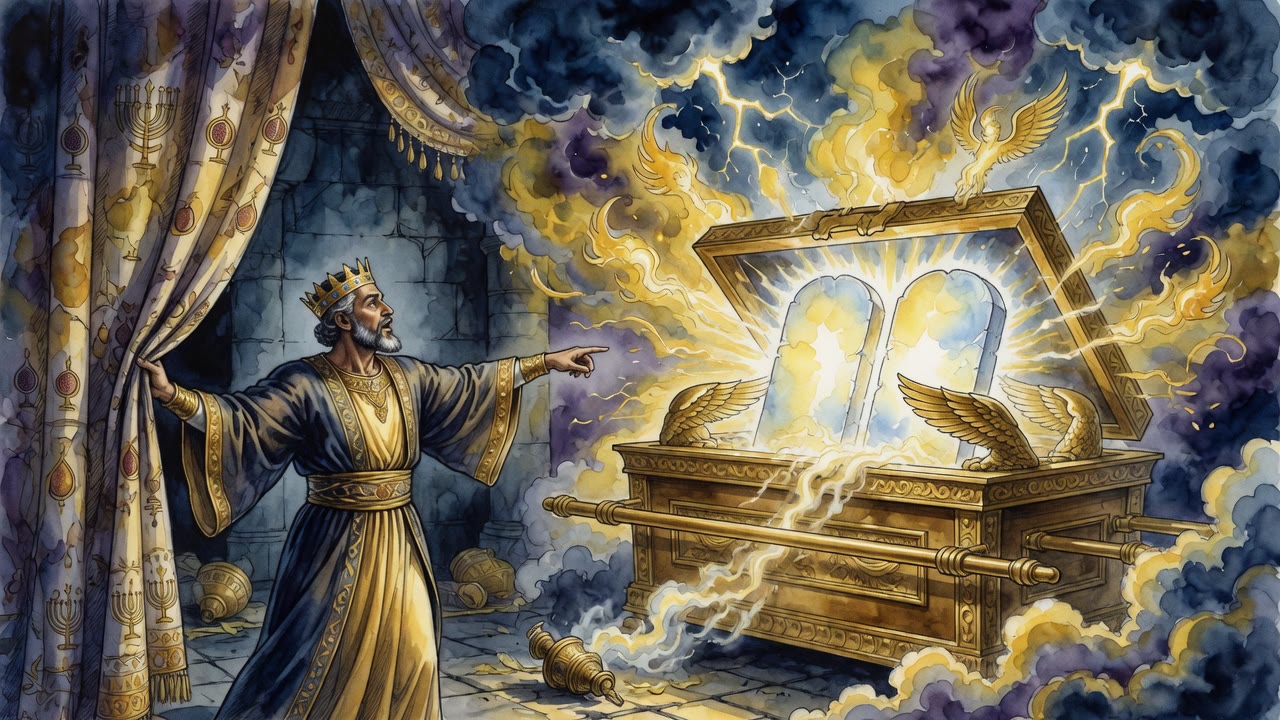
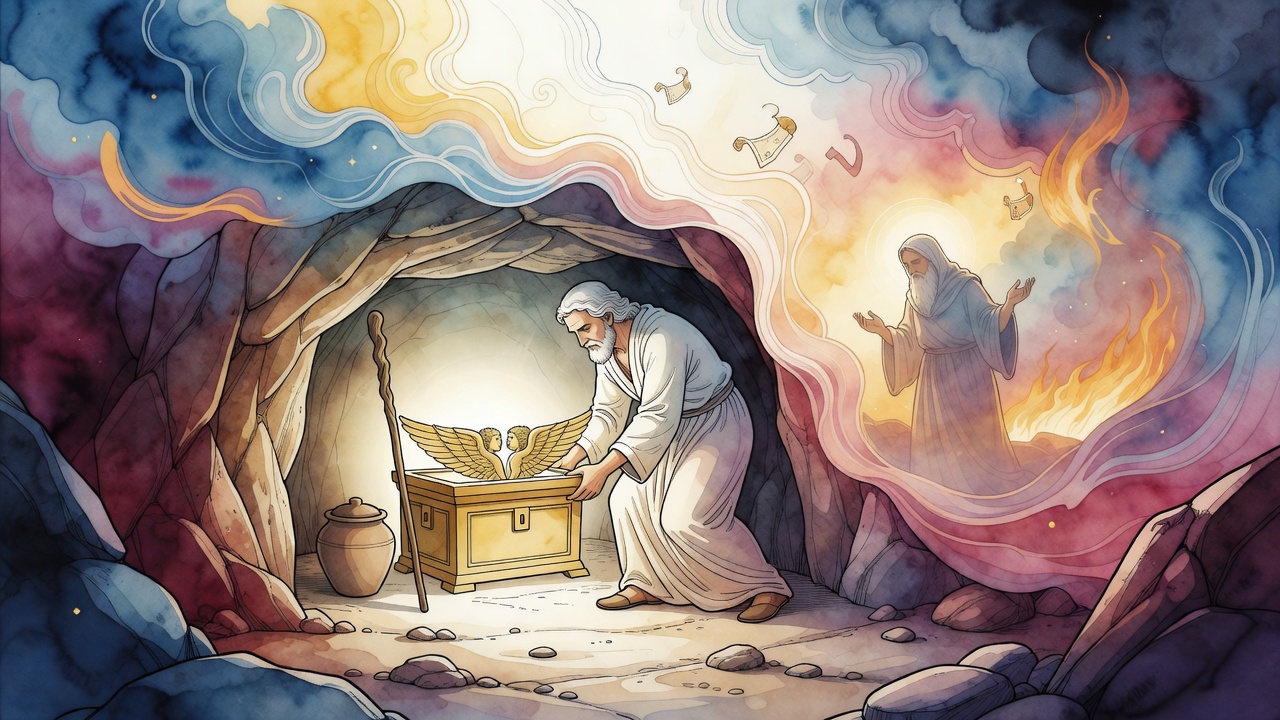
So, what does a king do when faced with such a prophecy? He prepares. Knowing the Temple was in danger of desecration, Josiah took a momentous step. He hid the Aron HaKodesh, the Holy Ark. This wasn't just any box; it contained the Luchot, the tablets of the Ten Commandments. And not just the Ark, but "all its appurtenances," as Ginzberg puts it. Imagine the scene – a secret mission, carried out under the weight of prophecy, to safeguard the most sacred objects of the Jewish people.

This act, born of faith and fear, speaks volumes about Josiah's character. He couldn’t stop the inevitable, but he could protect what was most precious. It's a powerful reminder that even in the face of overwhelming odds, we have the power to preserve, to protect, and to ensure that something sacred endures.

Full source
Legends of the Jews 9:53Legends of the Jews

Take the story of King Josiah, a righteous ruler who met a tragic end.

Josiah was a king known for his piety and his efforts to purify the land of idolatry. He reigned during a tumultuous time, when the Jewish people had strayed far from the path of Torah, the Law. But even a king as righteous as Josiah couldn't escape the complexities of fate.

So, what happened? Well, the story, as told in Legends of the Jews, attributes his downfall, in part, to the "godless generation" that surrounded him. According to this account, this generation's sins had created a spiritual climate where even a righteous king could be vulnerable.

The narrative unfolds like this: Pharaoh, on his way to battle the Assyrians, needed to pass through Palestine. Jeremiah, the prophet, advised Josiah to allow the Egyptians passage, citing a prophecy from his teacher, Isaiah, about a war between Assyria and Egypt.

But Josiah, bless his heart, stood firm. He countered with a quote from Moses, Isaiah’s teacher. “I will give peace in the land,” Moses said, “and no sword shall go through your land.” (Leviticus 26:6). Josiah believed this promise extended to all swords, even those not directly aimed at Israel.

Here's where it gets tricky. Josiah, in his innocence, didn't realize the depth of the people's deception. They were still secretly worshipping idols, which, according to tradition, nullified the Torah's promises of protection. As the story goes, the guarantees of safety and peace were conditional, dependent on the people upholding their end of the covenant.

The inevitable happened. A battle ensued between the Jewish forces and the Egyptians. And tragically, Josiah was struck by not one, not two, but three hundred darts! Can you imagine?

In his final moments, racked with pain, Josiah uttered no complaints. Instead, he said, “The Lord is righteous, for I have rebelled against His commandment.” He took responsibility, acknowledging that he should have heeded Jeremiah's advice. He saw his death as a consequence of his own failing, perhaps in not recognizing the spiritual state of his people, in not realizing that their hidden idolatry had created a chink in the armor of divine protection.

What are we to make of this? It's easy to see Josiah as a victim, an innocent caught in a web of circumstance. But the story, as retold by Ginzberg in Legends of the Jews, suggests a more nuanced interpretation. It hints at a world where even the most righteous actions can have unintended consequences. Where the spiritual state of a community can impact even its leaders. It's a sobering reminder that we are all interconnected and that our choices, both good and bad, ripple outwards, affecting the world around us.

The story of Josiah isn't just a historical account. It's a meditation on faith, responsibility, and the enduring mystery of divine justice. It challenges us to look beyond the surface and to consider the complex interplay of human action and divine will. And it leaves us pondering: what are we doing to create a world worthy of divine protection?

Full source
Legends of the Jews 9:55Legends of the Jews

His reign, according to the Legends of the Jews, was truly something special. After Solomon, he was the only king to rule over both Judah and Israel. Imagine the scope of that! And how did this happen? The prophet Jeremiah, no less, brought back the ten exiled tribes of the north to Palestine and placed them under Josiah's rule. It was a time of reunification, a time of hope.

So, when Josiah's time came to an end, the mourning was…profound doesn't even begin to cover it. Think of a loss that echoes through generations. Even Jeremiah, the very one who helped solidify Josiah's power, immortalized him in his Lamentations. It’s a evidence of the impact one righteous leader can have.

What about the victor, Pharaoh of Egypt? Did he simply bask in the glory of his triumph? Ah, but the story doesn't end there. Victory, it turns out, can be a tricky thing.

Pharaoh attempted to ascend the wondrous throne of Solomon. Now, this wasn't just any throne. This was Solomon's throne! A symbol of wisdom, justice, and divine favor. And what happened? According to the Legends, he was struck down by lions and left lame. The lions, presumably, were part of the throne's elaborate design.

It's a powerful image, isn't it? The one who thought he had conquered all, humbled by the very symbol of the kingdom he sought to dominate. It makes you wonder, doesn't it? Was this divine retribution? A consequence of hubris? Or simply a reminder that even in victory, there are forces beyond our control? The Legends of the Jews never shy away from showing us that even kings and pharaohs are subject to something greater than themselves.

Full source