The King Whose Name Was Written in Heaven Before His Birth
Three hundred years before Josiah was born, a prophet called him by name. The king who arrived had been expected all along.
Table of Contents
 Click for full size
The Name Spoken Before the Body Existed
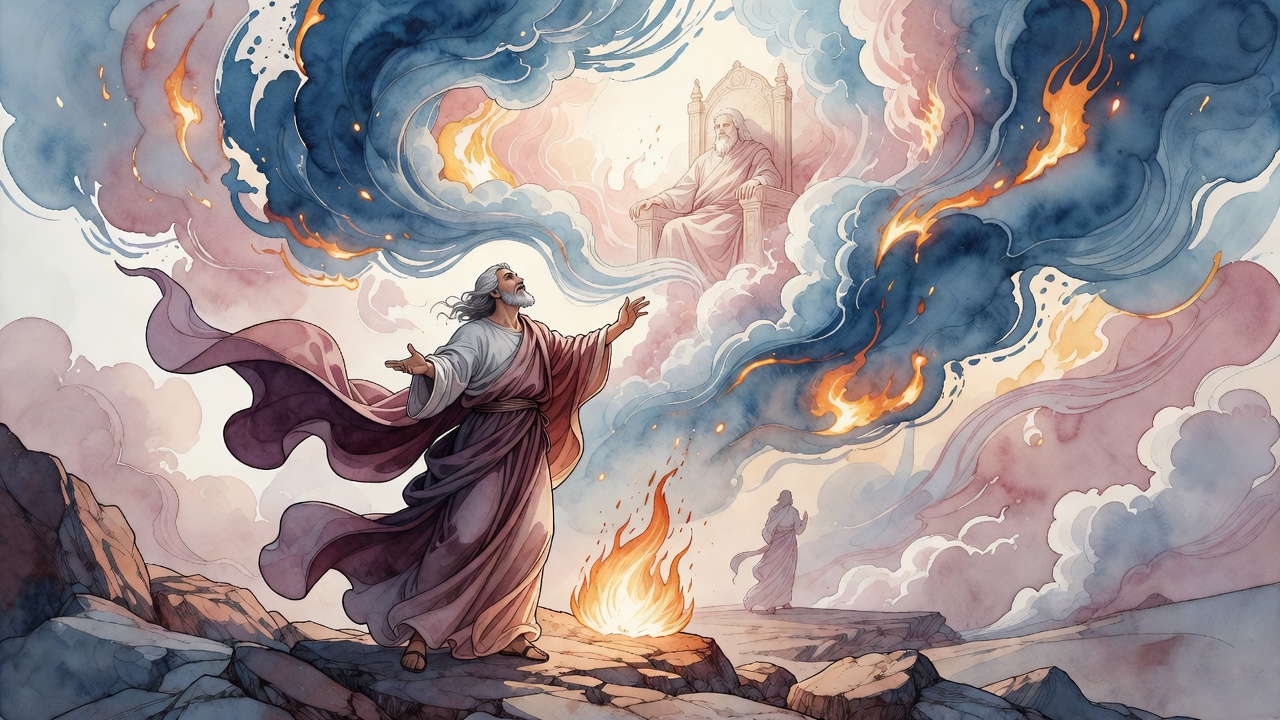
A man of God came to Bethel during the reign of Jeroboam son of Nevat, the king who built the golden calves at Dan and Bethel and told the northern tribes this is your god who brought you out of Egypt. The man stood before the altar Jeroboam had built and cried out against it. He did not speak in vague terms about false worship. He spoke a name.
Josiah, son of David, will one day defile this altar. He will burn on it the bones of the priests who offered here.
The name Josiah had not yet been given to any living person. The parents of Josiah had not yet been born. Their parents had not yet been born. The prophecy was spoken into a gap of roughly three hundred years, naming a specific man who would do a specific act to a specific altar. The man of God then gave a sign that the word was true, and the altar split apart and the ashes spilled, right there in front of Jeroboam, as if the future had briefly made contact with the present to confirm that the name it had spoken was real.
The Soul Already Shaped
Pirkei DeRabbi Eliezer, the early medieval narrative midrash from Palestine, takes the three-hundred-year prophecy as evidence of something specific about Josiah's nature: his soul was already shaped before he entered the world. Rabbi Nathaniel, quoted in that tradition, holds this up as one of the most extraordinary facts in the history of the Davidic line. The name written in heaven before the body was formed was not a piece of information God chose to share early. It was the record of a soul that had been designated for a particular work long before the ordinary mechanisms of birth and childhood could shape a human being toward it.
When Josiah arrived, he arrived at eight years old on the throne. The text of Kings does not read like a child being managed by advisors. It reads like a child who already knew what he was there to do.
What He Did With the Time He Had
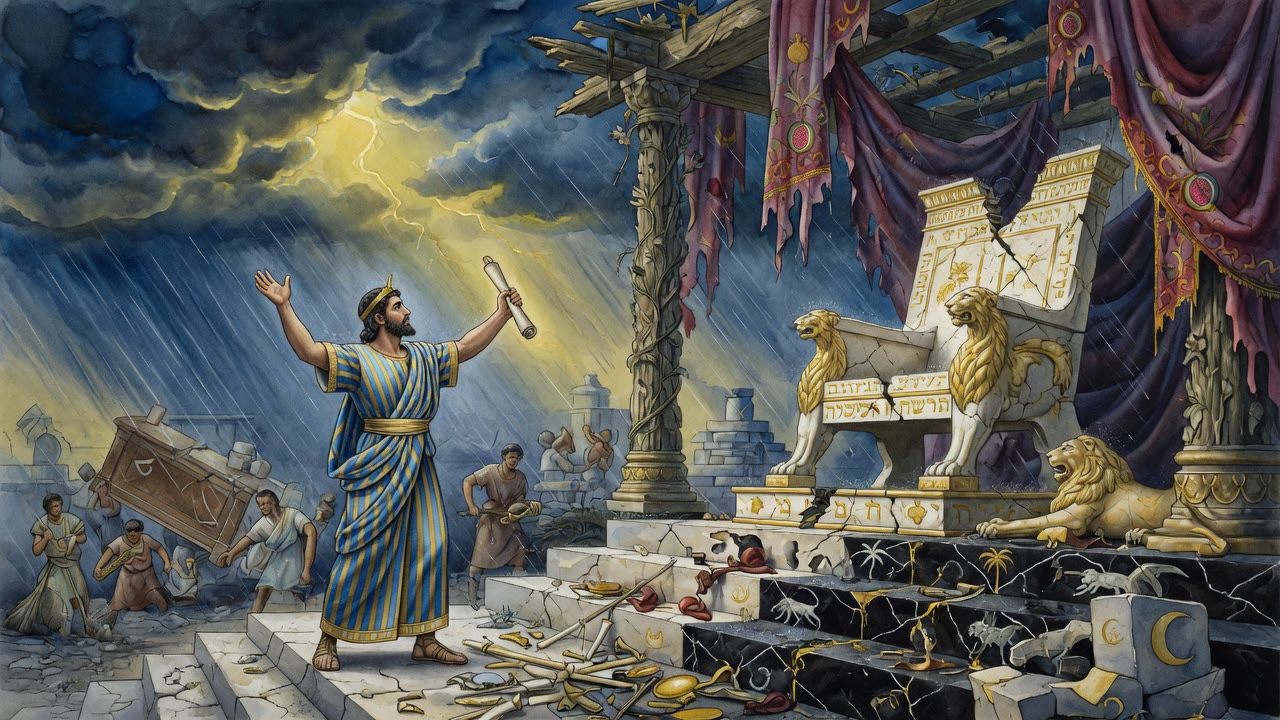
He broke idols. He smashed pillars. He cut down the groves. He pulled down the altars the kings before him had built and spread the dust of them on the graves of those who had offered there. When he came to Bethel, he did exactly what the man of God had promised in Jeroboam's time: he took the bones from the tombs near the altar and burned them on it, desecrating it in the specific way that had been predicted three centuries before his birth.
Then the workers repairing the Temple found a scroll. Legends of the Jews preserves the tradition that this was not an ordinary discovery. Amon, Josiah's father, had spent his reign destroying Torahs: burning them, tearing them, trying to eliminate every copy. One scroll had been hidden. Josiah's mother, in some accounts, had sewn it into the lining of something and concealed it within the Temple walls. When it was found and read aloud to the king, Josiah tore his clothes.
What the scroll said, and what it meant for the people, was not a surprise to God. But it broke the king in the way that a person is broken when they encounter the full measure of what they and their people have failed to do, and understand the gap between what was asked and what was given.
The Mercy in the Timing
Pirkei DeRabbi Eliezer says Josiah's merit was great before the Throne of Glory. But the merit that most exercised the rabbinic imagination was not his military reform or his cultic purges. It was the mercy he showed his father's memory. Amon had been among the most wicked kings Judah ever produced. He had taken the service of idolatry further than his father Manasseh had. By any accounting, Amon had forfeited his place in the world to come.
The tradition asks why he retained it. The answer is his son. Josiah's righteousness, his teshuvah from the path his father had set him on, his return so complete that it became one of the central examples in Jewish teaching of genuine repentance, covered a debt that Amon himself had never tried to pay. The father who destroyed Torahs was preserved in the world to come because the son built on the ruins of what the father had torn down.
← All myths