Josiah Hid the Holy Ark Before Babylon Could Reach It
Huldah told him the Temple would fall after he died. He hid the Ark, the manna jar, and the oil where Babylon would find nothing.
Table of Contents
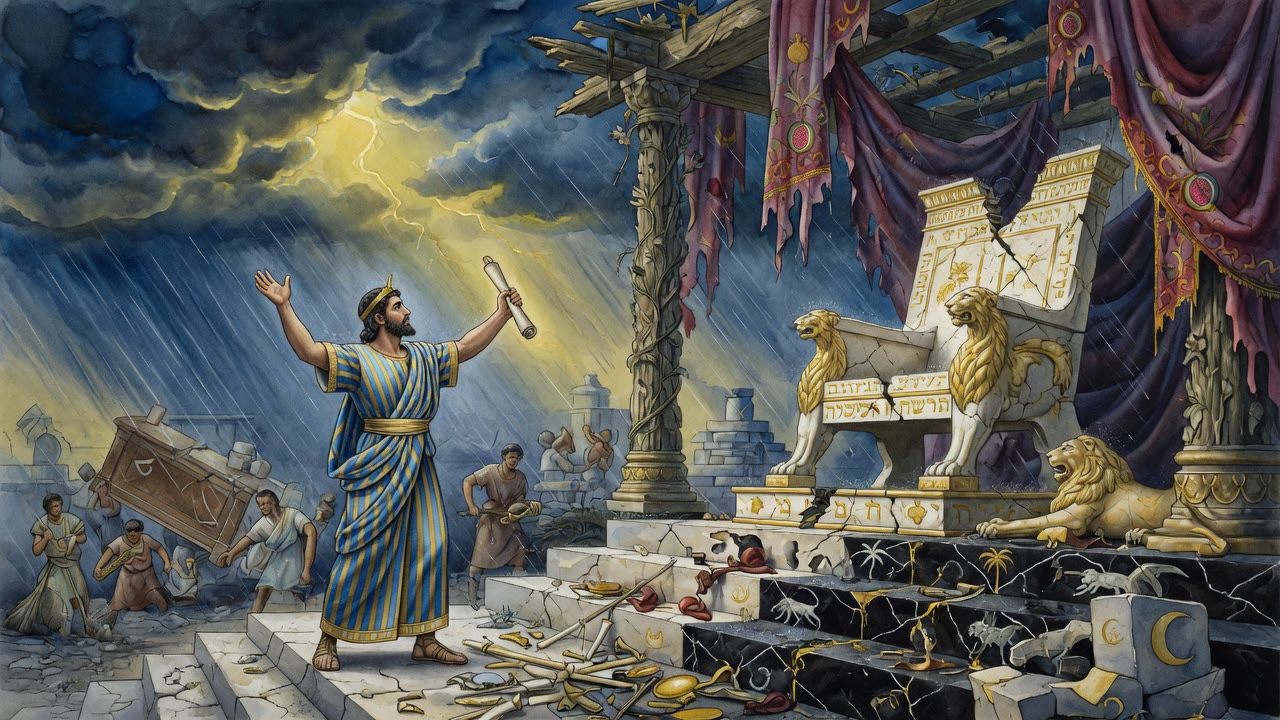
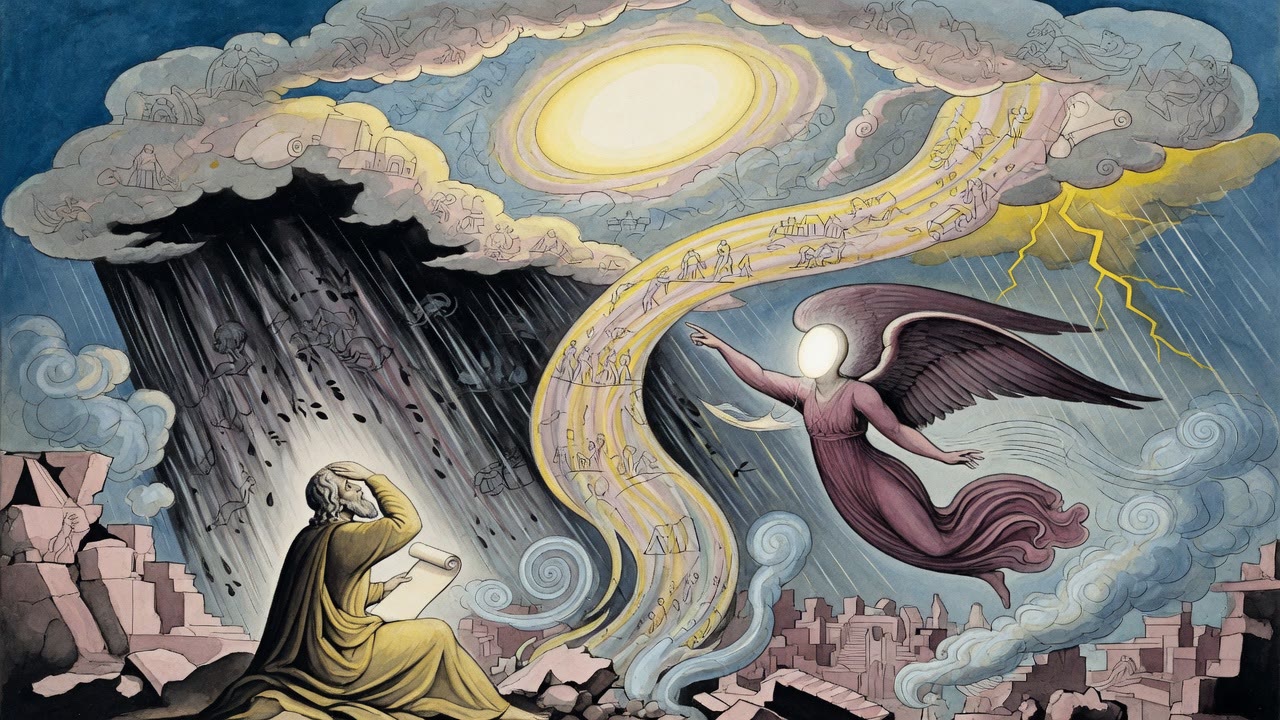
The prophetess Huldah did not soften her mouth. The scroll Josiah's men had found in the Temple walls was not a warning that might still turn. The Temple would fall. The city would fall. Judah would go east in chains. The only mercy she offered was narrow. Josiah himself would not live to see it. He would die in peace, and that was the best she could tell him.
 Click for full size
He heard her and began to move objects.
Huldah Would Not Soften the Scroll
The doom Jeremiah had been announcing in the streets was accurate. Huldah confirmed it as operative, not as poetry. She would not bargain the city off the hook. She would only take the king off the stage before the fire arrived.
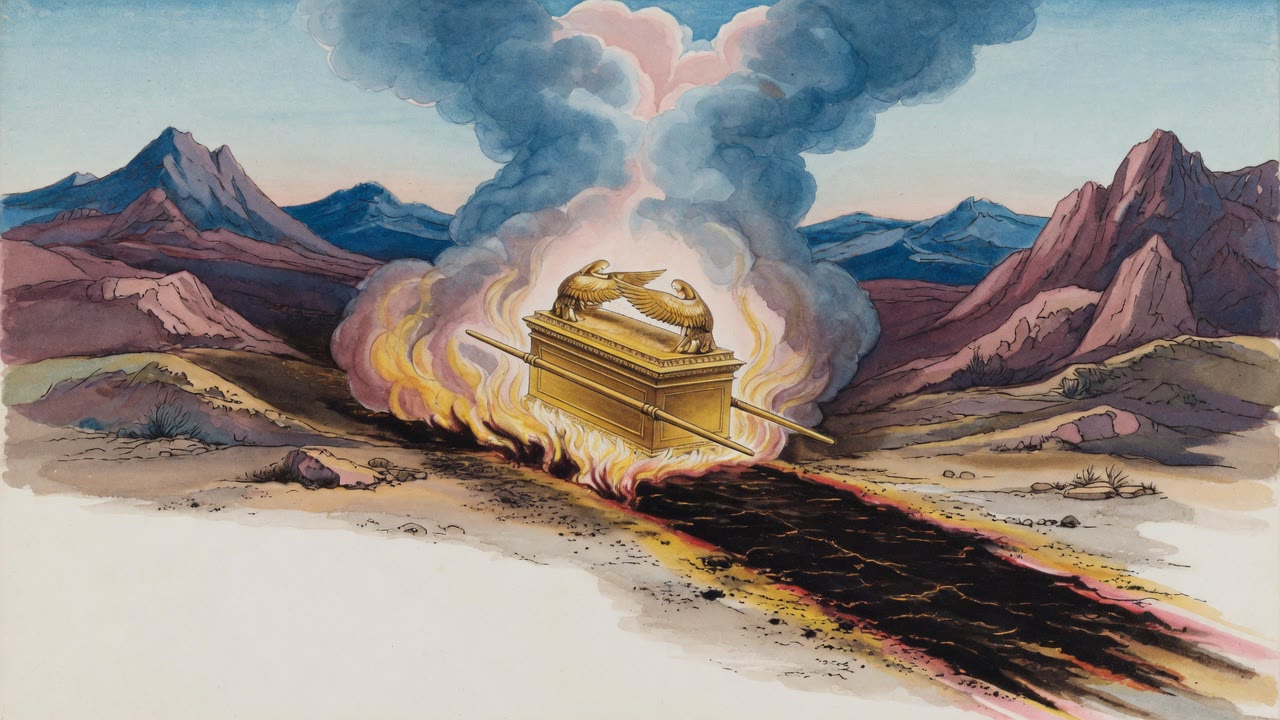
Josiah walked back through the courts with that sentence in his chest. He would not see the fall. The fall was still coming for specific objects in the innermost chamber that no enemy of Israel should carry away in triumph. The Aron HaKodesh (ארון הקודש), the Holy Ark, with the tablets inside it. The staff of Aaron. The jar of manna that had fed Israel in the wilderness. The flask of anointing oil used to consecrate kings and priests. All of it sat where any army that reached Jerusalem would find it.
He decided where to hide it before it could be taken.
He Chose the Prophet of Mercy
He had sent his messengers to Huldah rather than to Jeremiah, who was already preaching in the same city, already his ally, already the louder name. Jeremiah would later mourn Josiah in verses the tradition kept with special weight. He was accessible. He was not the one Josiah chose.
Josiah chose Huldah because he believed a woman's mercy might move God in ways a man's rebuke would not. He was not shopping for a softer fact. He was hunting the narrowest path through a fact he already feared. He sent to the prophet whose character seemed most likely to intercede on behalf of the people, rather than the prophet whose role had been to confront them. He judged tone, not credibility. Both were legitimate. He chose the one whose mercy he trusted to be larger.
She gave him a peaceful death and a ruined Temple. That was the mercy. After Solomon, he was the only king to rule Judah and Israel together, the northern tribes returned under his hand. Even that standing could not buy the city. It could buy him time to hide the proofs.
Solomon's Tunnel Took the Ark
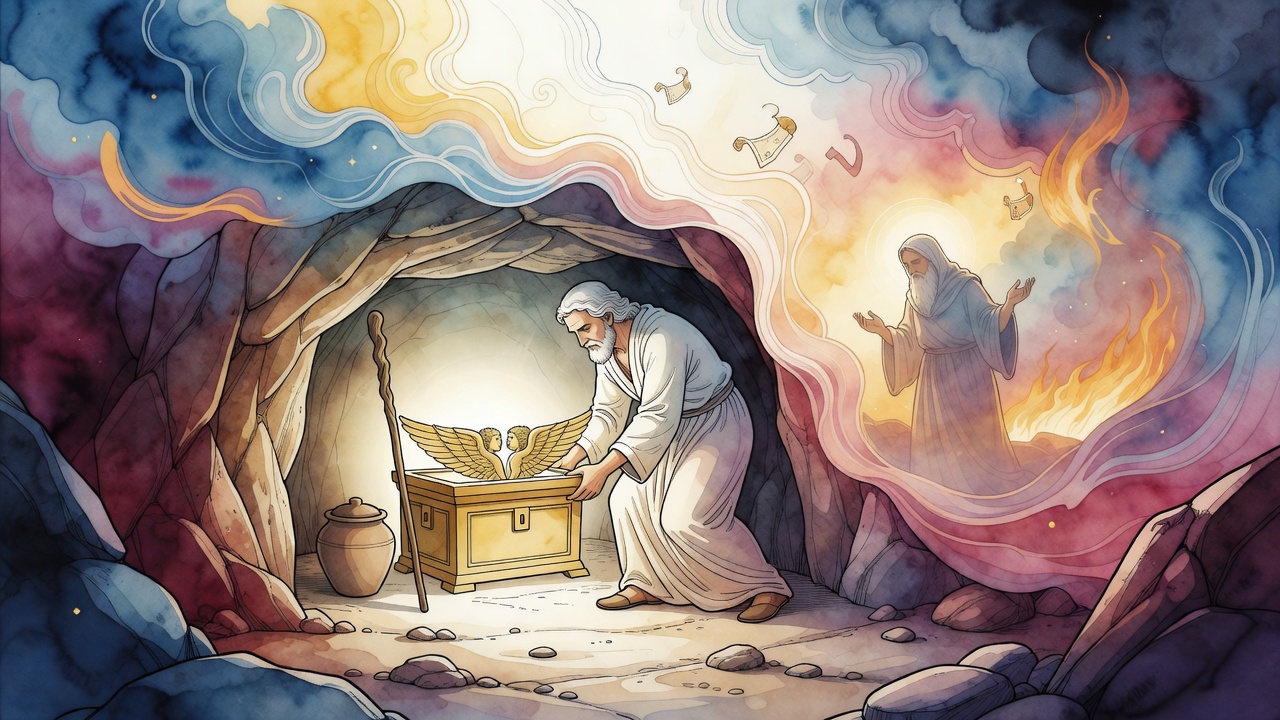
He concealed it in a tunnel beneath the Temple Mount. In the wooden storage room where the Ark had been brought, a stone covered the entrance to a chamber. The tunnel was there before this crisis. Solomon had prepared it at the founding for exactly this possibility: a time when the Temple would not be safe for what it held.
Josiah moved the Ark and everything with it into that prepared space. Tablets. Staff. Manna jar. Oil. He sealed the entrance. He made sure that the Babylonians who would eventually break through the Temple walls would find an empty inner chamber. They would see where the Ark had been. They would not find it.
He understood what an empire does when it destroys a nation. It carries off the evidence the nation was real. He made that satisfaction impossible. The proofs went underground. The public house of God would fall. The witnesses would not.
The Levite Died at the Stone
Generations later, after exile and return and the building of a Second Temple, a Levite working in the wood storage room noticed something about one of the stones in the floor. It was different from the others. He went to tell a colleague. As he was explaining it, he died.
The seal Josiah had placed was still operative. The Ark was still there, undisturbed, waiting for a time called the end of days. The Levite's death was the evidence. Look too closely at the hiding place, and the hiding place looks back.
Men still argued whether the Ark had ever left. The stone answered by killing the man who found its difference. Elijah, they said, would one day restore what Josiah had buried: Ark, manna, oil, the desert's daily bread and the oil that made kings. Until then the attic of the First Temple's secret stayed shut under a later floor.
Jeremiah Forbade the Mark
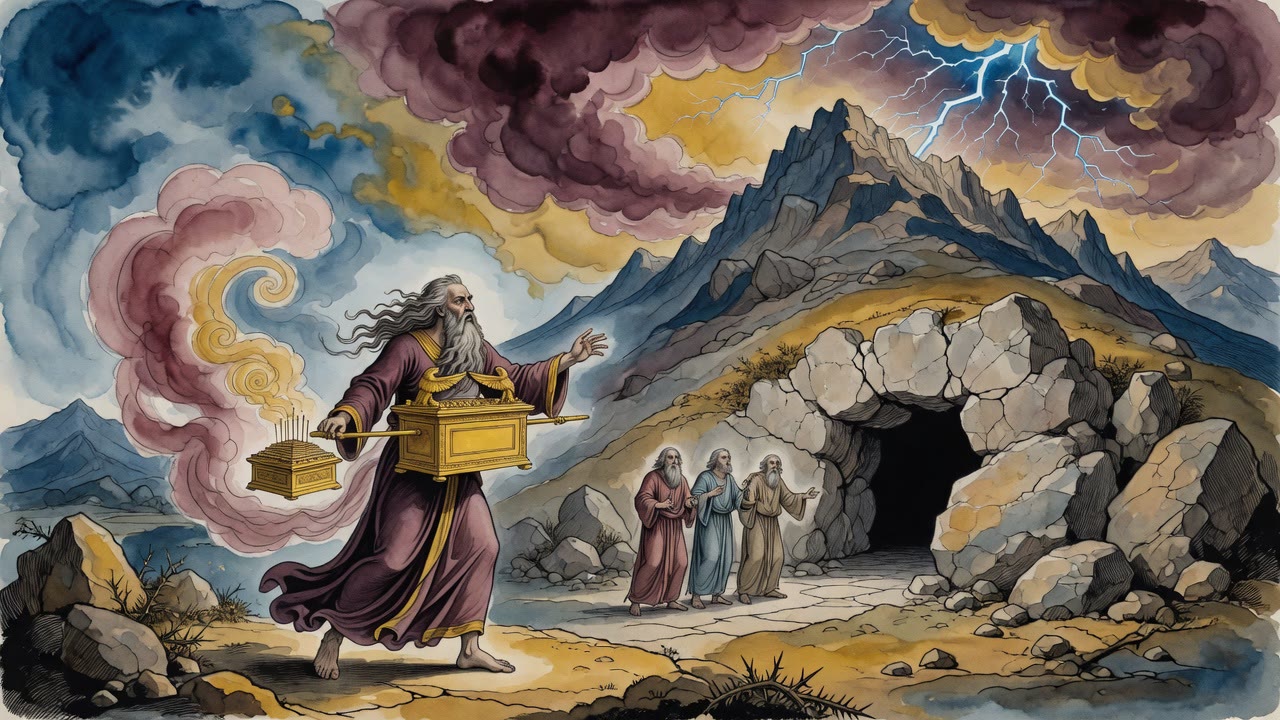
Another hiding ran beside Josiah's. Before the exile, Jeremiah took the Ark, the mishkan, and the incense altar into a cave. Some of those who went with him tried to mark the place so they could find it again. Exhaustion overtook them. They could not find the cave they had just left.
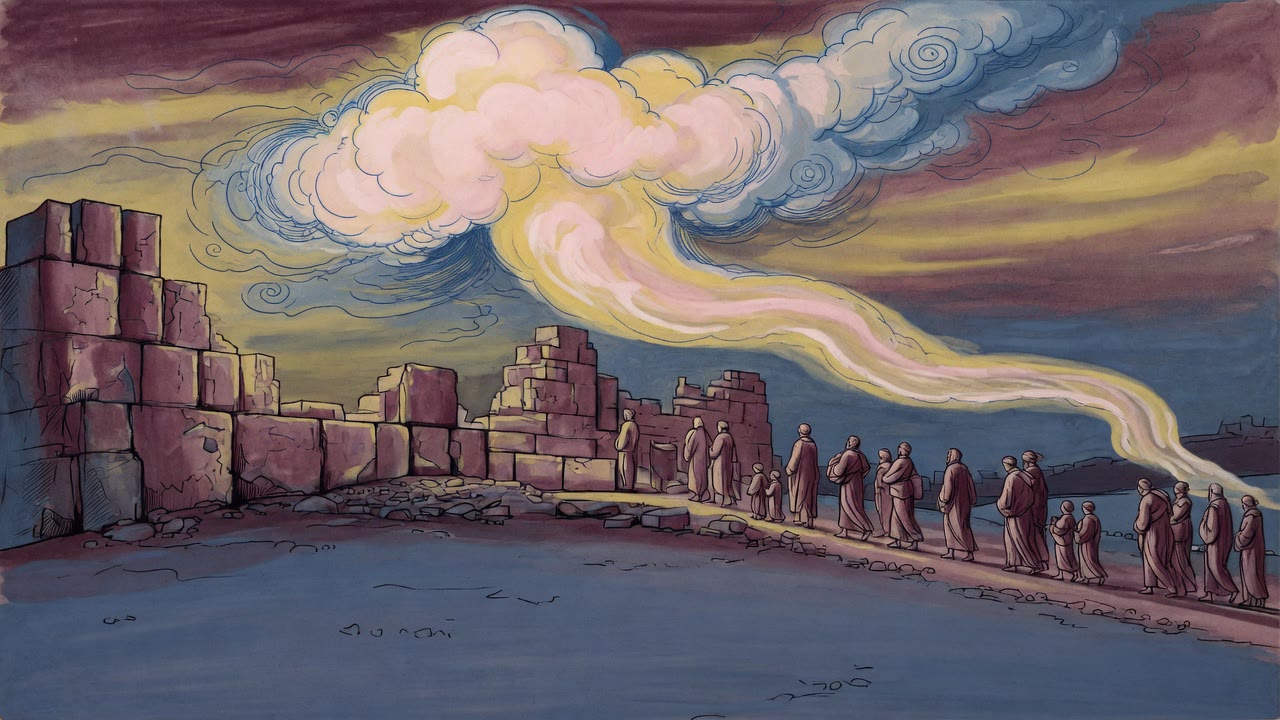
Jeremiah rebuked them. It was not their place to know, not yet. "No man will know the location until the Lord gathers his nation and grants them mercy." Then, and only then, would the glory shine in a cloud, the way it had in the days of Moses and Solomon, when presence filled a dedicated house.
Josiah hid so Babylon would find an empty room. Jeremiah hid so no map would survive the hiding. Two men, one coming doom, one refusal to let the holiest objects become trophies or tourist marks. The cave kept its mouth shut. The tunnel kept its stone. Judah went east. The Ark did not.
← All myths