6 min read

Solomon Sent Pharaoh's Marked Men Home With Their Shrouds

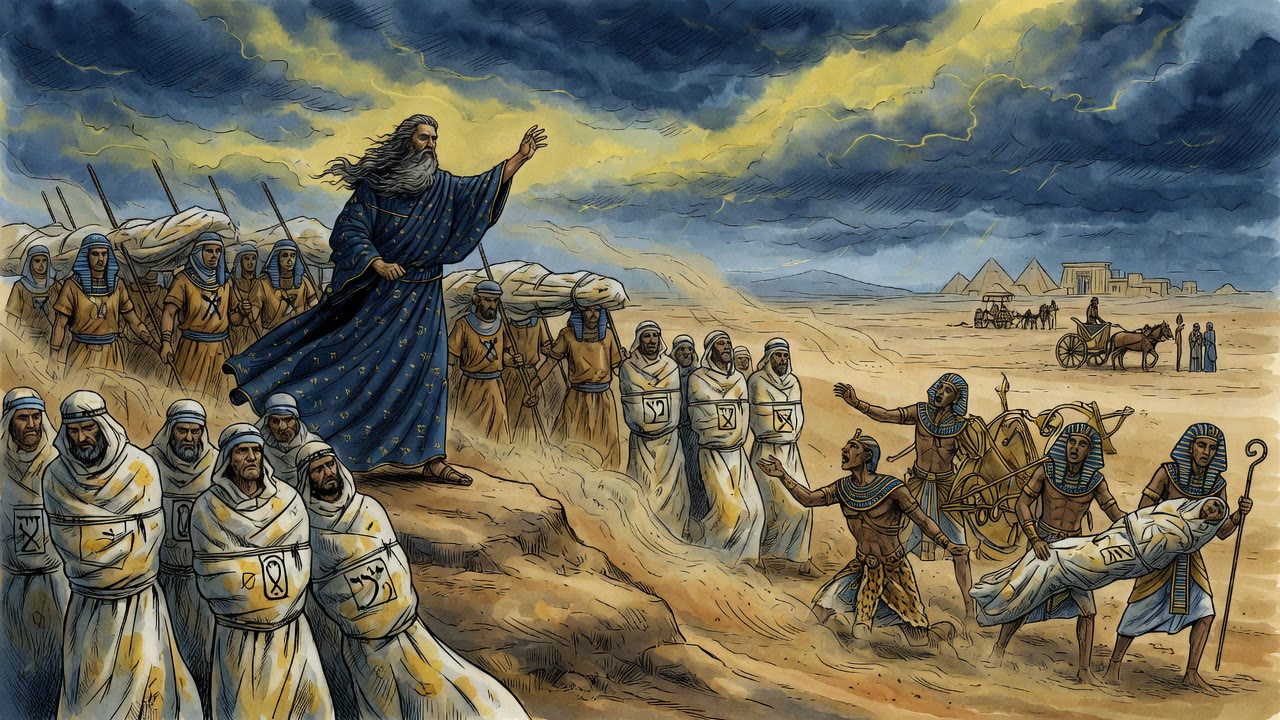
Pharaoh marked the men fated to die and shipped them off to build Solomon's Temple. Solomon sent them home wearing the shrouds Pharaoh planned to bury them in.

Curated by Arthur · Told by Maggid ·
Table of Contents
  1. Solomon Asks Egypt For Hands
  2. Pharaoh Calls His Astrologers
  3. Solomon Reads What Egypt Hid
  4. The Shrouds Go Back To Egypt
  5. Pharaoh Receives His Own Trick

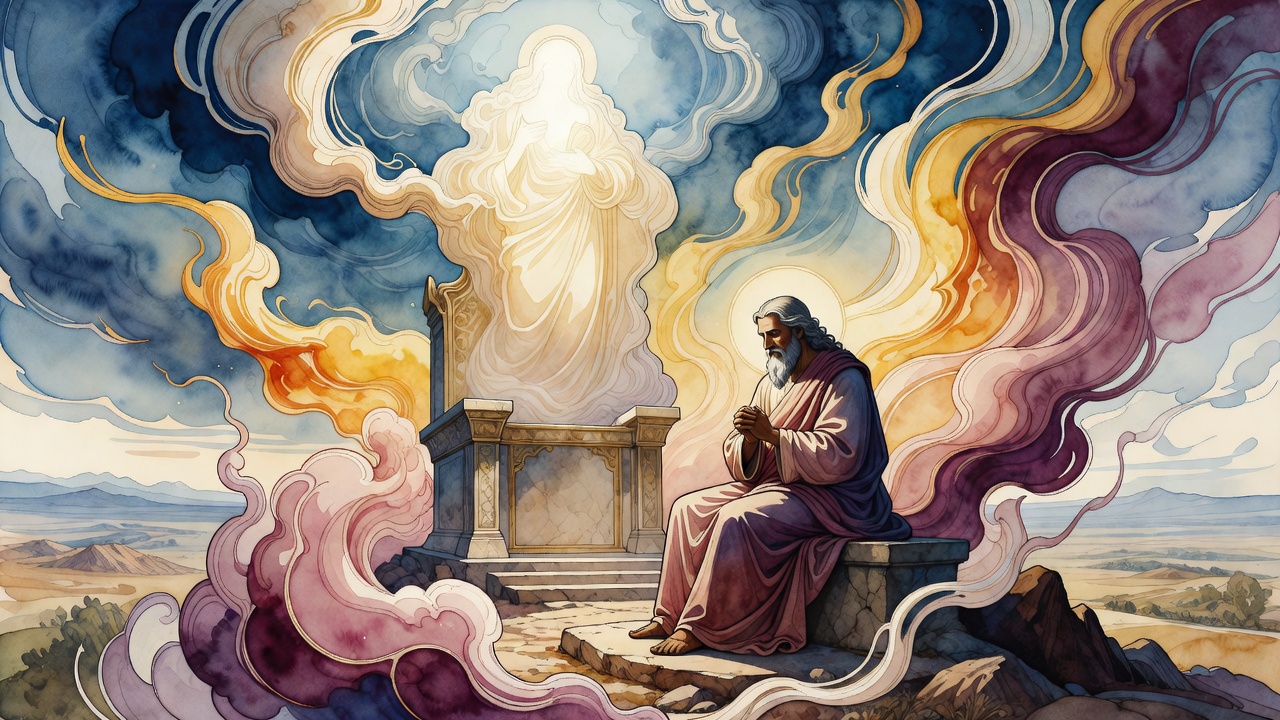
The letter came up from Egypt under a heavy seal, and the men came behind it, a column of craftsmen marching north along the coast road with their tools rolled in oiled cloth. Stonecutters, joiners, men who knew how to set a chisel against limestone and listen for the grain. They had been told they were a gift from one king to another. None of them had been told the rest.
Solomon Asks Egypt For Hands

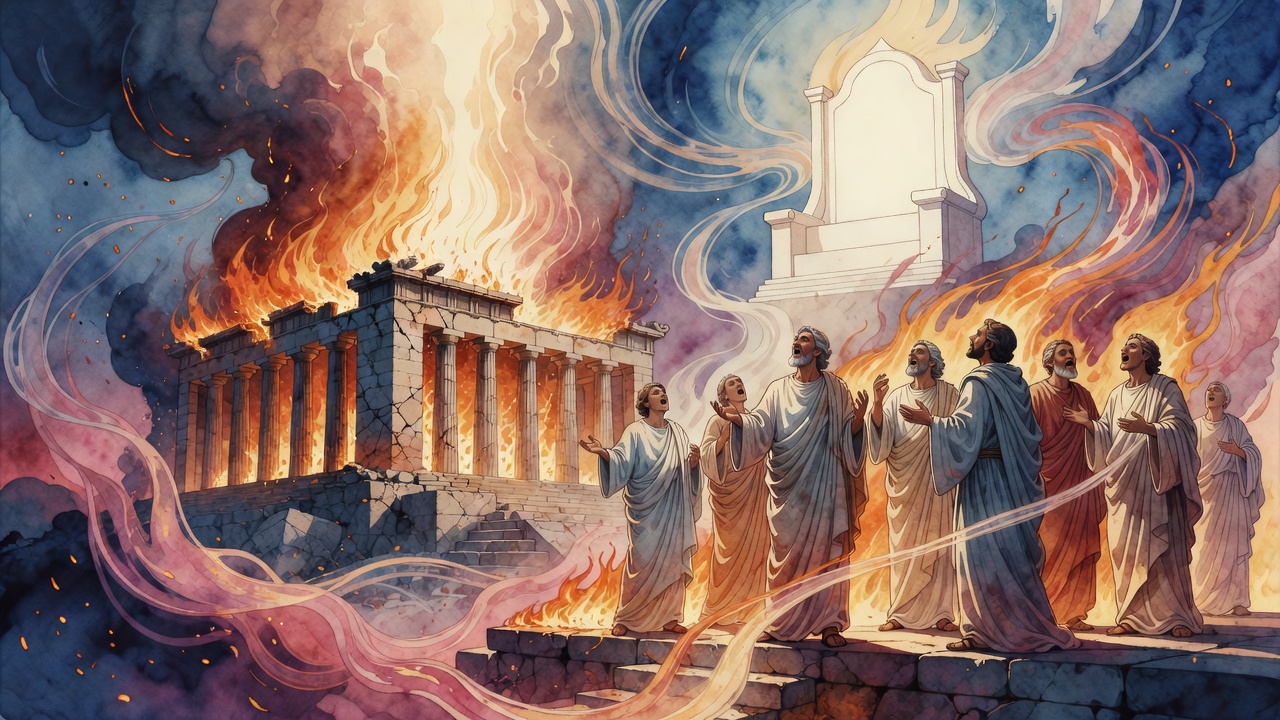
Solomon needed them. The work on the mountain in Jerusalem had outrun the labor he could raise from his own people, and the building rising there was meant to outlast every king who would ever look at it. Cedar came down from the north in rafts. Stone was dressed in the quarry so that no hammer or axe sounded on the site itself (1 Kings 6:7). What he lacked was hands, enough skilled hands, more than his kingdom could give him.

So he sent to Pharaoh, king to king, a plain request across the desert. "Send me men who know the craft, and I will pay for them, and the work of God will be the better for it." It was the kind of letter a powerful man writes to another powerful man when he is confident the answer will be yes.

The answer was yes. That was the trap.

Pharaoh Calls His Astrologers

Before the column ever left, Pharaoh did not go down to the workshops to choose the strongest backs or the steadiest hands. He called his astrologers instead. They came with their charts and their long memories of the heavens, and he put to them one question. "Among all the craftsmen I might send, which of them will be dead inside the year?"

They bent over their reckonings. They named the men. This one, and that one, and the gray-bearded joiner by the door, all of them marked in the stars for the grave before the next harvest came around.

And those were the men Pharaoh sent. Not the ones he could spare least, the ones he could spare most, the dying ones, the ones whose funerals he would rather not pay for. Let them drop in Jerusalem on the great king's wages. Let Solomon bury a crew of corpses and choke on the cost of it, and let the famous wisdom of Israel look foolish with a building site full of the dead. He sealed the letter and smiled and sent his condemned men marching toward the Temple of the living God.

Solomon Reads What Egypt Hid

They reached the city. They stood in the dust of the courtyard with their tools still rolled, and Solomon came down to look at the gift Pharaoh had sent him.

He saw it at once. Whatever it was, the pallor in a cheek, the slowness in a step, the cold weight that hangs on a man the year before he dies, Solomon read the column the way Pharaoh's astrologers had read the sky. These were not workers. These were the marked. Egypt had not sent him craftsmen. Egypt had sent him a joke at his own expense, dressed up as diplomacy and sealed with a king's own hand.

A lesser man would have set them to work and watched them fall, one by one, into the foundations of the holy house. Solomon did not lift a hammer over them. He turned and gave a different order.

The Shrouds Go Back To Egypt

"Bring linen," he said. "White linen, the kind in which the dead are wrapped and laid in the ground. And bring me a clean sheet to write on."

His servants cut and folded the burial cloth, one shroud for every man Pharaoh had condemned. They placed the folded linen in the men's own hands. Then Solomon wrote, and the words went back south with the column, sealed and plain. "You had no shrouds to bury your men in? Here. I send you these, and I send your men back to you, so you may attend to them yourself."

The craftsmen turned around in the courtyard, still living, and walked the coast road home carrying the cloth they were meant to be buried in. Every step was a message. The great king in Jerusalem had opened the sealed letter, weighed the men against the stars, and read the whole scheme down to its cold little heart. He had not been embarrassed. He had not paid for a single grave. He had simply handed the trick back to the trickster, folded neatly, in linen.

Pharaoh Receives His Own Trick

Picture the moment in the Egyptian court when the column came back through the gate. The men Pharaoh had written off, alive and on his doorstep again, each one holding his own shroud out before him like an accusation. The letter unrolled in Pharaoh's hands. The smile he had sealed his own letter with, gone.

He had tried to make Solomon look like a fool burying strangers. He had only proven, in front of his whole court, that Solomon could see what an astrologer could see, and farther, all the way to the motive behind the gift. The marked men lived out whatever days the stars had counted for them, but they lived them in Egypt, and the cost and the shame both stayed where they had started. Solomon kept building. The house on the mountain rose, stone fitted to silent stone, and no Egyptian corpse ever lay in its foundations.


← All myths
From the tradition

Sources

4 sources

The texts this telling draws on, in full. Open a card to read inline, or expand it for a wider, quieter read.

Legends of the Jews 5:47Legends of the Jews

What he hears… saves him from death! The story goes that he heeded the advice of a rooster, and by doing so, he managed to cheat fate. We don't know the details of the advice, unfortunately. But it certainly makes you wonder about the secrets whispered in the barnyard, doesn't it?

Speaking of secrets and wisdom, the tradition turns to the legendary King Solomon. He wasn't just wise; he was clever. So clever, in fact, that he could outwit foreign rulers who tried to pull a fast one on him.

Solomon was building the Beit Hamikdash, the Temple in Jerusalem. A massive undertaking! He needed skilled artisans, so he reached out to Pharaoh of Egypt for help. Now, Pharaoh, he wasn't exactly playing fair. He did send artists, but with a wicked twist.

In Ginzberg's retelling in, Legends of the Jews, Pharaoh consulted his astrologers. They identified the men destined to die within the year. And those were the men Pharaoh sent to Solomon! Can you believe the audacity? It's almost comical, if it weren't so… well, morbid.

But Solomon, the wisest of all men, wasn't born yesterday. He quickly saw through the deception. Talk about a king who doesn't miss a beat!

So what did he do? He sent the men back to Egypt, each one equipped with their own tachrichim – grave clothes! And he sent a message along with them: "To Pharaoh! I suppose thou hadst no shrouds for these people. Herewith I send thee the men, and what they were in need of."

Talk about a mic drop moment!

It's a pretty cutting message, isn't it? Imagine the look on Pharaoh's face when he received that package. Solomon wasn't just returning the men; he was returning Pharaoh's treachery right back at him. The story is a evidence of Solomon's unmatched wisdom and his ability to turn the tables on those who sought to deceive him.

These stories, seemingly simple, offer a glimpse into a world where wisdom, cunning, and even a little bit of eavesdropping can change everything. They remind us that even in the face of deception, there's always a way to find the truth, and perhaps, even send it back with a little extra something.

Full source
Legends of the Jews 5:45Legends of the Jews

The old stories certainly think so. Take this little snippet from Ginzberg's Legends of the Jews, a treasure trove of rabbinic tales and folklore. It paints a picture of animal loyalty, marital discord, and. well, let’s just say questionable advice.

The scene opens with a man nearing his end. His faithful dog, sensing the impending loss of his master, is overcome with grief. He refuses food and drink, a evidence of his unwavering devotion. You can almost picture the poor creature, head hung low, a picture of canine sorrow.

Then there's the cock. Oh, that cock! He's the polar opposite of the dog. While the dog mourns, the cock sees an opportunity. He brazenly devours the food meant for the grieving dog, throwing a feast for himself and his many wives.

The dog, understandably, is outraged. "How great is thy impudence," he barks (or, rather, says in this talking-animal tale), "and how insignificant thy modesty! Thy master is but a step from the grave, and thou eatest and makest merry."

Now, you'd expect some remorse, maybe a bit of shame. But no. The cock, puffed up with self-importance, retorts: "Is it my fault if our master is a fool and an idiot? I have ten wives, and I rule them as I will. Not one dares oppose me and my commands. Our master has a single wife, and this one he cannot control and manage."

Ouch. Talk about adding insult to injury!

The dog, ever loyal to his master, is genuinely curious. "What ought our master to do?" he asks, seeking a solution to this marital imbalance.

And here comes the kicker. The cock, in his infinite (and deeply problematic) wisdom, advises: "Let him take a heavy stick and belabor his wife's back thoroughly, and I warrant thee, she won't plague him any more to reveal his secrets."

Whoa. Let's just pause there for a moment. This little story, while entertaining on the surface, reflects some pretty uncomfortable societal attitudes about marriage and control.

It's a stark reminder that these ancient tales, while often filled with magic and wonder, also carry the baggage of their time. It’s easy to dismiss the cock’s advice as simply absurd, a humorous exaggeration. But embedded within is a very real, very troubling view of power dynamics within a marriage.

It leaves you wondering, doesn't it? About the roles animals play in our narratives, about the wisdom (or lack thereof) they offer, and about the values reflected in these age-old stories. And most importantly, it prompts us to examine how far we've (hopefully) come since then.

Full source
Midrash Tanchuma Buber, Chukat 11:3Midrash Tanchuma Buber, Chukat

As it is said (in Genesis 31:4): "And Jacob sent and called Rachel and Leah to the field, to his flock." (And it is written, in 1 Kings 5:10): "And [it surpassed] all the wisdom of Egypt." What was the wisdom of the Egyptians? You find that when Solomon sought to build the Temple, he sent to Pharaoh Necho. He said to him: Send me craftsmen for their wages, for I wish to build the Temple. What did he do? He gathered all his astrologers, [and said to them]: Foresee which men are destined to die in that year. And he sent them to him. When they came before Solomon, he foresaw through the Holy Spirit that they would die in that year. He gave them their shrouds and sent them back to him. He sent word to say to him: Did you have no shrouds to bury your dead? Here, take them, with their shrouds.

Full source
Yalkut Shimoni on 1 KingsHebraic Literature (1901)

The verse in (1 Kings 4:30) tells us that Solomon's wisdom exceeded the wisdom of all the east and all of Egypt. The midrash on Kings, preserved in Yalkut Eliezer, offers a story to prove it.

When Solomon resolved to build the Beit HaMikdash, the First Temple, he needed skilled craftsmen and sent a request to Pharaoh Necho, king of Egypt, to hire some out to him.

Pharaoh was cunning. He called in his astrologers and asked them to identify, through their arts, which of the Egyptian craftsmen were fated to die in the coming year. These were the ones he sent to Jerusalem, not his finest, but his doomed, to rid himself of their burial expenses while pretending to help a foreign king.

Solomon, to whom the Ruach HaKodesh, the Holy Spirit, whispered truth that astrologers could only grasp at, saw through the trick at once. He saw the fate hanging over each man. So he provided every workman with a fine linen shroud and sent them all back to Egypt with a message for Pharaoh: "Have you no shrouds in which to bury your own dead? Behold, here are theirs, prepared."

The verse says Solomon was wiser than all men, "even than Adam, the first man" (1 Kings 4:31). The midrash places him above the astrologers of Egypt too. Solomon did not merely outwit Pharaoh; he turned Pharaoh's trick into his own act of kindness. That is what Jewish wisdom looks like when it has the power of a king.

Full source