Esther Fasts Three Days Then Walks to the King
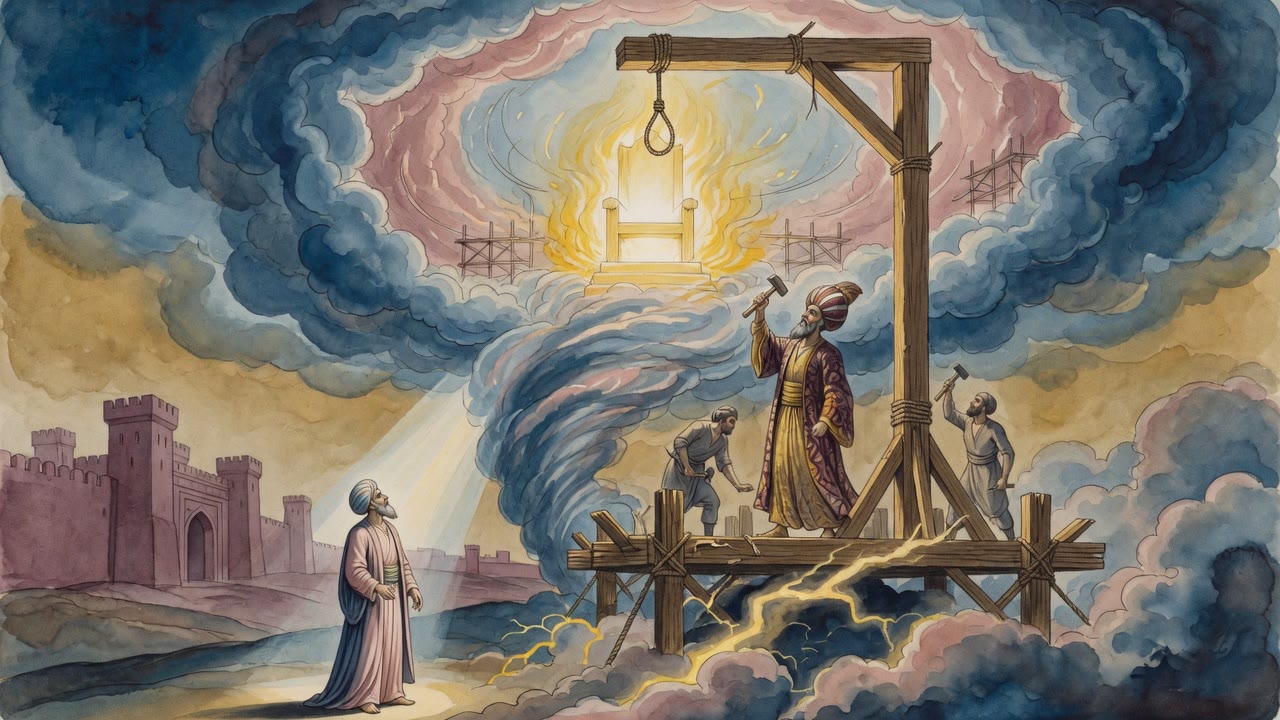
She had not eaten in three days. The corridor narrowed toward the king's face. Behind her, Haman's silver already sat in the account.
Table of Contents
Esther stood where the palace corridor narrowed toward the court of King Ahasuerus. Beyond that door, law waited with a blade. To enter unsummoned was to risk death.
 Click for full size
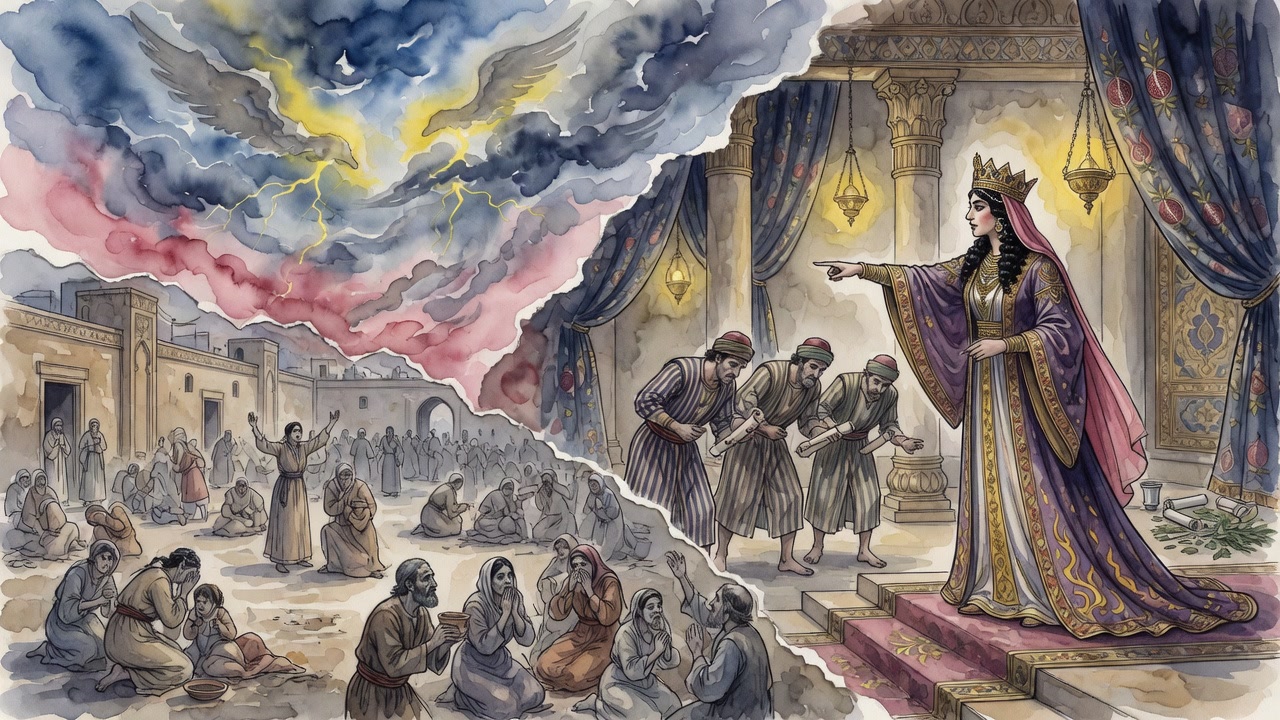
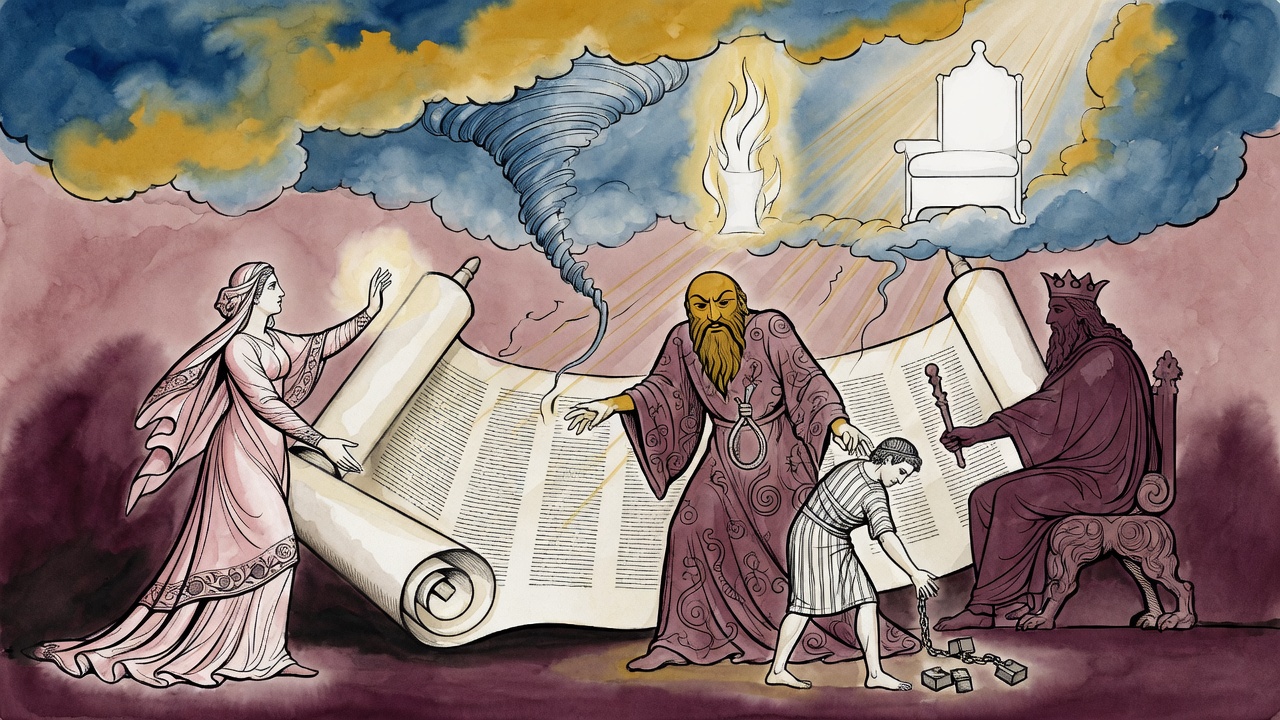
Behind her, in every Jewish house of Shushan, the decree of Haman already moved like smoke. Silver weighed for their destruction. Ten thousand talents offered. A people marked for a single day of knives.
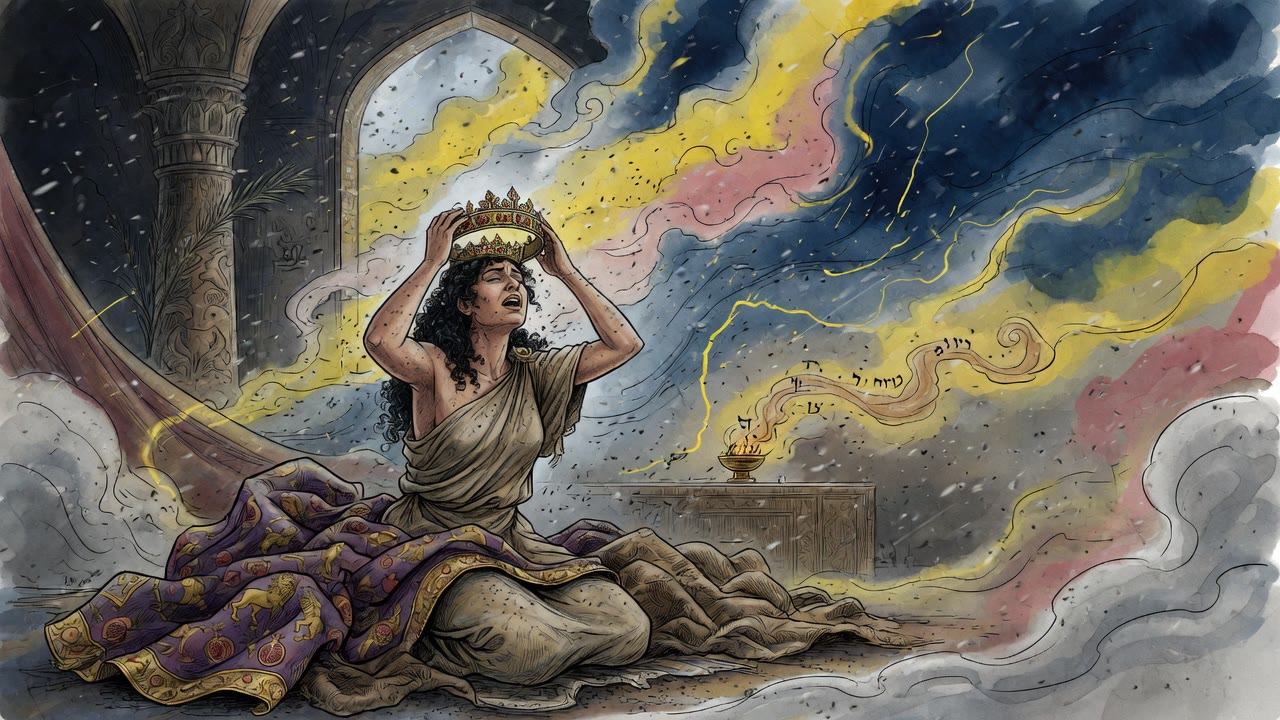
She had not eaten for three days. The fast was a road she walked on her feet and in her gut.
The Door That Could Kill Her
Servants passed with trays. Guards shifted their weight. Esther's body knew the count of heartbeats between this stone and the king's face. She was ready to appear and ask for her inheritance, and readiness felt like standing on a thin board over a pit.
She asked heaven for company flesh could not see. "Send Thou an angel of compassion with me on mine errand, and let grace and favor be my companions." She did not ask for an army. She asked for a presence that could turn a king's eyes before the law finished its sentence.
Three Days Toward Moriah
"For three days have I fasted in accordance with the number of days Abraham walked to bind his son upon the altar before Thee," she said. She bound her hunger to that road. Abraham had walked three days toward Moriah with Isaac beside him. Esther walked three days of empty mouth toward a throne that could empty her people.
She put the knife scene into her prayer so heaven could not pretend it had forgotten. "The left hand of Abraham held Isaac by the throat, and his right hand grasped the knife. He willingly did Thy bidding, nor did he delay." Heaven had opened its windows then, to give space to the angels, who cried, "Woe to the world, if this thing should come to pass!"
"Thou didst promise him: whenever thy children shall be in distress, I will remember the binding of Isaac favorably unto them." She added Sinai. Three days of fast for the three camps at the mountain, priests, Levites, and Israelites, who once said they would do and hear. Her empty stomach carried both altars, Moriah and Sinai, into the Persian hall.
The Fathers in Her Mouth
She needed words that could turn a face. She asked for Jacob's charm in her mouth, the speech that had once bought peace from Esau and from an angel at a ford. She asked for Joseph's favor on her tongue, the restraint that had held him clean in a foreign house.
Above, those names had already ranked themselves by hard feats. Jacob had claimed he was greater than Moses because he wrestled an angel and prevailed. Moses had answered that Jacob fought on human ground, while he had climbed into the angels' own territory and made them fear him. Joseph had claimed he was greater for refusing his master's wife. Moses had answered that Joseph held back from a strange woman, while he held back even from his own wife in the years of prophecy.
Those rankings live in the upper court. On the palace floor Esther still needed Jacob's words and Joseph's favor for one king's ear. "May the righteousness of Abraham go before me, the binding of Isaac raise me, the charm of Jacob be put into my mouth, and the grace of Joseph upon my tongue."
Then she named the enemy. "Thou who breakest the mightiest, crush Haman, so that he may never again rise from his fall." She did not soften the ask. Haman had bought their deaths with weight of silver. She asked for a fall that would not reverse.
She turned toward the city. "Ye, all ye of Israel, pray for me as I pray in your behalf. For whatsoever a man may ask of God in the time of his distress is granted unto him." She refused a private miracle. She bound the people's prayer to her steps.
She Crossed the Line
"I also call upon Thee. Thou art called the Merciful and the Gracious. Thou art slow to anger and great in lovingkindness and truth. Hear our voice and lead us out of distress into enlargement."
The corridor did not brighten. No guard fell down. Esther finished the prayer the way a diver finishes the last breath before water. Complete, then gone. She stepped toward the court. The angel of compassion she had asked for either walked with her or did not. What moved was her body, crossing the line the law had drawn in blood.
Behind her, three days of hunger. Before her, a scepter that might rise or stay. Haman's silver still sat in the king's account. Esther's fast sat heavier. She went in.
← All myths