Haman Set the Feast as a Trap for Israel
Haman used a royal banquet as a snare, hoping Israel's appetite would make God angry enough to leave the people exposed before the king.
Table of Contents
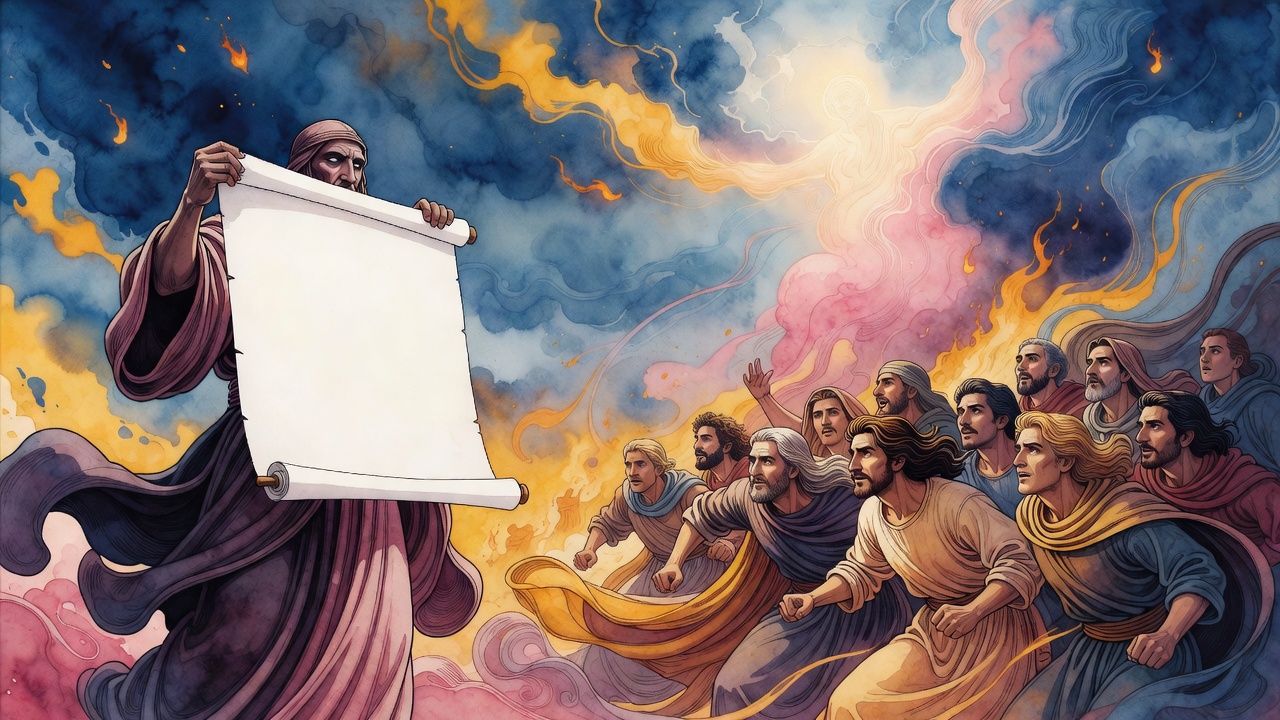
Haman began with food. Before the gallows, before the lots, before the sealed decree, he placed a feast in the road and waited for Israel to walk into it hungry.
 Click for full size
The Invitation Became a Net
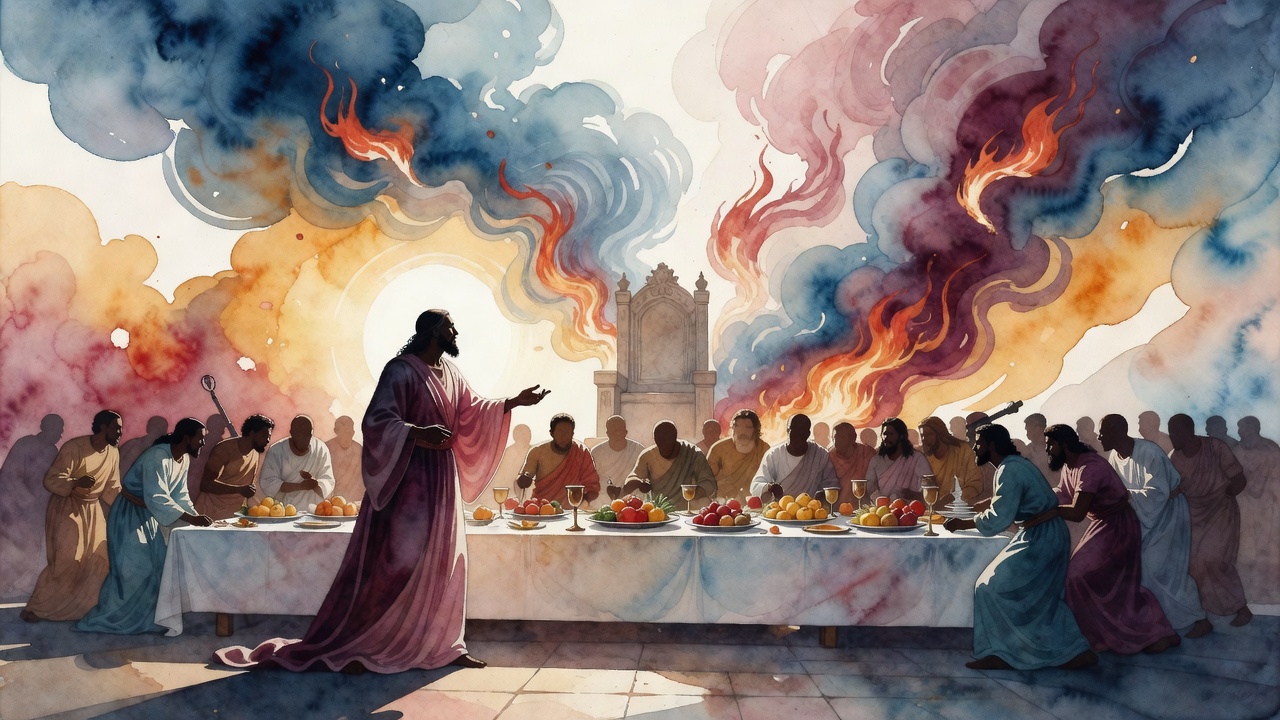
Shushan glittered under royal abundance. Tables opened. Wine moved from hand to hand. The palace announced pleasure as if pleasure were harmless, as if a king's invitation could not also be a weapon. Haman had already brought his request to Ahasuerus. The people he hated were peculiar, he said. They should be destroyed.
The king did not refuse out of love. He refused out of fear. He knew the history. He knew the name of the God who had broken Egypt. He knew enough to understand that a throne can crack when it leans against Israel. The empire was huge, but memory was larger. Pharaoh had been huge too.
The King Remembered the Sea
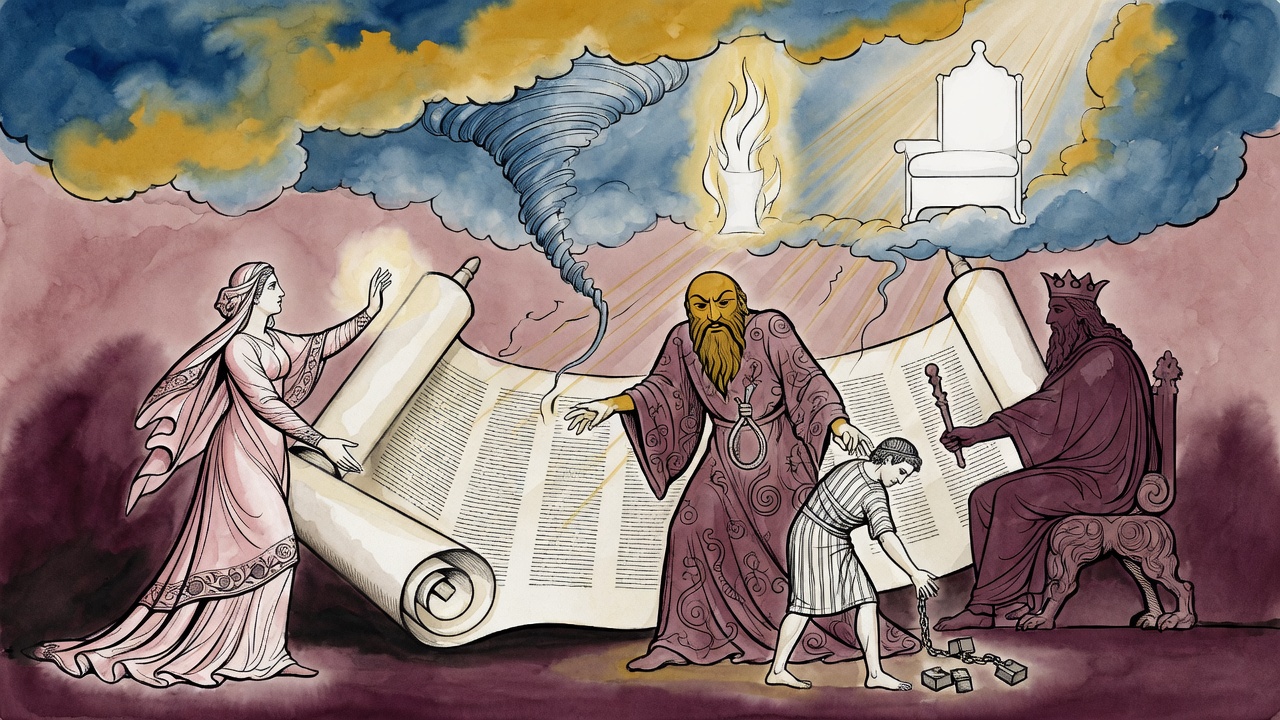
Ahasuerus filled the room with names of the dead. Pharaoh had ruled a world and drowned with his army. Six hundred thousand warriors had pursued Israel and vanished under water. Amalek, Haman's own ancestor, had attacked with four hundred thousand heroes, and Joshua cut them down. Sisera had marched with forty thousand generals, each one commanding a hundred thousand men, and the stars burned against his camp until a woman finished him.
The king's fear had numbers. It had examples. It had the shape of old disasters. Many rulers had risen against the Jews, and every one of them had been crushed into warning. Ahasuerus wanted their destruction, but he did not want to become the next name in that catalogue. Fear held his hand where justice never had.
The Enemy Chose Appetite
Haman did not argue that Persia was stronger than God. He knew better than to say that. His answer was colder. "Their God hates an unchaste life," he said. "Prepare feasts for them. Command them to join the merrymaking. Let them eat, drink, loosen themselves, and act as desire tells them. Then their own God will become angry."
It was a trap made of permission. No soldiers at the door. No blade at the throat. Only abundance, invitation, music, and the pressure of belonging in the king's city. Haman did not need Israel to bow to him yet. He needed them to forget themselves at a table set by their enemy.
The Remnant Stayed Untouched
The feast could be arranged. The heart could not be mastered so easily. Haman could spread the food, but he could not make every righteous soul eat. He could stage the merrymaking, but he could not force Mordechai's spine to bend or Esther's hidden life to dissolve into the palace. Somewhere inside the empire, a remnant stayed beyond his reach.
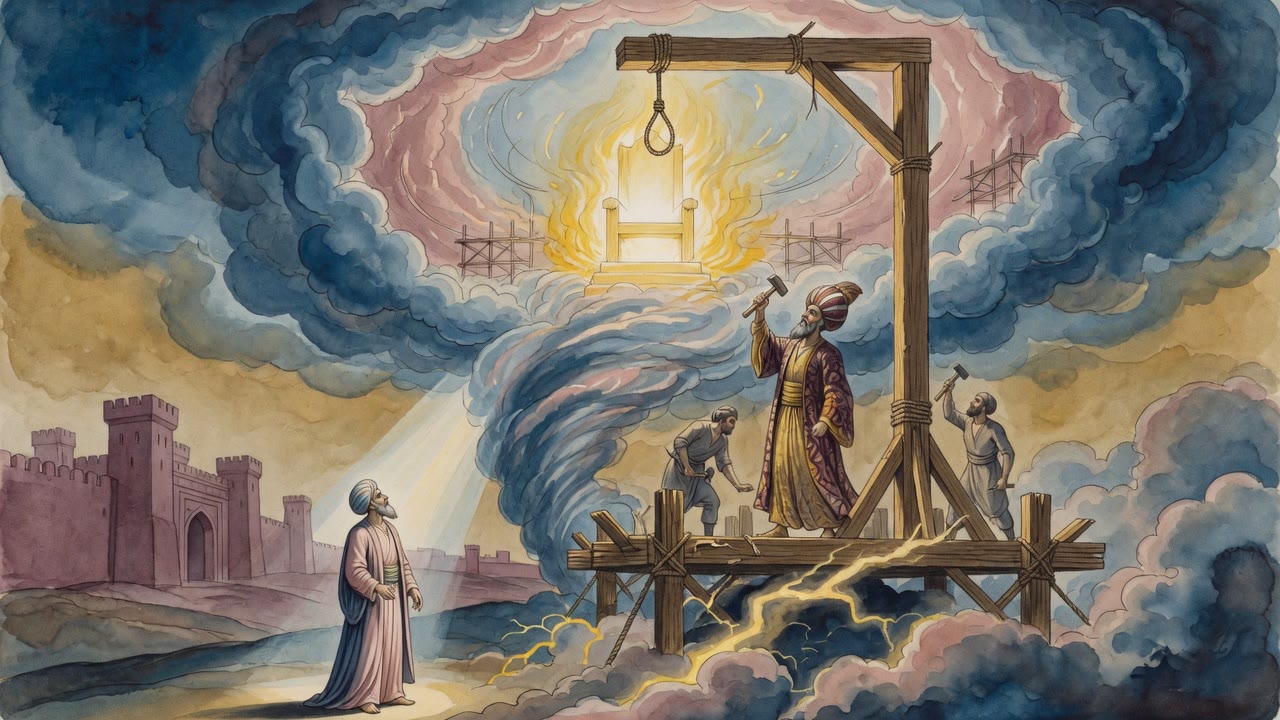
That was the crack in his plan. Haman had understood covenant well enough to weaponize it, but not well enough to know its keeper. He treated sin like a lever in his own hand. Pull it, and God withdraws. Pull it, and Israel is exposed. The Holy One does not surrender judgment to an enemy with a banquet budget.
In Haman's mind, the banquet had already become testimony. If the people sat at the king's tables, he could claim that they had chosen palace favor over covenant discipline. If they laughed with the courtiers, he could tell the king that the old protections no longer held. The accusation did not need truth in every household. It needed enough noise to sound convincing inside a throne room that already wanted permission.
The Fast Answered the Feast
When the danger finally rose into daylight, Esther answered with hunger. Three days without eating. Three days without drinking. The body that Haman wanted softened by royal pleasure was tightened by refusal. The people gathered around that refusal, and the queen prepared to enter the inner court with no guarantee that the golden scepter would rise.
The feast had been designed to turn appetite into accusation. The fast turned restraint into a shield. Haman had gambled that Israel's weakness would speak louder than its merit. He found, too late, that the covenant he tried to twist could still turn in God's hand and strike the one who had handled it like a weapon.
← All myths