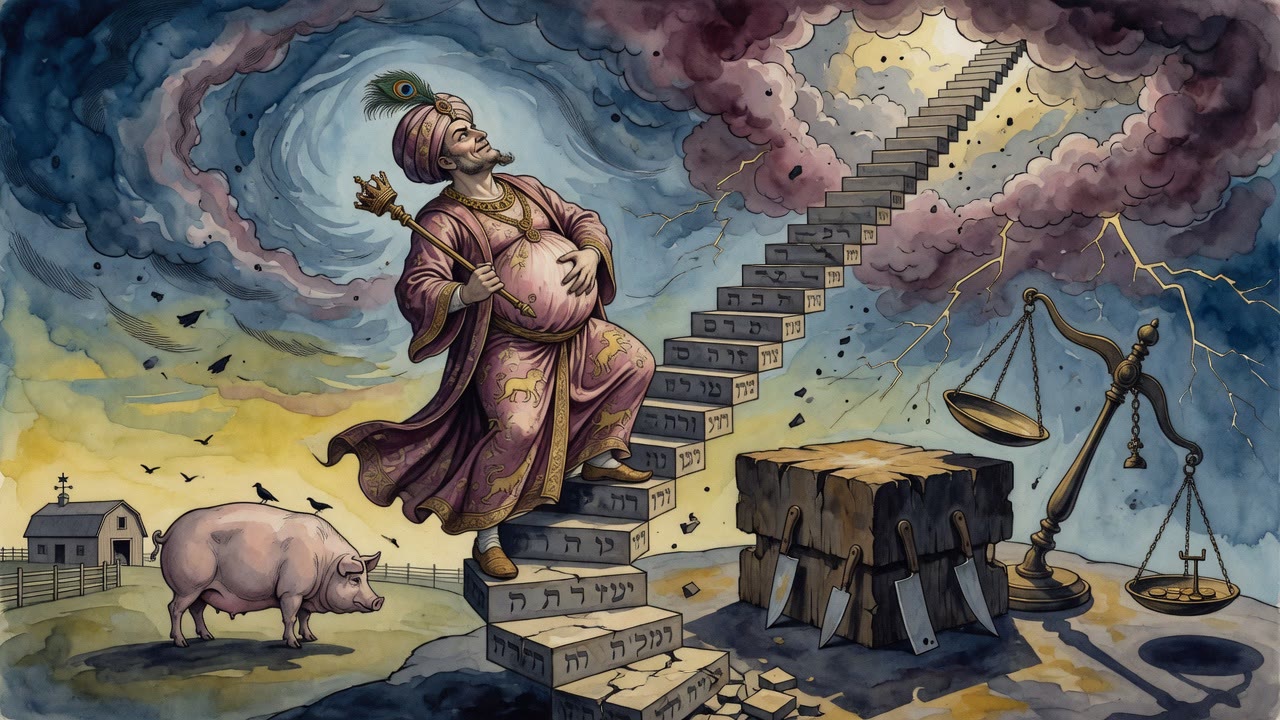
Haman Argued That God Was Too Old and Feeble to Stop Him
The advisors named the God who drowned Pharaoh. Haman pointed at the burned Temple and called heaven's silence proof.
Table of Contents
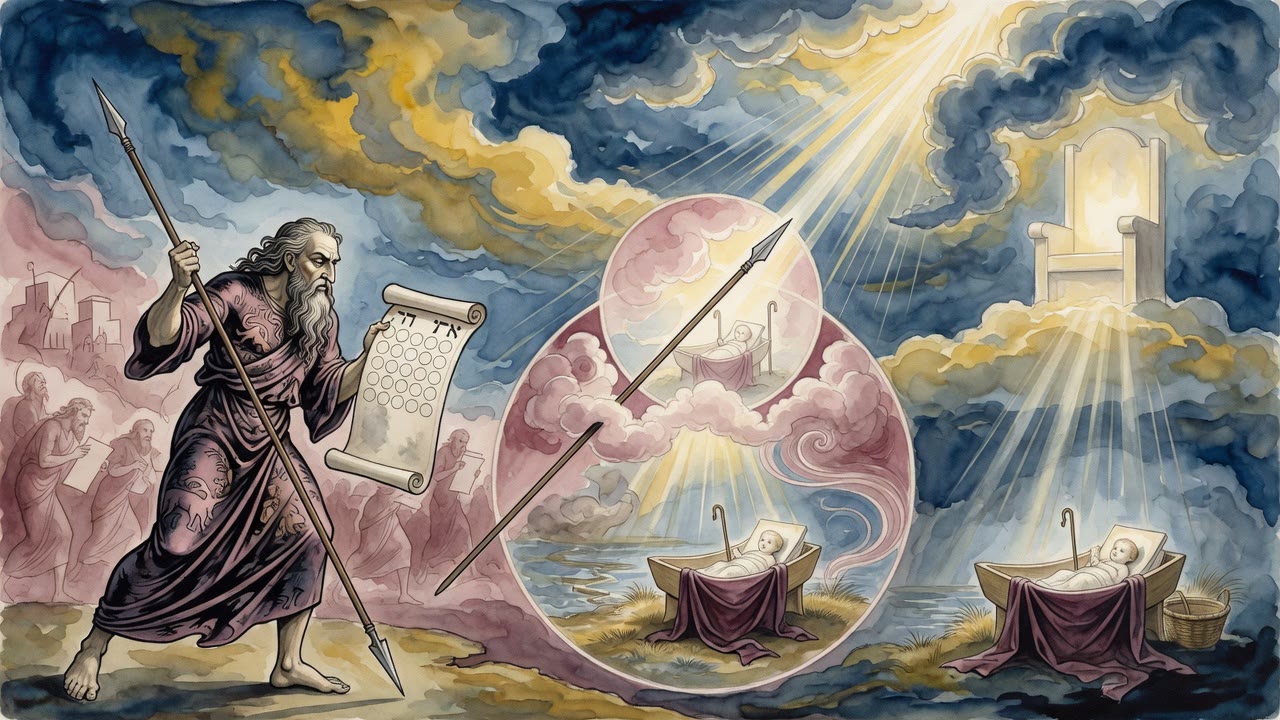
The men who knew their history did not let Haman finish. "This is not a people a king moves against lightly," they said. Their God had drowned Pharaoh's army. He had sent ten plagues. He had fought in the wilderness and in the wars of the judges. The record was long. The record was not on Haman's side.
 Click for full size
Haman had an answer ready.
He Called God Old
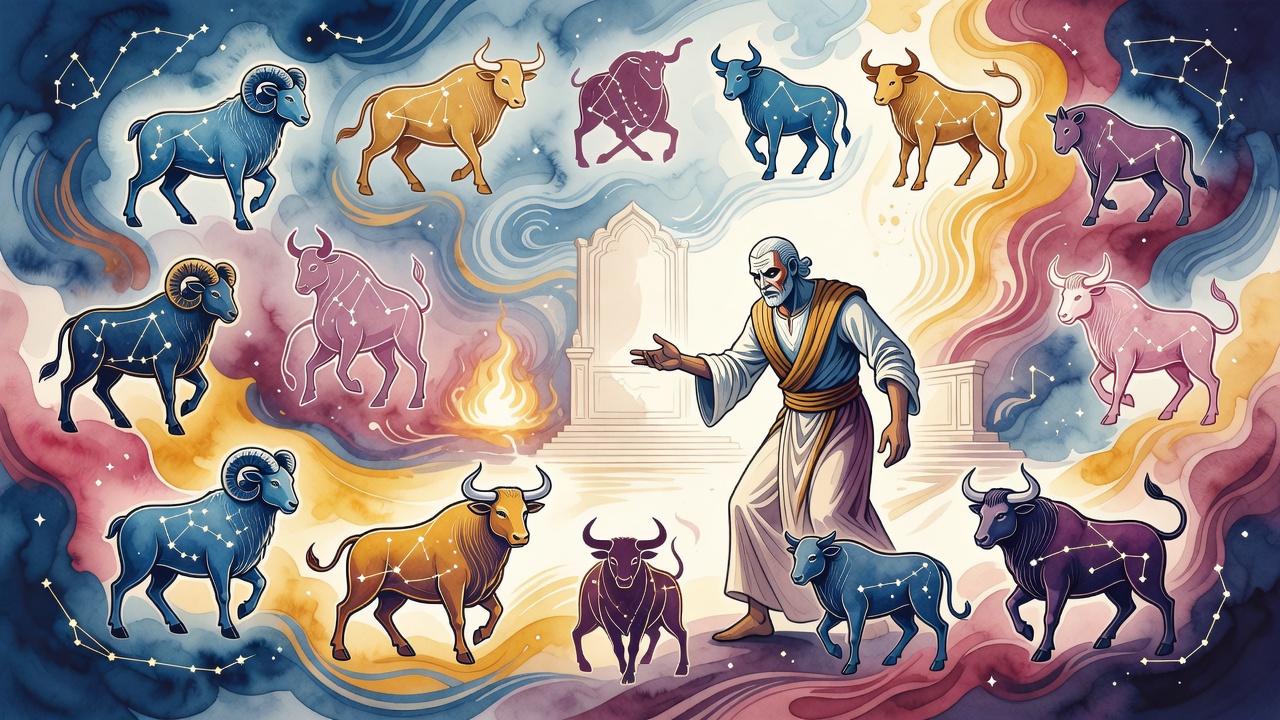
That God, he told them, is past His prime. The One who split the sea and drowned Pharaoh has waxed old and feeble. He can neither see nor act for His people any longer.
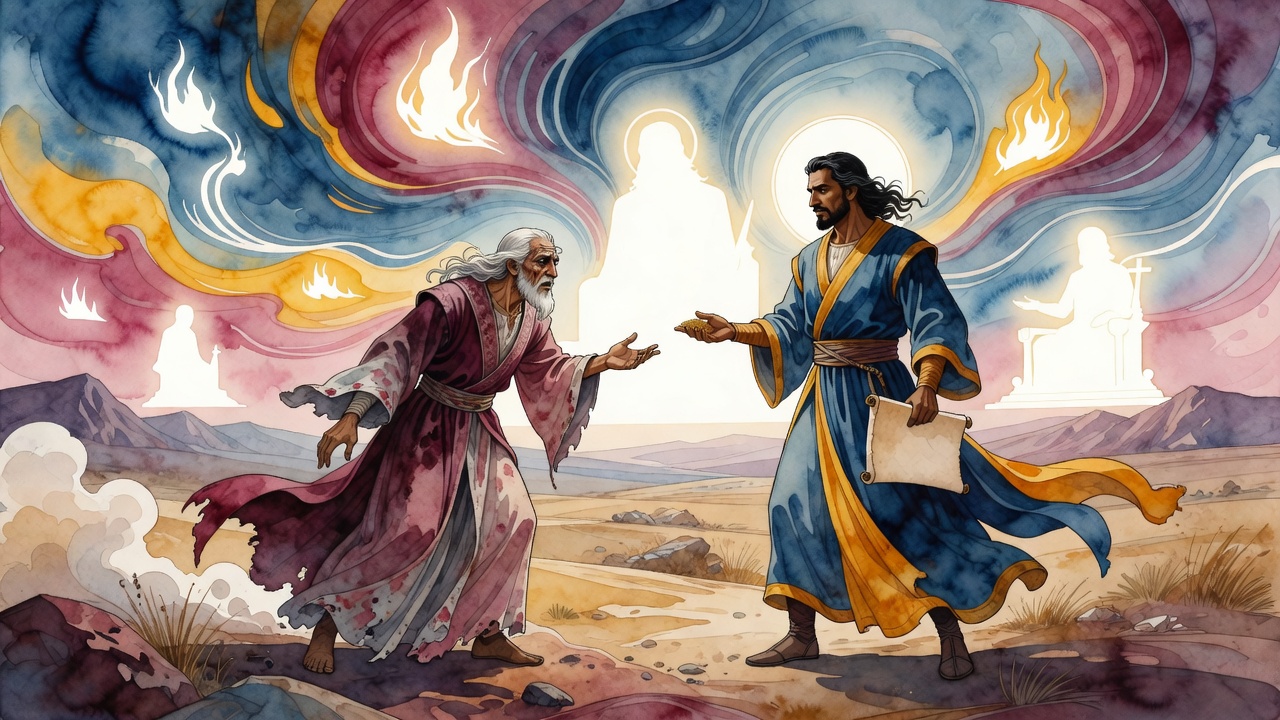
He pointed at the ruins. Nebuchadnezzar had burned the Temple to the ground, and no miracle had stopped him. Look at the people themselves, Haman said. Scattered exiles, living inside a foreign empire, waiting on the patience of kings. Had fire fallen from heaven when the Babylonian army marched into Jerusalem? Had that army drowned in any sea? No. And no. "If He had had power and strength, would He not have displayed them? This is the best proof that He was waxed old and feeble."
The council chamber was full of men who were not theologians. The ruins were real. The exile was real. Haman needed both to mean what he said they meant. His plan required a God who could not get up.
He Said God Was Asleep
He took the same claim to Ahasuerus. "There is one people that is scattered and dispersed among the peoples in all the provinces of your kingdom; their laws are different from every people's, and they do not keep the king's laws; it is not worthwhile for the king to tolerate them" (Esther 3:8).
He leaned on a single word. Yeshno, there is. He heard in it yashen, asleep. The one people belongs to the Lord who is One (Deuteronomy 6:4), Haman said, and that Lord is asleep for them now. A sleeping God does not split seas. A sleeping God does not notice a decree.
He added a ledger. They eat and drink and say, Delight in Shabbat, delight in the festivals. Once every seven days a Sabbath. Once every thirty a new moon. In Nisan, Passover. In Sivan, Shavuot. In Tishrei, Rosh Hashanah, the great fast, and Sukkot. They decrease the assets of the world, he told the king. Ahasuerus said they were commanded in their Torah. Haman pressed. They keep their days and treat the king's days with contempt.
The Guardian Who Neither Slumbers
The Holy One answered him before any horse was saddled. "There is no sleep before Me. Behold, the guardian of Israel neither slumbers nor sleeps" (Psalms 121:4). "And you say that there is sleep before Me? By your life, I will awaken against that man and eliminate him from the world."
The verse that closed the answer was already written: "Then the Lord awoke as if from sleep. He drove his foes into retreat" (Psalms 78:65-66). Haman had built a theology out of a burned house and a pun. Heaven did not argue the ruins with him. Heaven named the lie inside the pun.
"Wicked one," God said, "you are casting aspersions on their festivals." The charge Haman had used as money in the throne room was already entered against him.
A Sleepless King and a Ready Gallows
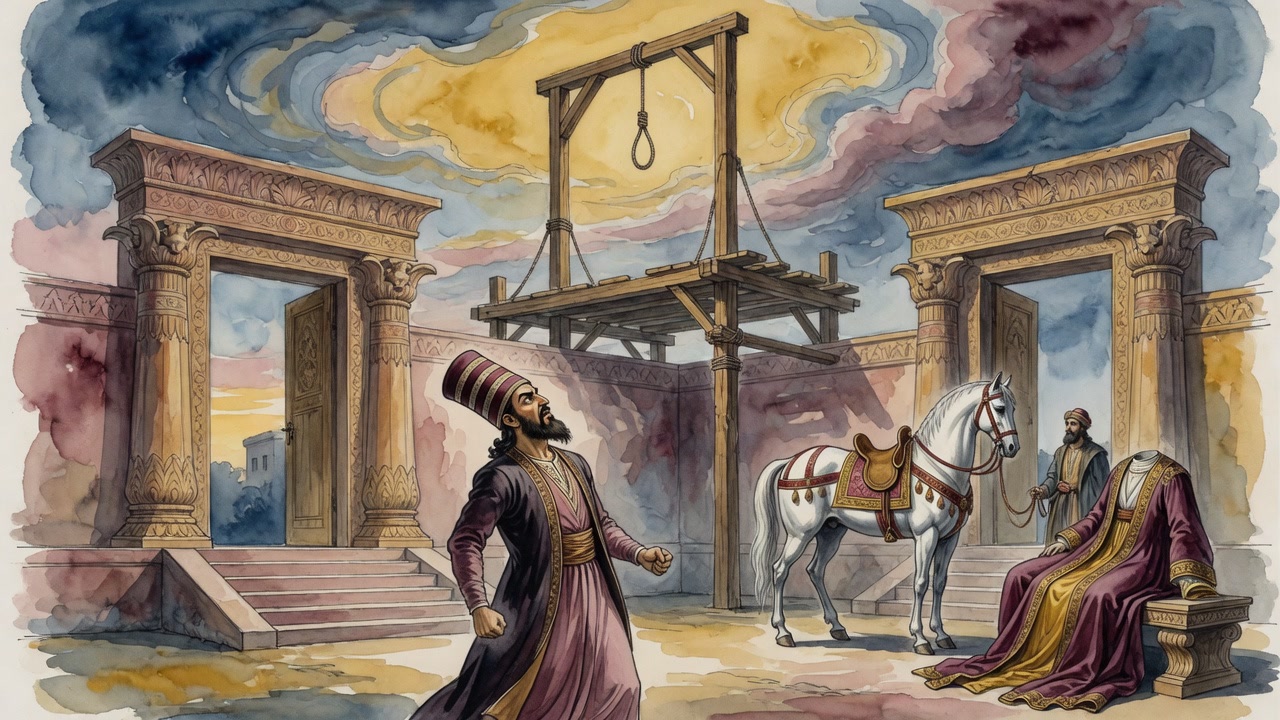
The decree went out. Mordecai sat in sackcloth. Esther fasted. The king spent a night without sleep and had the chronicles read to him. Haman arrived early to talk about a hanging and left late with his enemy on his own horse. The gallows he had built were used for the man who built them.
No sea split. No plague fell on Shushan. The God Haman had pronounced senile did not need a miracle the court would have recognized. He used a restless king, a book of records, and a woman already inside the palace when the hour came. Haman had read silence as weakness. The silence was the method.
He had wanted the ruins to be the last word. They were not. A people still keeping Shabbat in exile had a guardian who does not doze, and a vizier who called that guardian old walked up the wood he had cut for someone else.
← All myths