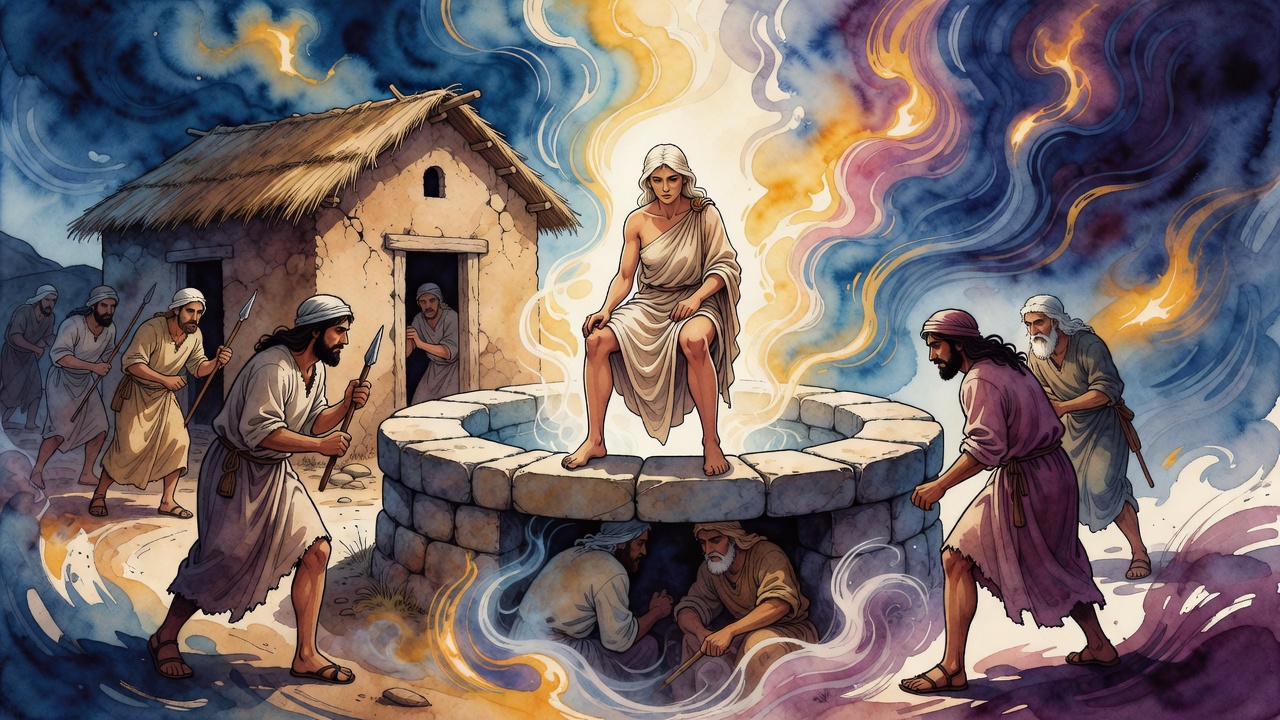
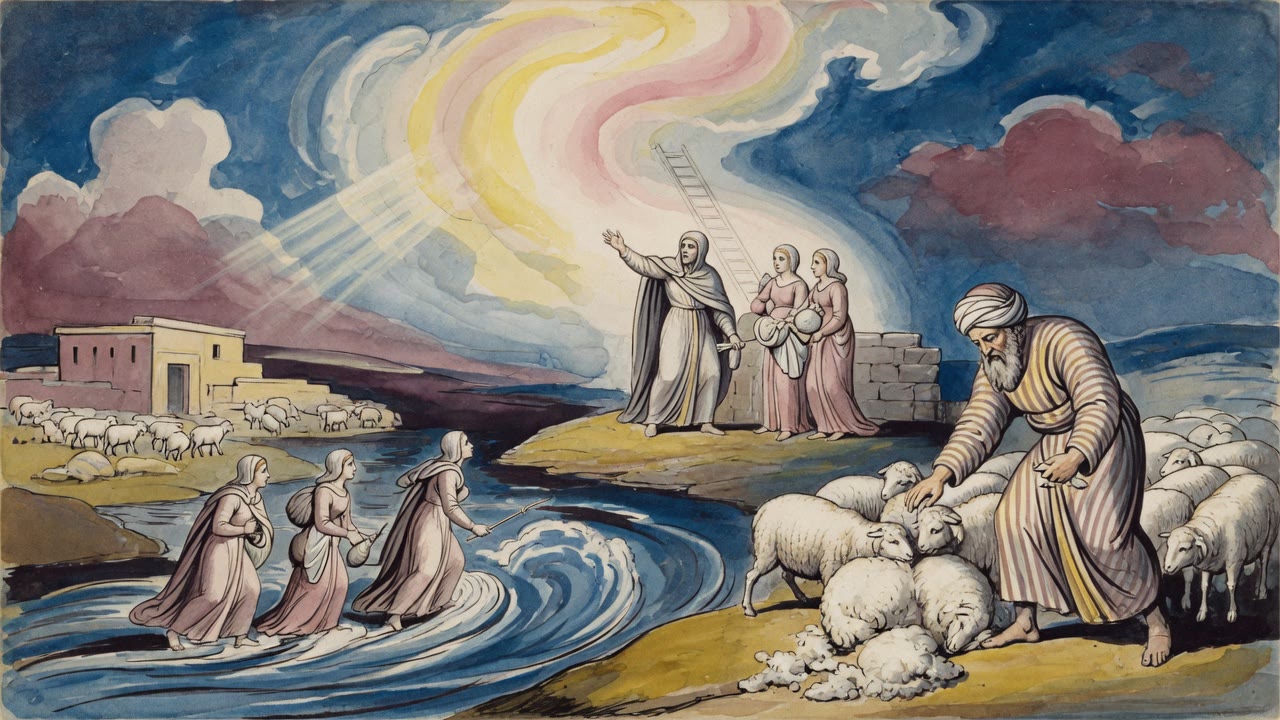
Esther Commanded Israel to Fast Through Passover
Mordechai named the festival sitting inside her three days. Esther did not blink. If the people died, the holiday would have no one left to keep it.
Table of Contents
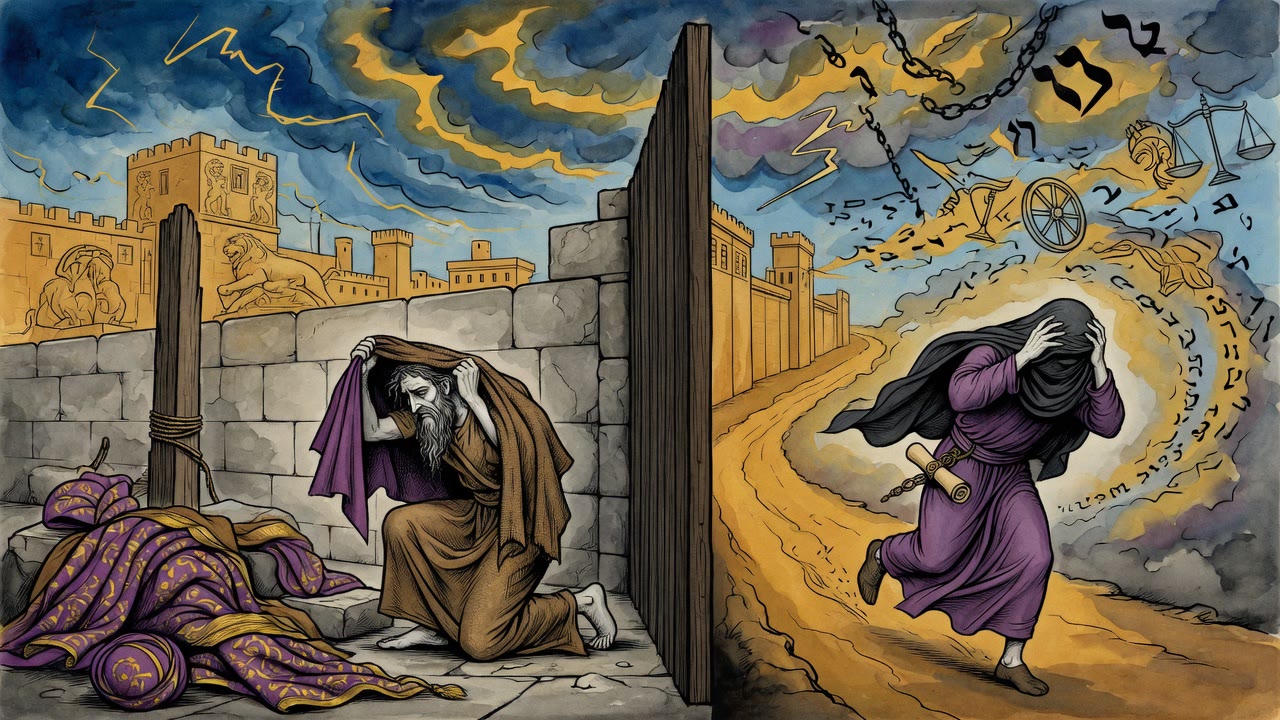
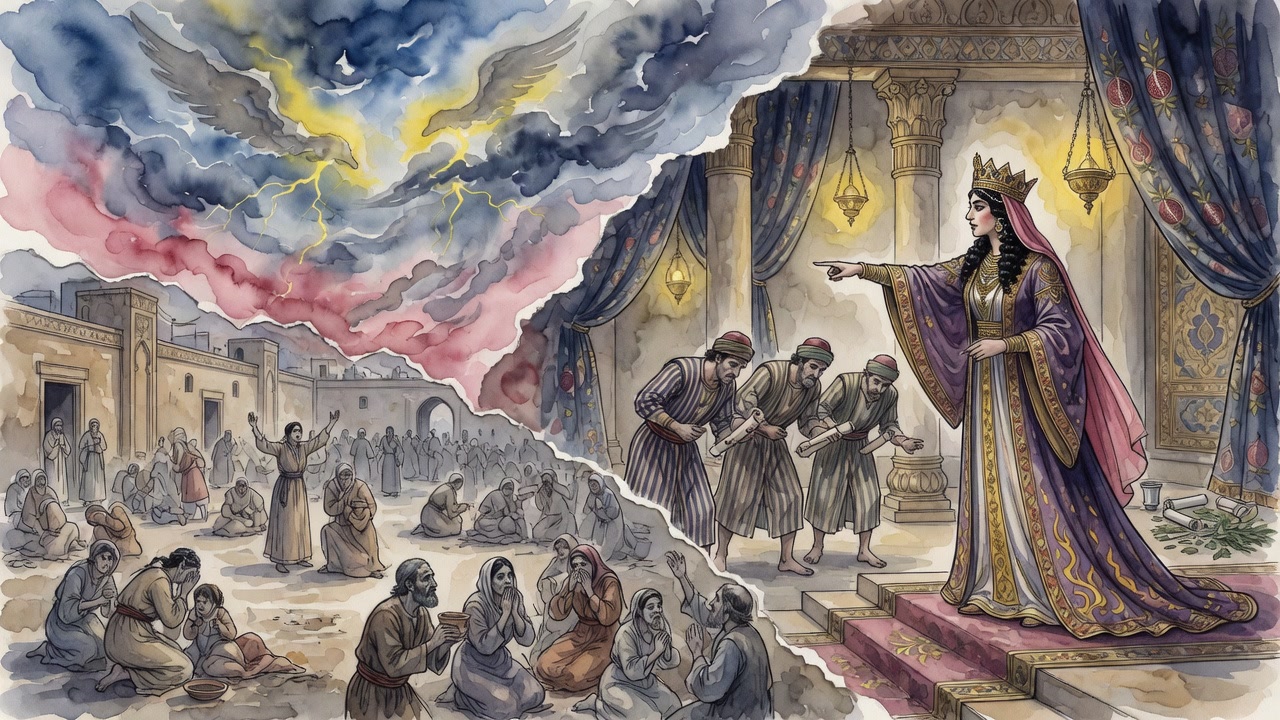
The word came through her maids and her chamberlains. Mordechai was mourning in the street, dressed in sackcloth, weeping in front of the palace gate. Esther heard it and her body folded.
 Click for full size
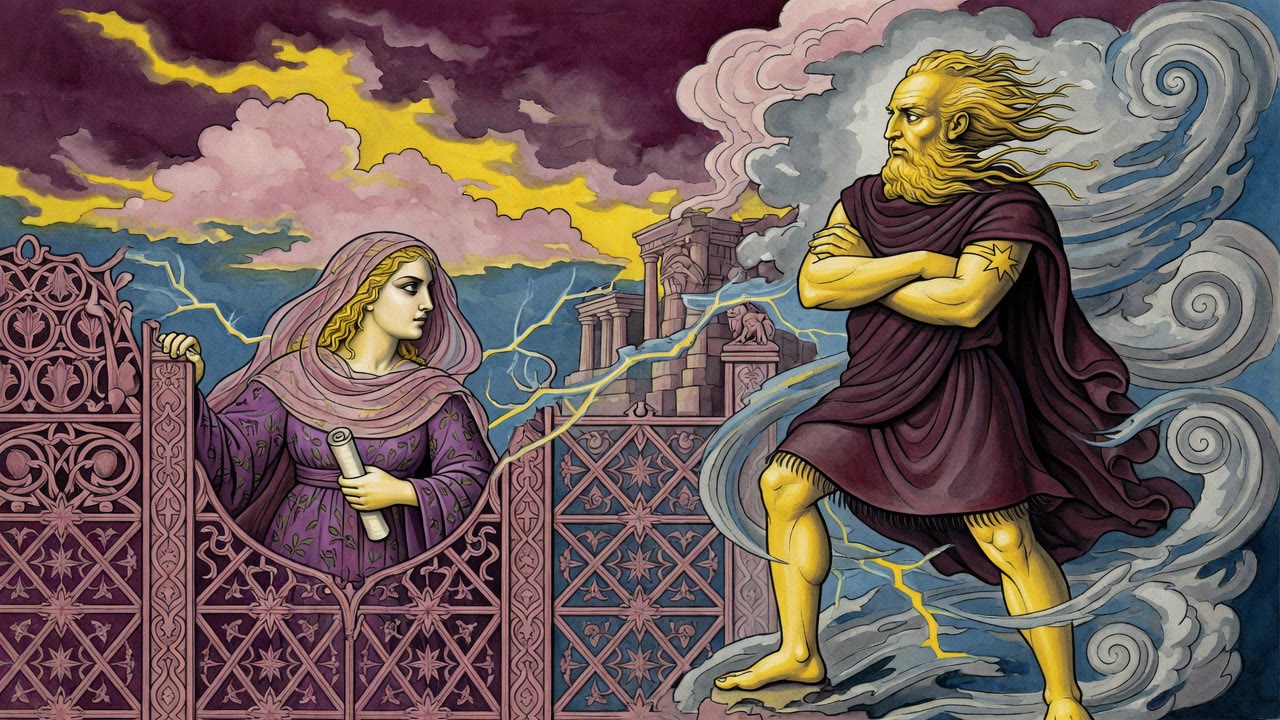
She did not yet know the decree. She knew the sound of him. The queen sat in the inner rooms of Ahasuerus, far from the gate, and the shock hit her before any scroll did. Blood came. Her maids found it on the linens and did not know whether it was her month arriving like a blow or a child leaving her. After that day she never bore a child in that house.
Blood in the Queen's Chamber
Whatever Haman had purchased from the king, whatever writing was now moving through all one hundred twenty-seven provinces from India to Ethiopia, it had found her through her skin. The Scroll of Esther says the queen was greatly distressed (Esther 4:4). Distressed is a small word for what the maids found.
She sent clothes out to the gate. Mordechai would not put them on. Sackcloth does not enter the king's gate, and he would not pretend the street was a place for linen. Esther had to send a person, not a garment.
The Messenger Who Had Been Cut Down
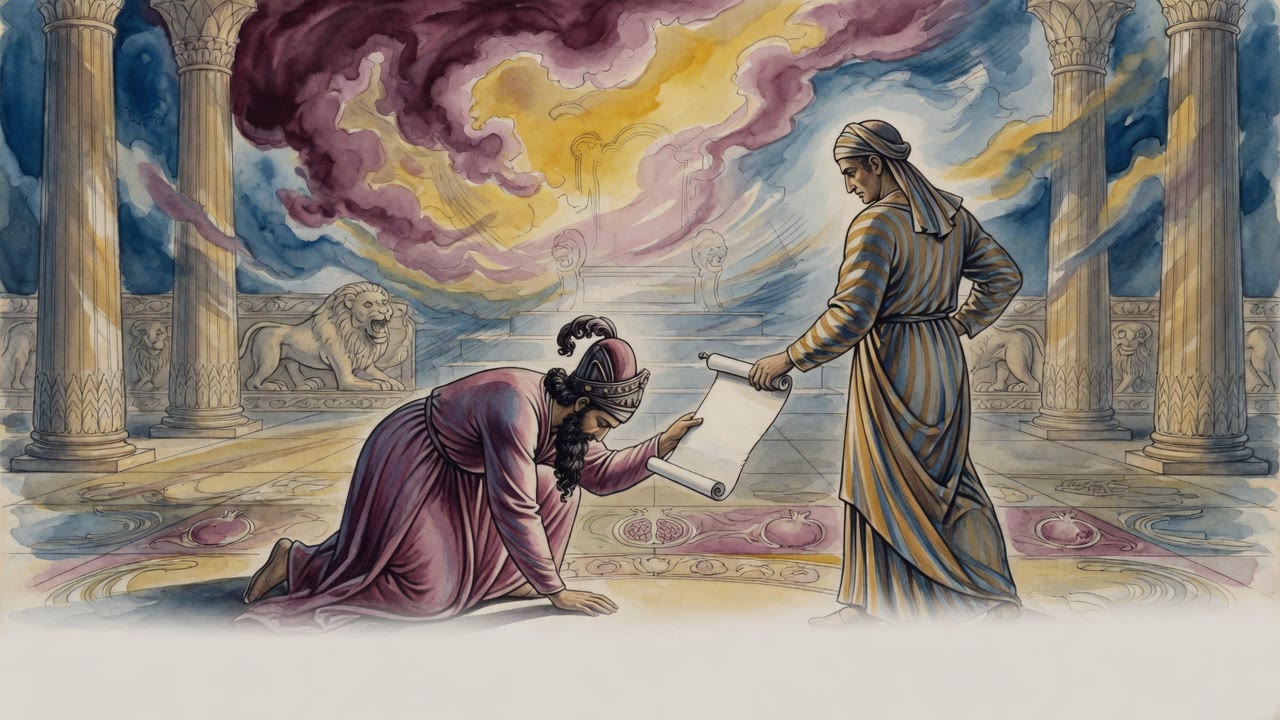
She sent Hatakh, one of the king's chamberlains assigned to her service. His name in the palace was Hatakh. Before that he had been Daniel, a high official under Babylon, cut down from his place when the court changed hands. A man who knew what a king's caprice could do to a life.
She wanted to know what this was and why this was. Hatakh went out. Mordechai's answer came back complete and terrible. Haman had made his purchase. The decree existed. The date had been set by lot. There was nothing left in the law of Persia that could unwrite it. What Esther did next would decide whether the decree was carried out or not.
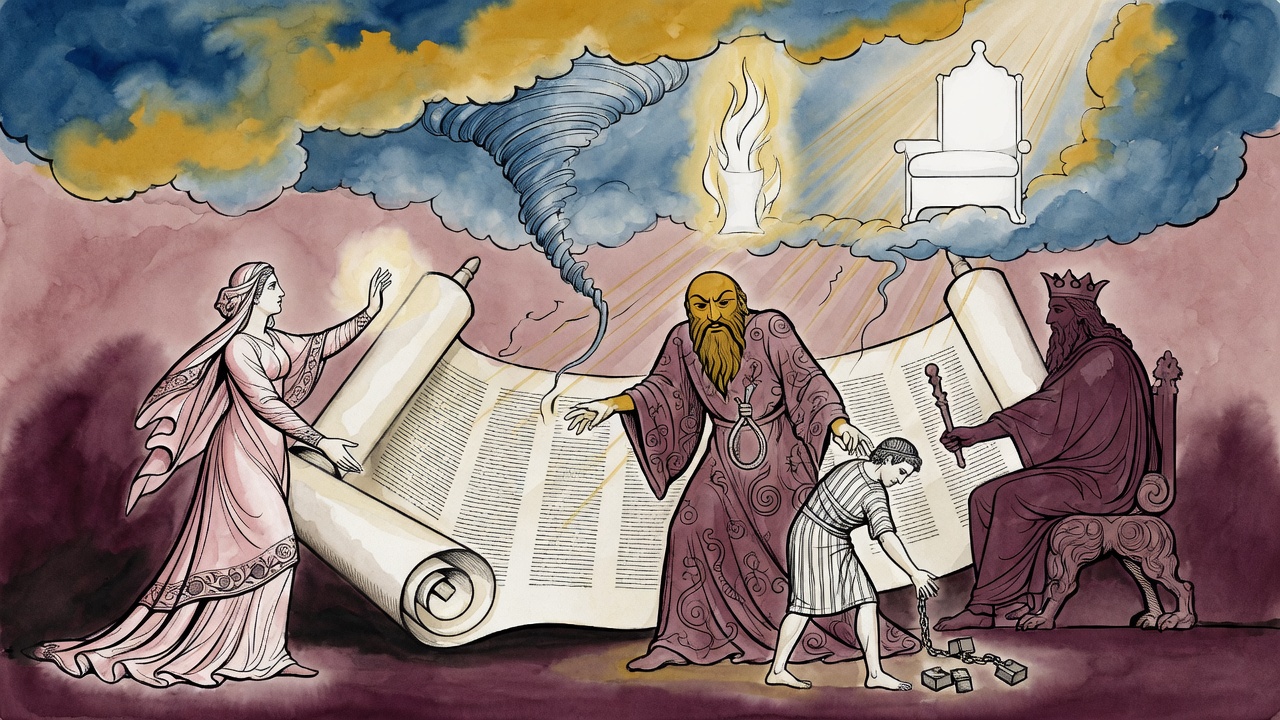
She also sent a harder question through the same man. Had Israel denied the cry at the sea, "This is my God and I will praise Him" (Exodus 15:2)? Had they denied the tablets, written on this side and on that? The fast she was about to demand was not only hunger. It was a repair, if a repair was still possible.
Three Days Across Passover
She told Mordechai to assemble every Jew in Shushan and fast on her behalf. Three days. No eating. No drinking. The thirteenth, fourteenth, and fifteenth of Nisan.
Mordechai got the message and sent back a single objection. The first day of Passover sat inside those three days. The festival given to Israel to mark the leaving of Egypt. Eight days in which leavened bread was forbidden and the leaving of Egypt was told at every table. Esther was asking the whole community to go hungry straight through it.
Her answer came without a pause.
"Elder of Israel, why is it Passover? The festival of Passover was given to Israel. If Israel is destroyed, of what value is the festival? It is better to desecrate Passover once so that it may be observed forever more."
If Israel Is Gone
Mordechai heard her. He went out and did what she commanded (Esther 4:17). He passed over his own objection the way the festival itself remembers a passing-over. He assembled the children, took bread and water from them, dressed them in sackcloth, and sat them in ashes. They shouted. He prayed that he had not refused Haman out of pride, and that God would not forget the promise not to destroy them in the land of their enemies (Leviticus 26:44).
Esther prepared to walk toward a king who had not called her. The three days would empty every table in Shushan, including the tables that should have held the roasted lamb and the unleavened bread. She had already bled in the inner room. She would now starve a festival to keep the people who were supposed to keep it.
If the people died, Passover would become a date with no mouths. She chose the mouths.
← All myths