Retold in our words. Read the original at the link below.The Sefaria Midrash Rabbah, 2022 · CC-BY
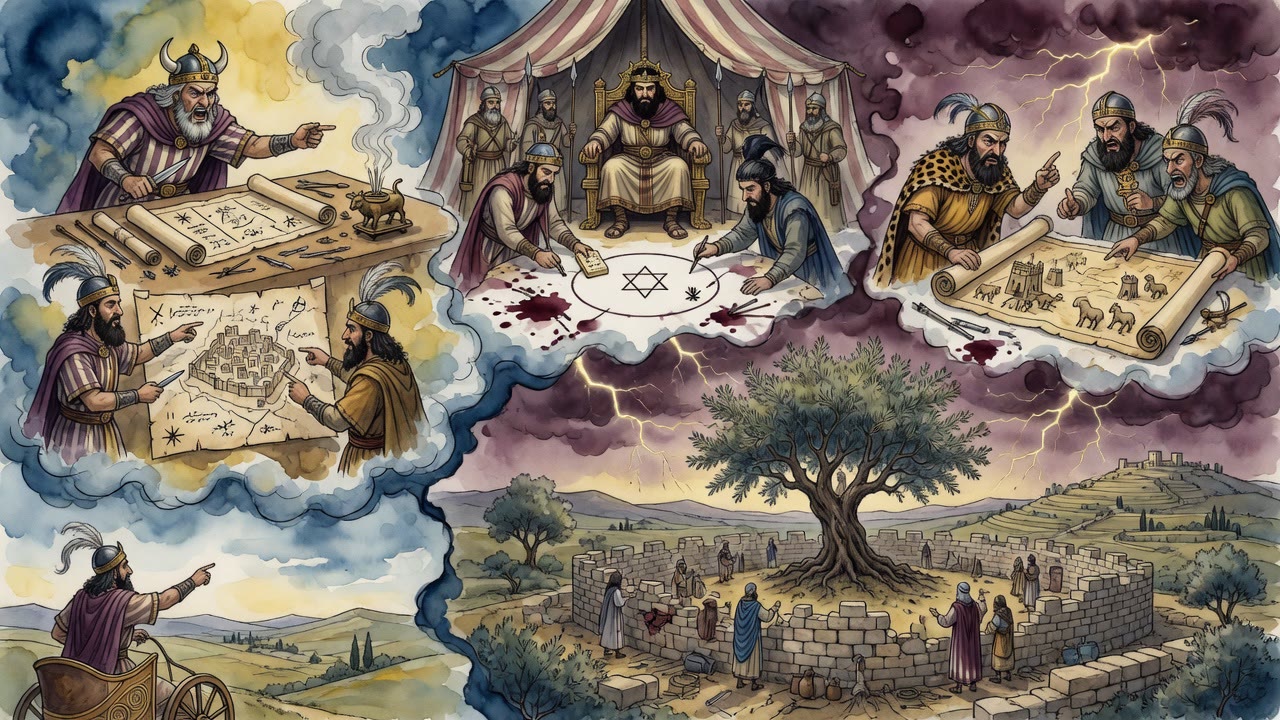
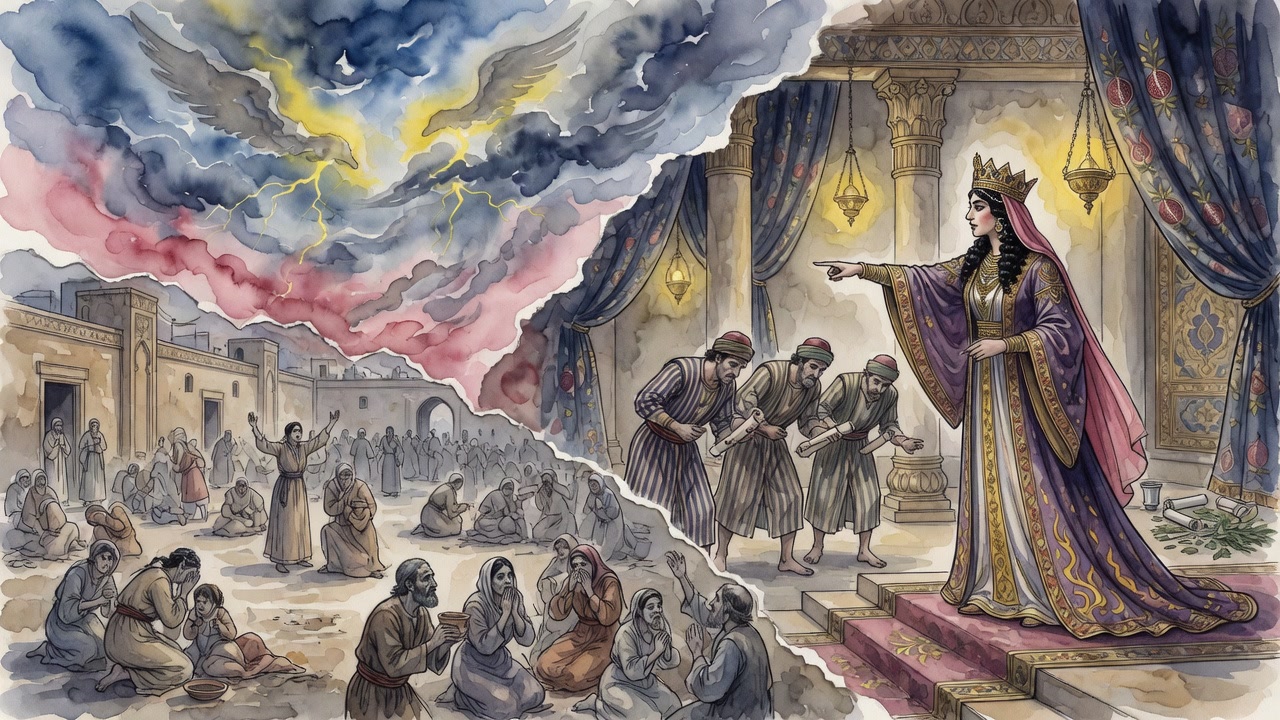
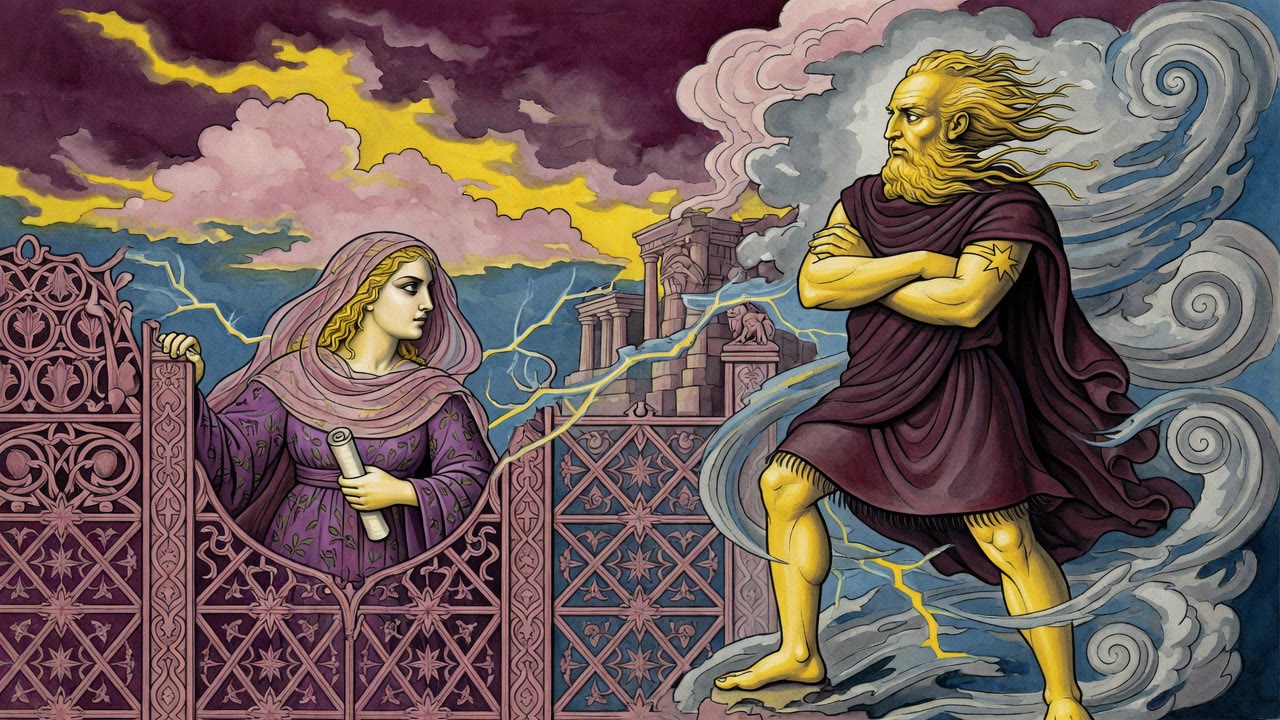
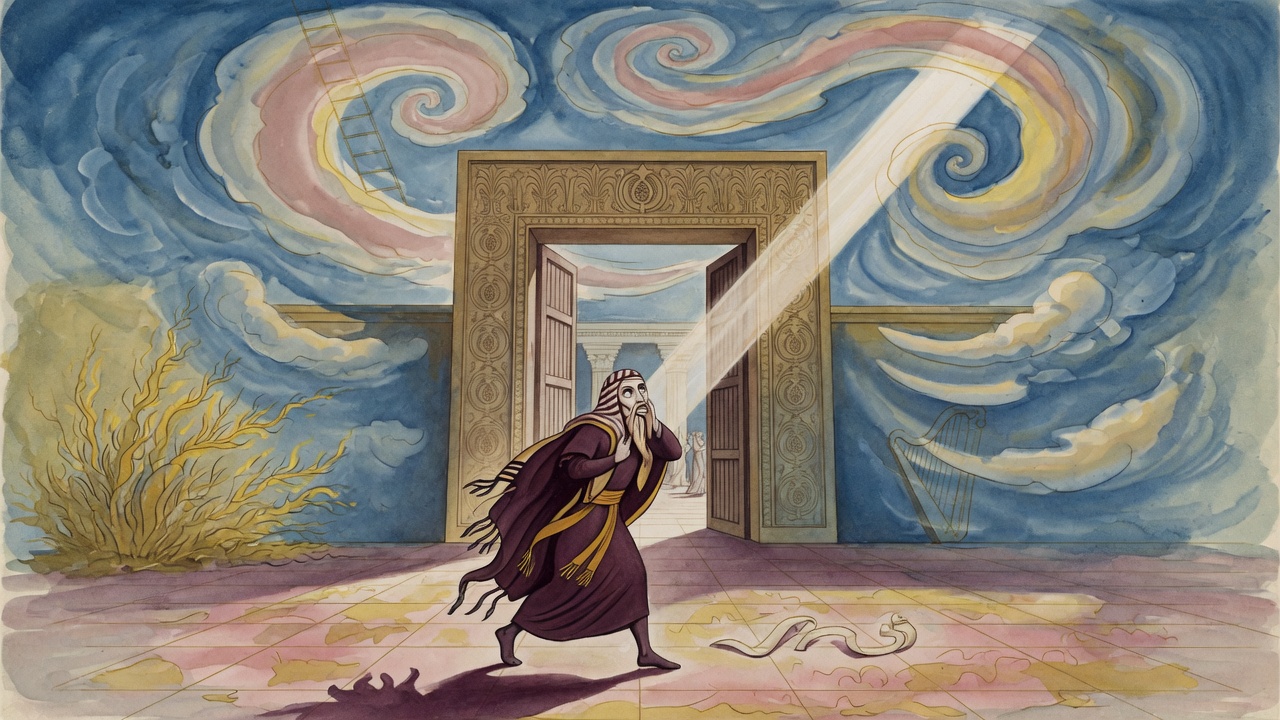
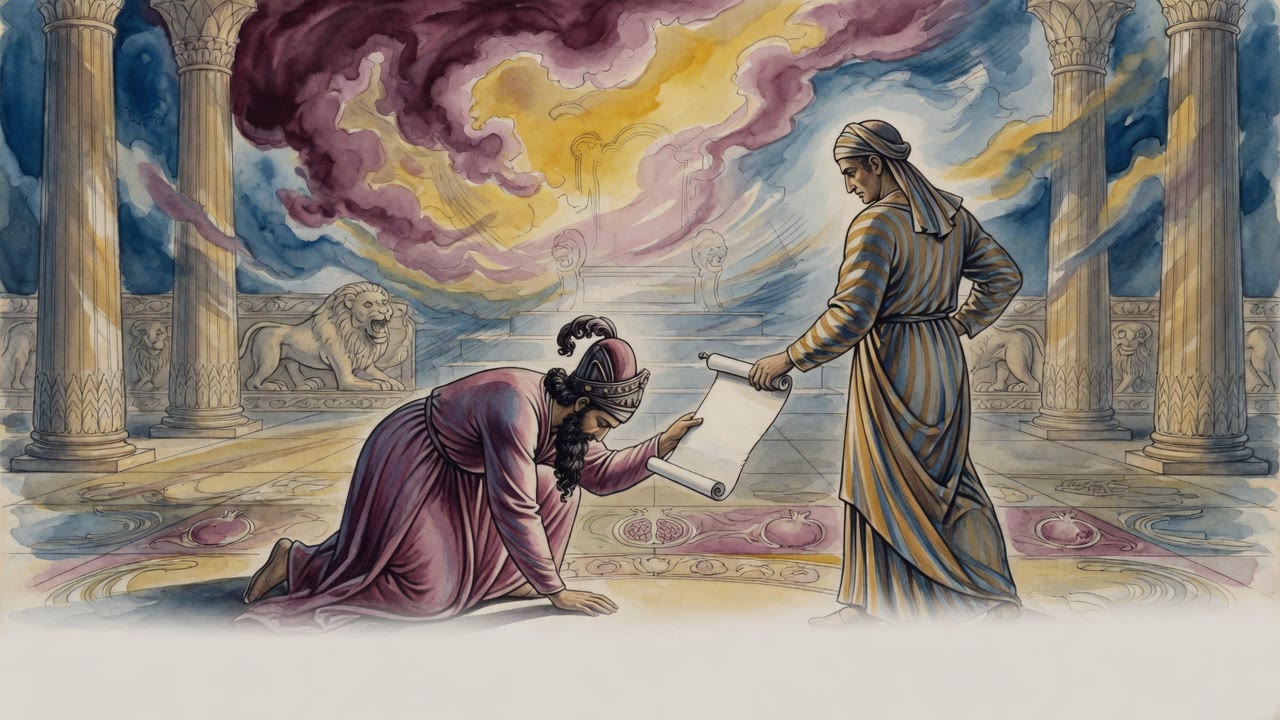
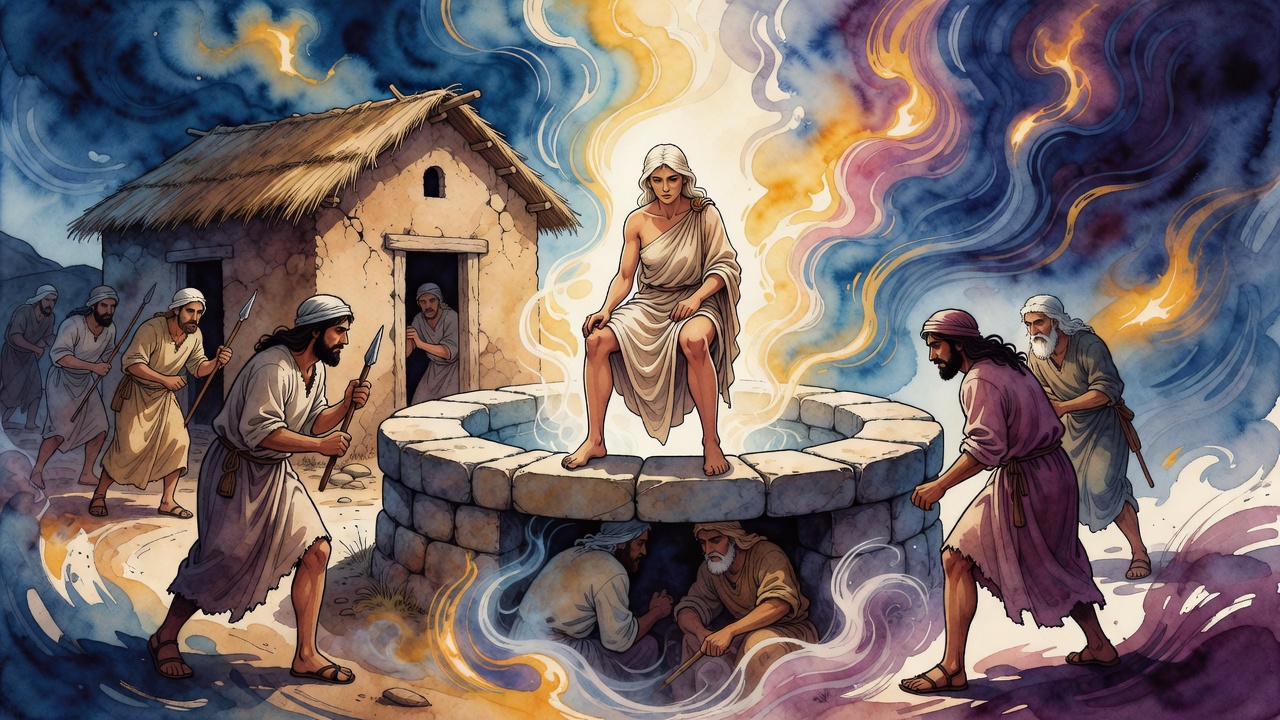
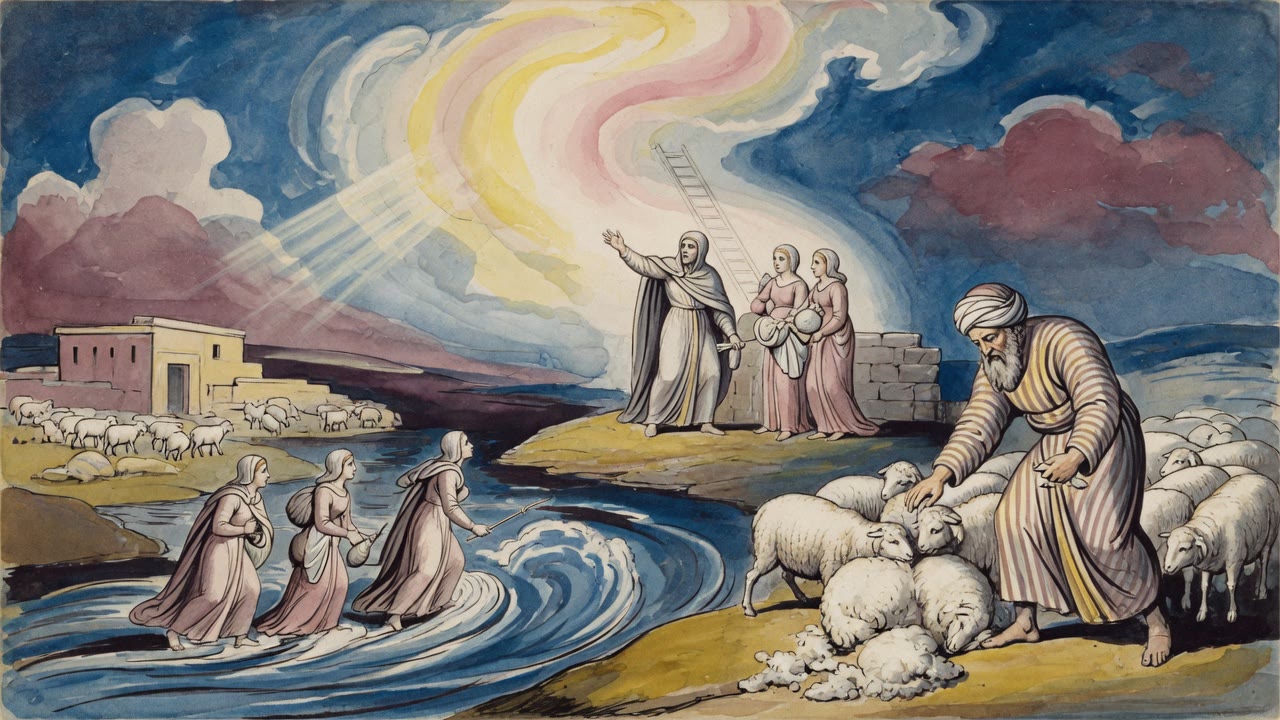
“If it pleases the king, let it be written to eliminate them and I will weigh out ten thousand talents of silver by the hands of the king's craftsmen, to bring to the king's treasuries” (Esther 3:9).“If it pleases the king, let it be written to eliminate them.” Reish Lakish said: At the moment that Haman the wicked said to Aḥashverosh: ‘Come let us eliminate Israel from the world,’ Aḥashverosh said to him: ‘You cannot overcome them, because their God does not abandon them at all. Come see what He did to the kings who came before us who extended their hand against them, who were greater and more powerful kings than we are. Anyone who came against them to eliminate them from the world, and those who counseled against them, were eliminated from the world and became a proverb for all residents of the world. We, who are not as great as they were, all the more so. Cease speaking of this matter again.’ Nevertheless, Haman would constantly pester Aḥashverosh over this matter and would counsel him with evil counsel regarding Israel.Aḥashverosh said to him: ‘Since this is the situation, we will consult the wise men and the magicians.’ Immediately, he sent for and assembled all the wise men of the nations of the world. They all came before him. Aḥashverosh said to them: ‘Is it your wish that we eliminate this nation from the world?’ They all said to him simultaneously: ‘“Who is he and where is he, who was so presumptuous to do so?” (Esther 7:5) – to seek to cast [lots] in this matter? For if you eliminate Israel from the world, [know that] the world only exists for the sake of the Torah that was given to Israel. That is what is written: “If it were not for My covenant of day and night, had I not set the statutes of heaven and earth, [I would indeed spurn the descendants of Jacob…]” (Jeremiah 33:25-6).Not only that, but all the idolaters are called strangers before the Holy One blessed be He [and Israel are called [His] intimates]; that is what is written: “Also to the foreigner, who is not of Your people Israel” (I Kings: 8:41). But Israel are called intimates; that is what is written: “For the children of Israel, the people who are intimate with Him” (Psalms 148:14). Not only that, but they are called children; that is what is written: “My firstborn son is Israel” (Exodus 4:22); “You are children to the Lord your God” (Deuteronomy 14:1). And the Holy One blessed be He is called close to Israel; that is what is written: “The Lord is close to all who call Him sincerely” (Psalms 145:18). There is no nation that is close to the Holy One blessed be He other than Israel, as it is stated: “[For who is a great nation that has God near it] as the Lord our God in all of our calling to Him?” (Deuteronomy 4:7) A person who seeks to extend his hand against the intimates and children of the Holy One blessed be He, how can he escape, as He rules over the upper and the lower worlds, and all living beings. He has the capacity to elevate and to degrade, to put to death and to revive. Go see the previous kings, like Pharaoh and Sennacherib, who transgressed by extending their hand against Israel. What befell them?’Immediately, Haman said to them: ‘The God who drowned Pharaoh in the sea and performed miracles on behalf of Israel, and the mighty acts of which you heard, He is already old and is unable to do anything. Nebuchadnezzar has come and destroyed His Temple and burned His Sanctuary, has exiled Israel and dispersed them among the nations. Where is His power and His might now that He has grown old? As it is stated: “They say: The Lord does not see; the God of Jacob does not comprehend”’ (Psalms 94:7).Once he said this to them along these lines, they immediately accepted his proposal and they reached a consensus to annihilate Israel, and wrote letters and sealed them. This is what they wrote in those letters: Unlimited peace to you. Let it be known to you that there is a person among us, who is of not from our place, but rather a descendant of royalty, from the descendants of Amalek and one of the great ones of this generation; Haman is his name. He asked us a small simple question about a certain people residing in our midst, most despicable of all the peoples, and they are arrogant. They seek our harm, and cursing the king is common among them. What is the curse that they curse us? “The Lord is King forever and ever; nations have perished from His land” (Psalms 10:16), and they also say: “To wreak vengeance on the nations, rebuke among the peoples,” (Psalms 149:7).They repudiate those who have treated them well. Come and see, from that unfortunate, Pharaoh, what did they do? When they went down to Egypt, he received them hospitably, settled them in the finest land in the country, provided for them during the famine years, and fed them all that was best in the land. He had palaces to build, they would build there; nevertheless, he was unable to get them to participate.15That is, until he ultimately forced them to work. Not only that, but they came to him with a pretext and said to him: ‘In order to sacrifice to the Lord our God, we will go on a three-day journey and we will return afterwards. If you want, lend us silver vessels and gold vessels, and garments.’ They lent them their gold, their silver, and all their fine garments. Each one of them loaded a countless number of their donkeys, until they stripped Egypt; that is what is written: “And they stripped Egypt” (Exodus 12:36), and they fled.When Pharaoh heard that they were fleeing, he followed them to recover his property. What did they do to him? There was a man with them named Moses son of Amram, and with his sorcery he took a staff, uttered an incantation and struck the sea, until it became dry. All of them entered the dry land in the sea and all of them crossed; I don’t know how they crossed, and how the water dried up.When Pharaoh saw this, he entered [the seabed] after them to recover his property. I don’t know what pushed him into the sea. He and his entire army drowned in the sea. They did not remember that he had treated them well. What did they do to Amalek my grandfather, when he came and waged war against them? It is stated: “Amalek came and waged war with Israel in Refidim” (Exodus 17:8). From where did Amalek come? Rabbi Kruspedai said in the name of Rabbi Yoḥanan: He came from the company of wicked Bilam, as he went to consult with him. He [Amalek] said to him: ‘We know that you are a wise counselor and a purveyor of evil plots, and anyone who receives counsel from you does not fail.’ He [Amalek] said to him: ‘Look what this nation did to Egypt, who had performed many kindnesses to them. If they did so to Egypt, who performed many kindnesses to them, to other nations, all the more so. What do you counsel me?’Bilam said to him: ‘Go and wage war against them, and if you do not wage war against them you will be unable to overcome them, because they can rely on the merit of Abraham their forefather and you are also a descendant of Abraham and can rely on the merit of Abraham.’ They immediately came against them in war.What did that Moses, their leader, do? He had a certain disciple, Joshua son of Nun was his name, and he was extremely cruel and had no mercy. That Moses said to him: “Choose for us men and go out and wage war with Amalek” (Exodus 17:9). I don’t know if those men whom he chose were sorcerers, or whether they were great warriors. What did Moses do? He took a staff in his hand, and I don’t know what he did with it, and when he came against them, I don’t know what incantation he uttered that weakened them and they fell before them; that is what is written: “Joshua weakened Amalek and its people by sword” (Exodus 17:13).They came against Siḥon and Og, the mighty of our land, against whom no creature can prevail, and I don’t know how he killed them. The kings of Midian came against them, and I don’t know how they killed them. What did the disciple of that man Moses do? He brought Israel into the land of Canaan, and not only did he take their land, but he killed thirty-one of their kings, and allotted their land to Israel. He had no mercy on them, and those whom he did not seek to kill became their slaves. They came against Sisera and his multitudes and I don’t know what they did to the Kishon Stream that it swept and washed them away and cast them into the Mediterranean Sea, as it is stated: “The Kishon Stream swept them away” (Judges 5:21).They had their first king, Saul was his name, and he went and waged war in the land of my grandfather Amalek, and he killed one hundred thousand of their cavalrymen in one day, and he had no mercy on man, woman, infants and suckling babes, and I do not know how he killed them. In addition, what did he do to my ancestor Agag, upon whom they initially had mercy? A man from them named Samuel came and beheaded him, and left his flesh for the birds of the heavens, as it is written: “Samuel cut Agag into pieces” (I Samuel 15:33), and I do not know why he killed him in this unusual way, as you have heard.After this, they had a certain king named David son of Yishai, who destroyed and eliminated all the kingdoms and had no mercy on them, as it is stated: “David would not leave man or woman alive” (I Samuel 27:11). His son Solomon arose after him and built a certain building for Israel and called it the Temple. I don’t know what they had in it. When they go to war, they enter into it and engage in sorcery there, and when they emerge from it, they kill and destroy the world.And with all the prosperity that they had, they rebelled against their God, and in addition, that God of theirs had grown old. Nebuchadnezzar came and burned that Temple of theirs, exiled them from their land, and brought them into our midst, but they have not yet changed their ugly ways. Even though they are in exile in our midst, they mock us and the faith of our gods. Now we have arrived at a consensus, and have cast lots to eliminate them from the world to determine the time that it will be feasible to annihilate them, and the lot fell on the thirteenth day of the month of Adar. Now, when these letters reach you, be prepared for that day, to destroy and kill all the Jews among you, from lad to elder, children and women, on one day, and do not leave from them remnant or refugee.When those letters were sealed and given to Haman, he and all the members of his entourage proceeded joyfully. They met Mordekhai, who was walking ahead of them. Mordekhai saw three children who were coming from school and Mordekhai ran after them. When Haman and his entire entourage saw that Mordekhai was running after the children, they followed Mordekhai to ascertain what Mordekhai would ask them. When Mordekhai reached the children, he asked one of them: ‘Recite your verse to me.’ He said to him: ‘“Fear not from sudden terror, and from the cataclysm of the wicked when it comes”’ (Proverbs 3:25). The second began and said: ‘I read today and with this verse I left school: “Take counsel and it will be negated; speak something and it will not stand, as God is with us”’ (Isaiah 8:10). The third began and said: ‘“Until old age I am He and until gray hairs I will bear you; I have done and I will carry; I will bear and I will rescue”’ (Isaiah 46:4). When Mordekhai heard this, he laughed and was overjoyed. Haman said to him: ‘What is this joy that you rejoiced when hearing the words of these children?’ He said: ‘It is over the good tidings of which they apprised me, that I need not fear the evil designs that you counseled against us.’ Immediately, the wicked Haman became angry and said: ‘I will strike at none other than these children first.’Rabbi Yitzḥak Nappḥa said: The wicked Haman came with a great scheme to indict Israel; that is what is written: “Upon the completion of those days, the king made a banquet for all the people who were present in the Shushan citadel” (Esther 1:5). The people mentioned here are none other than Israel; that is what is written: “Happy are you, Israel, who is like you? A people redeemed by the Lord…” (Deuteronomy 33:29). Haman said to Aḥashverosh: ‘The God of these people hated licentiousness. Provide them with prostitutes, make a banquet for them, and decree that they must all attend and eat and drink and do as they please,’ as it is stated: “To act in accordance with the wishes of each man” (Esther 1:8).When Mordekhai saw this, he arose and proclaimed, saying to them: ‘Do not go to eat at the banquet of Aḥashverosh, who invited you only to prosecute you, so there will be a basis for the attribute of justice to prosecute you before the Holy One blessed be He.’ They did not heed the words of Mordekhai, and they all went to the banquet house.Rabbi Yishmael said: Eighteen thousand five hundred went to the banquet house and ate, drank, became intoxicated, and were corrupted. Immediately, the Accuser arose and informed on them before the Holy One blessed be He and said before Him: ‘Master of the universe! How long will you cleave to this nation, who remove their heart and their trust from you? If you will, eliminate this nation from the world because they are not repenting before you.’ The Holy One blessed be He said: ‘What will become of the Torah?’ He said to Him: ‘Master of the universe! It will be satisfied with those above.16The Torah will be learned by the angels. He also resolved to eradicate Israel. At that moment, the Holy One blessed be He said: ‘Why do I need a nation for which I made many of my signs and wonders against all who rose against them to harm them? “I would terminate their memory from man”’ (Deuteronomy 32:26).Immediately, the Holy One blessed be He said to the Accuser, ‘bring Me a scroll, and I will write eradication on it.’ At that moment, the Accuser went and brought Him a scroll and He wrote on it. Immediately, the Torah emerged in widow’s garb and raised its voice in weeping before the Holy One blessed be He, and the ministering angels screamed in response to its weeping. They said before Him: ‘Master of the universe, if Israel is abolished from the world, what need is there for us in the world, as it is stated: “Behold, their angels cry out outside, the messengers of peace weep bitterly”’ (Isaiah 33:7). When the sun and the moon heard this, they withheld their light, as it is stated: “I will garb the heavens with blackness and make sackcloth their garment” (Isaiah 50:3). At that moment, Eliyahu of blessed memory ran in a panic to the eternal patriarchs, and to Moses son of Amram, and said to them: ‘How long will the patriarchs of the world remain dormant in sleep, and not pay attention to the trouble which your descendants are undergoing, over which the ministering angels, the sun, the moon, the stars, the constellations, the heavens, the earth, and all the hosts of the heavens are weeping bitterly, and you are standing by, and not paying attention?’ They said to him: ‘Why?’ He said to them: ‘Because they derived benefit from the banquet of Aḥashverosh. Because of that, a decree was issued against them to eliminate them from this world and to expunge their memory.’Abraham, Isaac, and Jacob said to him: ‘If they violated the laws of the Holy One blessed be He and their decree was sealed, what can we do?’ Eliyahu then said to Moses: ‘Loyal shepherd, how many times have you stood in the breach on Israel’s behalf, and you cancelled the decree so He would not destroy, as it is stated: “Were it not for Moses, His chosen one, who stood before Him in the breach to turn back His wrath from destruction” (Psalms 106:23). How will you respond to this trouble, “for the children have come to the birth stool, [but there is no strength to give birth]”?’ (Isaiah 37:3).Moses said to him: ‘Is there an honest person in this generation?’ He said to him: ‘There is, and his name is Mordekhai.’ He said to him: ‘Go and let him know, so that he will stand in prayer there, and I will do so from here, and we will ask for mercy for them before the Holy One blessed be He.’ He [Eliyahu] said to him: ‘Loyal shepherd, the letter of annihilation of Israel has already been written.’ Moses said to him: ‘If it is sealed in mortar, our prayer will be heard, but if it is sealed in blood, what was [decreed] will be.’ He said to him: ‘It is sealed with mortar.’ Moses said to him: ‘Go and let Mordekhai know.’ He immediately went and let Mordekhai know; that is what is written: “Mordekhai knew everything that had been done, and Mordekhai rent his garments” (Esther 4:1). When they told Esther, immediately, “the queen was greatly agitated” (Esther 4:4). What is the meaning of agitated? It teaches that she began menstruating.

 Click for full size