5 min read

Haman Leads Mordecai Through the King's City

From a deed cut on a kneecap to a sleepless king, Haman designs a parade for himself and ends up leading Mordecai through the gate he named.

Curated by Arthur · Told by Maggid ·
Table of Contents
  1. A Contract on a Kneecap
  2. The Decree Already Written
  3. How to Honor the Man the King Loves
  4. The Street That Turns
  5. Two Kingdoms, One Gate
Haman Leads Mordecai Through the King's City Click for full size

A Contract on a Kneecap

Long before the gallows, Haman already owed Mordecai a humiliation he could not scrub off with perfume or titles. In a starving camp his troops threatened mutiny with the clarity hunger gives. Haman begged supplies from the Jew who would not bow. Mordecai refused silver at interest and demanded a different payment: Haman would sell himself as slave under terms no court poet would later admire. No parchment was near in that desperate place. They cut the bill of sale into Mordecai's kneecap.

Years later, whenever their paths crossed in the king's city, Mordecai let the knee show. Not a speech. A reminder. Hatred that begins as a private debt spreads like fire in dry grass after a long summer. Haman's fury widened from one stiff neck to a people whose name he learned to spit.

The Decree Already Written

By the time Ahasuerus signed Haman's plan, the empire's Jews already lived under a date of death stamped with royal authority. Haman walked tall through courts that smelled of wine and fear. He had the ring, the money, the schedule, and the pleasure of a plot that looked like statesmanship. Mordecai sat at the gate in sackcloth that the palace perfume could not ignore. Esther moved in rooms Haman did not fully map, learning when to speak and when to wait.

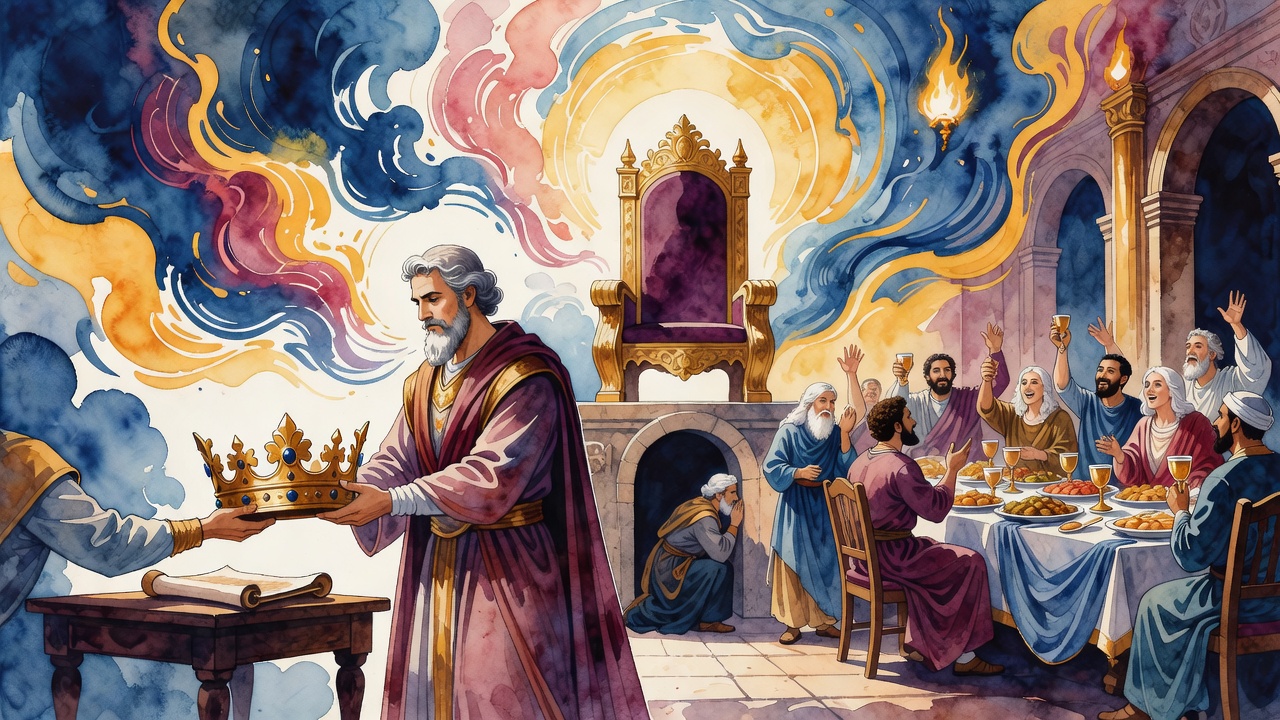
Then the king could not sleep. Chronicles of old favors were opened by restless hands. Mordecai's name surfaced as the man who had once blocked an assassination and received nothing for it. Ahasuerus asked what honor had been done for him. Nothing. The gap yawned like a missing tooth in the royal mouth. A king who forgets a savior becomes a stage for reversals heaven has already drafted.

How to Honor the Man the King Loves

Ahasuerus called Haman in and asked how to honor a man the king delights to favor. Haman's mind filled with his own face before the question finished. Royal robes. The king's horse. A noble of rank to lead the horse through the city crying the man's praise so that every market stall would learn the name. He spoke the fantasy aloud, certain the mirror of power would answer with Haman.

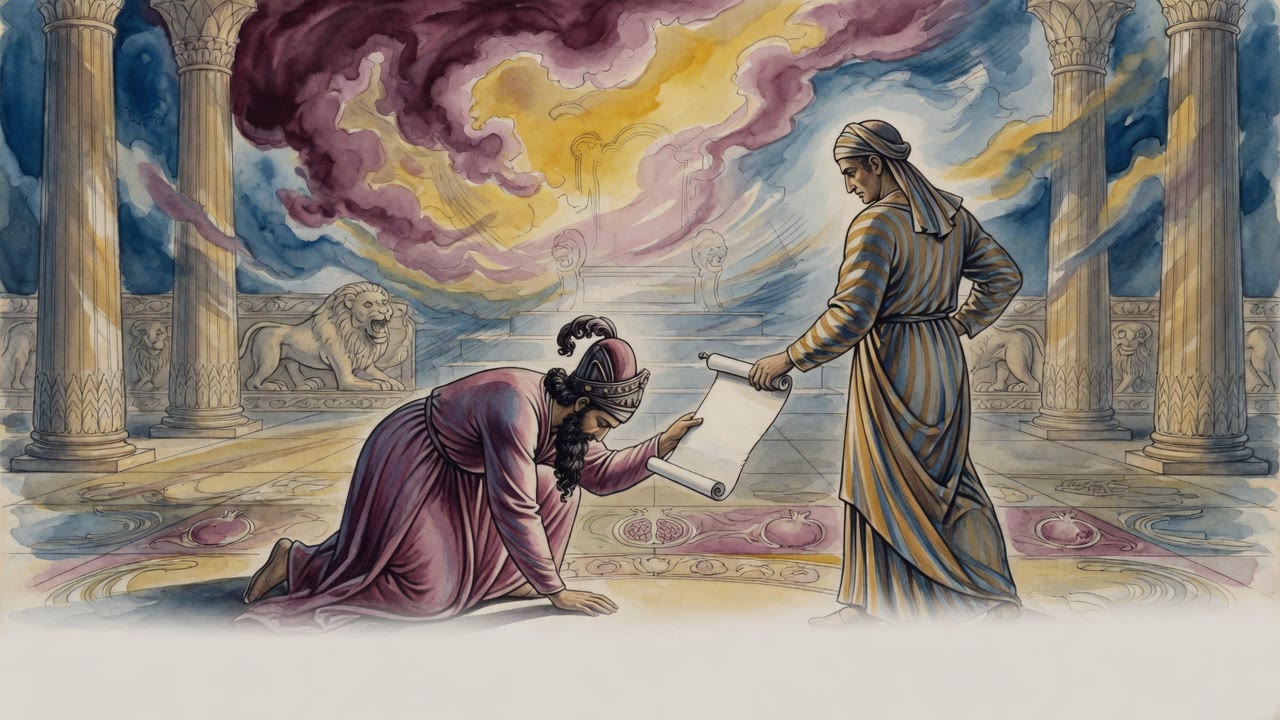
"Do so to Mordecai the Jew," the king said, and named the gate that runs from the harem to the palace, the most public threshold in the complex. Haman tried fog. Many gates exist. Which man. Which Jew. He offered ten thousand talents of silver rather than that walk. He offered his own sons to run before the horse if only he himself could be spared the leading. The king held the line with a stubbornness that felt larger than one night's insomnia. The honors must come from Haman's own hands and mouth.

The Street That Turns

Haman dressed Mordecai. He led the horse. He cried the words he had invented for himself while the city watched a vizier become a herald. Servants who had bowed to Haman yesterday learned a new choreography in an hour. Some looked at the ground. Some looked too long. The horse's hooves struck the paving with a rhythm that mocked every prior decree against the Jews.

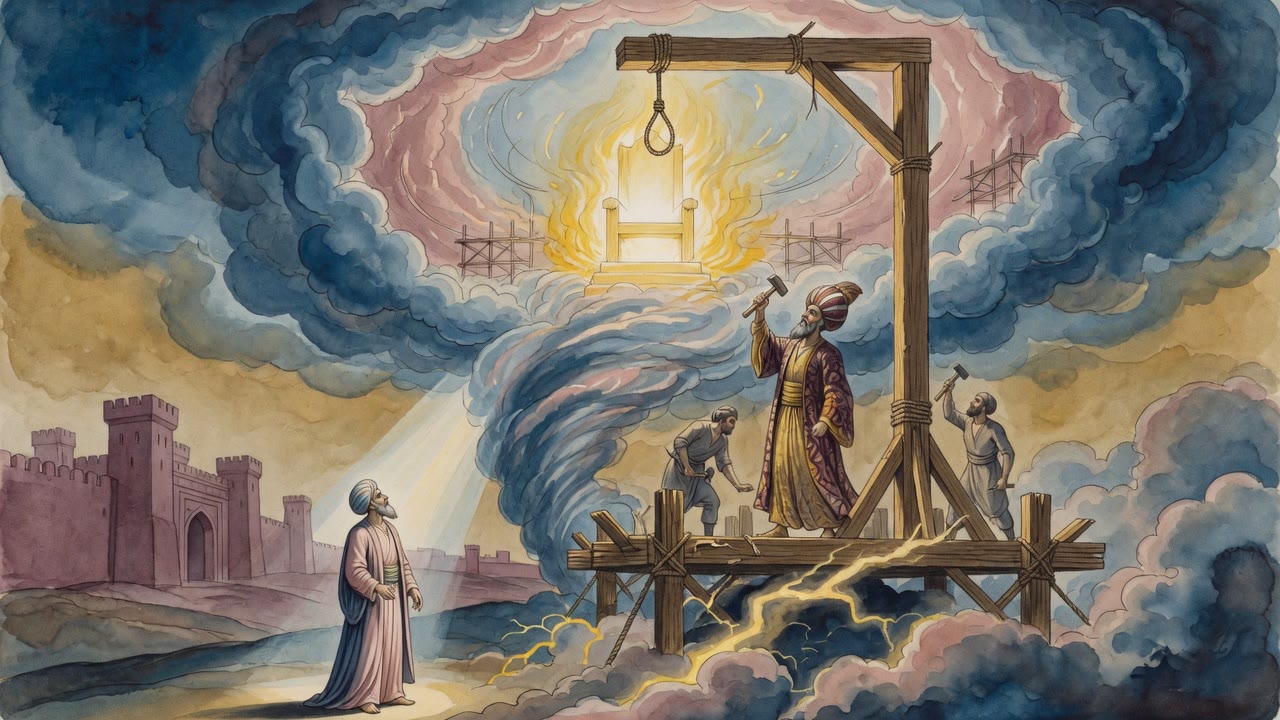
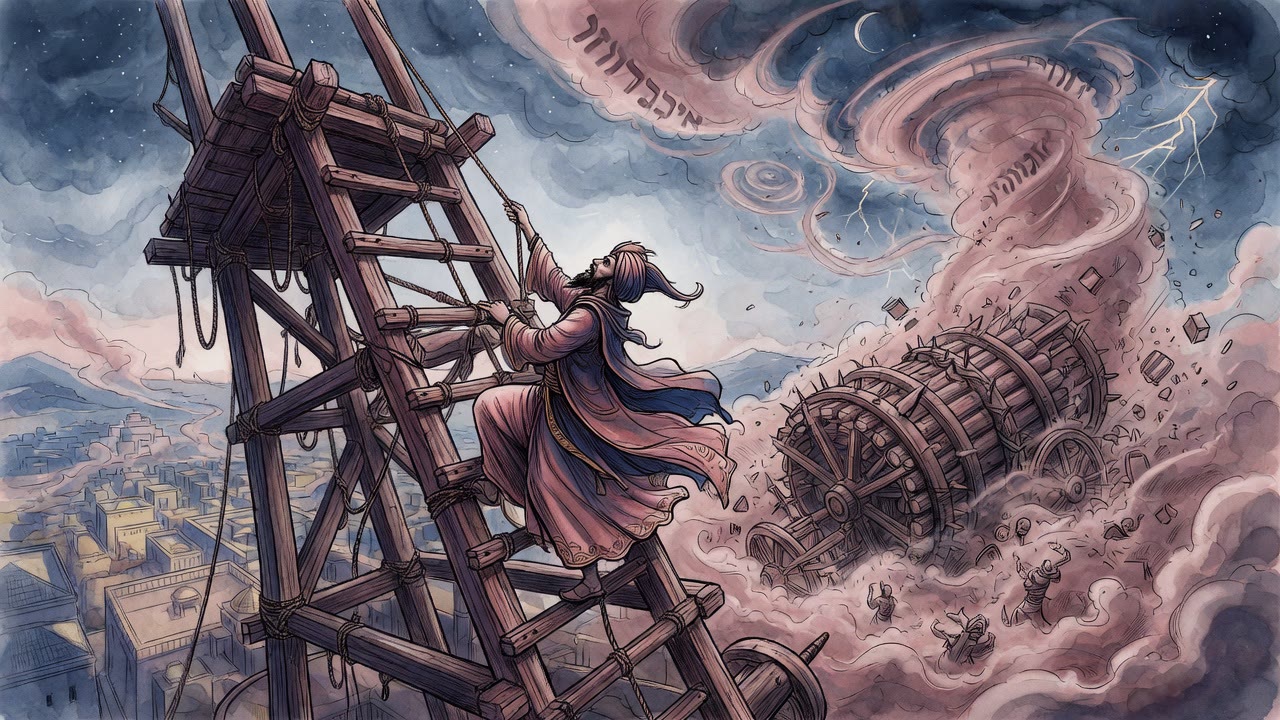
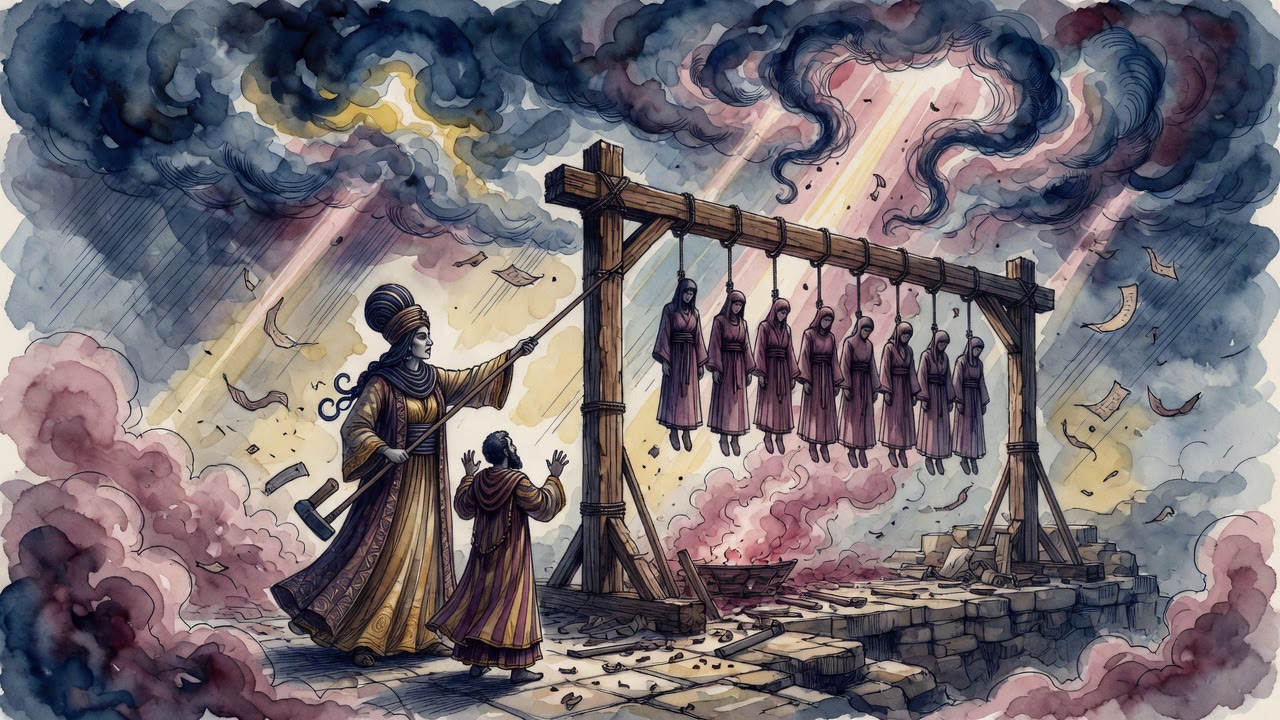
Haman's mouth shaped praise while his mind shaped gallows taller than reason. Mordecai did not gloat from the saddle. Victory that arrives as royal theater still leaves a death date on the calendar until another night and another banquet cut the rope. For this hour the city needed only to see who led and who rode.

Every step ground the kneecap contract into a public truth. The one who had bought a people for destruction now bought air with his own voice for their protector.

Two Kingdoms, One Gate

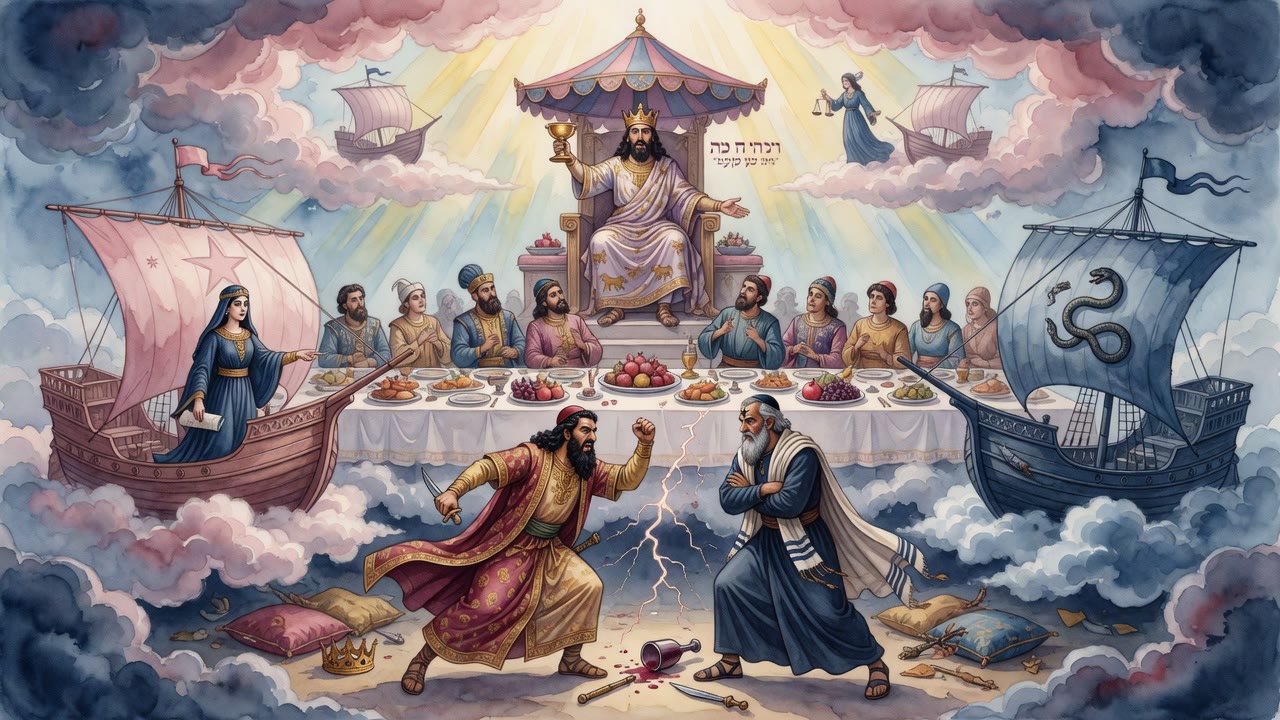
At home Haman's household heard the omen before the gallows rose in the garden of his plans. A parade designed as self-flattery had become a funeral march for pride still wearing court clothes. Esther's banquet, the pointed finger, the tree built for Mordecai that received Haman instead, all follow the same geometry. Power that cannot bear a Jew who will not bow ends by bowing through the streets it meant to rule.

The gate Haman tried to misname becomes the place the empire learns who sits in the king's memory when the night will not let a ruler sleep. Two kingdoms contended in one city: the kingdom Haman thought he owned, and the quieter kingdom of a man at the gate whose knee still carried a bill of sale.

Along the route women leaned from upper windows and men stopped mid-bargain. A child asked why the important man was walking like a servant. His father did not answer until the cry of honor had passed: because the king remembered a Jew at the gate, and heaven remembers faster than kings. Haman tasted dust and polished words in the same breath. The parade ended. The hatred did not. It only changed shape toward a tree and a queen's second banquet.


← All myths
From the tradition

Sources

3 sources

The texts behind this telling. Some cards carry a translation of the source; others are our own retelling of it, and each card says which. Every card links out to the original.

Legends of the Jews 12:212Legends of the Jews

Retold in our words. Read the original at the link below.The Legends of the Jews by Louis Ginzberg (1909) · Public Domain

The Book of Esther, or Megillat Esther, is full of these kinds of dramatic reversals, and one of the most striking happens between Haman and Mordecai.

Haman, the wicked advisor to King Ahasuerus, has just gotten the king's permission to annihilate all the Jews in the Persian empire. But, as we know, things are about to take a sharp turn.

The king, sleepless and restless, discovers that Mordecai, Esther's uncle, had once saved his life by revealing a plot to assassinate him. Ahasuerus, wanting to reward Mordecai, turns to Haman and asks him for advice on how best to honor a man the king favors. Of course, Haman, arrogant and self-absorbed, assumes the king means to honor him! He suggests a lavish parade. Little does he know…

Comes the moment we're looking at. The king orders Haman to carry out this very parade.. for Mordecai!

The conversation, as recorded in Ginzberg's Legends of the Jews, is just dripping with irony.

"The Jew Mordecai who sits at the king's gate," Ahasuerus tells Haman.

Haman, ever the weasel, tries to weasel out of it. "There be many royal gates; I know not which thou meanest."

Ahasuerus clarifies, "The gate that leads from the harem to the palace." The most public, the most visible gate of all!

Haman is cornered. He knows exactly who the king is talking about. "This man is my enemy and the enemy of my house. Rather would I give him ten thousand talents of silver than do him this honor." Can you imagine the bitterness in his voice?

But the king is resolute. "Ten thousand talents of silver shall be given him, and he shall be made lord over thy house, but these honors must thou show unto him." According to the Midrash Rabbah, Ahasuerus wasn't just being capricious; he was divinely inspired to bring about this reversal of fortune.

Haman, still desperately trying to avoid this humiliation, offers a final, chilling bargain. "I have ten sons. I would rather have them run before his horse than do him this honor." He'd rather sacrifice his own children than publicly acknowledge Mordecai's worth. Talk about a villain!

This exchange isn't just a plot point; it's a powerful illustration of the themes of reversal and divine justice that run throughout the Book of Esther. Haman's pride and hatred lead to his ultimate downfall, while Mordecai's loyalty and righteousness are rewarded in the most public and dramatic way possible. How often do we see those who plot evil against others ultimately ensnared by their own schemes? And one that resonates powerfully within the story of Purim.

Full source
Legends of the Jews 12:102Legends of the Jews

Retold in our words. Read the original at the link below.The Legends of the Jews by Louis Ginzberg (1909) · Public Domain

Desperation can drive people to do the unimaginable. And in the tumultuous story of Haman and Mordecai, we find exactly that: a man brought to his knees by circumstance, forced to make a truly appalling choice.

The scene: Haman, not yet the infamous villain of the Purim story, but a general in a desperate situation. His troops are starving. Famine gnaws at their bellies, and they're ready to turn on him. They demand their rations, threatening death if they don't get them. The pressure is immense.

So, what does Haman do? He turns to his nemesis, Mordecai. The man he despises, the Jew who refuses to bow. He offers him a deal, a seemingly generous one: he'll pay him back with ten percent interest if Mordecai will just give him the supplies to feed his troops.

Mordecai isn't interested in money. He knows Haman. He understands the depth of his ambition and the potential for cruelty. He refuses. Yet, Mordecai, ever the strategist, offers Haman a way out, but a way out that is utterly humiliating.

He proposes a single condition. A condition so drastic, so demeaning, that it speaks volumes about the dire straits Haman finds himself in. Mordecai demands that Haman sell himself into slavery, to become Mordecai's slave.

Can you imagine the internal struggle? The pride swallowing, the agonizing decision? Haman, a man of power, a man of influence, reduced to this. But the threat of mutiny, the gnawing hunger of his troops, it leaves him no choice. He agrees.

And the contract? Where is it written? On parchment? On papyrus? No. The story tells us that in this desperate camp, there was no paper to be found. So, the agreement, this monument to Haman's downfall, is etched onto Mordecai's knee-cap. A stark, unforgettable image.

This episode, recounted in Legends of the Jews (Ginzberg), paints a vivid picture of the shifting power dynamics between Haman and Mordecai long before the events of Purim as we typically celebrate them. It's a reminder that even the most powerful can be brought low, and that sometimes, the most humiliating defeats are self-inflicted. What choices might we make when pushed to the very edge? What price would we be willing to pay to survive?

Full source
Legends of the Jews 12:106Legends of the Jews

Retold in our words. Read the original at the link below.The Legends of the Jews by Louis Ginzberg (1909) · Public Domain

Legends of the Jews turns to Kingdom of Mordecai of Haman.

The Zohar, that foundation of Jewish mystical thought, often speaks of hidden meanings and subtle actions. In this case, Mordecai, whenever he encountered Haman, made a point of subtly displaying his knee. Sounds odd. But this wasn't just any knee. This was a knee that, metaphorically, held the deed. The "bill of sale," as Ginzberg's Legends of the Jews puts it, a constant reminder of a past humiliation.

This seemingly insignificant act, repeated again and again, became the spark that ignited Haman's fury. It wasn't simply about disrespect; it was about power, memory, and the constant sting of being reminded of a debt owed.

At first, Haman's hatred was laser-focused, aimed squarely at Mordecai. But as hatred often does, it began to spread. Like a wildfire, it consumed everything in its path. According to Legends of the Jews, Haman's animosity quickly encompassed Mordecai’s colleagues – the scholars, the wise men, the keepers of tradition. He wanted them gone.

But even that wasn't enough. Haman’s rage, fueled by pride and the constant reminder of his vulnerability, metastasized into something far more sinister. He wasn't just after individuals; he was after an entire people. He plotted, as the story tells us, the annihilation of Mordecai's entire people – the Jews. A personal vendetta, born from a perceived slight, escalating into a genocidal plot. How easily can personal resentment turn into something so much larger, so much more destructive? How important is it to let go of old wounds, before they fester and poison everything around us? The story of Haman and Mordecai, at its heart, is a chilling reminder of the destructive power of unchecked hatred.

Full source