5 min read

Michael Warned Ahasuerus That Haman Wanted the Throne

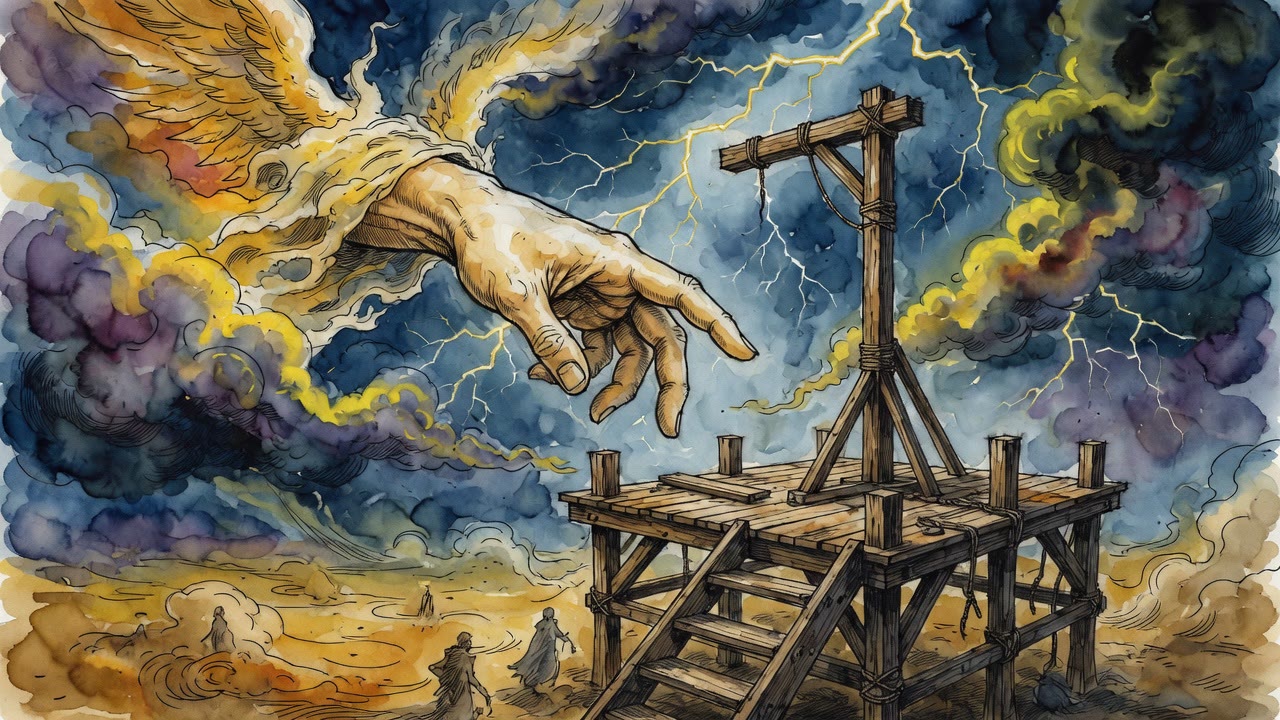
Haman fixed an idol to his robe so every bow in the street became worship. Officials bowed. Judges bowed. Mordecai would not.

Curated by Arthur · Told by Maggid ·
Table of Contents
  1. A Feast Built from Living Trees
  2. Haman Sews an Idol into His Clothes
  3. Michael in the Shape of a Poor Man
  4. What the Garden Could Not Hide
Michael Warned Ahasuerus That Haman Wanted the Throne Click for full size

A Feast Built from Living Trees

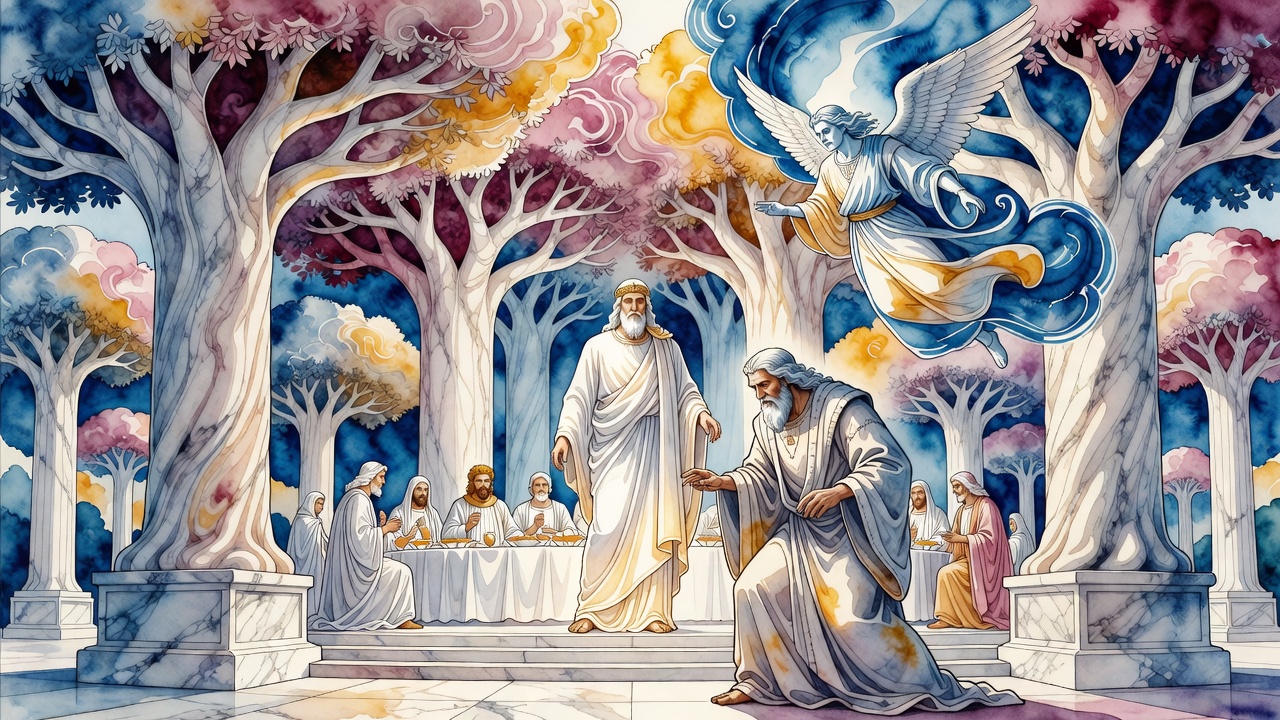
The banquet of Ahasuerus was not a closed hall. It opened in the royal gardens and remade them into a false paradise. Tall trees had branches interwoven into vaulted arches. Smaller fragrant trees were dug up and set inside tents so the forest scent walked into the party. Curtains of byssus hung white, sapphire, green, and purple from round silver beams on pillars of red, green, yellow, white, and glittering blue marble. Couches rested on silver feet; rods of gold held the drapes. The floor shone with crystal, marble, and precious stones for what seemed miles of light.

This was power dressed as beauty. Guests drank under living architecture. The empire announced that nature itself could be rearranged for a king's calendar. Every color of curtain and every stone underfoot said the same sentence. Nothing in the garden is allowed to remain merely itself. Even trees must perform.

That stage will matter when later decrees try to rearrange a people out of existence. The man who can force a forest into a banquet hall believes he can force history. The midrash lingers on the luxury so the later panic has a foil.

Haman Sews an Idol into His Clothes

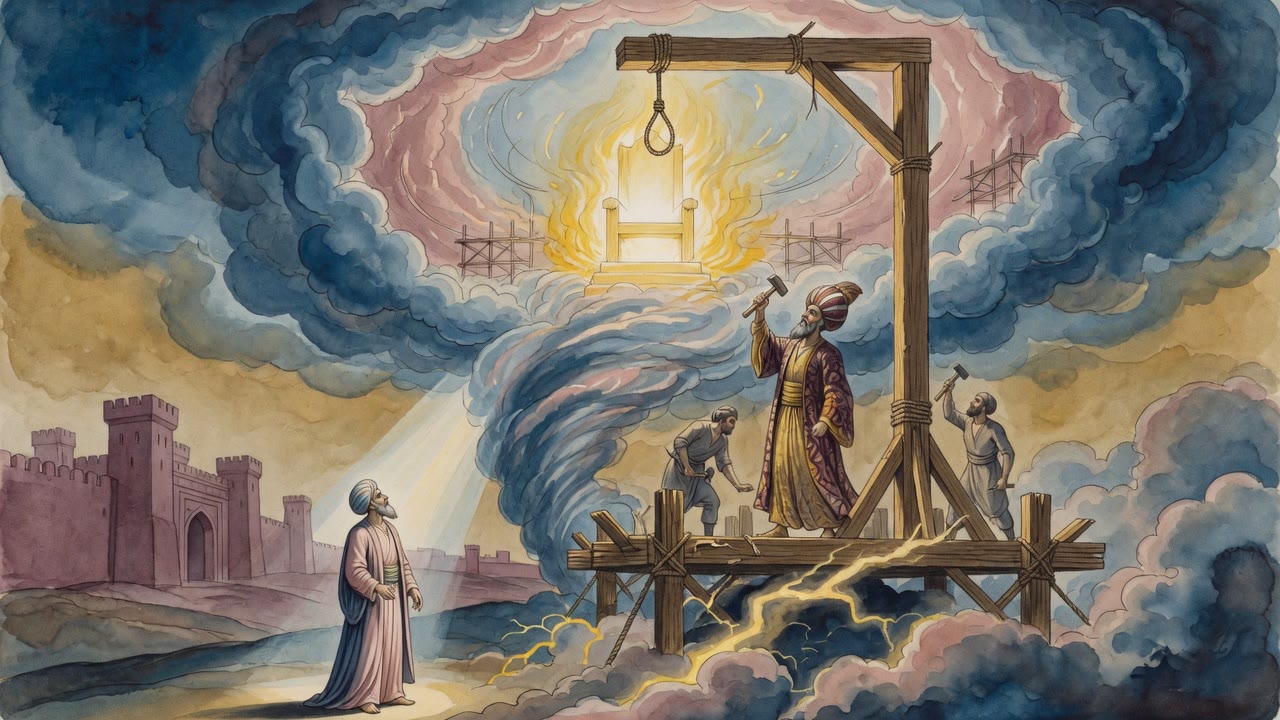
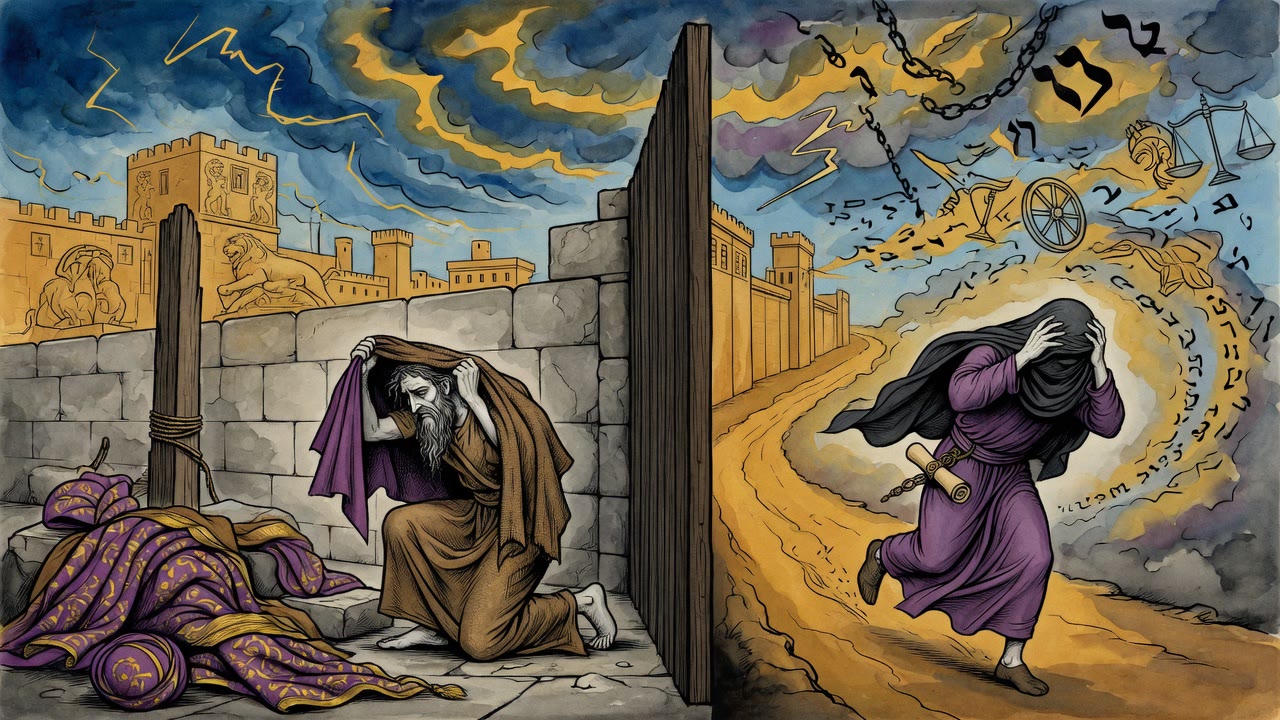
When Ahasuerus raised Haman, he ordered that all who saw him bow with divine honors. Haman, not content with human respect, fixed an image of an idol to his garment so every bow became worship. Officials fell. Judges fell. Jews pleaded with Mordecai not to provoke the man who could ruin the people. Mordecai would not give a mortal what belongs only to God. Haman also tried to claim kinship with Esther either way, as Jew through Esau and Jacob or as heathen among heathens. Ambition wears any costume.

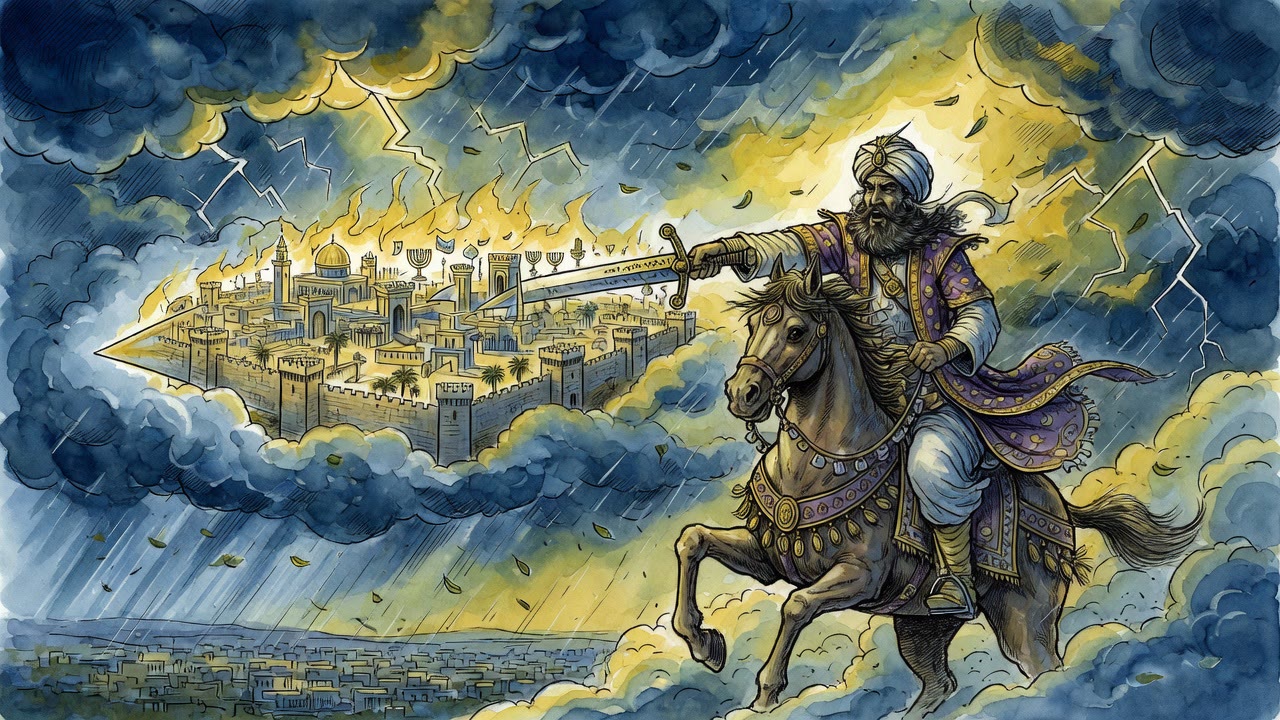
Outside the palace, when the decree of annihilation went forth, Shushan tore itself. Women hanging laundry fell dead on roofs. Men drawing water fell into wells. Ahasuerus and Haman found joy the city would not share. The capital was "in mourning and sorely perplexed" while the feast culture of the court still remembered how to hang purple cloth.

The idol on the robe is the small hinge of a large crime. Bowing becomes worship without the crowd needing to visit a temple of idols. Mordecai's refusal looks like stubborn manners until you see the stitch. He is not rude. He is refusing a portable shrine walking the gate.

Michael in the Shape of a Poor Man

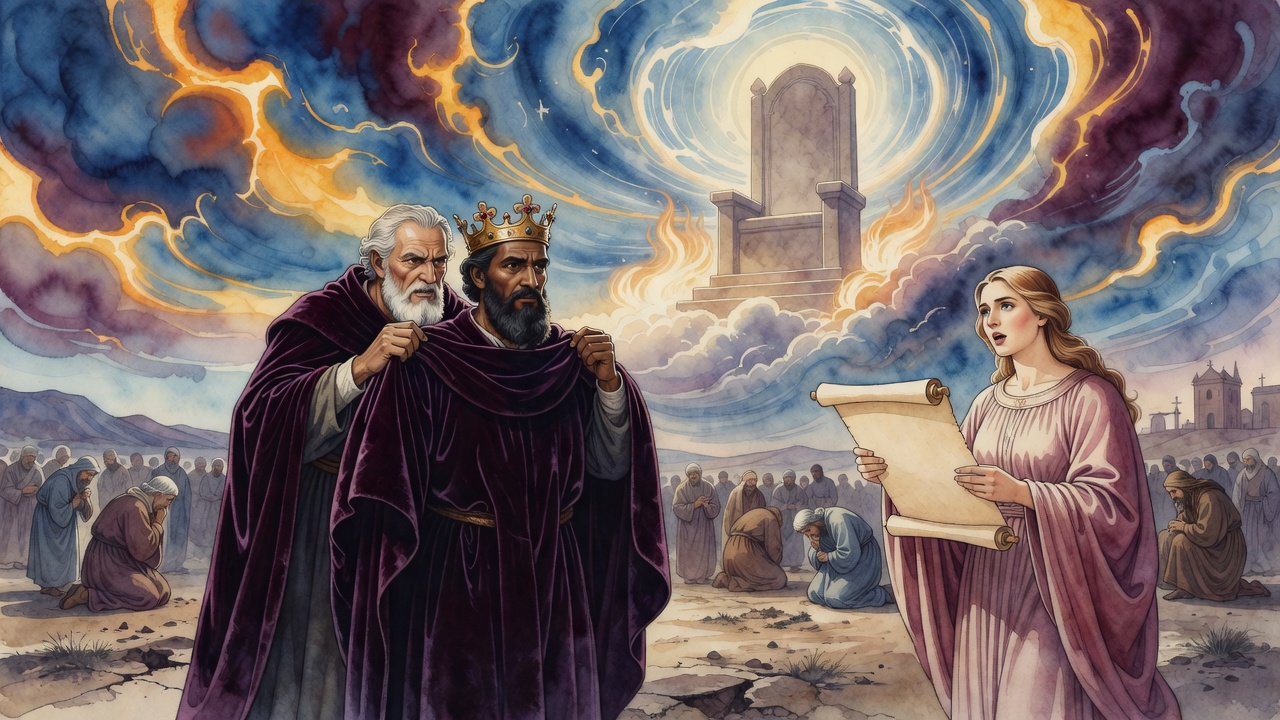
Ahasuerus sat troubled over the chronicles. A poor man appeared. It was the angel Michael, guardian of Israel. "Haman wants to kill thee, and become king in thy stead!" The angel offered a test. In the morning Haman would ask leave to kill the man who saved the king's life. When asked what honor should be done to the man the king delights to honor, Haman would request the king's apparel, crown, and horse. Arrogance would write its own indictment.

The plot that looked like court politics was already a war of messengers. Esther's name, some say, ties to the morning star that shines after other stars fade and before the sun rises. In the midrash Israel's danger is a dove with a snake in the nest and a falcon outside. Michael's warning is the pre-dawn light that does not yet end the night but proves the night is not final.

Ahasuerus, who rearranged trees, now receives a beggar who rearranges his fear. The king who signed a people's death is shown that his own neck is also on the list. That is how heaven turns a genocidal court against itself without a single legion.

What the Garden Could Not Hide

Woven trees and idol-stitched robes and an angel in beggar's cloth form one stage. Empire builds paradise from coerced nature. The second man in the kingdom turns bows into idolatry. Heaven answers with a poor man's face and a script Haman will speak against himself. Mordecai's stiff neck is not stubbornness for its own sake. It is the refusal that keeps the plot from becoming pure slaughter without a witness.

Purim's noise later will sound like reversal. The sources insist the reversal began under marble pillars and a hanging fear in every Jewish house. The feast that rearranged the forest could not rearrange the decree of the God of Israel.

Hold the images until they bruise. Purple cloth over forced trees. An idol sewn where a heart should be. A city whose laundry lines become death lines. A poor man who is Michael. A queen whose name hints at light before sunrise. Against all that stands one man who will not bow and one God who will not let the morning star of Israel go out. The banquet was never only a party. It was a rehearsal for a world where surface beauty and secret murder share the same guest list.


← All myths
From the tradition

Sources

5 sources

The texts behind this telling. Some cards carry a translation of the source; others are our own retelling of it, and each card says which. Every card links out to the original.

Legends of the Jews 12:21Legends of the Jews

Retold in our words. Read the original at the link below.The Legends of the Jews by Louis Ginzberg (1909) · Public Domain

It’s not inside some stuffy palace, oh no. This is an outdoor affair, staged in the royal gardens, but transformed into something truly otherworldly.

The first thing you notice is the sheer scale of it all. The tallest trees? They're not just standing there. Their branches have been carefully interwoven, creating a series of natural, vaulted arches overhead. Even smaller, fragrant trees have been dug up and replanted inside elaborate tents, bringing the scent of the forest right into the heart of the party.

The colors! Everywhere you look, there's a riot of hues. Curtains made of byssus, that's a fine linen, almost silk-like, drape from tree to tree. White, sapphire blue, vivid green, and royal purple, all shimmering in the light. These curtains aren’t just hung haphazardly; they're secured by ropes attached to round silver beams. And these beams? They rest on pillars made of red, green, yellow, white, and glittering blue marble. Can you picture it? The light catching the different colors, reflecting off the polished stone…

Then there’s the seating. Forget wooden benches. The couches are draped in the most delicate fabrics, their frames resting on silver feet. Even the rods holding the draperies are made of solid gold!

But the real showstopper? The floor. It’s not just dirt or stone. It’s tiled with crystal and marble, and outlined with precious stones. Imagine the sparkle, the gleam as the light dances across the surfaces, illuminating the entire scene for what seems like miles around. This wasn't just a party; it was a statement. A demonstration of power, wealth, and artistry.

What was the occasion? Who were the guests? What stories unfolded under those shimmering curtains and vaulted arches? We can only imagine the tales those crystal tiles could tell.

Full source
Legends of the Jews 12:95Legends of the Jews

Retold in our words. Read the original at the link below.The Legends of the Jews by Louis Ginzberg (1909) · Public Domain

Legends of the Jews turns to Ahasuerus's Legacy.

Haman, that notorious villain of the Purim story, certainly knew how to make things awkward. After Esther became queen, he tried everything to get on her good side. According to Ginzberg's Legends of the Jews, Haman didn't care if she was Jewish or not. He was ready to claim kinship either way! If she was Jewish, he’d emphasize the brotherly connection between Esau and Jacob (never mind how that relationship ended up!). If she wasn't, well, "all the heathen are akin to one another," as Ginzberg puts it. Desperate times, desperate measures. But Haman wasn't just about awkward family reunions. He had bigger plans. When Ahasuerus promoted Haman to his lofty position, he also issued a decree: everyone who saw Haman had to bow down and pay him divine honors. Now, that’s where things get really interesting.

Haman, being the cunning manipulator he was, wanted to make sure everyone understood the kind of respect he expected. So, he had an image of an idol attached to his clothing. for a second. Every time someone bowed before him, they were, in effect, worshipping an idol.

Everyone, it seems, except for one man: Mordecai.

Mordecai, Esther's cousin and guardian, absolutely refused to bow. He wouldn't do it. Not for Haman, not for the king, not for anyone. The other officials, even the highest judges, were prostrating themselves left and right. Even the Jews themselves pleaded with Mordecai. "Don't provoke Haman!" they begged. "You'll bring ruin upon all of Israel!"

But Mordecai stood firm. He wouldn't give to a mortal what he believed was due only to the Divine. According to Legends of the Jews, no amount of persuasion could sway him.

What drove Mordecai’s unwavering stance? Was it simply religious conviction, or something more? And what does his defiance tell us about the nature of power, faith, and resistance in the face of overwhelming pressure? Where do we draw the line? What principles are we willing to defend, even when the consequences seem dire?

Full source
Legends of the Jews 12:198Legends of the Jews

Retold in our words. Read the original at the link below.The Legends of the Jews by Louis Ginzberg (1909) · Public Domain

Legends of the Jews turns to Birth of King Ahasuerus.

The biblical story, as we know, is filled with twists and turns. But the legends that grew up around it, collected in works like Ginzberg's Legends of the Jews, add layers of depth and intrigue we might otherwise miss.

So, here’s the scene: Ahasuerus is troubled. Deeply troubled. What he reads offers him no solace. He is haunted by the appearance of a poor man. But this is no ordinary beggar. This is the angel Michael himself, divine messenger and protector of Israel!

What message does Michael bring? A chilling prophecy: "Haman wants to kill thee, and become king in thy stead!"

To hear that your trusted advisor, the second-most powerful man in the kingdom, is plotting your demise?

But Michael doesn’t just deliver the bad news. He offers proof, a way for Ahasuerus to test the truth of his words. “Let this serve thee as proof that I am telling thee the truth," Michael says. "Early in the morning he will appear before thee and request permission of thee to kill him who saved thy life. And when thou inquirest of him what honor should be done to him whom the king delighteth to honor, he will ask to be given the apparel, the crown, and the horse of the king as signs of distinction."

The angel lays out the whole plot. He tells Ahasuerus what Haman will say, even the outrageous request he will make. Haman's arrogance and self-regard will be his undoing.

This encounter, as told in the legends, adds a dimension of divine intervention to the story of Esther. It's not just human drama unfolding; it's a cosmic battle between good and evil, with Michael, the guardian angel, playing a crucial role. And sometimes, just sometimes, they send a poor man to deliver a life-saving message.

Full source
Legends of the Jews 12:147Legends of the Jews

Retold in our words. Read the original at the link below.The Legends of the Jews by Louis Ginzberg (1909) · Public Domain

– well, he wasn’t exactly a fan of the Jews. And with Haman whispering poison in his ear, that dislike curdled into something far more sinister. That Ahasuerus hated the Jews with no less fierce a hatred than Haman did.

The scene: a royal decree, an edict of annihilation, has just been issued against the Jewish people. Panic spread like wildfire. But here's the thing: this wasn't just fear. It was as if the very fabric of the city was unraveling.

This teaching paints a vivid picture. Women, hanging laundry on their rooftops, suddenly collapsing, lifeless. Men, going to draw water, falling into the wells, never to resurface.

While Ahasuerus and Haman reveled in their cruelty within the palace walls, the city outside was consumed by consternation and mourning. The joy of this Jew-hating couple..was shared by none.

The disconnect between those in power and the suffering of the people. The capital city of Shushan was in mourning and sorely perplexed.

What does this tell us? Perhaps that true joy can never be found in the suffering of others. Perhaps that even in the face of unimaginable adversity, the spirit of a community can endure, even when those in power seem determined to crush it.

Full source
Legends of the Jews 12:4Legends of the Jews

Retold in our words. Read the original at the link below.The Legends of the Jews by Louis Ginzberg (1909) · Public Domain

It marks the end of the Ketuvim, the Writings, the final section of the Hebrew Bible. But what happened after? What about the stories too sacred, too painful, or perhaps just too… human… to be written down? Well, that's where oral tradition steps in, filling the gaps with whispers of resilience, echoes of faith.

That brings us to Esther herself.

The name Esther, as some scholars point out, is linked to Venus, the morning star. for a second. The morning star shines its light after all the other stars have faded, but before the sun rises. It's a beacon in the pre-dawn gloom, a promise of a new day even when the night feels endless. Ginzberg, in his Legends of the Jews, suggests that Esther's deeds were just that: a ray of light cast forward into Israel's history at its darkest hour, a reminder that even when all seems lost, hope can still flicker.

The situation for the Jews in the time of Ahasuerus. The Midrash (rabbinic interpretive commentary) paints a vivid picture, comparing them to a dove desperately seeking refuge in its nest. But inside, a snake lies coiled, waiting to strike. And outside? A falcon circles, ready to pounce. There's danger on all sides.

In Shushan, the capital city, the Jews were trapped in the clutches of Haman, the villain of the Purim story. But the danger wasn't confined to one city. As we learn through the oral tradition, and as Ginzberg emphasizes, in other lands, they were at the mercy of countless enemies, all too eager to carry out Haman's genocidal decree: to destroy, to slay, and to cause them to perish.

Talk about being between a rock and a hard place.

A community caught between internal and external threats, facing annihilation. And yet, within this context of fear and vulnerability, a young woman named Esther rises to become a symbol of hope. What does it say about us, that we cling to these stories? What do we learn from the courage of someone like Esther, shining like a morning star in the face of overwhelming darkness? Maybe it’s that even when history books close, the story… the real story… continues to be told. And maybe, just maybe, that's where the real power lies.

Full source