Haman Climbs High and Sets Catastrophe Rolling
The ring left Ahasuerus's finger and found Haman's. Ten thousand talents sat on the table before anyone counted who would die.
Table of Contents
Ahasuerus took the ring from his own finger and held it over Haman's open hand. The court went still. A king who loved spectacle more than wisdom was about to buy himself a rival for the man who had saved his life.
 Click for full size
He knew Mordecai had caught a plot in the gate and kept him breathing. He also knew Mordecai wanted the Temple in Jerusalem to rise again. Gratitude sat in one pocket. Refusal sat in the other. The king was not ready to grant the rebuild, and the debt still pressed the back of his neck.
So he raised Haman.
A Foil Set Against a Savior
Not as a random favorite only. As a counterweight. What the one built up, the other might pull down. Palace math is often that crude. Keep two forces straining against each other so the crown never has to choose cleanly.
Courtiers learned the new weather in a day. Knees found Haman. Eyes avoided Mordecai's unbent spine. Ahasuerus smiled at his own cleverness. Cleverness in a weak king is fuel for other men's fires.
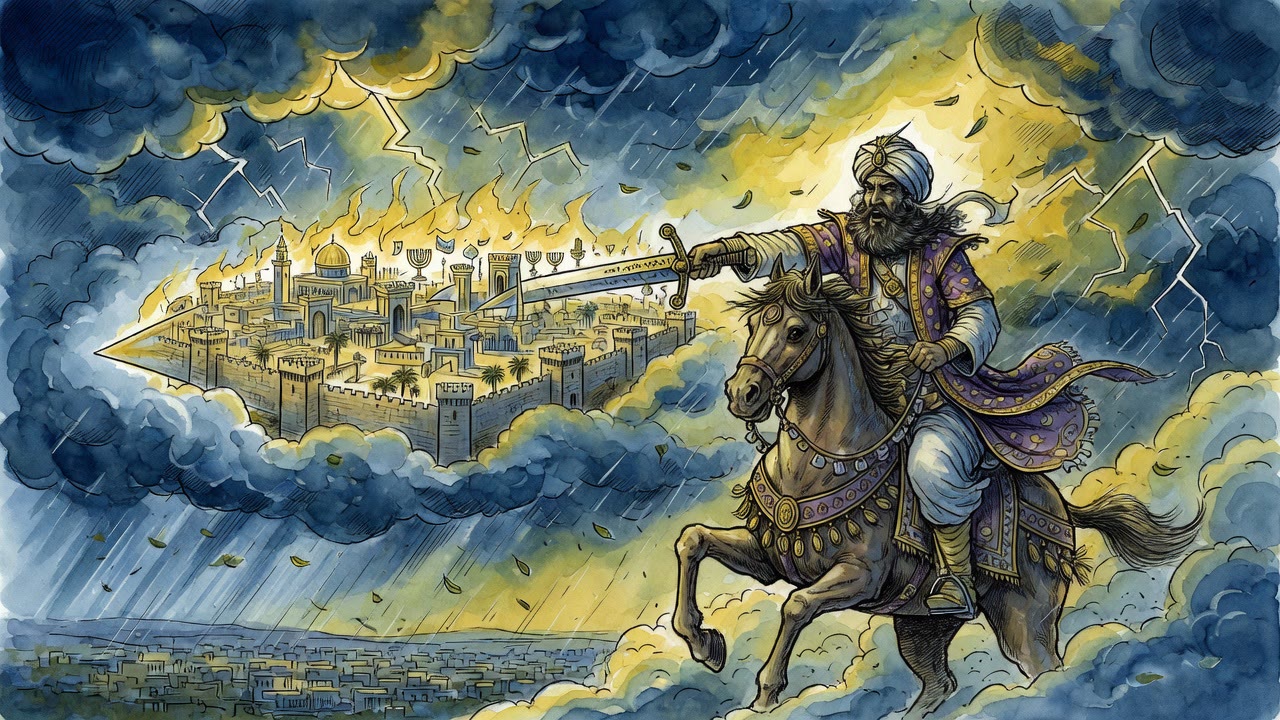
Haman had already stood against the Jews when the quarrel over the Temple's rebuilding reached the throne. He had been the voice that knew how to hate them in a language the king enjoyed. Elevation fed him. He walked taller each morning. He rehearsed the bow he would never receive from one man at the gate, and the rehearsal became his whole work.
A Judean Man in the Gate
In Shushan there was a Judean man, Mordecai son of Yair, and he sat in the king's gate the way Moses once stood in a breach: one body between a people and a decree. He sought good for his people. He spoke peace that was also truth. Children in the Jewish quarter learned his name the way earlier children learned Moses's, as a person who would not let them fall without a fight.
The comparison would have embarrassed him. It also fit.
He refused a bow that would have cost him nothing except the truth of whom he feared. Haman saw that stance and hated it. A knee that will not bend is an insult no climber forgives. Haman's height in the palace made the unbent spine look larger, not smaller. Every morning the same man at the same gate did not go down.
Give Me the Pen
"If it pleases the king, let it be written to eliminate them."
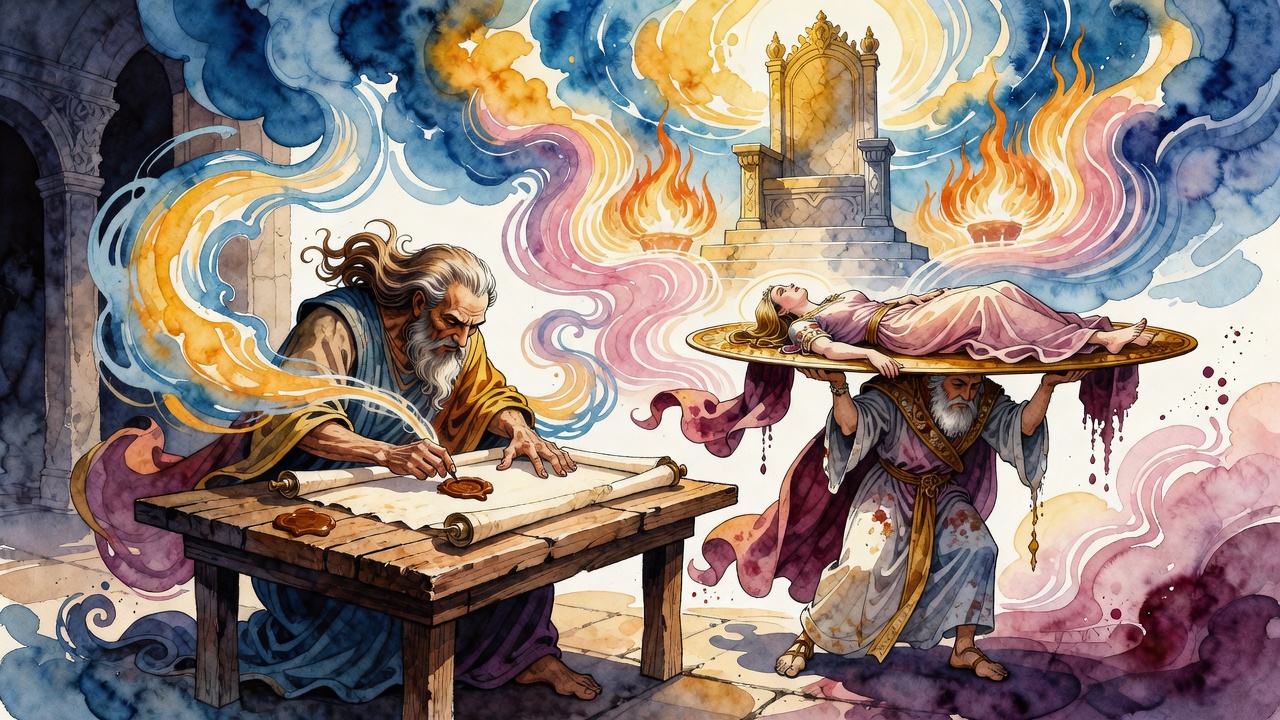
Haman did not ask for ink. He asked for the pen. License to write in the royal name. Full authority to send letters that traveled as if the throne itself were walking. Power first. Silver after.
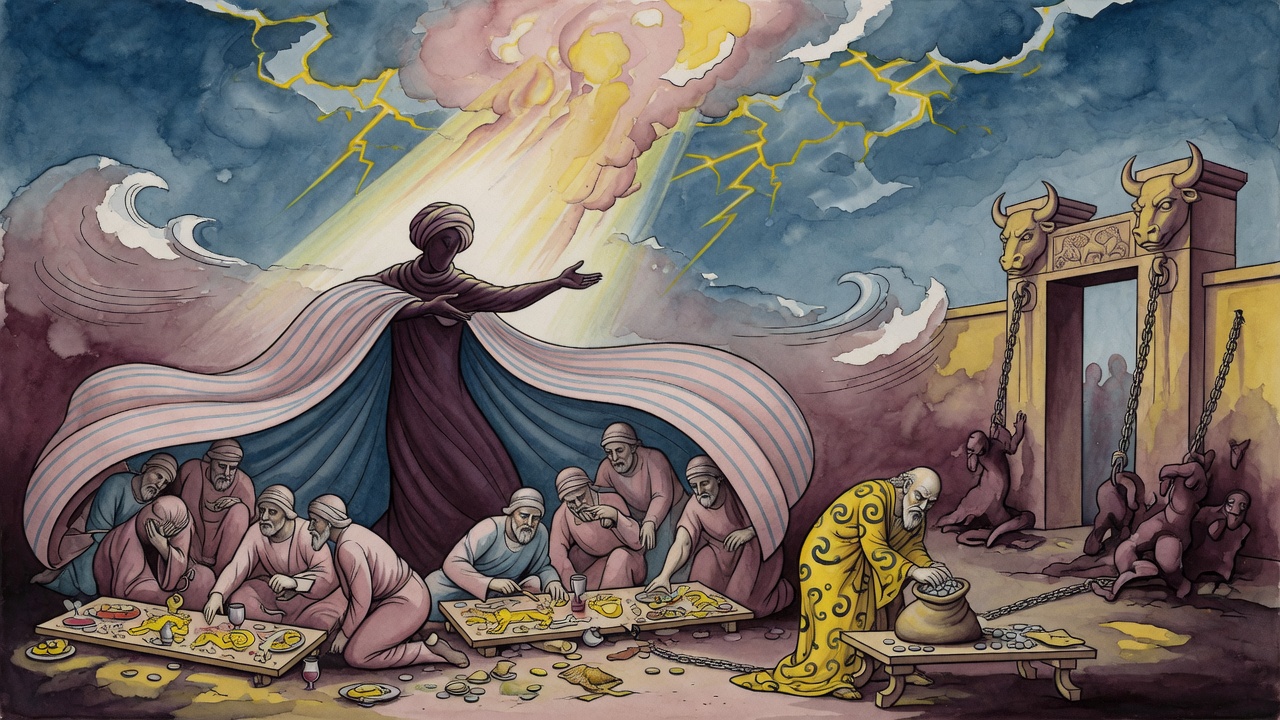
"You should write to give me the pen," he said, and then he poured out the price. Ten thousand talents, offered even before the count of victims was sure. He estimated from the old census of the Exodus, six hundred thousand men leaving Egypt, and promised a hundred zuz for each, weight enough to make greed feel like statesmanship.
Craftsmen of the king would weigh it. The treasury would shine. The Jews would vanish from the provinces like a problem solved on paper.
Ahasuerus, who had already made himself a laughingstock with decrees about household language no marriage could obey, now handed catastrophe a seal. The ring left a mark deeper than wax. It left a date on which a people were scheduled to die.
Scrolls in Every Script
Earlier the king had sent scrolls to each province in its own writing, each people in its tongue, as if speech inside a home could be legislated from a couch of gold. The world had laughed. Husbands could not compel lentils or language by decree.
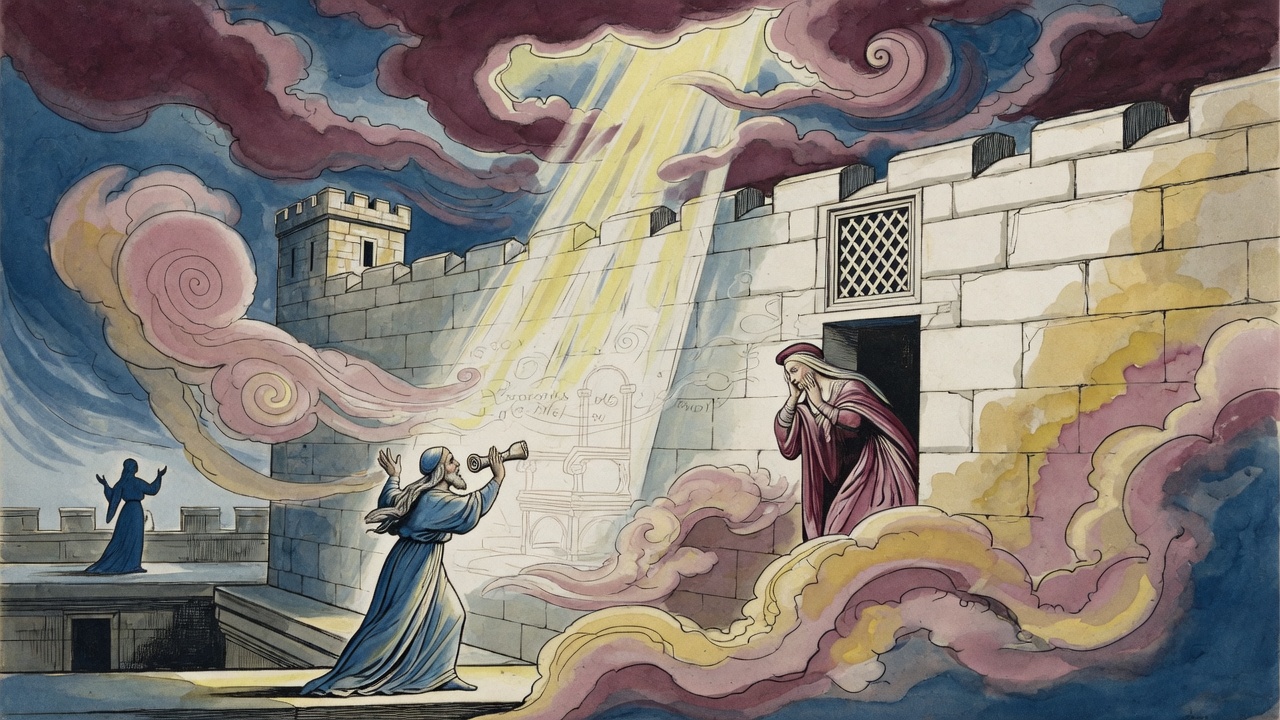
Now the same machinery of many scripts prepared for a darker mail. Dates of death. Permission to plunder. A calendar of killing dressed as order. Haman's ring-impression would ride those roads. Couriers would sleep in inns with death in their satchels.
In the Jewish streets of Shushan, women began to count days without knowing why their sleep thinned. Dogs barked at the riders. A tailor refused a rush order because his hands shook. The air already knew before sackcloth made the crisis visible.
The Fuse Was Already Lit
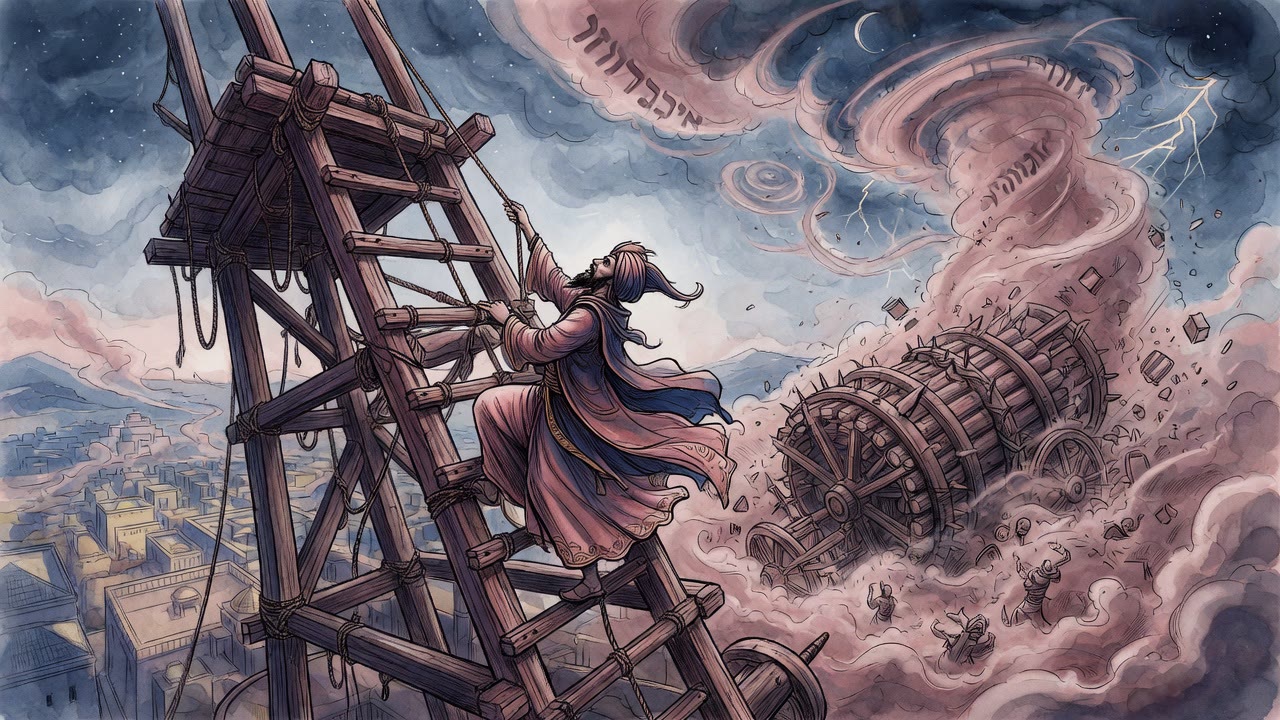
Haman climbed high enough to cast a shadow over every Jewish doorway in the empire, and the king who raised him thought he had purchased balance. He had purchased a storm.
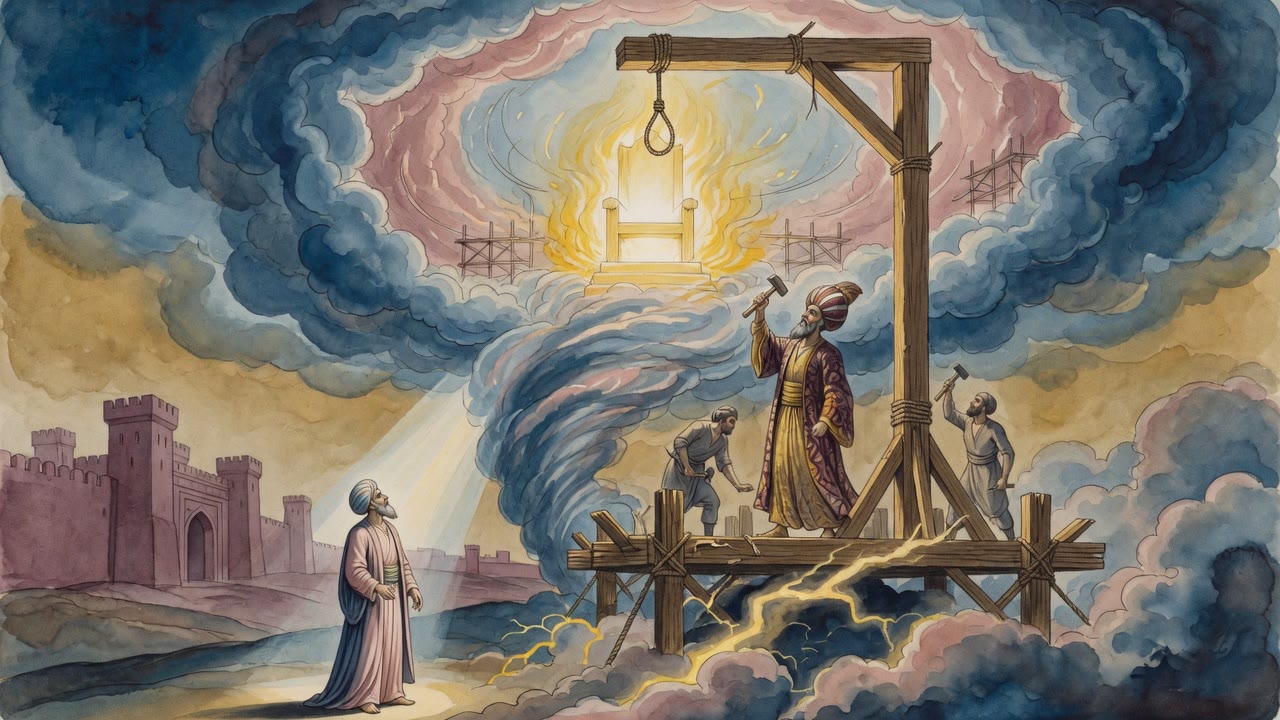
Mordecai would put on sackcloth where perfume usually walked. Esther would learn the cost of silence inside a gilded marriage. The gallows had not been built. The queen had not risked the inner court. Somewhere a scribe sharpened a reed. Somewhere Mordecai looked toward a palace window and began the long work of not despairing.
Two men still shared the same city air: the Judean who stood in the breach, and the Agagite who wanted the pen more than peace. The catastrophe was already rolling from the moment a king chose a rival for a savior and called the choice wisdom.
← All myths