5 min read

Haman Sealed a Death Decree That Heaven Had Not Ordered

Haman pressed the king's ring into hot wax and sent riders out with a date for killing every Jew. God had not said it. The plot came back on his own head.

Curated by Arthur · Told by Maggid ·
Table of Contents
  1. Who Said It
  2. The Platter Before the Gallows
  3. Life and Good, Death and Evil
  4. A Nation Created on the Floor
  5. Complaint and Confession
Haman Sealed a Death Decree That Heaven Had Not Ordered Click for full size

Who Said It

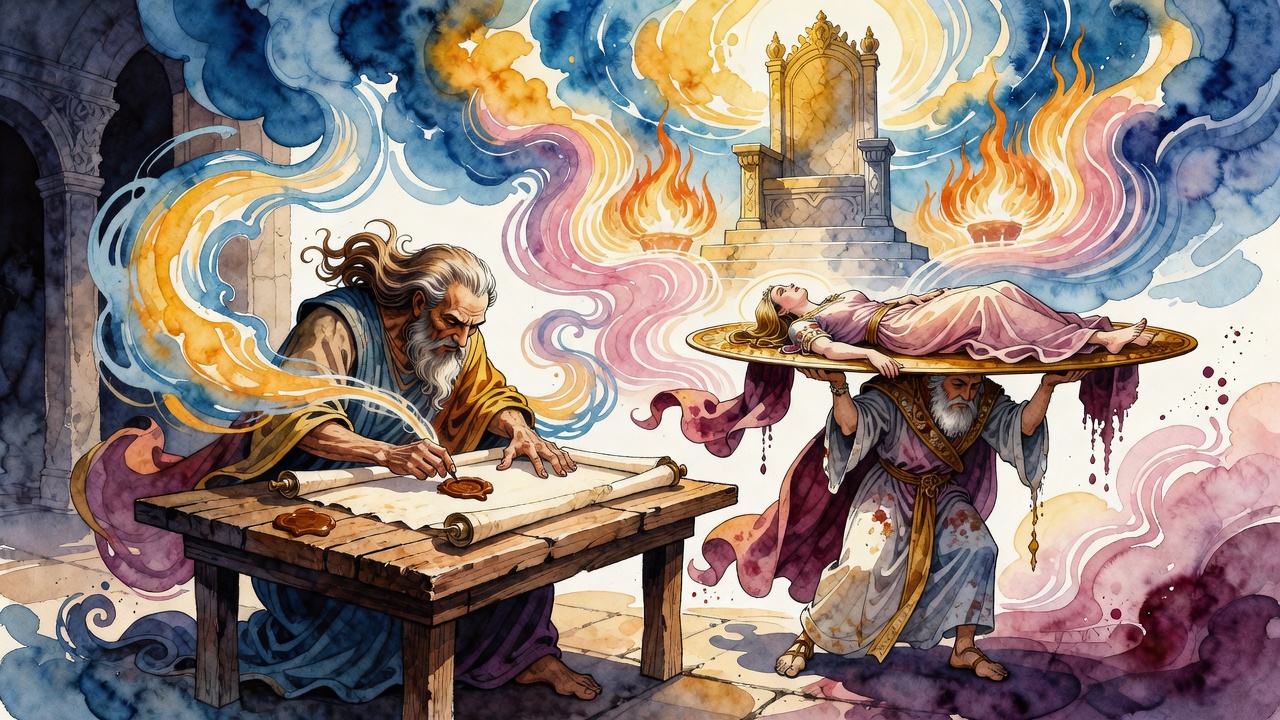
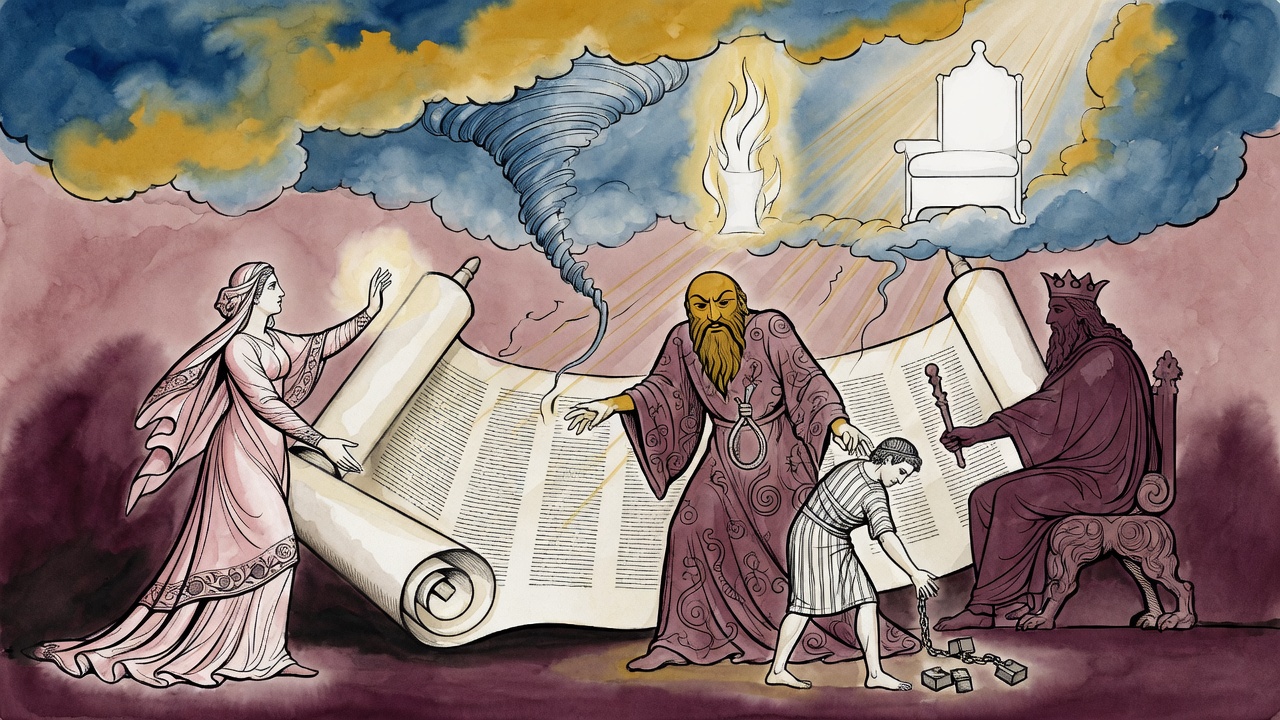
Haman pressed the ring into wax until the seal bit like a tooth. Destroy, kill, eliminate (Esther 3:13). Couriers ran until their horses foamed. Dates were fixed for a people's end, and silver changed hands as if blood could be prepaid. The decree left his mouth and entered the empire before any prophet could object.

"Who is it who said and it occurred, if the Lord did not command it?" (Lamentations 3:37). The question walked the streets of Shushan after the seals cooled. The Holy One had not said it. The plot that left Haman's mouth would return upon his own head (Esther 9:25). Between the saying and the returning, a kingdom held its breath and counted days on a calendar written by a man who thought heaven was a rumor for slaves.

Evil can be commanded by a courtier with a ring. It cannot be finished unless heaven agrees to finish it. Shushan learned that difference the hard way, in fasting and in a woman who walked toward a throne without a summons she could trust.

The Platter Before the Gallows

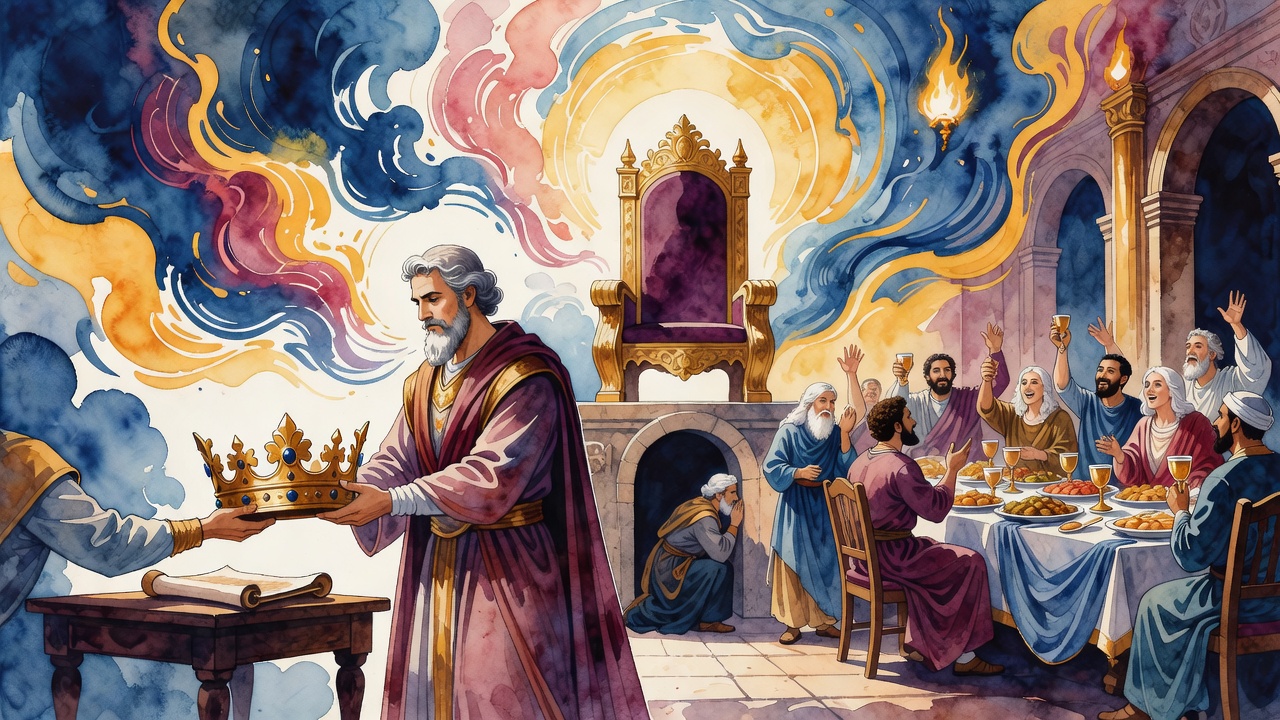
Years earlier the same throne room had already practiced sudden death for a smaller audience. Queen Vashti refused a drunken summons to display herself before a banquet that had already spent its shame on gold. Memukhan, who saw the king's face and sat first among princes, urged a punishment that would teach every wife in the empire to fear a husband's wine. "The matter was pleasing in the eyes of the king and the princes, and the king did as Memukhan had said" (Esther 1:21).

The scroll is quiet about her end. The midrash is not. The king did as Memukhan said meant the decree, then the blade, then her head brought in on a platter to the man who had wanted her beauty for a toast. A banquet that began in displays of wealth ended in the destruction of the face it had tried to own. Servants cleaned the floor. The law of Persia and Media, which does not revoke, kept the blood in the record.

Esther would one day enter that room knowing what a refusal could cost. Courage is cheaper when no one has seen the platter. She had seen it in the stories the eunuchs told when the wine made them careless.

Life and Good, Death and Evil

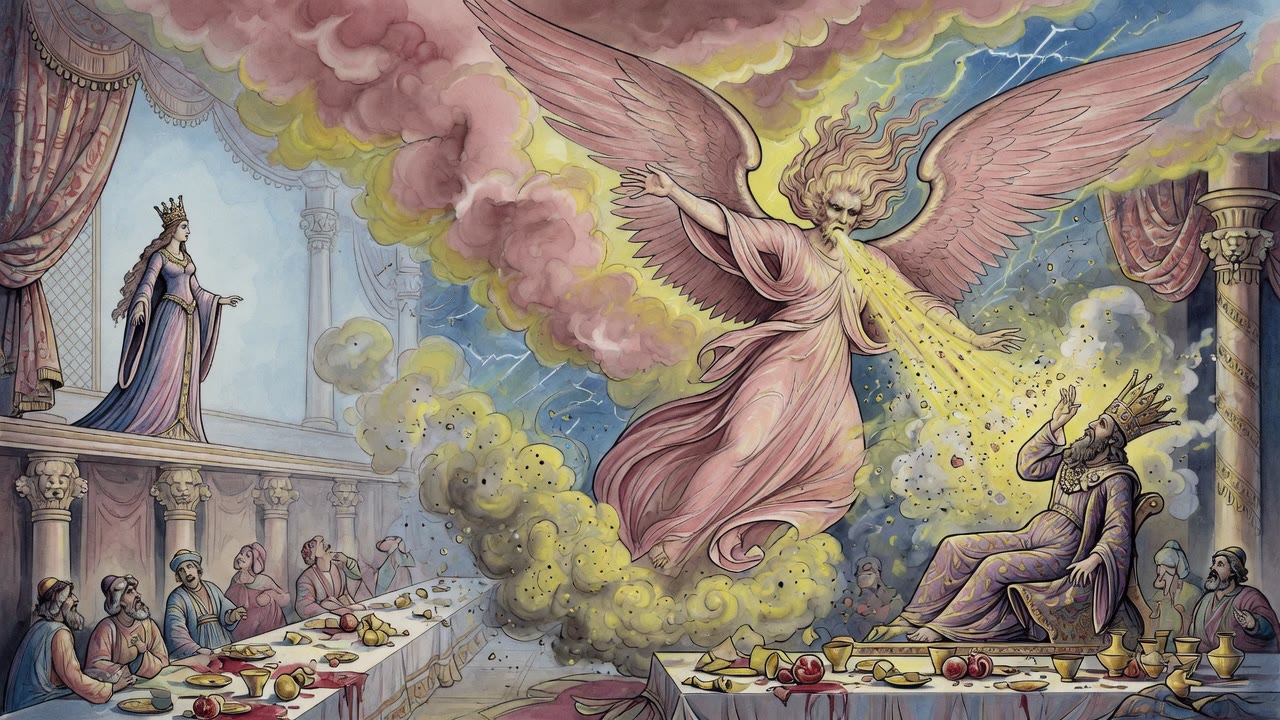
From the day the Holy One set before Israel life and good, death and evil (Deuteronomy 30:15), Rabbi Elazar taught, no good has emerged for a performer of evil, nor evil for a performer of good. The ledger is not always fast. It is not confused. "The Lord will reward the performer of evil in accordance with his wickedness" (II Samuel 3:39).

Haman stacked wood for another man's body and built his own height in the process. The king who loved wine more than counsel had already shown how quickly flattery turns to blood when a counselor speaks first and a conscience speaks never. Heaven watched both men write checks against a bank they did not own, and filed the paper under a different name.

Good for the good. Evil for the evil. The scroll would make the proverb walk on two feet, one in a queen's courage and one in a gallows' rope.

A Nation Created on the Floor

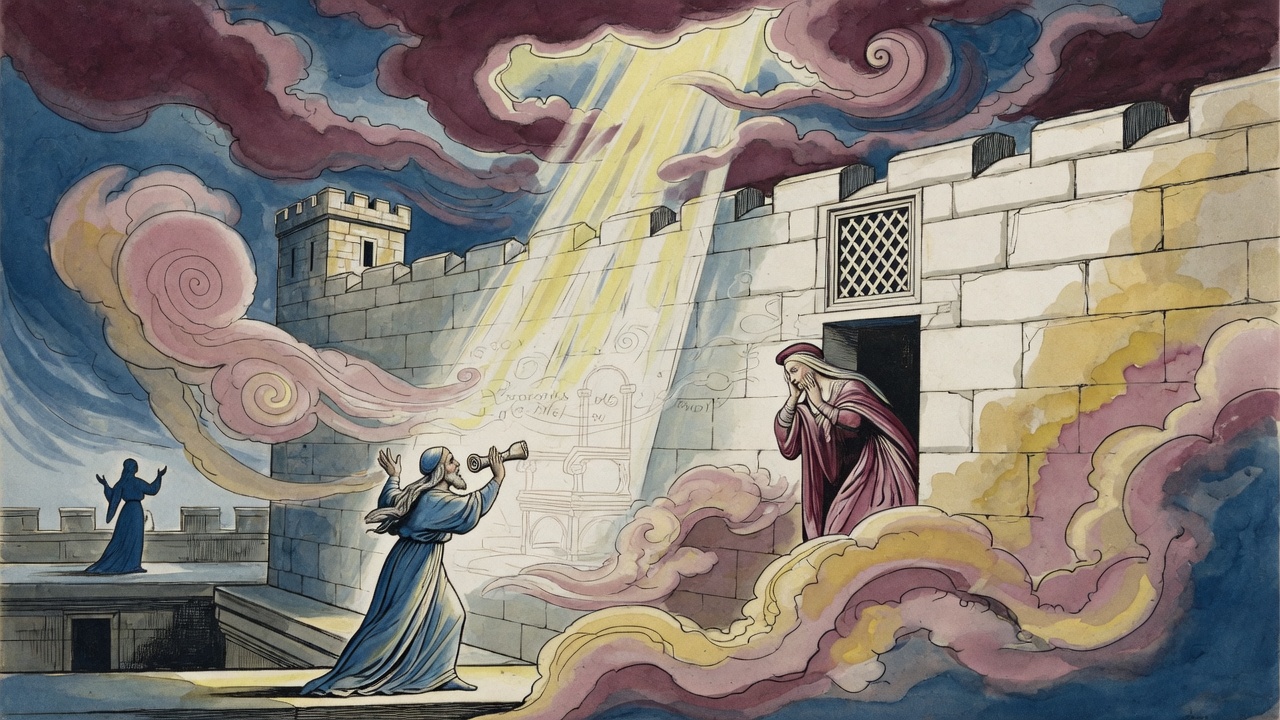
Generations without prophet, without priest, without Temple still had prayer. "Turn to the prayer of the oppressed, and do not despise their prayer." On Rosh Hashanah and Yom Kippur the oppressed stood with empty hands and full throats, no altar smoke to carry the plea, and God did not despise them. The midrash heard that mercy as a standing policy, not a one-time kindness.

Who is the "future generation," the "nation created"? Rabbi Yossi son of Rabbi Shimon pointed to the generation of Mordechai: a people nearly erased, then made new through deliverance. Prayer wrote them back into the census heaven keeps when earthly seals say zero and the ring of a villain has already closed the wax.

They rose from near-death like a nation born between two decrees, one signed by Haman, one overturned by the Name he never learned to fear. Fasting was their ink. Esther's feet in the throne room were their seal.

Complaint and Confession

"Of what shall a living man complain?" It is enough that he is alive, said the teachers, while life still sits in God's hand like a coin not yet spent. Rabbi Huna pressed harder: stand like a mighty one, confess, and stop the grievance. Adam had complained after gifts. Jacob had complained while a son was being crowned in Egypt. Shushan's Jews had better work than grievance. They had to fast, enter, speak, and reverse a sentence heaven had never countersigned.

Haman's mouth closed on the gallows he had ordered for another neck. The platter from Vashti's night still hung in the palace memory like a warning Esther chose to walk past anyway, with a people behind her who had learned to pray without a Temple and without a prophet's staff.

Who said it? Haman said it. Who finished it? Not the Lord. The return of the plot was the only signature that mattered.


← All myths
From the tradition

Sources

3 sources

The texts behind this telling. Some cards carry a translation of the source; others are our own retelling of it, and each card says which. Every card links out to the original.

Eikhah Rabbah 3:13Eikhah Rabbah

Retold in our words. Read the original at the link below.The Sefaria Midrash Rabbah, 2022 · CC-BY

“Who is it who said and it occurred, if the Lord did not command it?” (Lamentations 3:37).“Who is it who said and it occurred, if the Lord did not command it?” – who did command? Haman commanded, but the Holy One blessed be He did not command. Haman commanded “to destroy, to kill, and to eliminate” (Esther 3:13). But the Holy One blessed be He did not command it, but rather, “the plot [that he devised]…return [upon his head]” (Esther 9:25).“Is it not from the mouth of the Most High that evil and good emerge?” (Lamentations 3:38).“Is it not from the mouth of the Most High that evil and good emerge?” – Rabbi Elazar said: From the moment that the Holy One blessed be He said: “See, I have placed before you today: life and good, and death and evil” (Deuteronomy 30:15), no good has emerged for a performer of evil nor evil for a performer of good, but rather good for a performer of good and evil for a performer of evil, just as it says: “The Lord will reward the performer of evil in accordance with his wickedness” (II Samuel 3:39).“Of what shall a living man complain, each man for his sins?” (Lamentations 3:39).“Of what shall a living man complain?” – it is sufficient for him that he is alive. Rabbi Levi said: The Holy One blessed be He said: Your life is in My hands, yet you complain? Rabbi Huna said: Let him stand like a mighty one, confess his sins, and not complain. Rabbi Berekhya said: Of what shall he complain about the One who gives life to the worlds? If he seeks to complain, it should be each man for his sins. Rabbi [Yehuda HaNasi] says: Descendants of bearers of grievance; Adam, the first man, after all the good that I bestowed upon him, he expresses a grievance before Me and says: “The woman whom You gave to be with me, [she gave me from the tree, and I ate]” (Genesis 3:12). Jacob, too, did so. I am engaged in crowning his son king in Egypt, and he expresses a grievance before Me: “[Why do you say, Jacob…] my way is hidden from the Lord” (Isaiah 40:27). His children, too, I am engaged in providing them with easily digestible bread so that no one among them will be afflicted with indigestion or diarrhea, and they express a grievance before Me: “Our soul loathes this insubstantial bread” (Numbers 21:5). Zion, too, is similar: “Zion said: The Lord has forsaken Me and the Lord has forgotten Me” (Isaiah 49:14).

Full source
Esther Rabbah 4:11Esther Rabbah

Retold in our words. Read the original at the link below.The Sefaria Midrash Rabbah, 2022 · CC-BY

The verse reads, "The matter was pleasing in the eyes of the king and the princes, and the king did as Memukhan had said" (Esther 1:21). In the plain story, Ahasuerus had summoned Queen Vashti to appear before his drunken banquet, she refused, and Memukhan, one of the seven advisers "who saw the king's face" and sat first in the kingdom, urged that she be punished so that the rebuke would reach every wife in the empire. The rabbis of Esther Rabbah press on a gap the biblical text leaves open: it never tells us what became of Vashti, only that the royal word against her could not be revoked.

Reading the king's swift compliance against this silence, the midrash supplies a chilling answer. The king "did as Memukhan had said" means that he issued the decree and then had Vashti executed, so that her head was brought in to him on a platter. The sages note the cruel logic of the scene: a banquet that began with displays of the king's wealth and the demand to parade his queen's beauty ends with that same beauty destroyed at his command. The phrase "the king did" is read not merely as agreeing to advice but as carrying out a sentence of death.

For the rabbis this teaches how quickly a ruler swayed by wine and by flattering counselors will spill the blood of one he had just praised, and it sets the stage for the rest of the scroll, where a single royal decree can again be turned against an entire people, and where Esther will one day enter that same throne room knowing what befell the queen before her.

Full source
Midrash Tehillim 102:6Midrash Tehillim

Retold in our words. Read the original at the link below.Rabbi Mike Feuer, Jerusalem Anthology · CC-BY

Our tradition has a lot to say about that, especially when it comes to prayer and redemption. to a powerful passage from Midrash Tehillim, a collection of rabbinic teachings on the Book of Psalms. Here, the Rabbis are unpacking Psalm 102, specifically the verse, "Turn to the prayer of the oppressed, and do not despise their prayer."

Rabbi Yitzchak offers a poignant interpretation, speaking about generations who lack the traditional means of atonement: no prophet to guide them, no priest to intercede, no Temple in which to offer sacrifices. What hope do they have? Rabbi Yitzchak says that they still have prayer, specifically the prayers offered on Rosh Hashanah (the Jewish New Year) and Yom Kippur (the Day of Atonement). And God, he emphasizes, does not despise these prayers. Even when all else seems lost, prayer remains a potent force. A lifeline, even. even without all the traditional structures, the sincerity of our pleas can reach the Divine. It’s a message of hope, reminding us that even in the bleakest of times, connection is possible.

The midrash (rabbinic interpretive commentary) doesn't stop there. It goes on to ask: Who is this prayer written for? "Write this for the future generation and with the newly created nation," the verse continues. This raises a question: Is there still a nation that will be created, as it says "and a nation is created"?

Rabbi Yossi, son of Rabbi Shimon, suggests that this refers to the generation of Mordechai, the hero of the Purim story. They were, in a sense, created anew through their deliverance from Haman's plot. A fresh start, born from the ashes of near-annihilation.

Then, the Rabbis offer another perspective. They say it refers to generations who are considered dead due to their actions. Ouch. Heavy stuff. But there's a powerful message of hope embedded here. These are people who, despite their past, come before God on Rosh Hashanah and Yom Kippur, seeking renewal. And through their sincere repentance and prayer, God creates them as a new creation. A chance to be reborn, to shed the old and embrace the new.

So, what are these newly created people supposed to do? The midrash tells us: "They should take a myrtle branch, a palm branch, and praise You, as it says 'and a nation is created, they will praise God'." The myrtle and palm are, of course, part of the lulav used during Sukkot, the Festival of Booths. This connects the themes of repentance and renewal with joyous celebration and gratitude.

It’s a beautiful image: a nation reborn, expressing its thanks through ritual and praise.

What does it all mean? Perhaps that the possibility of renewal is always present. That even when we feel lost or disconnected, the power of prayer and sincere intention can bring about a new beginning. That like the generation of Mordechai, or those who return to God on the High Holy Days, we too can be created anew. And that the appropriate response to such a gift is praise, gratitude, and a commitment to living a life worthy of this second chance.

Full source