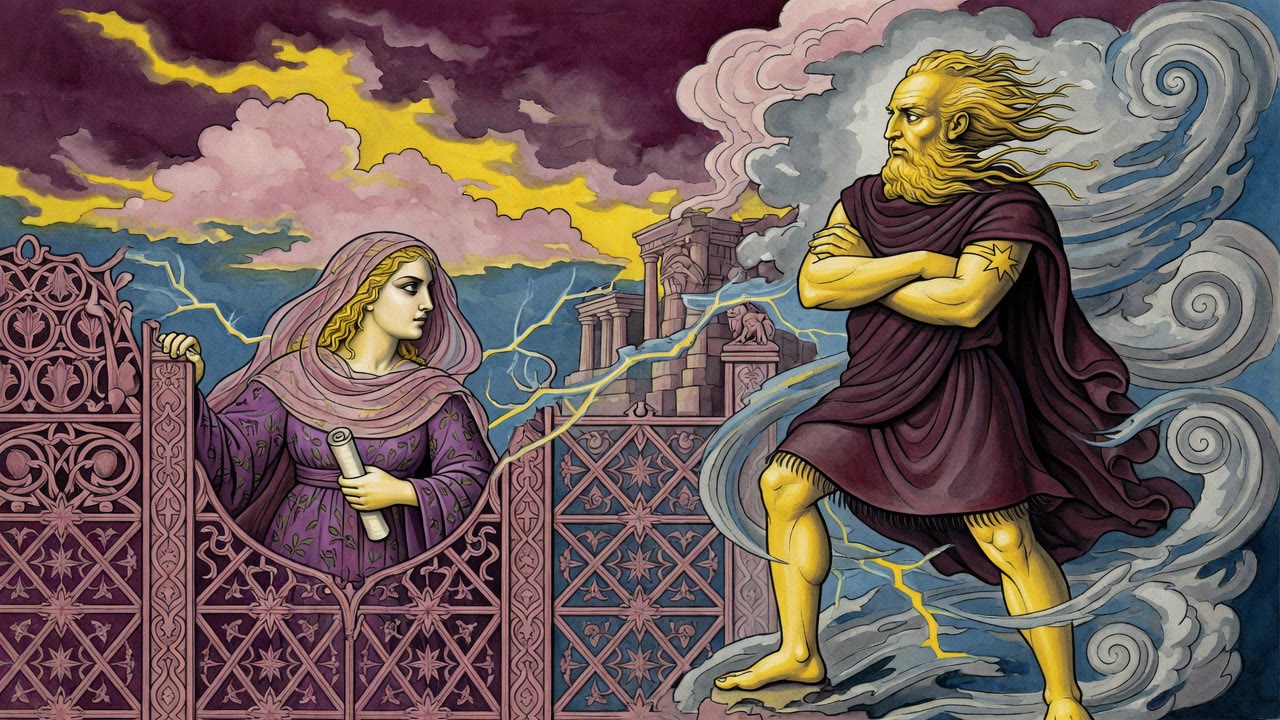
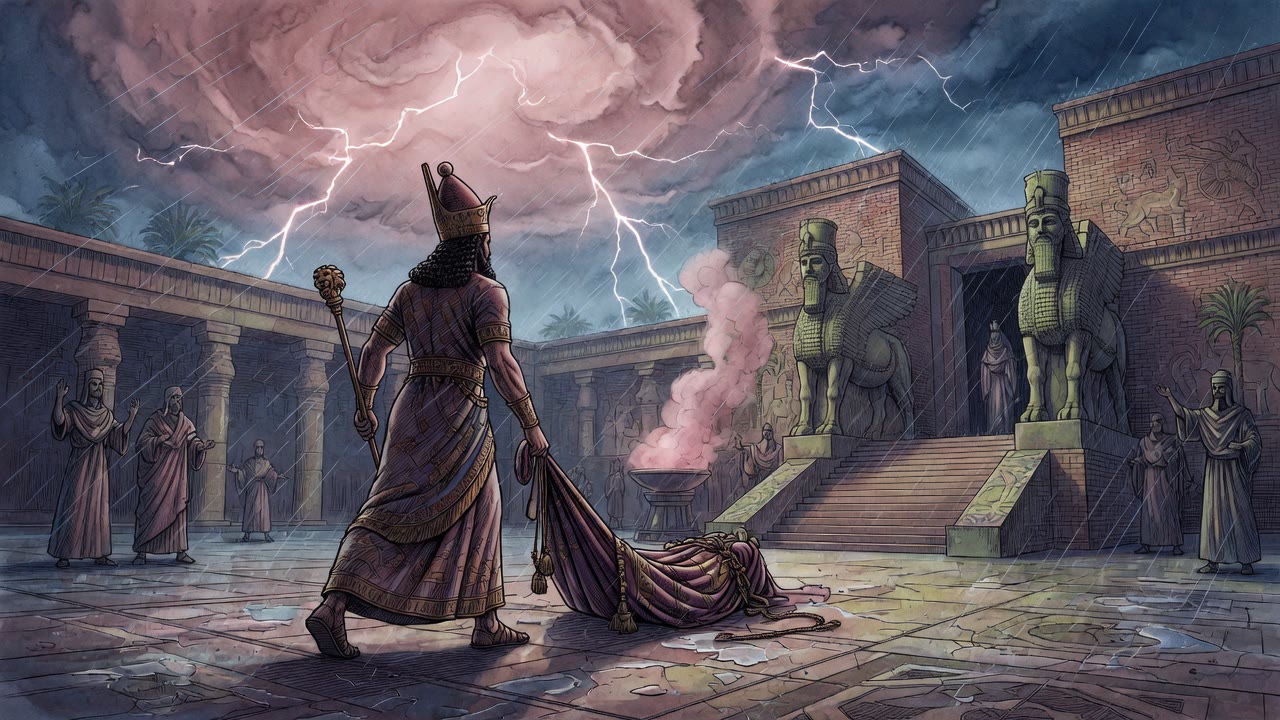
Angel of Fury Blew Sulfur into Ahasuerus
The queen's refusal reached the throne during the seventh day of wine. Above the beams a command went out to blow sulfur into his belly.
Table of Contents
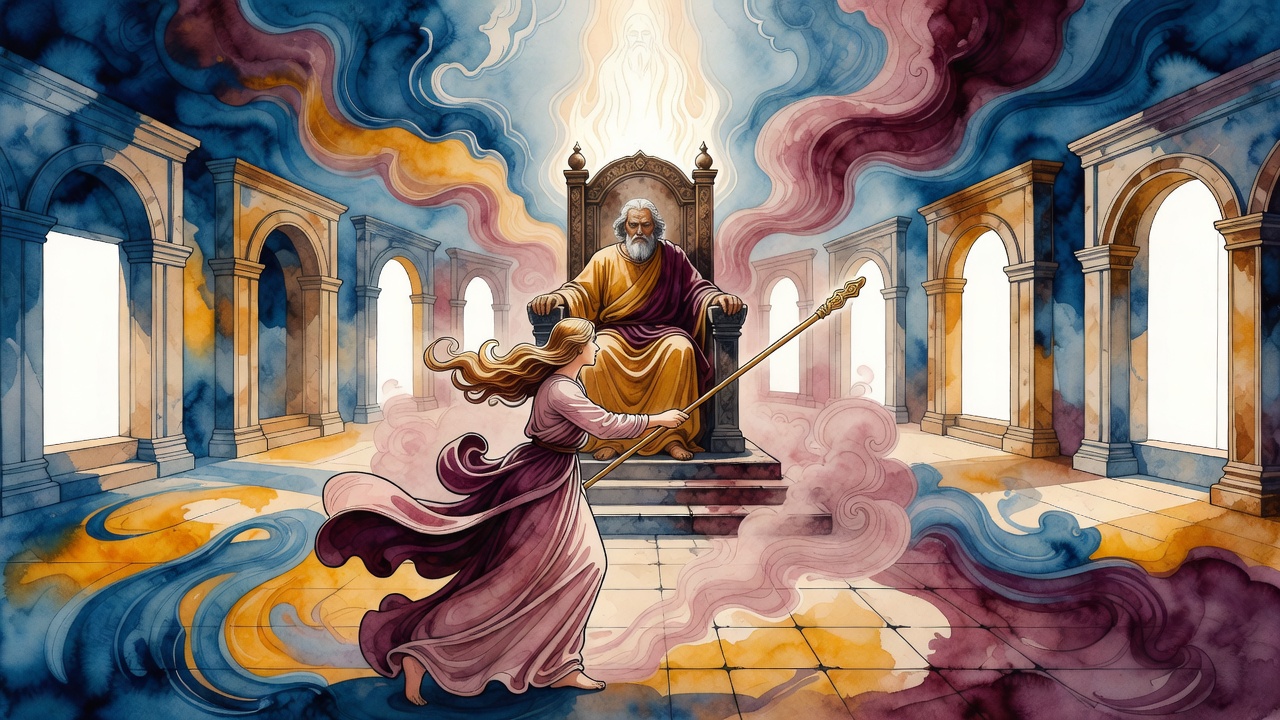
The hall had been drinking for a week when the summons went out to the women's wing, and the answer came back that the queen would not come.
 Click for full size
Vashti sent it in front of the princes of a hundred and twenty-seven provinces. Cupbearers stopped mid-pour. The men nearest the throne began measuring the distance to the doors.
And Ahasuerus felt something climb his ribs that was too large for the insult that caused it.
Blow Wind Into His Belly
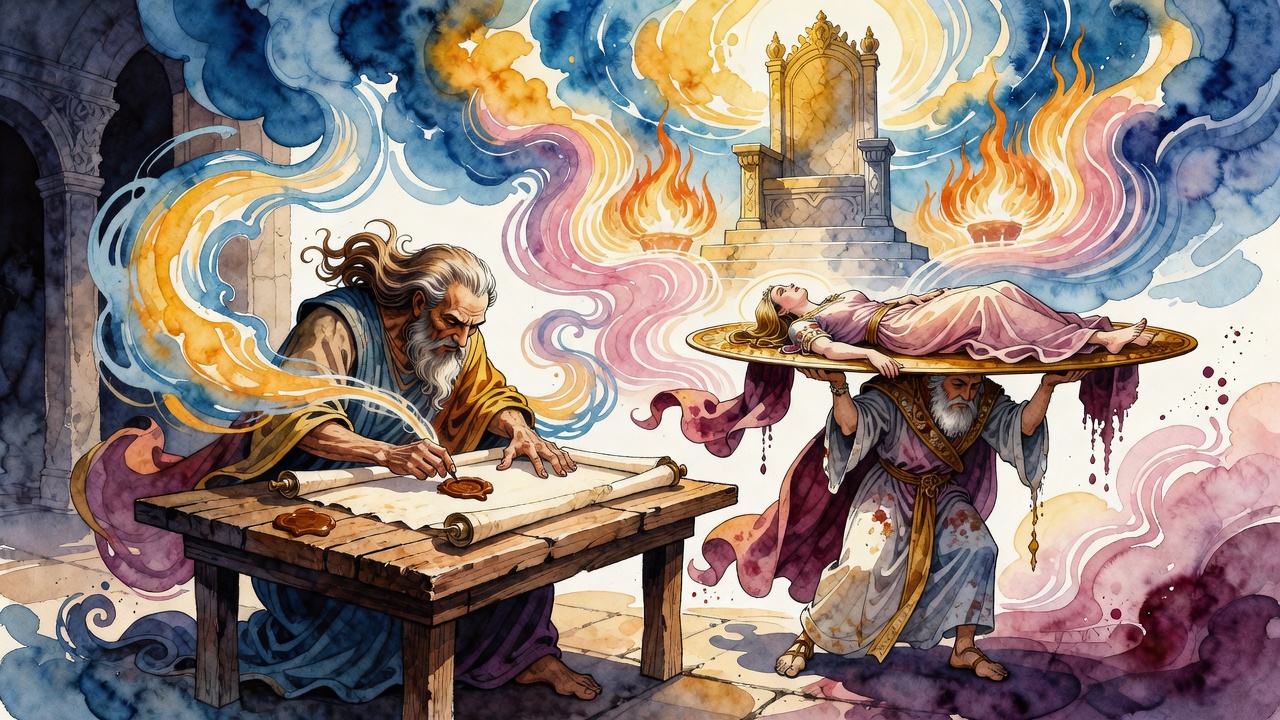
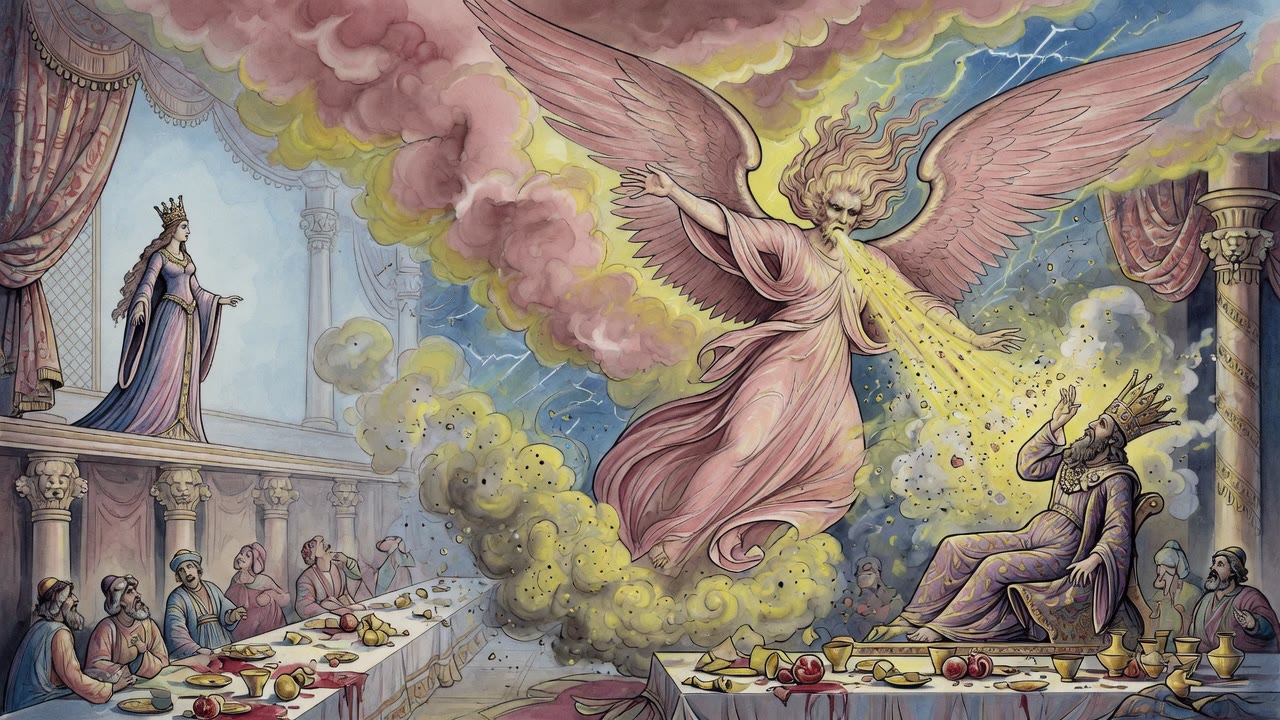
Above the roof beams the Holy One gave an order to the angel set over fury.
Go down. Blow wind into his belly. Fan his coals. Throw sulfur on his furnace.
The angel went. What entered the king that night was not the ordinary rage of a man embarrassed at his own table, which flares, burns its fuel, and is gone by the second cup of the next morning. This had a bellows behind it and a hand on the bellows. Every time the court decided the weather had turned, another draught found the coals.
Vashti was killed. The decree was written and copied out to every province in its own script. The floors were scrubbed and the hall was reopened. None of it made any difference to the fire, because the fire had not been lit by Vashti and did not answer to her absence.
A Crown With No Father Behind It
This was the Ahasuerus who ruled from Hodu to Kush, a hundred and twenty-seven provinces, and the throne under him had a crack the court could smell. He reigned, and had not yet reigned. No father had handed him the crown. He had taken it, and a throne taken has to be re-taken every morning in the eyes of the men who watch him sit on it.
That is dry timber. A man who has inherited a crown can survive a wife who says no to him in public. A man who is still proving the crown cannot.
The angel of fury had not built the flaw. He had only been sent to a house that was already full of kindling. Sulfur finds what is already ready to burn.
The Quiet King Still Burned
The scribes wrote afterward that the fury of King Ahasuerus abated. The palace knew better. A cooling shaped like a cooling. Smoke still coming off it.
Servants learned the difference and lived by it. They learned which hours to bring reports and which hours to be elsewhere. They learned that a quiet king is not the same thing as a cool one. Officers who had watched Vashti's night from a safe corner discovered that the safe corner moved.
From the moment Vashti was killed until Esther entered, the fury did not go out. Out in the provinces the gathering of girls began, cartloads of daughters coming up the roads toward a palace that nobody outside it understood was burning.
Esther Walked Into the Heat
When Esther was taken into the house of the women, she was not walking into a marriage. She was walking into a climate.
She learned it the way people learn a sea that has already drowned better sailors than they are. Which day he could be approached. Which silence meant nothing and which silence meant get out of the room. She kept her people and her city out of her mouth for years inside that heat, and the heat never once let up, because the angel had been given no order to stop.
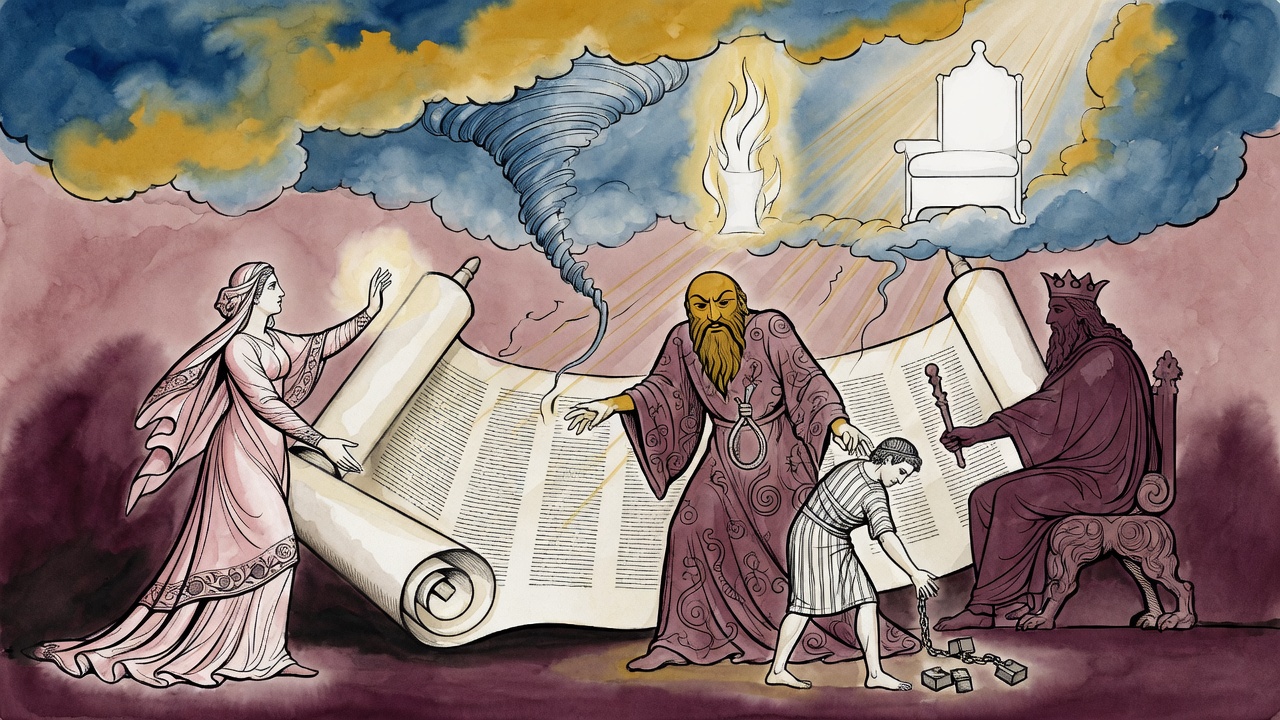
Her cousin sat in the gate in sackcloth and would not bow to the man the king had raised over every prince. Lots were cast. Letters went out with a date on them for the killing of every Jew in the empire, and the two men who signed the thing sat down to drink while the city of Shushan stood in the street not understanding what it had just been told.
All of it ran on the same fire. The angel had never left the room.
Two Furies Left Together
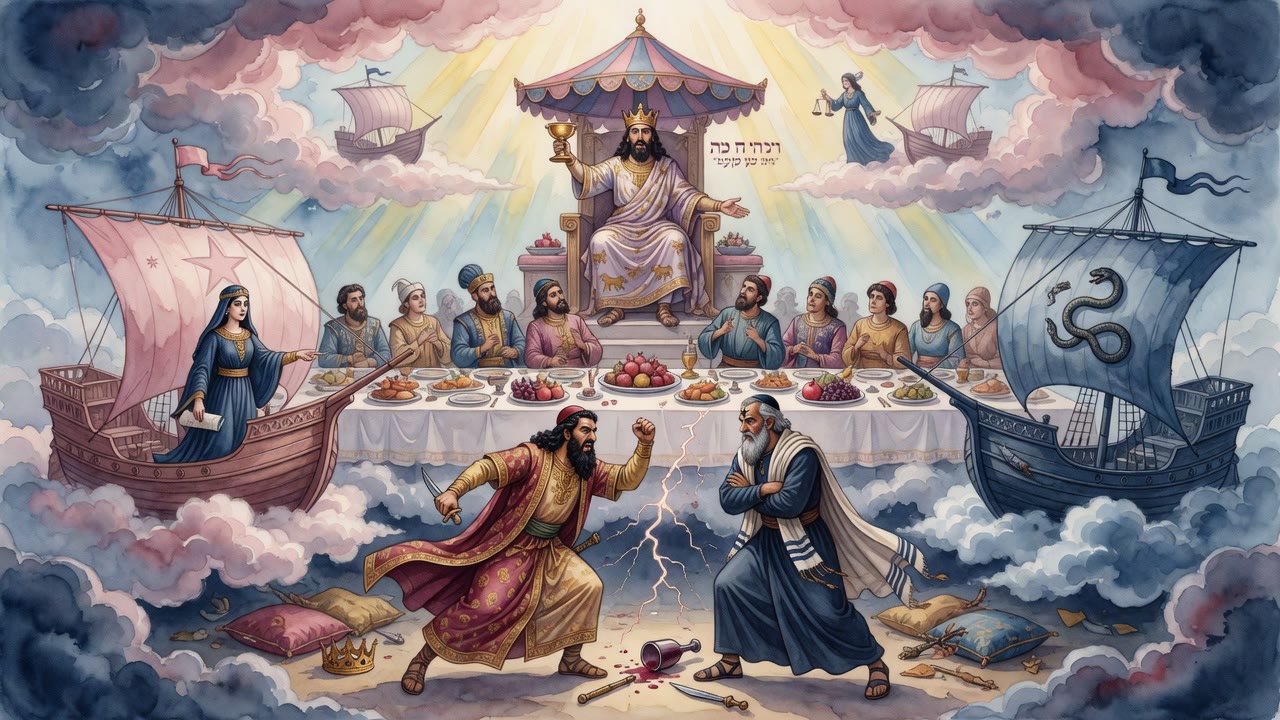
Then a night came when the king could not sleep, and the book of records was read to him, and a man who had built a gallows fifty cubits high for someone else was made to lead that someone else through the streets on the king's own horse.
They hanged Haman on the timber he had raised for Mordecai, and the scroll says the king's fury abated, and this time the word is not a hedge.
Not only did the fury of Ahasuerus go out. The fury of the King of kings went out, the anger that had been riding this whole long rage the way a rider stays on a horse he cannot yet dismount. The decree against Israel had burned itself down to the last of its own wood.
The palace air changed that hour, and the courtiers did not trust it for a month. Somewhere above the roof beams an angel wiped the sulfur off his hands and waited to be sent again. Ahasuerus never learned that he had been the fire and the coal and the bellows and the sealed room. He only knew that for years he could not stop burning, and that after one hanging he could.
← All myths