Esther Crossed Seven Rooms and the King Remembered Vashti
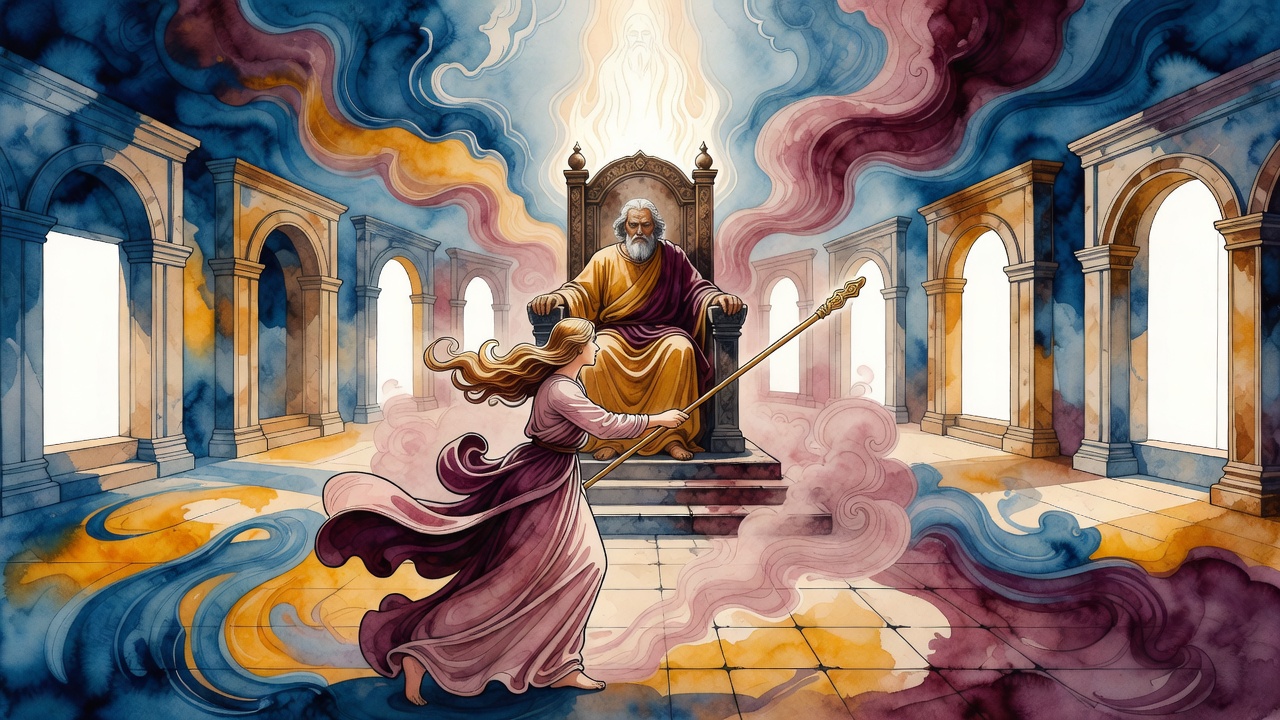
Esther crossed seven palace rooms unsummoned, and the king's rage exposed the wound left by Vashti before mercy finally moved the scepter.
Table of Contents
 Click for full size
The Walk No One Could Survive on Paper
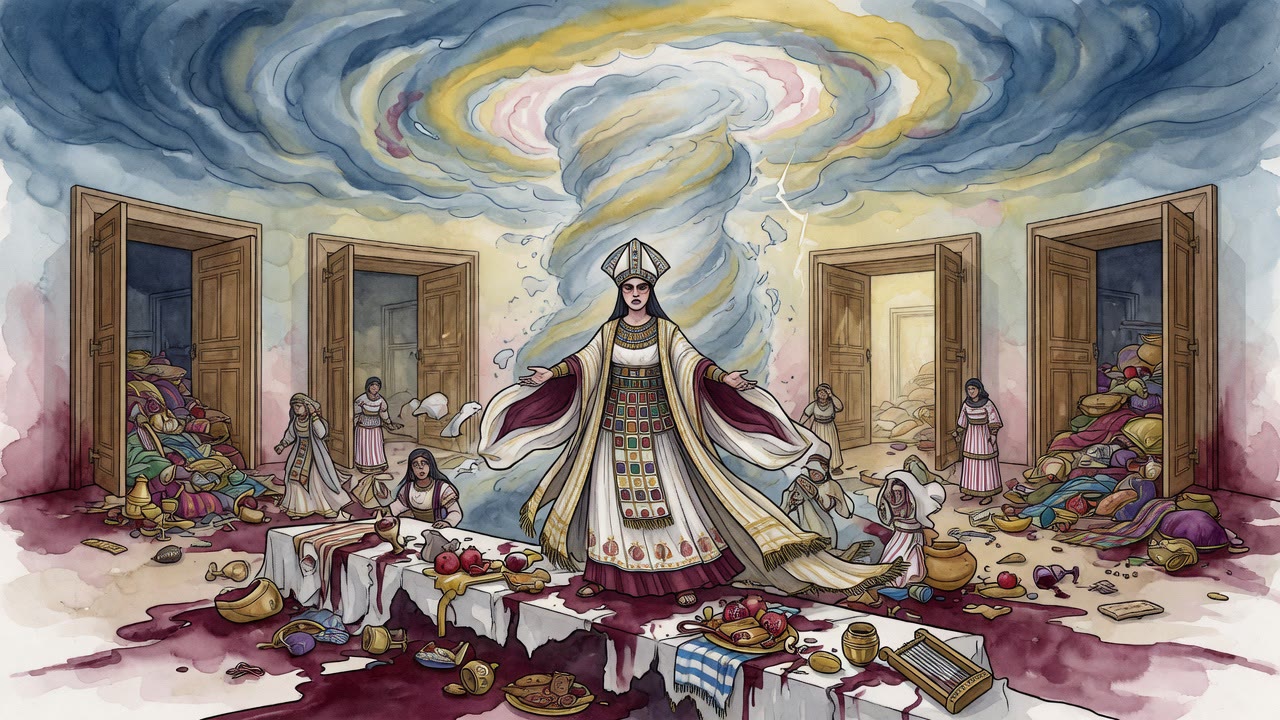
She was already past the point where law could save her. Esther had not been called. In the Persian court, that was enough to make a queen a corpse unless the king extended his golden scepter. Ginzberg's synthesis, drawing on the Midrashic sources around Megillah, slows the walk to its architecture: seven royal apartments, each ten ells long. The first three rooms gave her mercy by distance. The king could not see her yet, and what he could not see he could not punish. The fourth room ended that protection.
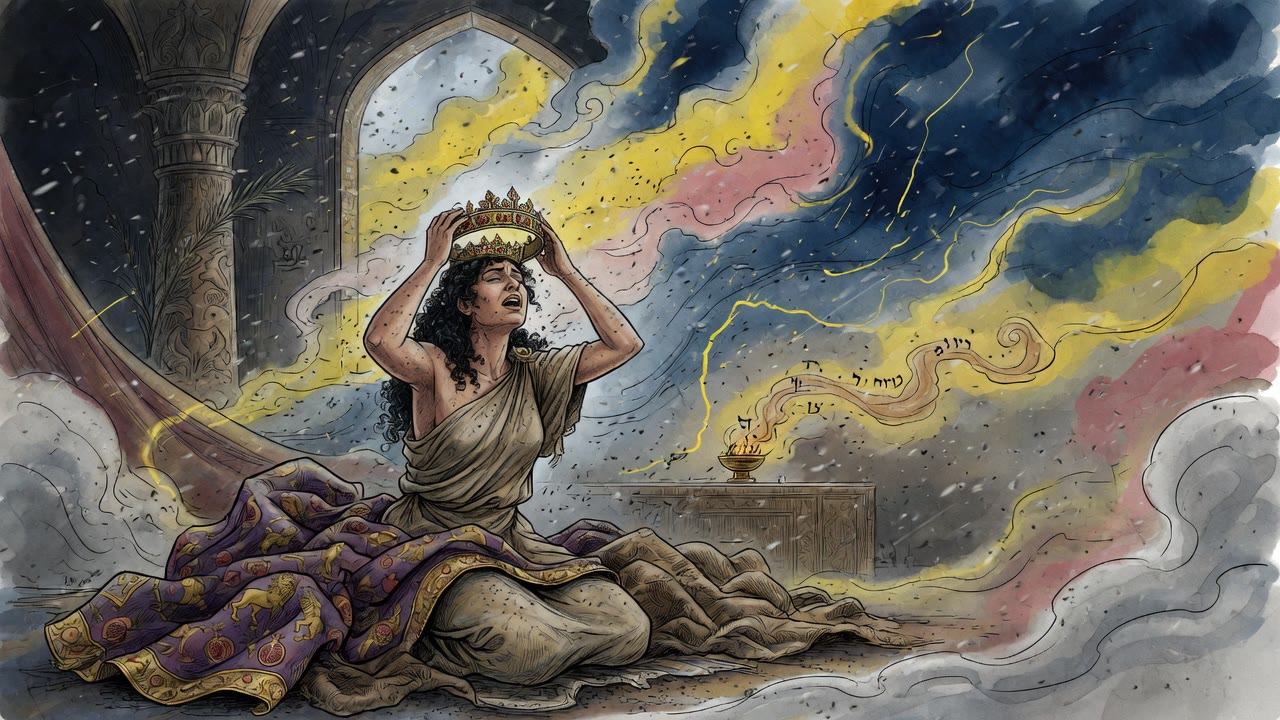
The Chronicles of Jerahmeel, a twelfth-century Hebrew chronicle preserved through Moses Gaster's 1899 translation, shows what Esther did before she dressed in the royal garments. She stripped off her crown and prayed like an orphan. She did not approach God as a queen making a petition. She approached as a woman with nothing left to offer except the fact of her need. Then she put the crown back on and walked through the rooms.
The Fourth Room Opened Like a Verdict
Barely had Esther crossed the fourth threshold when the king saw her and anger came before anything else did. Not love, not relief, not desire. Anger. The law had been violated. The woman who was supposed to wait had come without being called, and Ahasuerus was a man who had already killed one queen for defying protocol. The angel sent alongside Esther by God, in Ginzberg's telling, saw the rage and acted: it turned the king's face away so he could not look at her directly, giving the anger somewhere to go that was not at Esther.
The memory of Vashti moved through that moment. The tradition from the Chronicles of Jerahmeel and the Ginzberg synthesis both hold this: the king remembered what it had cost him to lose Vashti. He had killed her, or exiled her, at the advice of men who wanted her removed. The emptiness that followed, the long search for a replacement, the four years of beauty competitions that had embarrassed the empire, all of it surfaced when he saw Esther standing uninvited at the fourth threshold. The old wound was still open.
Vashti's Kingdom and What It Left Behind
Vashti had governed her own domain within the palace. Her refusal to appear before the king's guests was, in some midrashic readings, an act of dignity, not defiance. She had her own authority. When she was removed, that authority disappeared, and the palace became simpler and more dangerous, because the queen's separate sphere had been one of the few places where the logic of the court could be questioned.
The tradition around Vashti preserved in the Ginzberg material is divided. Some sources condemn her. Others suggest her punishment was disproportionate and that the advisors who recommended it had self-interested reasons. What is consistent across the sources is that the removal of Vashti created an instability that Esther then had to navigate. She did not inherit a clear role. She inherited a vacancy that had been created by violence and filled by a competition that treated women as inventory.
The Scepter and What It Meant
When Ahasuerus extended the golden scepter, the moment was not automatic. Ginzberg records an intermediate stage: the king's face had been turned away by an angel, he could not see Esther clearly, she was fading before him from the strain of the walk and the prayer and the terror, and at that point she touched the top of the scepter and he saw her again. Recognition came back. He saw his wife, not a trespasser.
He asked what she wanted. He offered half the kingdom. The offer was standard royal rhetoric, but Esther did not accept it or refuse it with the question he was probably expecting. She invited him to a banquet. And then to another. She made him come to her twice before she said what she needed to say about Haman. The woman who had crossed seven rooms without being called then made the most powerful man in the empire wait twice before hearing her request.
← All myths