Ahasuerus Cannot Please Both Haman and Mordecai
Cups kept filling in Shushan while God asked how one wind could push two ships two ways at once. Tomorrow those ships would have names.
Table of Contents
 Click for full size
The King Ordered Pleasure For All
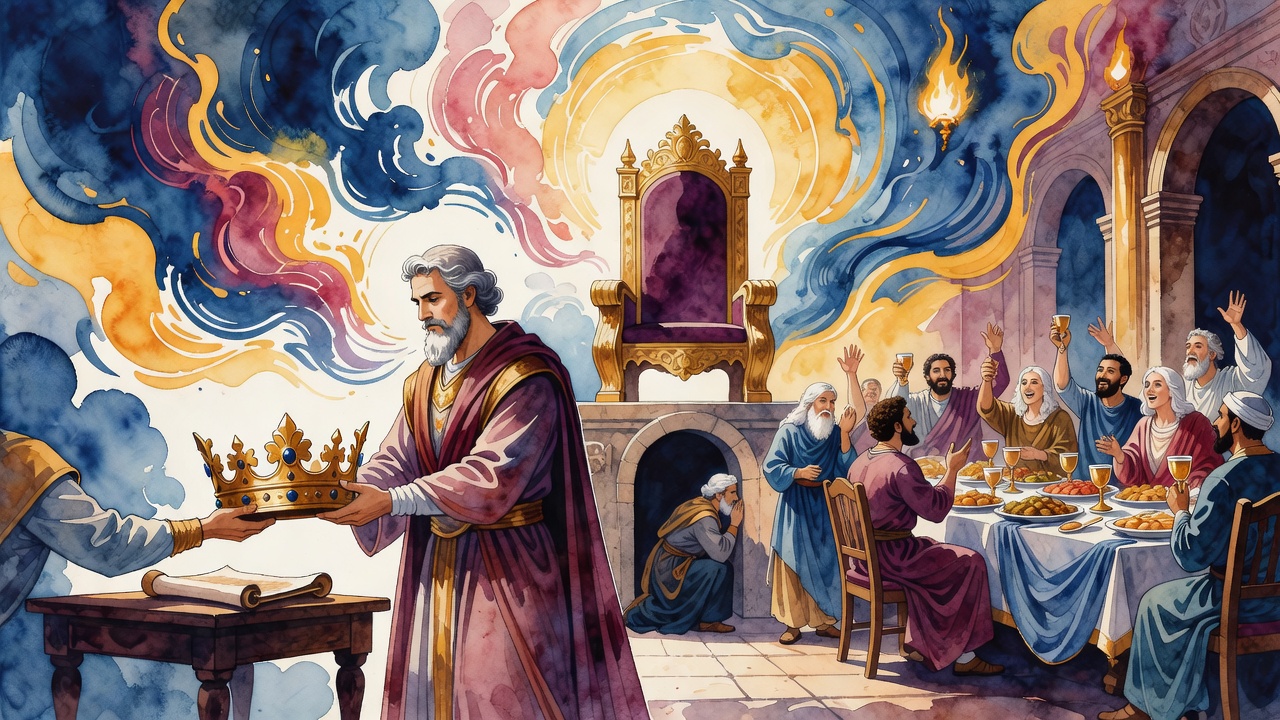
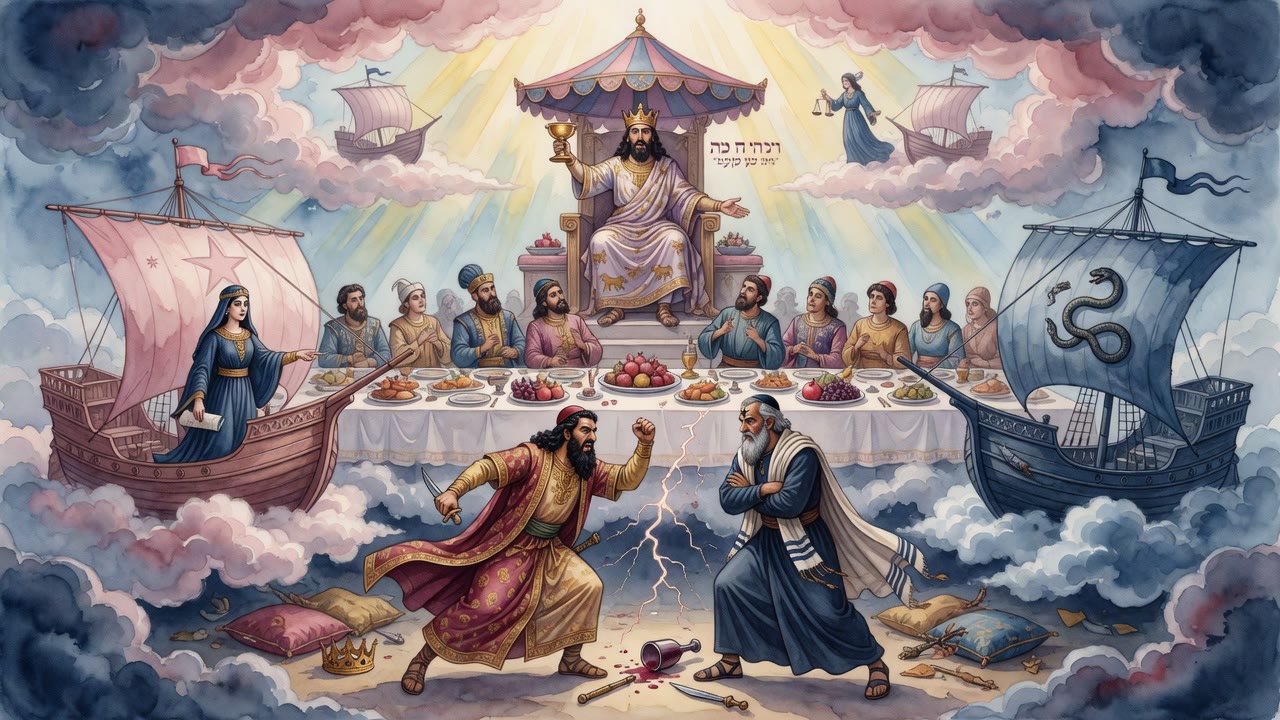
Ahasuerus filled the palace at Shushan with wine until the floors stuck. He told the officers of his house to do according to every man's pleasure (Esther 1:8). Guests chose their own cups. They chose their own couches. They chose who sat beside them. The king smiled as if desire itself took orders from a steward.
God answered him in wrath.
"Thou villain, canst thou do every man's pleasure? Suppose two men love the same woman, can both marry her? Two vessels sail forth together from a port, the one desires a south wind, the other a north wind. Canst thou produce a wind to satisfy both?"
The musicians found the next note. Servants ran with trays. None of them heard the veto land on the king's open mouth. God had one more question. "On the morrow Haman and Mordecai will appear before thee. Wilt thou be able to side with both?"
Two Ships Want Opposite Winds
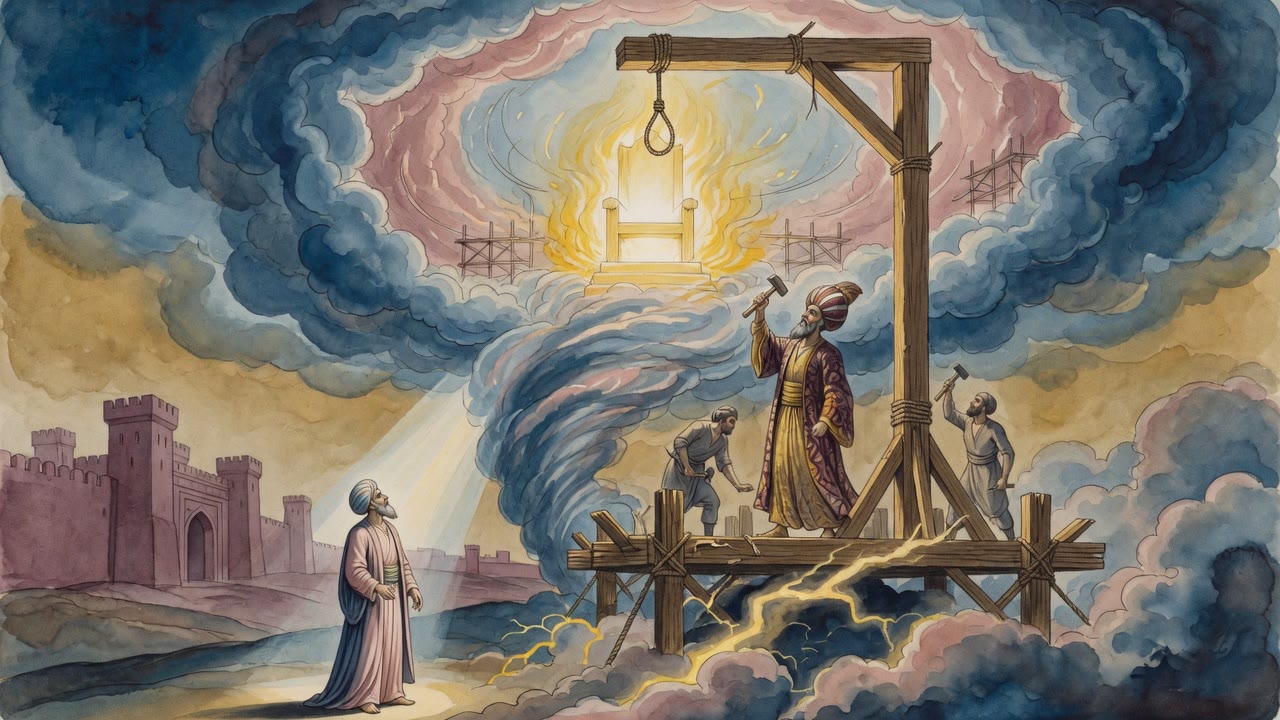
Mordecai sat at the king's gate with an older grudge already in the air. He descended from Saul, who had struck Amalek from Havilah to Shur and put more than five hundred thousand of that people to the sword. Haman descended from the same Amalekite line. He carried the memory under silk, like a knife.
Hatred in Shushan was not a new fashion. It was an inheritance that had found new titles.
The king's command still hung over the feast. Please every heart. Pour every cup. God had already named the two men who could not share one policy. Haman would want a nation erased. Mordecai would want that nation alive. No steward could pour one cup that satisfied both.
Mordecai Dreamed of Dragons
In the second year of Ahasuerus, Mordecai dreamed. The earth shook. Wailing rose from the land. Two immense dragons went against each other with a noise that sent people running toward the fight. A small nation lived among the watching peoples. The nations around it rose to wipe its memory off the earth. Darkness thickened until it was hard to breathe.
Then a thin brook ran between the dragons. It grew. It became a flood like the Great Sea and covered the earth. The sun came back. The small nation stood exalted. The proud lay low.
At the gate, in waking life, Mordecai overheard Bigthan and Teresh whispering. They meant to take the king's head from the bed and send it to Macedonia, whose empire was at war with Persia. He told Esther. Esther told the king. The conspirators hung. They had been Haman's counselors. The rope only fed the Amalekite's rage. The dream still waited for faces.
Eighteen Thousand Sat at the Trap
Haman did not trust steel alone. He told Ahasuerus that the God of Israel hates lewdness, then staged a feast of lewd women and open desire, hoping Jews would sin and lose protection. Mordecai warned the people not to go.
Eighteen thousand five hundred sixty went anyway. They sat at Haman's table and drank until the wine did the work the women had been hired to do.
Above, while those mouths were still wet, Ha-Satan, the Accuser, stood before God.
"How long wilt Thou cleave to this nation who turn their hearts from Thee? Let them perish from the world."
God asked what would become of the Torah.
"Let it remain for the higher beings," Ha-Satan said.
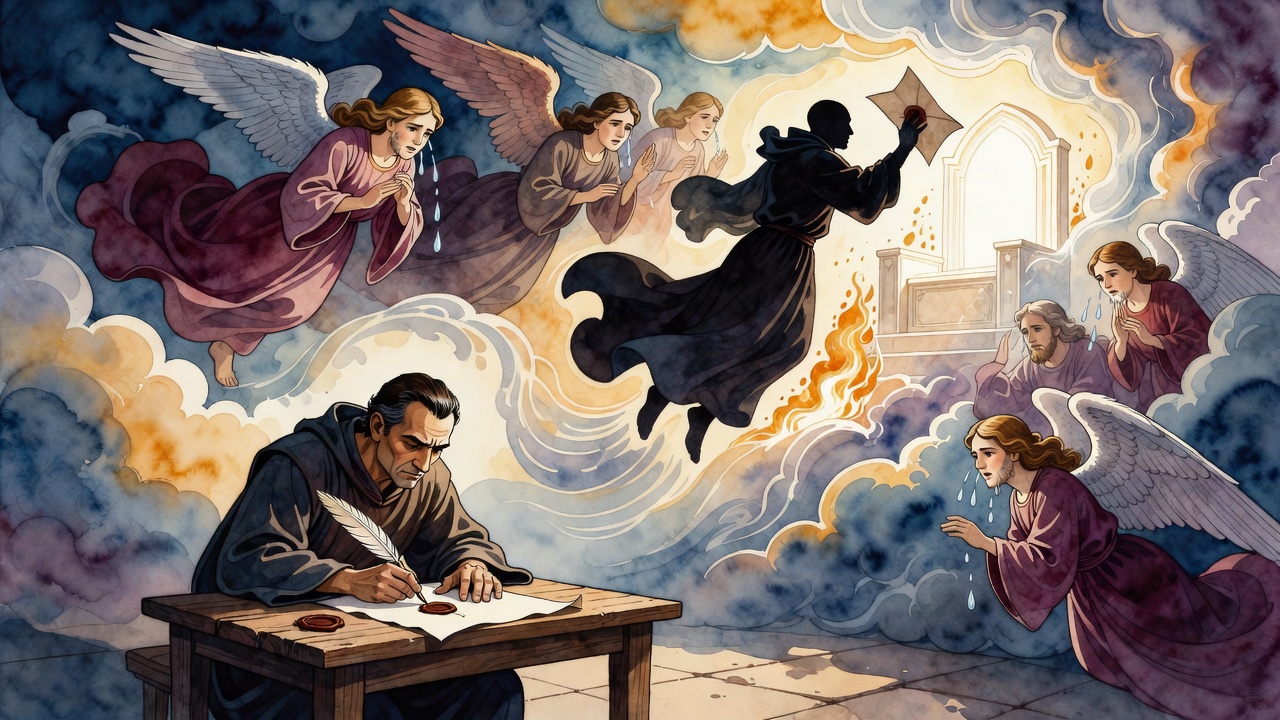
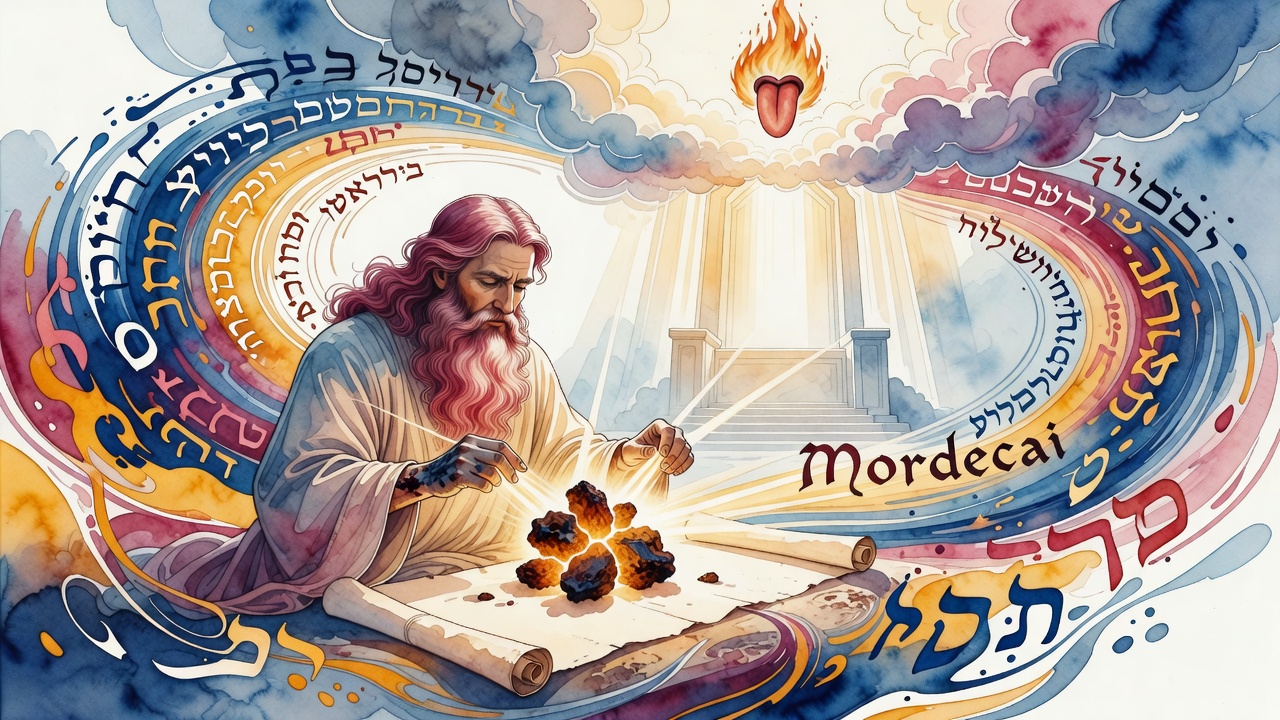
For a terrible span, agreement hung in heaven like a drawn decree. God told the Accuser to bring a scroll, so destruction could be written on it.
The Torah Met the Accuser in Widow's Clothes
Ha-Satan went for the scroll. The Torah herself met him in widow's garments, groaning. Ministering angels heard her and wept.
"If the Israelites are to be destroyed, what is the use of us?"
Sun, moon, stars, and planets put on sackcloth. The heavens clothed themselves in blackness. Then Elijah ran to the patriarchs with the news that heaven and earth were already mourning a people not yet erased.
"Do you not know," he said to Abraham, Isaac, and Jacob, "that the whole world is like a woman in travail, while you remain silent?"
Back in the palace, Ahasuerus still believed a host could please every heart. Haman wanted a nation gone. Mordecai wanted that nation alive. The two ships had names now. The brook between the dragons had not yet become a sea. Esther still wore a crown that cost her silence. The Accuser still wanted a scroll. The king still thought power meant pleasing everyone at once.
Officers poured wine. The decree of annihilation waited its hour. Between those two pours, the king of Shushan had already been answered from above. He could not do every man's pleasure. Tomorrow would prove it with two names he could not hold in one hand.
← All myths