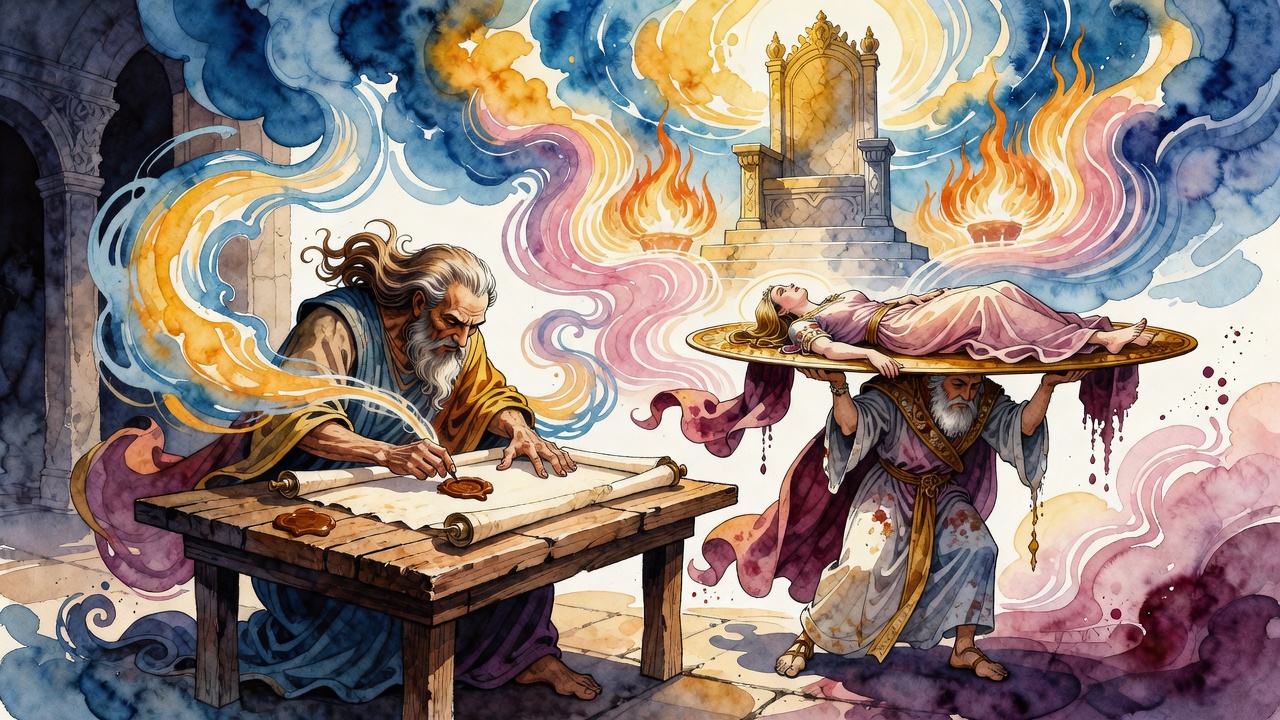
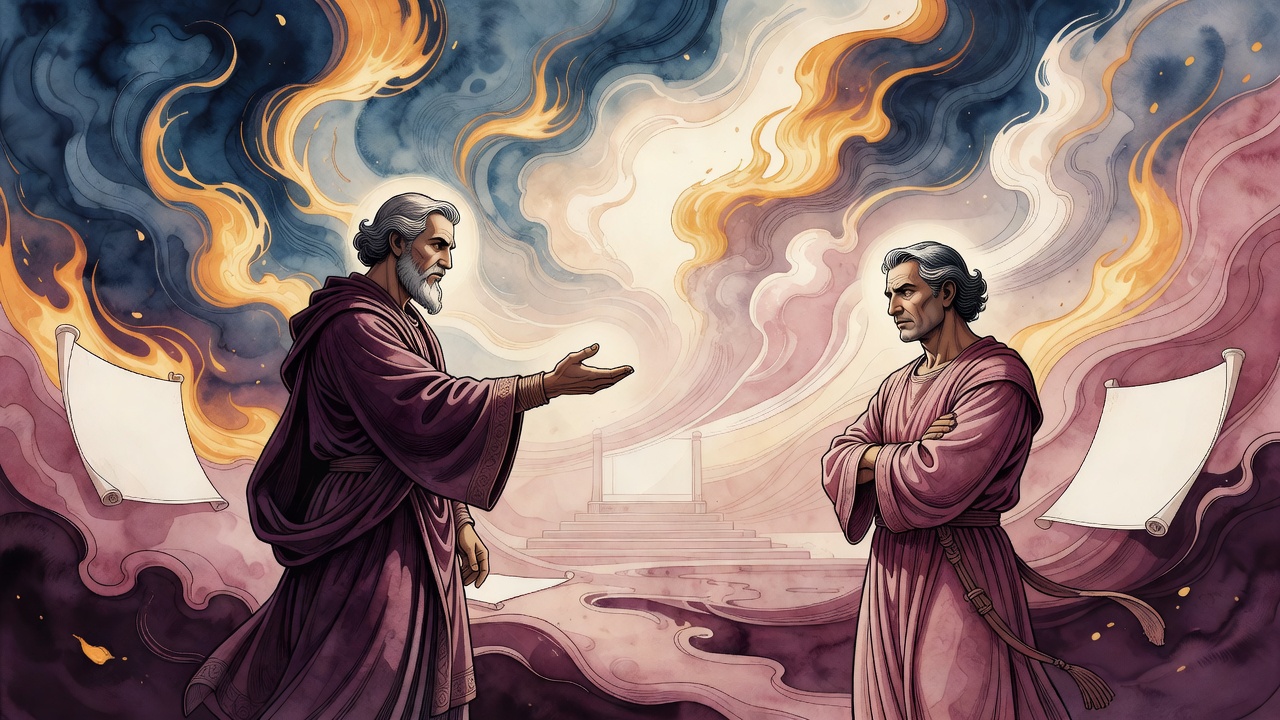
Ahasuerus Buys the Throne and Miscounts Years
Bigthan and Teresh mixed the poison in Tarsian, sure the Jew at the door would hear only noise. Mordecai knew seventy languages.
Table of Contents
 Click for full size
He Bought the World He Wanted
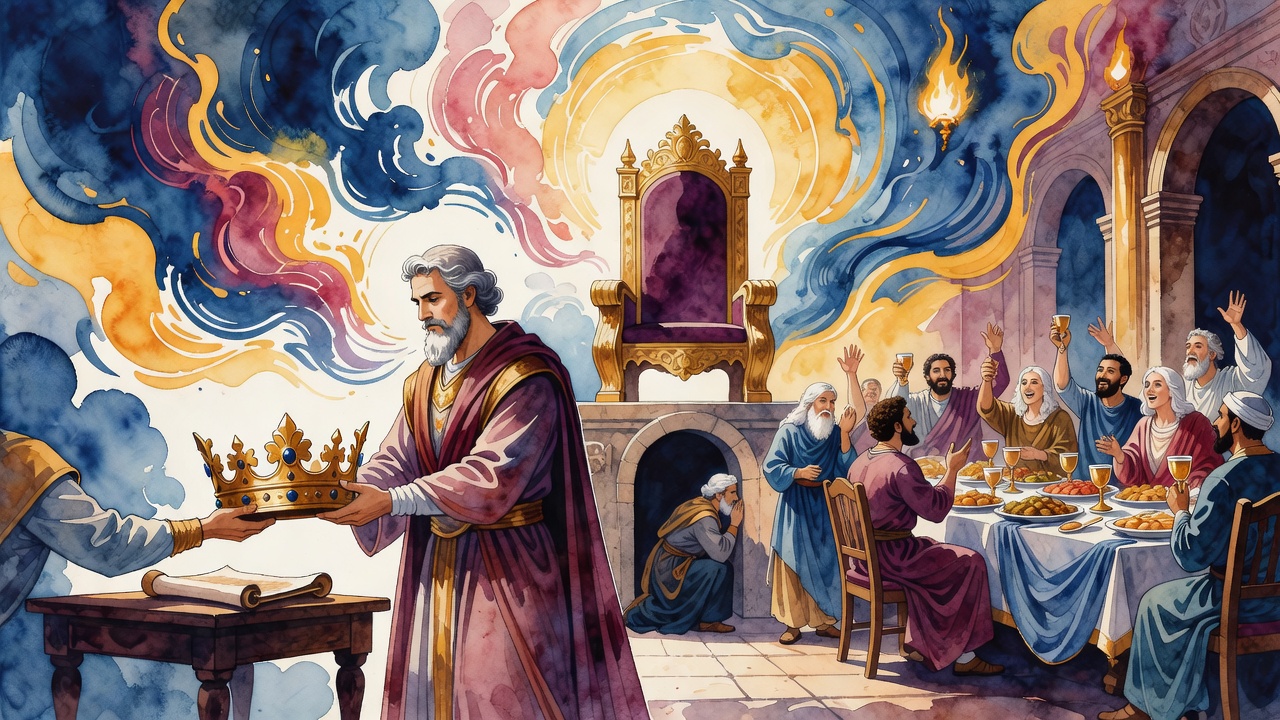
Ahasuerus stacked coin until the coin became a throne. He was not born under a canopy of royal blood. He bought the world he wanted and sat on it, king of Persia by purchase.
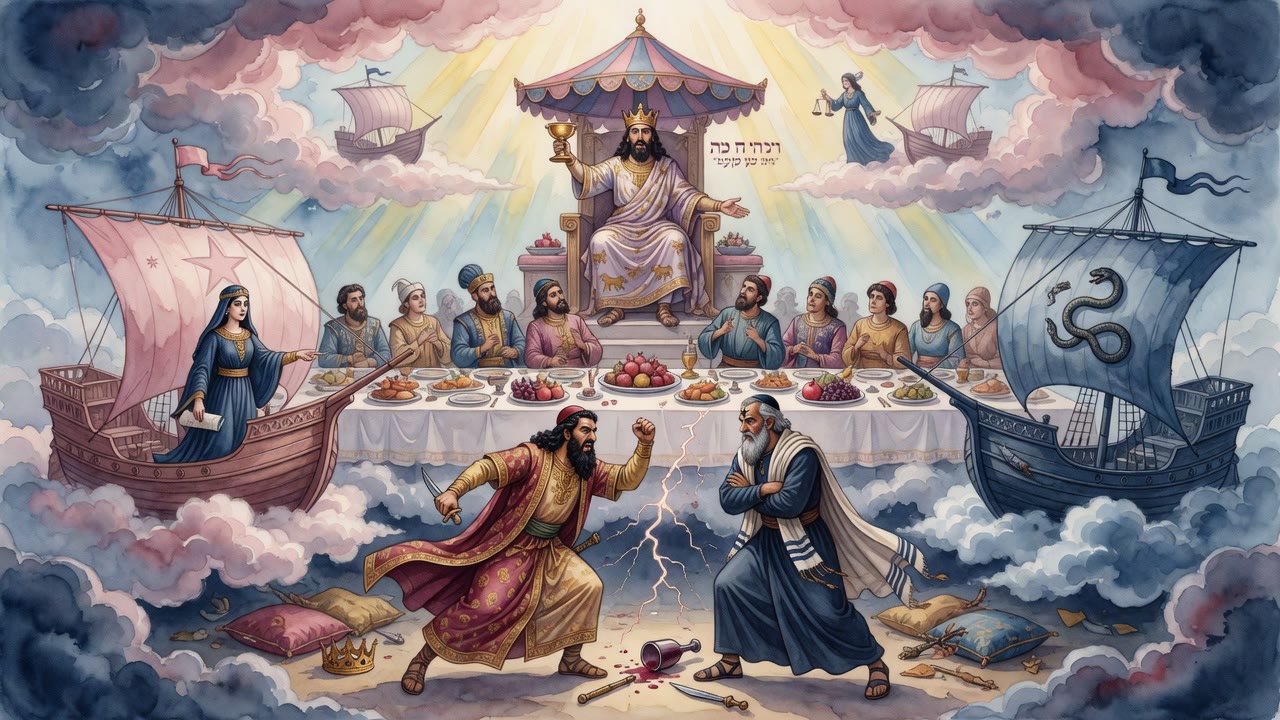
A bought throne still wants a feast. In the third year he threw one that ran for months. Vessels and colors. Stolen cups that had once belonged to sacred rooms. Guests cheered on cue. The timing was not only vanity. He had counted seventy years from Nebuchadnezzar's rise and decided Jeremiah had failed. The Temple still lay ruined. Israel had not returned on his calendar. He reasoned that the Jewish hope was a dead letter, and a dead letter deserves a party.
He Started the Count From the Wrong Door
Jeremiah had spoken of seventy years, then return (Jeremiah 25:11-12, 29:10). Ahasuerus started the count from the wrong door. The desolation's true zero was Jerusalem's fall, not the conqueror's first parade. The years would end when Darius, son of Ahasuerus in the later telling, allowed the Temple's rebuilding. The king's feast celebrated a misread clock.
Servants refilled cups. A jester mocked empty temples and the courtiers laughed. Ahasuerus laughed louder. The metal of the stolen vessels did not protest. The seventy years did not ask his permission. Somewhere under the music, the real count still ticked toward a different door.
He slept later on a night that would matter more than the feast. Sleep for a king is never only rest. It is a gap where plots grow teeth.
Bigthan and Teresh Spoke Tarsian
In the dark he asked whether any unpaid favor still sat in the books. The chronicles opened. Mordecai's name rose from the ink: the Jew who had blocked a killing. Elevation followed. The seat once held by Bigthan and Teresh, chamberlains proud of their rank, went to a man they called barbarian in their throats.
Hatred does not need a long education. They planned poison. As butlers they could reach the cup. They wanted the death to look like the wage of trusting a Jew. They spoke Tarsian, sure no outsider owned their tongue.
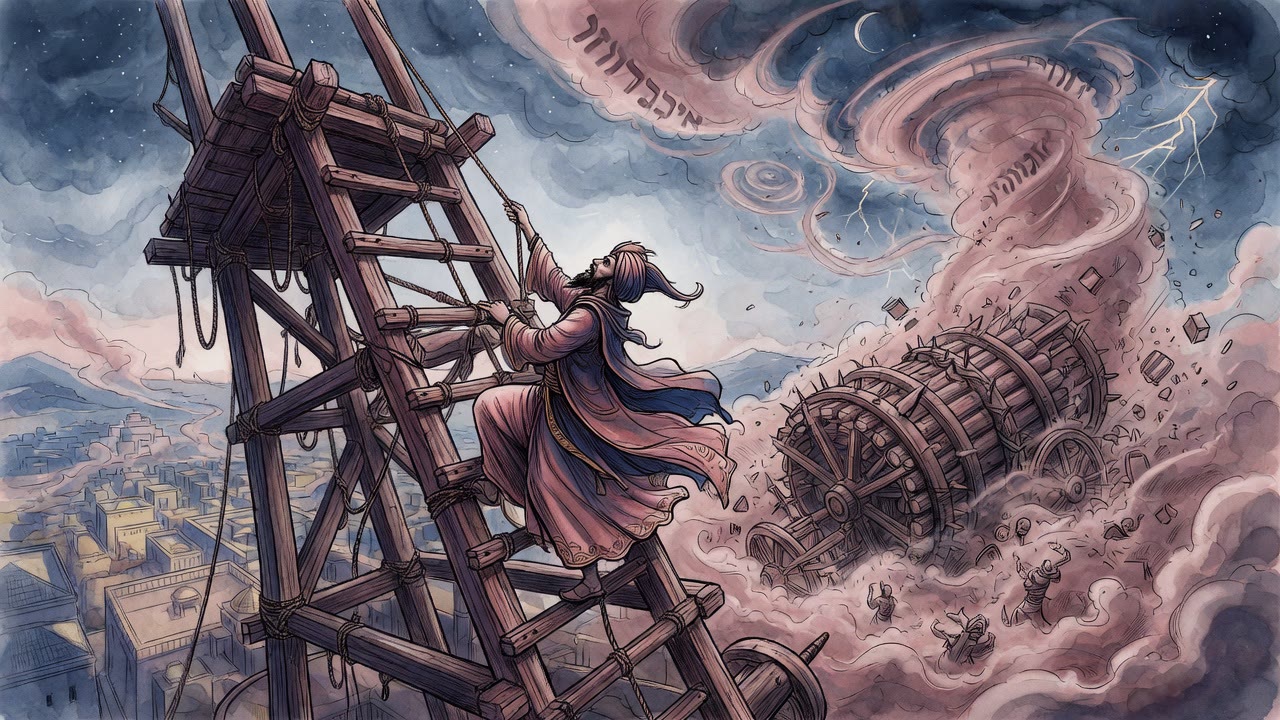
Mordecai owned more tongues than they owned knives. He sat among those trained by the Sanhedrin, Israel's high court, and he knew the seventy languages. Every venomous word arrived in his ear as clear as palace Persian. Their secret became his evidence. The plot broke on a listener they had erased from the room.
The Poison Never Reached the Lip
The king lived. The chamberlains died. Mordecai's deed entered the book that a later sleepless night would reopen when history needed a hinge. Ahasuerus still did not understand the seventy years. He understood only that a Jew had been useful.
Outside, Jews in exile still counted toward a Temple the king had already buried in his mind. Inside, a rich man who misread Jeremiah owed his pulse to a man he barely saw.
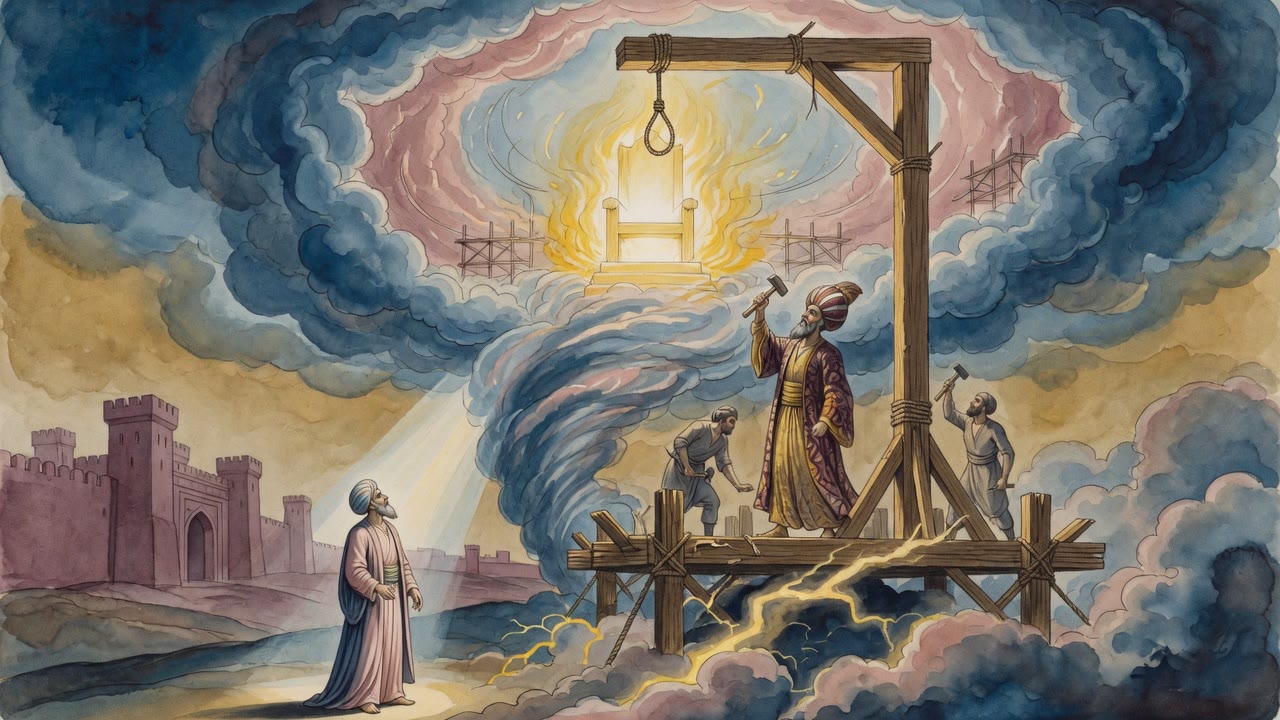
Morning brought ropes for plotters and a note in a book. The seventy years would not ask the king's permission to finish. Darius would yet open a door Ahasuerus had already declared sealed. Purchased crowns cannot buy the end of Jeremiah's sentence.
Mordecai Went Back to the Gate
Ahasuerus rolled over in bed, alive because Mordecai heard Tarsian. He did not thank the language lessons. He ordered another cup, checked this time, and went back to sleep in a world he still thought he had purchased forever.
The seventy years kept walking toward Darius and stone upon stone. Mordecai returned to the gate, still a Jew, still listening. A servant wiped a drop of wine from a vessel that had once held something holier than palace laughter. The drop looked like any drop.
Mordecai wiped dust from his sleeve and went back to the gate. The bought crown never priced listening correctly. The seventy years kept walking.
← All myths