Haman Tried Peace With Mordecai and Mordecai Refused
Before the decree, Haman offered Mordecai shalom. Mordecai answered with a verse from Isaiah. Some peace is camouflage for violence.
Table of Contents
 Click for full size
The Greeting That Was a Trap
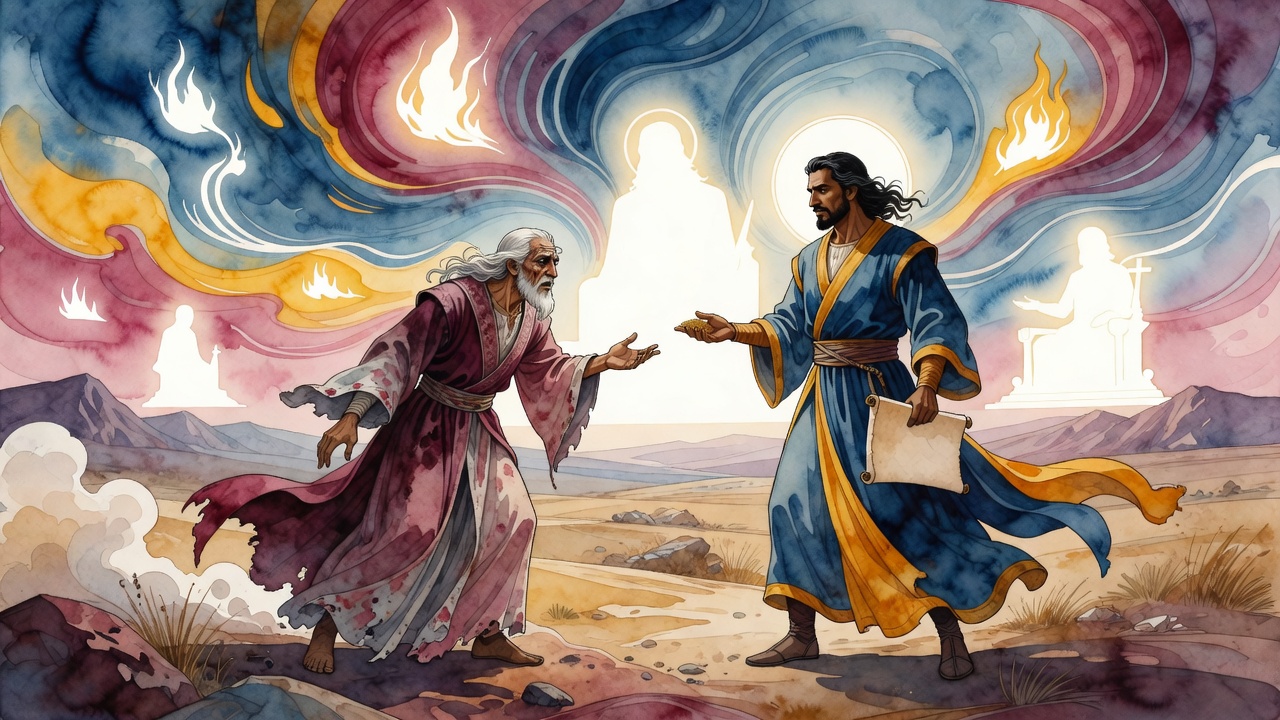
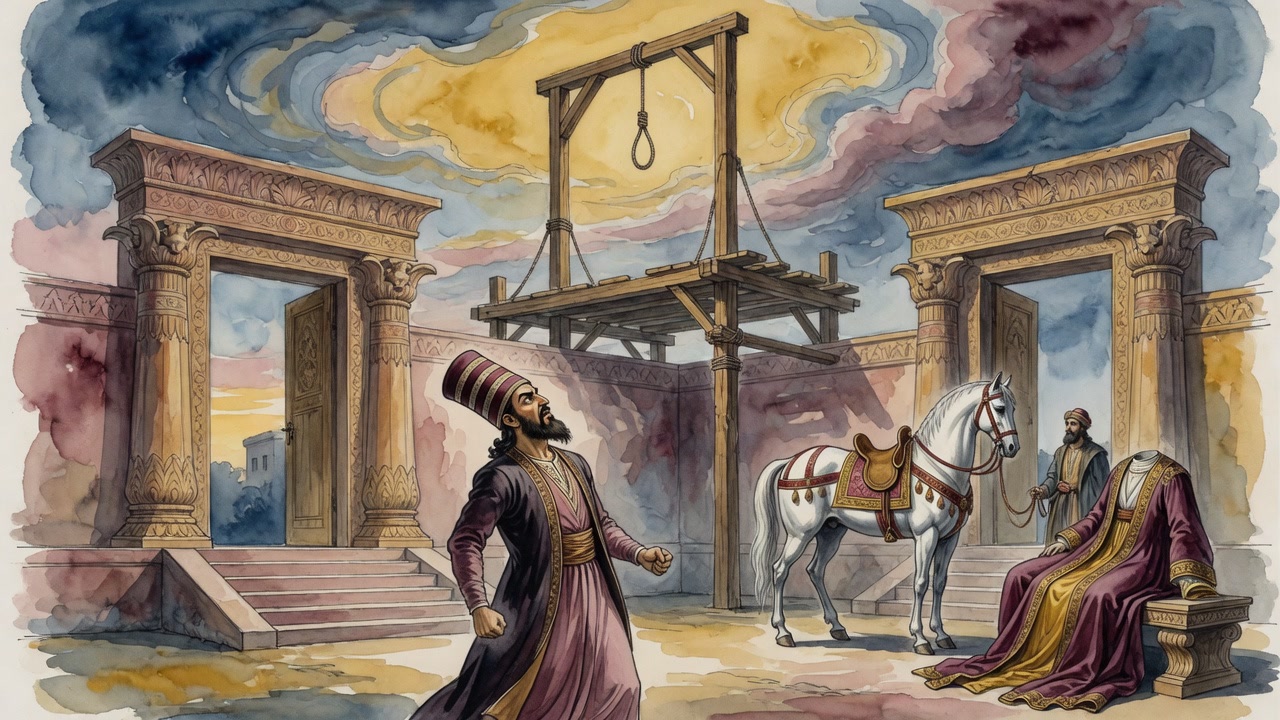
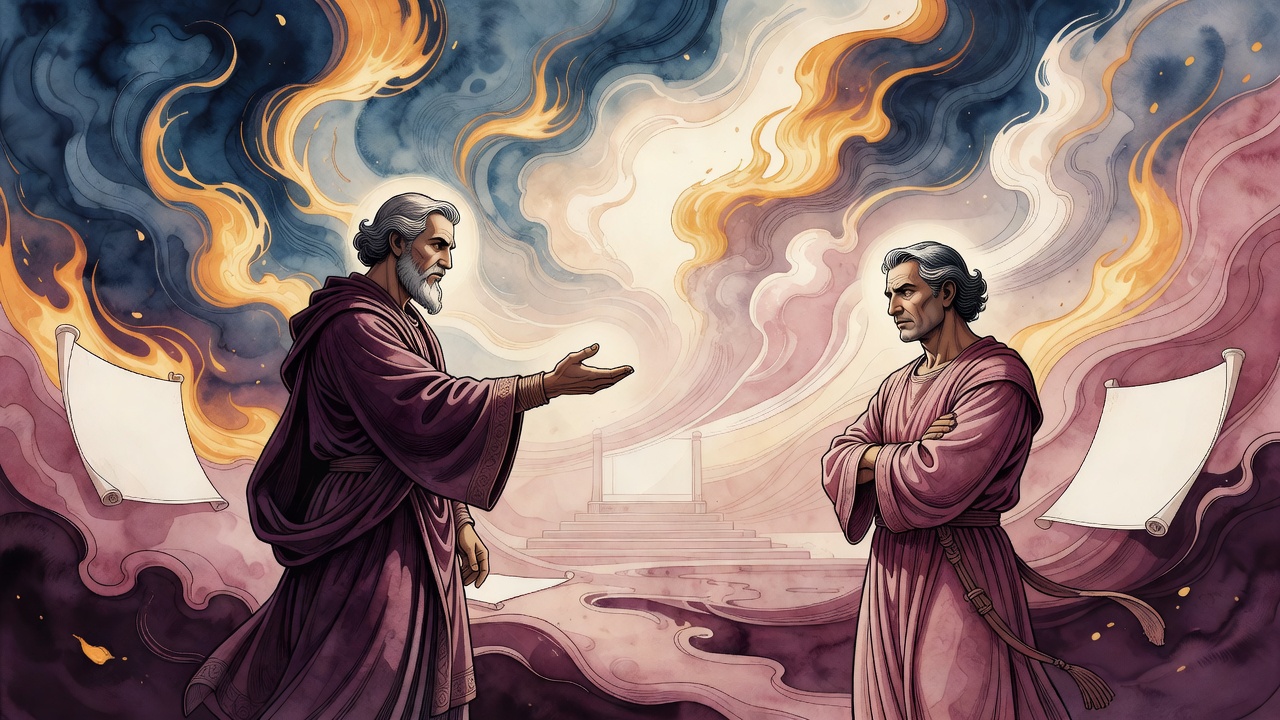
Haman walked up to Mordecai in the palace corridor and said shalom aleichem. Peace be with you, my lord.
He knew Mordecai would not bow to him. The entire court knew. The gate attendants had been watching for days and reporting it, and the reports had reached Haman with the regularity of an insult being freshly delivered each morning. He had the authority to act on the refusal at any moment. He had not acted yet. What he did instead was offer a greeting so civil it might be mistaken for magnanimity.
A public greeting creates a public record. If Mordecai accepts it, if he returns the shalom, if he allows even a thread of civility to be woven into the record of their relationship, then Haman has something to work with later. He can say the quarrel was settled. He can say the man who refuses to bow accepted the peace offering of a senior official and the matter was concluded. He can use that moment of apparent reconciliation to make any future conflict look like a new offense, a reopening of a wound that had been properly closed.
The Answer That Named What Was Happening
Mordecai did not return the greeting with court language. He answered with a prophet.
There is no peace, said my God, to the wicked. He was quoting Isaiah, chapter fifty-seven, verse twenty-one, and he delivered it with the precision of a man who understood exactly what the greeting had been intended to accomplish. The word shalom had arrived as a tool. He sent it back as a verdict.
The line does not say Haman is wicked. It does not make an accusation that Haman can refute in the corridor with witnesses present. It simply states a principle from scripture that applies to a category of person, and everyone in the hallway could determine for themselves whether the category applied. Mordecai was not making a charge. He was reading from a book that had already recorded the outcome.
What Haman's Shalom Revealed
The Benjamin tradition in the rabbinic reading of the Purim story pays attention to the ancestors. Mordecai descended from the same tribe that had produced Saul, who had made peace with the Amalekites when peace served his purposes. The prophets had condemned that peace. Samuel had delivered the rejection of Saul's kingship directly from God on the grounds that Saul had let Agag live when the command had been to destroy. The tradition reads Mordecai's refusal of Haman's shalom as the correction of that old error. Saul had accepted a peace that should have been refused. Mordecai refused a peace that could not honestly be accepted.
A man who is organizing genocide does not become peaceful because he speaks the word for peace in a corridor. The greeting was a costume. Mordecai stripped it off in public using a single verse from a prophet who had been dead for centuries, which is exactly the kind of answer that cannot be argued with in a hallway.
The Consequence That Followed
Haman erupted. The public refusal of his greeting, after the daily visible refusal to bow, after the accumulated humiliation of a man who would not bend, made the quiet planning that had been moving inside him break through into action. He went to the palace with a proposal: ten thousand silver talents and a royal decree authorizing the destruction of every Jew in the empire. The verse from Isaiah had not made him peaceful. It had made him show himself.
Mordecai had read the shalom correctly. The man offering peace was organizing war. The correct response to that kind of peace is the kind of response that makes the disguise unnecessary, that forces the reality underneath the greeting to reveal itself. Mordecai accomplished that in one sentence. Everything Haman did after it was confirmation.
← All myths