Esther Won Purim From the Sages With Annals
After Shushan was saved, Esther demanded a permanent feast. The sages feared gentile rage until she proved the victory already lived in Persian royal records.
Table of Contents
Esther stood after the blood and the relief and asked for a holiday. Not a private thanksgiving in Shushan alone. A permanent mark on the Jewish year, loud enough for costumes and bitter herbs of memory, fixed enough that children unborn would still drown out Haman's name. The sages hesitated. Victory can be dangerous when the losers still run provinces.
 Click for full size
Jews in Shushan wanted the day Haman had chosen for their death turned into a feast. Other cities of Persia copied them. Other lands heard and joined. Celebration spread faster than couriers. Esther pressed the sages to seal it for all time. They answered with geopolitics. Make a festival of beating an imperial enemy, and gentiles may hear rebellion, invent new grudges, and light new fires under old accusations.
The Queen Who Had Feared to Walk In
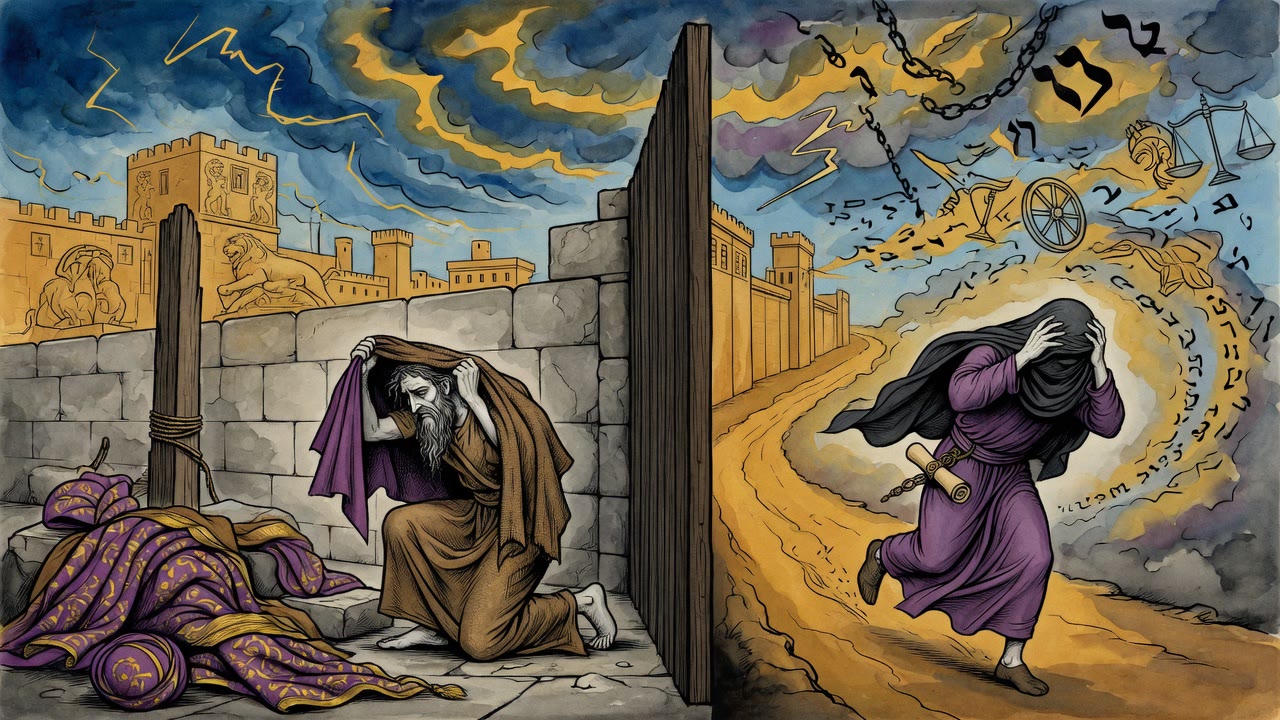
Months earlier she had almost refused the walk that made any feast possible. Mordecai told her to go to the king. She reminded him of his own teaching. A Jewish woman captive among the nations who goes to them of her own will risks losing her portion in the people. She had kept her origin hidden at his order. She had rejoiced when a full month passed without a summons, reading the silence as mercy rather than neglect.
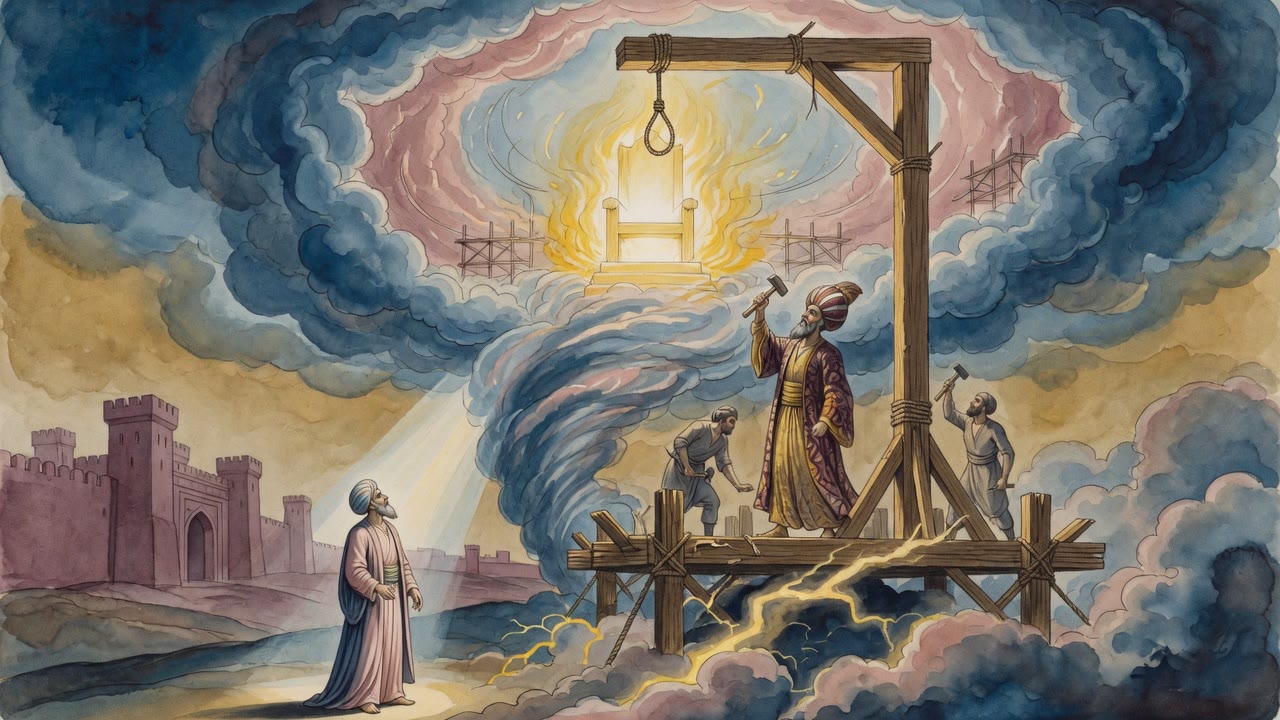
Then came Haman's new gate rule. Appear before the king without Haman's summons and die. Even a queen found her hands tied by a vizier's procedure. "Even if I wanted to, I could not go," she sent back. Power sat on her head and still could not open a door. The later woman who argued for Purim was the same woman who had measured death in palace corridors and chosen to risk it anyway after fasting.
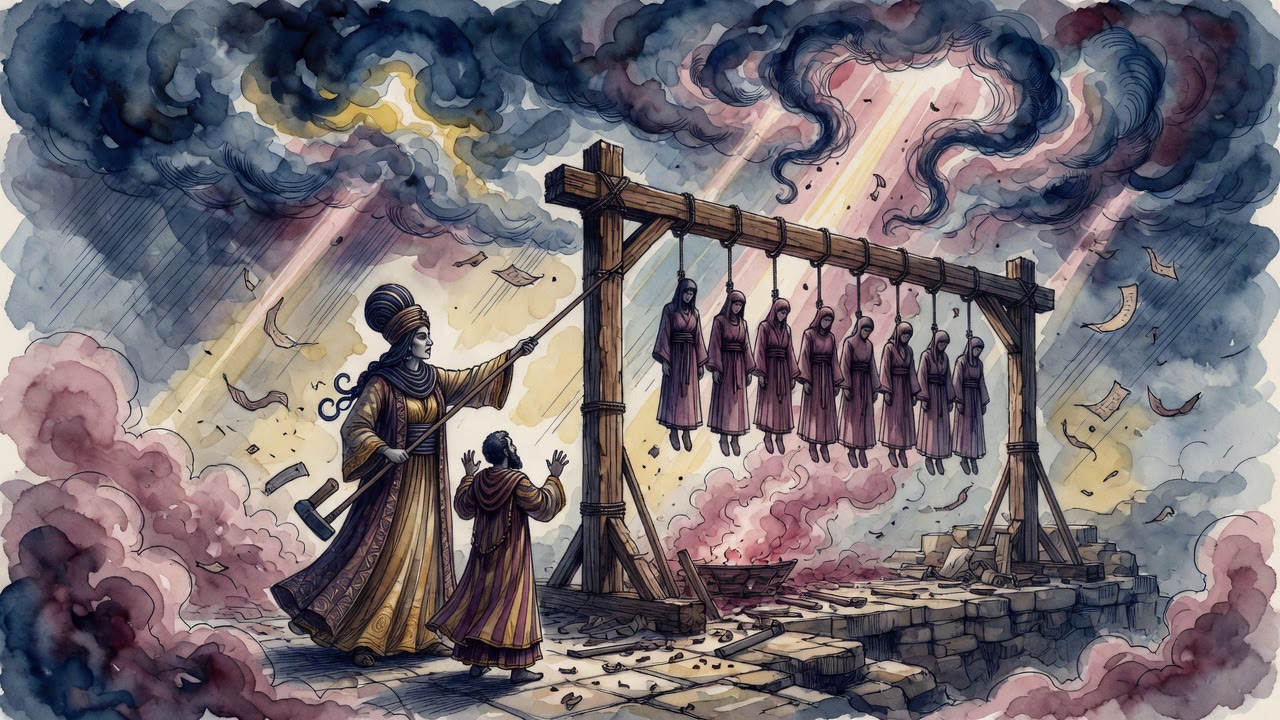
She went. She invited. She timed the accusation until the king's face turned and Haman's fall began. The holiday she later demanded was not abstract gratitude. It was the public shape of a private terror she had already survived.
Annals Against Suspicion
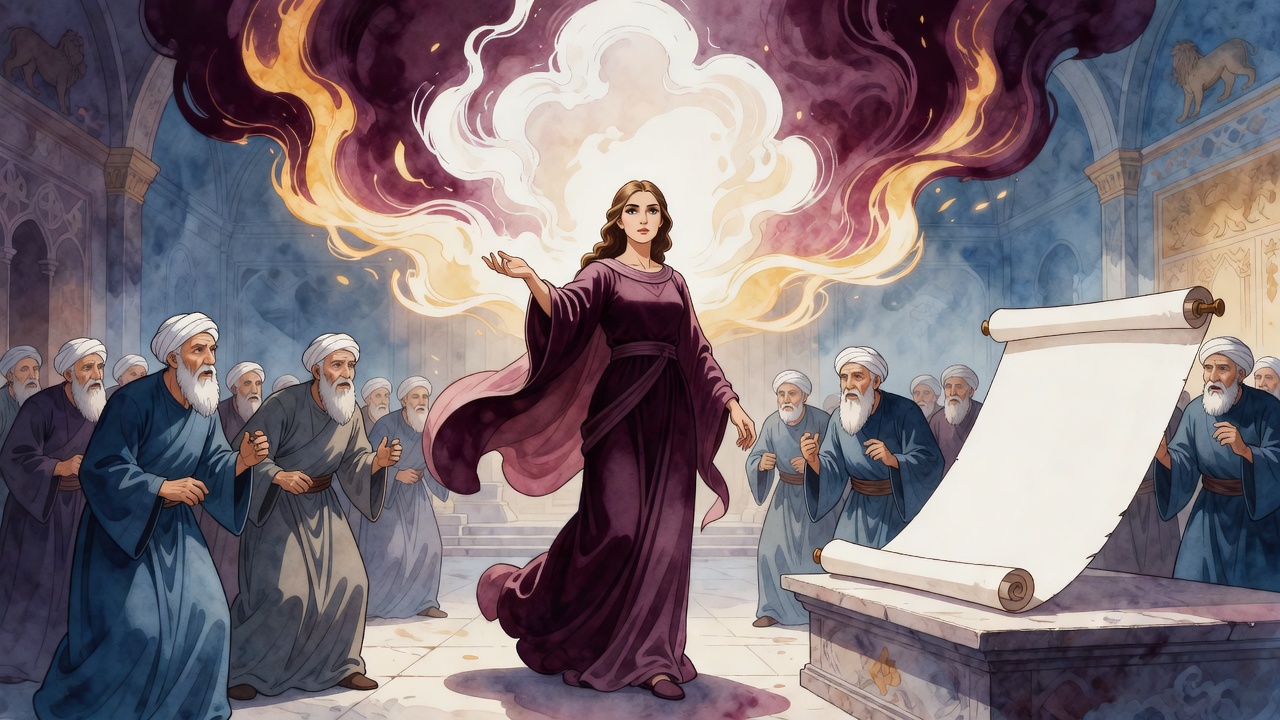
What broke the sages' caution was not a sermon. It was paperwork. Esther pointed to the annals of the kings of Persia and Media. The events were already written in imperial ink. The joy of the Jews could not be spun as a secret plot, because the court itself had recorded the plot and the reversal. Public archives make poor fuel for conspiracy whispers when the conspiracy is the empire's own shame.
With that, the sages relented. Purim entered the calendar as memory with a legal spine. The story would not live only in kitchens and alleys. It would live where Jews count moons and bind days. A feast born from near annihilation learned to speak in the language of record books, the same genre that had once listed their names for slaughter.
Graggers and hamantaschen came later as flesh on that bone. The bone was Esther's argument. If the kings already wrote it down, the people may sing it out.
Vessels and a Stolen Line of Kings
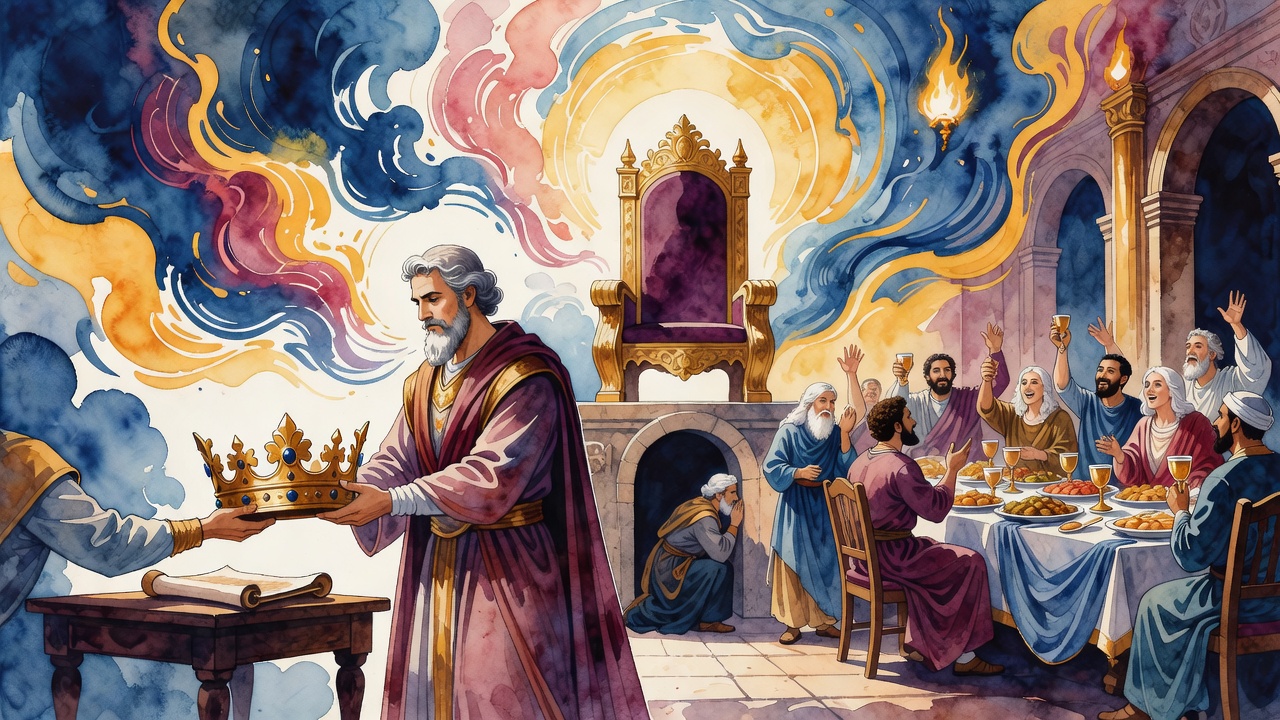
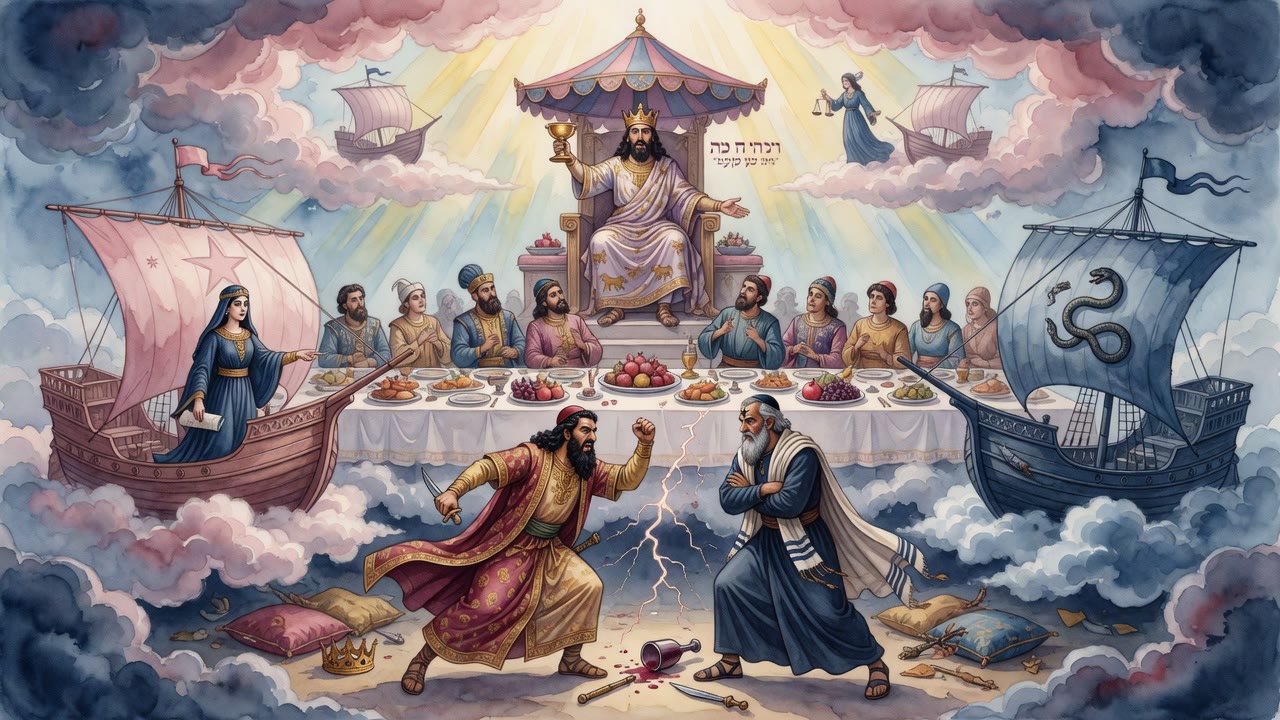
The larger stage under Ahasuerus includes a feast with vessels taken from the Temple, holy shapes filled with foreign wine. The legends set that insult against an older map of dominion. From Adam through Noah, firstborn succession was supposed to rule the world. Shem, prophet as well as heir, bypassed Elam and chose Arpachshad because he foresaw Abraham's line. Leadership bent toward Israel by prophecy, not only by birth order, until Zedekiah fell to Nebuchadnezzar and the vessels began their long humiliation.
So when Persia drinks from Jerusalem's cups and later nearly erases Jerusalem's children, the midrash hears one long argument about who may rule. Purim answers on the scale of a province and a year. The vessels story answers on the scale of ages. Esther's feast is a small hinge in a door that has been swinging since firstborns and prophets first disagreed about inheritance.
A Day That Almost Stayed Local
Without Esther's push, Purim might have remained a Shushan custom, a scar celebrated by the survivors closest to the gallows. She forced the scar into law. The sages' fear was not cowardice. It was memory of how quickly a majority can rebrand minority joy as threat. Her counter was cold and brilliant. Use the enemy's archive as the people's shield.
Mordecai had once told her to hide. Later he told her to act. She did both in sequence, and then she did a third thing. She institutionalized the act so that hiding would never again be the only Jewish skill on that date. The thirteenth of Adar had been drawn as a kill line. The fourteenth and fifteenth became noise, food, gifts to the poor, and a queen's stubbornness written into the year.
In the end the sages kept both truths. Be careful how you celebrate near empires. Also, when the empire has already confessed in its chronicles, refuse to whisper. Esther stood between those sentences and chose a feast loud enough to last.
← All myths