Esther Finished the War Against Amalek That Moses Began
Her father died before he could teach her much. What he did teach her was one promise God made through Moses, and she held God to it on the floor.
Table of Contents
 Click for full size
The Message From the Gate
Mordecai would not take the conversation indoors. He walked Hathach the servant out into the open ground where nobody could stand behind a wall and listen, the way Jacob had once taken his wives out into a field to talk about running from Laban.
The message he sent in was short and it had a name in it. Haman is an Amalekite, and he wants what his ancestor wanted. Amalek had come at Israel from behind on the road out of Egypt, at Rephidim, going for the ones at the back who were too tired to keep up, and Moses stood on that hill all afternoon with his arms in the air until the fighting stopped. The war began there and nobody ever ended it. Go to the king and beg for your people.
The Snake and the Hurricane
Mordecai told Hathach to remind her of the dream.
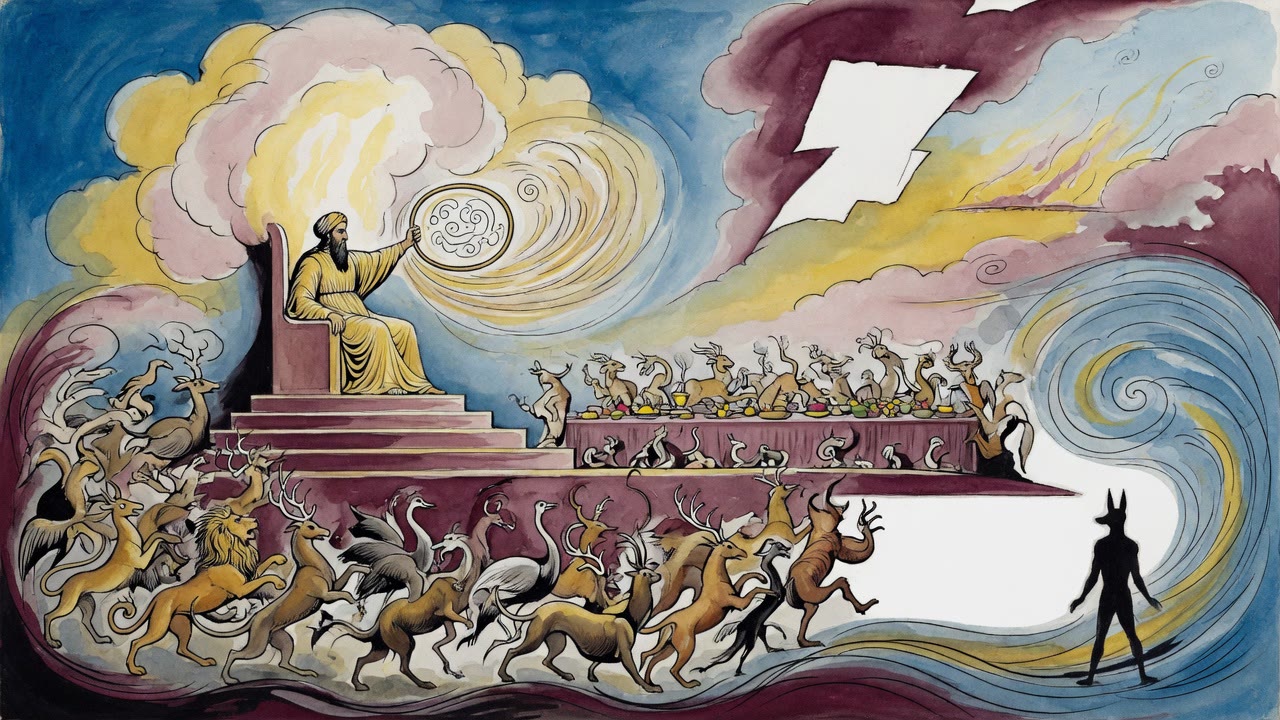
He had wept himself to sleep years before, praying for the exiles and for a Temple that was still rubble, and in the dream he stood in a desert he had never seen. Nations lived there jumbled together, and off to one side, keeping its distance, was one small nation everybody despised.
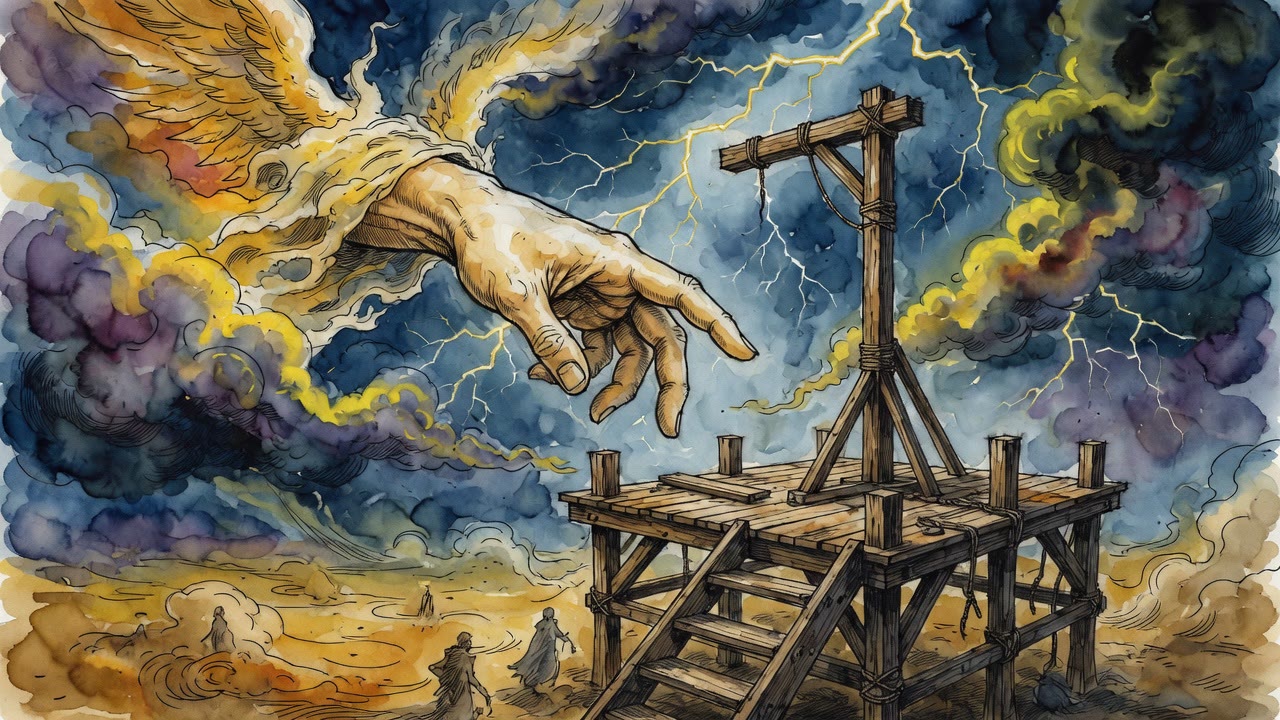
A snake came up out of the middle of the nations. It grew as it rose, higher and thicker the further up it went, and then it turned and shot toward the small nation. Cloud came down over them. Darkness closed on them so completely they could not see the thing coming.
The snake was about to take them when a hurricane broke out of all four corners of the world at once, wrapped the snake the way clothes wrap a man, and blew it to pieces. The pieces went off like chaff. There was nothing left of it anywhere. Then the cloud lifted off the little nation, and the sun came down on them again.
Sheep Without a Shepherd
Out in the city, Mordecai stood in front of the people and said it plainly.
"Have you not heard? The king and Haman have agreed to take us off the face of the earth. We have no king to lean on. We have no prophet to pray for us. There is nowhere to run and no country that will have us. We are sheep with no shepherd. We are a ship at sea with nobody steering. We are the orphan born after his father is buried, whose mother dies before he has finished feeding at her breast."
The last of it was not a figure of speech to the woman he had raised. It was her biography.
The Orphan on the Floor
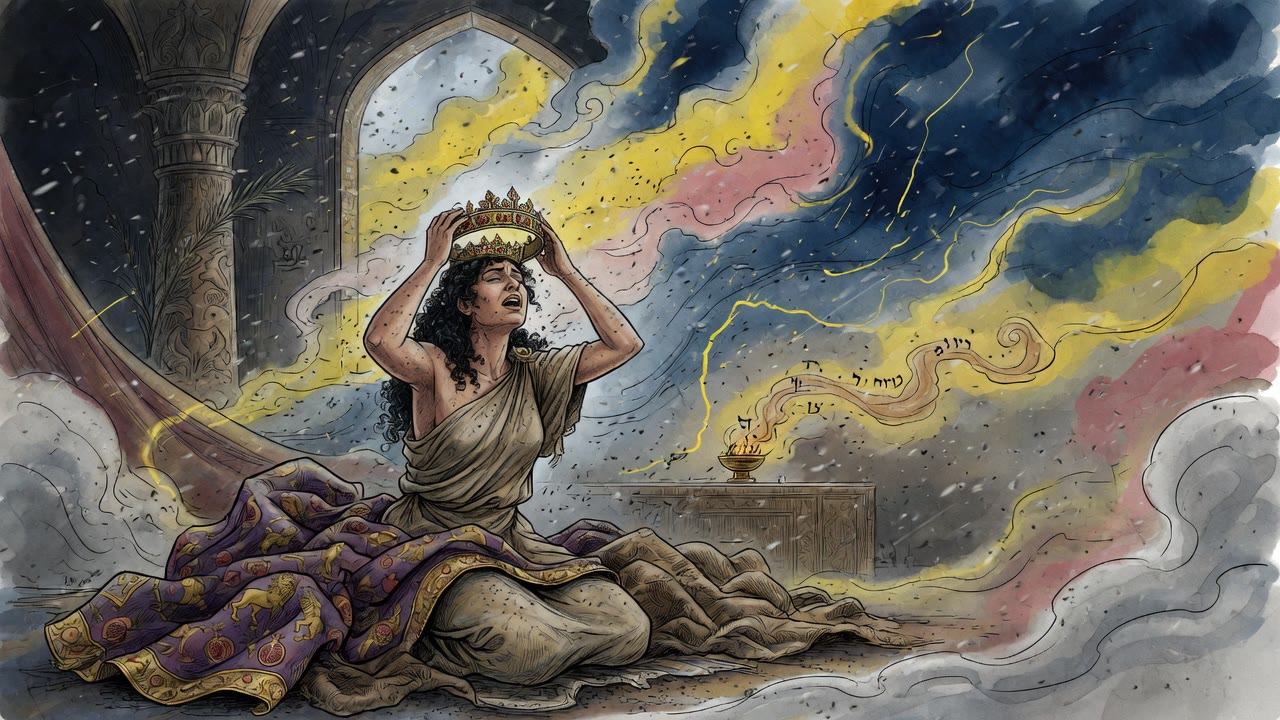
Esther took off the royal clothes. She took off the ornaments. She put on sackcloth, pulled her hair loose, put dust and ashes on her head, went without food, and lay face down.
"Lord God of Israel, King of kings, help your servant. I have nobody. I live in this palace by myself, without a father, without a mother. I beg you for mercy from one window to the next in the house of Ahasuerus the way a starving orphan begs from door to door, and I have been doing it since the day they brought me here.
"If it pleases you, take my life out of my own hands. If not, then get the flock of your pasture away from these lions.
"My father taught me that you brought our people out of Egypt and killed the firstborn there. That you walked them across a sea as though it were dry road, fed them out of the sky, split a rock for water. That you knocked down great kings ahead of them and handed them the good land. And that when they sinned against your name you gave them over to captivity, and here we still are.
"My father told me one thing more. He told me you said, through Moses your servant, that even when they are in the country of their enemies you will never abandon them.
"Father of the fatherless, stand at the right hand of this orphan. I am as afraid of that man as a kid is of a lion. Turn his heart against our enemies and toward your servants, because the hearts of kings are in your hand. Let me walk into that room in your name and walk out of it alive."
The Walk to the Throne
On the third day she put the royal clothes back on and went in with two of her women. Her right hand rested on the shoulder of the first, the way a queen walks. The second came behind carrying the train so the gold and the stones on it would not drag on the floor.
The great men of the empire were already seated in front of the king, and they started talking to each other as she came up the hall.
"She is dead. She came in without being sent for."
"I will take the royal clothes."
"I will take the ornaments off her feet."
"I will have the ones on her hands."
She heard every word of it and kept her face perfectly still.
The king looked up and went white with fury that she had broken the law by standing there. She started shaking. Her legs went, and she put her head down on the woman at her right.
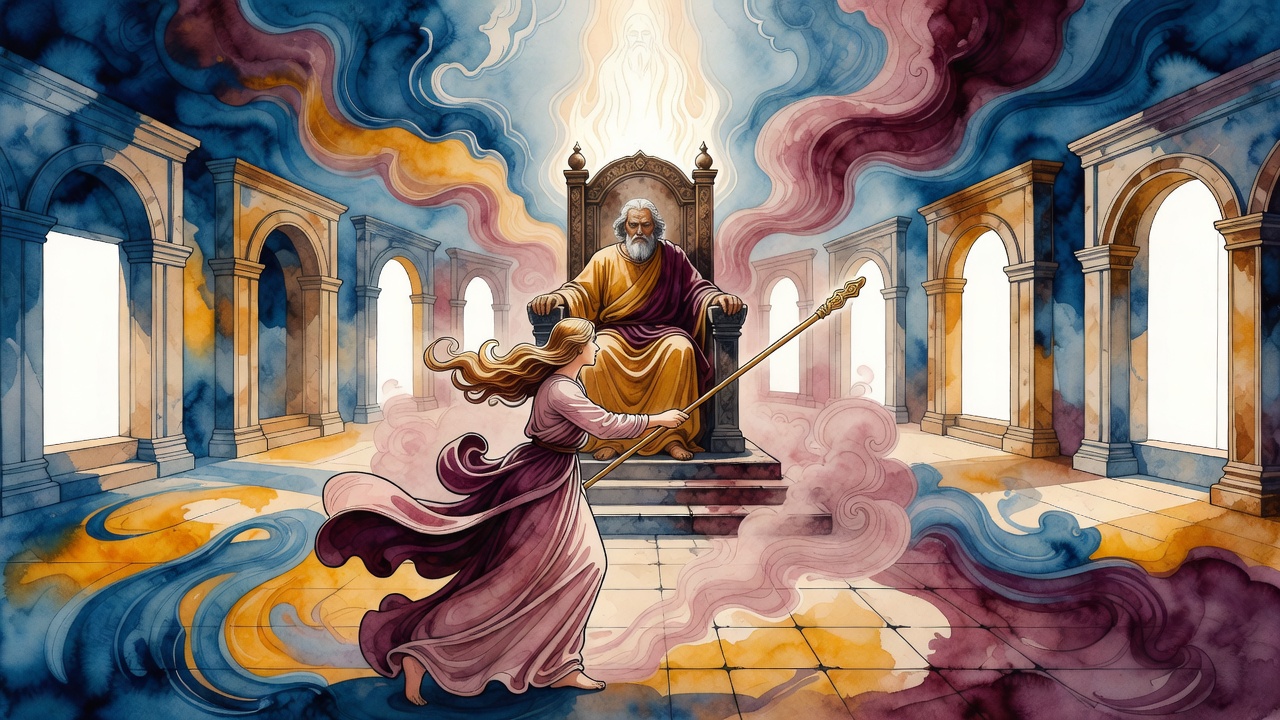
Then God added beauty to her beauty and majesty to her majesty. Ahasuerus came off the throne at a run. He got his arms around her and kissed her and told her the law had never applied to her, that she was the queen, his friend, his companion, and he put the golden sceptre into her hand.
"Why won't you speak to me?"
"When I looked at you, my lord, my soul went out of me."
She put her head back down on the maid, because three days without food and the walk up that hall had finished her. And the king of Persia stood over his wife and cried, while the men who had been dividing her jewelry among themselves a minute earlier crowded in around her, begging her to say something to him.
Haman went up on the gallows, and his sons after him, and everyone who had signed on to the plan was cut down. Mordecai walked the palace an honored man from that day. The line that had come out of Amalek and run all the way to Susa stopped in the room where an orphan had fainted twice.
← All myths