After the Parade Mordecai Returned to Sackcloth
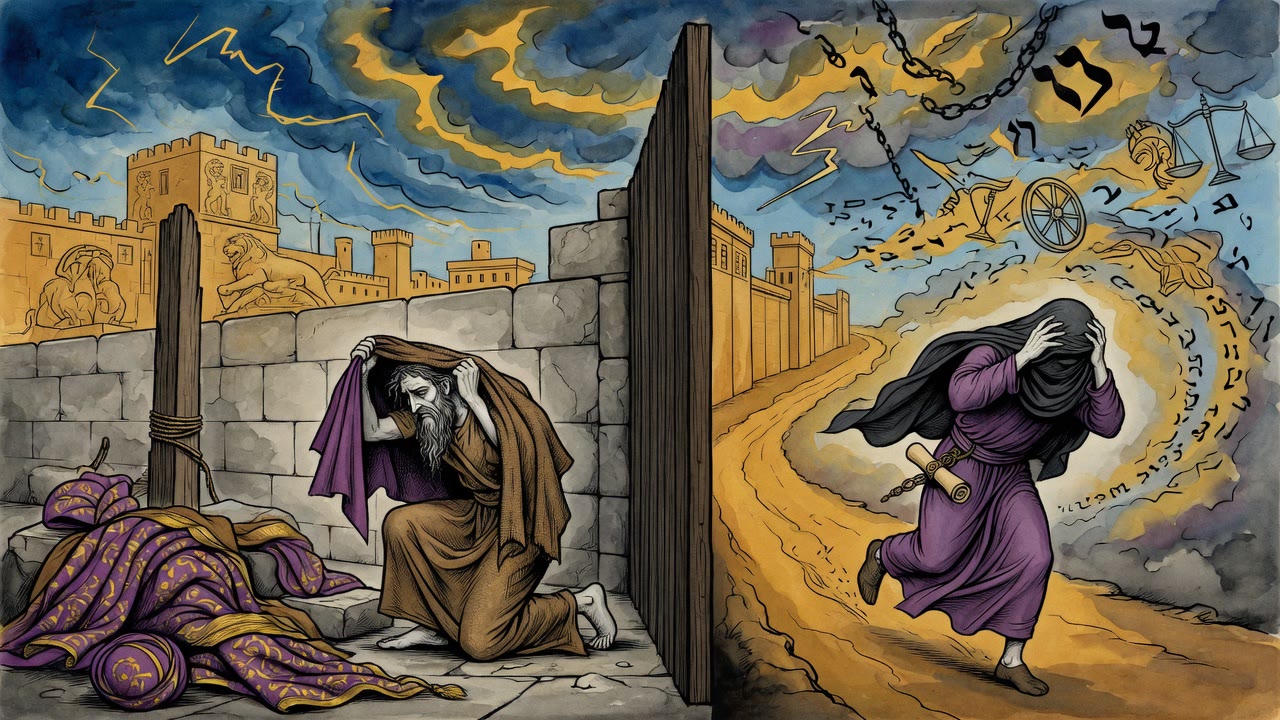
Royal cloth left Mordecai at the gate. He put mourning back on, while Haman hurried home with his head covered, because the deadly decree still stood.
Table of Contents
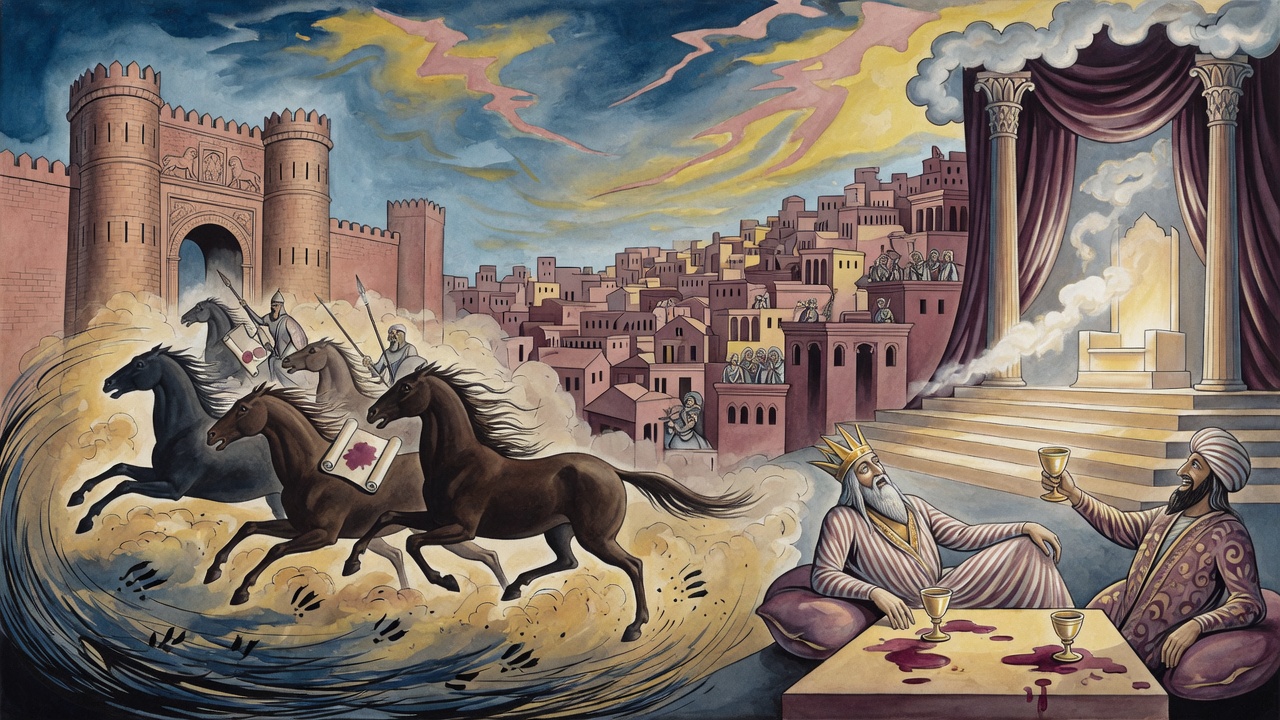
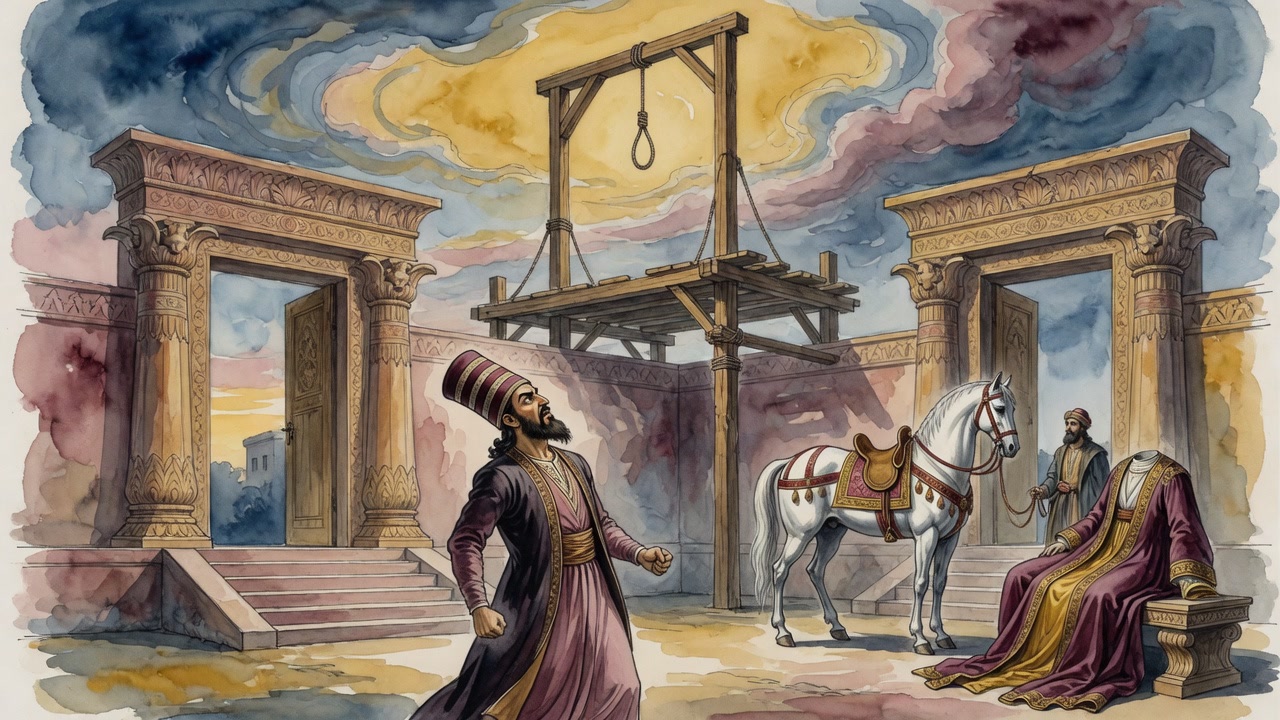
Mordecai stepped down from the horse while the last shouts of the parade still hung over Shushan. The royal garment came off his shoulders. The crown that was not his returned to hands that served the king. Street dust stuck to the sweat of a man who had been led through the city by his enemy. Then he walked back to the king's gate and put on what he had worn before honor found him: sackcloth, the cloth of unfinished pleading.
 Click for full size
Haman did not linger to watch. He hurried home with his head covered, mourning a public shame that still left the kill decree intact (Esther 6:12). One man's humiliation was not yet a people's rescue.
Honor Is Not Salvation
The city had seen the spectacle. Haman's mouth had been forced to cry out the greatness of the Jew he hated. For a few hours the balance of fear tilted. Children pointed. Officials recalculated. None of that rewrote the sealed letters already riding toward the provinces.
Mordecai understood the difference between a parade and a pardon. He returned to the gate not as a man collecting applause but as a man resuming a post of grief. The midrash hears in that return more than a job description. He returned to fasting and rough cloth because the petition was not fulfilled. Anyone who wears sackcloth and fasts, Rabbi Helbo teaches from this moment, does not cease until the request is answered.
Haman's Covered Head
Haman's house received a man who had led a horse and lost a war of status in a single morning. Covering the head was more than embarrassment. It was the body's attempt to hide from a story that had turned without his permission. His advisors would soon speak of falling. His wife would soon name the Jew as the fixed obstacle. For now he only hurried, as if speed could outrun the sound of his own voice praising Mordecai.
The decree he had bought still lived in ink. That fact was his last comfort and Israel's last terror. Shame and slaughter could share a calendar until someone broke the legal knot.
The Gate That Held Two Times
At the gate two clocks ran together. One clock said today you were robed like a companion of the king. The other said the appointed day of death still waited in the scribes' copies. Mordecai chose the second clock. He set his body back into the posture that had begun when Esther first heard the threat through messengers and when he warned her that silence could cost her house (Esther 4:14).
Persistence is not glamorous. It looks like returning to the same stone threshold after the crowd goes home. It looks like refusing the narcotic of partial victory.
What the Horse Could Not Carry
A horse can carry a man through streets. It cannot carry a people out of a sealed Persian law. For that, other instruments were still required: a queen's second banquet, a night of royal insomnia already past, a gallows built for one body and waiting for another, a new set of letters that would have to run as urgently as the first.
Mordecai knew only what the present demanded. The honor had been real. The danger remained realer. He tightened the sackcloth and stayed where the king could still, if heaven forced the matter, remember him again.
Haman shut his door. Mordecai kept the gate. Between those two choices the scroll's turning point finished its first half and left the second half unsolved on purpose.
Why Partial Mercy Is a Trap
Shushan loved a show. A minister leading a rival on the king's horse is the kind of story taverns retell before the wine goes flat. Mordecai refused to become the tavern's ending. He had lived long enough under empire to know that spectacle is cheap and sealed law is expensive. Until the sealed law changed, his body would stay in the posture of need.
There is a temptation, after any public honor, to believe the crisis has noticed you and therefore ended. Mordecai treated honor as weather. Weather passes. Decrees remain. Rabbi Helbo's rule grows from that stubbornness: sackcloth is not a costume for the opening act. It is a commitment that lasts until the petition is complete.
Haman, hurrying home, still possessed the older letters in the provinces. His shame was personal. The danger remained collective. That mismatch is why the parade cannot be the climax. A covered head on one man does not equal uncovered safety for a nation.
At the gate Mordecai could still see the routes the first couriers had taken. He could imagine the second set of letters that did not yet exist. Between imagination and ink he had only fasting, cloth, and the refusal to confuse a horse ride with redemption. The scroll will move again soon. For this hour it holds on a Jew who will not celebrate early.
← All myths