Haman's Forty Sons Hanged on His Own Gallows
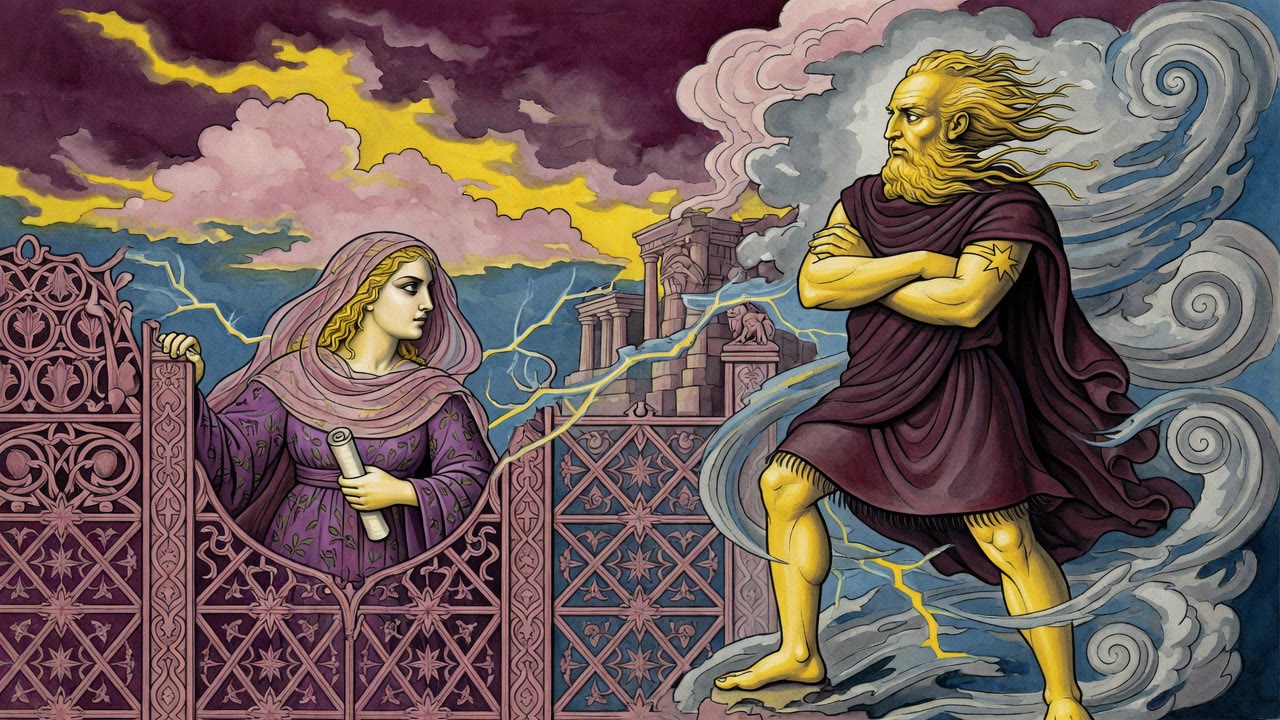
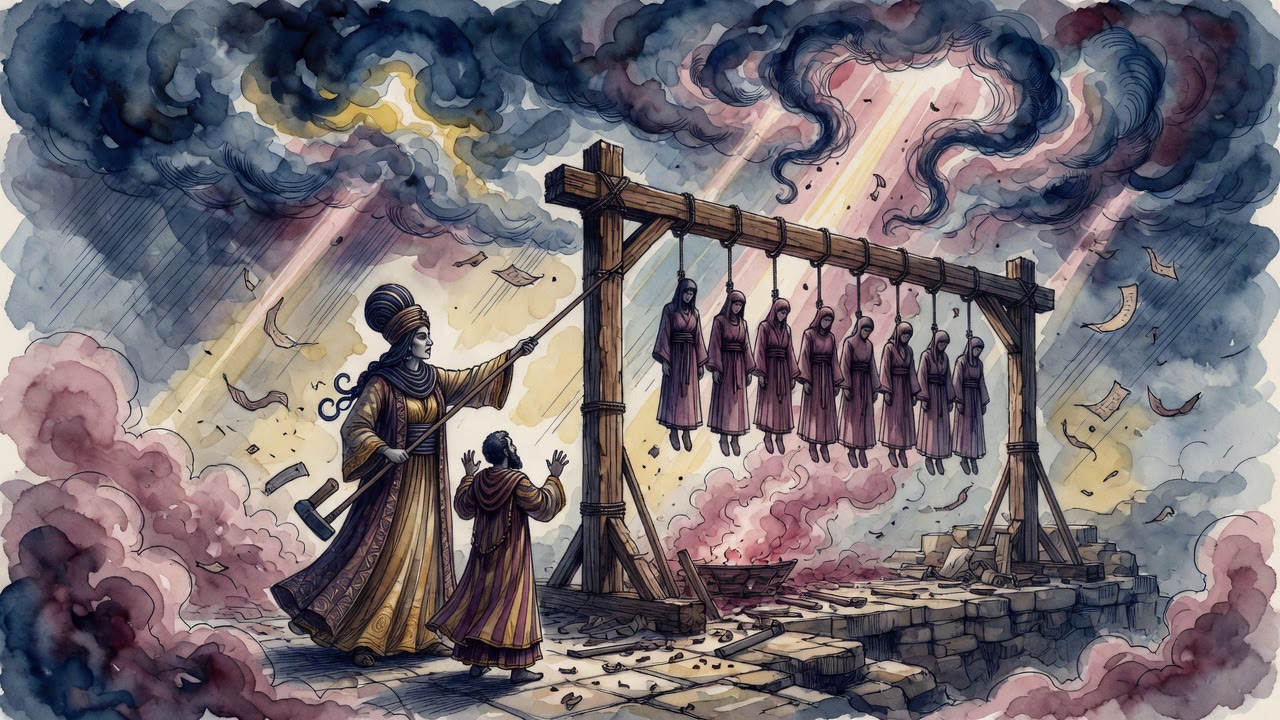
Haman raised a gallows for Mordecai. When the decree flipped, forty sons fell on that wood, and Mordecai walked out in the king's purple.
Table of Contents
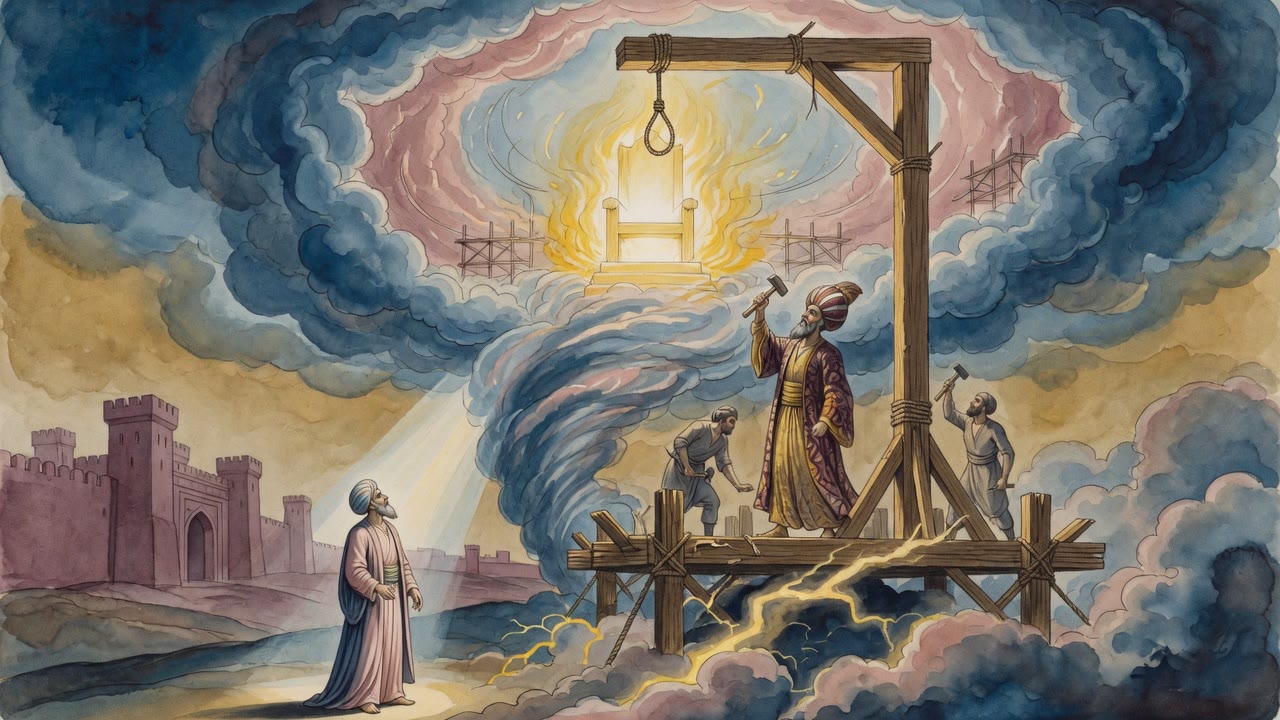
The wood was already cut when the story turned. Haman had raised a gallows for Mordecai, tall enough to be seen from a palace window, personal enough to taste like revenge. By the time the king's sleep broke and the chronicles were read, that same timber waited for a different neck. The empire that had agreed to erase a people found itself hanging the eraser.
 Click for full size
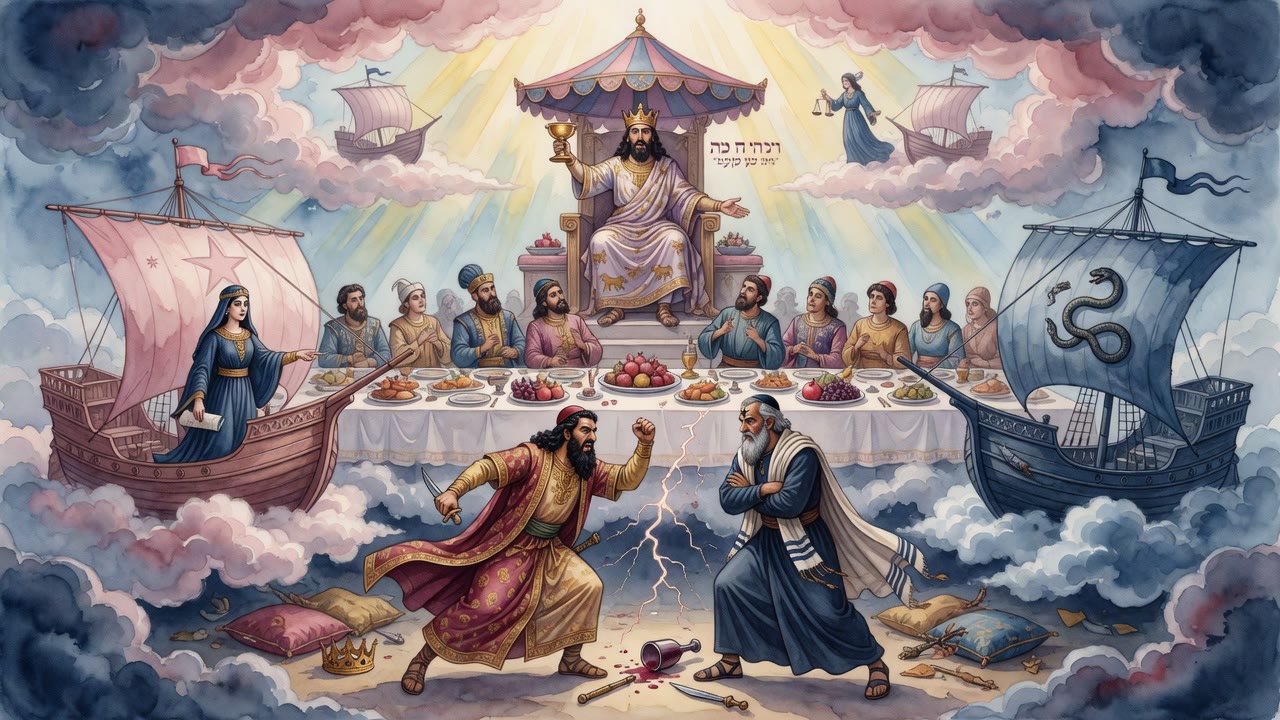
Before the rope, there was the complaint. Persia's grandees muttered that the Jews lived under their hand and still counted them as nothing. Different laws. No intermarriage. No bow to Persian gods. Freemen who would not bend. The litany hardened into counsel. An irrevocable resolution, after the laws of the Medes and Persians, went out to one hundred twenty-seven provinces. On the thirteenth of Adar, slay them, their sons, their wives, their little children. None is to escape. Spoil for the willing. Grace for the killers before Ahasuerus.
Forty Sons Across an Empire
Rabbi Eliezer counts Haman's house larger than the ten names the megillah prints. Forty sons. Ten served as scribes of the royal records, ink-stained hands keeping the empire's memory. Thirty ruled provinces, small kings under a larger hatred. Power had bred. Hatred had staffed itself with sons.
When the turn came, the midrash refuses a partial purge. All forty met the father's end on the gallows built for Mordecai. Scripture repeats the hanging of the ten (Esther 9:14) until the ear cannot pretend the victory was thin. The tradition stretches the number so the mind feels how deep the tree of Haman had pushed roots into the administration. A plot that staffed scribes and satraps does not die with one man in a courtyard.
Fear of Mordecai fell on the peoples the way fear of the king already had (Esther 9:3). That sentence is not costume jewelry. It is a transfer of weather. The climate of the empire shifted toward the man who would not bow, and away from the man who built wood for him.
Purple, Gold, and Coin Faces
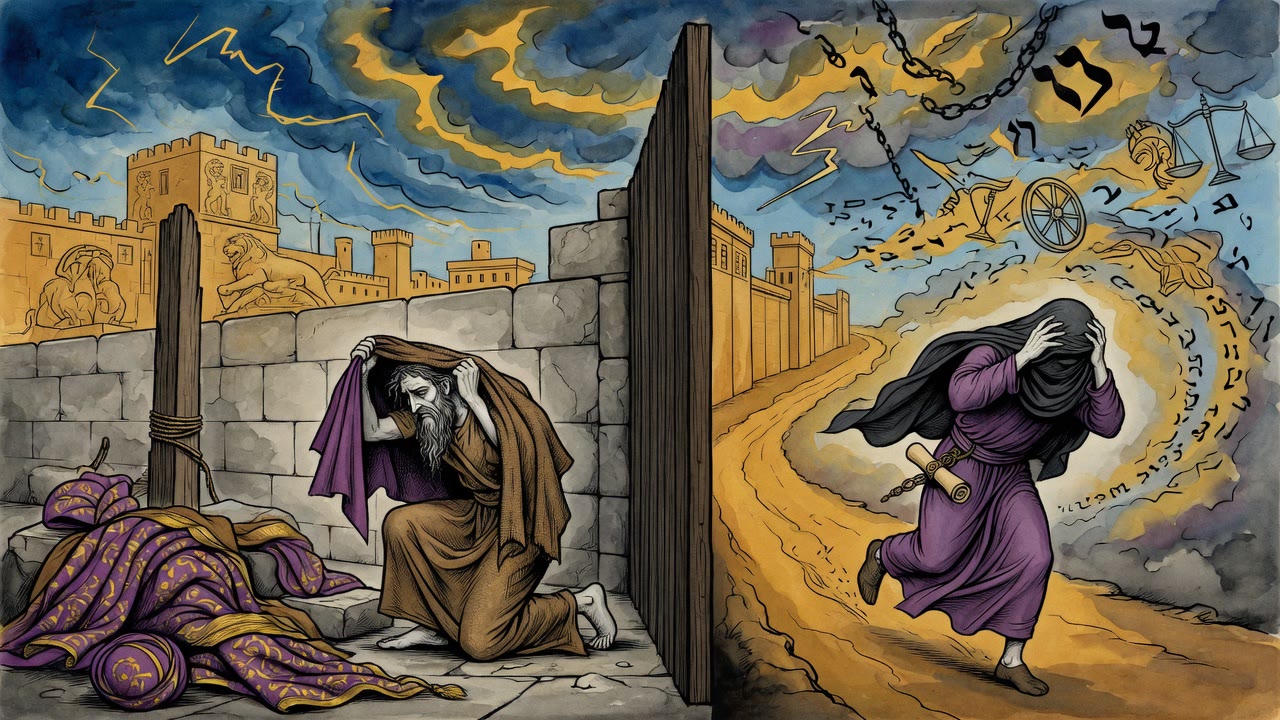
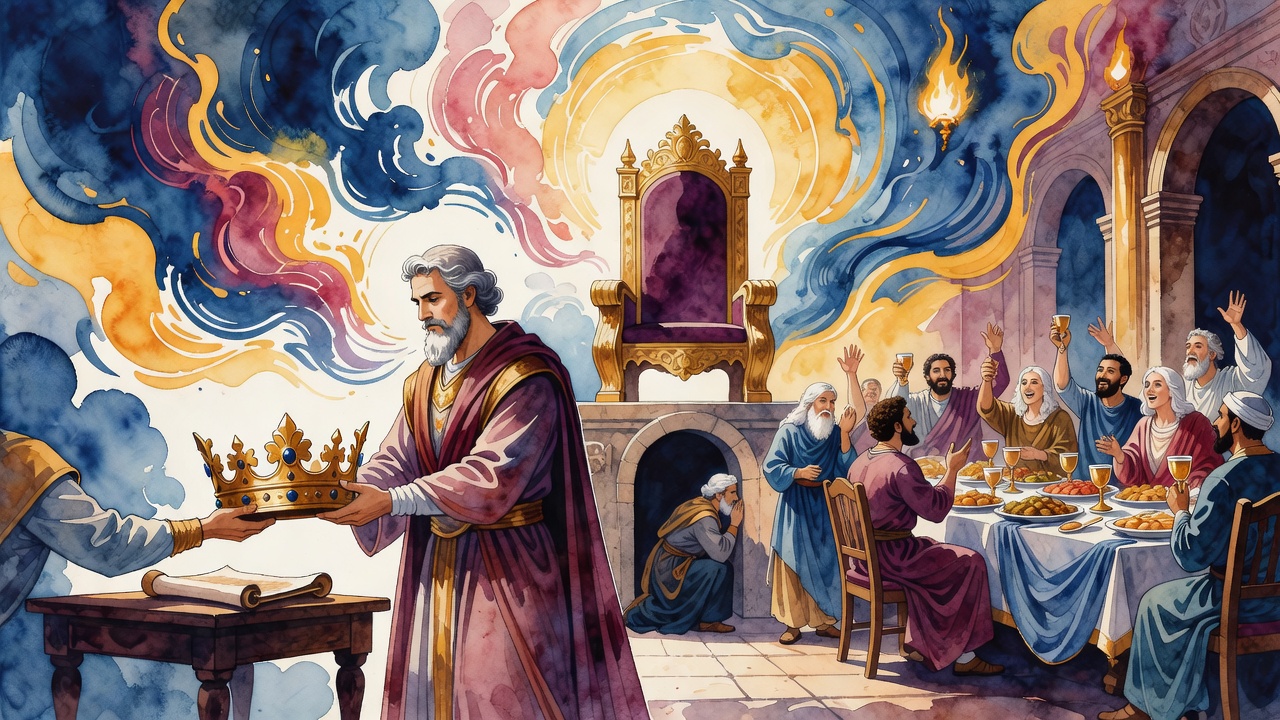
Mordecai went out from the king in royal apparel of blue and white, a great crown of gold, a robe of fine linen and purple (Esther 8:15). Rabbi Phineas paints the parallel without softness. As the king wears purple, so Mordecai. As the king wears a crown, so Mordecai. Clothes here are not vanity. They are the visible map of who may now command.
Even the currency, the midrash says, carried two faces. Mordecai on one side. Esther on the other. A market can teach theology faster than a sermon. Children buying bread learned whose names still bought safety. The empire that had planned a clean erasure found its coins arguing for the survivors.
The text calls Mordecai a good man, seeking the peace of his people (Esther 10:3). Peace here is not quiet gardens. It is the hard peace after a near extinction, the kind that still smells of gallows timber and sealed decrees. Mark the perfect man, and behold the upright, for the latter end of that man is peace (Psalm 37:37). The psalm is laid over the vizier's new authority like a seal.
David Spared the Insult So Mordecai Could Live
Mordecai's line, the legends say, runs forty-five generations back toward Jacob. Through Benjamin on his father's side. Through a mercy of Judah as well. Shimei son of Gera had cursed David and thrown stones when the king fled Absalom. Abishai wanted him dead. David stopped the sword. He saw, the tradition claims, a savior in Shimei's future under Ahasuerus. He delayed vengeance until Shimei could no longer father children, but he did not erase the line.
So Mordecai exists because a insulted king chose a longer vision than a bodyguard's rage. The man who would not bow in Shushan was born from a day when a different king refused to end a bloodline over stones and spit. Mercy upstream became survival downstream. The scroll of Esther rides on that older choice like a boat on a river no one at court could see.
The Wood Kept Its Appointment
Haman's gallows did not go to waste. Empires love efficiency even in their reversals. The house that copied records and ruled provinces emptied into the same vertical math it had designed for one Jew at the gate. Mordecai wore purple. Esther's face rode the coin. The decree of Adar still stood on the calendar as a scar that became a feast.
Outside the palace, people who had planned spoil counted losses instead. Inside, a Benjamite who owed his breath to David's restraint stood where Haman had stood, and the fear that once hunted Jews changed address. The wood remembered who ordered it cut. The midrash makes sure no one forgets how many necks that order finally claimed.
Adar kept both calendars in one month, the kill date and the feast date, pressed so close a child could taste the near miss in the pastry and the noise. Mordecai's peace was the kind that still checks the gates. Esther's courage was the kind that still argues with sages. Between them the empire learned that a gallows can change owners overnight when a hidden people refuse to disappear on schedule.
← All myths