Mordecai Overheard the Plot to Poison the King of Persia
The two eunuchs picked a language nobody in that courtyard was supposed to know. The man sitting at the gate knew seventy of them.
Table of Contents
 Click for full size
The Man at the Gate
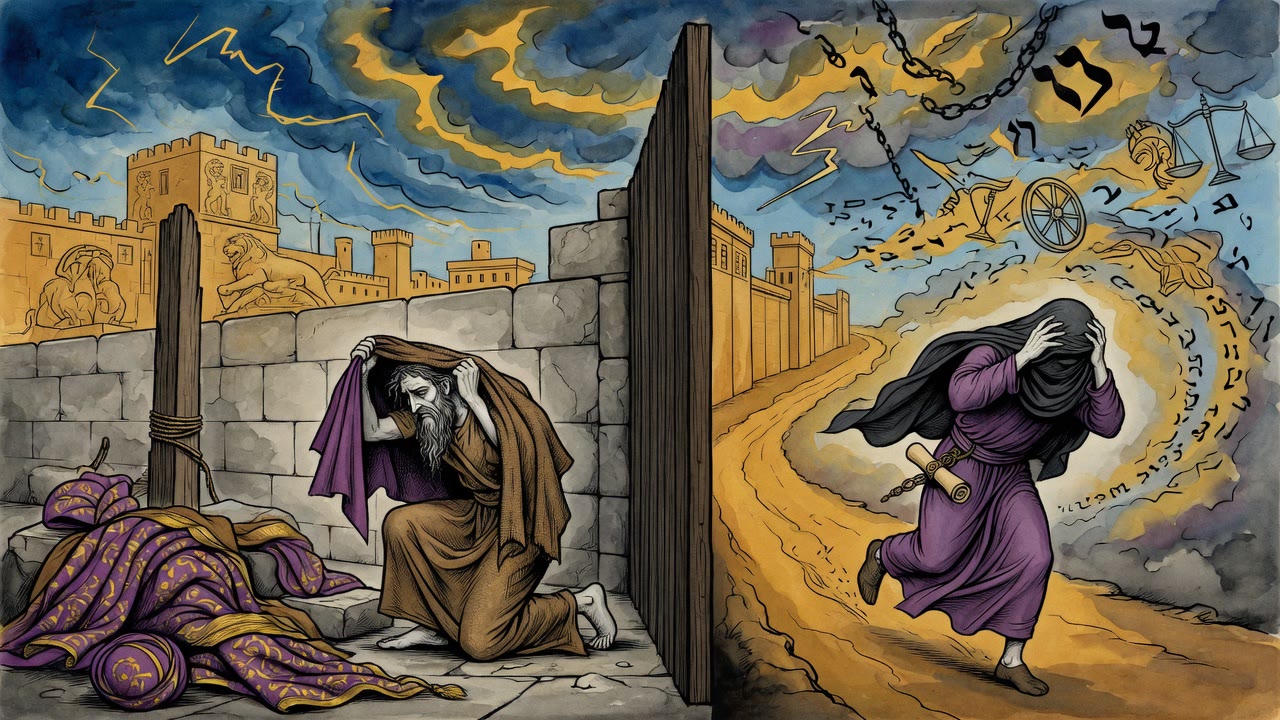
Mordecai sat in the gate of the king every day, and he was not there for the traffic.
His cousin was inside. She had been collected with the rest of the girls out of a hundred and twenty-seven provinces and shut into the harem, and she was living on food out of a Persian kitchen. The one thing he could still do for her was sit in the gateway and watch what went in. Seven maids attended her. He counted what they carried, and when something came through that Esther could not eat he found a way to say so.
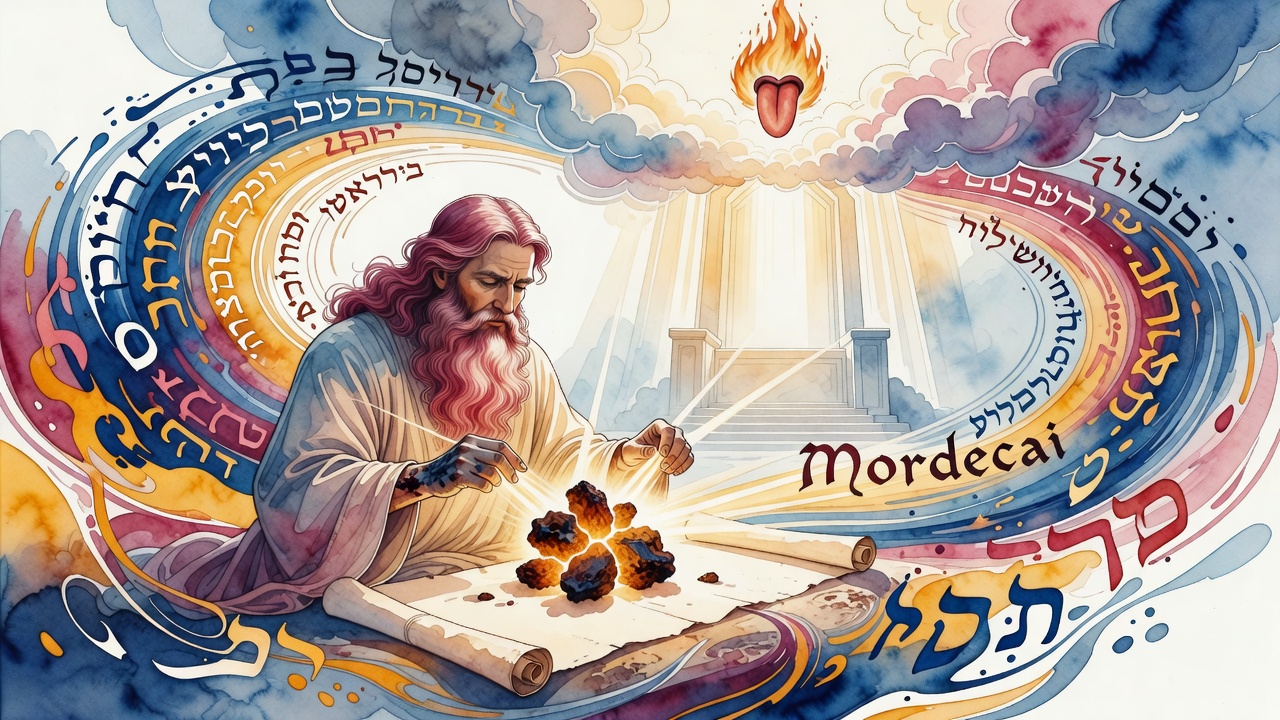
He had prayed his whole life, and his prayers went up the way pure myrrh goes up off the coals, the resin they burned for incense in the Temple. A man with no office, no soldiers and no title, sitting on a stone bench in a doorway, was running something close to an altar out of nothing but attention.
Two Eunuchs and a Golden Cup
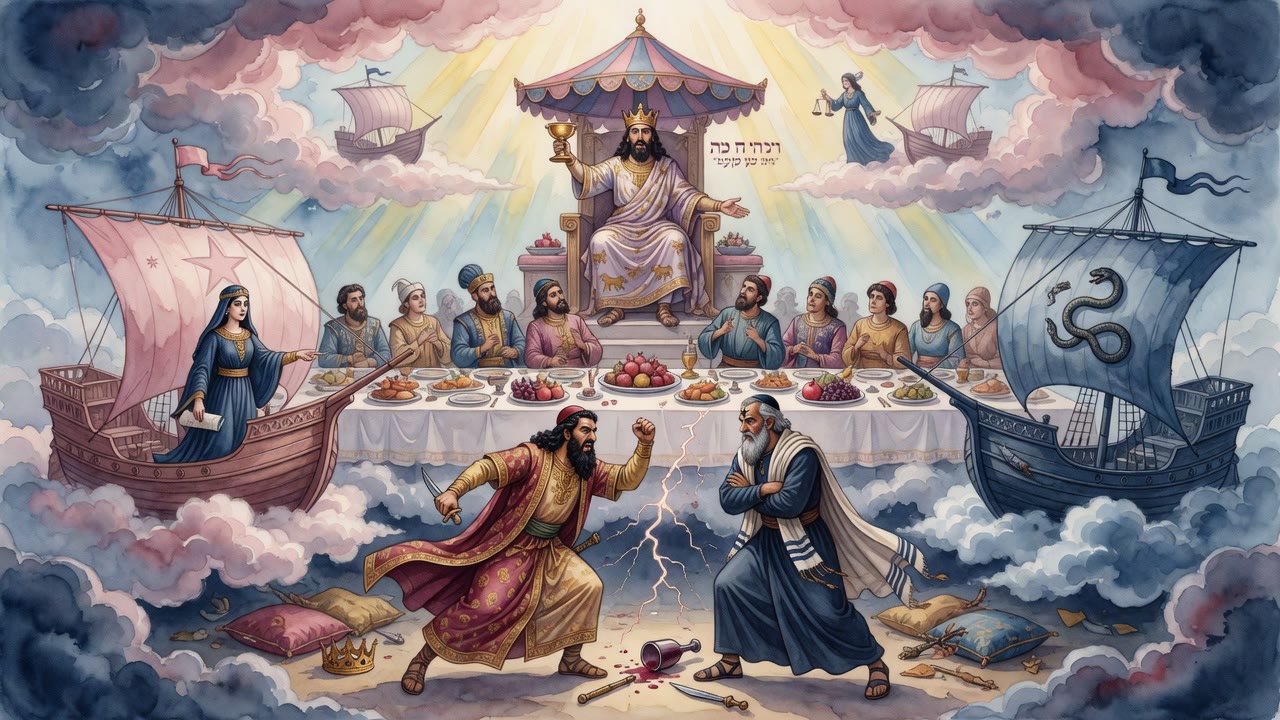
Bigthan and Teresh kept the door of the king's bedchamber, and they had decided to kill him.
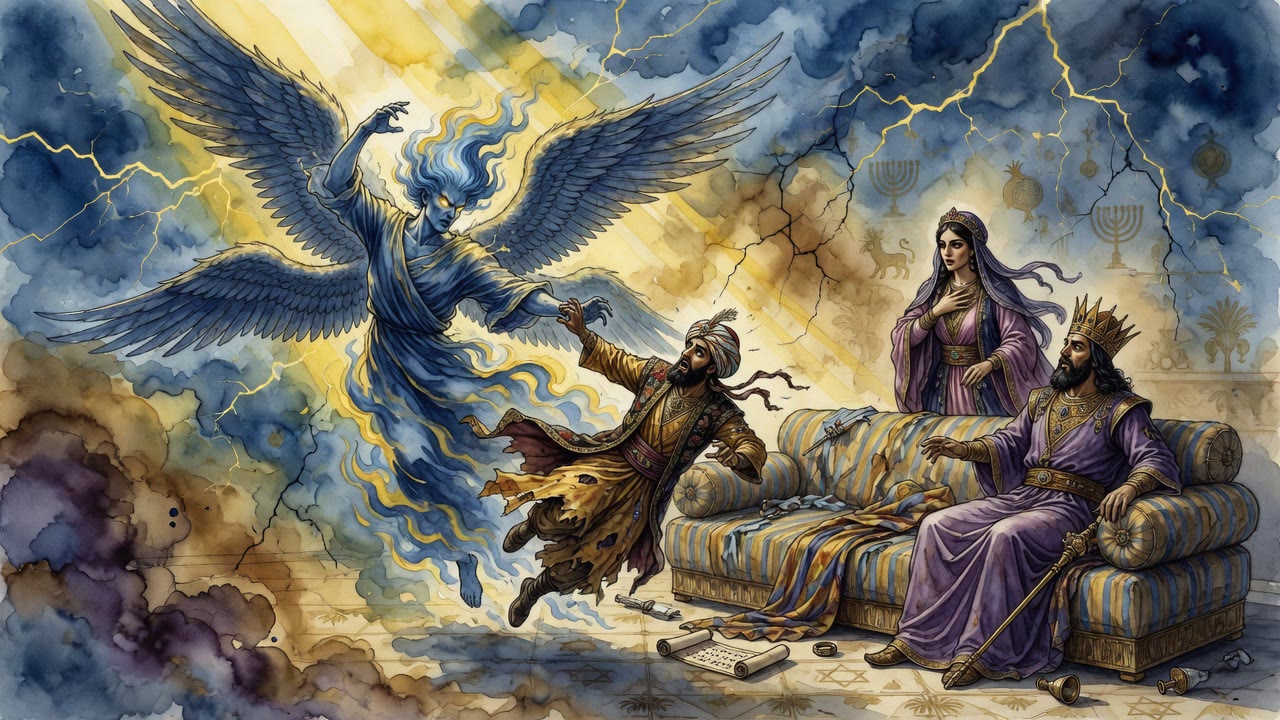
They worked it out standing in the gate, in Chaldean, because nobody in that courtyard spoke Chaldean. "Now the king will take his afternoon sleep," one of them said, "and when he gets up he will ask for a little water. Put the deadly poison in the golden cup. He will drink it and die."
Mordecai was close enough to hear all of it, and he knew seventy languages.
He did not confront them. He got up and went in to Esther, and Esther went to the king, and she told him in Mordecai's name. The two men were questioned, the thing was found out, and they were hanged on a tree. A clerk wrote the whole business into the daily record of the reign, including who had reported it, and the book went back on its shelf, and nobody thanked anybody.
Saying a thing in the name of the man who said it is how deliverance gets into the world. Years later a king who could not sleep would send for that book, and a servant would read that page out loud to him at two in the morning.
The Dead Men Were Haman's
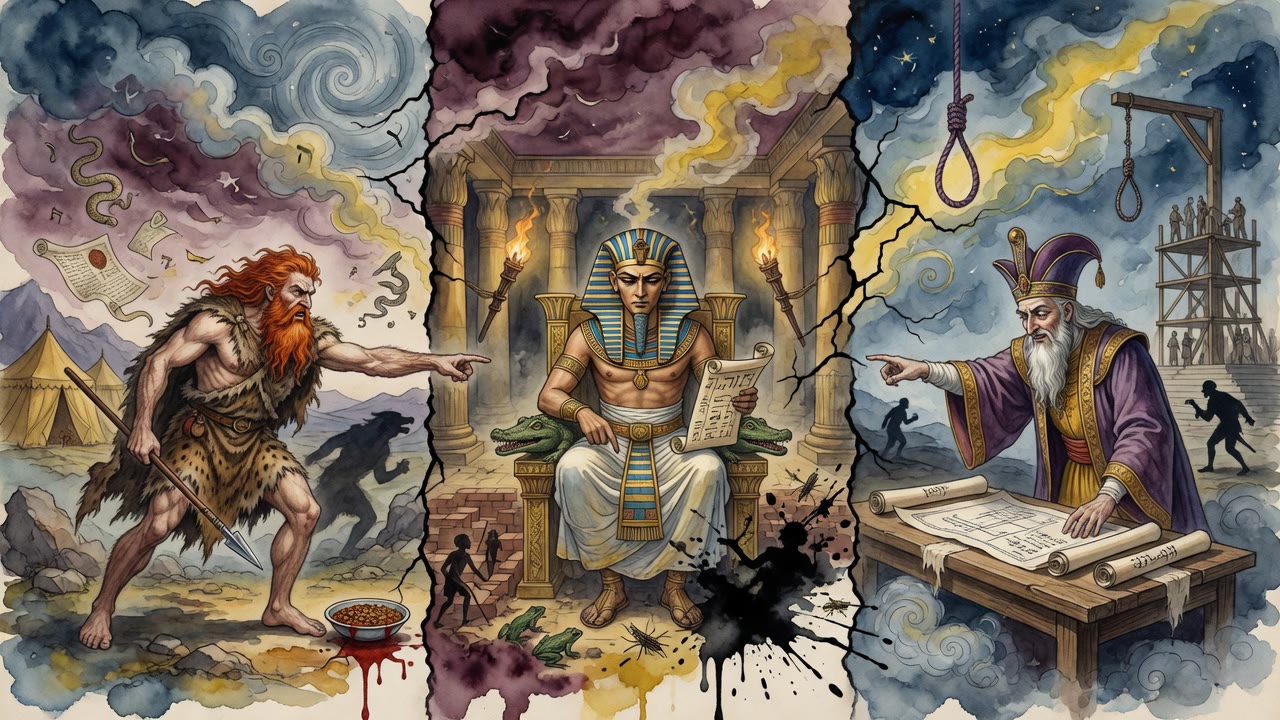
The two conspirators had been Haman's own counselors. Their execution cost him the men closest to him, and what he did with the loss was aim it at the Jews. He set out to blot the name of Judah from under heaven.
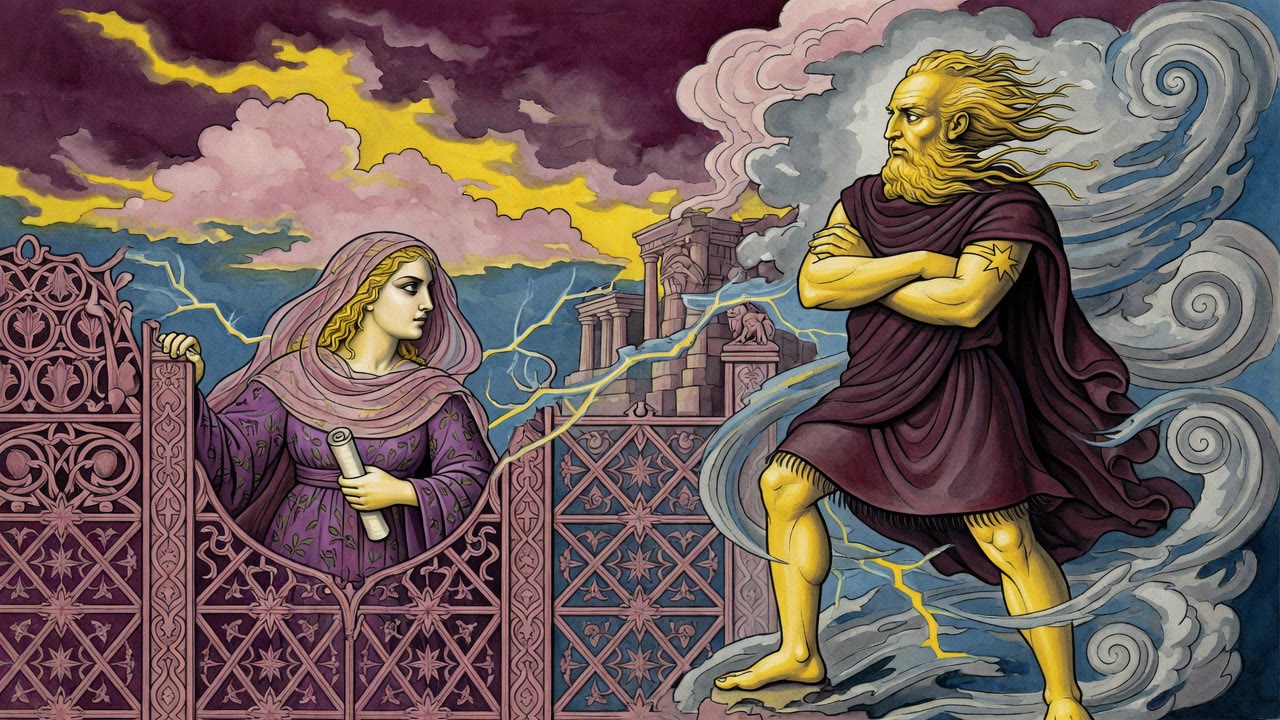
The grudge underneath was older. Mordecai came out of the house of Saul, and Saul had cut the Amalekites to pieces from Havilah to Shur. Haman came from what was left of them, and the hatred had been kept warm across the centuries, waiting for a Benjaminite who would not bow.
The Dream of the Two Dragons
In the second year of the reign Mordecai had dreamed, and he had told nobody but Esther, and she had been a girl then.
In the dream the ground went out from under the world. There was an earthquake, and a noise, and a sound of wailing across the whole land, and everybody living on it was in terror. Two enormous dragons came at each other, and the racket they made brought the nations running to watch. A small people lived among the watchers, and every nation standing around it rose up to wipe its memory off the face of the earth. The darkness came down thick. The small people cried out.
Then a brook of water came up between the two dragons and pushed them apart. It ran wider. It rose. It came on like the sea coming over its shore and covered the whole earth, and the sun broke out on the water, and the small people were lifted and the proud ones were put down.
He had carried that dream for years without knowing what it was for. When the decree was published he knew. "Remember the dream I told you when you were a girl," he said to Esther. "Now go in to him."
What He Offered to Do
Then he prayed, and what he said was not what a man says when he is sure he was right.
"It is known and open before the throne of Your glory," he said, "that I did not refuse to bow to that Amalekite out of pride or out of arrogance. I refused because I am afraid of You, and I would not hand Your honor to a thing made of flesh and blood. And who am I, that I would not bow to Haman? For Israel's deliverance I would lick the shoe on his foot. I would lick the dust he walks on."
He would have gone down in the road and put his mouth in the dirt of that man's path, and he would still not bend his back to him in the gate, and both of those were the same fear of the same God.
← All myths