5 min read

God Casts Ahashverosh as the Seller of Israel

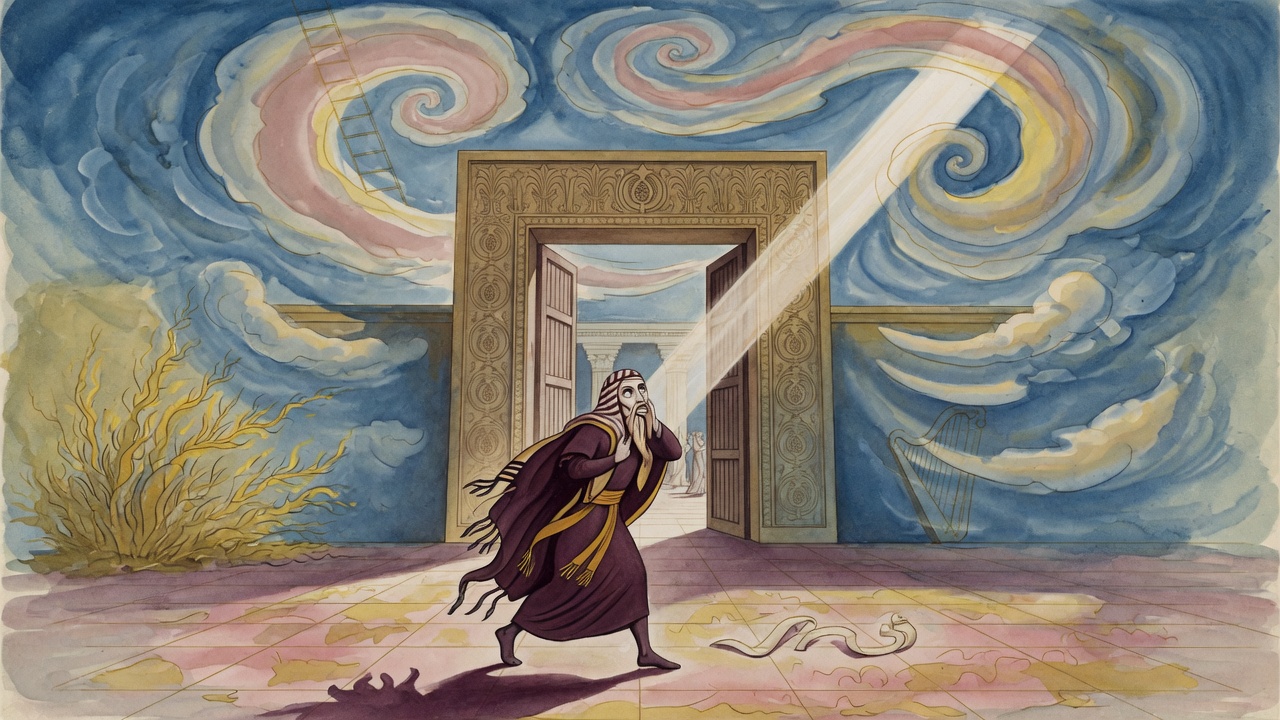
Before creation, roles were cast. Ahashverosh would sell. Haman would buy. The first word of Esther already groans vai, woe that this king reigned at all.

Curated by Arthur · Told by Maggid ·
Table of Contents
  1. The Casting Before Creation
  2. The Prefix That Groans
  3. Babylon's Last Link
  4. The Nation Unknown to the Fathers
  5. Woe in the Marketplace
God Casts Ahashverosh as the Seller of Israel Click for full size

The Casting Before Creation

God did not invent Ahashverosh on the morning of the feast. Rabbi Berekhya heard Isaiah ask who proclaimed the generations from the beginning, and then he read the answer as a casting sheet older than light. Adam head of the created. Cain head of the killers. Abel head of the killed. Noah head of the survivors. Abraham head of the circumcised. Isaac head of the bound. Jacob head of the wholehearted. Judah of the tribes. Joseph of the pious. Aaron of the priests. Moses of the prophets.

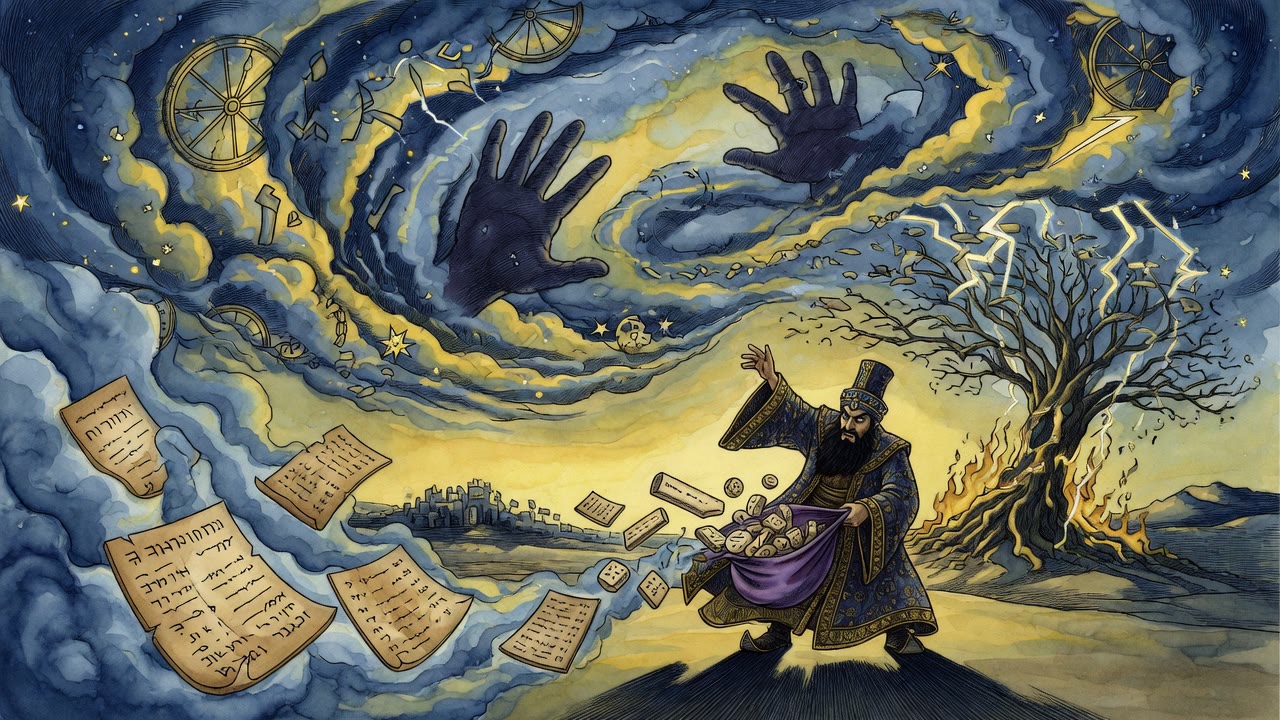
Joshua conquered. Otniel finished the land parcels. Samuel anointed. Saul was anointed. David made music. Solomon built. Then the list turned dark. Nebuchadnezzar head of the destroyers. Ahashverosh head of the sellers. Haman head of the buyers. One would sell the Jewish people. One would purchase them for destruction. When the world saw those two roles filled, it screamed. Woe. And so the book opens: It was during the days of Ahashverosh.

One would sell the Jewish people as if they were goods. One would purchase them for destruction as if silver could own a nation. The scream that met those filled roles was older than the citadel stones.

The Prefix That Groans

Rabbi Yitzhak found the scream inside grammar. With the rise of the righteous the people rejoice; with the rule of the wicked the people sigh. When Scripture names a righteous king it often writes vehamelekh, and the va is joy: and King David, and King Solomon, and King Asa, and even Cyrus the king. When a wicked king takes power the text prefers constructions that sound like vai, woe: Ahab reigned, Hoshea reigned, Zedekiah reigned.

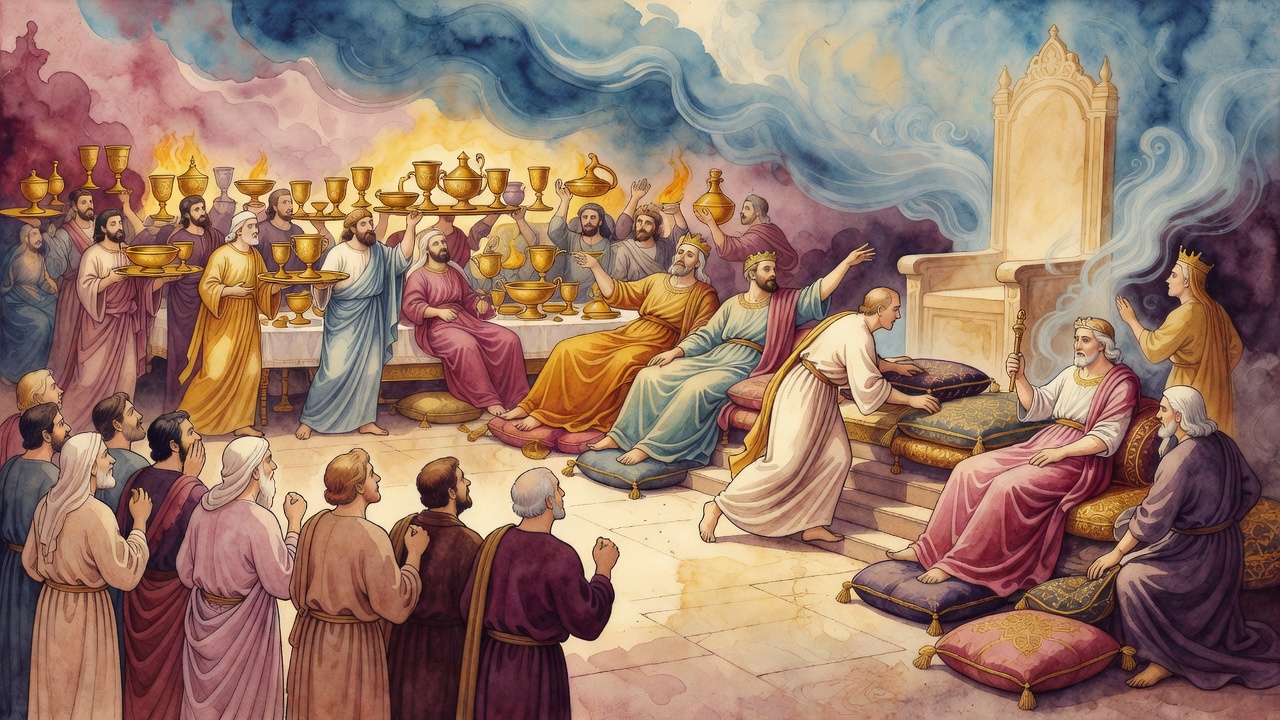
Esther begins with vayhi, and it was, in the days of Ahashverosh. The vai is already in the first breath. Before a reader meets the banquet, the syntax has groaned. Woe that Ahashverosh reigned. The seller has stepped onto the stage wearing a crown and a calendar of drinking days.

Children learning to read would taste that woe on the tongue before they understood the plot. The seller stepped onstage wearing a crown, a calendar of drinking days, and a ring heavy enough to seal death.

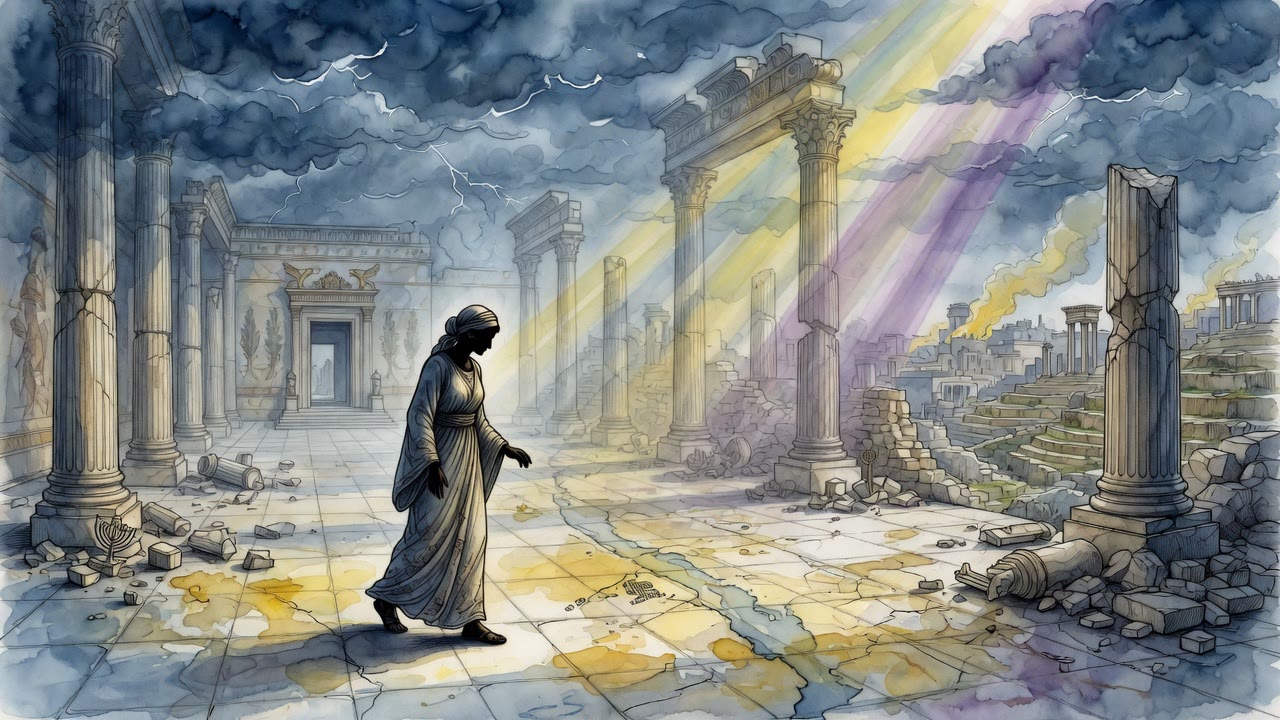
The exile under him was not an accident of Persian politics. Rav mapped Isaiah's erasure of Babylonia onto persons. Name is Nebuchadnezzar. Remnant is Evil Merodakh. Child is Belshazzar. Grandchild is Vashti, last link of that royal chain, deposed in the Persian court. Another reading erased script and language themselves. God did not only topple a dynasty. He scraped a civilization off the tablet.

Shmuel heard Jeremiah place a throne in Elam and eliminate king and princes. King is Vashti. Princes are the seven who advised Ahashverosh. The prophecy reached past Babylon into the Median-Persian succession that held Israel captive. The girl who would refuse the king was also the last cut of an older sentence against Babylon.

History, in this telling, is a long rope with knots already tied. Vashti's refusal cut the last Babylonian thread in a Persian hall, and the seven princes stood inside a prophecy that had named them princes before they were born.

The Nation Unknown to the Fathers

Deuteronomy warned that God would send Israel to a nation unknown to them or their fathers. Babylon could not be that nation. Abraham himself had walked out of Ur of the Chaldees. Rabbi Shmuel bar Nahmani answered that the unknown place was Media, the Persian-Median empire of Ahashverosh, a land Israel had not worn into memory. "It was during the days of Ahashverosh" fulfills the Torah's old threat as much as any banquet law.

So the seller sits on a throne that prophecy had already sketched. The buyers and sellers of peoples think they invent the market. The casting sheet was older than their rings.

Exile is never only geography. It is also a role the people did not audition for and still must play. Media was the unknown stage. Ahashverosh was the seller already cast.

Woe in the Marketplace

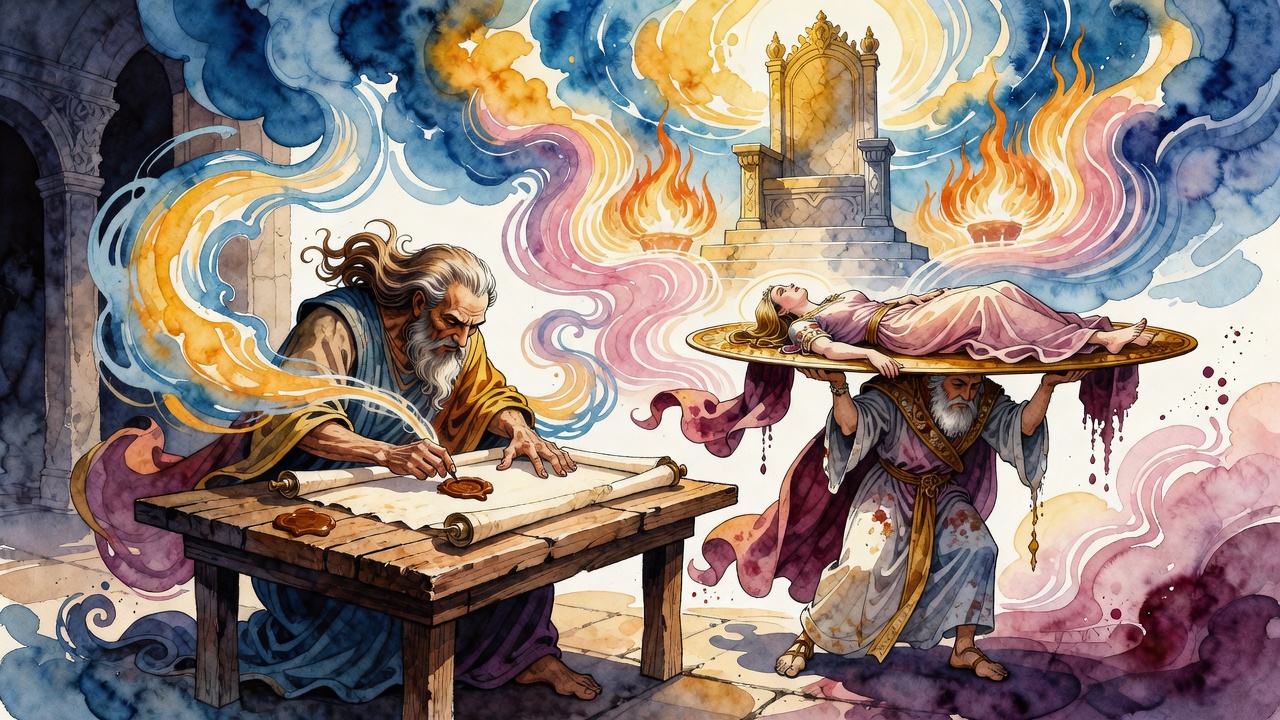
When Haman later pays for a people, he is only collecting a role assigned at the start. When Ahashverosh signs, he is only selling what the midrash says he was born to sell. The first word still hangs over Shushan like smoke. Vai. The people will rejoice only when another kind of king-language returns, the va of joy, through a queen the casting sheet had also placed in waiting.

Until then the grammar itself refuses to cheer.

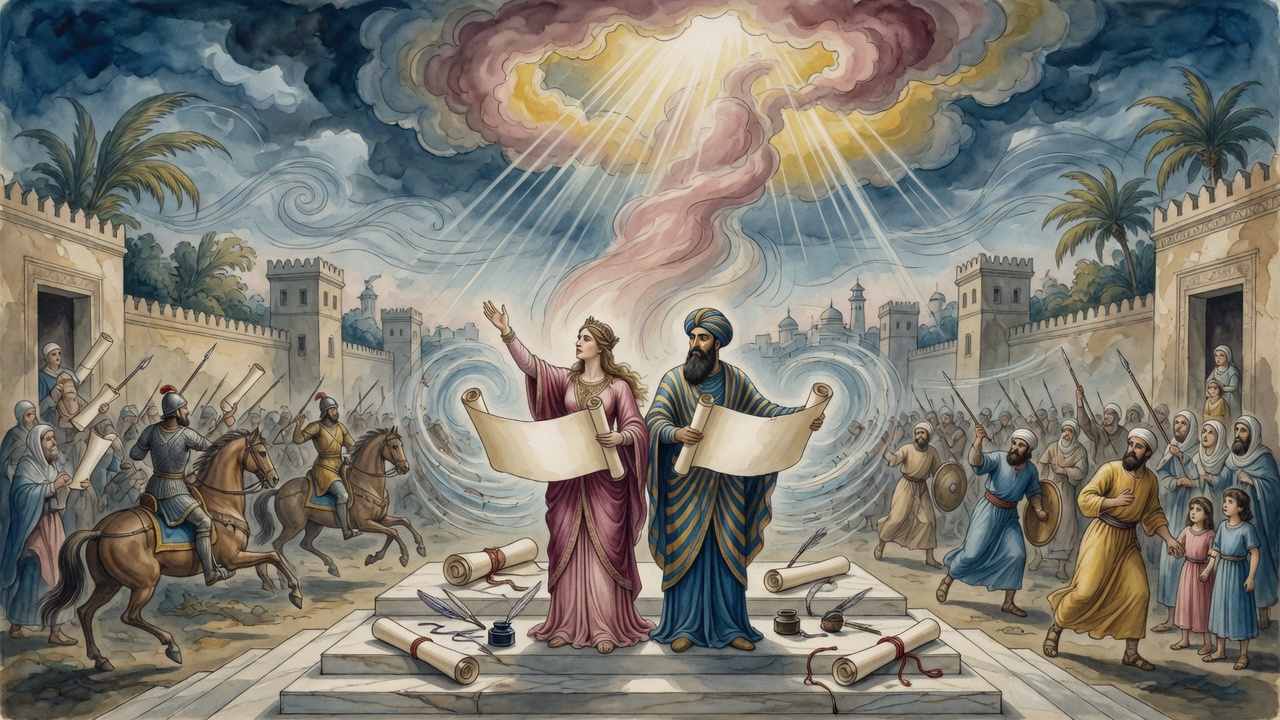
Markets open. Decrees travel. A seller counts silver. A buyer counts days until blood. Above both of them the old list remains: destroyer, seller, buyer, and somewhere still unwritten on the public board, the redeemer who will flip the purchase.


← All myths

From the tradition

Sources

3 sources

The texts behind this telling. Some cards carry a translation of the source; others are our own retelling of it, and each card says which. Every card links out to the original.

Esther Rabbah, Petichta 10Esther Rabbah

Retold in our words. Read the original at the link below.The Sefaria Midrash Rabbah, 2022 · CC-BY

From the very first moment of creation, God assigned every major figure in history a specific role. Esther Rabbah preserves a remarkable list, attributed to Rabbi Berekhya, that reads like a divine casting sheet for the entire biblical drama.

He began with Isaiah: "Who acted and accomplished it? He who proclaimed the generations from the beginning; I, the Lord was first and with the last, I am He" (Isaiah 41:4). Then he laid out the roles. Adam was head of the created. Cain was head of the killers. Abel was head of the killed. Noah was head of the survivors. Abraham was head of the circumcised. Isaac was head of the bound. Jacob was head of the wholehearted. Judah was head of the tribes. Joseph was head of the pious. Aaron was head of the priests. Moses was head of the prophets.

The list continues through Israel's conquest and monarchy. Joshua was head of the conquerors. Otniel was head of the allocators, the one who completed the division of tribal land that Joshua left unfinished. Samuel was head of the anointers. Saul was head of the anointed. David was head of the musicians. Solomon was head of the builders.

Then the list turns dark. Nebuchadnezzar was head of the destroyers. Ahasuerus was head of the sellers. And Haman was head of the buyers. Ahasuerus sold the Jewish people. Haman purchased them for destruction. These were not accidents. These were roles assigned before the world began.

When everyone saw that Ahasuerus and Haman had been cast in their roles from the beginning of time, they screamed: "Woe!" And so the Book of Esther opens: "It was during the days of Ahasuerus" (Esther 1:1). The midrash (rabbinic interpretive commentary) insists that even catastrophe was part of the divine script.

Full source
Esther Rabbah, Petichta 6Esther Rabbah

Retold in our words. Read the original at the link below.The Sefaria Midrash Rabbah, 2022 · CC-BY

The Hebrew Bible contains a hidden signal that tells you, in a single prefix, whether a king's reign brought joy or catastrophe. Rabbi Yitzhak discovered it buried in the grammar of Esther Rabbah, and it works across every monarch in the text.

He began with a proverb: "With the rise of the righteous the people rejoice, and with the rule of the wicked the people sigh" (Proverbs 29:2). Then he showed how the Torah encodes this principle directly into its syntax. When a righteous king is mentioned, the text uses the prefix "veha-" before the word "king" (vehamelekh). That prefix, va, is an expression of joy. "And the King David" (II Samuel 3:31). "And the King Solomon" (I Kings 2:45). "And the King Asa" (I Kings 15:22). The pattern extends even to righteous gentile kings: "And Cyrus the King" (Ezra 1:4). Each time, the prefix va signals celebration.

When a wicked king takes power, the text uses a different construction: vayimlokh, "and he reigned." That prefix, vai, is an expression of woe. "Ahab son of Omri reigned" (I Kings 16:29), vai that Ahab reigned. "Hoshea son of Ela reigned" (II Kings 15:30), vai that Hoshea reigned. "Zedekiah son of Josiah reigned" (Jeremiah 37:1), vai that Zedekiah reigned.

The pattern reaches its climax with the opening of the Book of Esther. "It was (vayhi) during the days of Ahasuerus" (Esther 1:1). The vai is unmistakable. Woe that Ahasuerus reigned. The midrash (rabbinic interpretive commentary) argues that the text itself is groaning. Before a reader even gets past the first word, the grammar has already delivered its verdict.

Full source
Esther Rabbah, Petichta 12Esther Rabbah

Retold in our words. Read the original at the link below.The Sefaria Midrash Rabbah, 2022 · CC-BY

The exile of the Jewish people under Ahasuerus was not an accident. According to Esther Rabbah, it was prophesied in detail centuries before it happened, embedded in verses from Isaiah, Jeremiah, and Deuteronomy.

Rav pointed to a verse in Isaiah where God declares: "I will eliminate from Babylonia name and remnant, child and grandchild" (Isaiah 14:22). He mapped each word onto a specific person. "Name" is Nebuchadnezzar. "Remnant" is Evil Merodakh, his successor. "Child" is Belshazzar. And "grandchild" is Vashti, the last link in the Babylonian royal chain, deposed and eliminated in the court of the Persian king. An alternative reading took the verse even further: "name" referred to Babylonia's script, "remnant" to its language. God did not just destroy the dynasty. He erased the civilization.

Shmuel offered a parallel reading from Jeremiah: "I will place My throne in Elam, and I will eliminate king and princes from there, says the Lord" (Jeremiah 49:38). "King" is Vashti. "Princes" are the seven princes of Media and Persia who advised Ahasuerus. Through this lens, God's prophecy targeted not just Babylonia but the entire succession of empires that held Israel captive.

Rabbi Shmuel bar Nahmani then asked a deceptively simple question. Deuteronomy warned that God would send Israel "to a nation unknown to you or your fathers" (Deuteronomy 28:36). But if the exile was to Babylonia, how could it be unknown? Abraham himself came from Ur of the Chaldees in Babylonia. The answer: the verse does not describe Babylonia. It describes Media. The unknown nation, the place Israel had never been before, was the Persian-Median empire of Ahasuerus. And so the opening of the Book of Esther fulfills the Torah's ancient warning: "It was during the days of Ahasuerus."

Full source