Couriers Raced While Haman and the King Sat Drinking
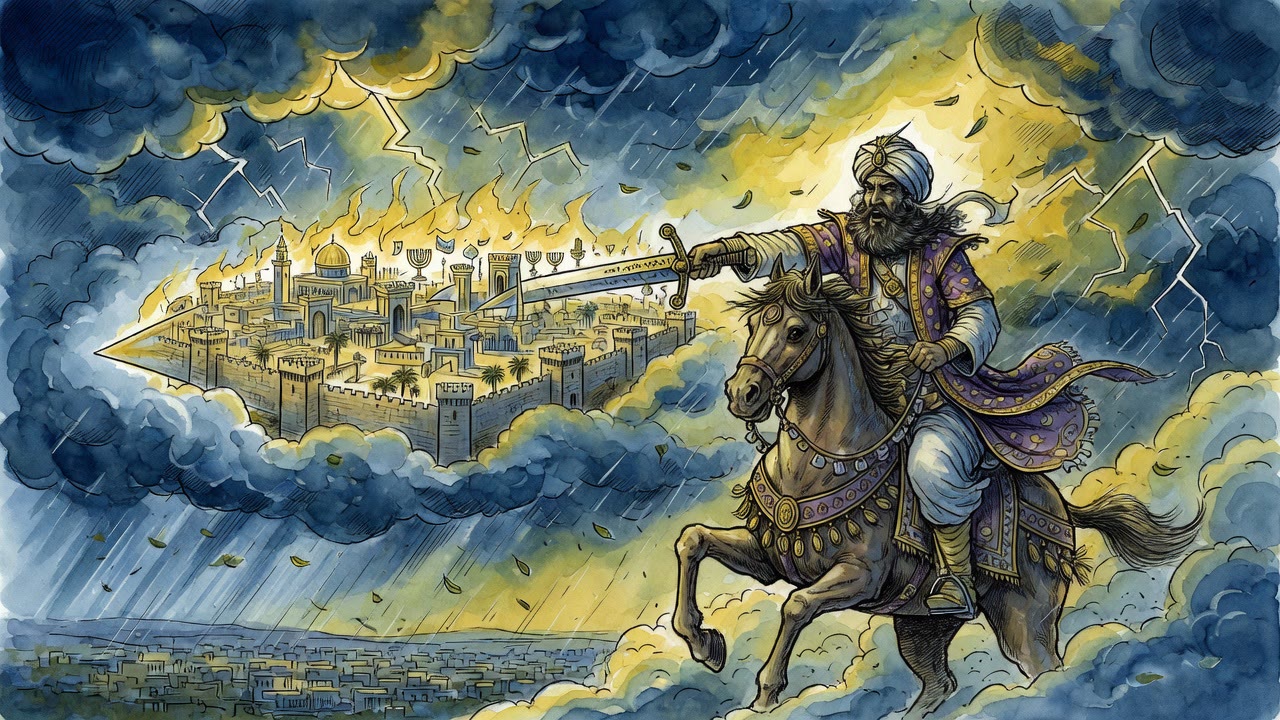
Horses left Shushan at a gallop with a kill order while Ahasuerus and Haman sat down to drink, and the city staggered under the sound of hooves.
Table of Contents
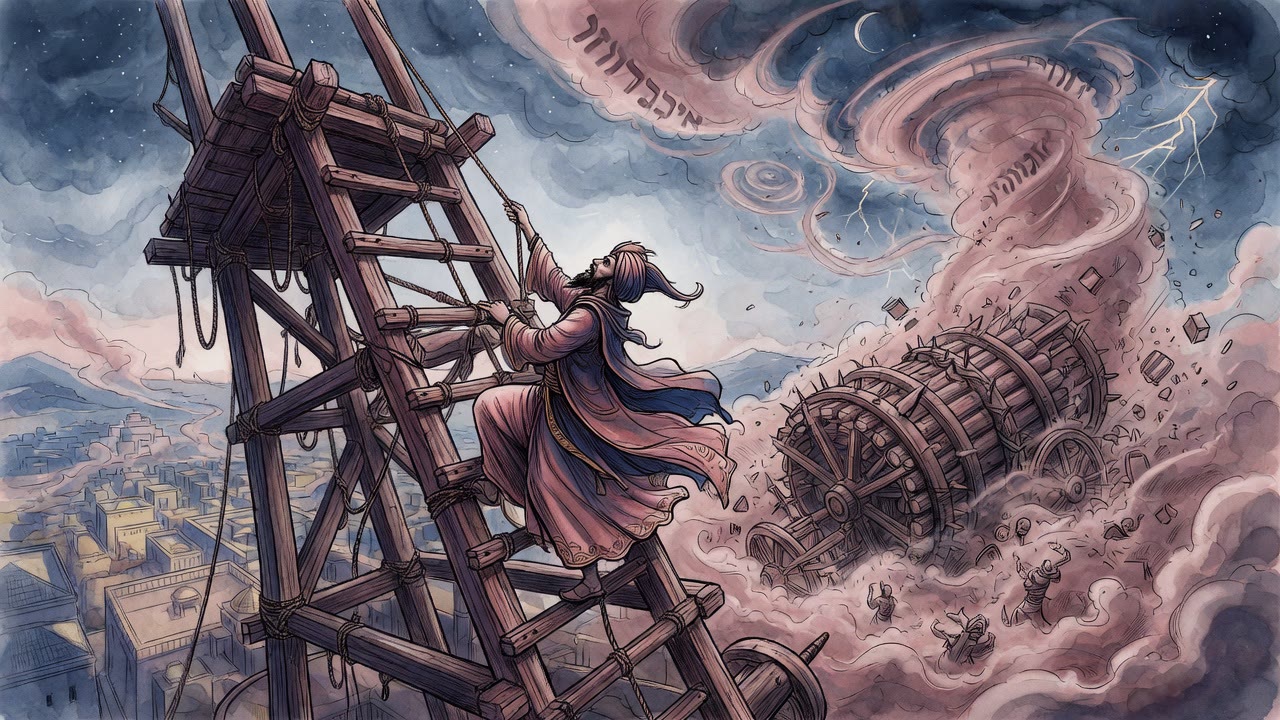
The couriers kicked their horses out of the Shushan citadel before the ink on the royal letters had finished drying. Leather bags slapped against saddle flaps. Dust rose in a long gray ribbon toward the first of one hundred twenty-seven provinces. Behind them, inside the palace, King Ahasuerus and Haman sat down to drink.
 Click for full size
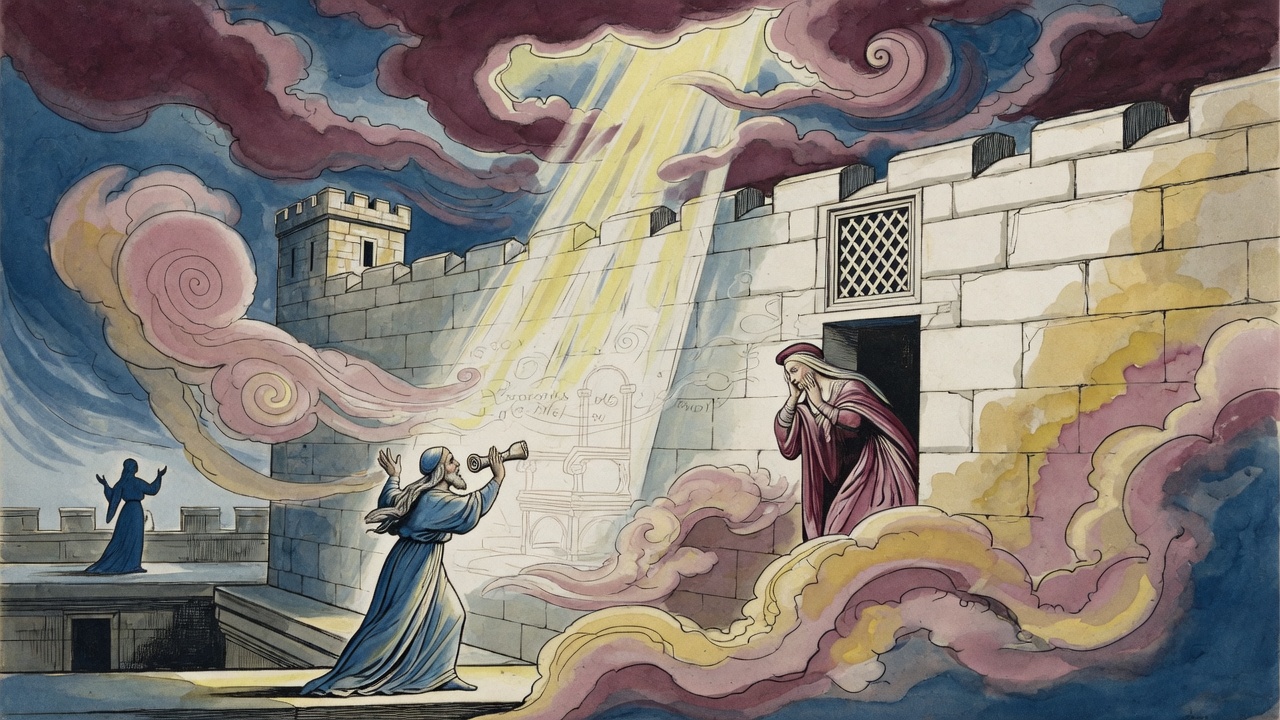
The city heard the gallop and did not know how to stand still. A man of Israel went to the marketplace for a litra of meat and a bunch of greens. A Persian put a hand on his throat and spoke into his ear: "Tomorrow I will kill you and spend your money." That was what it meant when the scroll said the city of Shushan was confounded (Esther 3:15).
The Table That Remembered Joseph
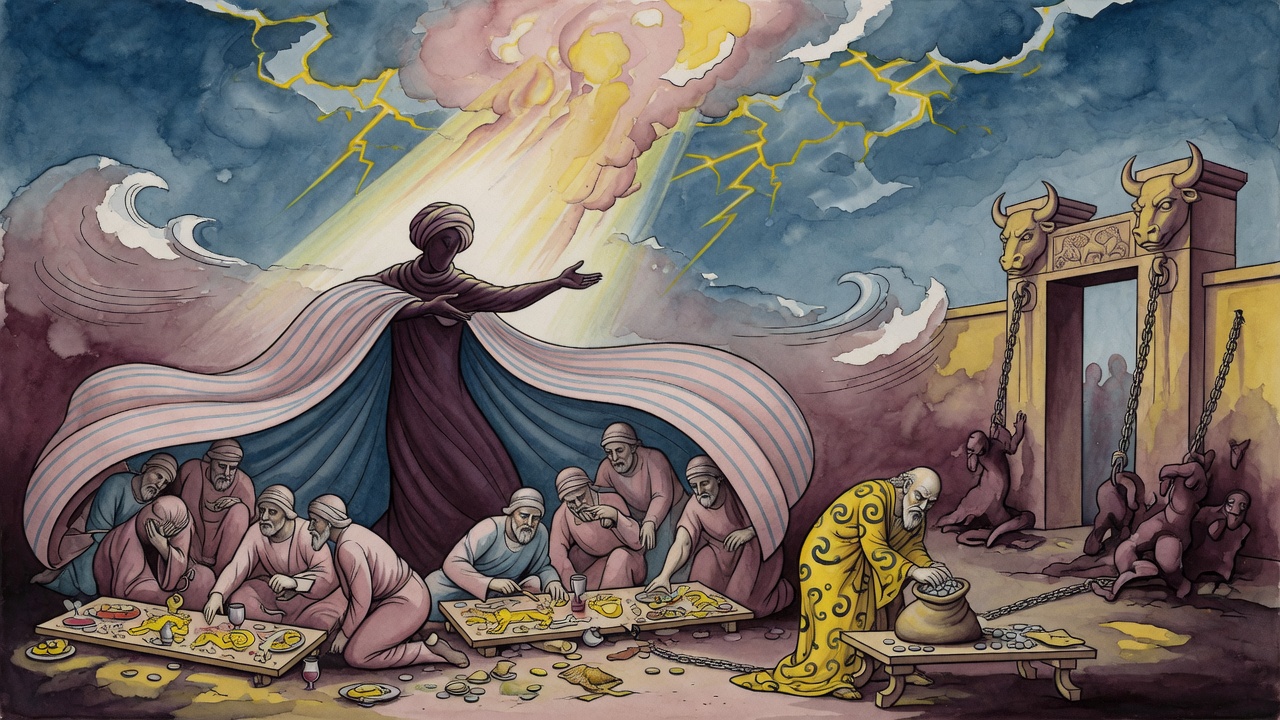
Heaven watched the two of them lift cups while the horses ran. The All-Merciful does not forget a meal taken over a brother's body. Long before Persia, Joseph's brothers sold him and then sat down to eat (Genesis 37:25). They bargained with Midianites while bread was still in their mouths. Now a king and a minister drank while a people was priced for slaughter.
The match was not metaphor. It was ledger. You sold your brother while eating and drinking, Heaven said to the tribes. I will do the same to you. The wine in the palace was the echo of that old meal, and the couriers were the interest long delayed. Joseph had forgiven them later in Egypt, saying it was not they who sent him there but God (Genesis 45:8). Forgiveness lengthens the rope. It does not cut the debt for those who never forgive at all.
Three Steps From Ring to Noose
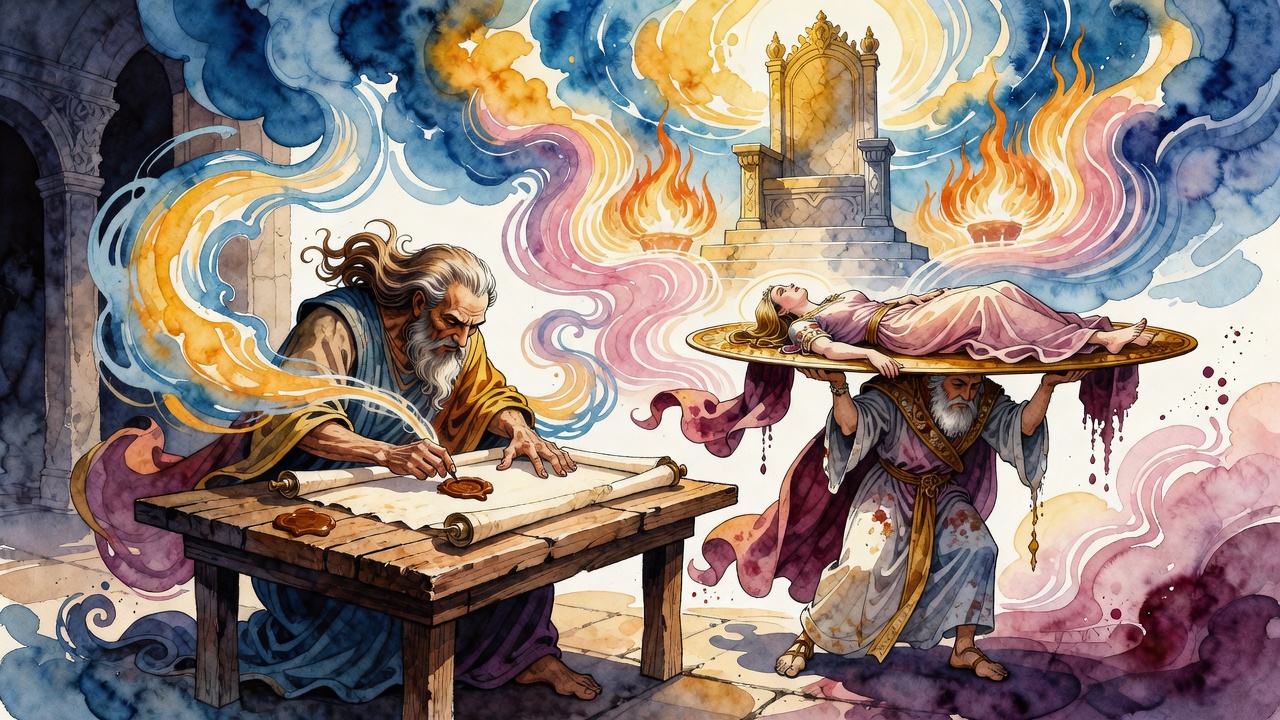
The terror did not arrive in one blow. First the king pulled the signet from his own finger and set it on Haman's hand (Esther 3:10). Life hung suspended in that transfer, abstract and almost polite. Then the letters went out to every province, and fear filled the nights and days. Then the appointed date was fixed, and no one could pretend the threat was rumor. Ready for that day, the scribes wrote. Ready meant the calendar itself had become a weapon.
Moses had already mapped those three steps in the curses: life suspended, fear night and day, no assurance of life (Deuteronomy 28:66). In Shushan the curse put on Persian clothes. The ring was the suspension. The couriers were the night-and-day fear. The chosen date was the final lock.
Drink in the Palace, Panic in the Street
Haman's mouth still tasted the royal wine when the first marketplace choking began. The decree made murderers of ordinary neighbors. A bunch of greens became a last errand. A litra of meat became a joke about inheritance. People who had shared stalls and wells overnight learned the new arithmetic of who would live long enough to spend whose coin.
Inside the citadel the music did not stop. Outside, mothers counted remaining meals. The horses kept running. Every province would receive the same sealed cruelty, written in the languages of the empire so that no village could claim it had not understood.
The City That Could Not Finish a Purchase
Confounded does not mean sad. Confounded means the ordinary day breaks. Bread is half bought. Coins stick in the palm. A man who came for greens goes home with a threat under his ribs and no vegetables in his bag. Shushan's Jews walked as if the ground had thinned. The decree was not yet the day of killing. It was the day the killing became legal, which is worse in its own way, because law wears a calm face.
Haman drank. The king drank. The couriers did not drink. They rode. Between the cup and the hoofbeat the whole story of Purim found its first irreversible motion.
The Night the Cups Stayed Full
While the first courier crossed the outer gate, a servant refilled the king's cup without being asked. Haman laughed at a joke that did not need to be funny. The citadel practiced calm the way a butcher practices a clean cut. Outside, shutters closed early. A woman who sold spices counted her jars and wondered which neighbor would claim them after the appointed day. A boy asked why the horses ran at evening. His father said only that the king had written, and writing in Persia was a kind of weather you could not argue with.
The midrash refuses to let that contrast stay decorative. Eating over a brother's sale in Genesis and drinking over a people's sale in Esther are one continuous sin wearing two costumes. Joseph's later forgiveness delayed the collection. It did not cancel the principle that heaven watches tables. In Shushan the table was gold and the menu was empire, and still the same old meal was being eaten again.
By midnight the marketplace threat had multiplied into a hundred smaller threats: a withheld greeting, a hand that did not rise to help a fallen basket, a landlord who suddenly remembered an old debt. The decree trained ordinary cruelty. Couriers carried law. Law gave permission. Permission taught the street how to speak like a knife.
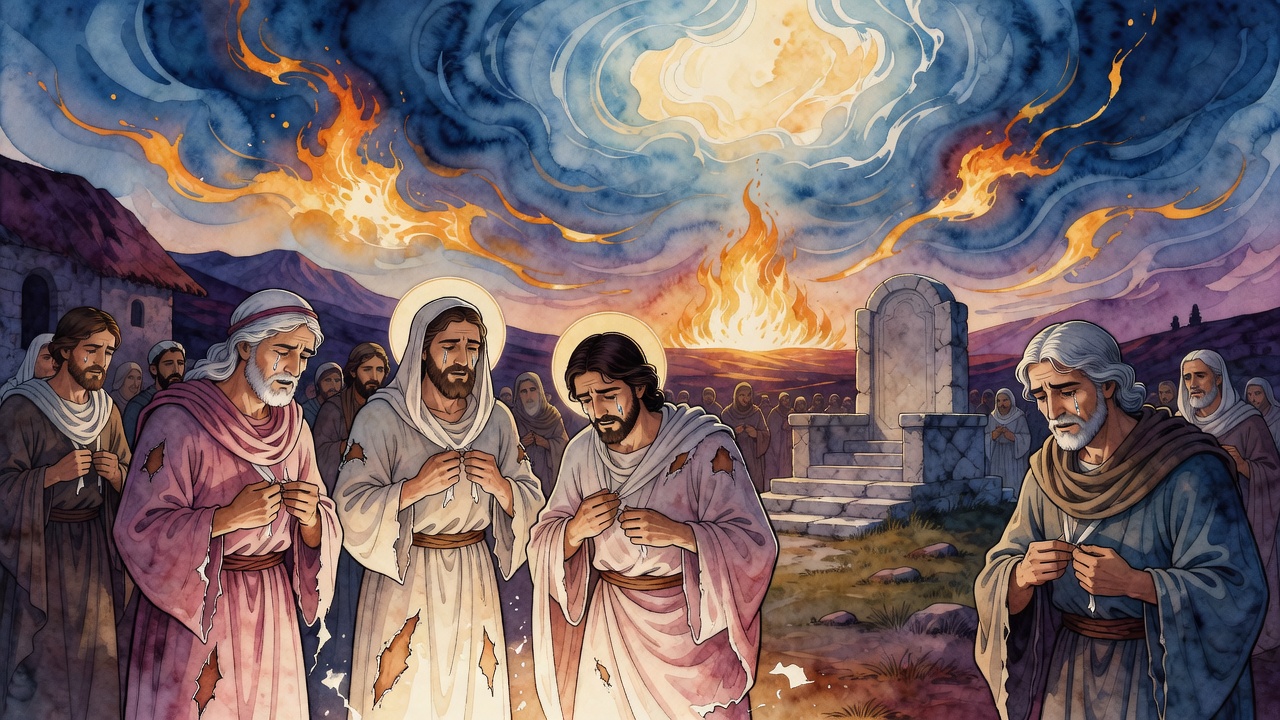
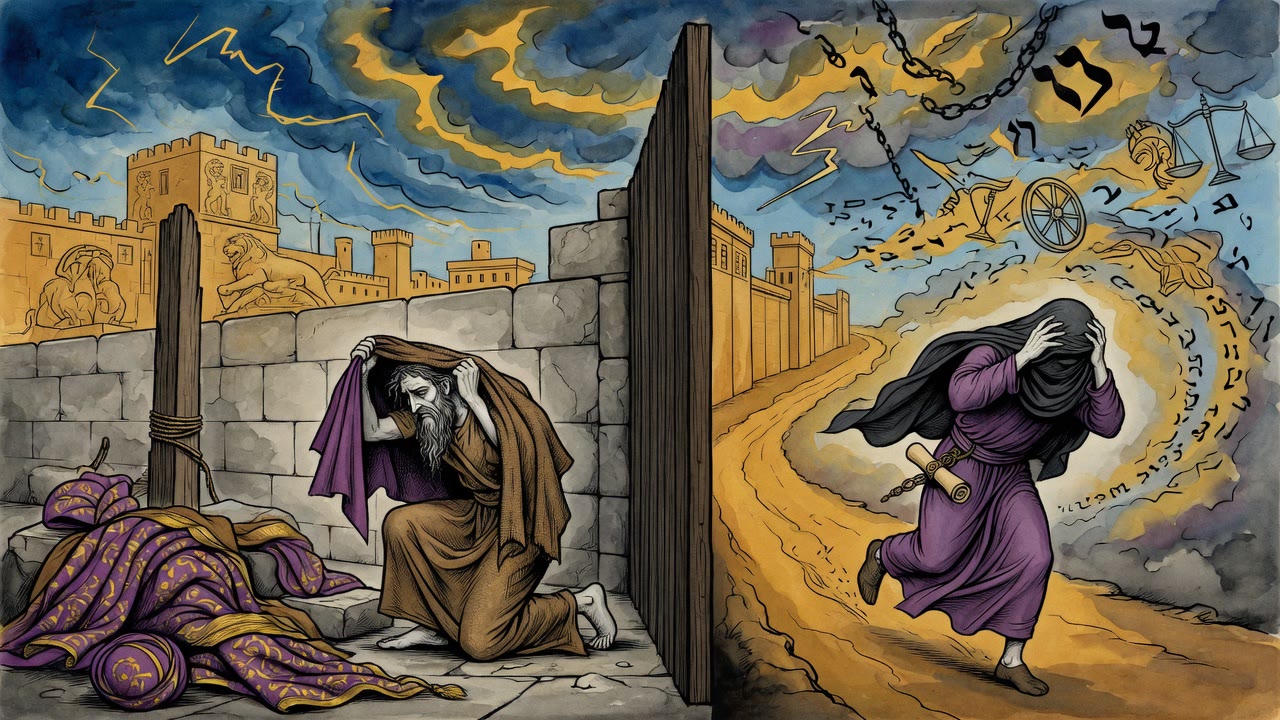
Mordecai had not yet torn his clothes in the open square. Esther had not yet heard the message that would force her choice. The story's later courage still slept. What was awake was the sound of hooves and the soft clink of royal cups, and between those two noises a city learning the shape of legal death.
← All myths