Mordecai Rode with Jerusalem on His Sword
Mordecai leaves the king in pearls and western-sea crimson, a Median blade engraved with Jerusalem, while Haman's ten sons walk bound before the crowd.
Table of Contents
 Click for full size
The City Holds Its Breath
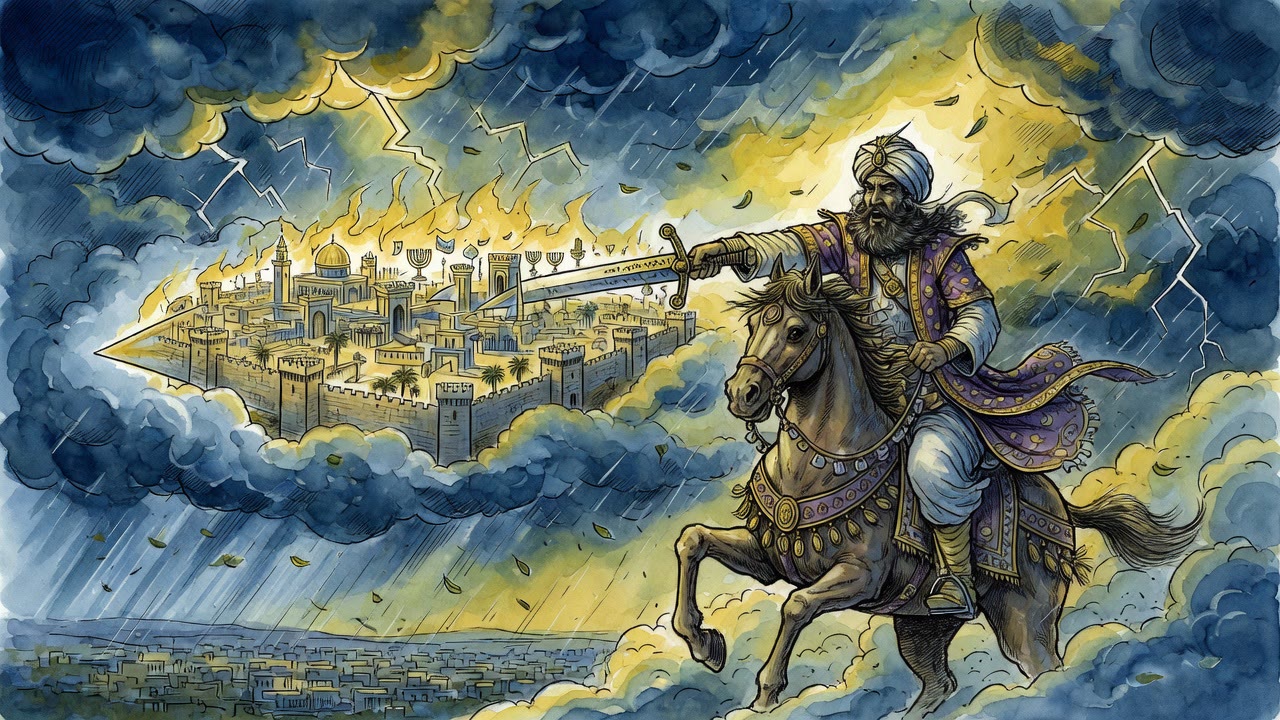
When Mordecai stepped out from before the king, Shushan seemed to stop mid-sentence. He wore royal raiment of fine wool, byssus, and blue, bound with gold of Ophir and set with pearls. Beneath an outer cloak gleamed a crimson mantle drawn from the western sea, dye that had cost more than many men's years. A purple tunic worth four hundred and twenty talents of gold carried the likeness of every winged bird of heaven embroidered into its cloth, wings frozen mid-flight in thread. A girdle of beryl circled his waist. Gold buckles fastened his boots. Emeralds caught light at every step as if the stones had been waiting for this particular walk and no other.
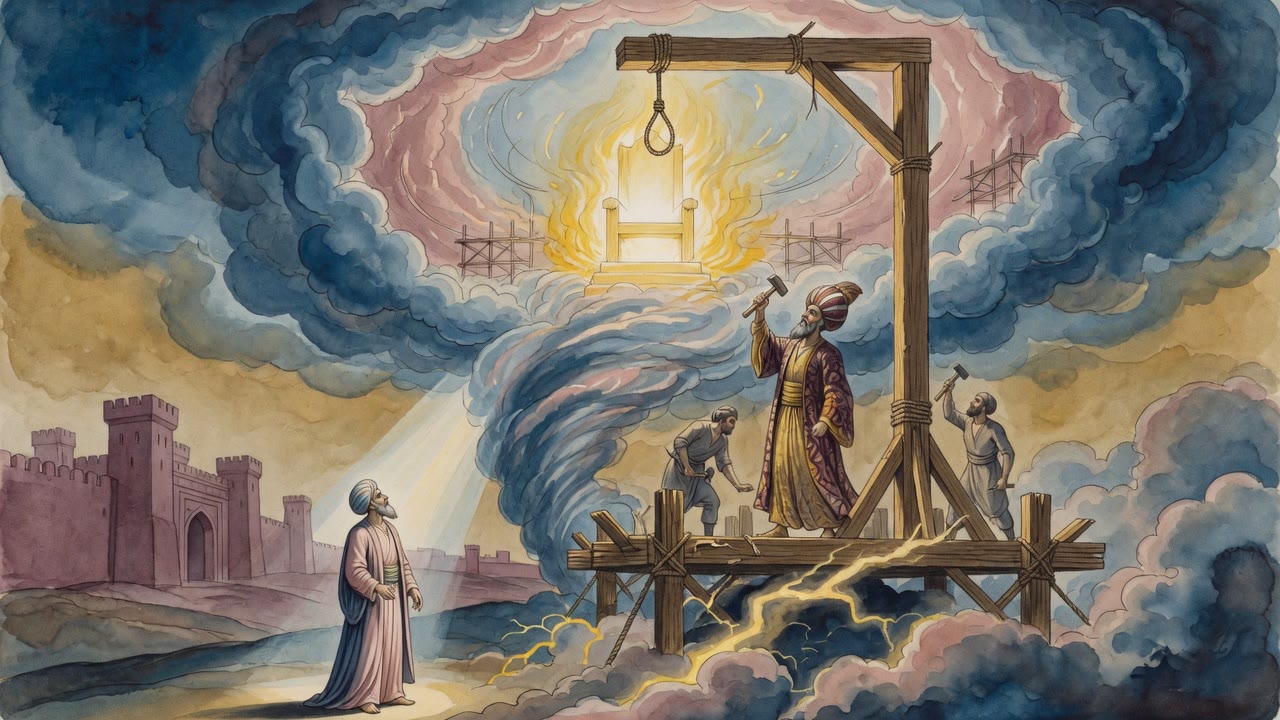
This was not costume for a festival parade. This was a man the empire had tried to hang, dressed as proof that the gallows had chosen the wrong neck. Servants who had once looked past him now looked at the ground. Market noise thinned. Even the dogs seemed to understand that the hierarchy of the street had changed clothes.
Jerusalem on the Blade
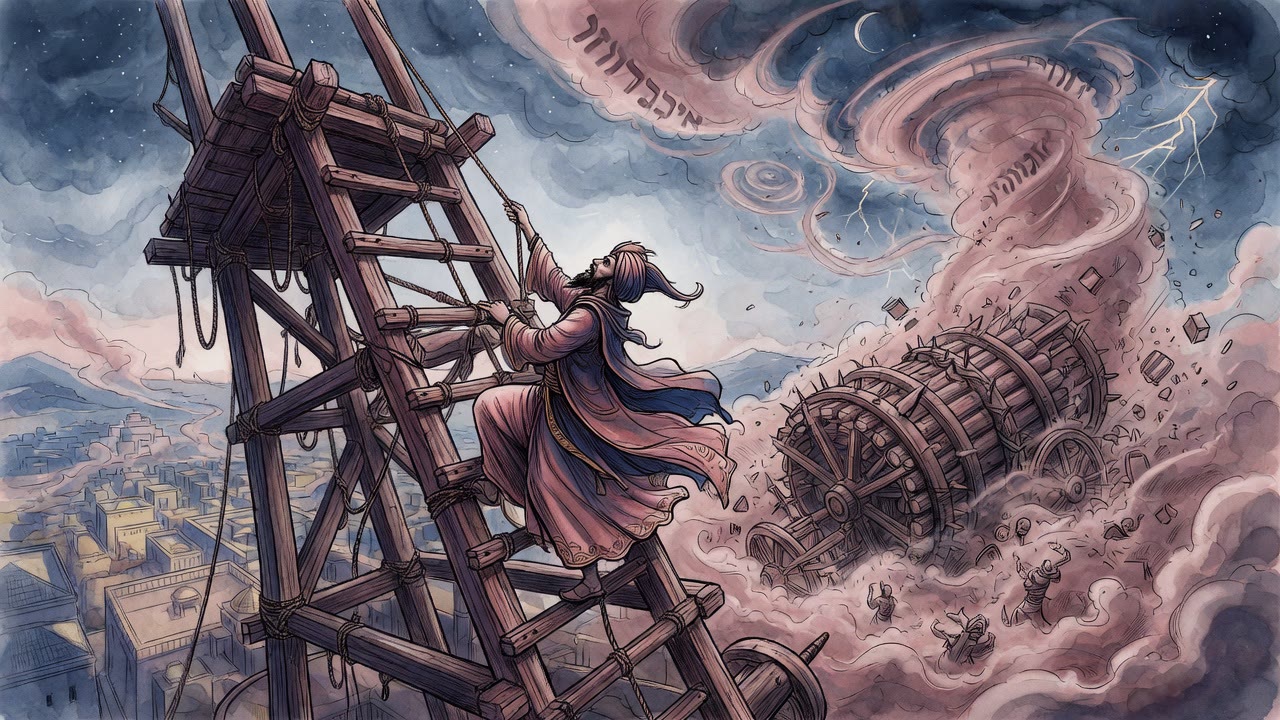
At his side hung a Median sword in a golden scabbard. On the blade was engraved the city of Jerusalem, walls and memory cut into steel. On the hilt, the far citadel of Media. A great crown of gold rose above his turban, and above the crown sat frontlets so that every nation and tongue would know him for a Jew, fulfilling the word that the peoples of the earth shall see that the name of the Lord is called upon you, and they shall fear you (Deuteronomy 28:10).
The sword did double work. It was weapon and map. One edge named the ruined capital of his people. One hilt named the empire that now had to watch him ride. He did not need to shout the theology. Steel carried both geographies in silence. A child in the crowd asked what the pictures meant. A grandfather answered without lowering his voice: that is home, and that is the power that failed to erase it.
Myrtle, Trumpets, Bound Sons
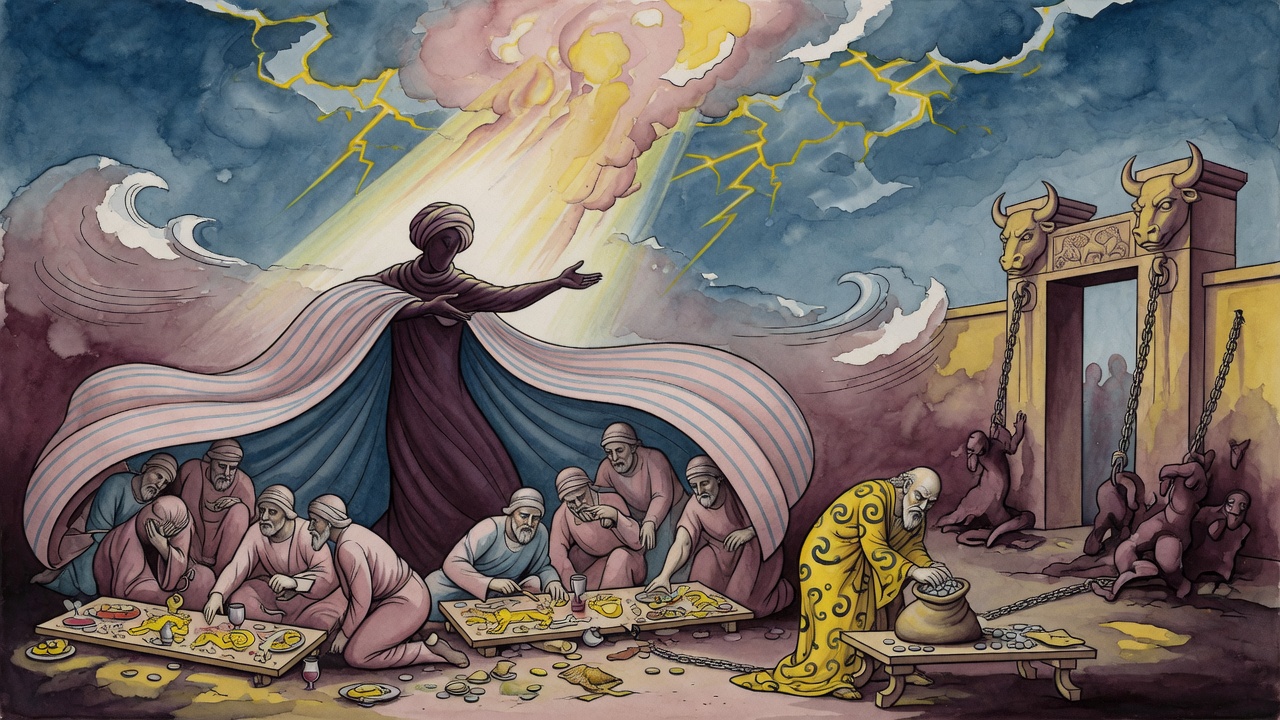
Myrtle lay strewn through the streets until boots crushed green into scent. Balconies hung with purple. Priests blew trumpets and cried out blessing on Mordecai and the Jews until the notes bounced off plaster and stone. Before him marched the ten sons of Haman, hands bound, the living inventory of a decree that had turned around and eaten its author. Their faces were gray with the knowledge that their father's letters had become their own chains.
The procession was mercy for one house and judgment for another, walking the same pavement in the same hour. Children who had learned to lower their voices when Persian officers passed now stared at a Jew whose boots made the same sound as power. Old men who remembered earlier decrees tasted salt and could not tell if it was tears or the memory of fasting. Women leaned from windows and did not bother to hide their faces. History, for once, was happening at street level where anyone could count the steps.
A Throne That Was Never Ahasuerus's
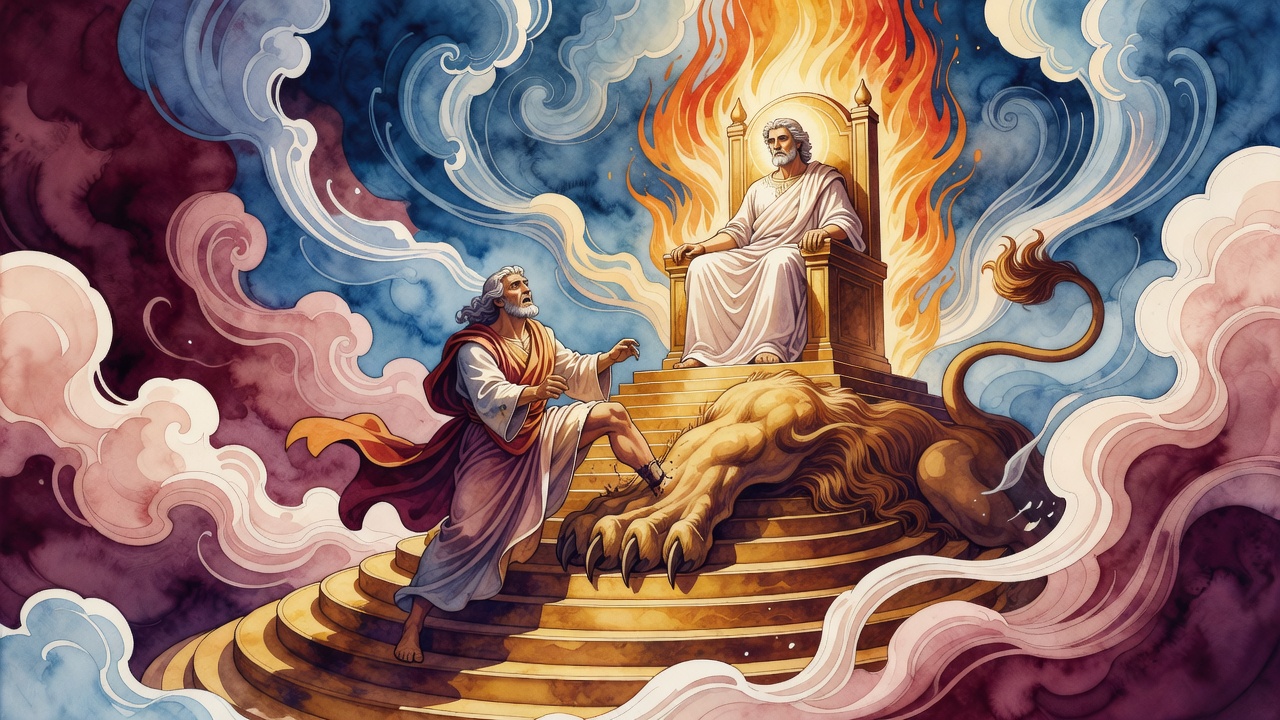
The king who dressed Mordecai sat on furniture with a longer memory than the banquet tables of Shushan. The throne Ahasuerus claimed had belonged to Solomon, built by Hiram of Tyre, a seat that once judged without speech and commanded beasts and spirits. Later conquerors who climbed those steps without earning them left limping: Nebuchadnezzar's thigh shattered by a golden lion, other kings marked the same way, only Cyrus rising whole because he rebuilt what others burned (Ezra 1:2).
Mordecai did not sit that throne. He walked away from it wearing a sword that refused to forget Jerusalem. In a court where seats maim pretenders, the Jew who survives does not need the chair. He needs the street to see him living, jeweled, armed, and still named by the Name. The birds on the tunic kept flying in thread. The myrtle kept bruising under boots. The ten bound sons kept walking. Somewhere behind palace doors a king remained on a borrowed seat. Outside, Mordecai moved like a sentence the empire could no longer edit, and Shushan, for one loud hour, read him correctly.
Somewhere a scribe who had copied Haman's decree watched Mordecai pass and felt the ink of old letters turn to ash in his memory. Paper had tried to erase a people. Cloth and steel were now rewriting the street. The ten bound sons did not look at the crowd. Looking would have required a future. Myrtle crushed under the procession released a smell sharp enough to cut through perfume and horse sweat, a green reminder that joy can be violent to the plants that carpet it.
Mordecai did not wave like a man drunk on reversal. He moved with the gravity of someone who had worn sackcloth recently enough to remember its itch under all this gold. The frontlets above his crown made Jewishness legible at a distance, not as apology but as claim. If the nations were commanded to see the Name upon Israel, this hour forced their eyes open. Shushan had wanted a quiet minority. It received a procession that refused to be quiet.
← All myths