Princes Asked Why This Day Was Different
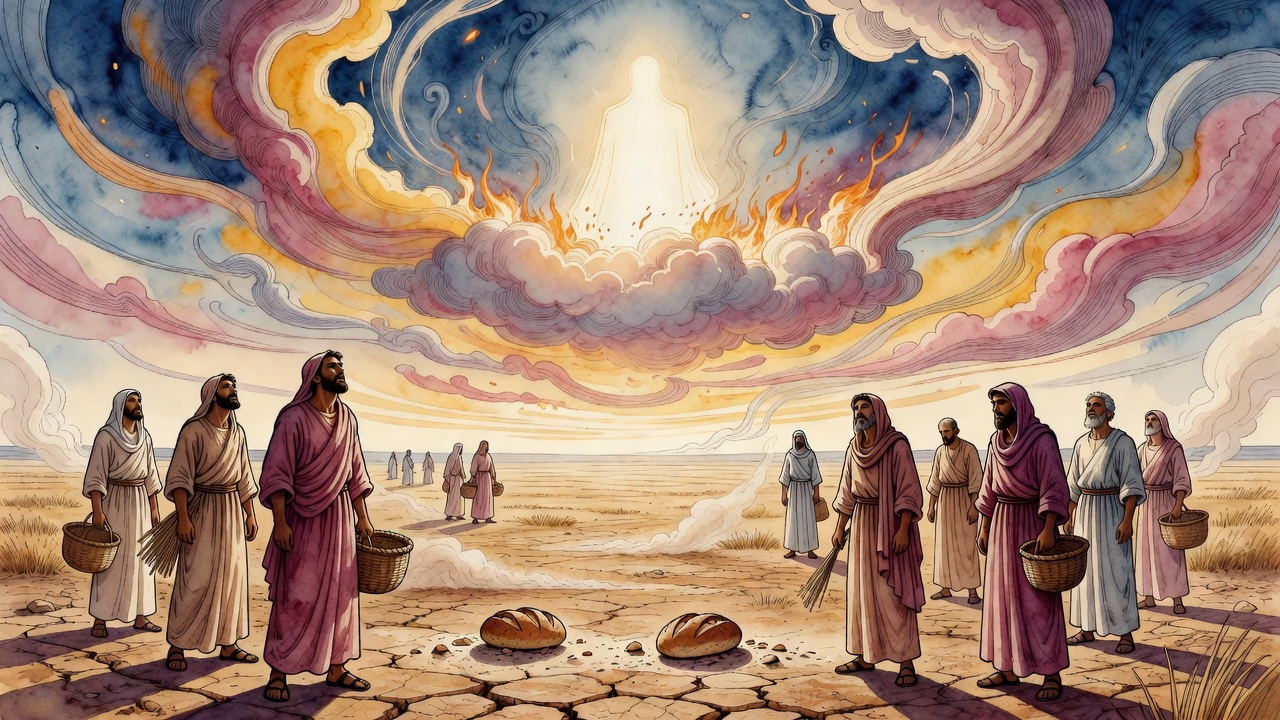
The sixth morning the baskets were too heavy. A prince counted twice, then a third time. He took the question to Moses before the camp invented an answer.
Table of Contents
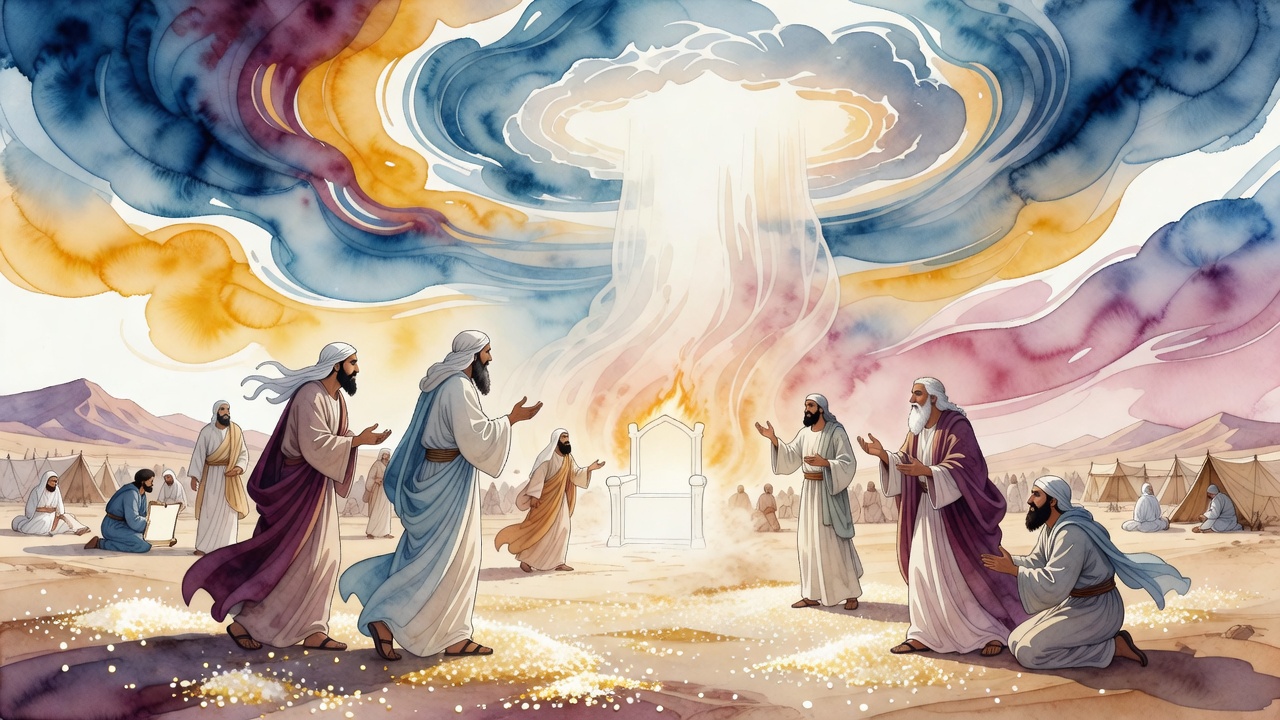
On the sixth morning a woman put her hands into the white on the ground and came up with twice what the day before had given her.
 Click for full size
She called her neighbor. They counted. They counted again. Children ran between tents shouting numbers. Hands that had learned to trust one omer (עמר), the day's measure, were holding two, and there was no market to blame, and no tax, and no trick they could name (Exodus 16:22).
Two Measures Where One Had Been
A prince from a large clan counted twice, then a third time. He was more afraid of mismeasurement than of miracle. Leadership is often fear wearing a straight back. If he named the wrong number, rumor would name it for him by nightfall, and thousands would hoard, or panic, or invent private rules.
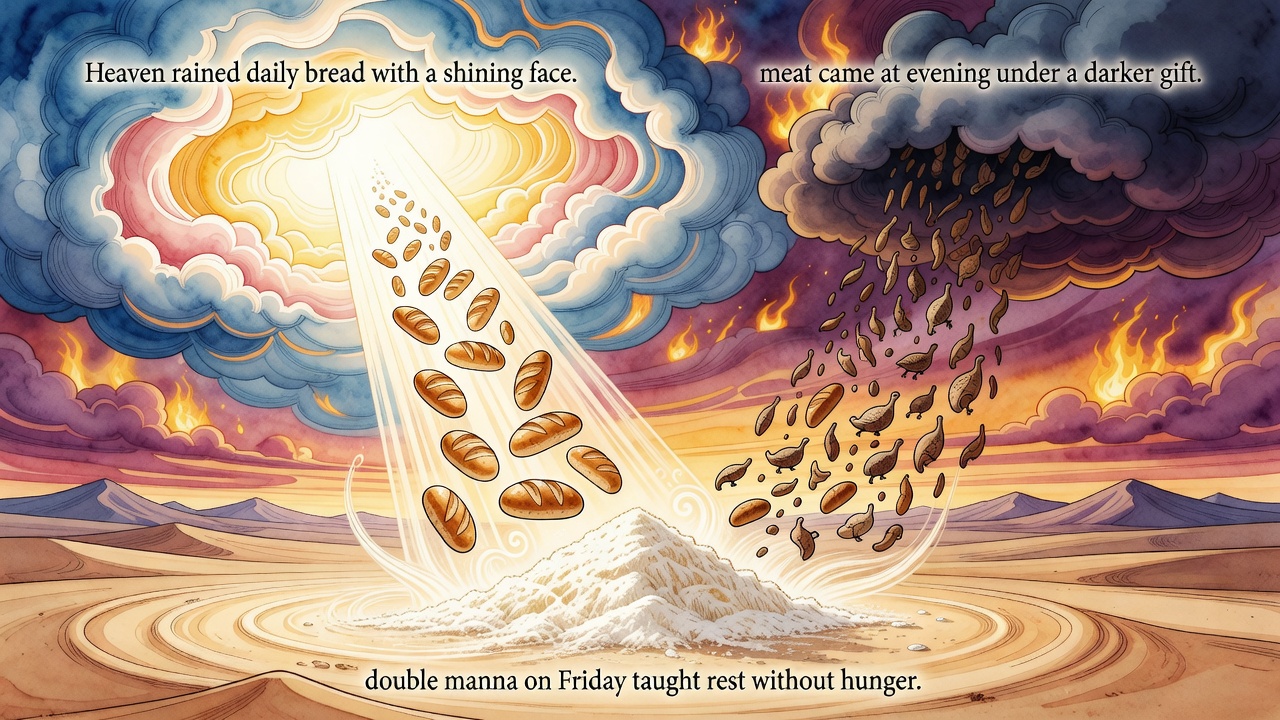
The manna had already been keeping a secret. On ordinary days it came aromatic, with a gilt sheen, one omer to a person, no more, no less, no matter how wide a man spread his gathering. Leftovers bred worms. The sixth day's portion smelled better. It shone more. It did not rot overnight. The bread itself had noticed the calendar before the camp had words for the day.
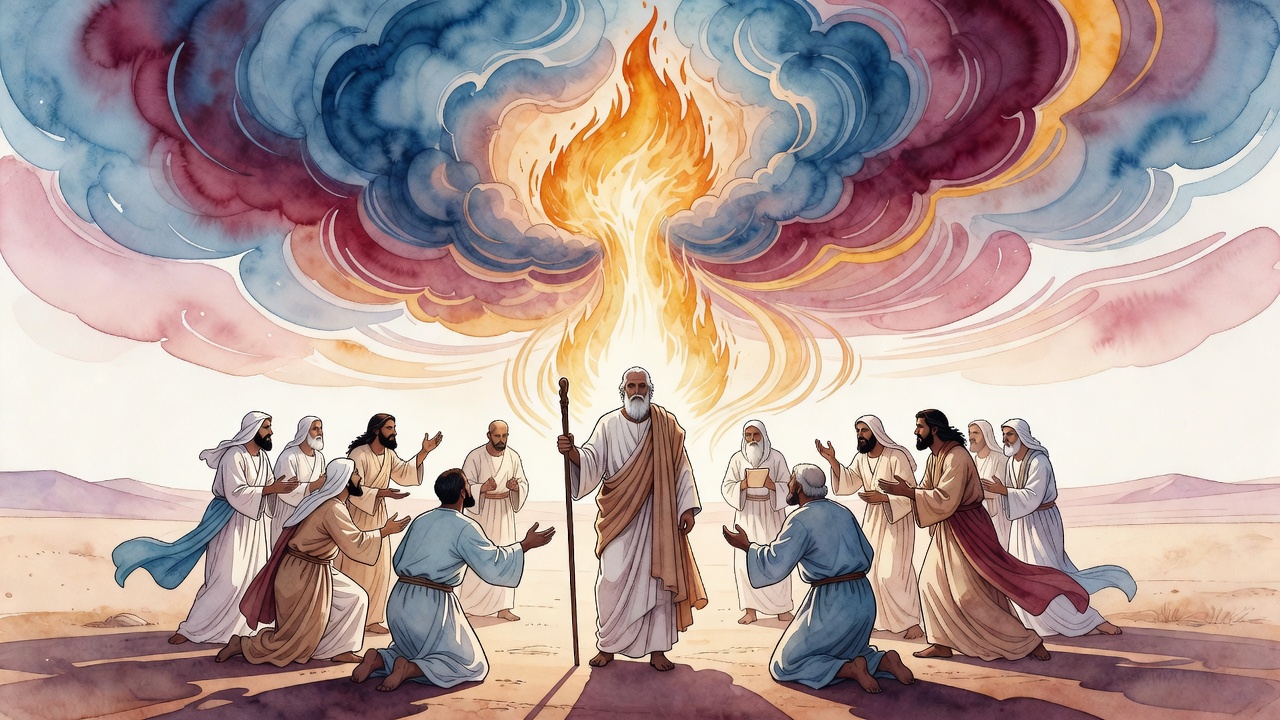
The princes of the congregation walked toward Moses with that weight in their baskets and a question in their mouths.
The Princes Walked to Moses
"Why is this day different from all the other days?" they said.
They did not ask as men with spare time. They asked as men responsible for clans who might still be out on the dunes at dusk, scooping, arguing, hiding extra in jars. Moses answered with Shabbat, the day set apart from the beginning of creation, now written into the physics of their food.
Gather two. Rest on the seventh. Do not go out looking for what will not fall. The command arrived as fact before it arrived as tablet. The doubled measure made the secret public. A prince who had counted rations for his clan felt the job shift in his hands. He was no longer only managing hunger. He was managing a day.
That evening, inside tents, parents told small listeners why tomorrow's basket would be heavy and the morning after that would be empty on the ground. The children wanted to know if they would eat. The answer was yes, if nobody went out to look.
If You Keep This Sabbath
Moses pressed the stake higher. Keep this Sabbath, he said, and three festivals wait in the future: the festival of Nissan, which is Pesach; the festival of Sivan, which is Shavuot; the festival of Tishrei, which is Sukkot. Rest now, and the year will have its joys later.
He named more. Keep this day and the Land itself sits in the gift, six goodly measures beginning with the soil they had not yet walked. Keep this day and be saved from the pangs of the Messiah's coming, from the day of Gog and Magog, and from the day of great judgment.
The camp did not need a treatise. It needed enough hope to stop gathering on the seventh morning. When they heard, they accepted it and rested. Not every heart was clean about it. Some sat down because the memory of worms on a wrong leftover still sat in the jar. Mixed motives still produced a quiet camp. Quiet was the first harvest of the day.
The Seventh Morning the Ground Was Bare
The seventh day came without the soft fall of white on the dunes. Anxiety tried the usual doors. Mothers checked jars and found Friday's double still sweet, still bright, still without worms. Fathers who had always been first into the field sat with their hands empty and learned that empty hands can be obedience.
Moses walked the lanes and heard less grumbling than on any ordinary dawn. Fewer footsteps outside the camp line. More talk inside the tents about what the princes had asked and what the answer cost. A man who had wanted to test the dunes on the seventh morning went looking for company and found faces that would not go with him. The test died of loneliness.
Shabbat entered Israel as food before it finished entering as stone. Difference was no longer a riddle. It was a practice you could smell in a jar.
On the following sixth day the double fell again, and this time fewer people ran to Moses. A woman lifted the extra omer, sniffed it, and put it in the back of the jar for tomorrow without asking anyone to confirm the count. The question had done its work. The princes went back to their clans. The ground kept the calendar. The camp, for one morning, did not.
← All myths