5 min read

Manna Settled Like Frost Under Heavens Open Face

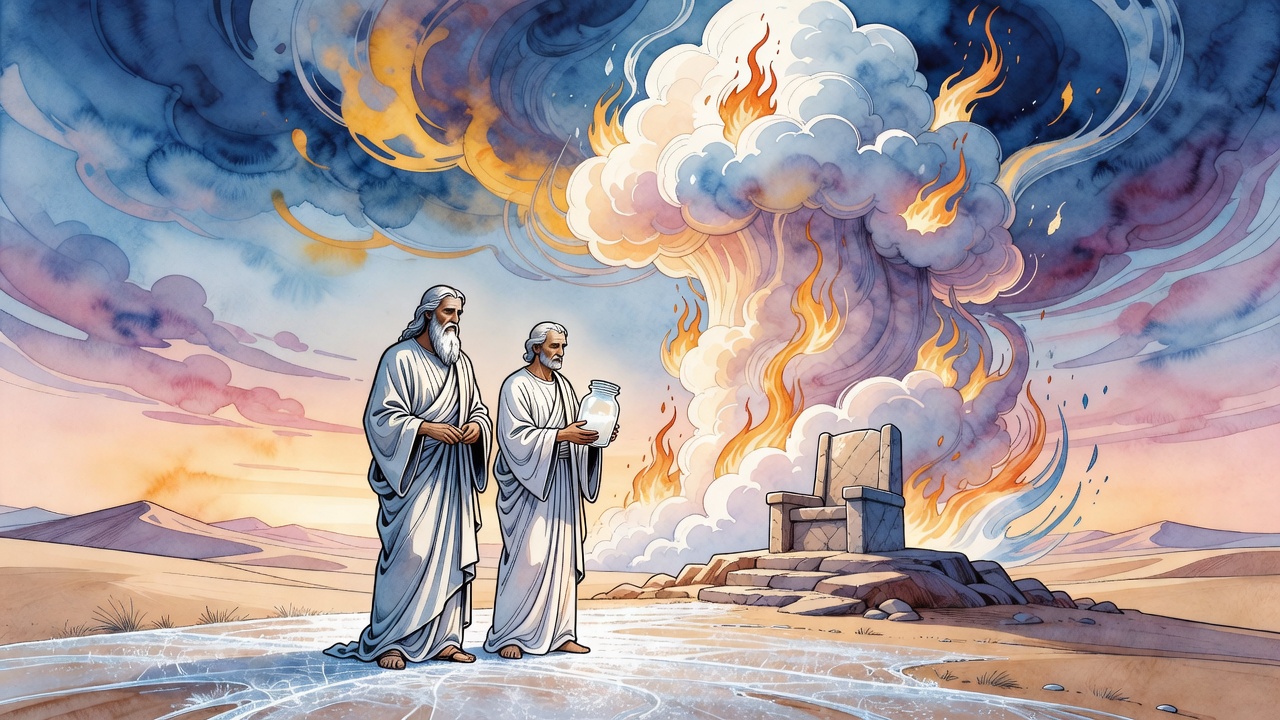
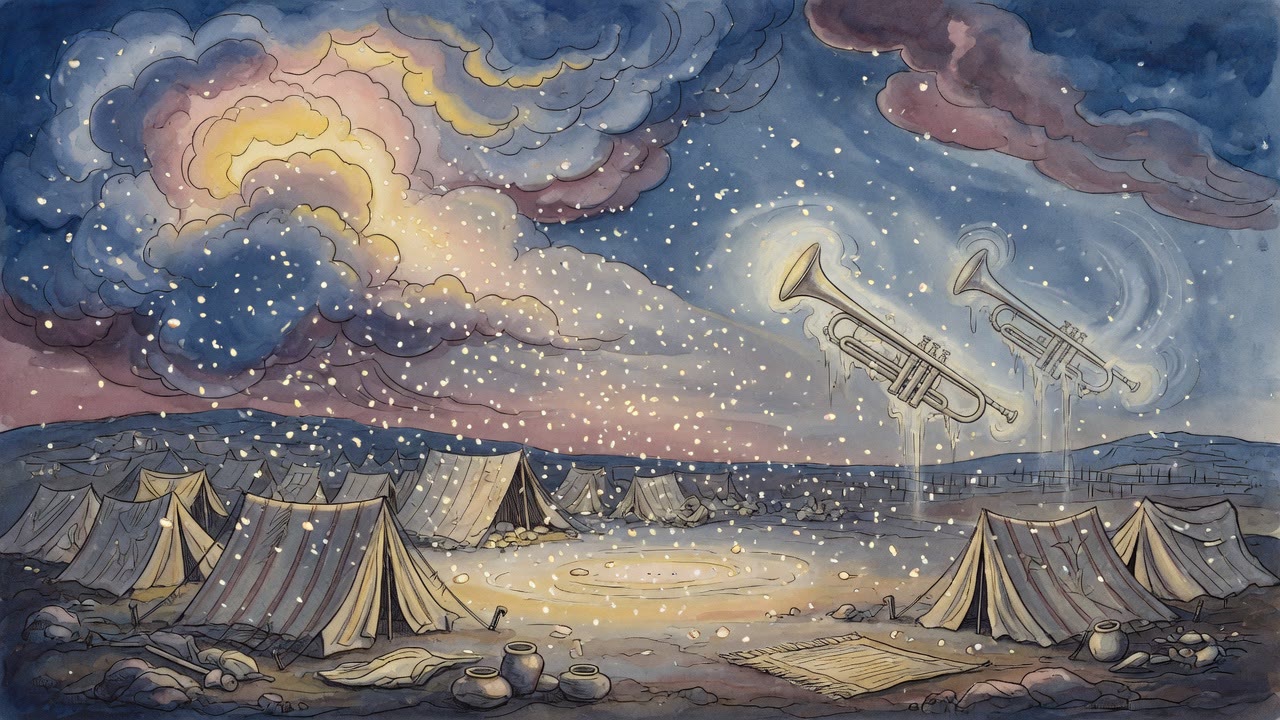
Each dawn a thin ice-like crust covered part of the desert. Moses and Aaron promised morning glory, and Aaron sealed a clear jar for later eyes.

Curated by Arthur · Told by Maggid ·
Table of Contents
  1. The Promise Made the Night Before
  2. A Crust on Part of the Desert
  3. The Face It Came With
  4. The Meat Came With Another Face
  5. The Jar That Had to Be Clear
Manna Settled Like Frost Under Heavens Open Face Click for full size

The Promise Made the Night Before

Moses and Aaron answered a hungry camp with a deadline. The grumbling had run tent to tent all day, the sound a crowd makes once it has started counting what is left in the sacks, and the two brothers did not answer it with a supply list. "In the morning you will see the glory of the Lord," they said (Exodus 16:7).

It was a large thing to say to people who wanted supper. Glory is not bread, and a promise with a time on it can only be kept or broken, so from the moment the words were out there was nothing to do but wait for light.

A Crust on Part of the Desert

Whoever stepped out first at dawn stopped walking. The sand in front of the tents had gone white, and the white caught the low light along its edges. He crouched down and put a hand flat on it, and it broke under his palm the way ice breaks on a trough, and what came up in his fingers was food.

It was not snow, which is soft, and it was not rain, which is wet. Rabbi Yehoshua held the verse to its exact words: the manna came down like ice on the ground and settled there thin as hoarfrost (Exodus 16:14). He would not let it spread any further than the verse allows either. "On the face of the desert" means part of the desert and not the whole of it, so the crust lay close around the camp and stopped, and the rest of Sinai went on being bare sand under the same hard sky.

A family had only to walk past the tent ropes and bend. Nothing could be gathered standing up.

The Face It Came With

The bread came out of the heavens with a lit face. Panim me'irot, an open countenance, the look a man has when he gives something he wanted to give. The hunger had been honest, so the answer was open-handed, and the manner of it was as much of the gift as the crust was.

Nobody in that camp was merely being tolerated. Each household measured out an omer (a dry measure of about two quarts) a head and no more, because whatever was held back overnight bred worms and stank by morning, so a man who wanted a private store of it learned within a day that there was no such thing.

They ate and were full. At dawn the frost was there again, and it was there the next dawn, and the one after that.

The Meat Came With Another Face

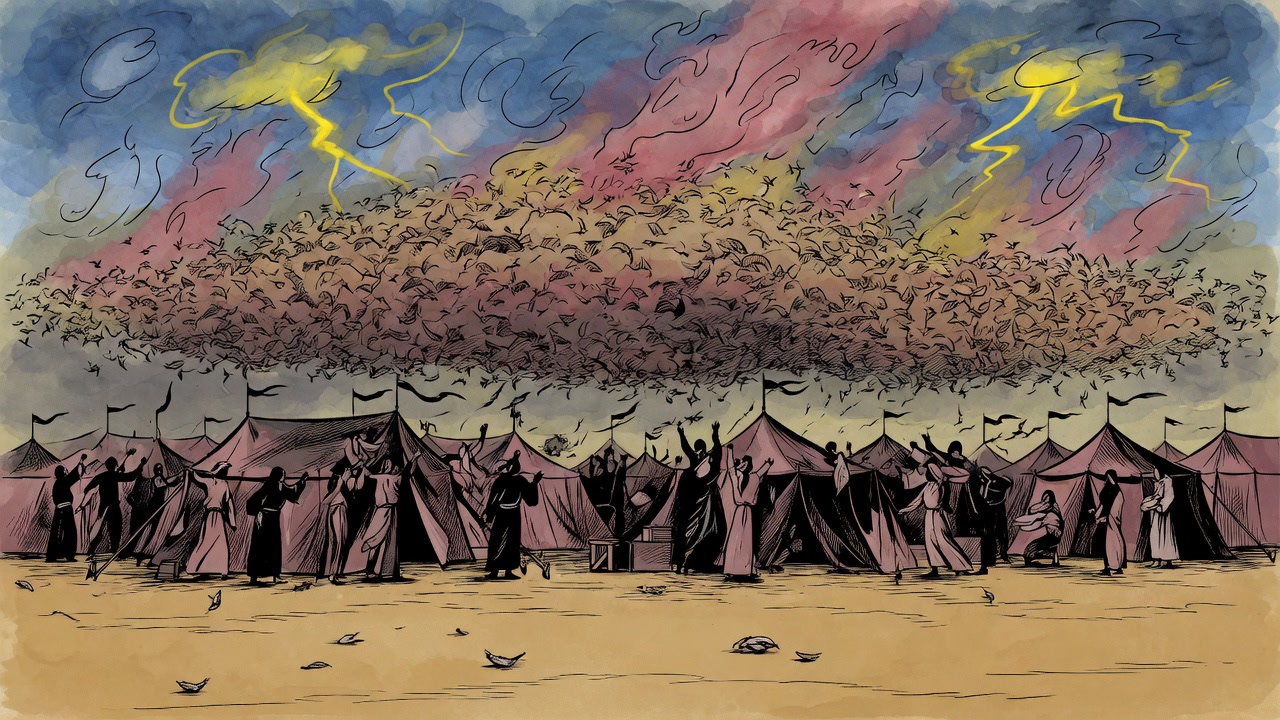
Later, on the same march, under the same sky, they wanted meat. It was not hunger that time. They stood in the doors of their tents and remembered the fish of Egypt, and the cucumbers, and the melons, and the wanting had a whine inside it that the first complaint never had (Numbers 11:4-6).

The quail came anyway. They came in such quantity that the people spent all that day and all that night and the next day gathering them, but the face behind that gift was dark, and a plague walked in with the feast while the meat was still between their teeth. They buried the greedy where they had eaten, and the place kept the name of the graves.

Both fell out of the same sky and both filled a stomach. The difference was in the face, and the camp learned it by digging.

The Jar That Had to Be Clear

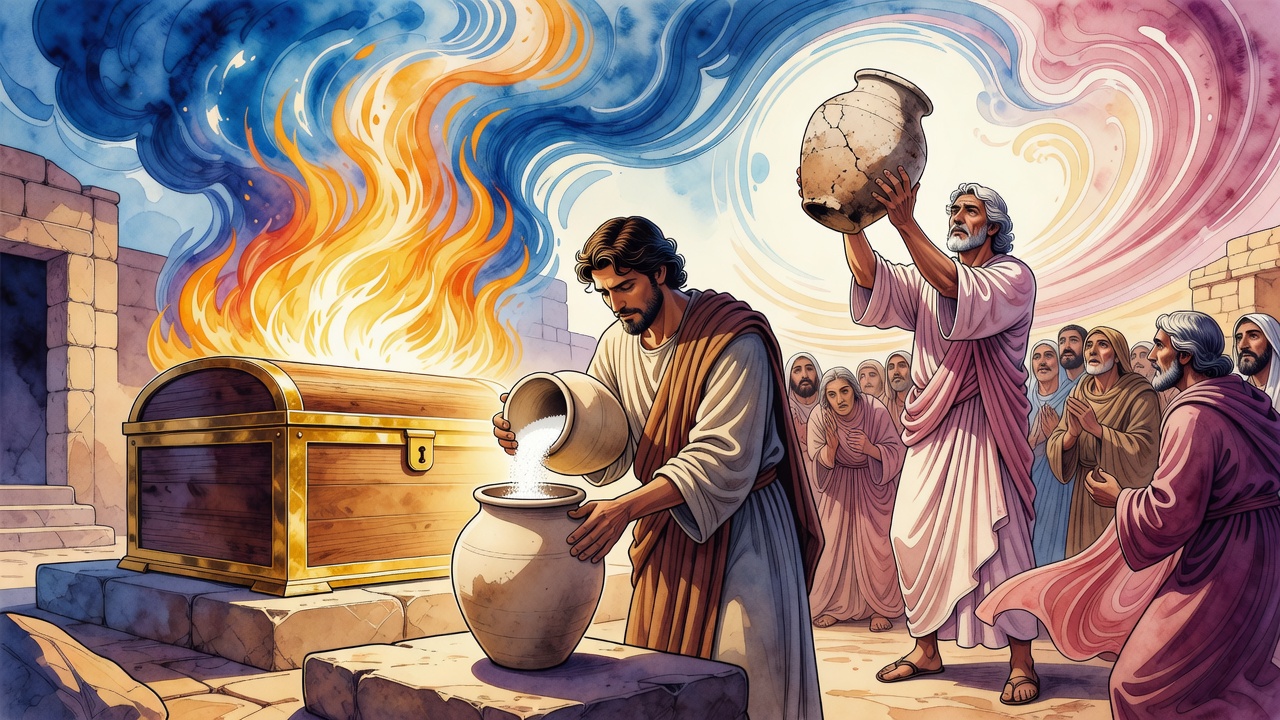
Long before any of that, in the first days of the frost, Moses told Aaron to take a tzintzeneth, put an omer of manna in it, and set it aside for the generations who would never walk that sand (Exodus 16:33).

The word appears nowhere else in the Torah. The sages went down the list of what such a jar might be made of, the way a man goes through a storeroom: silver, iron, lead, copper, tin. Any of them would hold manna. But there is a root buried in the letters, metztith, a thing seen through, and that decided it. The vessel was earthenware of the kind glass is made from, and it was clear.

A sealed box would have kept the manna and lost the whole reason for keeping it, because storage was never what Moses was after. Later people were meant to look at the stuff and see what had fed their grandfathers in a place with no fields. So Aaron filled the jar and laid it up before the Testimony, and the bread of that first morning sat behind a wall thin enough to see through, in a camp that would soon be burying men who had asked for something else.


← All myths
From the tradition

Sources

3 sources

The texts behind this telling. Some cards carry a translation of the source; others are our own retelling of it, and each card says which. Every card links out to the original.

Mekhilta Tractate Vayassa 3:9Mekhilta DeRabbi Yishmael

Retold in our words. Read the original at the link below.Mechilta, translated by Rabbi Shraga Silverstein · CC-BY

When the Israelites grumbled in the wilderness about food, Moses and Aaron told them (Exodus 16:7): "And in the morning you will see the glory of the Lord." The Mekhilta de-Rabbi Ishmael draws from this verse a subtle but important teaching: the manna was given to Israel "with a radiant countenance."

The phrase "radiant countenance" (panim me'irot) means that God gave the manna with joy, with generosity, with an open and welcoming face, not grudgingly, not as a concession to complaining, but as a gift freely and happily bestowed. The Mekhilta contrasts this with how the quail was given. The people had demanded meat (Numbers 11:4-6), not out of genuine hunger but out of craving and dissatisfaction. The quail came, but it came with a "darkened countenance", given in anger, accompanied by a plague that struck those who ate greedily.

The distinction matters enormously. Both the manna and the quail were miracles. Both fell from heaven. Both fed the people. But the manner of giving was completely different. When Israel asked for bread out of legitimate need, God responded with radiance. When they demanded luxury out of complaint, God responded with severity. The food arrived either way, but the face behind it changed.

The Mekhilta's teaching carries a broader message about prayer and divine response. It is not only what God gives that matters, but how He gives it. A gift given with joy sustains both body and spirit. A gift given in displeasure may fill the stomach but poison the soul. The manna, arriving each morning with the radiance of dawn, was proof that God delighted in nourishing His people. So long as they came to Him with honest hearts.

Full source
Mekhilta Tractate Vayassa 4:14Mekhilta DeRabbi Yishmael

Retold in our words. Read the original at the link below.Mechilta, translated by Rabbi Shraga Silverstein · CC-BY

The Mekhilta DeRabbi Yishmael offers a precise description of how the manna appeared to the Israelites in the wilderness, drawing its details from the verse "and, behold, on the face of the desert, thin as hoarfrost" (Exodus 16:14). Rabbi Yehoshua reads this verse with characteristic exactness, and his interpretation paints a vivid picture of one of the most famous miracles in the Torah.

First, the Mekhilta notes that the manna was not spread across the entire desert. The verse says "on the face of the desert," which the rabbis understood as a partial covering, not the whole expanse of wilderness, but only part of it. The manna fell in a specific area, concentrated near the Israelite camp, not scattered randomly across the vast Sinai landscape.

Second, Rabbi Yehoshua explains the phrase "thin as hoarfrost" to mean that the manna descended like ice on the ground. It was not fluffy like snow or wet like rain. It settled on the desert floor in a thin, crystalline layer, resembling frost. This detail matters because it tells us something about the texture and appearance of this miraculous food. When the Israelites stepped out of their tents each morning, what they saw on the ground looked like a fine crust of ice spread across the sand.

The precision of Rabbi Yehoshua's reading reflects the broader rabbinic approach to miracle narratives. The rabbis did not treat miracles as vague or impressionistic events. They wanted to know exactly what happened, exactly what it looked like, and exactly how far it extended. The manna was not everywhere. It was not formless. It was a thin layer of frost-like substance covering part of the desert near the camp, and every morning Israel gathered it by hand, a daily reminder that their sustenance came directly from heaven.

Full source
Mekhilta Tractate Vayassa 6:14Mekhilta DeRabbi Yishmael

Retold in our words. Read the original at the link below.Mechilta, translated by Rabbi Shraga Silverstein · CC-BY

Moses told Aaron to take a "tzintzeneth" and fill it with manna to preserve for future generations (Exodus 16:33). But what exactly was a tzintzeneth? The word appears nowhere else in the Hebrew Bible, leaving the rabbis to decode it from the word itself.

The Mekhilta runs through the possibilities. Was it silver? Iron? Lead? Copper? Tin? Any of these would make a practical container. But the rabbis noticed something embedded in the Hebrew letters. The word tzintzeneth contains the root "metztith," meaning something that can be seen through, something transparent.

The conclusion: it was an earthenware vessel, the kind from which glass is made. The manna jar was see-through. This was not an accident of vocabulary. The entire point of preserving the manna was so that future generations could look at it and know that God fed their ancestors with bread from heaven. A sealed metal box would defeat the purpose. The jar had to be transparent so people could actually see what was inside.

This small linguistic investigation reveals how carefully the rabbis read every unfamiliar word in the Torah. Nothing was decorative. If God chose the word tzintzeneth instead of a common term for "jar," there must be a reason. And the reason was visibility, the manna was meant to be witnessed, not just stored.

Full source