Chovav Kept His Land While Israel Craved Free Fish
Moses asked his father-in-law to march. Chovav named his land, his kin, and his altar in Midian, and turned the camels toward home.
Table of Contents
 Click for full size
Moses Asked Him to Come
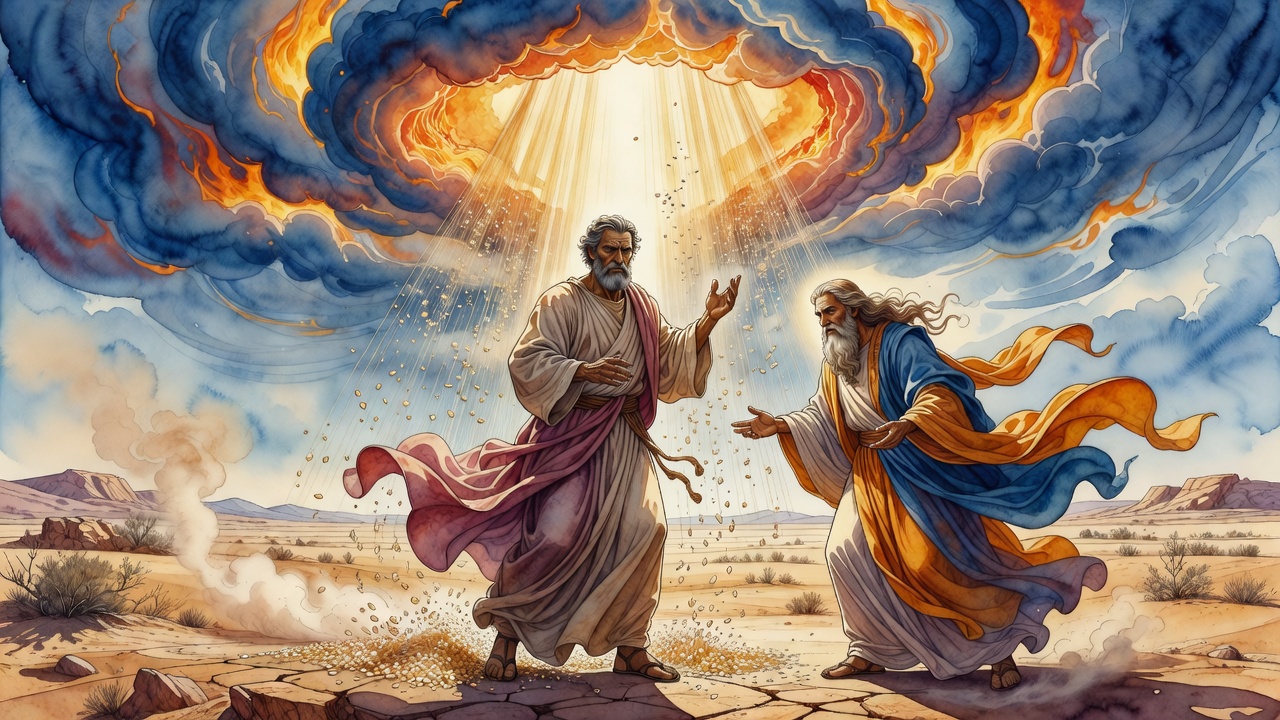
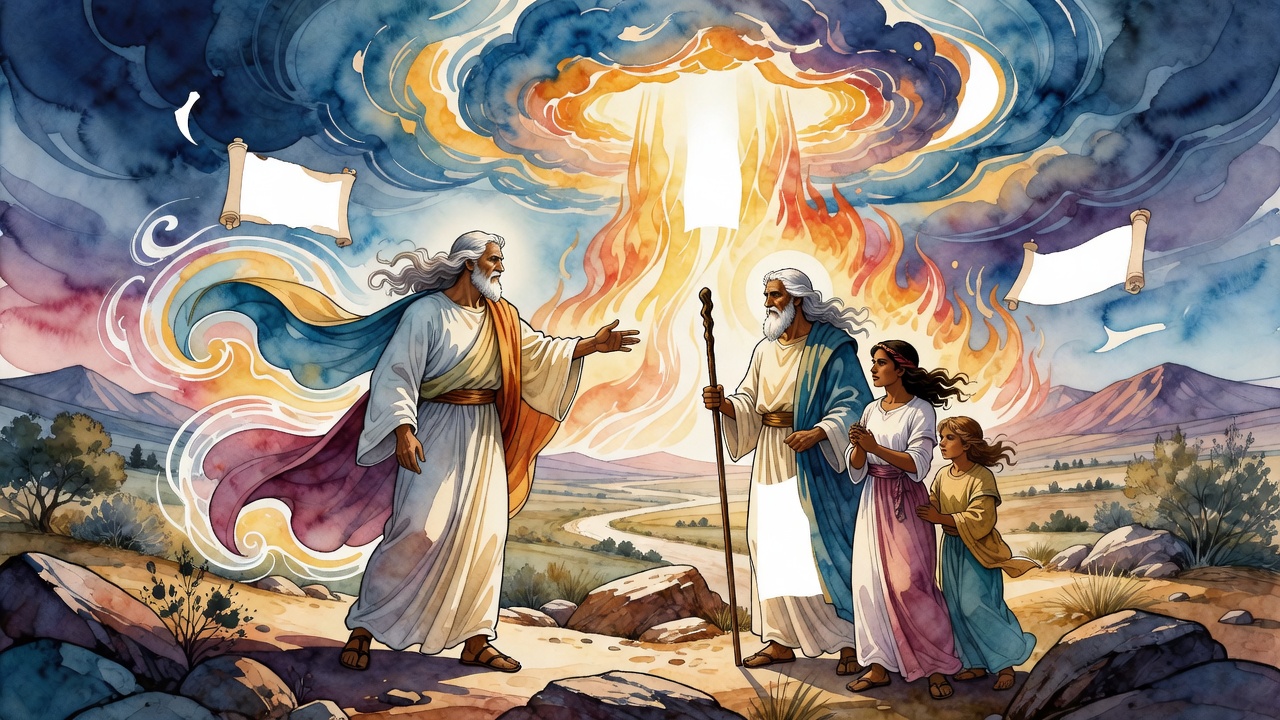
Moses stood in the wilderness dust and asked his father-in-law to throw his life into Israel's future.
"Come with us," he said. "We are marching toward a promise large enough to remake maps."
Chovav looked back toward Midian and shook his head.
Chovav Named What He Would Not Leave
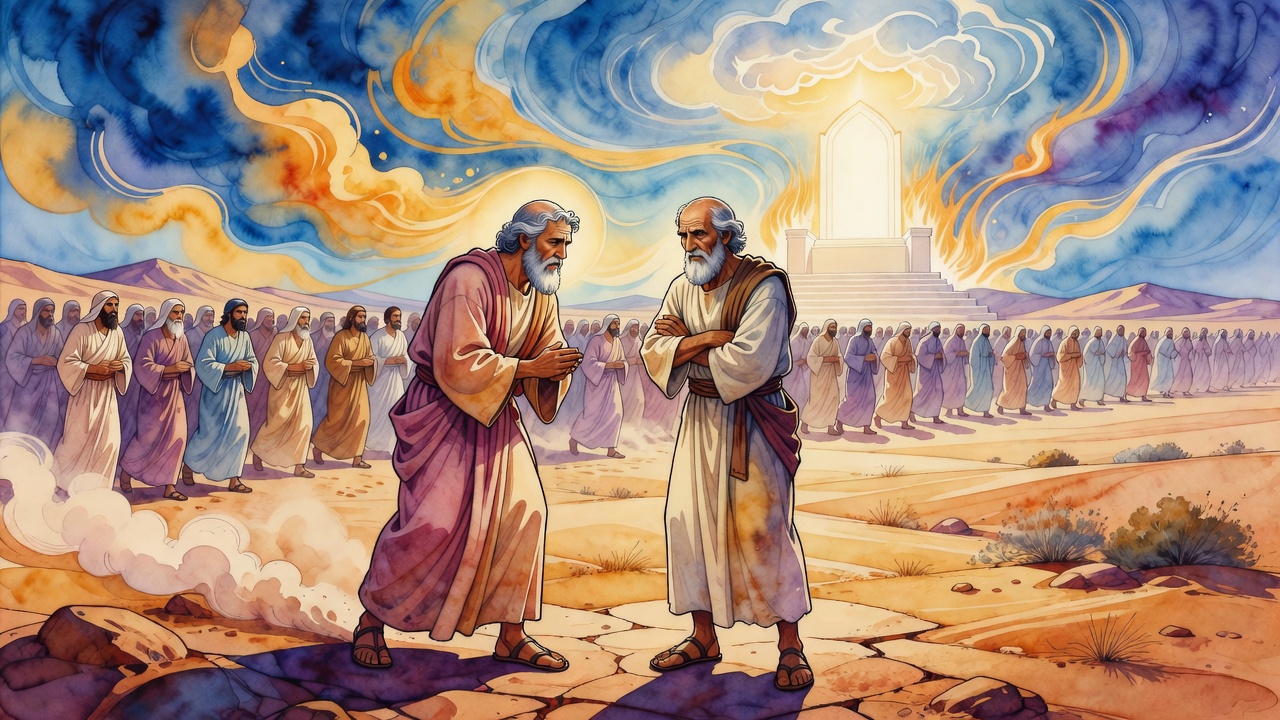
"I will not go," Chovav said. "I have land. I have possessions. I have kindred. I was a priest in my place. If I will not go because of my land, I will go because of my possessions. If not for those, I will go because of my family."
Some men have land without wealth. Some have wealth without family. Chovav had all three, and an altar that answered to his name. A complete life does not pack easily.
Moses had not invited a tourist. He had invited a man who knew water and roads, a relative whose honor would strengthen the camp. Chovav heard the honor and still heard home louder. He was not fleeing danger. He was choosing a finished world over an unfinished nation.
Priest of Midian. Father of a household. Owner of ground. Against that inventory Moses could offer manna, cloud, and a mountain still smoking in memory. Chovav chose what he could touch without a miracle.
He turned the camels. The camp moved on without him. Even Moses could not recruit every good man into the march. Some goodness is local. It stays and tends its own altar.
The People Wept for Fish
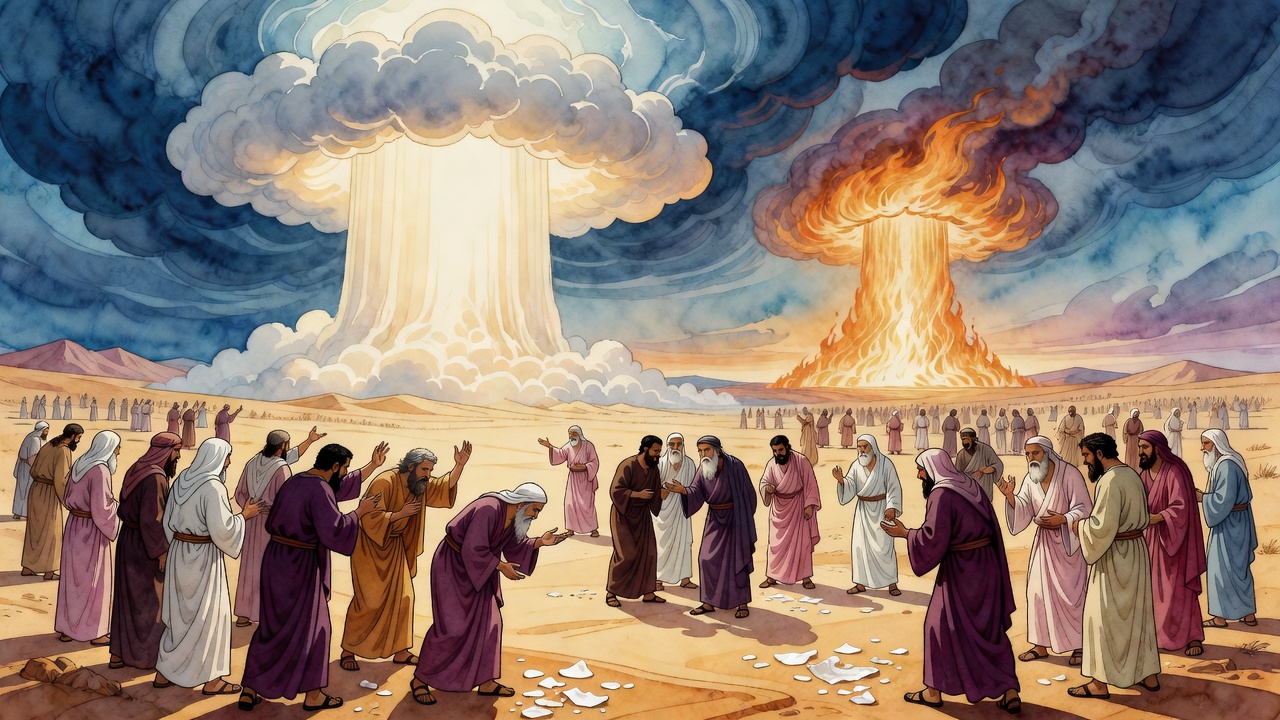
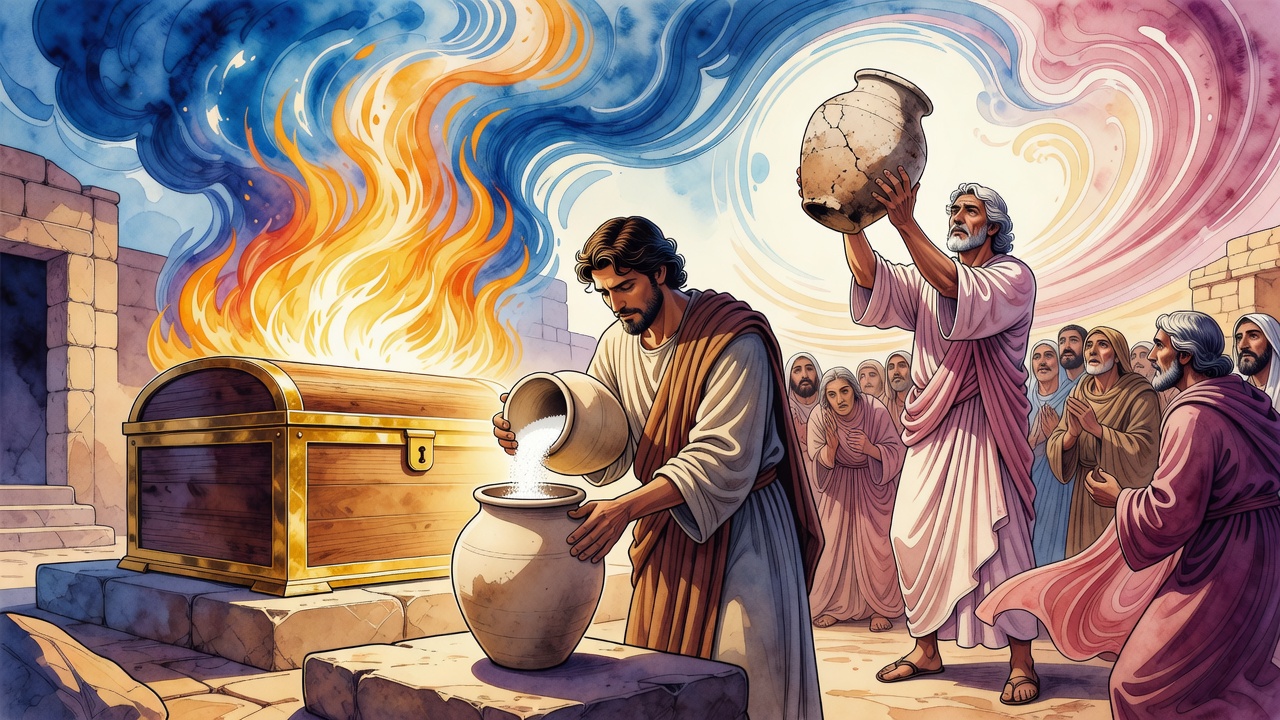
Later the people wept for Egypt. "We remember the fish that we would eat in Egypt free" (Numbers 11:5).
Free? Egypt had not even given straw for bricks (Exodus 5:18). It had not handed out fish as charity. What they missed was not a market with good prices. In the house of bondage they had not been bound to the mitzvot (מצוות), the commandments that now structured every dawn. The fish tasted of a calendar with no Sinai clock on it. Cucumbers, melons, leeks, onions, garlic. A menu of days no law had touched.
They stood in a camp fed from heaven and cried for a kitchen they had not owned. Slavery of the body can still feel like liberty of the calendar when no commandment rings the morning.
Manna Would Not Taste of Onions
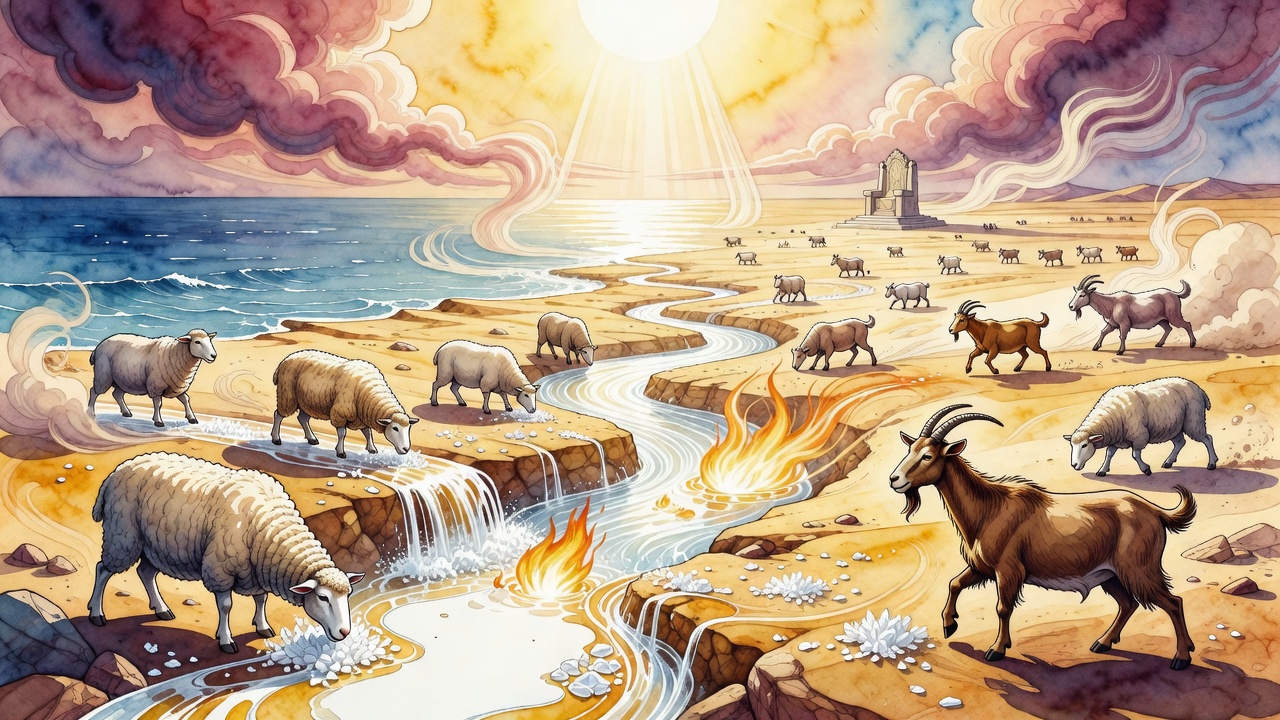
A man in the camp shut his eyes and asked the manna for onion. The manna stayed manna. He asked for melon. It would not come. He named leek, cucumber, garlic. Each time the stuff on his tongue stayed what it was.
The manna could become any other taste the mouth imagined. It would not lick Egypt's free onions out of the air. They could invent a hundred sacred flavors and still wake to coriander seed on the ground, morning and evening, and nothing else for the eye to see.
Heaven would feed them wonders. Heaven would not counterfeit those five thin flavors. The gift refused to impersonate the lie.
The Camels Shrank on the Horizon
Moses watched Chovav's caravan shrink until the last camel was a speck. The cloud still led. The ark still traveled. A skilled Midianite priest would have been useful among the tents. Usefulness is not destiny. Chovav's altar at home still needed him.
When the complaints about fish rose, Moses heard a different refusal. Not home's completeness, but Egypt's sales pitch. He stood between a relative who had enough and a nation that misremembered slavery as a free market.
On nights when the camp smelled of coriander seed and oil, someone still whispered melons. Completeness stayed in Midian. Complaint pitched its tent in Israel. Moses carried both losses like jars that never quite balanced.
He watched until the speck was gone. Later he stood in a camp that wept for onion. The manna still fell. It would not taste like Egypt.
← All myths