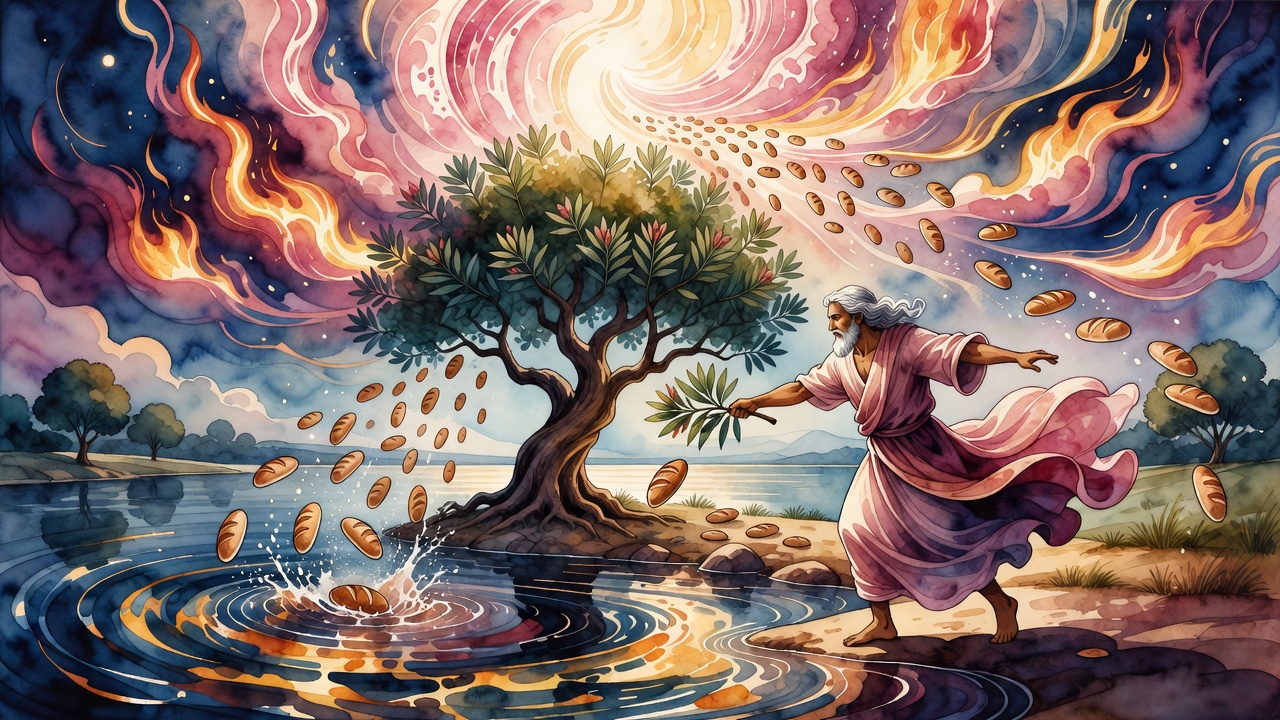
The Manna That Melted Into Streams of the Sea
By the fourth hour the sand ran wet toward the Great Sea. Clean beasts drank what no one had gathered, and later the camp ate those beasts.
Table of Contents
 Click for full size
The Sun at the Fourth Hour
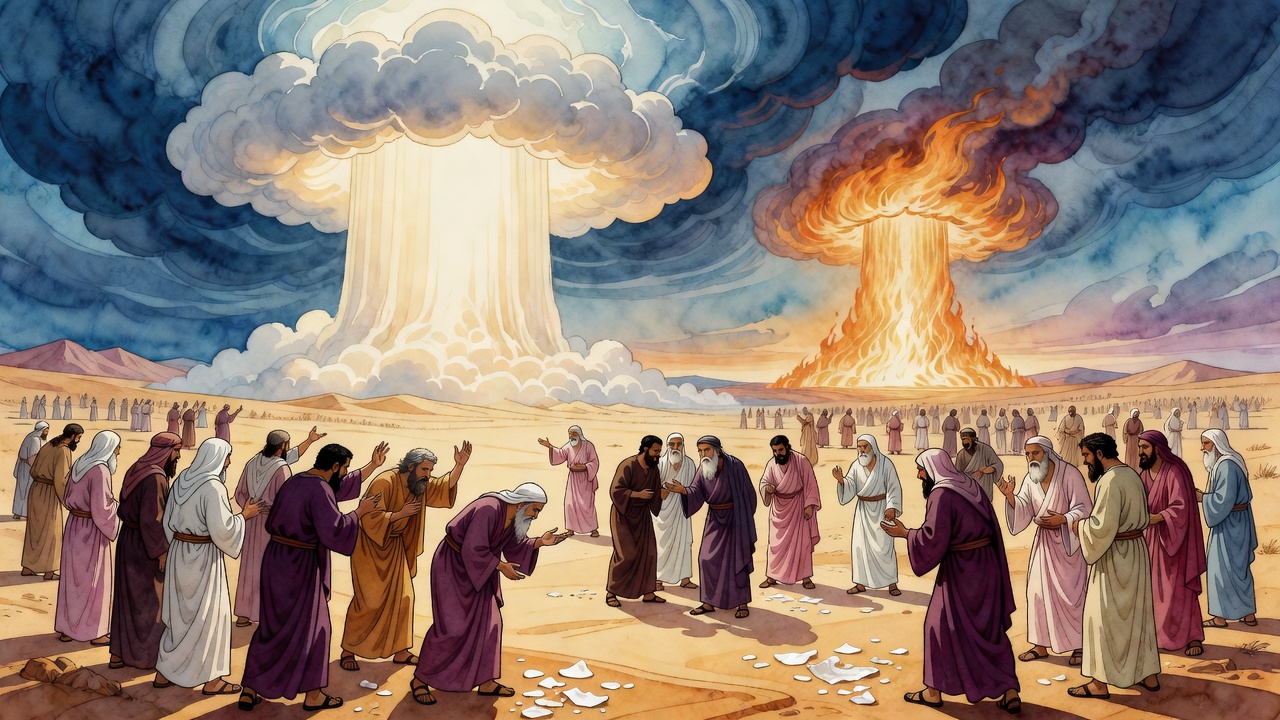
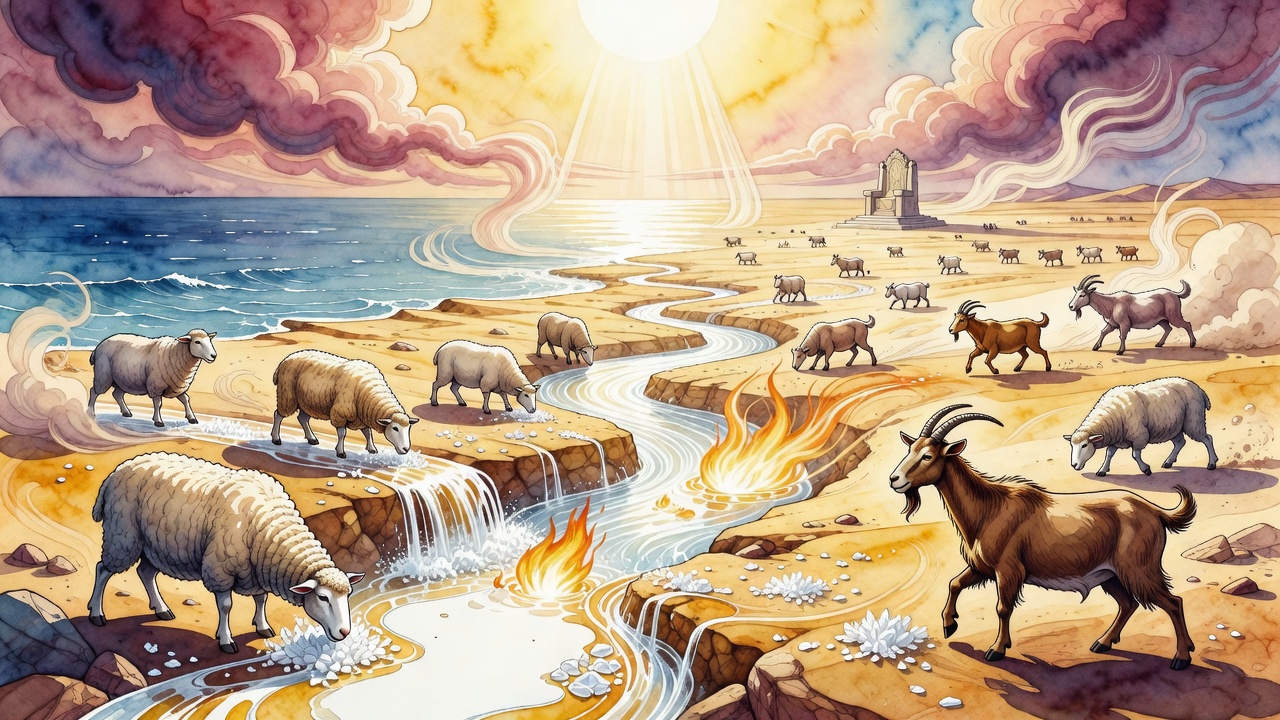
By the fourth hour the sun had teeth. The manna left on the sand did not vanish. It liquefied, ran in thin bright streams, and began a long run toward the Great Sea.
Each morning every household took what it needed. The ones who slept late found the ground turning wet underfoot. Streams formed where frost had been. The melt did not puddle and die. It ran, and the wilderness became a temporary river carrying sweetness toward the sea.
Children ran beside the wet tracks and laughed until their mothers called them back. Elders shaded their eyes and argued whether the melt was mercy or rebuke. Late sleepers felt the heat on their necks and knew the hour had already chosen for them. The streams did not wait. They ran because the sun had risen, and the sun does not negotiate with regret.
Streams Toward the Great Sea
The manna that missed Israel's baskets did not fall out of the story. It entered the bodies of kosher beasts. Clean wild animals and cattle came to drink. Their flanks filled. Later the sons of Israel hunted those same animals and ate them. What no one gathered at dawn still fed the camp by another road.
Heaven's bread refused to become waste. The blessing looked like loss for an hour. Then it looked like hunting. The people who watched the streams run might have cursed their own delay. The beasts that drank those streams carried the delay forward as fat. Israel ate its own missed morning and did not know the taste had already been holy once.
At the water's edge a stag lowered its head. Foam at its mouth was sweet. Miles away the Great Sea took the last of the runoff without comment. The gift kept changing shapes. Frost. Liquid. Animal blood. Cooked meat. Each shape still answered to the same Sender.
The Beasts That Drank Sweetness
A hunter who had slept past the gathering hour tracked a deer whose sides were already thick. He did not know he was following bread. He only knew the animal had drunk well, and the camp still needed meat.
He raised the knife. The manna was still traveling. It had not finished feeding the people it was sent for.
Children who had laughed at the wet tracks that morning ate at dusk without knowing the circle had closed. Late sleepers chewed and were quiet. Nothing of the gift had been thrown away. The Holy One had routed it through creation, feeding animals on the way, and brought it back in a form the latecomers could still eat.
Egypt Emptied Like a Pool
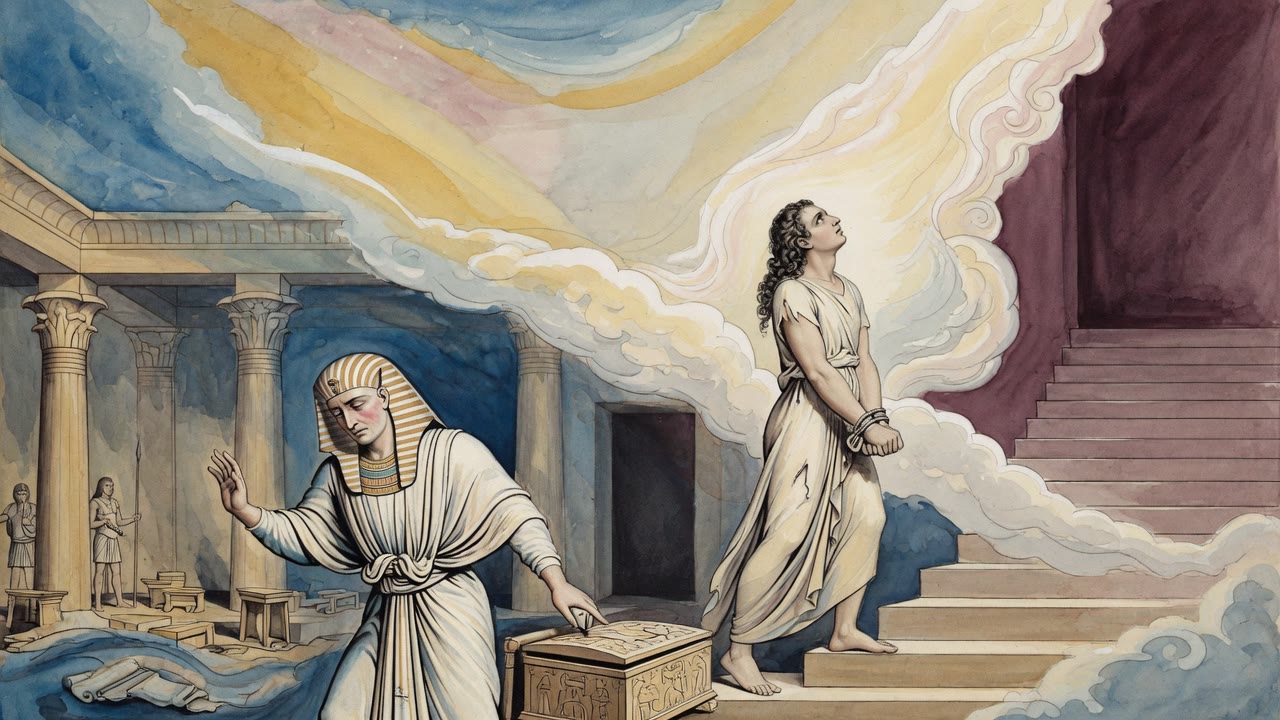
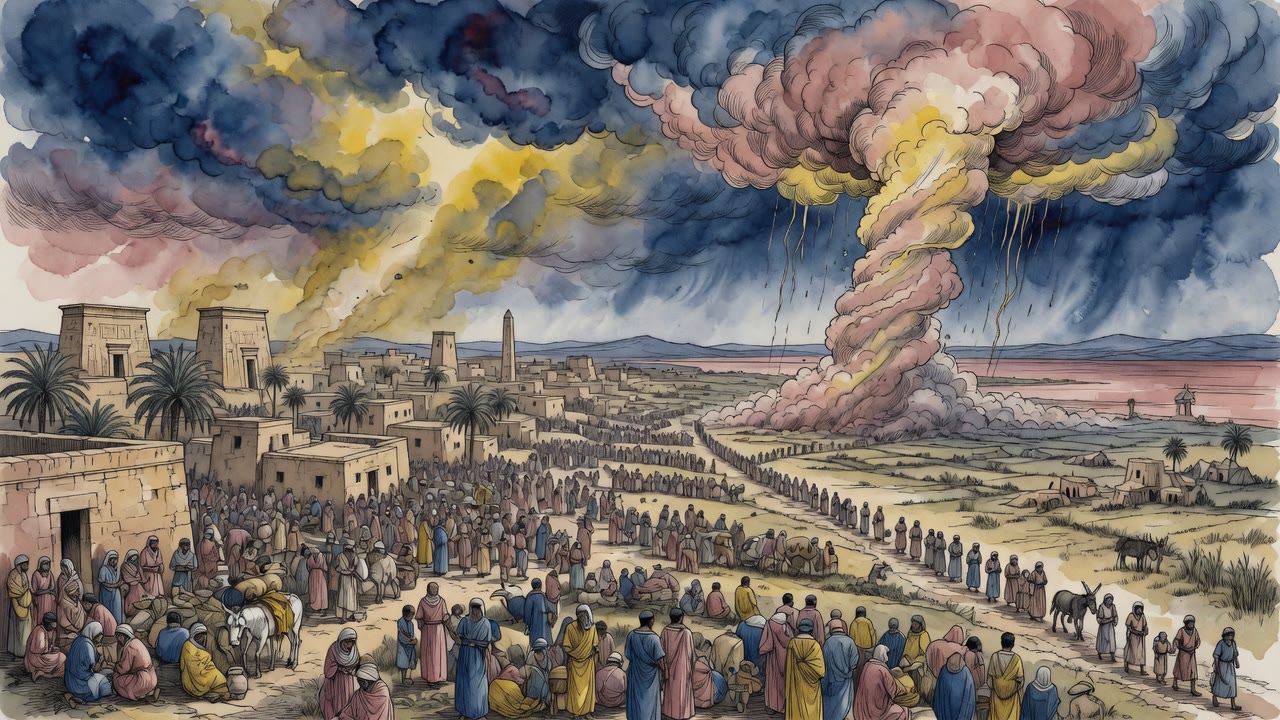
The same going-out holds another picture of total transfer. When Israel left Egypt, the Egyptians lent silver and gold, and the sages refuse to hear a polite loan. It happened against someone's will.
Some said against the will of the Egyptians, who emptied their houses while the women of Israel stayed home and divided spoil. A woman in Goshen sorted gold onto a cloth until the pile would not sit still. Bracelets slid. A cup rolled. She kept stacking because the house next door was already empty, and the night of leaving would not wait for a tidy count.
Some said against the will of Israel themselves, who groaned under the sheer weight of carrying so much wealth out of a land they were fleeing. A man bent under silver until his knees shook. He had asked for freedom. He had not asked to be a pack animal on the road out.
Rabbi Assi said they left Egypt like a deep pool drained of every last fish. Reish Lakish said like a trap emptied of all its bait. Either way the country that had swallowed Israel's labor stood hollow. Treasure flowed the opposite direction of the old whip. The land of bricks became a dry net.
Meat That Had Been Bread
Manna streams and Egyptian gold are not the same miracle, yet they share a motion. What looked fixed in place moves. What looked owned changes hands. What looked wasted finds another belly. In the wilderness the gift runs through animals. In Egypt the wages of centuries walk out in jewelry and cloth.
God does not leave the story half-paid. The pool without fish and the manna that becomes meat both insist that the accounting is larger than a single morning's work. Israel is not asked to invent the circle. Israel is asked to notice it when the sun rises and when the night of leaving finally comes.
A woman sorting gold in Goshen and a hunter tracking a fattened deer in the desert receive what oppression or delay seemed to cancel. Both hold proof that Heaven's books stay open longer than human panic allows.
A person who misses the dawn may still eat at dusk. A nation that leaves empty-handed in fear may leave heavy with silver by decree. The streams that ran to the Great Sea did not mock the late gatherers. They completed a sentence Heaven had already begun. The drained pool of Egypt did not mock the masters. It closed a debt written in brick and blood.
At the fourth hour the sand still shone. Somewhere a clean deer lowered its head to drink. Somewhere later a knife rose. The manna kept moving. It had not finished.
← All myths