Israel Got Manna From Heaven and Complained Anyway
The bread came down with the dew in the exact right amount and rotted if anyone hoarded it. It bought them free mornings for forty years.
Table of Contents
The bread was on the ground before anyone woke up. Bread out of heaven, lying in the dirt, waiting.
 Click for full size
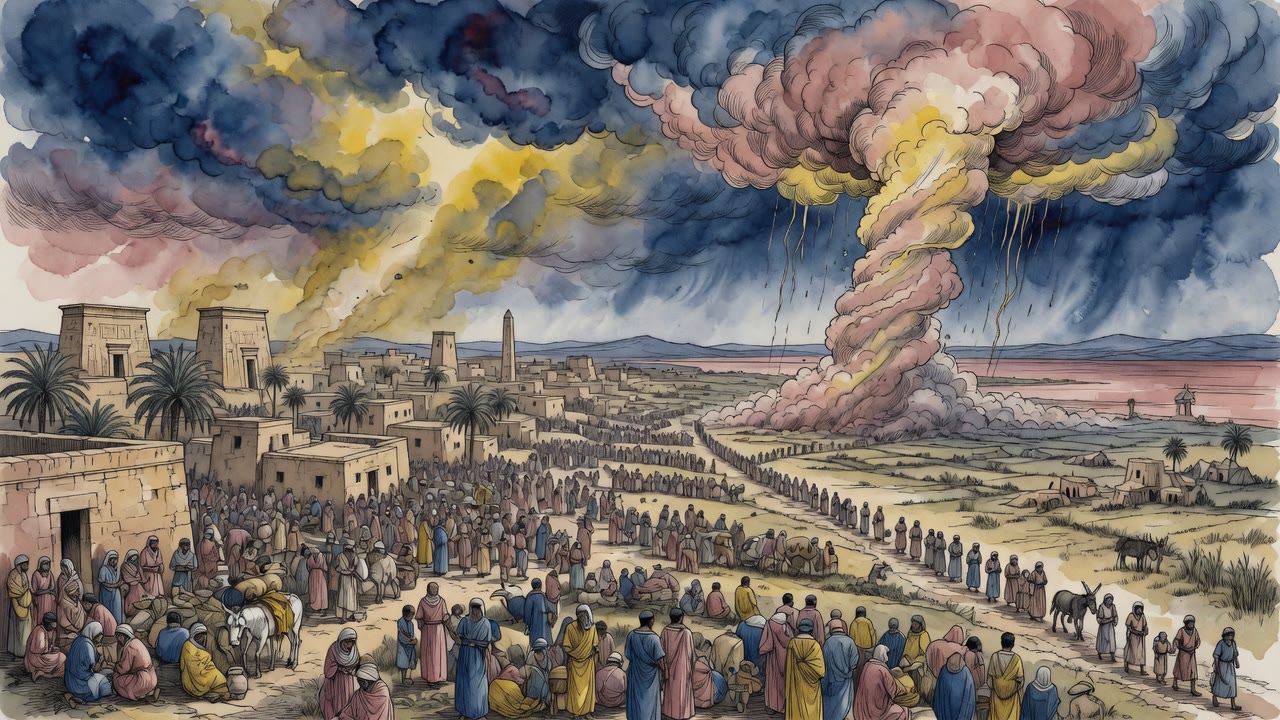
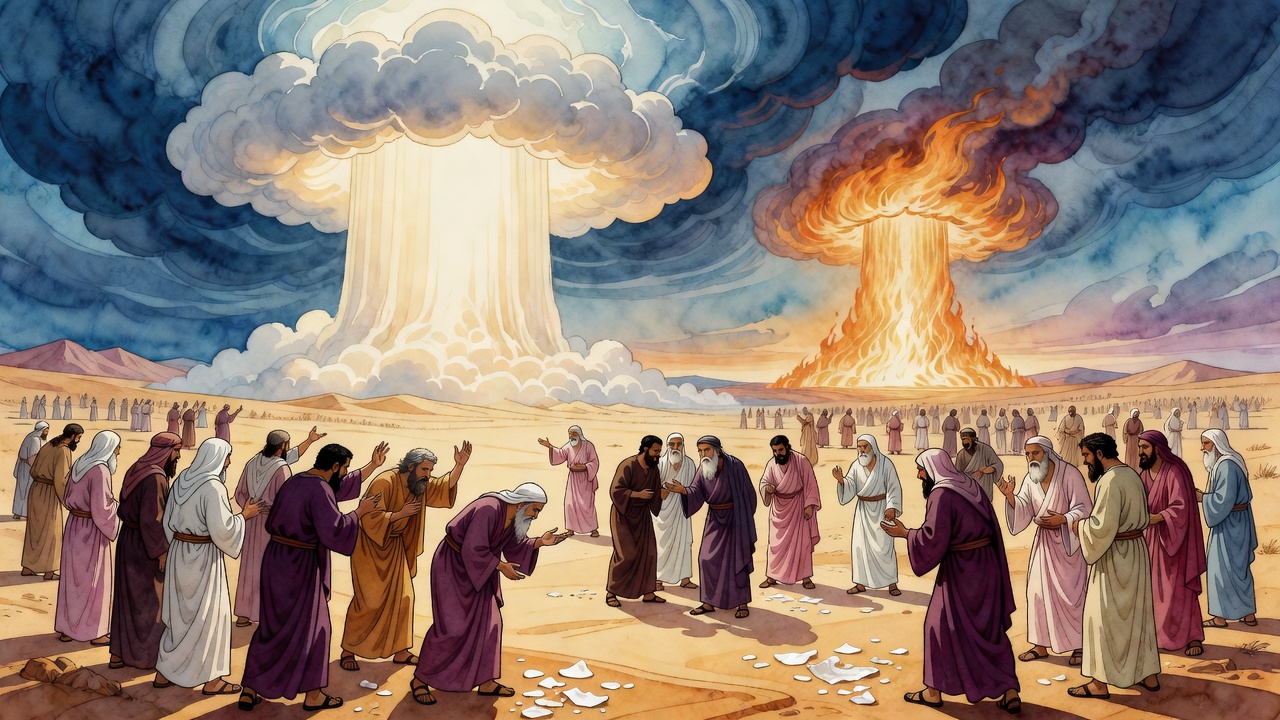
It came down with the dew, sweet as wafers made with honey, and it came in exactly the right amount, so the man who gathered a great deal had nothing left over and the man who gathered almost nothing had enough. Keep it overnight and it bred worms and stank. There was no way to get ahead of a neighbor. Nothing to plow, nothing to grind, nothing to bake, and no reason to worry about tomorrow.
Free hours. Every day. For forty years.
They Had Already Watched the Sea Close
Weeks earlier they had stood on a beach and watched an army drown.
The Egyptians in the water could see the far shore, and that was part of what was done to them. They went under looking at the slaves they had owned standing dry on the other side, and what was happening back home in Egypt reached them before the water finished.
Then the bodies came up on the sand and nobody wanted them. The sea shoved them at the land. "Take your children." The land shoved back, still sore from the day it drank Abel's blood. "Keep the ones you killed." The sea was afraid God would demand them back on the day of judgment. The earth was afraid of a second curse. They argued over the corpses until God swore an oath that the ground would not be punished for taking them in, and only then did the earth open and let them under.
Pharaoh had admitted at the end that the sentence was just. The burial was what that admission bought.
What They Did With the Free Mornings
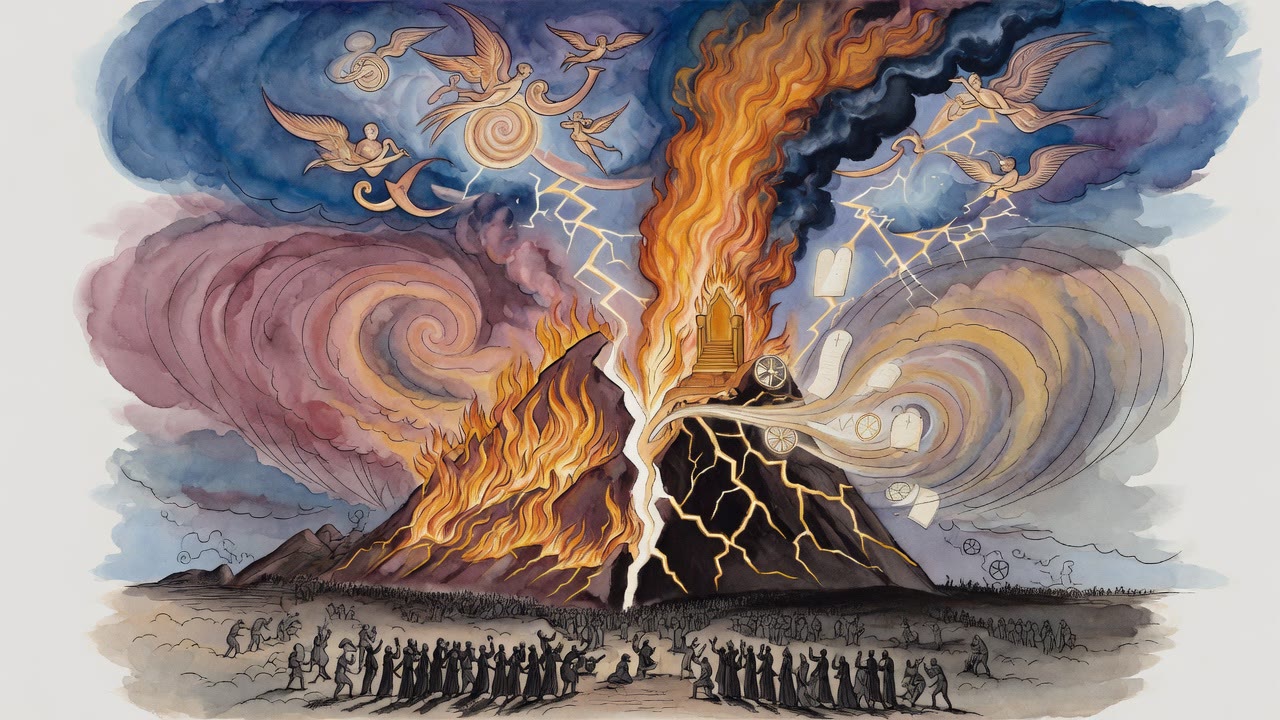
Sinai was two months behind them, the law was new, and every hour of the day was theirs.
They did not study it. The rabbis' verdict on that generation is not gentle: with nothing left to do, they slackened, and the slackening was answered fast.
The water ran out.
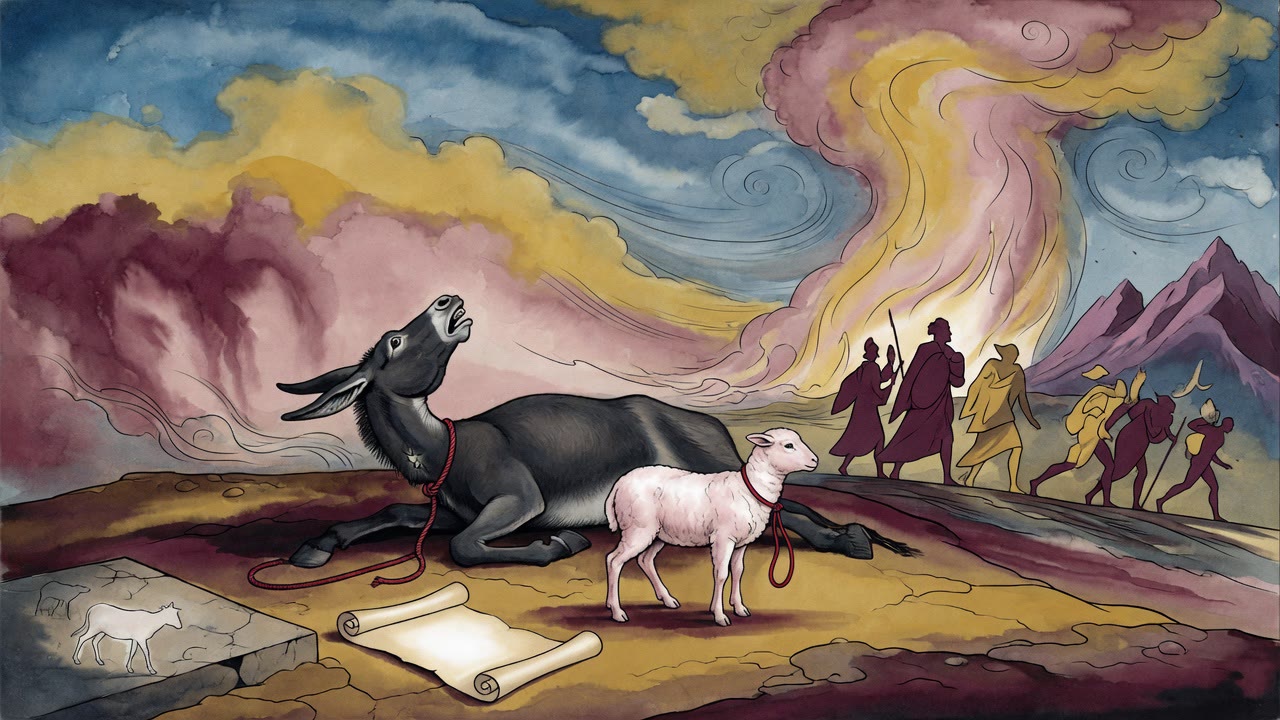
Not the bitter pool at Marah, which Moses had sweetened with a piece of wood. Real thirst this time, in real quantity, with children and livestock in it. They complained about the water, then they complained about the cattle, and then they turned on him. "Why did you bring us up out of Egypt, to kill us and our children and our cattle with thirst?" (Exodus 17:3).
Rabbi Yehoshua heard the shape of that sentence and winced. The house has collapsed and they are grieving the windows. Others took their side: a man on the road without his animal is a man who does not arrive, so the cattle in the complaint were their own lives said a second time.
The Staff of Punishment
Moses did not answer them. He went to God and asked a plain question. "Master of the universe, tell me whether they are going to kill me."
The answer had nothing to do with his safety. "Pass before the people."
Rabbi Meir turned the verb over in his hand. Avor, to pass, is also to pass over, to let a thing go by. Be like Me. I repay evil with good, so you will repay evil with good. "Who is a God like You, who pardons iniquity and passes over transgression" (Micah 7:18). Walk out in front of the crowd that just accused you of marching them into the desert to die.
Then take the staff.
Moses balked at that part. It was the staff of the plagues. Every time it had come out of his hand something in Egypt had died, blood in the Nile, hail on the crops, the firstborn in their beds. He was being sent into a thirsty crowd carrying an instrument of punishment.
"My nature is not the nature of flesh and blood," God told him. "A man cuts with a chisel and heals with a bandage. What I strike with, I heal with."
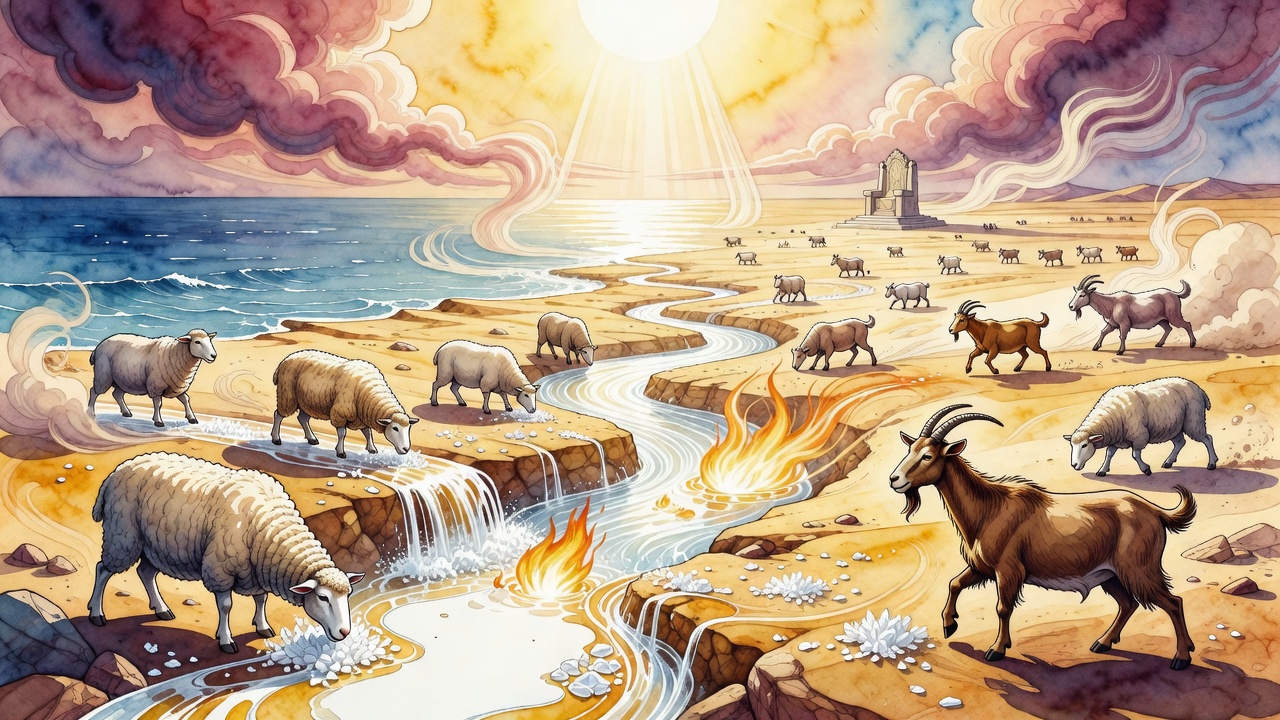
He struck the rock and the water came out in enough quantity for every person and every animal, and they named the place Testing and Quarreling and drank from it (Exodus 17:7).
The Clouds Went Out With Aaron
The clouds that had covered them since Egypt were tied to one man, and when Aaron died on the mountain the clouds lifted.
Amalek had been waiting for exactly that. The attack came on a people who had lost their cover and their peacemaker in the same week, and the nerve went out of them. They turned around. They went back down the road they had come up, eight stations of it, aimed at Egypt.
The Levites came after them.
What happened at Moserah was not an argument. It was Israel fighting Israel over whether to keep going, and it cost eight tribal divisions. Five of them were Benjamin. One each from Simeon, Gad, and Asher. The Levites lost a division outright and three more so badly that the numbers did not recover until David was king.
The Levites won. The survivors stopped and looked at the price of the retreat and did the arithmetic, and the answer they came to was that they had let Aaron go into the ground without mourning him properly. So they held the funeral late, at Moserah, for a man who had died somewhere else. That is why the place carries his death.
Mine, and I Am His
The bond held. It held the way a fraying rope holds, which is to say it held and everyone could hear it working.
"My beloved is mine, and I am his" (Song of Songs 2:16). He is God for me and I am a nation for Him. He is a shepherd who does not sleep, and we are the flock that keeps wandering off in front of him. He struck Egypt on our account, and we took their god by the horns, tied it to our bedposts for four days, and killed it in our doorways where they could watch.
The manna kept coming down anyway, on people who had proved over and over what they would not do with the time it bought them. That was the arrangement. Nobody inside it was pretending otherwise.
The morning after Moserah, the dew lifted and the bread was lying there again, in exactly the right amount, for everyone still alive to go out and gather.
← All myths