5 min read

Abraham's Table Paid Israel in the Wilderness

Abraham ran with curds, milk, and a calf for three travelers, and every kindness returned as wells, manna, quail, and walking clouds.

Curated by Arthur · Told by Maggid ·
Table of Contents
  1. Water for Water, Shade for Clouds
  2. The Table That Can Kill
  3. Back to the First Tent Pegs
  4. Loyalty in Both Directions
  5. The Heat, the Tree, the Running

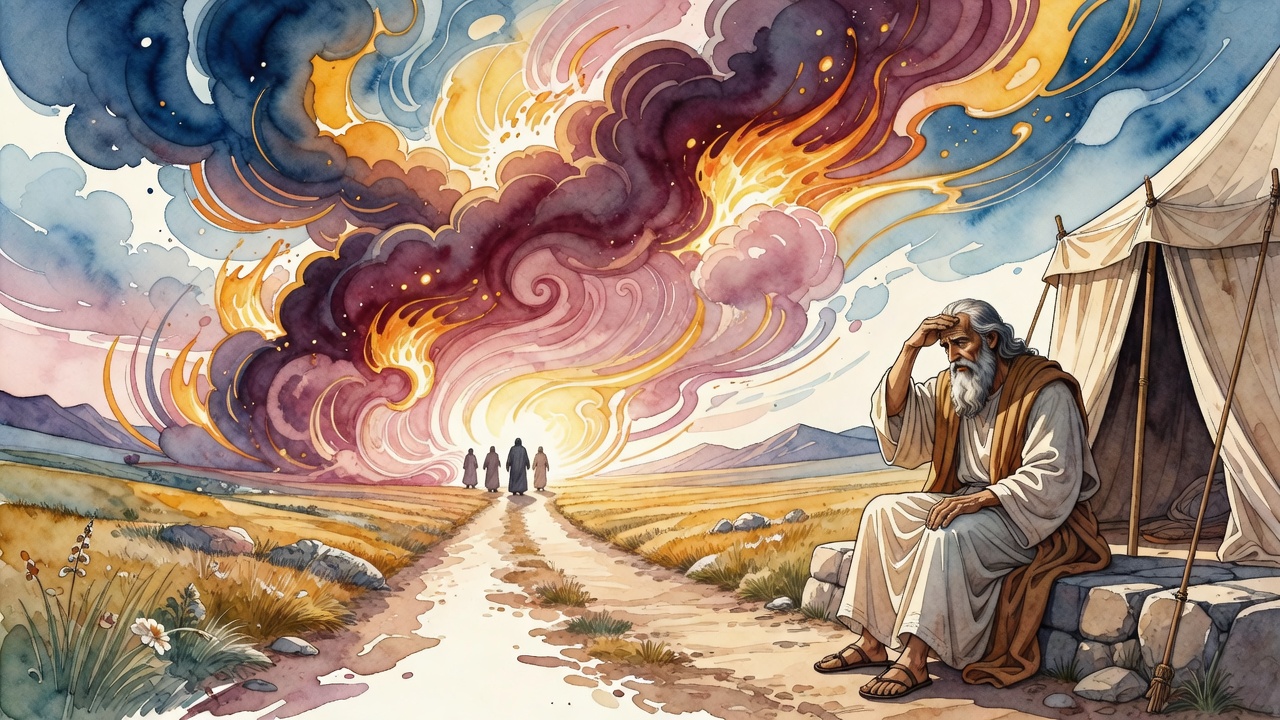
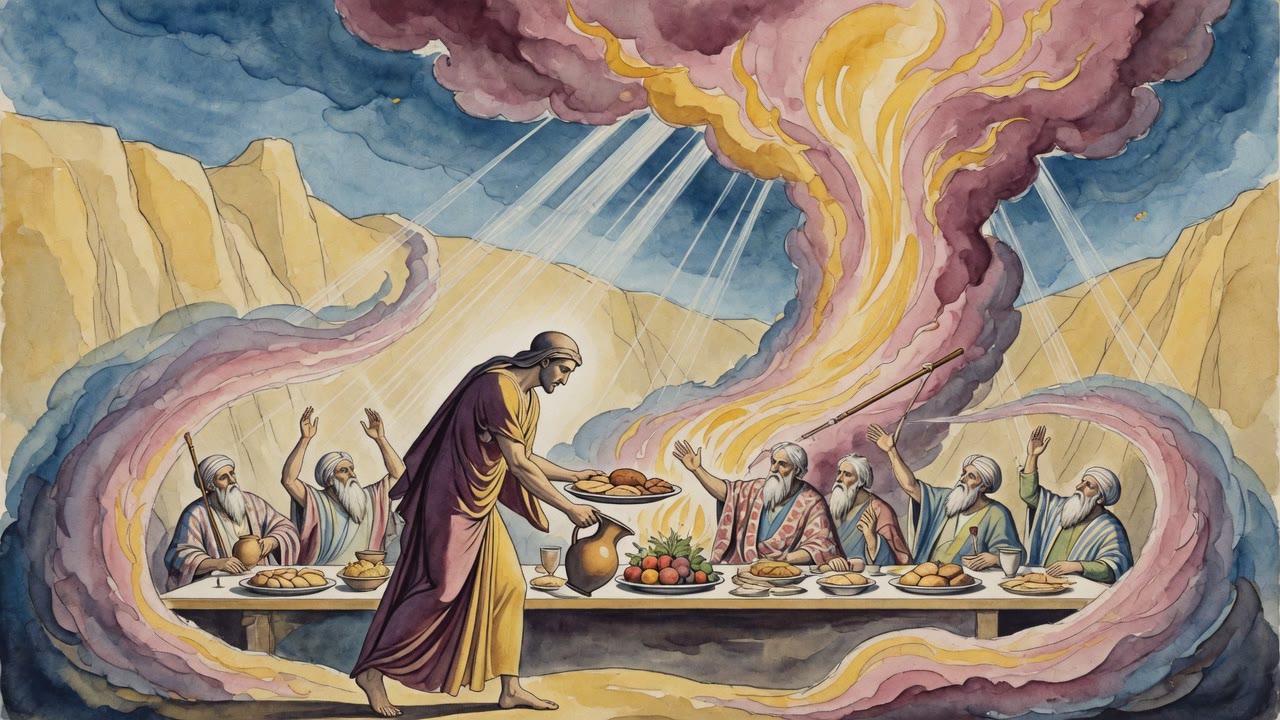
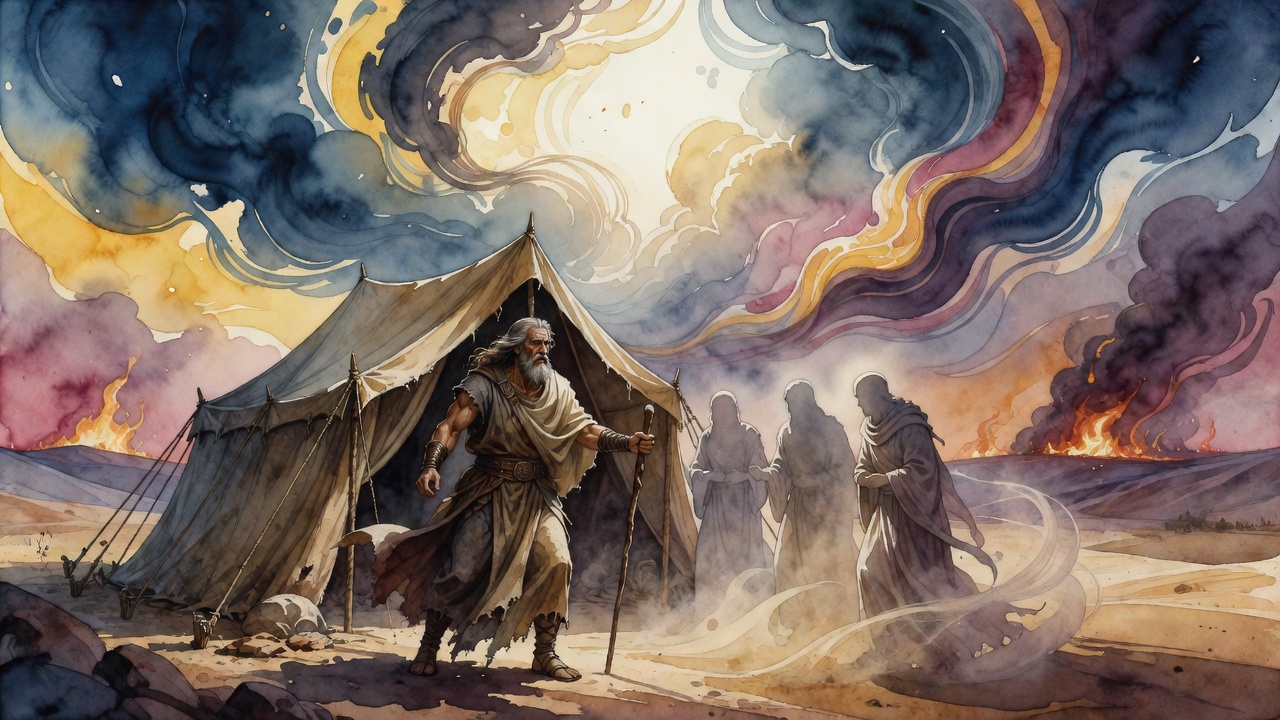
Abraham saw three figures on the heat-shimmer of the road and ran. He did not wait for them to reach the tent flap. Curds, milk, a tender calf: the table filled while he stood over the guests under the tree and watched them eat (Genesis 18:8). Angels, who do not need food, opened their mouths because the merit of that host pried them open.
Abraham's Table Paid Israel in the Wilderness Click for full size

The wilderness later received the bill paid in reverse.

Water for Water, Shade for Clouds

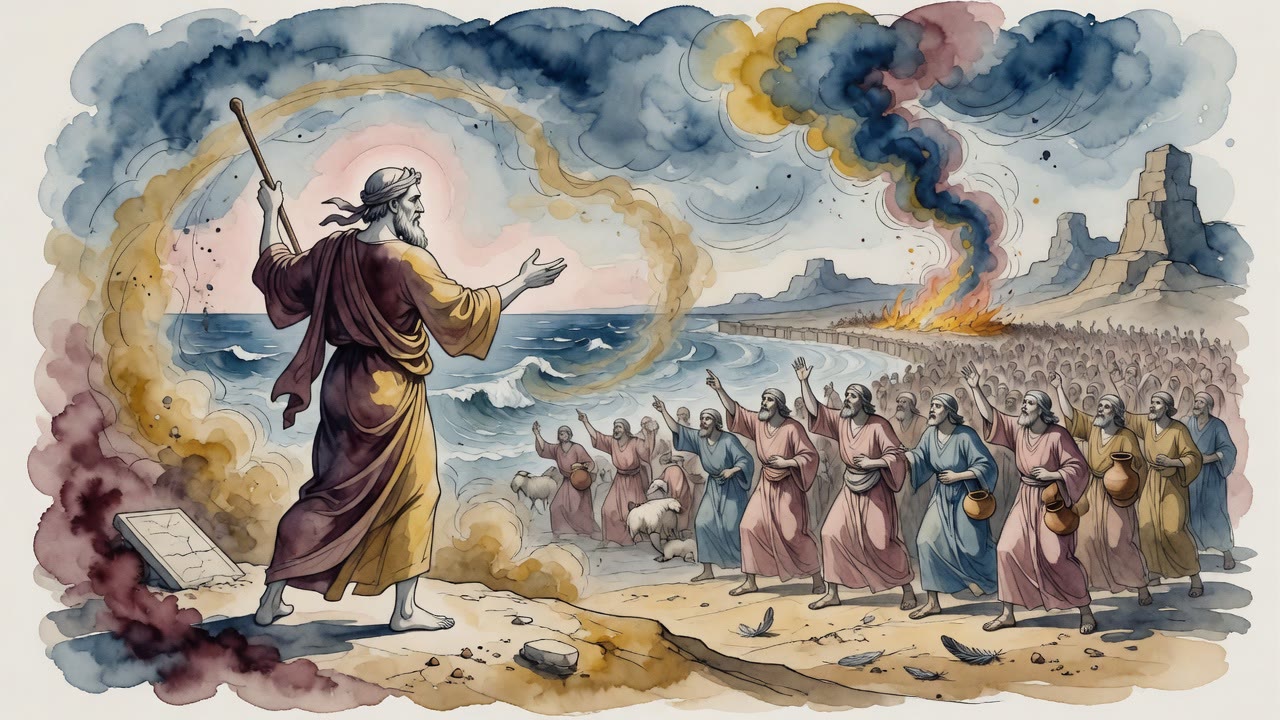
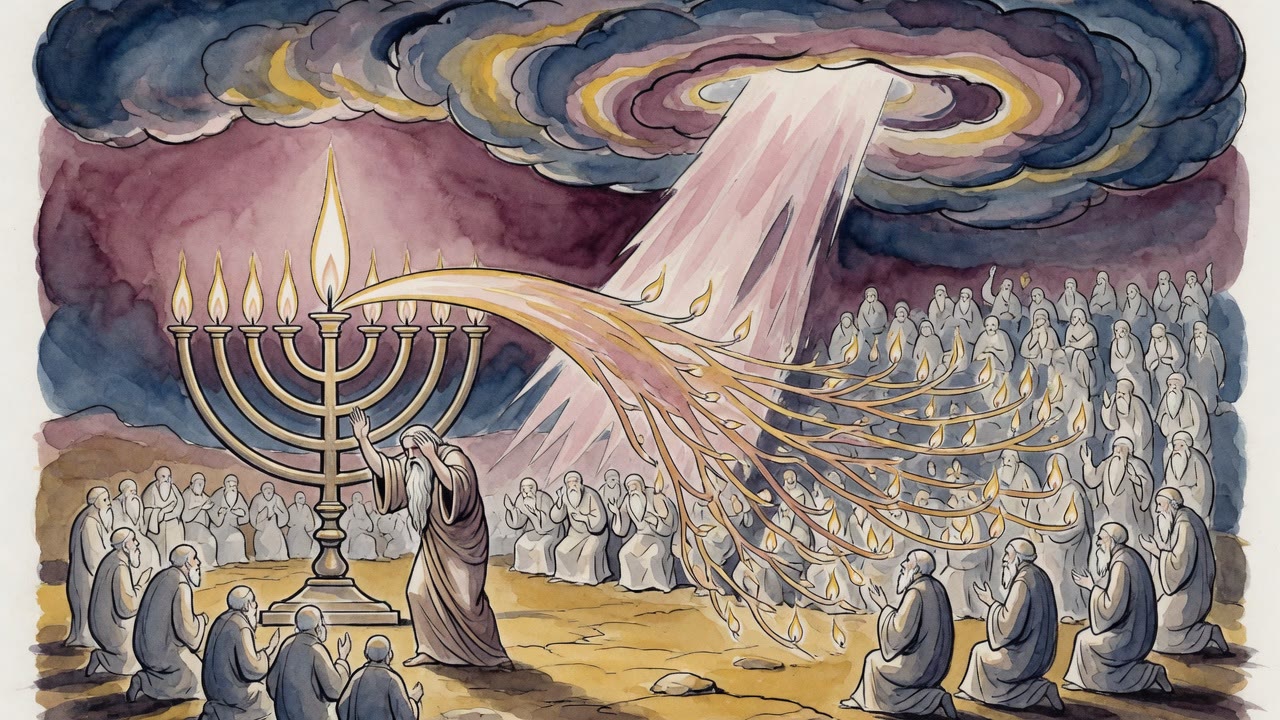
For the pitcher that washed angelic feet, Israel received the well that traveled forty years, rising when children sang, "Rise up, O well," by the merit of Abraham, Isaac, and Jacob. For the shade of his tree, the seven clouds of glory. For the loaf of bread, the manna that tasted of whatever a person craved. For the calf, the quail. For walking his guests on their way, the pillar of cloud that walked before Israel like a father carrying his son, like a nurse cradling an infant.

Heaven kept a ledger. Hospitality was not a mood. It was currency stored for a nation not yet born.

The Table That Can Kill

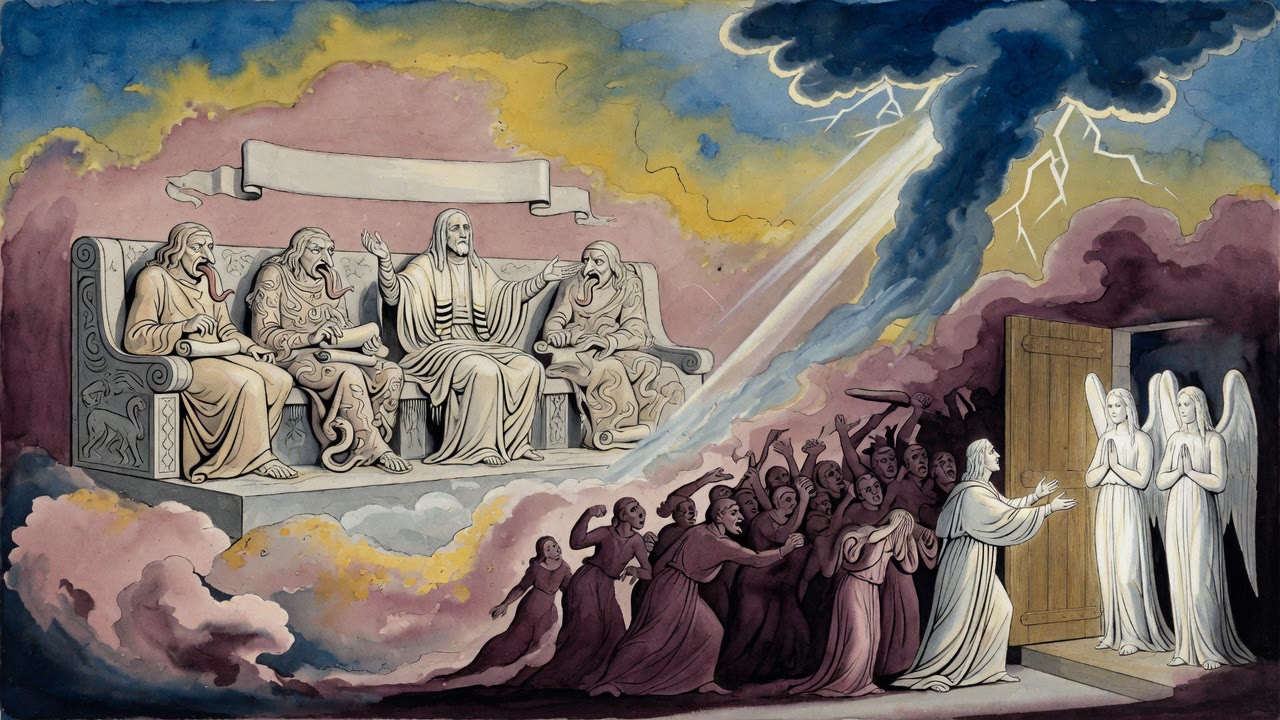
The same chapter that praises Abraham's table warns about the wrong one. Sit with people of learning, not with those careless about the law, because company at a meal seeps into who you become. King David said of himself that he had not sat with worthless men. Bread shared with the wrong mouths is no small thing. It killed the priests of Nob and let prophecy fall on a liar who fed wayfarers. A scholar who lowers himself to the table of the careless debases his learning and shortens his days.

Hospitality is sacred. So is the choice of whom you draw close.

Back to the First Tent Pegs

When Abraham came up from Egypt, he returned "to the place where his tent had been at the beginning" (Genesis 13:3). He did not shop for a finer inn. He went back to the spot that had once sheltered him. Rav drew a rule from that return: a person should not casually switch the lodging that once took him in. The host gave you a roof when you needed one. Abandoning him the moment something shinier appears is a betrayal dressed as practicality.

How bad must things get before a guest may leave? Rav says you stay until the host strikes you. Shmuel says you stay until he gathers your bags and flings them out. The rabbis even debate whether a slap from the host's wife counts the same, since the sting to dignity may match. Behind the hairsplitting sits a double warning: a difficult guest both shames his host and is shamed himself.

Loyalty in Both Directions

Abraham's life models both sides of the table. He runs toward strangers with meat and water. He returns to the old peg-holes rather than chasing status. Israel in the wilderness eats the long interest of that first meal, then learns, generation by generation, that the company around bread can either feed holiness or starve it.

The angels left the tree with full mouths. The nation later walked under clouds that remembered a single afternoon of welcome. Between those two scenes stands a simple pressure: open the door carefully, feed well, and do not forget the first roof that kept the rain off your head.

The Heat, the Tree, the Running

The day was the hottest kind of desert day, the kind that flattens speech. Abraham's body still ached from the covenant cut, yet he sat in the tent mouth watching the road. Three figures appeared. He ran. Sarah kneaded. The servant slaughtered. Dust stuck to sweat on a man who would not let strangers reach the shade without being met halfway.

Under the tree the angels ate, and the eating itself was a miracle of manners. Heaven accepted a mortal table. That acceptance became policy for generations. When Israel later complained of wilderness boredom, the manna still arrived with the memory of a loaf Abraham had once set down. When the cloud lifted and settled, it moved with the courtesy of a host walking guests toward the next town.

Choose the table, the chapter insists. David refused the seat of worthless men. The priests of Nob died because bread was given in a poisoned political hour. Abraham's model is not open-door naivete. It is discernment that still runs. Feed the ones heaven sends. Return to the pegs that first held your tent. Let the wilderness collect interest on a single righteous afternoon until a nation can walk forty years without forgetting how it first learned to host.

Years later, when the manna first whitened the ground like frost, old men who still told stories of Haran and Canaan would have said the taste was familiar in a way no Egyptian grain had been. Not the flavor of a spice, but the flavor of a debt paid. The well that rose when children sang did not rise only for the children. It rose because angel feet had once been washed at a tent door and heaven had decided the washing would not go unanswered.

Abraham returned to Bethel's old peg-holes with Lot still beside him and Egypt still a memory of fear and wealth. He chose the first ground again. Israel in the wilderness would choose again and again between the table of learning and the table of complaint. The midrash stacks those choices until a simple meal under a tree becomes the hidden engine of forty years of public miracles.


← All myths
From the tradition

Sources

2 sources

The texts behind this telling. Some cards carry a translation of the source; others are our own retelling of it, and each card says which. Every card links out to the original.

Tanna Debei Eliyahu Rabbah 12:1Tanna DeBei Eliyahu Rabbah

Translation of the source text.Tanna debei Eliyahu Rabbah, Warsaw 1880 · Public Domain

Let a person guard these matters in his heart: that he not eat at the same table with the unlearned, and not increase his meals with them in any place, because the unlearned are lax about tithes and are suspected concerning the produce of the Sabbatical year. And the verse says (Jeremiah 23:28): "What has the straw to do with the grain?" And so David said (Psalms 26:4-5, 8-9): "I have not sat with worthless men, nor will I go in with hidden ones... the LORD, I love the dwelling of Your house... gather not my soul with sinners." And the Sages said: Every bird dwells with its own kind, and a person with one like himself. From here the Sages said: Let a person increase his meals with Torah scholars and not increase his meals with the unlearned, for after a while the unlearned one will speak slander about him. And let him learn from Abraham our father, who made a meal for the angels and they benefited from it, as it is said (Genesis 18:3, 8): "And he said, My lords... do not, I pray, pass away from your servant... and he took curds and milk and the calf which he had prepared and set it before them... and they ate." From here they said: Let a person first take permission and afterward run after the Torah scholars who come to him and do their will. Therefore it is said, "And he said, My lords, do not, I pray, pass away." And whoever says that the ministering angels did not eat with Abraham our father has said nothing; rather, by the merit of that righteous one and as a reward for the trouble he took on their behalf, the Holy One, blessed be He, opened their mouths and they ate. Therefore it is said, "And he stood over them under the tree, and they ate."

Blessed is the Omnipresent, blessed is He, who pays a good reward to those who fear Him in this world and in the world to come, for such is the way of acts of lovingkindness: a person eats their fruits in this world and the principal remains for him in the world to come. For as a reward for the pitcher of water with which the ministering angels washed their feet, the Holy One, blessed be He, gave Israel the well for forty years in the wilderness. How so? When Israel were doing the will of the Omnipresent, the well would hasten and rise early and go and well up in its place, in the place where Israel were dwelling; and when they were not doing the will of the Omnipresent, the well would delay an hour, two, three, four, five, until the young children and the Torah scholars would go out and say, "Rise up, O well, by the merit of Abraham, Isaac, and Jacob; rise up, O well, by the merit of Moses and Aaron and Miriam," and afterward the well would well up and go between the tribe of Judah and the tribe of Issachar, as it is said (Numbers 21:17): "Then Israel sang this song: Rise up, O well, sing to it." At that hour there was great joy for Israel, from their great to their small.

And as a reward for the shade of the tree under which Abraham our father seated the ministering angels, the Holy One, blessed be He, surrounded Israel with the seven clouds of glory to sit beneath them in the wilderness for forty years. And as a reward for the loaf of bread with which Abraham our father fed the ministering angels, the Holy One, blessed be He, gave Israel the manna in the wilderness for forty years. Blessed is the Omnipresent, blessed is He, before whom there is no favoritism: just as Abraham our father made for the ministering angels bread and meat and curds and milk, so was the manna, anyone who wished to taste in it the taste of bread tasted bread; the taste of meat tasted meat; the taste of honey tasted honey; the taste of curds and milk tasted them, as it is said (Numbers 11:8): "The people roamed and gathered it... and its taste was like the taste of cakes baked in oil." And as a reward for that calf which Abraham our father fed the ministering angels, the Holy One, blessed be He, gave Israel the quail in the wilderness twice: once before the giving of the Torah and once after the giving of the Torah. The quail was a great thing for Israel, for whose sake the Holy One, blessed be He, brought the thing about through him.

And as a reward that Abraham our father accompanied the ministering angels, the Holy One, blessed be He, accompanied his children in the wilderness for forty years, as it is said (Exodus 13:21): "And the LORD went before them by day in a pillar of cloud to lead them on the way." Were this great thing not written, it would be impossible to say it, as it were, like a father before his son, like a master who took a lantern before his servant, like a mother to an infant, as it is said (Numbers 11:12): "And Moses said to the LORD... that You should say to me, Carry it in your bosom, as a nurse carries the suckling."

We learned from Gideon, who made bread for the angel and the angel did not benefit from it, as it is said (Judges 6:19-21): "And Gideon came and prepared a kid of the goats and an ephah of unleavened cakes... and the angel of the LORD put forth the end of the staff that was in his hand and touched the meat and the unleavened cakes, and fire went up from the rock and consumed the meat and the unleavened cakes." We learned from Manoah, who made bread for the angel and the angel did not benefit from it, as it is said (Judges 13:16): "And the angel of the LORD said to Manoah, If you detain me, I will not eat of your bread."

Come and see how great is both the punishment and the merit of bread: it kills the great ones of Israel and it causes the Divine Presence to rest upon false prophets. And from where do we know that it kills the great ones of Israel? Go out and learn from the place of Nob, the city of priests, and Ahimelech son of Ahitub and Saul, who were greatly punished on account of David. And from where do we know that it causes the Divine Presence to rest upon false prophets? Go out and learn from that prophet who came to Jeroboam king of Israel, to whom the Holy One, blessed be He, had said, Do not benefit in this place, and if you benefit you will die. A false prophet came to him and said, I too am a prophet like you; although he lied to him, the holy spirit rested upon the false prophet on account of the bread he gave to wayfarers, as it is said (1 Kings 13:20): "And it came to pass as they sat at the table, that the word of the LORD came to the prophet who had brought him back."

From here they said: Whoever eats bread at the table with the unlearned and increases his meals with him, his words are not heeded, and in the end strife comes about through him, as it is said (Isaiah 9:20): "Manasseh devours Ephraim, and Ephraim Manasseh, and together they are against Judah." From this you have learned that whoever eats bread with the unlearned at the table, it is as if he served idols; and if he is a Torah scholar, he debases his Torah and profanes the Name of his Father in heaven and widows his wife and orphans his children and does not fill out his days, and ties an evil name to himself and to his children and to his children's children until the end of all generations.

Full source
Yalkut Shimoni on Torah 69:4Yalkut Shimoni on Torah

Translation of the source text.Torat Emet (Yalkut Shimoni) · CC-BY-NC

Rav Yehuda said in the name of Rav: From where do we learn that a person should not change his lodging? As it is said, "to the place where his tent had been at the beginning" (Genesis 13:3). Rabbi Yose bar Chanina says: From here, "and he went on his journeys" (Genesis 13:3). What is the difference between them? Between them there is the case of a chance, one-time lodging. Until what point may a person not change his lodging? Rav said: Up to a beating. And Shmuel said: Up to the point that the host slings his belongings onto his back to throw him out. Regarding a beating that the host himself gives, all agree he need not stay; and regarding the host slinging his belongings onto his back, they also do not disagree. Where they disagree is regarding a beating given by the host's wife: one master holds that since she is not paining him directly, what does it matter to him; and the other master holds that he will come to be driven away anyway. Why all this concern? Because the master said: An unworthy guest disgraces and is disgraced.

Full source