Abraham Fed Angels Who Never Needed Bread
The meat left the plate. The cups emptied without a wet lip. Abraham kept serving men who had no hunger, and the desert later ate from that hand.
Table of Contents
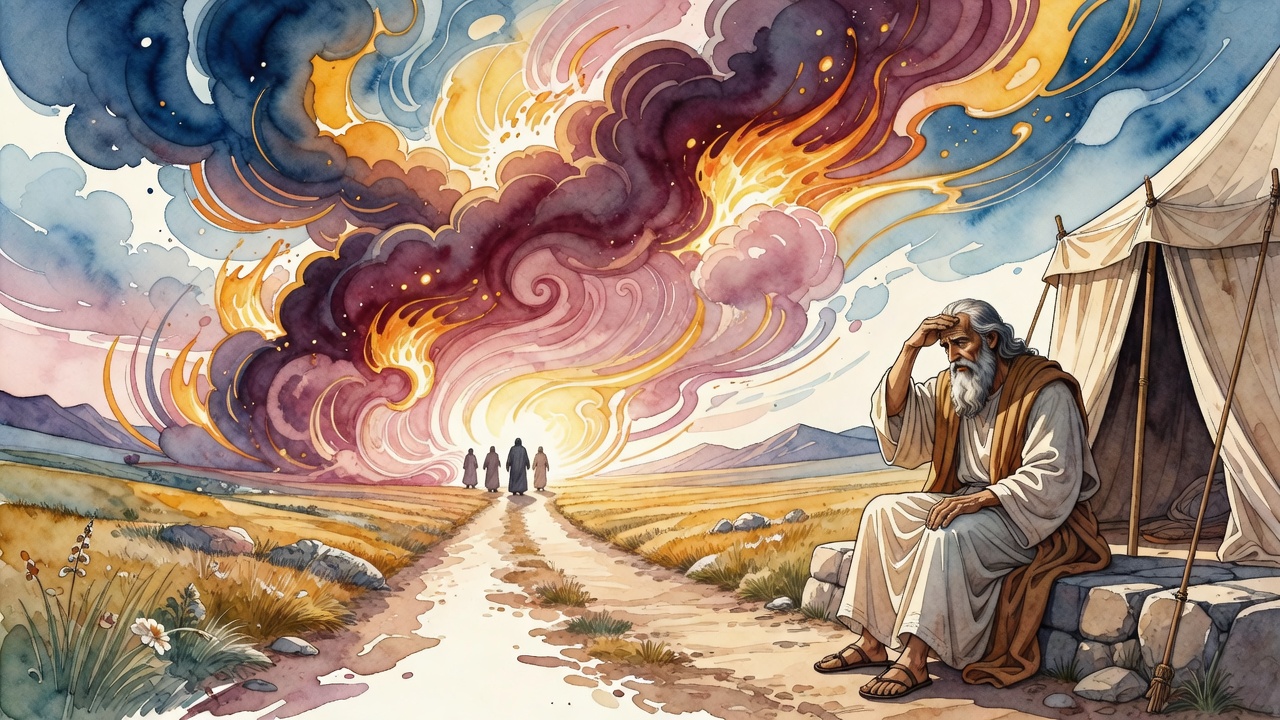
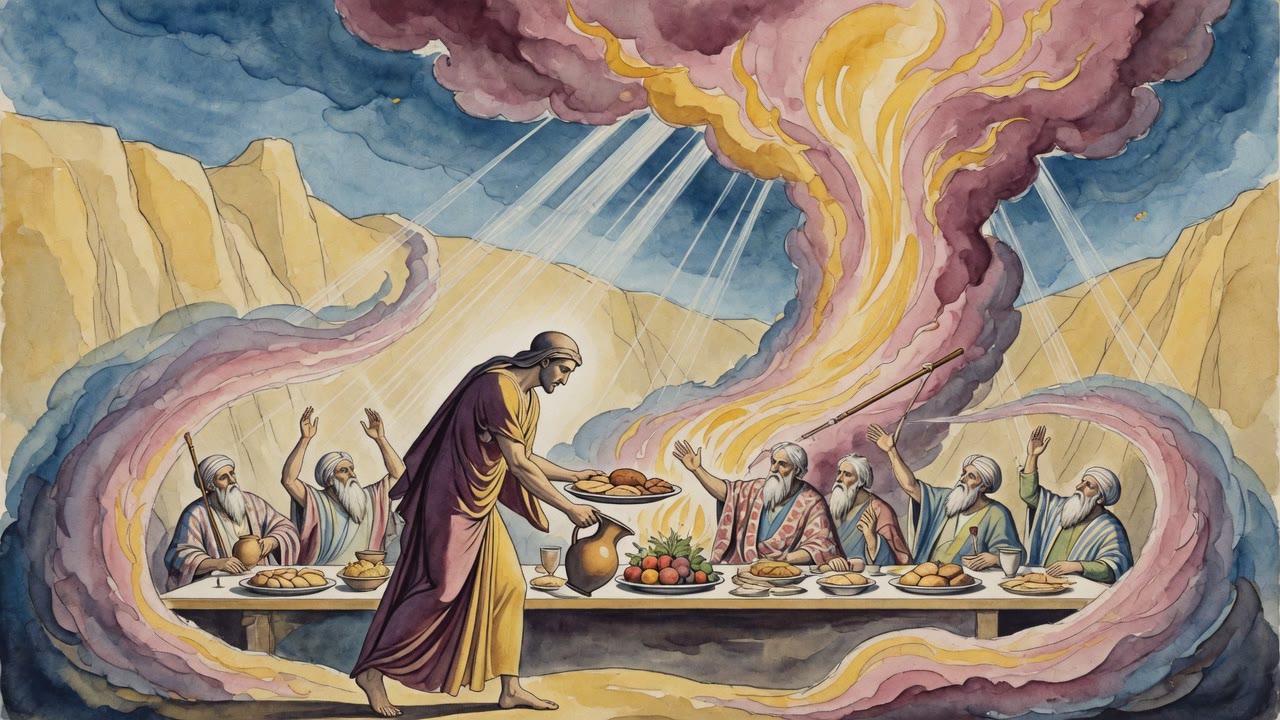
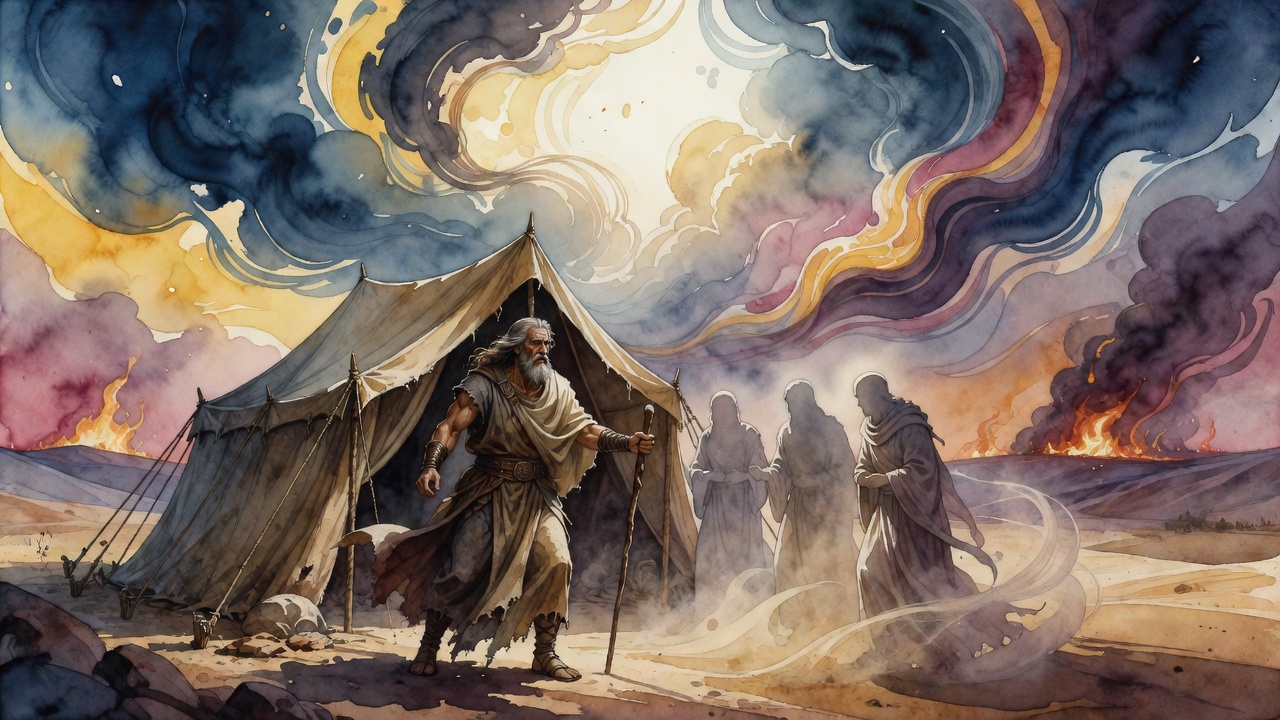
Abraham stood over the strangers beneath the tree and pressed the tray forward as if hunger itself might be offended. Heat sat on the terebinth. Dust stuck to the hem of his robe. Three men had come out of the noon glare, and he would not let them pass his tent without bread, water, and a place in the shade.
 Click for full size
He cut the calf. He set cakes. He poured. He watched their hands.
The meat left the plate. The bread thinned. The cups emptied without a wet lip or a chewed crust. The ministering angels only appeared to eat and drink, and each course vanished as soon as it was served. Abraham did not wait for a need he could measure. He served men who did not need him, and he served them hard.
Under the Tree the Plates Went Empty
He stood over them the way a host stands when refusal would shame the house. (Genesis 18:8) holds him there, not seated, not finished, not glancing toward the road. The guests spoke of a child for Sarah. Abraham heard the promise with flour still under his nails.
The kindness was not a bargain. No invoice hung over the tree. He gave what the road seemed to require, and the road, that day, did not require anything. Hospitality offered when the guest has no lack. When the tray could have stayed inside. When the host still runs.
Years later the same kindness answered in the desert for his seed. God set manna on the sand, a spring that followed the camp, quail when flesh was wanted, clouds of glory against heat and night, a pillar that chose the next dune. The desert ate from Abraham's open hand long after the plates under the tree had gone bare.
Ammon Locked the Gate
When Israel walked the same wilderness, the camp was not starving. Bread fell. Water rose. Birds dropped into the pots. Still, custom said a traveler should be met with bread and water at the border of a people who could spare a greeting.
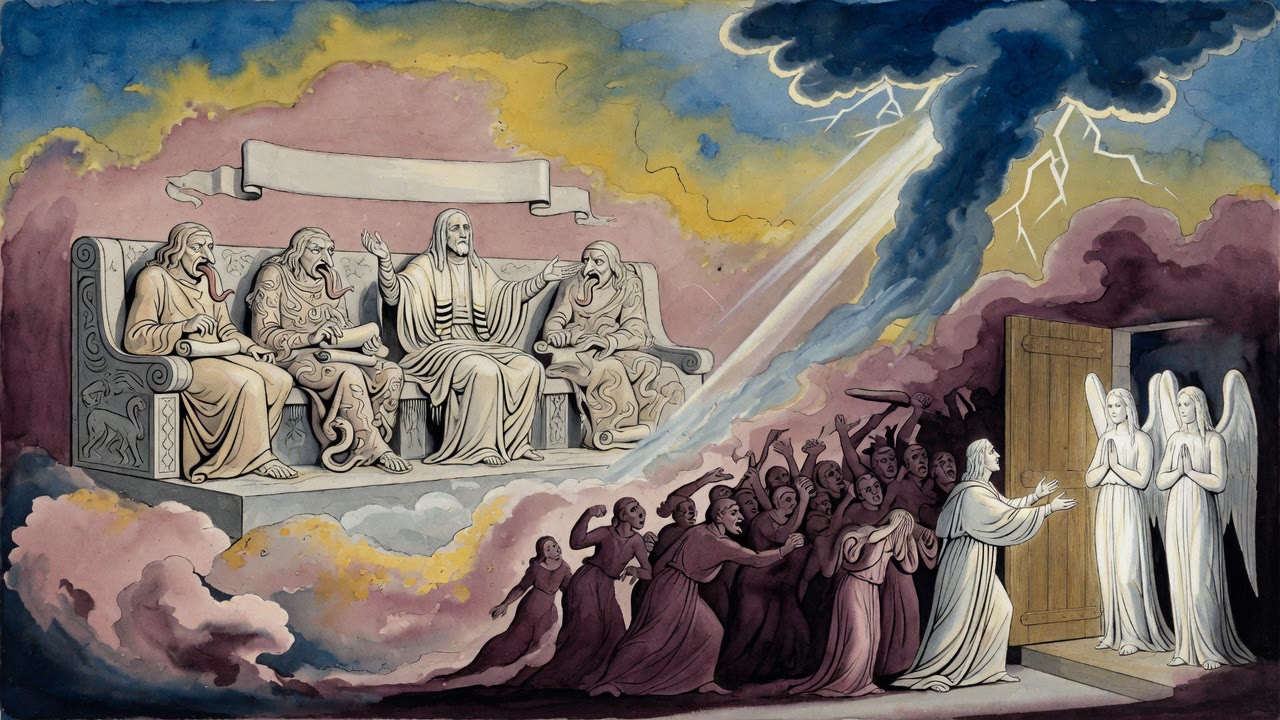
The Ammonites and the Moabites did not greet them. (Deuteronomy 23:5) marks the refusal without a market stall or a dry well as excuse. They withheld common courtesy from a nation already fed by heaven. The failure was not logistics. It was a closed gate of the mouth.
The decree cut deeper than a raid. "An Ammonite or a Moabite shall not enter into the assembly of the Lord" (Deuteronomy 23:4). Withholding bread from those who did not truly lack it sealed a door for generations. If refusal toward the already-fed earns exile from the assembly, what weight falls on the hand that withholds from the truly poor?
Bread at Midian and a Pinch in the Field
Yitro called Moses to eat bread after Moses drove the shepherds from the troughs and watered the Midianite flocks (Exodus 2:19-20). A house opened. Kindness shown to Moses later saved the Kenites when Saul peeled them from Amalek's doom, because favor to the leader counted as favor to the whole people coming up from Egypt (I Samuel 15:6).
In the barley fields of Bethlehem, Boaz handed Ruth a pinch of toasted grain. She ate, was satisfied, and left over. If Boaz had known how long that pinch would be remembered, he would have piled delicacies. The smallest act still bends the future when it is done with a joyous heart.
Ruth told Naomi she had "acted" for the man, not only worked. Accepting kindness gave Boaz a mitzvah (a commandment) he could not perform alone. The guest completes the host.
The Messenger Who Alone Could Hear
The book of Leviticus opens with a call. "He called to Moses, and the Lord spoke to him from the Tent of Meeting" (Leviticus 1:1). Psalms blesses the Lord's emissaries, mighty in strength, who perform His bidding (Psalms 103:20). The verse does not say "all." Not every earthly messenger finishes the task. Prophets are called malakhim, emissaries. The verse that says God "sent a malakh and took us out of Egypt" (Numbers 20:16) points to Moses, not a winged being.
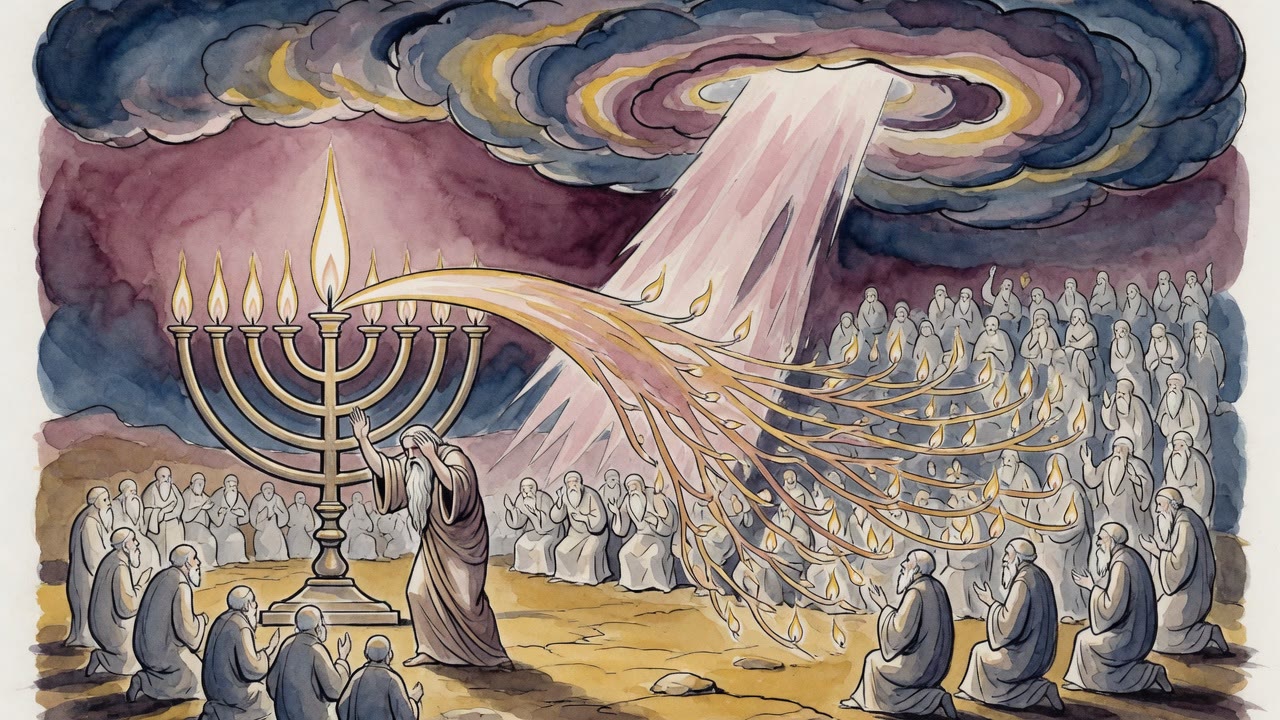
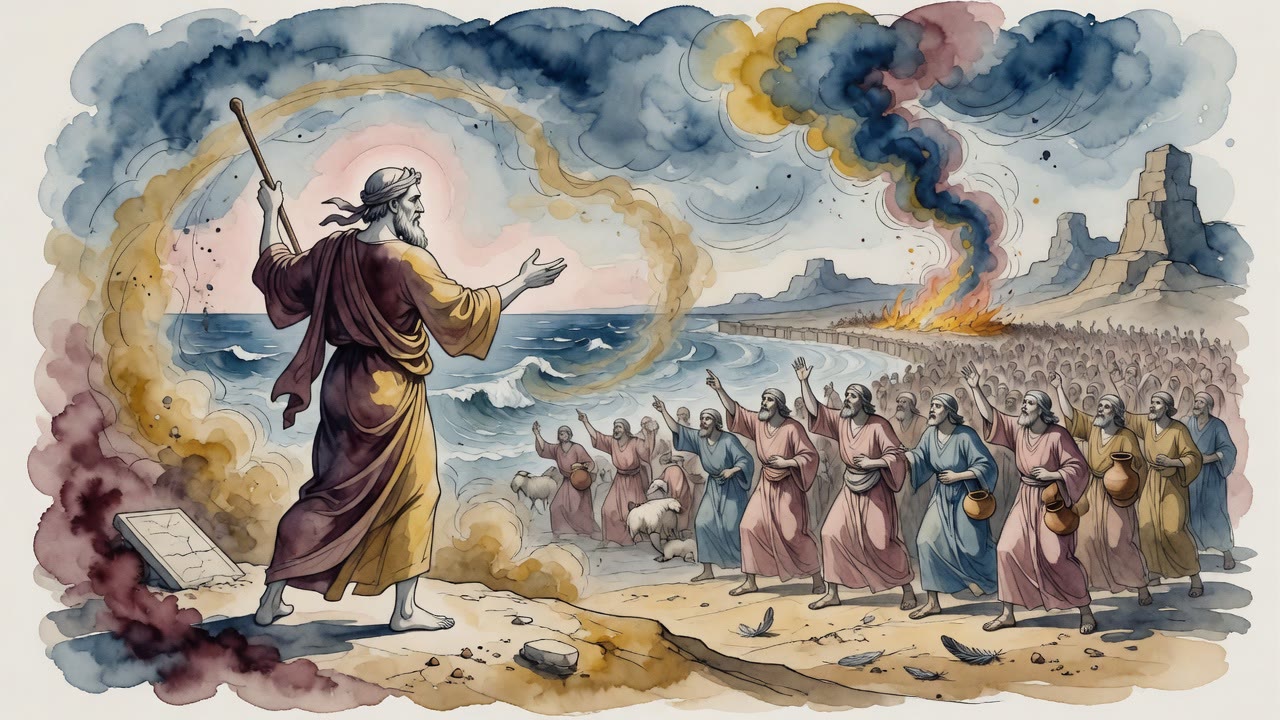
At Sinai the people said they would die if they kept hearing the voice (Deuteronomy 5:22). Moses alone could stand inside that speech and live. From all of them, God called only him. Mighty strength is not only a farmer leaving the field fallow in the Sabbatical Year while the tax still comes due, silent before an untouched vineyard. It is also the body that carries a word no one else can hold.
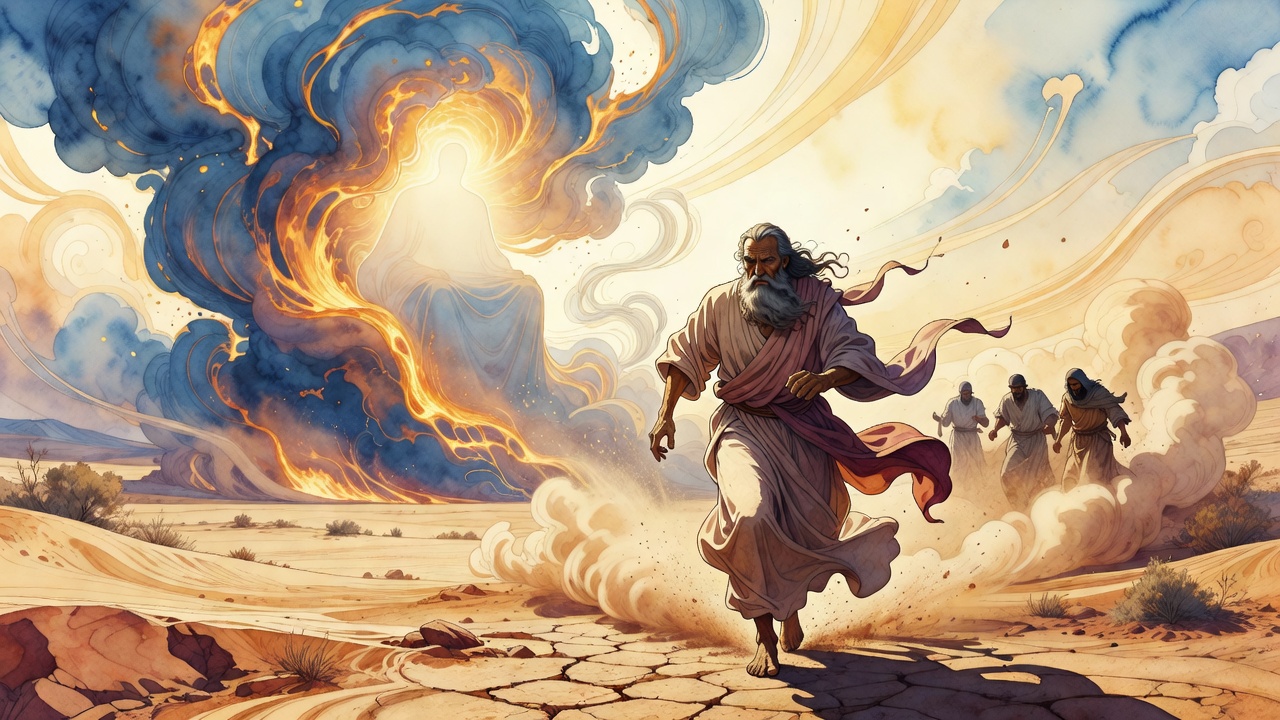
Abraham ran with food for guests who needed nothing. Moses ran with a word that could kill. Both performed a bidding that looked excessive from outside and necessary from within.
Under the tree the plates emptied without hunger. In the desert the borders of Ammon and Moab emptied of greeting. One house taught the nation how to be fed by clouds and bread from the sky. The other house taught the nation what a locked mouth costs for ages. Between those doors walks every later pinch of grain, every Midianite invitation, every messenger who answers when the call lands on one name alone.
← All myths