Abraham Served Strangers While Gamliel Served Sages
Abraham ran at three strangers he took for idolaters. Centuries later Gamliel poured wine himself, and the sages flinched at the honor.
Table of Contents
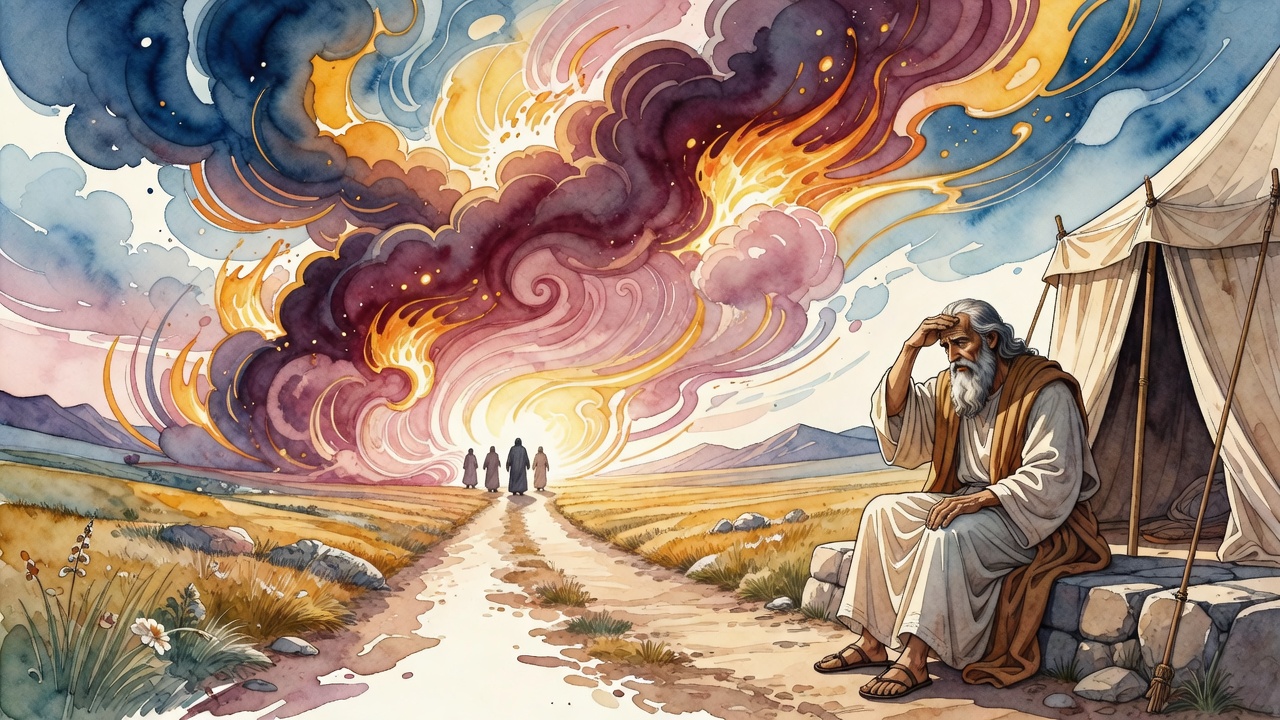
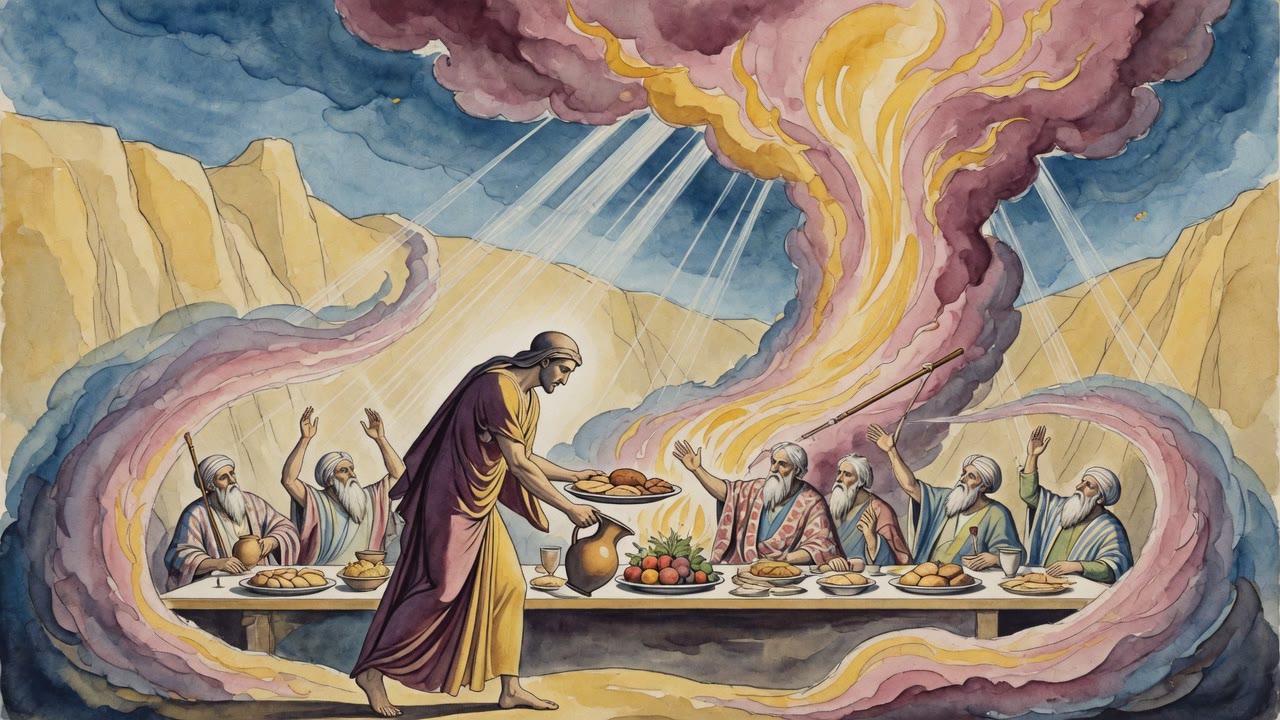
Abraham saw three figures in the heat and ran. His body moved before his mind finished counting them. The tent flap slapped behind him. He did not ask their names. He did not check their gods. He bowed low enough that dust marked his brow, and he spoke as a host speaks when the road has been hard. Water for the feet. Shade for the rest. A calf for the meal.
 Click for full size
He thought they were wandering men of the desert, idolaters who bowed to stone and star. He served them while he believed they were nothing holy. Only later did anyone name them ministering angels. The honor was given first. The revelation arrived second.
The heat on the plain of Mamre did not care about rank. It baked the visitors and the host alike. A man who can still run when he is old and marked by covenant has decided that flesh on the road matters more than his own rest.
Abraham Ran Into the Heat
In the tent the bread was still warm. Sarah worked the dough while Abraham chose the animal. Three mouths ate under his roof. Three pairs of feet took the water he poured. The guests spoke of a child who would be born, but the first act of the afternoon was not prophecy. It was labor. The greatest man of the age bent his back over strangers he thought belonged to other altars.
He could have sent a servant. He did not. Kindness stood in the doorway, and he refused to outsource it.
When later ages argue about bowing, they return to this posture. Abraham and Joshua both go down before messengers who wear human faces. The intention points past the face. The body bows toward the One who sent the visit. An angel is not God. Service is not worship of the servant. The heart aims at the Sender.
Gamliel Left the Seat of Honor
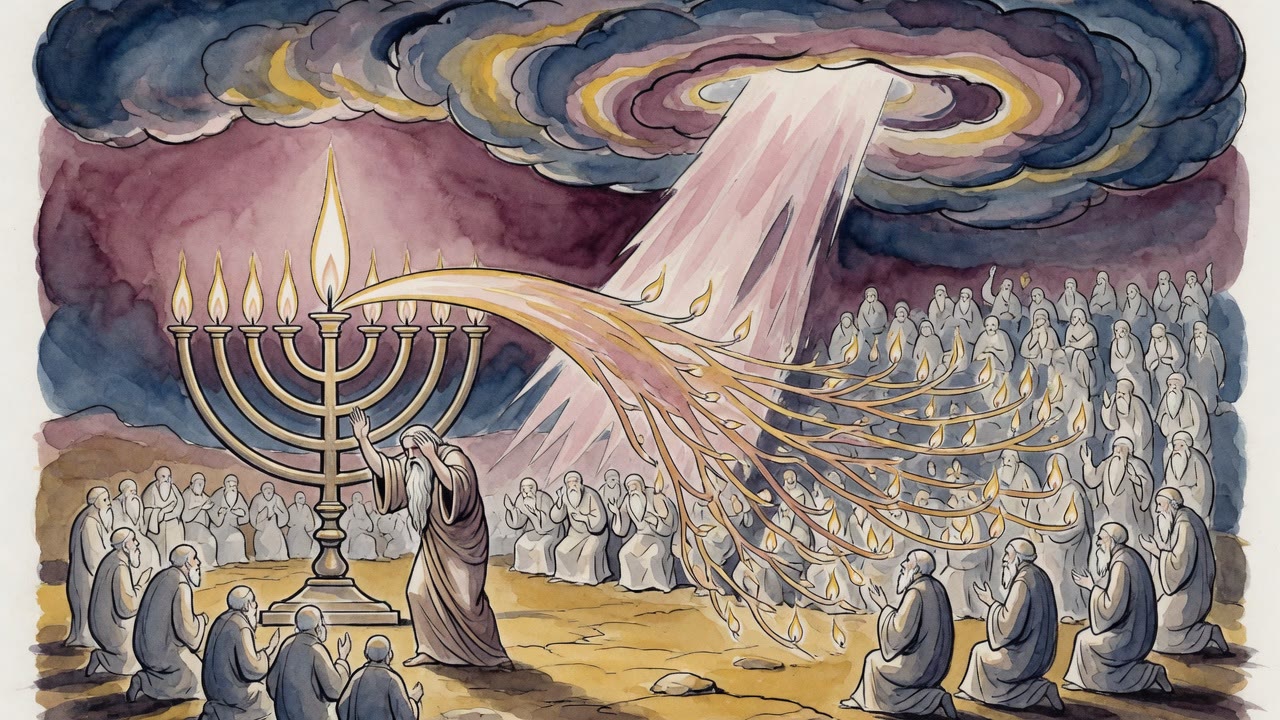
Centuries later, in a house loud with scholars, Rabban Gamliel the patriarch stood up from the seat of honor. The sages of Israel sat before him. He began to serve them himself, plate after plate, cup after cup, his hands wet with the work of a steward.
The room tightened. Men who studied law for a living felt hierarchy bent the wrong way. They protested. They were not worthy of such service from so great a man. Greatness was supposed to sit still and receive.
Oil lamps threw Gamliel's shadow across the floor as he moved between couches. Students who had argued all day about damages watched their patriarch carry bowls. The quarrel in the room was no longer legal. It was about whether power is allowed to kneel.
Rabbi Yehoshua Named the Tent
Then Rabbi Yehoshua cut the protest short. Let him serve. There is precedent greater than this house.
They asked who.
He answered with Abraham at Mamre, the founder of the nation, who waited on three travelers he took for Arab idolaters and never once measured their worth before he ran.
If Abraham served men he thought were outside the covenant, how much more may Gamliel serve students of Torah. Hospitality toward the stranger of no known merit makes hospitality toward the scholar look almost small.
Silence followed that climb the way silence follows a gavel. The sages had been thinking of their own unworthiness. Rabbi Yehoshua forced them to think of Abraham's haste. Once that image entered the hall, refusing Gamliel's service would have meant claiming to stand higher than the first patriarch.
One Greater Than Both Still Serves
Rabbi Yitzchak had not spoken yet. He waited until the room had settled into agreement, until the sages had accepted the wine and the argument together, and then he set his cup down. We find one greater than Rabban Gamliel and greater than Abraham, he said, who also served men.
The hall wanted the name. Who?
The Shechinah (שכינה), the Divine Presence. Every hour, food for everyone who walks into the world, measured to what each one needs. Not portioned by merit. The table is set for the worthy and the righteous, and it is set with the same hand for the wicked and for those who bow to stone and star.
That answer moved the floor under the first two. Abraham served three visitors on one hot afternoon and did not know what they were. Gamliel served a room of sages and knew exactly what they were. The Shechinah serves the idolater at the far end of the road who will never say thank you, and serves him again tomorrow.
True rank showed itself when the ranked person became the waiter. Gamliel did not lose the patriarchate by pouring wine. He proved what the seat was for. Abraham did not cheapen the covenant by feeding idolaters. He showed how the covenant treats flesh that walks in from the road.
If service reaches that far above, no one seated at the feast could argue it was beneath the man pouring their wine. Who holds the ladle. Who takes the lower seat. Who runs when three strangers appear against the light. The tent and the feast stay on the page so no one can pretend humility is only a saying.
← All myths