Moses Enters the Cloud No Angel Can Enter
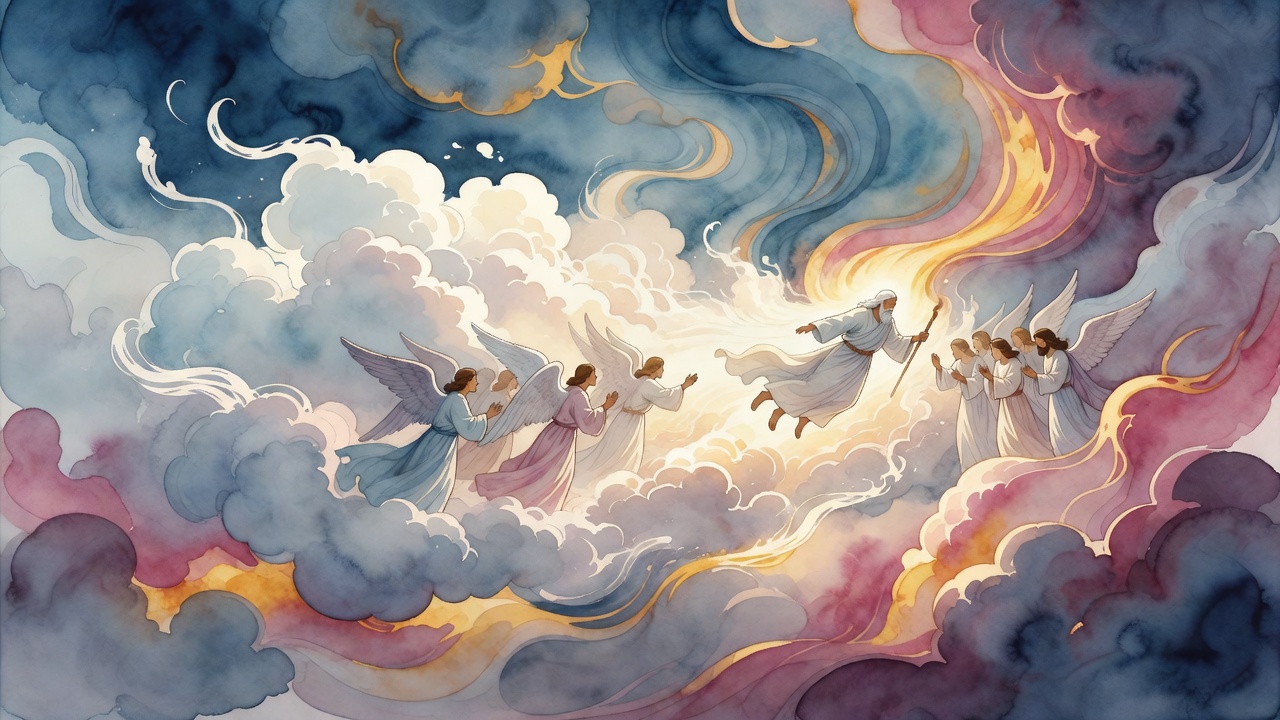
Seraphim stopped at the outer dark. Moses went in like a fish through water. Inside, God taught him the words that would keep Israel alive.
Table of Contents
 Click for full size
Darkness, Cloud, and Mist
Darkness first. Then cloud. Then the mist that stopped wings.
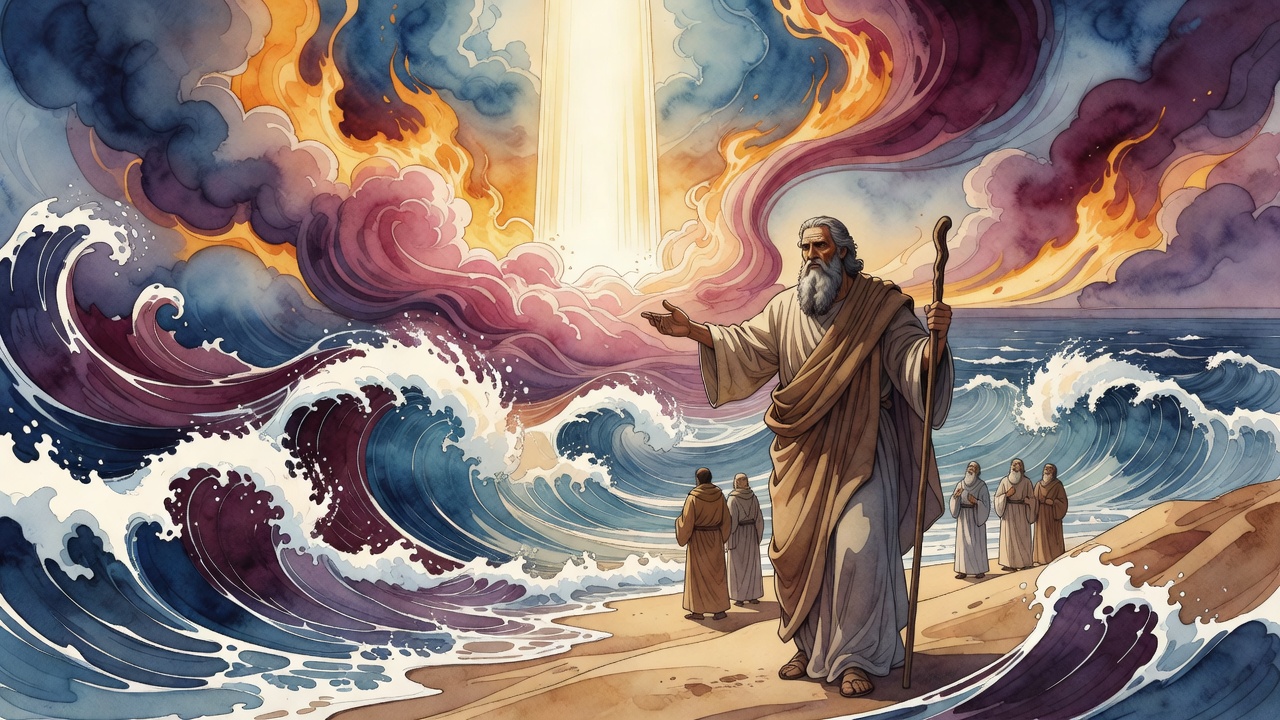
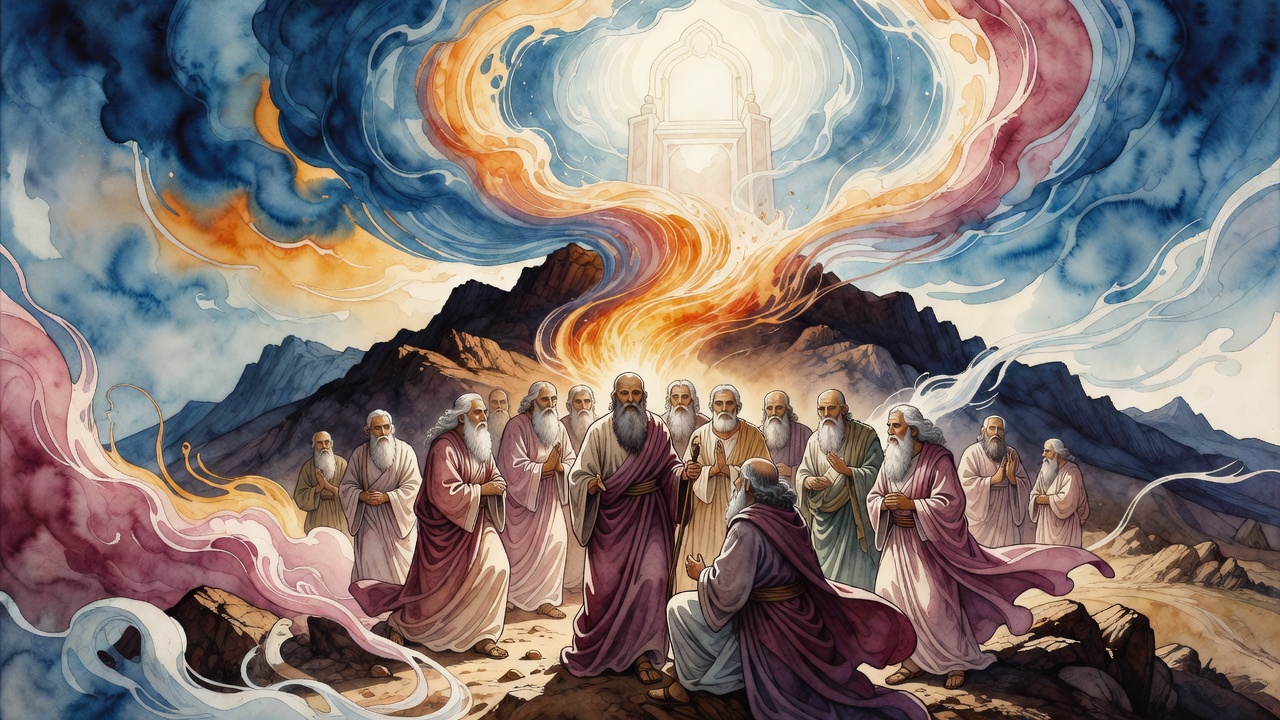
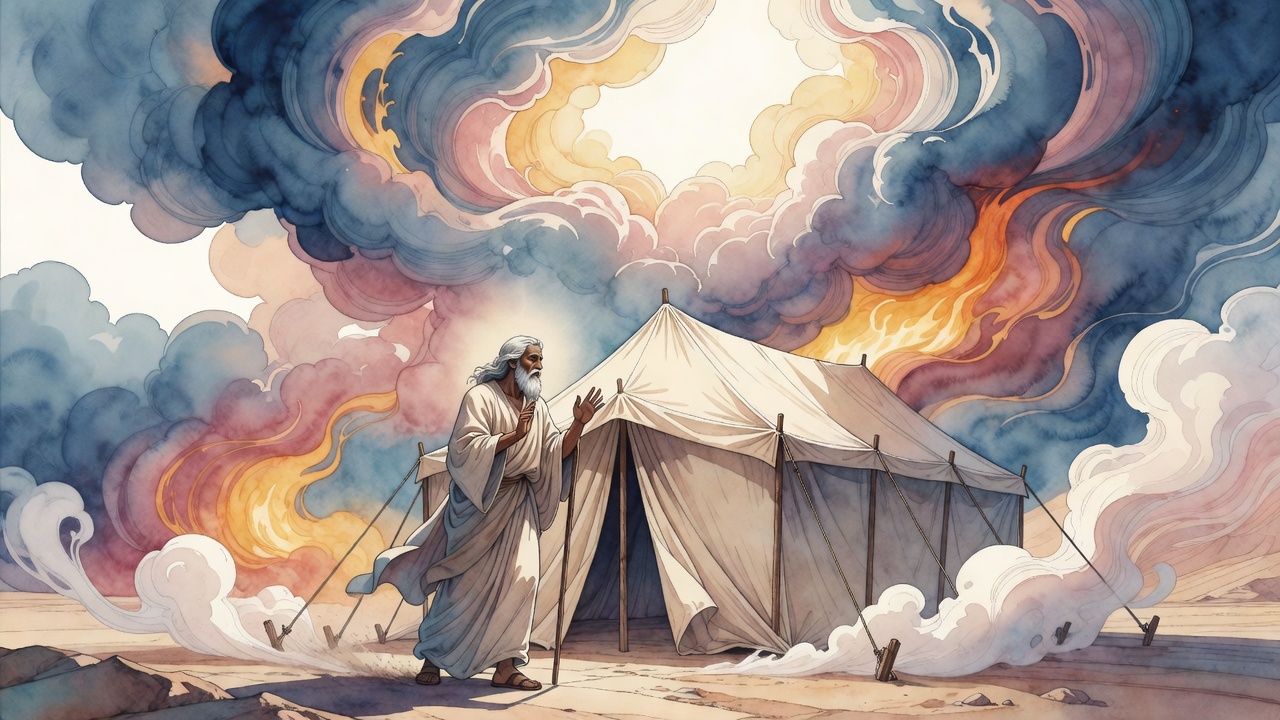
Moses walked into the three walls in that order. Darkness was the outermost. Cloud sat inside it. Mist was the innermost, and God was there. Angels halted at the outer dark. Seraphim claimed no seat past the cloud. The man kept walking.
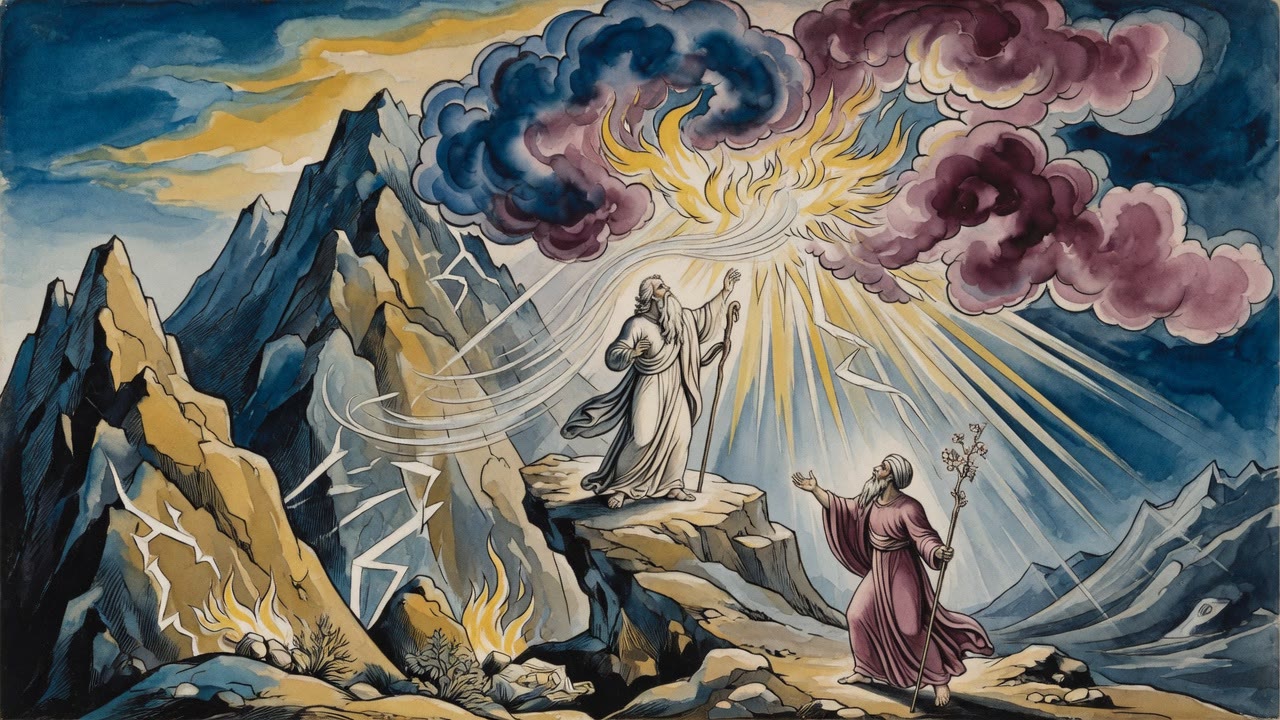
The Lord descended in the cloud and stood with him there (Exodus 34:5). No angel pushed in beside them. Moses was drawn into the mist and rose through the firmament the way a fish moves through water that would drown any other body. One telling calls the motion like a colias cutting a path only it can take. The mountain's glory had a door shaped like lowliness, and the key was not wings.
The Mist That Refused Wings
"And the man Moses was extremely humble" (Numbers 12:3). Closeness was not a prize for volume, lineage, or the brightness of a face already marked by fire. It was a function of how small Moses made himself before a Presence that fills heaven and earth and still looks for a low place to rest.
Outside the cloud, the camp still smelled of the calf and of broken trust. Inside, the air was thick enough to stop a seraph and thin enough to admit a man who knew he was dust.
The High and Exalted, who abides forever and whose name is holy, dwells with the oppressed and the lowly of spirit (Isaiah 57:15). The Shechinah (שכינה), the indwelling Presence, rests on earth when a human being has emptied the space pride usually fills. Angels excel in fire and song. They do not excel in the broken heart that lets a mortal stand where they cannot. The mist was a boundary of quality, not of altitude alone.
The Judge Taught the Defense
Inside the meeting, the Holy One did not only display majesty. He taught Moses how to plead for Israel.
"Tell Me the merits of the patriarchs," He said. "Remind Me of Abraham, Isaac, and Israel My servants. Without their merit I would destroy this people." From now the Name would be spoken as merciful and gracious (Exodus 34:6). The defense was placed in Moses' mouth by the Judge Himself, a strategy whispered by the One who would hear it.
In this world Moses would argue. In the future the Holy One declared He would speak in victory, mighty to save (Isaiah 63:1). The cloud was a school for advocacy. The man who entered alone left with a script heaven wanted used on heaven's own wrath when the people would fail again, as people do.
How fortunate was Moses that he could come before the Omnipresent while no angel or seraph was able to do so. Privilege here tracked humility, not wattage of holiness measured in pure fire.
Light Left on a Human Face
When Moses later walked among Israel with a face that needed covering, the camp saw the afterglow of a room angels had not entered. The glow was not fashion. It was residue from a conversation held inside humility's weather, light that clung to skin because the mist had been closer than any seraph was allowed to stand.
Children asked why he veiled. Elders remembered the calf and the broken tablets and the second chance written into the Thirteen Attributes. The veil was not theater. It was mercy on eyes not built for leftover cloud.
Every later prayer that leans on "merciful and gracious" walks the path Moses first walked through that mist. The words are not a poem for a shelf. They are a legal strategy first spoken by God to the only advocate allowed in the room.
The People Waiting Below
He came down with words for a people who had already broken faith and would break it again. The mountain did not become a permanent home. The mist was a temporary office for a temporary man who would die on another height without entering the land.
What he carried down was enough: a Name that chooses mercy, a method for defense, and the proof that heaven's deepest room opens for the one who does not force the door.
He stepped out of the innermost weather and the camp flinched from his face. Below, Israel still smelled of gold and panic. Above, the three walls closed again. Darkness. Cloud. Mist. The host that sings without ceasing took up its posts at the outer dark, where it had been told to wait.
Angels waited outside. Moses came down with light on his face and Israel still on the ledger of the living.
← All myths