Two Serpents and the Poisoned Garlic Bowl
On Sabbath eve a field serpent poisoned a covered garlic bowl. The house serpent uncovered it so the family would pour the death out and live.
Table of Contents
 Click for full size
Dusk and a Bowl on the Table
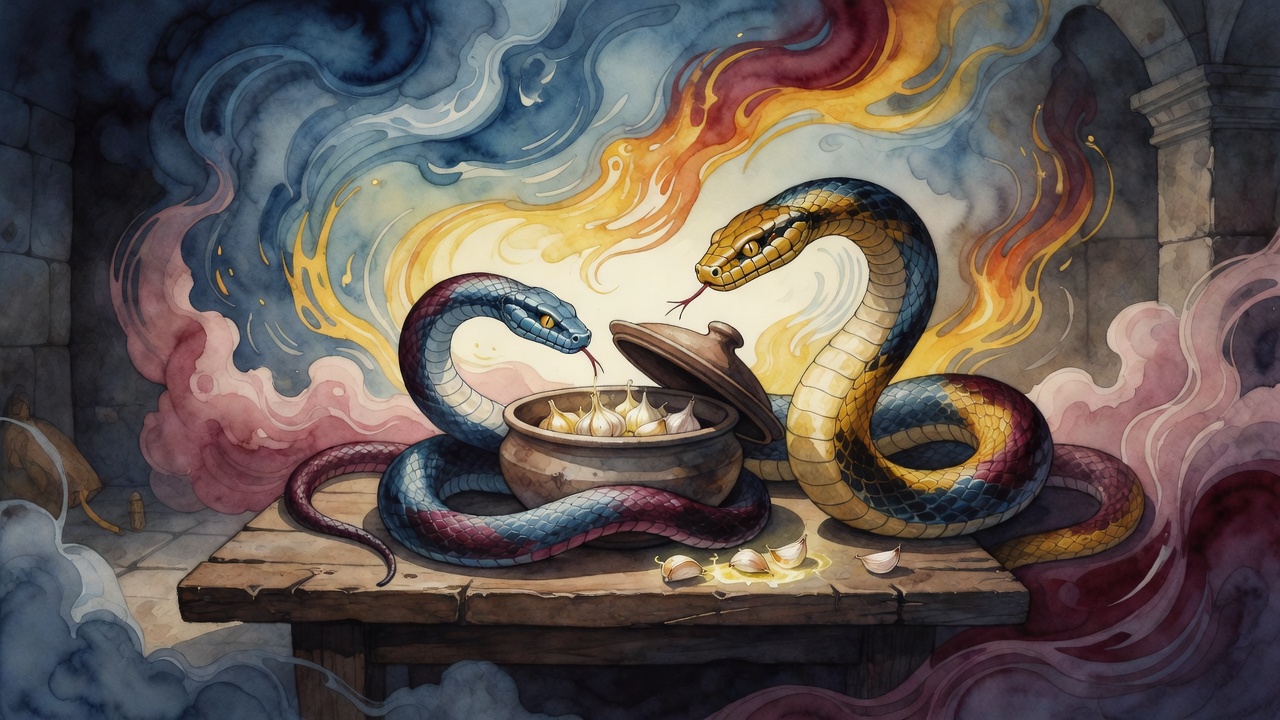
It was the eve of the Sabbath. Dusk thickened into dark. A householder set a bowl of crushed garlic on the table and covered it, the way a careful man covers food before the candles. Outside, the field still held heat. Inside, the smell of garlic promised a meal that would welcome the seventh day.
A serpent came darting from the field and slipped under the door. The truest enemy of man, the one of whom the Holy One said at the world's dawn, "I will put enmity," had entered a kitchen. It lowered its mouth to the bowl, ate, sickened, and vomited its venom back into the mash. Then it drew the cover over the dish exactly as it had found it, so the family would eat and die without noticing a seam.
The Serpent Who Lived in the House
A second serpent, one that dwelt in that very house, had been watching. It did not strike the first. It went to the bowl and uncovered it. When the householders came, they saw the dish lying open, wrong for a covered table, and poured the whole of it out into the dirt. Who saved that house from death? The serpent that uncovered the poison.
Rabbi Samuel bar Nahmani turned the verse, "He makes even his enemies to be at peace with him," over in his hands until this scene fell out. When the LORD is pleased with a person's ways, even the ancient foe becomes an instrument of rescue. Enmity remains written into creation. Mercy can still draft the enemy into a night watch.
Double Bread for a People Learning Rest
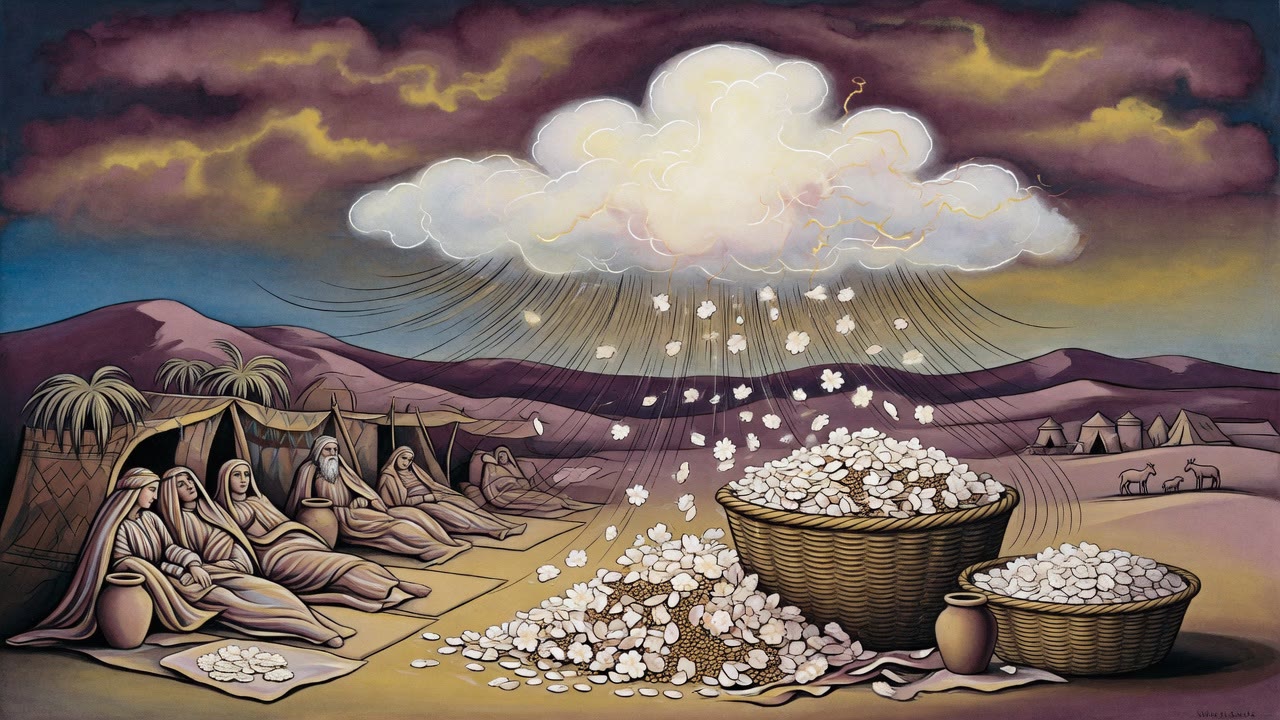
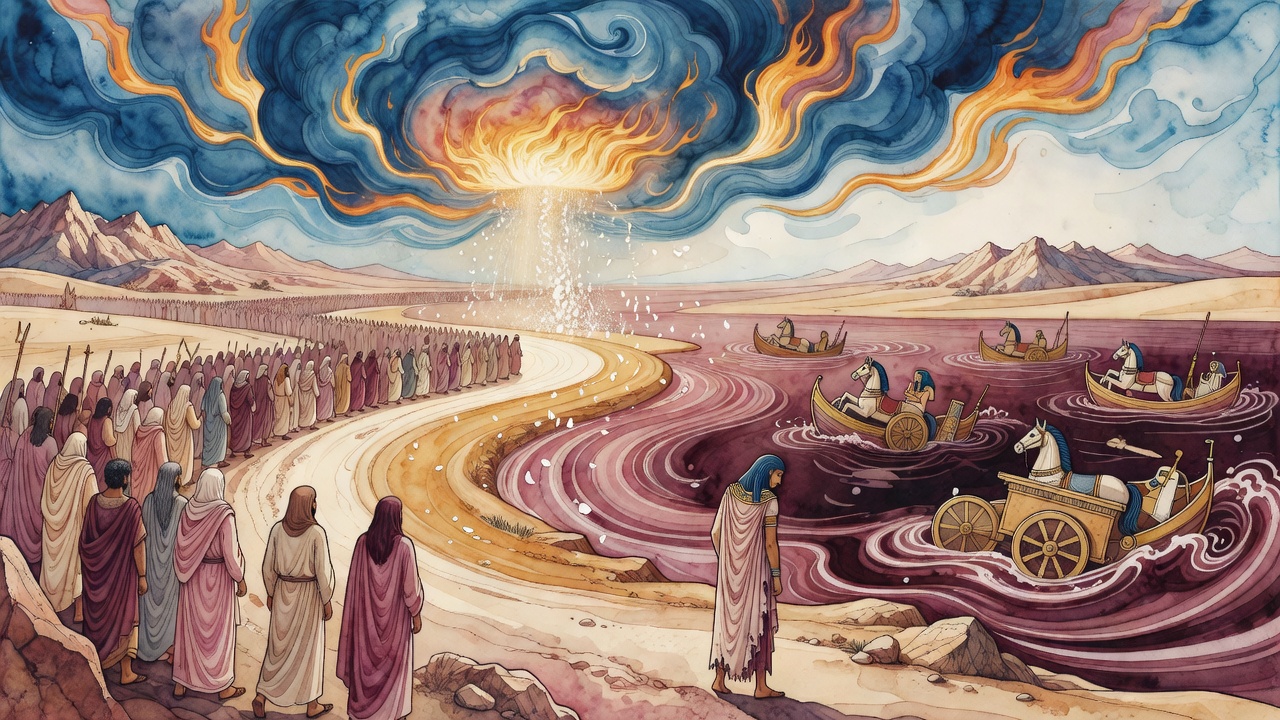
In the wilderness, long before that kitchen, Israel learned another kind of covering and uncovering. "See that the LORD has given you the Sabbath," and Rabbi Isaac heard the word "See" as an answer for the nations: look at the bread that fell from heaven. Every day one portion. On the eve of the seventh day, two. Hezekiah bar Hiyya taught that "double" meant more than measure. The Sabbath portion was sweeter, finer, fairer, and while weekday leftovers rotted by morning, the Sabbath bread "did not stink."
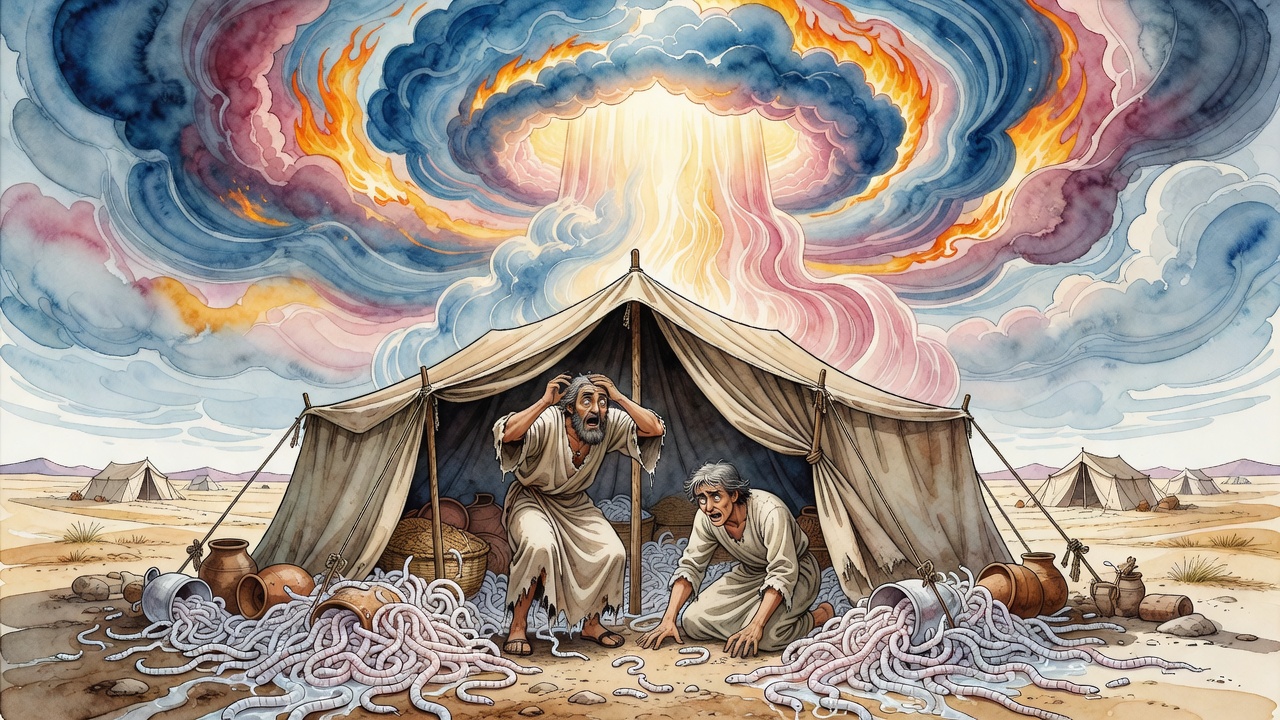
The princes once ran to Moses about the manna, and he startled because he had forgotten to teach them the Sabbath law God had already given him. Even Moses forgot. Later Jeremiah would rebuke a harder generation: if Moses lapsed, how much more the rest. On the Sabbath no manna fell. Dathan and Abiram hoarded against the command, and worms crept from their tents into the tents of the faithful. Nothing hides from the One who sees the secret place.
What the Open Bowl Means
The householder who poured out the garlic did not know he had been spared by a serpent. He only knew the cover was wrong and death might live under wrongness. Israel, counting double manna into jars before sundown, learned the same habit in another key: inspect what is kept, refuse what stinks of disobedience, rest when Heaven says the portion is already enough.
Two dramas share one pressure. A kitchen almost becomes a grave. A camp almost turns Sabbath into a lie. In both, a small wrongness on the surface, an open bowl, a hoarded loaf, signals a poison underneath. The people who pour out and the people who leave the second portion pure live to see morning.
Night closed on the house. Candles burned. Somewhere in the wall the house-serpent settled again into its dark. The field-serpent was gone. The family blessed the wine without tasting garlic that would have ended the blessing mid-word. Enemies at peace is not a soft proverb. It is a covered bowl left open by a creature that should have wanted them dead.
The householder's wife was the first to notice the cover. "I set that closed," she said. He lifted the lid, saw the wrong sheen on the mash, and without debate carried the bowl to the yard and tipped it. Garlic and venom hit dirt together. A child asked why dinner had changed. He said only that open is sometimes safer than closed, and he did not smile when he said it.
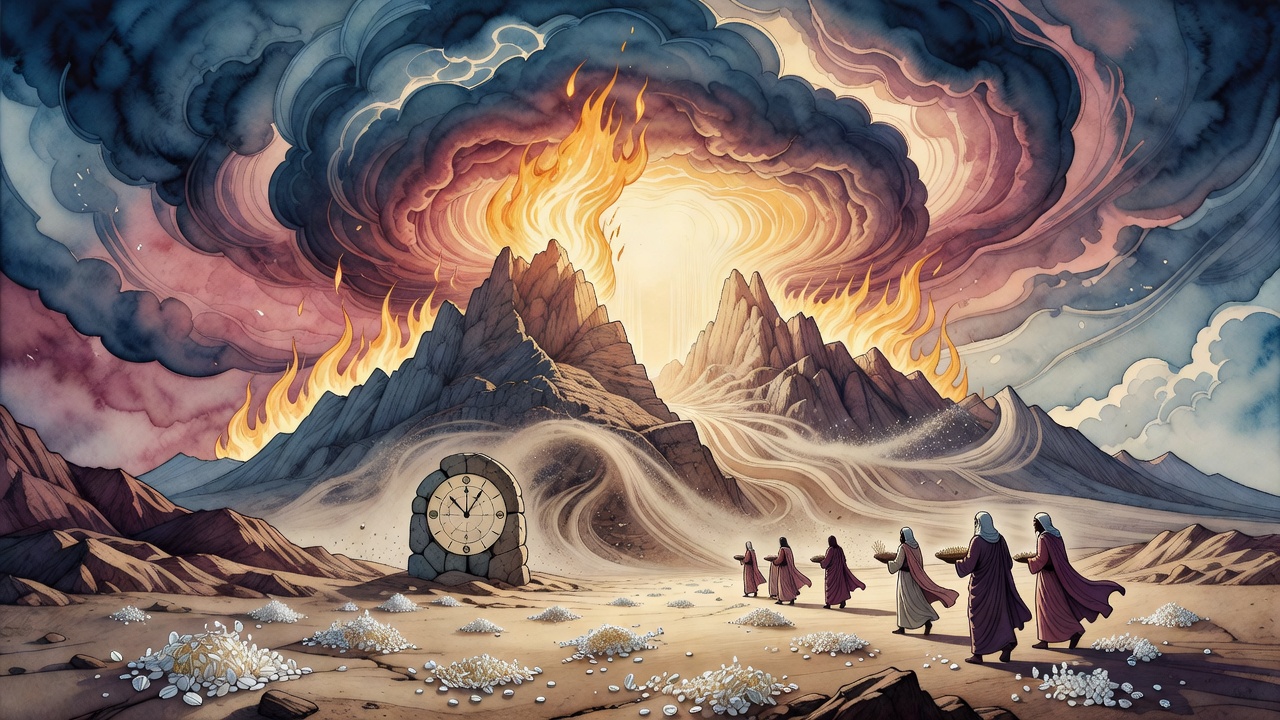
In the wilderness the double portion taught a similar vigilance. Men who tried to keep weekday manna overnight learned the smell of disobedience by morning. Men who trusted the Sabbath portion found it sweet still at dawn. Dathan and Abiram's worms crossing tent lines made the secret public. The Holy One who sees the hidden place does not need a serpent's courtesy to expose a hoard, but on one Sabbath eve in a later age He used even that courtesy.
Rabbi Samuel bar Nahmani's verse about enemies at peace does not cancel Genesis. Enmity remains. What changes is whether Heaven drafts the enemy for a night. The field serpent kept its nature and still became, against its aim, a sign. The house serpent kept its nature and became a guard. The family kept the Sabbath with empty garlic and full breath. Rest is not only cessation of work. Rest is also the refusal to swallow what should have stayed covered until death, and the willingness to pour out a meal when the surface of the bowl has been disturbed by a will that is not yours.
← All myths