Israel Heard God on Friday at the Sixth Hour
By the ninth hour the people were back in their tents. A double portion of manna was prepared for the next day. Moses stayed on the mountain.
Table of Contents
 Click for full size
Friday, the Sixth Hour
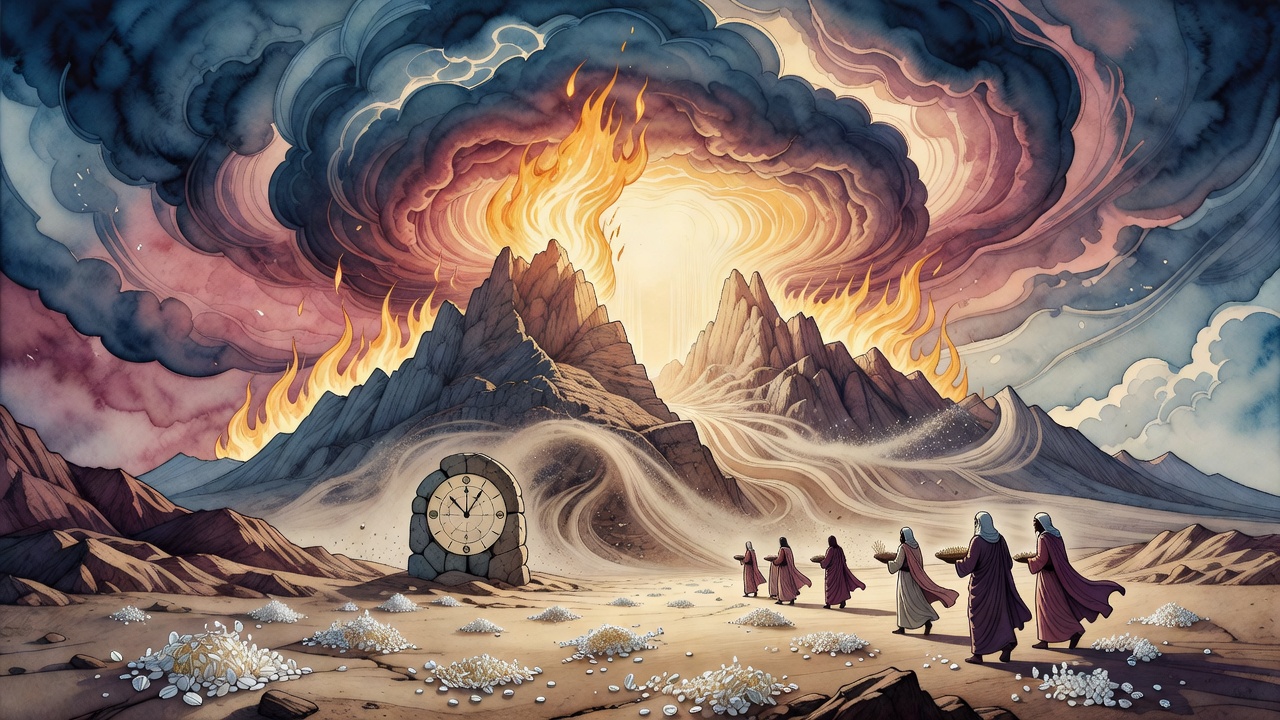
Rabbi Elazar son of Azariah gives Sinai a clock. On a Friday, the sixth of the month, at the sixth hour of the day, Israel received the Commandments. By the ninth hour the people had returned to their tents. That same day a double portion of manna was prepared so the coming Sabbath could be festival rest after hearing the living God from the fire.
"For who is there of all flesh, that hath heard the voice of the living God speaking out of the midst of the fire, as we have, and lived?" (Deuteronomy 5:26). Survival itself became part of the miracle. Flesh heard and did not dissolve.
Moses Told to Stand, Israel Told to Go Home
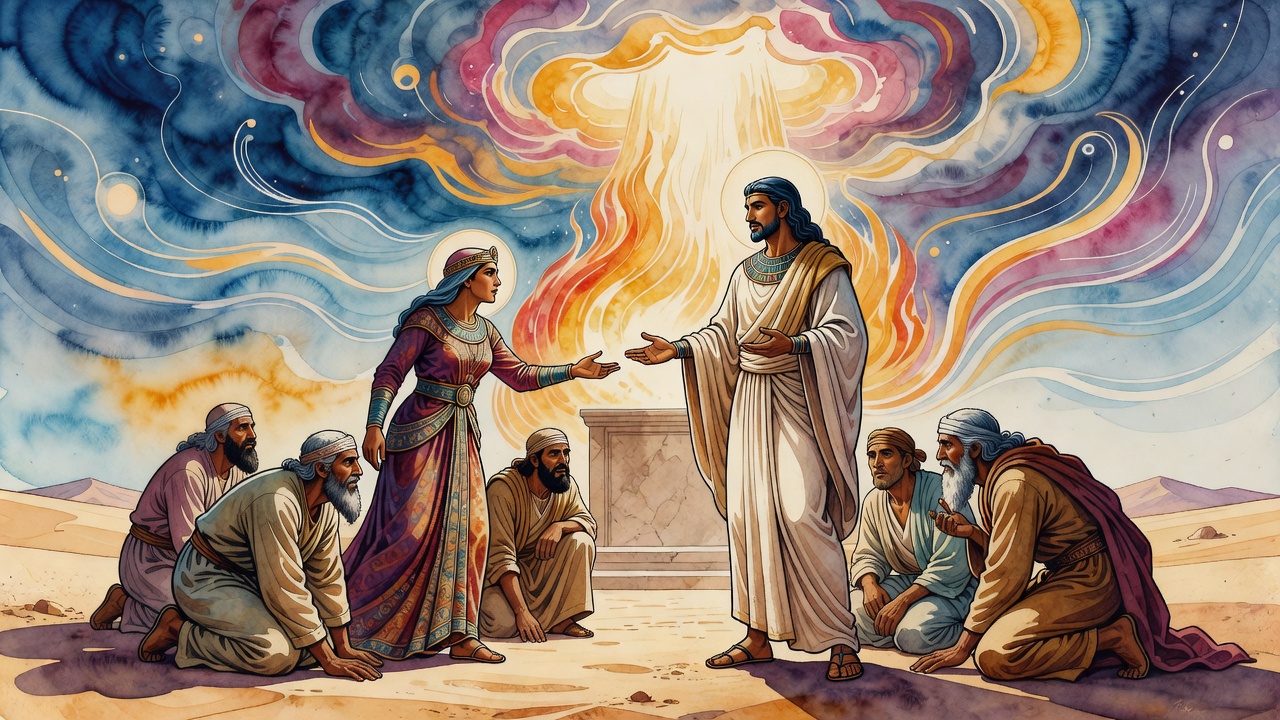
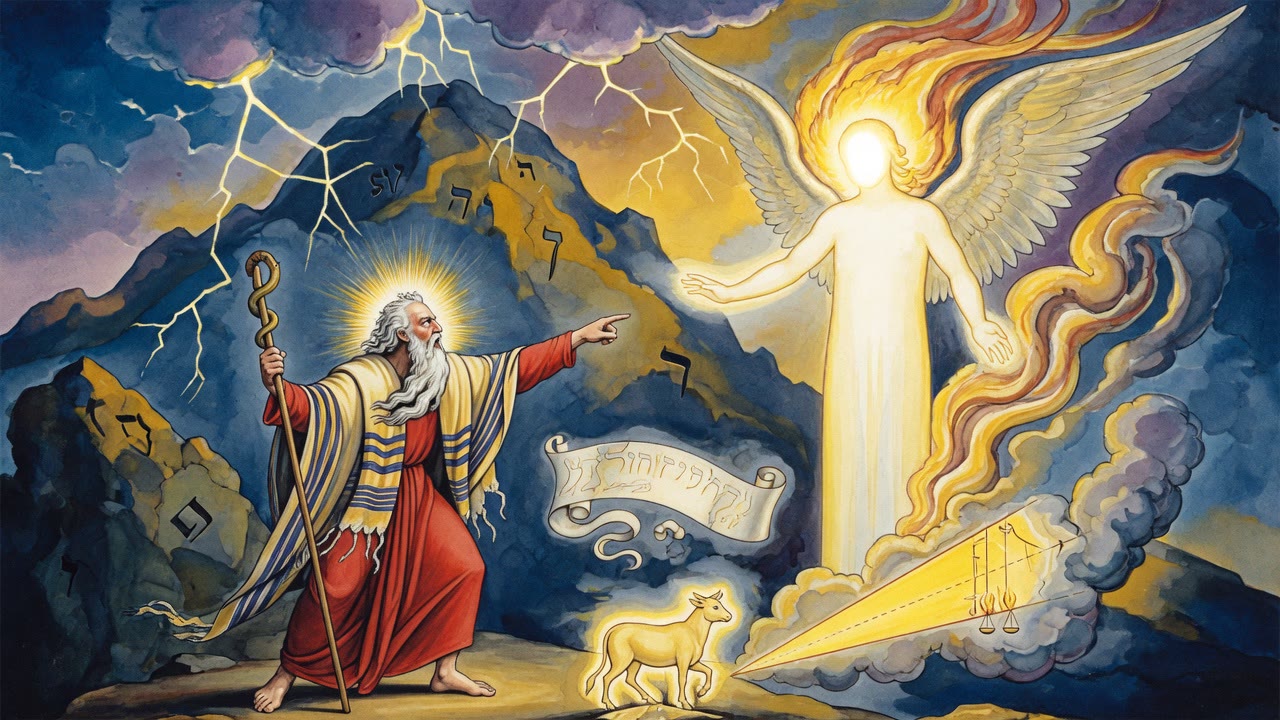
God spoke to Moses in pure speech: tell them, return to your tents (Deuteronomy 5:30). Pirkei DeRabbi Eliezer presses the next line. "But as for thee, stand thou here by me" (Deuteronomy 5:31). From the hour Moses brought Torah down, he did not return to ordinary marital life. He remained stationed by the Presence while the nation learned how to live with a revelation they could take home.
Two paths left the mountain. Israel walked back to tents and a Sabbath table. Moses stayed in the zone where speech had burned the air. Both paths were obedience. Neither was casual.
Manna That Refuses to Erase Sacred Time
Before Sinai's Friday, hunger had already taught rhythm. Israel left Elim and murmured on a Sabbath, and Moses promised morning glory. Manna began on the first day of the week with six days of gathering written into the gift. "Six days you shall gather it" (Exodus 16:26). Miracle bread did not cancel holy time. It trained hands to stop.
Double portion ahead of rest. No field work on the seventh. The desert became a school where even food obeyed the calendar.
Ephraim Offers on the Sabbath
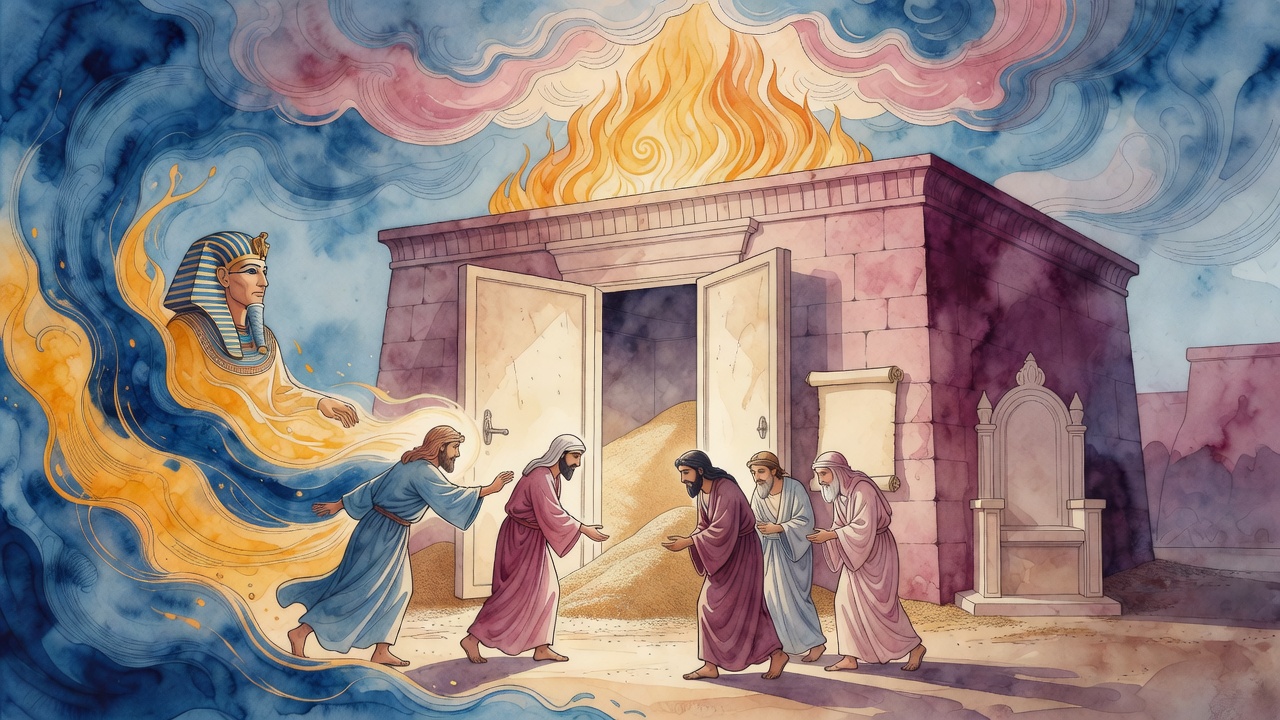
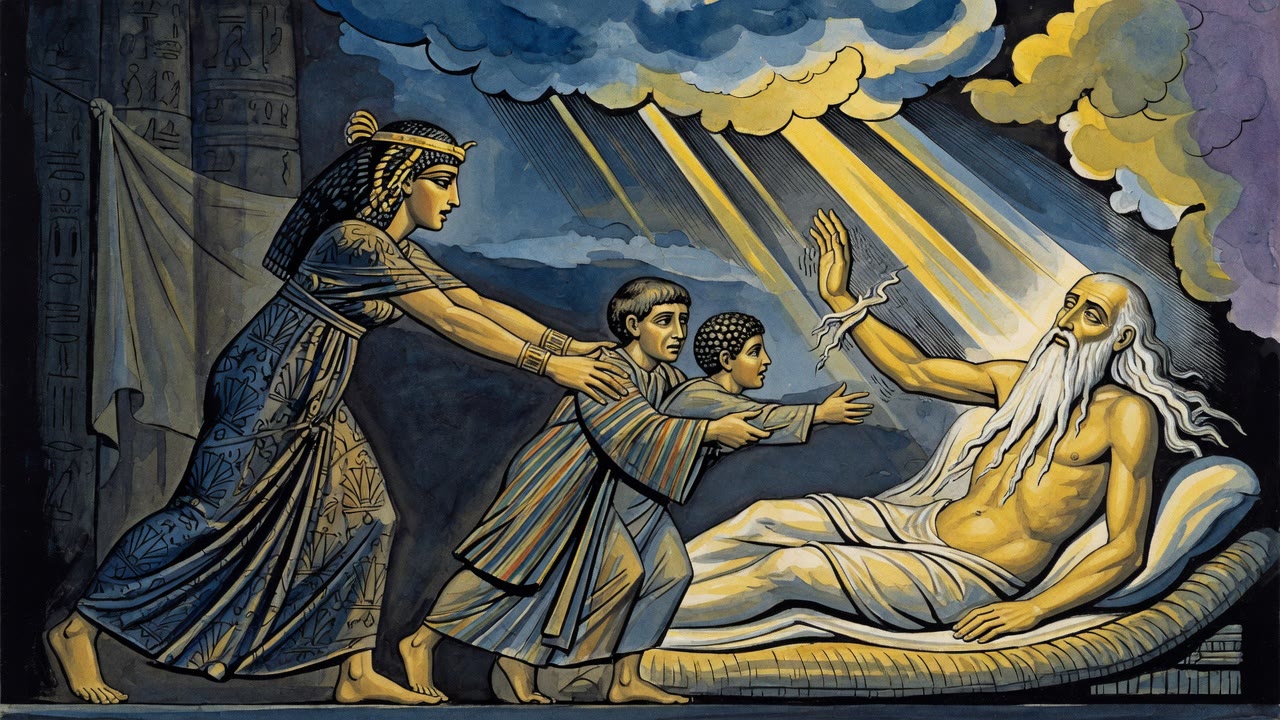
Later, when princes brought dedication gifts, the prince of Ephraim was permitted to offer on Shabbat, a slot usually reserved for the daily fixed offerings. Legend traces the honor to Joseph, who kept Sabbath even while governing Egypt. The grandson's tribe inherited a day-slot because the ancestor would not let empire erase the seventh day.
The vessels themselves preach family history. Charger for Jacob, bowl for Joseph, both filled with fine flour and oil like lives filled with devotion. The spoon recalls Jacob's right hand on Ephraim's head. Incense rises from worthiness recognized in advance.
One Week Taught Three Ways
Sinai's Friday afternoon, manna's six-plus-one, and Ephraim's Sabbath offering are one argument. Hearing God creates rest. Eating from God teaches rest. Ancestral loyalty earns a public share in rest.
Israel did not receive commandments as abstract law only. They received a clock, a diet, and a later honor for a tribe that remembered Joseph's stubborn calendar in a foreign court. The sixth hour still matters because revelation entered ordinary daylight, not only midnight vision.
Moses standing apart protects the seriousness of the event. If the mediator had dissolved back into routine without remainder, the people might have treated the fire as a story. His continued station said the fire was still near.
Joseph's Egypt Sabbath protects the opposite danger: exile that forgets. Because he counted days under Pharaoh, Ephraim could count a Sabbath offering under Moses' Torah. Private fidelity became liturgical privilege.
Hold the three scenes together and the week stops looking like empty container. It looks like the shape heaven uses to keep a people human after they have heard too much glory to survive without rest.
Placing revelation on Friday afternoon ties Torah to the approach of Shabbat like a bride already on the road. Israel does not hear God and then invent rest as self-care. Rest is scheduled into the same day as hearing. The double manna is the pantry version of that theology.
Moses' separation after the pure speech protects the people from confusing mediator and message. He remains near the source so that questions can still rise. They return to tents so that commandment can become household practice. Without both movements, Sinai would be either elite mysticism or chaotic crowd religion.
Ephraim's later Sabbath offering closes a historical loop. Joseph kept seventh-day boundaries when no desert manna forced him to. Centuries later his tribe receives a public ritual slot that other princes do not get on that day. Memory of private loyalty becomes national liturgy. The sixth hour at Sinai and the Shabbat offering of Ephraim are relatives: both insist that time itself can wear holiness.
Count the hours again. Sixth hour for words of fire. Ninth hour for tents. Double bread for a day without gathering. Then, generations later, Ephraim's prince stepping into Sabbath with vessels that remember Jacob's hand and Joseph's loyalty. The calendar is the plot.
← All myths