Joseph Kept the Ten Words Long Before Sinai
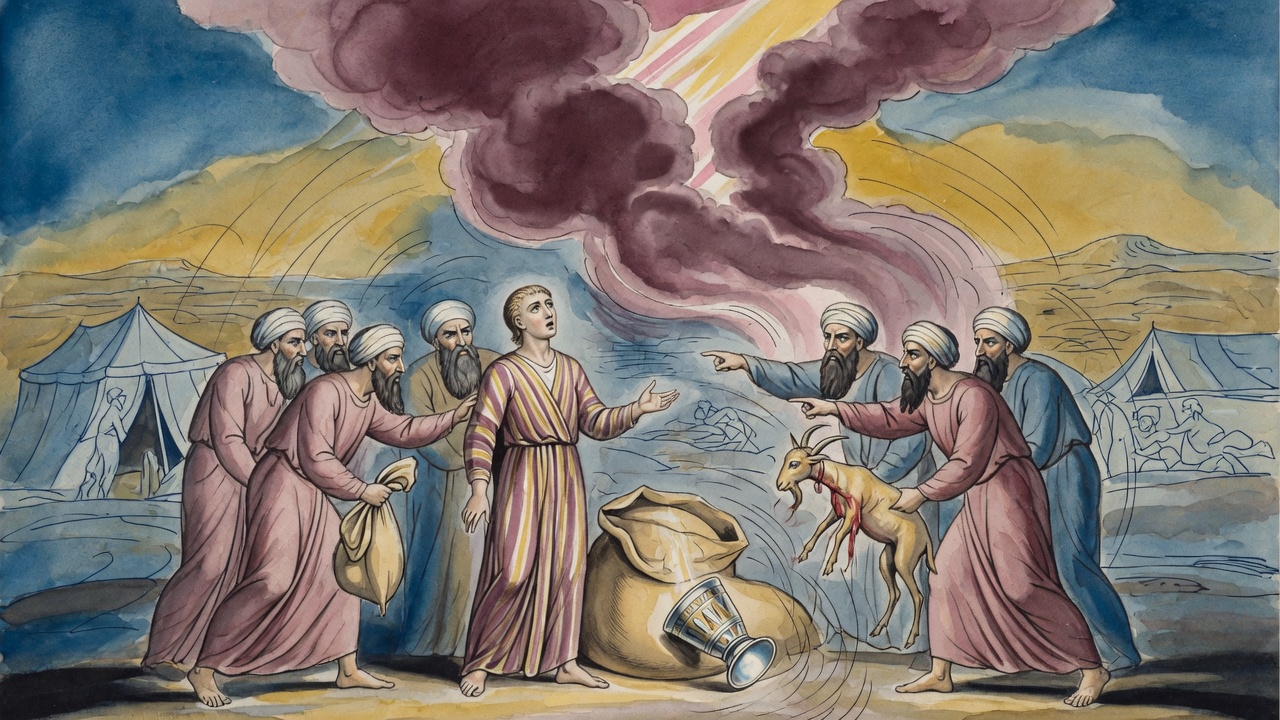
Before Sinai thunders, Joseph lives the Ten Words in Egypt. He refuses Potiphar's wife, spares his brothers, and will not play God with their lives.
Table of Contents
 Click for full size
Two Arks, One Life
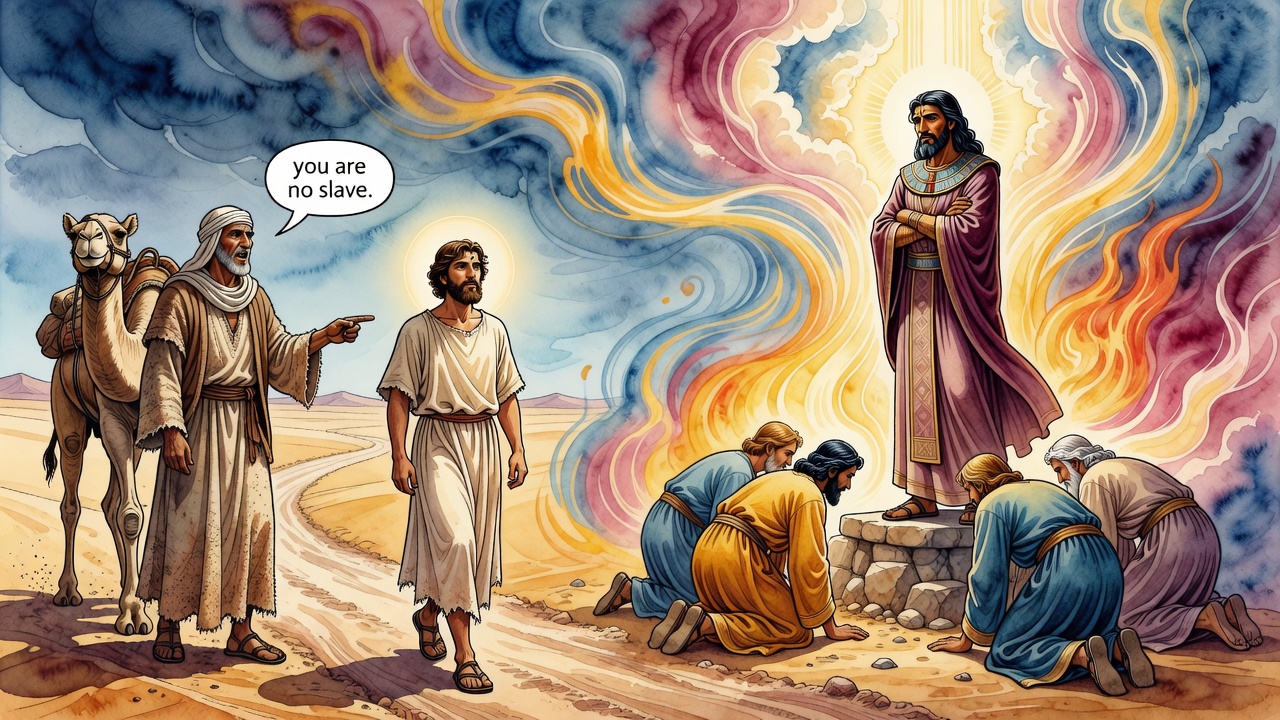
Joseph stood over his brothers in Egypt with the power to end them. Jacob was dead and buried with honor. The old fear returned to their mouths like a fever that had only slept: what if Joseph still hated them for the pit and the sale? He looked at the men who had sold him and did not raise a hand. "Am I in the place of God?" he asked (Genesis 50:19). The question was not humility as costume. It was a commandment lived before the mountain ever shook with public law.
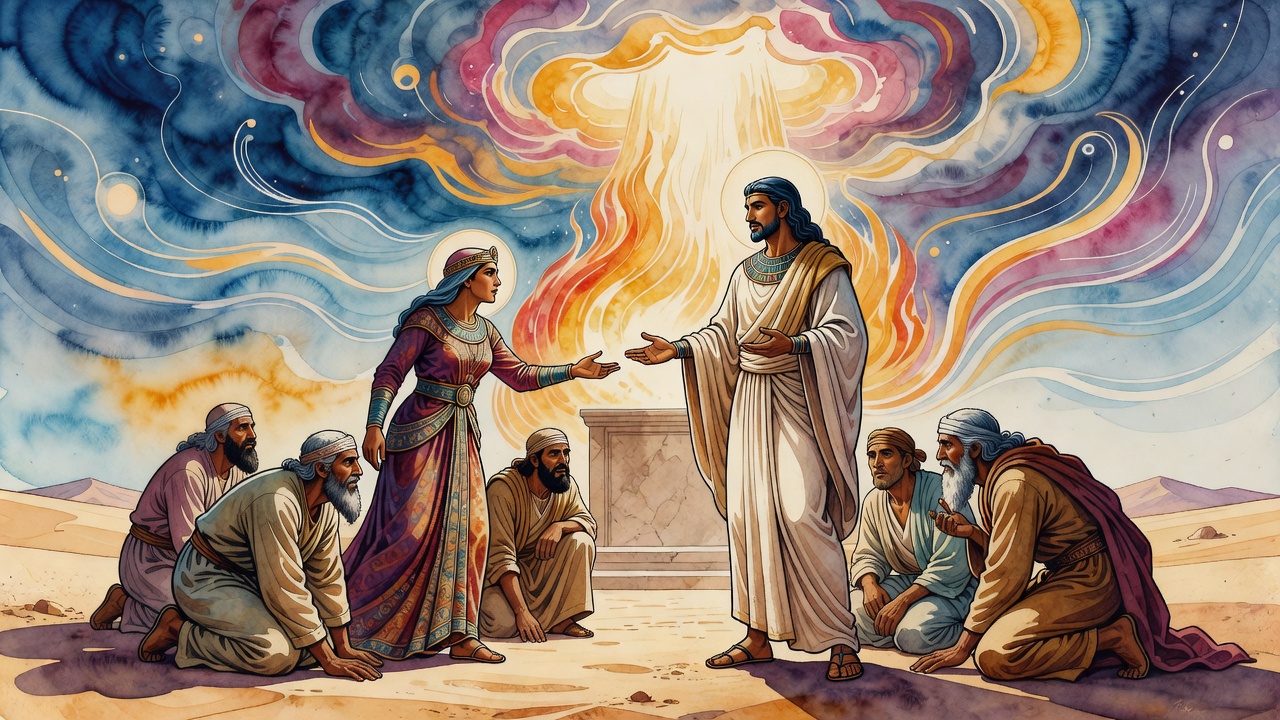
Later teachers would set the tablets of the covenant beside his story and hear the Ten Words speaking through his choices year by year. In one ark, "I am the Lord your God." In Joseph's mouth, the refusal to be God over men who had wronged him. In one ark, "You shall have no other gods." In Joseph's prison and palace, "It is God whom I fear" (Genesis 42:18). The rhyme was too tight to be accident in the ears of the Mekhilta.
The House of Potiphar
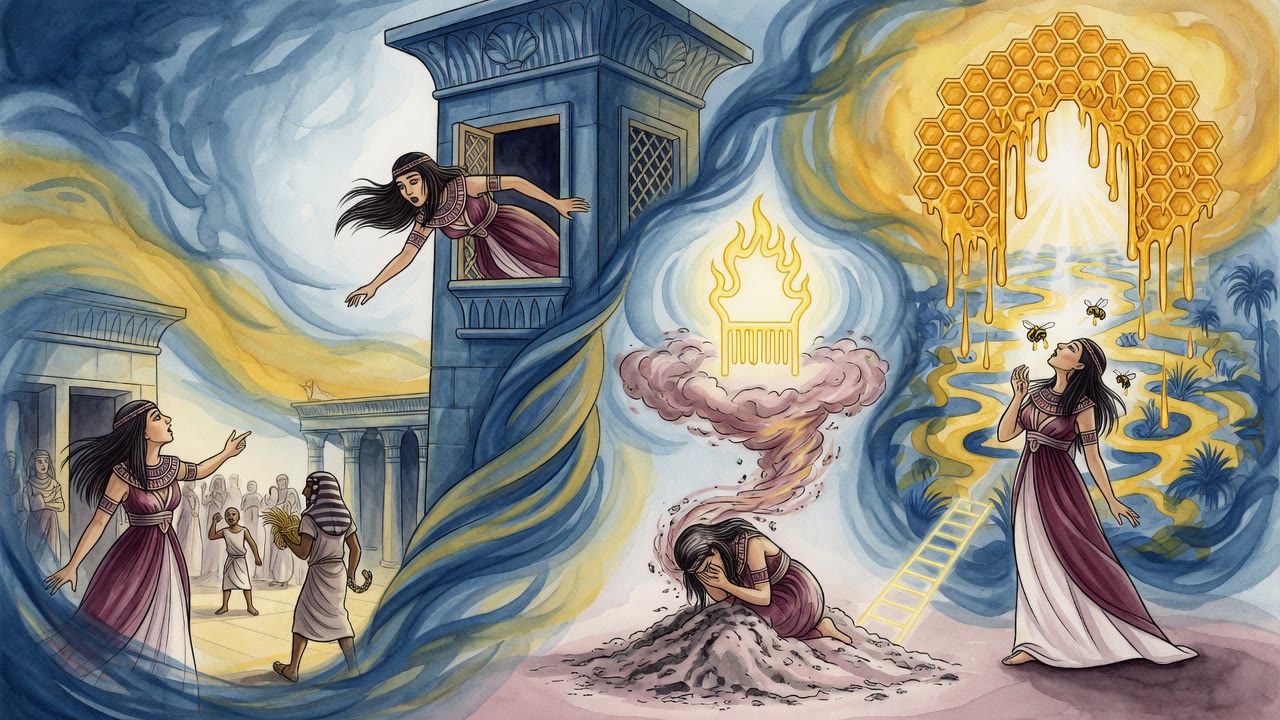
The wife of Potiphar reached for him day after day in a house that smelled of power and perfume. He was young, beautiful, and alone in a foreign service. He did not take what was not his. "You shall not commit adultery" was not yet thunder on stone, but it was already law in his body. He did not kill Potiphar though he could have twisted the story and made the Egyptian disappear into rumor. He did not covet the woman who coveted him. He ran, and the garment he left behind became evidence against him, and still he would not buy safety with another man's wife.
When he swore in the brothers' hearing, he swore by the life of Pharaoh, not by the Name in vain. Even his oaths kept a boundary the mountain would later name. "You shall not take the name of the Lord your God in vain" found him already editing his mouth in a court that worshiped other powers.
Prepare, and Do Not Hate
He ordered an animal slaughtered and prepared for his brothers' meal when they came down hungry and afraid. The word "prepare" would later ring against the manna law: on the sixth day they shall prepare (Exodus 16:5). The sages heard Sabbath eve in Joseph's kitchen before Israel ever camped at Sinai. He honored his father when Jacob said, "Go, I will send you to your brothers," and Joseph answered, "Here I am," knowing their hatred and still refusing to break the father's word (Genesis 37:13).
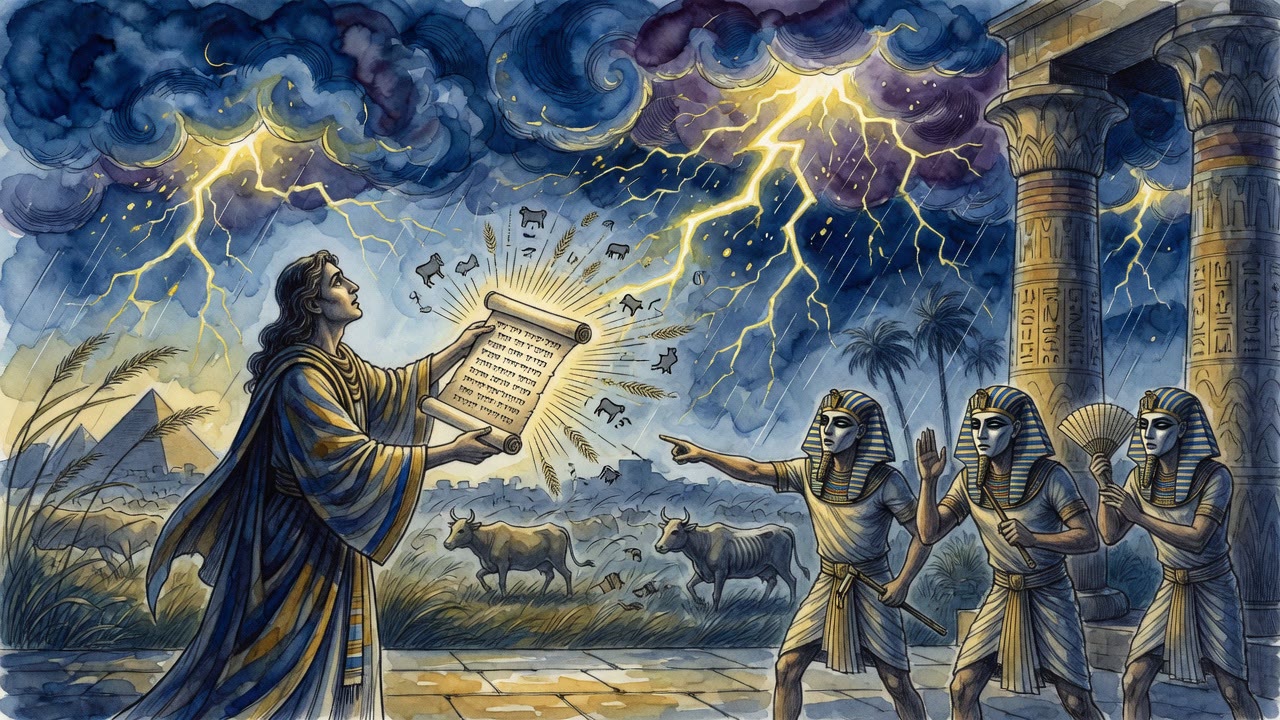
He did not rob Pharaoh when he gathered the money of the famine years into the royal store. He did not tell Jacob the full truth of the brothers' crime, and the silence was not false witness but a refusal to destroy them with accurate speech. "Do not hate your brother in your heart," the Torah would say; Joseph spoke to their hearts and counseled them when he could have repaid blood with blood (Genesis 50:21). "You shall not take revenge" arrived late as text and early as biography.
The Land Sworn Three Times
Under all his Egyptian titles Joseph still belonged to a promise spoken to others before him. God had sworn the land to Abraham between the parts (Genesis 15:18), to Isaac in the land of sojourning (Genesis 26:3), and to Jacob on the stone at Bethel where angels climbed a ladder (Genesis 28:13). Joseph's bones would wait for that land in a coffin that outlasted dynasties. His righteousness in Egypt was not a career of clever administration. It was fidelity to an oath that had not yet become an address he could walk with his own feet.
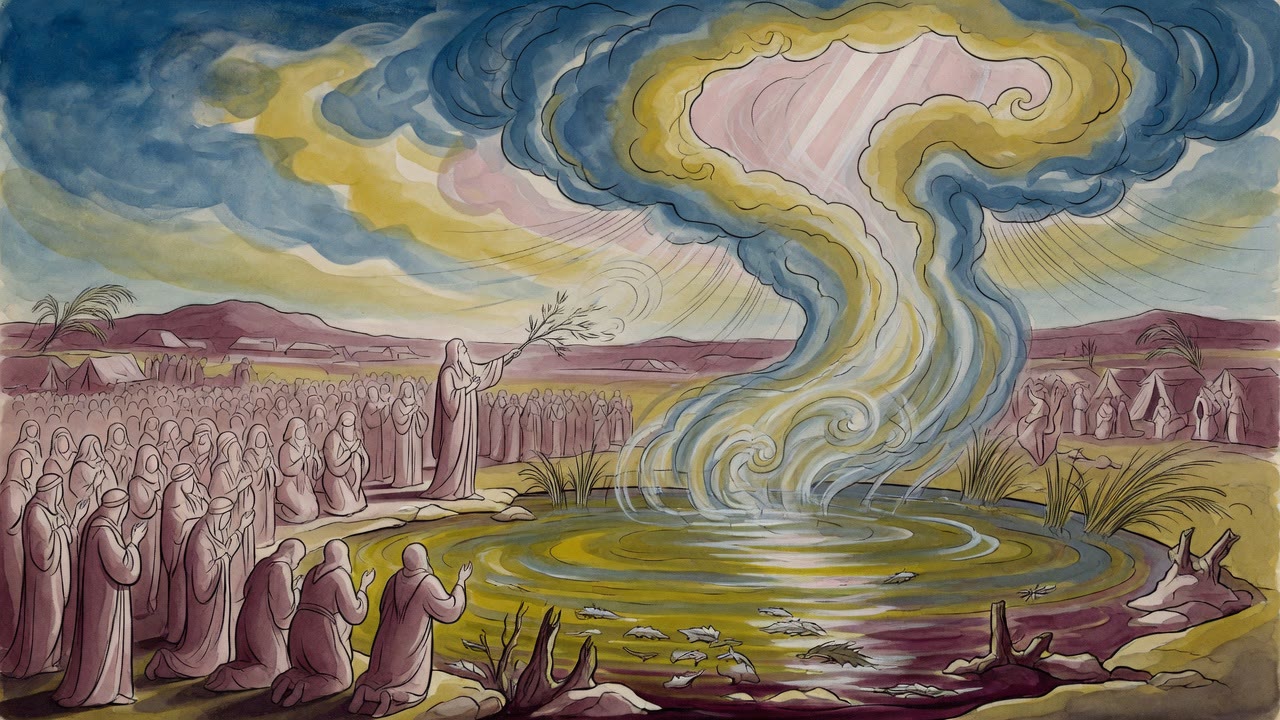
The Mekhilta would later teach that the Passover service begun in slavery must continue in every generation. Joseph's life is the same logic in a single body: the service of the commandments begins before the public ceremony, in rooms where no one is watching but heaven and a few frightened brothers.
What the Brothers Learned
When Joseph wept and fed them and refused revenge, the Ten Words were not a plaque on a wall in a future sanctuary. They were a man who would not become a second god over his family. Sinai would still be necessary. Thunder would still be necessary. A nation would still need stone and fire to hold what one righteous life had already practiced under pressure. Egypt already held a living tablet named Joseph, and that the ark of law and the ark of his choices rhyme on purpose.
Israel leaves Egypt carrying bones and commandments together. The bones are Joseph's. The commandments sound like his biography read backward from Sinai, and forward into every generation that must keep the service when power finally sits in its own hands and the old pit is only a story told at night.
← All myths