Joseph's Report Returned as Egypt's Suspicion
Joseph told Jacob his brothers ate meat torn from live animals and chased Canaanite women. In Egypt, Potiphar's wife accused him of the same thing.
Table of Contents
 Click for full size
The Report in the Father's Ear
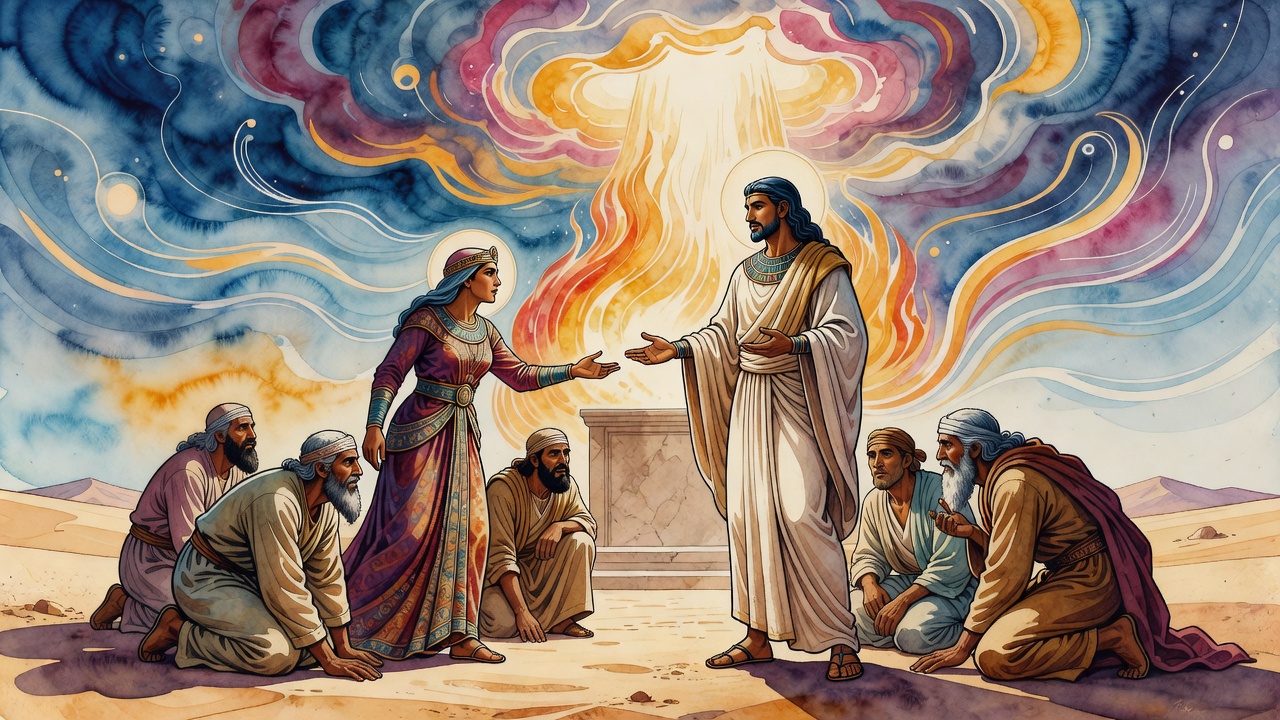
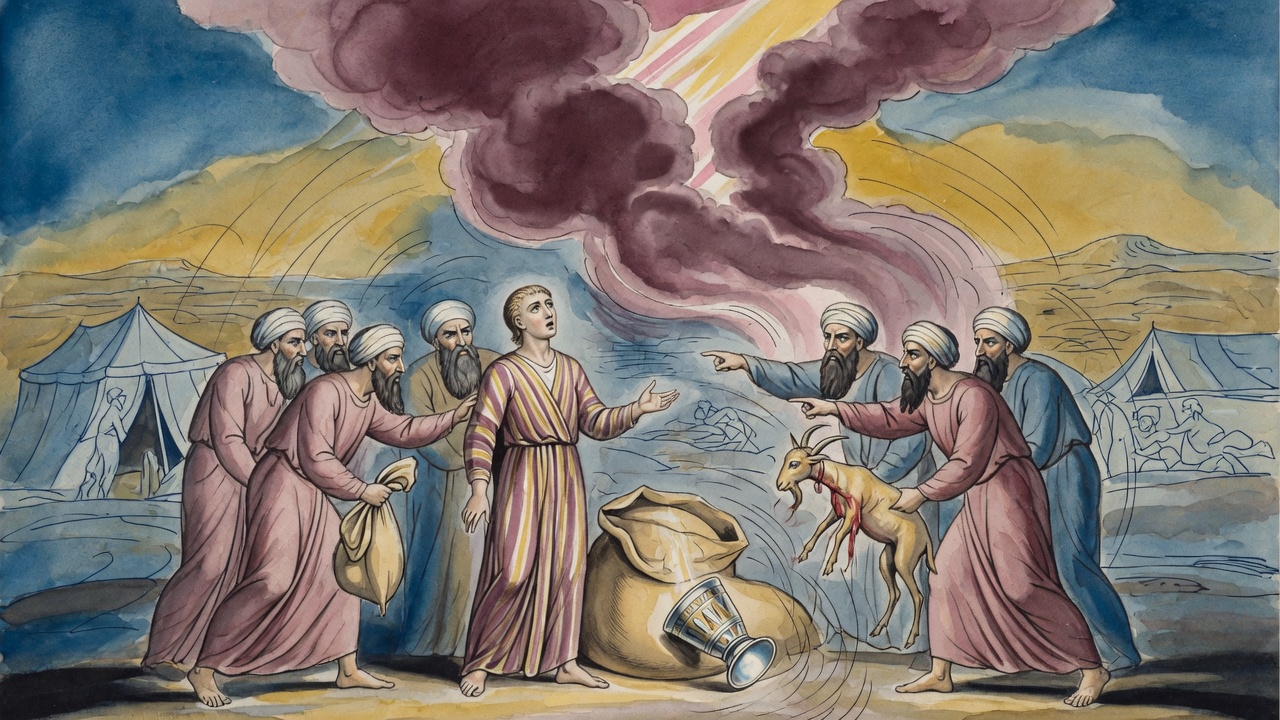
Joseph walked into his father's tent with news that was not news of peace. Dust from the flocks still clung to his hem. He spoke, and the air in the tent changed. "And Joseph brought a bad report of them" (Genesis 37:2). Rabbi Judah names the charge: the brothers tear a limb from a living beast and eat it. Rabbi Meir names another: they cast their eyes on Canaanite women. The youth who wore the colored coat also wore a tongue that cut.
He greeted them in peace when he met them in the field. They answered with silence. He still asked after their welfare. They still would not speak peace back. The report filled the space their silence left. Jacob heard his beloved son and did not yet hear the measure Heaven was already setting against that speech.
The Holy One answered the report without raising a voice in the tent. You have slandered the tribes concerning slaughter. By your life, tomorrow you go down to Egypt, and when you spread a feast and call them to eat at your table, they will suspect you over that very matter. You have slandered them in matters of women. By your life, the wife of Potiphar will declare that the Hebrew slave came in to her. The tongue that named another's sin is repaid with the accusation it spoke.
Silence as Hatred
Why could the brothers not speak to him in peace? Because he came and asked after their welfare, and they would not answer a word. That was simply his way. He always greeted them. There is the kind of man who, before he rises, asks after ordinary people, and once office is his, his spirit coarsens and he stops. Not so Joseph. Even after he rose in Egypt he kept the old habit: "And he asked them concerning their welfare."
Heaven took note of the one-sided greeting. In this world you began to ask after your brothers, and in return they hated you. In the world to come I Myself will reconcile you. I will remove the hatred, settle you in tranquility, and make peace between brother and brother. Until that day, the silence in the field was already a sentence, and the report in the tent was already a road toward a pit.
The Cups That Obeyed
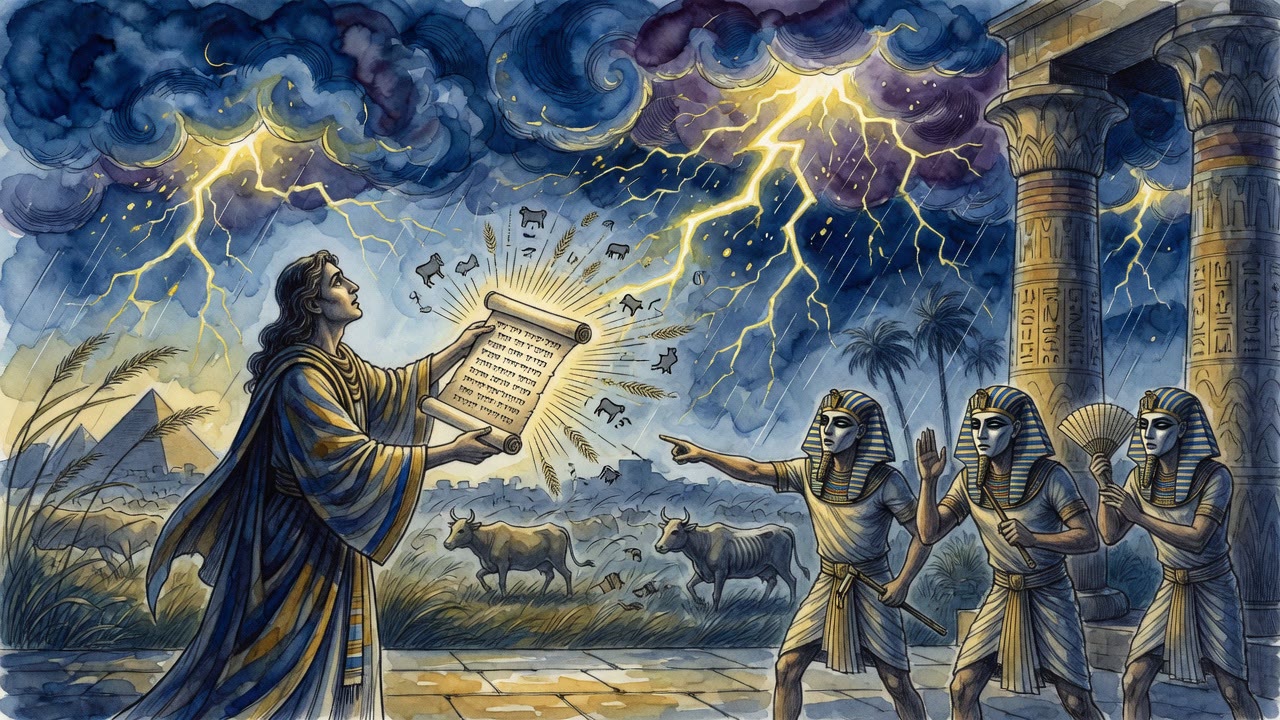
In Potiphar's house the verse called him a successful man, and the success was not ordinary trade. He girded his loins and stood ready. "Mix me a cup of hot water," said the master. Joseph mixed it, and it was hot. "Now give me cold," and from that same vessel he poured cold. "Give me wine." Wine. "Give it threefold, tempered with two parts of water," and the measured mixture filled the cup. The drink sweetened of its own accord, with no honey and no hand to sweeten it.
Whatever the master desired, the vessel obeyed. What was bitter turned sweet. The hand of Heaven went before the faithful servant and turned his labor sweet, while the house around him was already preparing the second half of the old report. Success can stand in a cup and still leave a man exposed to a lie that fits the shape of words he once chose.
The Accusation That Matched the Tongue
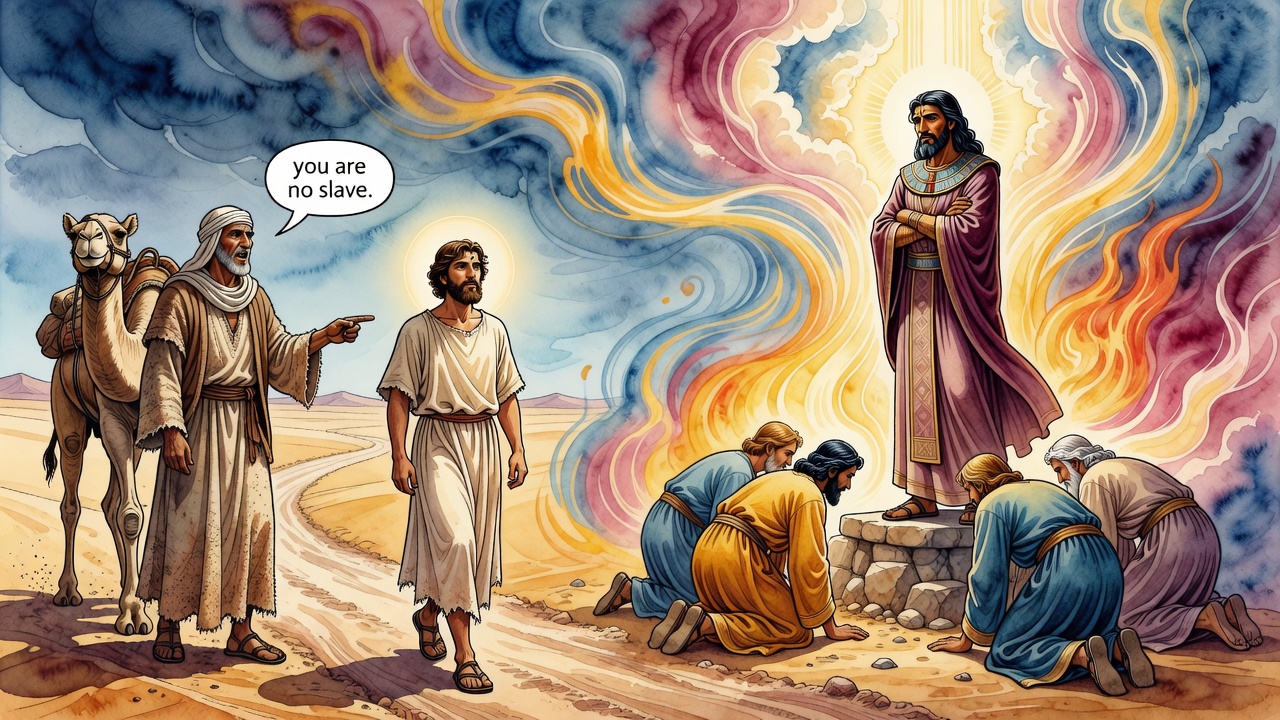
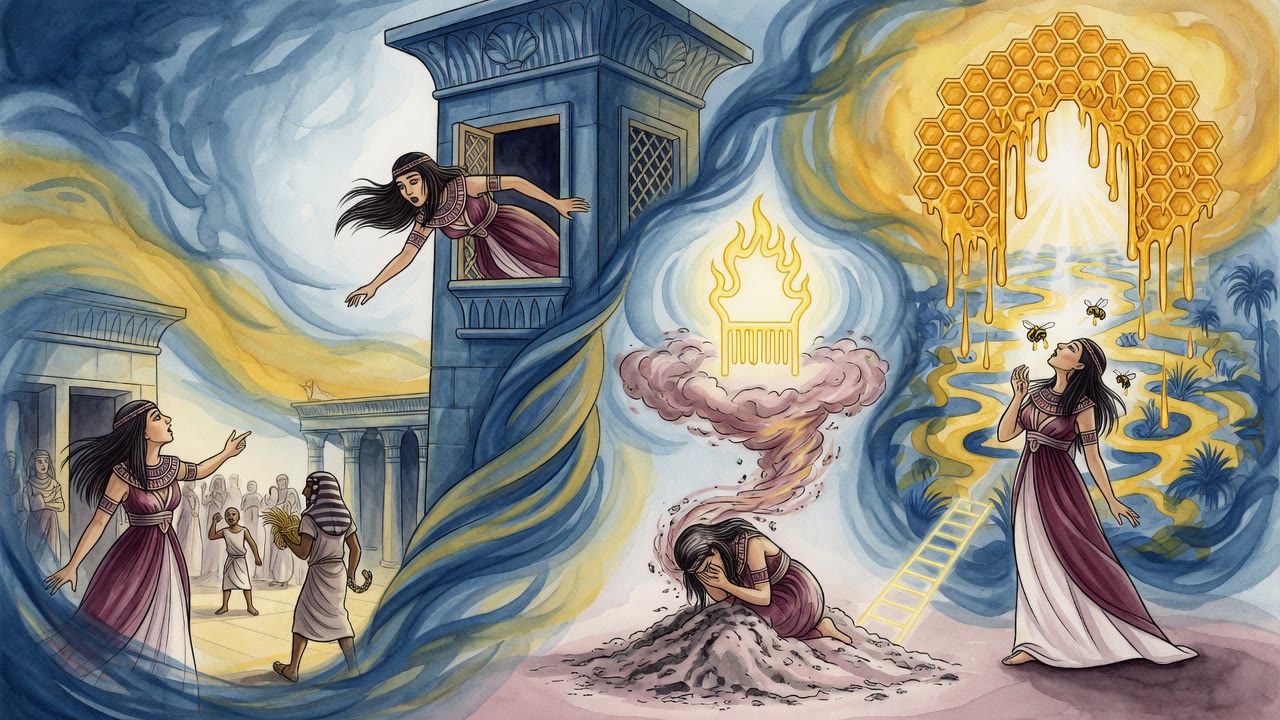
Potiphar's wife seized the story Joseph had once told about his brothers and women. The Hebrew slave came in to me, she said, and the household believed the shape of a sin Joseph had named against others. Measure for measure is not a proverb here. It is a plot. The coat left in her hand became the proof the old report had earned. The accuser of unclean eating becomes the one seated alone at the feast when the brothers finally arrive: "And they set on for him by himself." The one who spoke of Canaanite desire becomes the one charged with desire in an Egyptian room.
He still asked after their welfare when they stood before him as strangers. The habit did not die in the pit or in the prison. The charges he had once carried home had already done their work on his flesh and name. The greeting he never stopped offering waited for a day Heaven alone could finish. Between the steward's cups and the viceroy's table runs one continuous thread: speech returns to the speaker wearing foreign clothes.
What the Report Cost
A bad report left a son's mouth and entered a father's ear. Years later every clause of it walked back into the reporter's life. Hot water and cold from one vessel could not cool the return of the tongue's debt. Peace spoken into silence could not cancel the measure already set. Only the promise of a later peace, spoken by God over brothers who would not answer, stood beyond the kitchen of the steward and the coat left in a woman's hand. Joseph learned in Egypt what the field had already begun to teach: the mouth that wounds kinship will drink from that wound until Heaven rewrites the ending.
← All myths