Benjamin Named the Worse Crime When His Brothers Called Him Thief
They called him thief, then they called his mother a thief. Benjamin asked about a kid of the goats and a coat soaked in blood.
Table of Contents
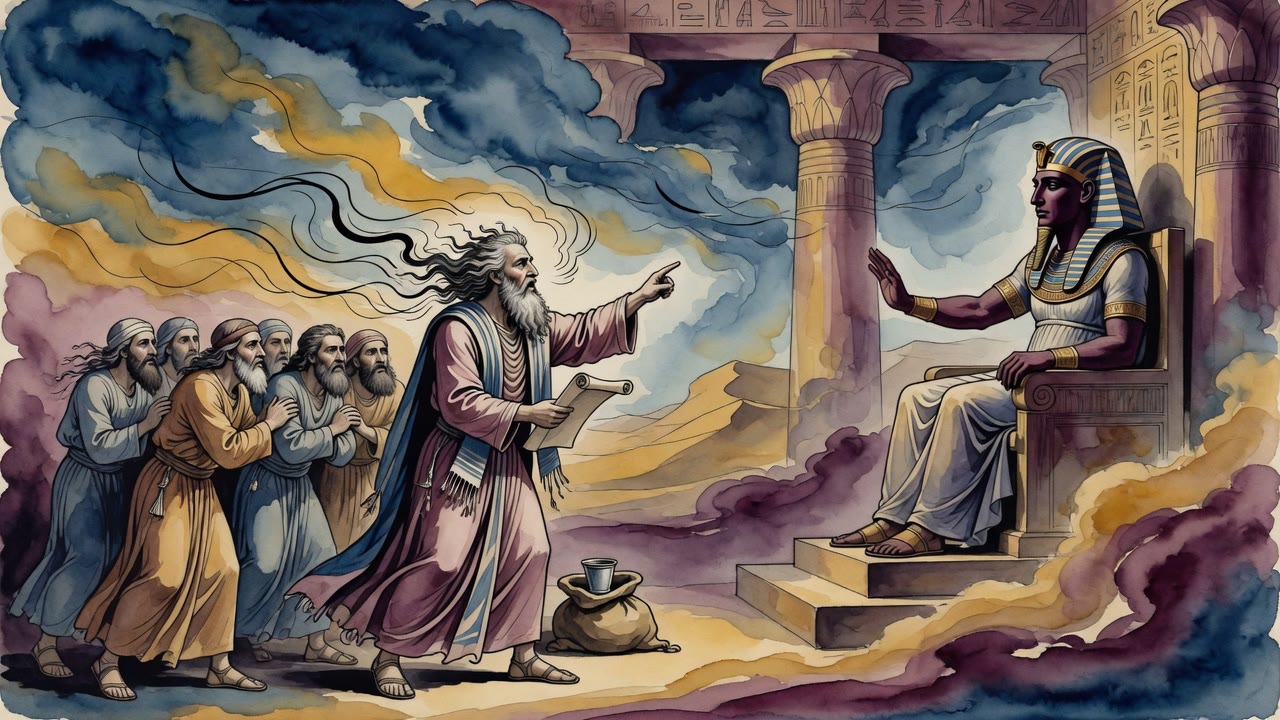
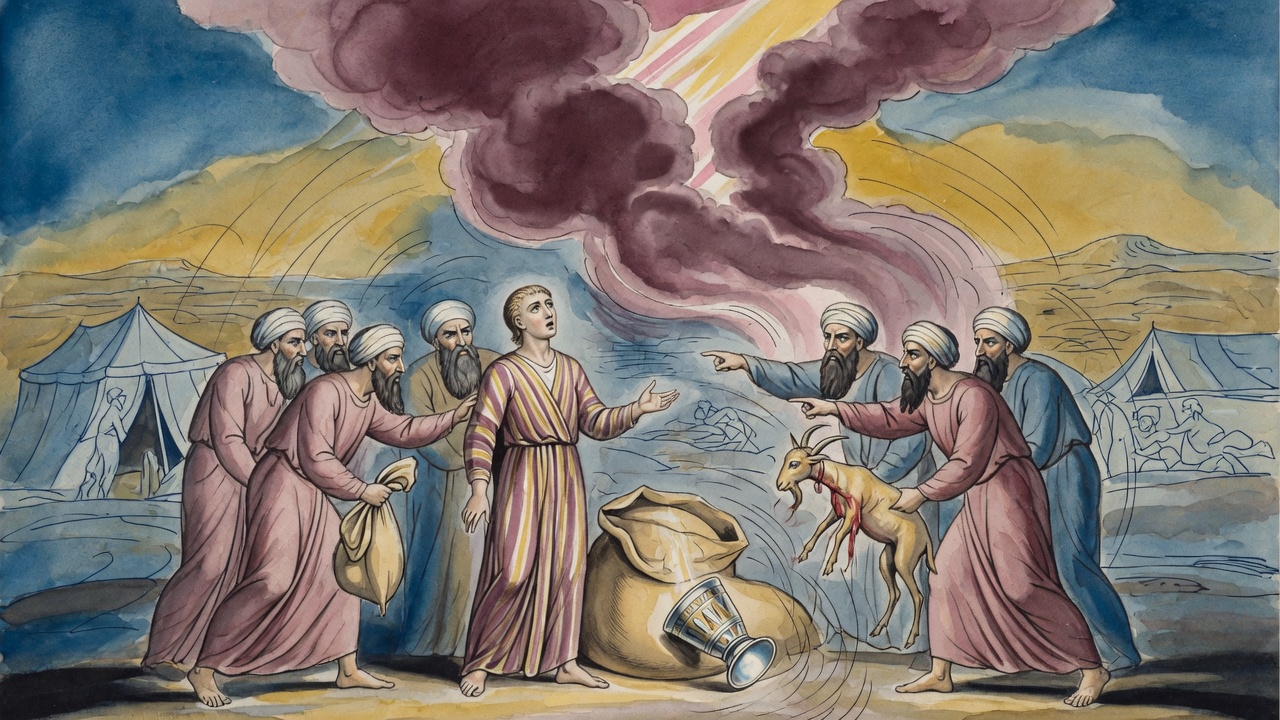
Manasseh began with Reuben. He opened the oldest brother's sack first and took his time. Grain. Travel bread. Nothing. He moved to Simeon. Then Levi. He worked down the birth order as if the silver cup might be anywhere, as if he did not already know whose bag held it.
 Click for full size
The ten older brothers watched the performance. Each empty sack was a small relief and a tightening. By the time Manasseh reached the youngest, no one could say the search had been aimed. Then the cup came up out of Benjamin's sack, bright as a lie, and the pretense of fairness had done its work.
Thief and Son of a Thief
They turned on him at once. "O thou thief and son of a thief!" The words hit him twice. First the cup. Then his mother.
Rachel had taken Laban's household idols when she fled Paddan-aram with Jacob. She had hidden them under her on the camel and said she could not stand because she was unwell. The family had kept that theft in its mouth for a generation. Now the brothers spat it at her last son. Your mother brought shame on your father. Now you bring shame on us.
Benjamin had not been alive for that flight. He had been born later, in Canaan, and the birth had cost Rachel her life. He knew the idols only from his brothers' telling. He also knew another story they had hoped he did not know in full.
The Kid of the Goats
His answer was short. "Is this matter as evil as the matter of the kid of the goats? As the deed of those who sold their own brother?"
The road went quiet.
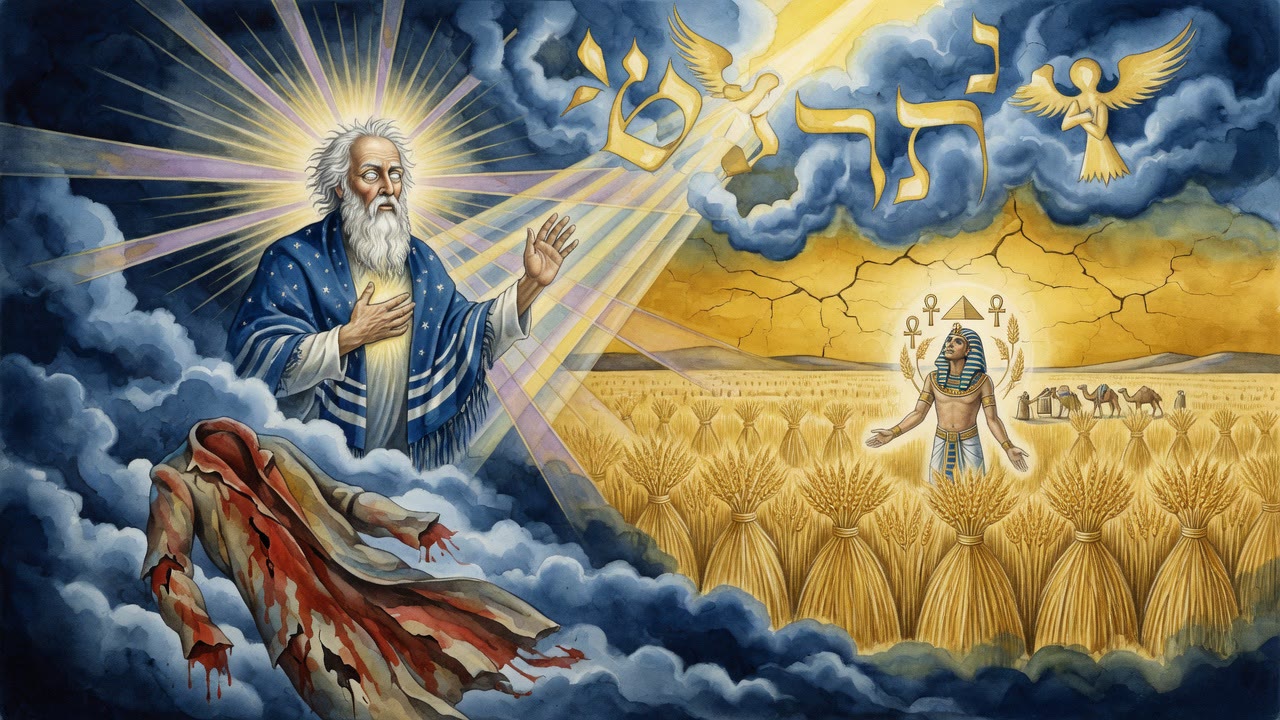
The kid of the goats was the animal whose blood they had used to fake Joseph's death. They had taken the coat of many colors, soaked it, and carried it home to Jacob. They had watched their father's face understand what they meant him to understand. That had been twenty years ago. Benjamin had been left at home when Jacob sent Joseph toward Shechem. He was not supposed to have the whole account. He had pieced it together in the house anyway, and now he spoke it to the ten men who had done it.
He Named It Once
He asked the question and stopped. He did not pile on. He did not list the pit, the traders, the silver, the empty place at the table. He named the worse crime and left the silence to finish the work.
They did not answer him. There was no answer that would hold. They were still on the road back toward the viceroy's city, still carrying a planted cup, still bound to a charge they could not shake. Judah had pledged his own life to Jacob for this boy's return. "Send him with me," Judah had said, when famine pressed and Jacob would not let Rachel's last son go. If Benjamin stayed in Egypt, Judah stayed under the blame all his days.
So they could not cut the youngest loose, even now, even with the cup in his sack. The accusation against Benjamin sat in one scale. The kid of the goats sat in the other. Everyone on the road knew which side had dropped.
The Donkeys Turned Around
They loaded the sacks again. They turned the donkeys. The city they had just left rose back into view, and the viceroy who had set the cup in the grain was waiting there, unknown to them, measuring whether the men who had sold a brother would sell another.
Benjamin walked with the cup's weight still in the air around him. The brothers had called him thief. He had called them sellers of their own blood. He did not repeat it. The donkeys' hooves struck the road, and the ten men around him had no sentence left that would cover what he had just put in their mouths.
Ahead, Egypt's court would ask who was guilty. Behind them, a coat that had once been wet with a kid's blood was still hanging in the family story. Benjamin had hung it there in public, once, and then he closed his mouth.
← All myths