Mothers Pluck Fruit from the Walls of the Sea
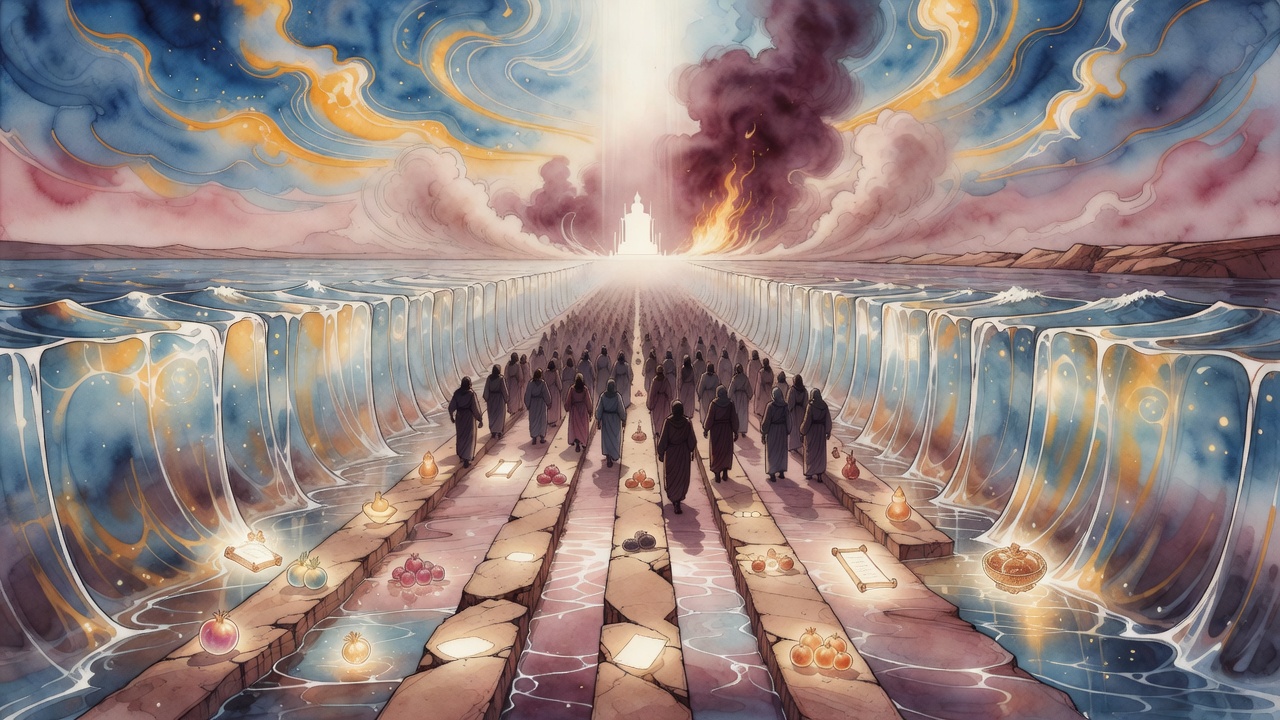
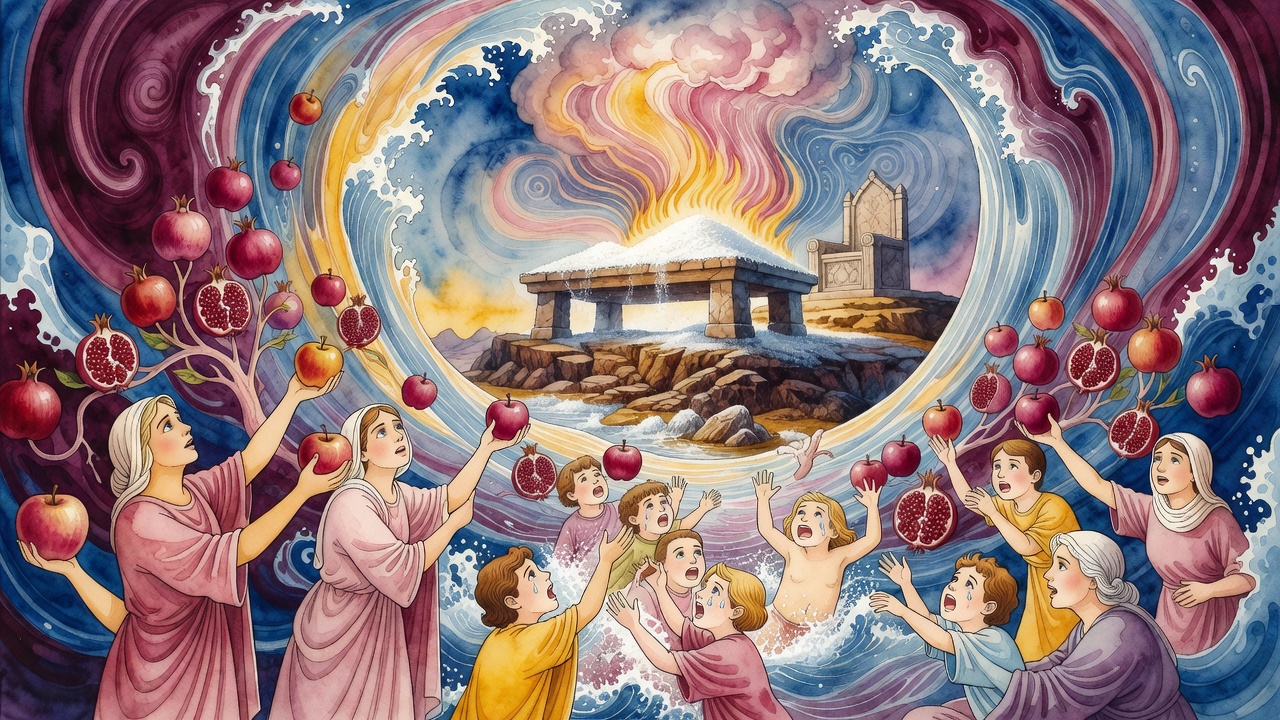
A baby cried on the seabed, so his mother reached into the standing water and pulled out an apple. Another woman found a pomegranate in the wall.
Table of Contents
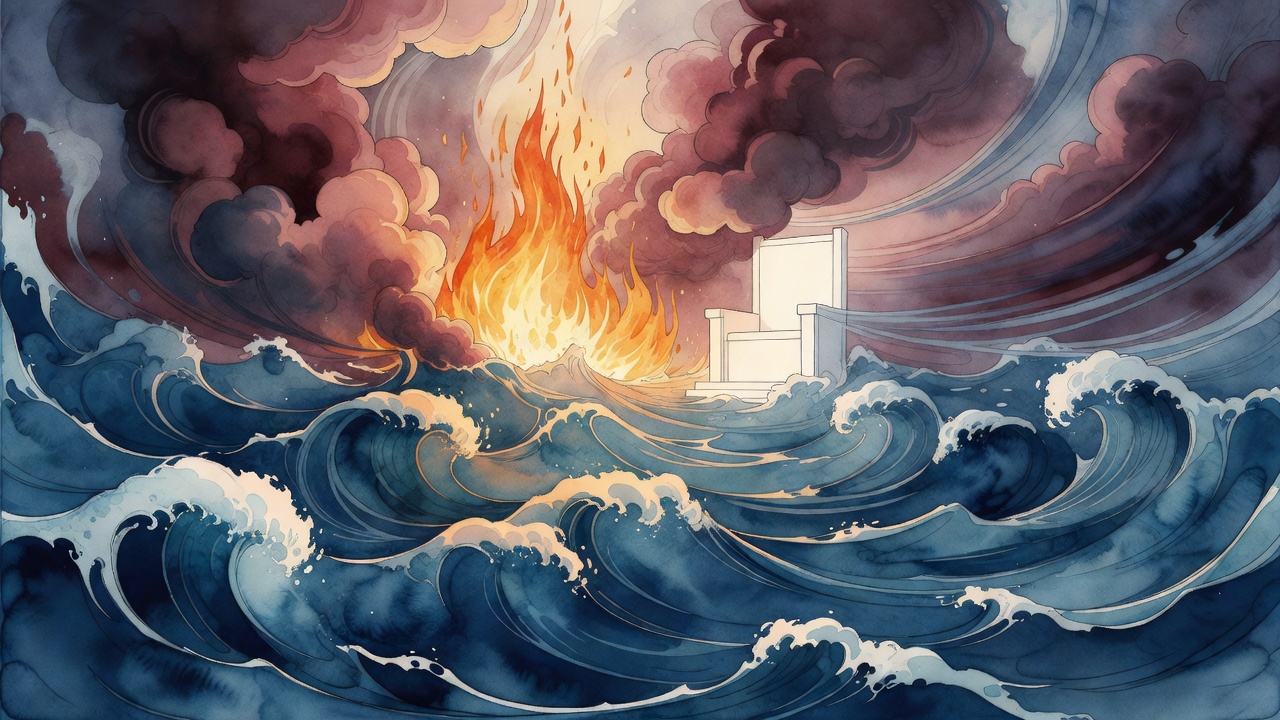
The seabed was not dry in the way a road is dry. It was wet memory underfoot, salt and shell and the smell of something that had never meant to be a path. Moses had stretched out his hand. The water stood like walls. Israel walked into a corridor that should not exist, and the first sound after the wind of division was not song. It was a baby crying.
 Click for full size
A mother shifted the child on her hip and looked at salt water that had become architecture. The child wanted milk, fruit, anything that tasted like the world before midnight and death. She reached into the wall of the sea.
Apples Where Salt Should Be
Her hand came back with an apple. Another woman found a pomegranate, red as a wound and whole. The midrash places fruit growing in the waters for the children who wailed on the crossing, a provision so strange that later tellers still stop mid-sentence to make sure the image is heard. Not bread baked in haste. Fresh fruit, as if Eden had sent a basket through the flood that was not a flood for them.
Children quieted with juice on their mouths. Mothers walked faster. Behind them, Egypt's chariots found the corridor less hospitable. Ahead of them, the far shore waited like a rumor that had become dirt.
Walls That Fed and Walls That Held
The sea did two jobs at once. It held armies back and it fed mouths that could not wait for manna's later schedule. Providence here was not abstract care. It was something a woman could grab without losing her place in the column. The child on her shoulder tasted sweetness while the floor of the ocean held the weight of a nation mid-escape.
No one wrote a hymn in that exact second. Hymns came later, on the far bank, when lungs found air that did not taste of fish and miracle. In the middle, the work was simpler. Keep walking. Keep the child from screaming. Take the fruit the water offered and do not ask how an apple roots in salt.
The Table Fifty Cubits High
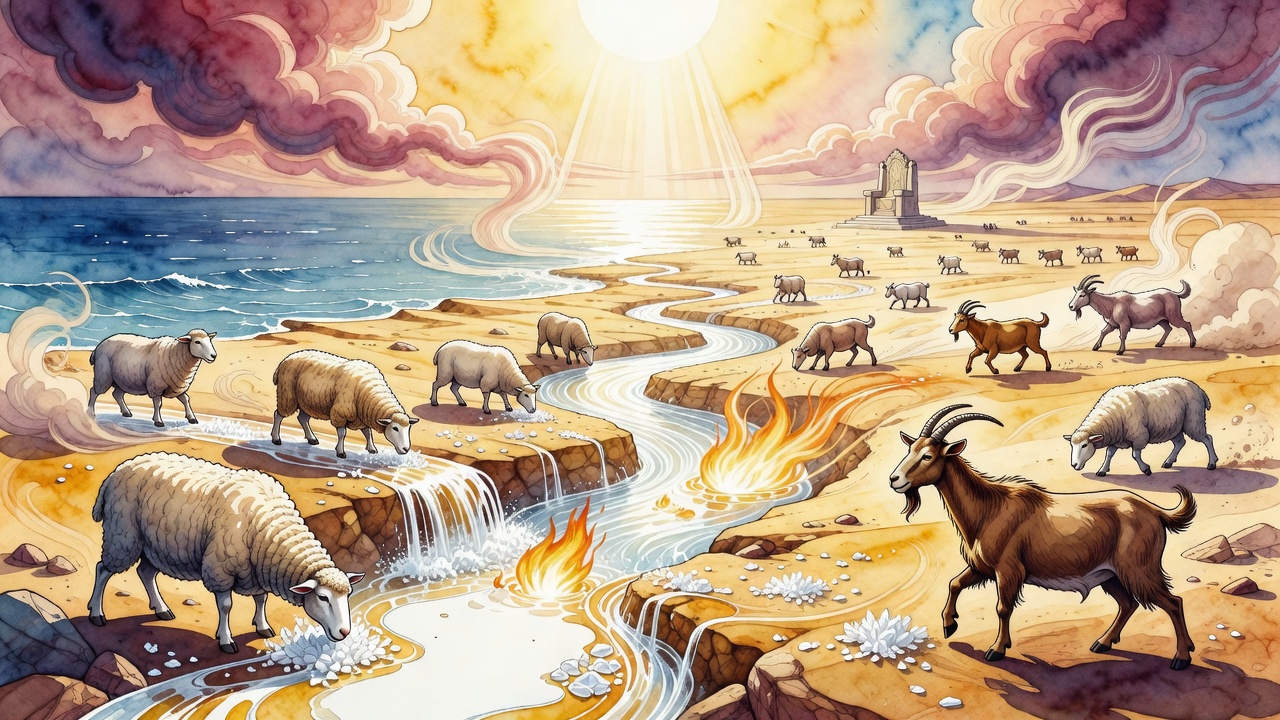
In the wilderness, the feeding changed shape but not stubbornness. "He prepares a table before me," the psalm says, and the midrash sets that table as manna. Rabbi Ishmael ben Elisha said the manna stood fifty cubits high. Anyone who would not believe it, he snapped, should not look upon such goodness, quoting Job about rivers of honey and butter withheld from the scoffer's eye.
Fifty cubits is not a polite portion. It is a pile that insults scarcity. The people who had plucked fruit from sea walls now faced a table that rose like a white cliff each morning, enough to make disbelief look like a kind of blindness rather than sophistication.
David's Mouth in Another Desert
The same midrash hears David speaking of green pastures while fleeing Saul, another wilderness where a table would have been a joke if Heaven had not insisted. The line from sea fruit to desert manna to a hunted king's psalm is not a neat lesson. It is a habit God has of setting food where maps show only threat.
Israel at the sea did not yet know manna's name. They only knew a child's cry and a mother's wet hand and the taste of something that did not belong to Egypt. That was enough to finish the crossing without the column collapsing into panic.
What the Corridor Remembered
When the waters returned, they took the chariots and left no apples for later collectors. The fruit was for the hour of the wail, not for museums. The manna, when it came, melted in the sun if hoarded past trust. Both foods refused to become property. Both arrived as argument against the claim that survival must always taste like fear.
A mother on the far shore wiped pomegranate from a small chin and looked back at water that had gone back to being only sea. Somewhere ahead, a table would rise fifty cubits in a place with no market. She did not know that yet.
Older children stopped staring at the Egyptian dust cloud and started staring at fruit that should not exist. One boy bit an apple and laughed, a sound so wrong and right in a seabed corridor that his mother almost wept from the shock of ordinary joy. The walls of water did not lean in. They held, tall as towers, while juice ran down small wrists.
Far ahead, the first ranks reached sand that had always been shore. Behind, the last ranks still walked between orchards of miracle and the threat of wheels. The fruit did not run out until the need ran out. Provision timed itself to the cry, not to later trade.
She knew her child had eaten between two walls of water, and that the road out of slavery had, for a few impossible minutes, been lined with orchards that had no business being there.
← All myths