4 min read

The Tither Sold Water at Three Times Wheat's Price

A man who tithed without shaving a grain split his field for a reservoir. In the drought his water sold for three times the price of wheat.

Curated by Arthur · Told by Maggid ·
Table of Contents
  1. Half a Field, Half a Sea
  2. When the Wells Failed
  3. Barley When the Wheat Is Gone
  4. The Locked Storehouse
  5. What Costs Three Selas
The Tither Sold Water at Three Times Wheat's Price Click for full size

Half a Field, Half a Sea

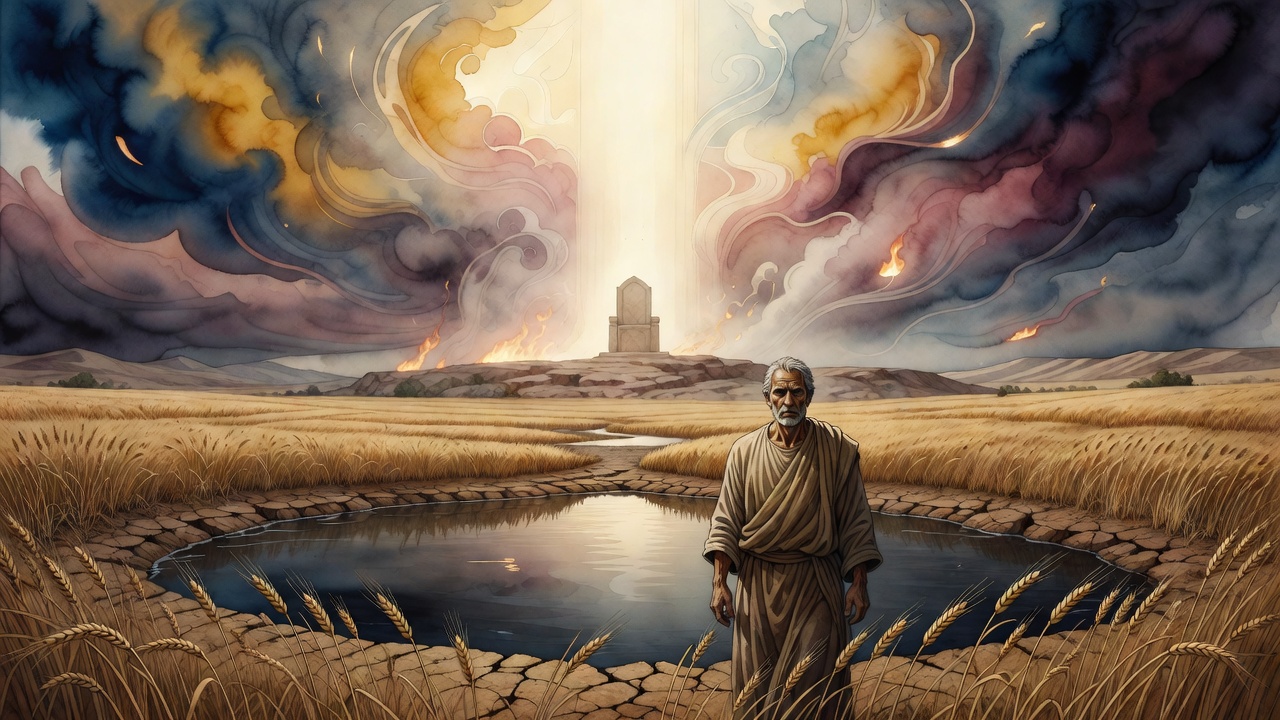
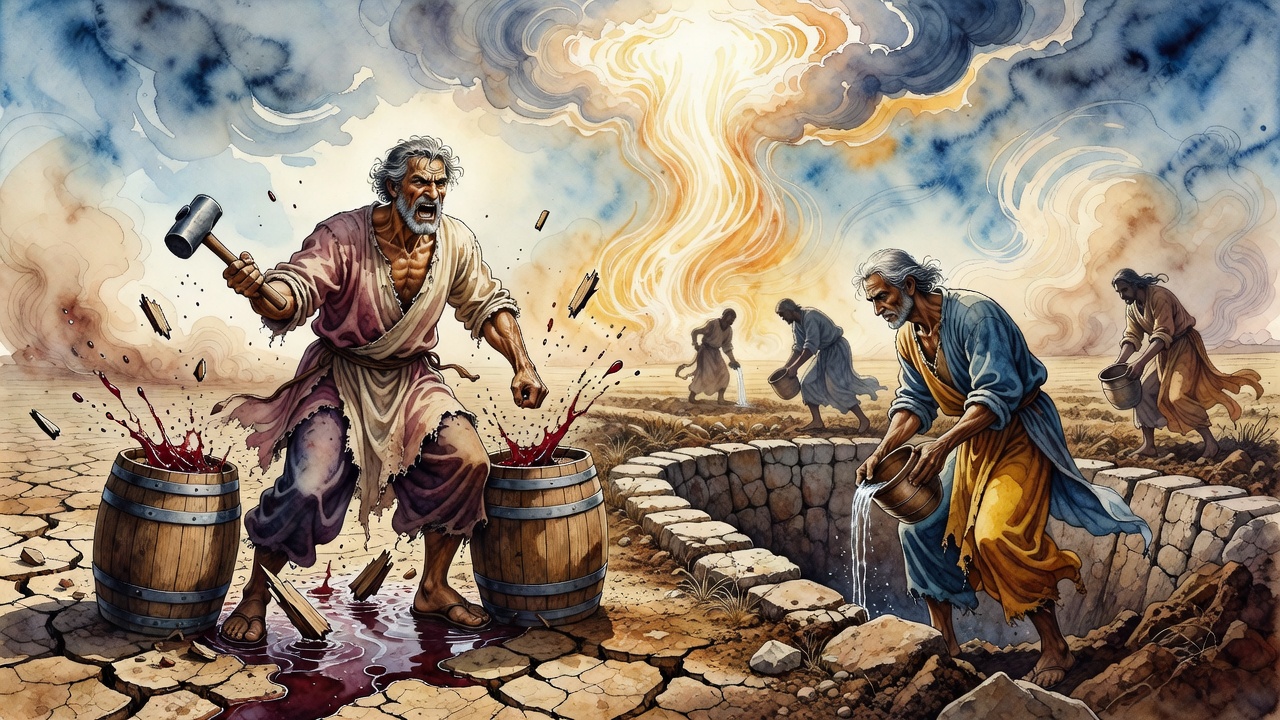
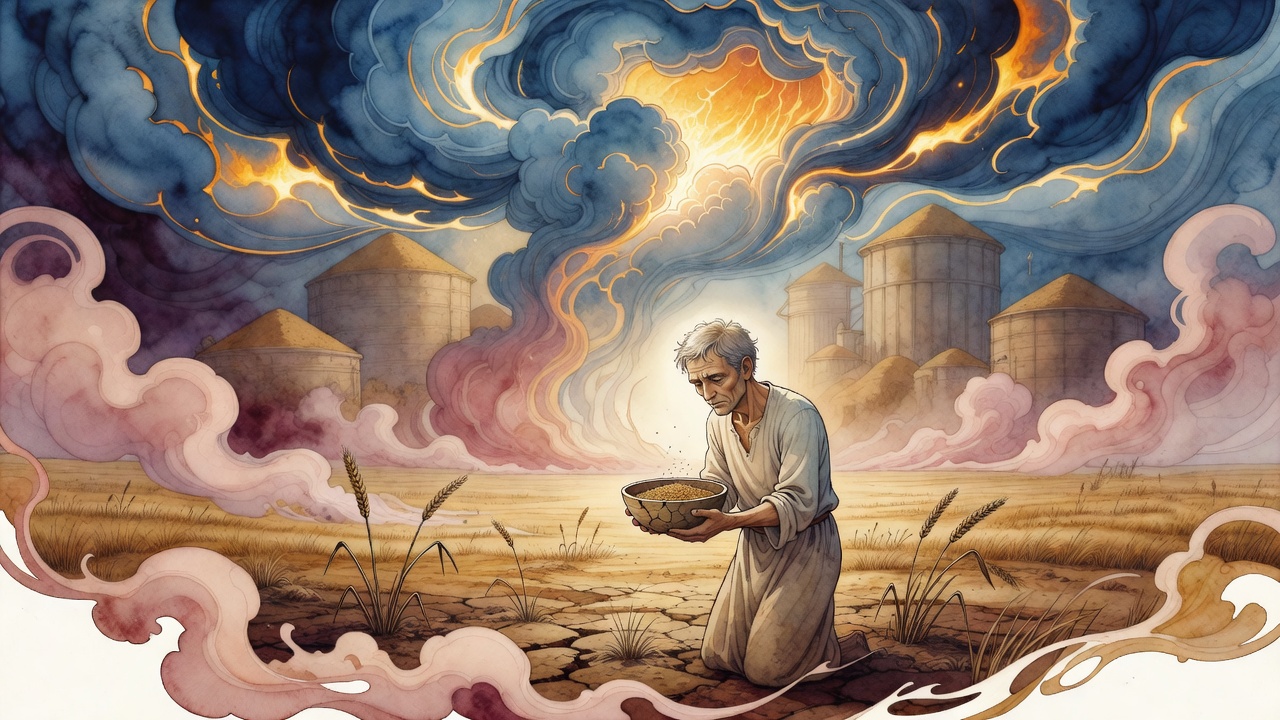
There was a man who tithed his harvest exactly as the Torah demands, never shaving a grain off what he owed to Heaven. He owned a single field. Then the Holy One placed a thought in his heart: divide the land. He sowed only half with grain and dug the other half into a reservoir.

Neighbors must have laughed. Half a field of wheat is half a harvest. Who trades bread for a hole in the ground? Heaven sees the years before they arrive. Children of the later dry year would learn to measure water like silver. The tither measured it like answer to prayer before he knew why.

When the Wells Failed

Drought came. Wells failed. Wheat withered, and what little grain remained grew dear. The man sold a se'ah of wheat for a sela. But his water he sold a se'ah for three selas. Three times the price of wheat. The thing no one thought to store became the thing everyone needed.

Rabbi Levi tells it so you feel the whisper that started it. What earned him that instinct? Only this: he had taken out his tithes properly. The man who gives Heaven its full measure finds Heaven gives the measure back, pressed down and overflowing. For this reason Moses warned Israel, You shall surely tithe.

Barley When the Wheat Is Gone

Folk wisdom is blunt. Ask a man why he eats coarse barley bread, and he says there is no wheat. Ask why he chews carobs, and he answers he has no dried figs. People reach for the lesser food only when the better one is gone.

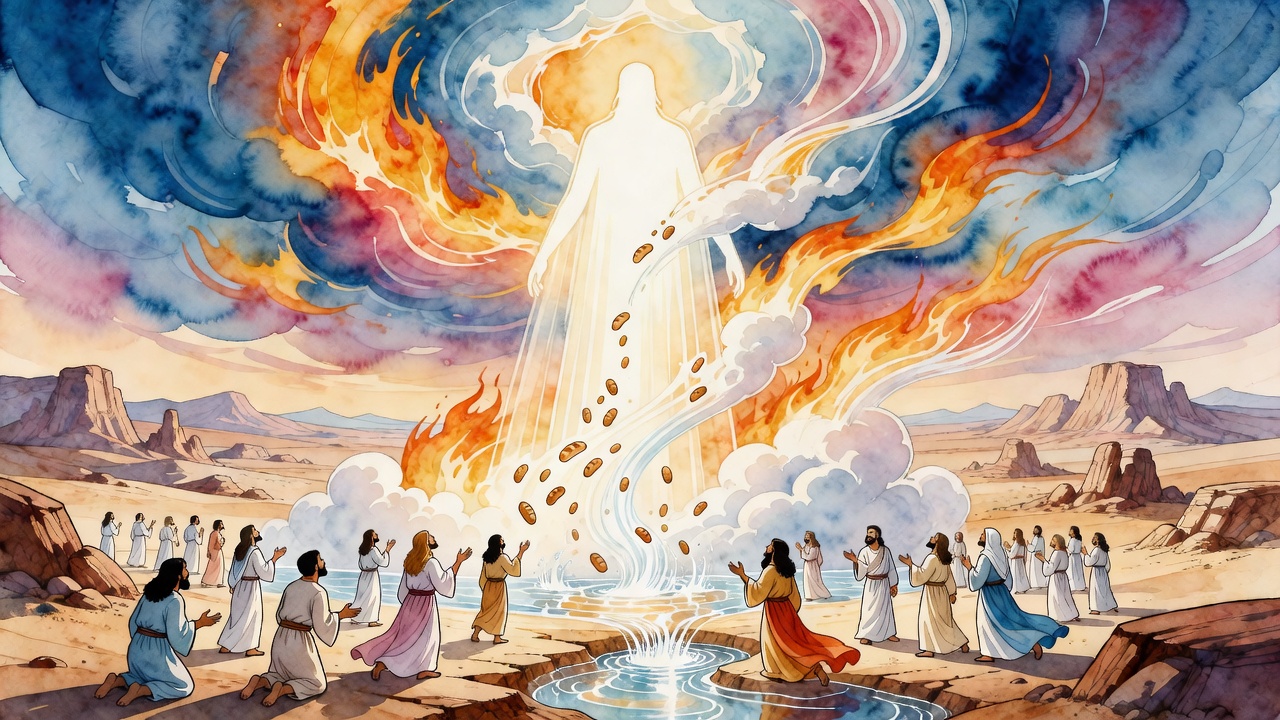
So long as Israel held even a single handful of the manna gathered on the day Moses died, they had no wish to eat the crops of Canaan. The bread of heaven outranked the produce of the soil. Manna began on the sixteenth of Iyar, ceased on the seventh of Adar, and the last of it finished on the sixteenth of Sivan. Only then they ate of the produce of the land of Canaan in that year (Joshua 5:12). Heaven's provision ends on a date. Inheritance begins on a date.

The Locked Storehouse

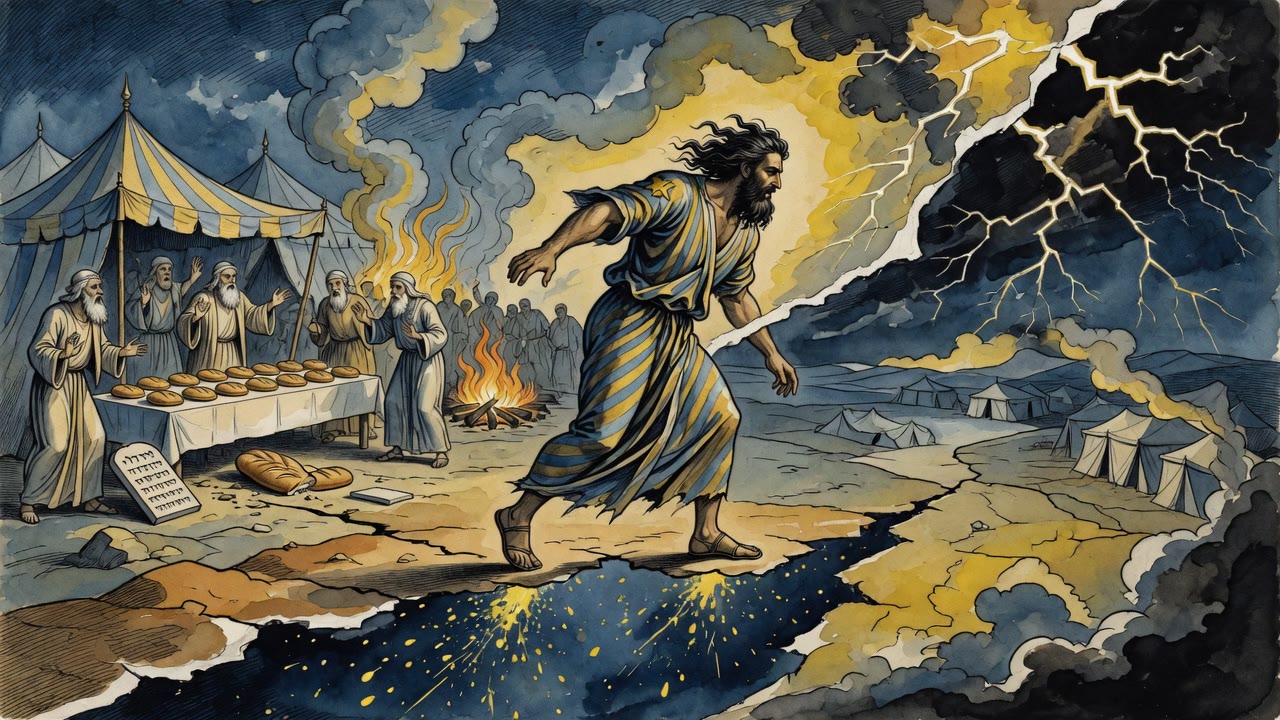
Rabbi Shimon bar Yochai frames the same dependence as royal policy. A king holds the key to the storehouse. When sons and servants walk in his will, he unlocks abundance. When they turn, he locks the doors and hunger teaches. Thus with Israel. Align, and the Lord opens His goodly treasure, the heavens. Turn, and wrath holds back the rain.

The tither's reservoir is the human side of that theology. He does not invent rain. He digs where Heaven has already taught him to trust. Tithe first. Split the field when told. Hold water against a year that has not yet shown its teeth.

What Costs Three Selas

In a drought, wheat is precious and water is more precious. In the wilderness, manna is precious and ordinary bread waits its turn. In the king's house, the storehouse is precious and the key is more precious still. Survival is not only cleverness. Survival is fidelity that receives a next instruction: give the tenth, dig the cistern, eat heaven's bread until it is gone, then accept the land's grain without contempt.

The man who shaved nothing from Heaven's share woke up owning the only liquid market in a dry year. That is not luck. That is trust made visible in mud and price.

The older sources do not float above the street. They plant their claims in rooms where people eat, mourn, marry, dig, and wake at midnight. That is why the scenes still cut.


← All myths
From the tradition

Sources

3 sources

The texts behind this telling. Some cards carry a translation of the source; others are our own retelling of it, and each card says which. Every card links out to the original.

Midrash Tanchuma Buber, Re'eh 9:5Midrash Tanchuma Buber, Re'eh

Translation of the source text.Midrash Tanchuma (Buber), Public Domain, on Sefaria · CC-BY-SA

Rabbi Levi said: There is a story about one who took out his tithes properly, and he had a certain field. And the Holy One, blessed be He, put it into his heart, so that he made half of it sown with crop and half of it a reservoir for water. And a year of drought came, and he was selling a se'ah of wheat for a sela and a se'ah of water for three selas. What caused this for him? Because he took out his tithes properly. Therefore Moses was warning Israel (Deuteronomy 14:22): "You shall surely tithe."

Full source
Yalkut Shimoni on Nach 15:10Yalkut Shimoni on Nach

Translation of the source text.Yalkut Shimoni on Nach (Sefaria) · CC-BY-NC

Another interpretation. A proverb says to a person: Why do you eat barley bread? Because I have no wheat bread. Why do you eat carobs? Because I have no dried figs. So too, had Israel still held even that single handful which they had gathered on the day Moses died, they would not have wished to eat from the produce of the land of Canaan. And in that year that they went out from the land of Egypt, the manna came down for them on the sixteenth of Iyar, and it ceased on the seventh of Adar, and it was finished in their hands on the sixteenth of Sivan, as it is said, "And they ate of the produce of the land of Canaan in that year" (Joshua 5:12).

Full source
Sifrei Devarim 40:12Sifrei Devarim

Retold in our words. Read the original at the link below.Sifrei by Rabbi Shraga Silverstein · CC-BY

Here, Rabbi Shimon bar Yochai, a towering figure in Jewish mysticism – tradition ascribes the authorship of the Zohar to him – uses a powerful analogy to illustrate our relationship with the Divine.

A king. He has many sons and servants, all completely dependent on him. He’s the sole provider, holding the key to the royal storehouse, the source of all sustenance. When his people act in accordance with his will, what happens? He unlocks the storehouse. Abundance flows. Everyone eats, and everyone is satisfied.

What if they stray? What if they disregard his wishes? Then, the king locks the storehouse. The flow stops. Hunger sets in.

Rabbi Shimon bar Yochai says, "Thus with Israel." (And, we might add, with all of us.)

When we, as a people or even as individuals, act in alignment with the Divine will, we experience the blessings that flow from that connection. As it says in Deuteronomy (18:12), "The L-rd will open for you His goodly treasure trove, the heavens." The heavens open, metaphorically showering us with goodness, prosperity, and all that we need.

Conversely, when we turn away, when we act in ways that are contrary to the Divine, the consequences are real. Deuteronomy (11:17) warns, "And the wrath of the L-rd will burn against you, and He will hold back the heavens and there will not be rain."

Now, let's pause here for a moment. The phrase "wrath of the L-rd" can be easily misunderstood. It's not about a capricious, angry deity lashing out. Rather, it speaks to the natural consequences of our actions. : When we act with kindness, compassion, and integrity, aren't we more likely to experience positive outcomes? And when we act selfishly or destructively, don't we often reap negative consequences? This isn’t necessarily about reward and punishment, but about the inherent nature of cause and effect.

So, what's the key takeaway here? It's an invitation to consider the impact of our choices, both on ourselves and on the world around us. Are we opening the storehouse through our actions, or are we inadvertently contributing to a drought? It's a question worth pondering, and one that can guide us toward a more fulfilling and meaningful life.

Full source